This site is supported by our readers. We may earn a commission, at no cost to you, if you purchase through links.
Your cockatiel’s cage isn’t just a living space—it’s their entire world, and the cage accessories you choose can mean the difference between a thriving, active bird and one that develops behavioral problems or health issues. I’ve seen countless cockatiels in my practice suffering from preventable conditions like bumblefoot, obesity, and feather-destructive behaviors, often traced back to poorly chosen or inadequate cage setups.
The right bird cage accessories for cockatiels don’t just make your pet’s home look nicer; they provide essential physical exercise, mental stimulation, and enrichment that keep your feathered companion healthy and happy for their 15-20 year lifespan. From perches that protect delicate feet to toys that satisfy their natural foraging instincts, each accessory plays a critical purpose in supporting your cockatiel’s well-being.
Table Of Contents
- Key Takeaways
- Essential Cockatiel Cage Accessories
- Top 10 Cockatiel Cage Accessories Reviewed
- 1. Suremita Hanging Bird Bath Cube
- 2. Portable Parrot Play Stand Perch
- 3. Kathson Bird Play Stand Gym
- 4. Keersi Bird Mirror Toy Perch
- 5. Parrot Wooden Ladder Toy
- 6. Parrot Wooden Block Puzzle Toy
- 7. Prevue Bird Cage Cover
- 8. Natural Grape Vine Bird Perches
- 9. Stainless Steel Parrot Food Bowls
- 10. Jmxu’s Cuttlebone For Birds
- Choosing Safe and Bird-Friendly Materials
- Maintaining Hygiene in Cockatiel Cages
- Creating an Enriching Cockatiel Environment
- Frequently Asked Questions (FAQs)
- What accessories should be in a cockatiel cage?
- What do cockatiels need in their cage?
- What is the best cockatiel cage setup?
- What do I put at the bottom of my cockatiel cage?
- How often should I replace cockatiel cage accessories?
- Can cockatiels share accessories with other bird species?
- What temperature range is safest for cockatiel cages?
- Do cockatiels need nightlights in their cages?
- How many accessories are too many for cockatiels?
- Conclusion
Key Takeaways
- Choose varied perches in different materials (natural wood, rope, pedicure) and diameters (1/2 to 1 inch) to prevent bumblefoot and pressure sores while supporting proper foot health and daily exercise.
- Prioritize stainless steel food bowls and paper-based cage liners over plastic dishes and loose bedding to eliminate bacteria buildup, simplify daily cleaning, and protect your cockatiel’s respiratory system.
- Rotate toys and accessories every 3-7 days to prevent boredom-related behaviors like feather plucking and screaming while providing essential mental stimulation through foraging puzzles, shredding materials, and climbing structures.
- Always verify accessories are made from bird-safe materials (untreated woods, food-grade plastics, stainless steel) and inspect weekly for choking hazards like frayed rope, small detachable parts, or sharp edges that could cause injury.
Essential Cockatiel Cage Accessories
Your cockatiel’s cage isn’t just a place to sleep—it’s their entire world, and the accessories you choose can make the difference between a stressed bird and a thriving companion.
Many of the same principles that make bird cage accessories for parakeets so effective also apply to cockatiels, since both species thrive with similar enrichment needs.
Your cockatiel’s cage is their entire world, and the right accessories mean the difference between stress and genuine thriving
From the perches they grip all day to the toys that keep their clever minds engaged, each element plays a central role in their physical health and emotional well-being. Let’s walk through the essential accessories that every cockatiel needs to feel safe, stimulated, and genuinely happy in their space.
Perches for Comfort and Exercise
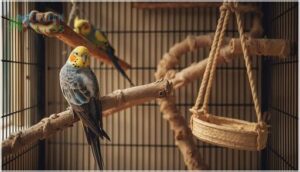
Perch materials and placement are essential cockatiel cage accessories that directly impact foot health and daily exercise. You’ll want to offer variety in diameter—about 1/2 inch to 1 inch—and texture to support proper bird ergonomics and prevent pressure sores.
- Natural wood perches with irregular surfaces stimulate circulation and mimic wild branches
- Rope perches provide cushioned comfort for sensitive feet
- Pedicure perches gently wear down nails near feeding stations
- Exercise options like swings add balance challenges and core engagement
Position perches at different heights, keeping the highest spot comfortable for sleep, and maintain 2 to 3 inches of clearance from cage walls so tail feathers don’t fray. For more on how natural choices can support bird well-being, see the benefits of.
Toys for Mental Stimulation
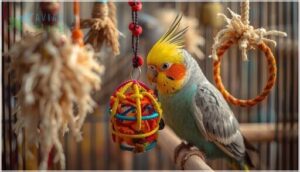
While perches keep your cockatiel’s body active, toys engage their intelligent mind and prevent destructive boredom behaviors.
Foraging toys, puzzle toys, and shredding activities mirror natural behaviors—your bird will spend hours manipulating compartments, tearing palm fibers, and working for hidden treats. Add preening stimulation through soft tassels, sensory play with bells, and trick training props like miniature hoops.
Rotating these cockatiel cage accessories weekly keeps avian enrichment and stimulation fresh, supporting your feathered friend’s cognitive health. For more inspiration on safe, mentally stimulating options, check out this thorough guide to rotating toys for mental stimulation.
Food and Water Dishes

Just as important as mental enrichment is how you deliver nutrition—stainless steel dishes resist rust and scrub clean daily, eliminating bacteria that plastic scratches harbor.
Mount these feeding accessories and water accessories at chest height, away from perches overhead, so droppings won’t contaminate your cockatiel’s meals. Tube waterers keep water quality high, while open bowls double as bathing spots, supporting feather health through simple pet bird nutrition and bird care routines.
Cuttlebones and Mineral Blocks
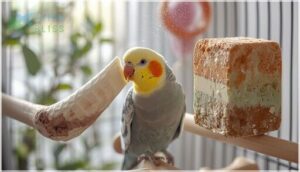
Cuttlebones and mineral blocks act as 24/7 beak conditioning tools and calcium sources your cockatiel can access whenever needed.
Mount a natural cuttlebone—roughly 80 percent calcium carbonate—alongside a mineral supplement block so your bird self-selects texture and trace minerals like magnesium and zinc, supporting both beak health and strong eggshells in laying hens without overwhelming their bird nutrition plan.
Ladders, Swings, and Play Stands
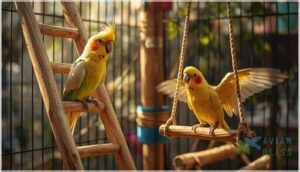
Climbing structures like ladders and swings double as exercise equipment and balance toys, turning static cage time into active exploration.
Position a 12- to 24-inch ladder with 1- to 2-inch rung spacing between perches so your cockatiel builds muscle and confidence without over-stretching, while a wooden swing placed at head level offers gentle movement that strengthens core stability and keeps those bird cage accessories working overtime.
Cage Liners and Bedding Materials
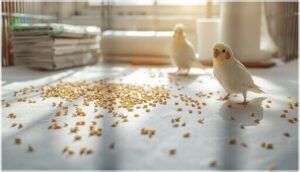
Your liner choice directly impacts cage hygiene and your bird’s respiratory health, so you want to prioritize flat paper liners over loose bedding materials that trap moisture and dust.
Safe, bird-friendly options include:
- Plain newspaper with soy-based ink
- Unprinted butcher paper cut to cage size
- Absorbent paper towels under feeding zones
- Pre-cut cage papers for quick daily changes
- Non-scented, mold-resistant flat liners
Replace daily to spot droppings clearly and protect those delicate lungs.
Cage Covers for Sleep Regulation

Beyond all those thoughtful cage liners and accessories, your cockatiel’s sleep patterns depend heavily on consistent light control and noise reduction, which is where a quality cage cover becomes paramount for bird care and maintenance.
Choose breathable cover materials with proper ventilation systems to guarantee cage safety and security while blocking ambient light, helping your feathered companion achieve those essential 10 to 12 hours of darkness nightly.
Top 10 Cockatiel Cage Accessories Reviewed
Now that you understand what your cockatiel needs to thrive, let’s walk through the accessories I recommend most often in my practice. Each of these products has earned its spot through real-world performance, safety standards, and genuine benefit to your feathered friend’s daily life.
I’ve personally seen how the right accessories transform a basic cage into a stimulating sanctuary that keeps cockatiels healthy, engaged, and genuinely happy.
1. Suremita Hanging Bird Bath Cube
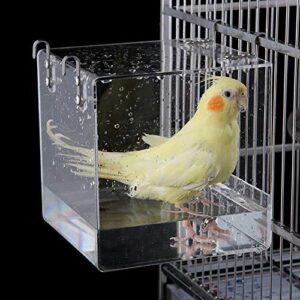
If you’ve ever watched your cockatiel eye a water dish with hesitation, you’ll appreciate the Suremita Hanging Bird Bath Cube—a transparent acrylic cube that transforms cage-side bathing into a safe, enclosed experience.
This clever design attaches directly to cage bars using metal hooks, giving your feathered friend perch-height access to a splash zone where they can spread their wings comfortably without soaking your floor. The clear walls let you monitor bath time, while the smooth acrylic surface wipes clean in seconds, making hygiene a breeze between your cockatiel’s enthusiastic splash sessions.
| Best For | Cockatiel and small bird owners who want a secure, cage-mounted bathing option that keeps mess contained while letting their pets bathe safely at perch level. |
|---|---|
| Material | Acrylic |
| Weight | 13.4 oz |
| Easy to Clean | Yes |
| Installation | Metal hooks |
| Bird Size | Small birds |
| Color | Transparent |
| Additional Features |
|
- Clear acrylic walls let you watch your bird’s bath time while containing splashes inside the cage
- Metal hook installation makes it easy to attach and remove for cleaning without tools
- Works as both a water bath and dry bath (with sand), plus doubles as a treat or foraging box
- No lip on the top edge creates a potential safety hazard for birds perching on the rim
- Some customers report receiving cracked or broken units during shipping
- Size limitations mean it won’t fit larger cages or work well for bigger bird species
2. Portable Parrot Play Stand Perch
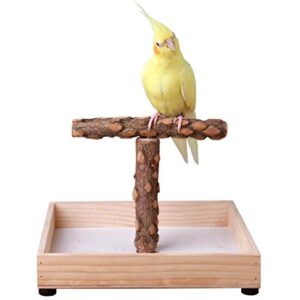
When you want intimacy and eye-level bonding with your cockatiel, the KINTOR portable parrot play stand delivers a tabletop perch crafted from 100% natural Prickly Ash Wood that invites interaction during training sessions or quiet hang-out time.
Its hide-screw design keeps curious beaks safe, and at just 1.72 pounds, you can easily shift this 10.2-by-9-inch stand from room to room so your bird stays part of family activity—perfect for hand training, supervised play, and building trust without floor-stand bulk.
| Best For | Cockatiel owners who want a lightweight, portable perch for eye-level interaction during training sessions and supervised playtime. |
|---|---|
| Material | Natural Wood |
| Weight | 1.72 lbs |
| Easy to Clean | Moderate |
| Installation | Easy assembly |
| Bird Size | Small-medium parrots |
| Color | Natural wood |
| Additional Features |
|
- Natural hardwood construction with hidden screws keeps beaks safe while providing a sturdy perch
- Weighs under 2 pounds so you can easily move it from room to room to keep your bird engaged
- Compact tabletop design lets you interact at eye level without needing a bulky floor stand
- The rough branch texture may be uncomfortable for birds with sensitive feet
- Platform can get chewed up quickly by aggressive chewers
- Cleaning can be challenging due to the natural wood construction
3. Kathson Bird Play Stand Gym
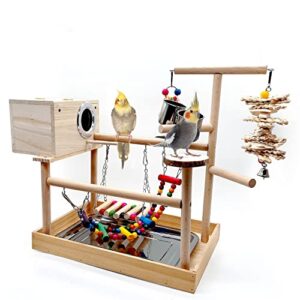
The Kathson Bird Play Stand Gym transforms your countertop into a sixteen-inch natural-wood adventure zone that encourages your cockatiel to climb, chew, and swing through multiple perch levels outside the cage.
You’ll appreciate the screw-fastened construction—no glue means safer chewing—and the ladder, swing, and colorful toys keep beaks busy while the base platform catches stray seeds and droppings. At just 3.8 pounds, you can easily reposition this gym near windows or family spaces so your feathered companion stays socially engaged during supervised play.
| Best For | Small to medium bird owners who want a portable, no-glue play gym with built-in toys and a breeding box for cockatiels, parakeets, and lovebirds. |
|---|---|
| Material | Wood |
| Weight | 3.8 lbs |
| Easy to Clean | Moderate |
| Installation | Self-assembly required |
| Bird Size | Small-medium birds |
| Color | Natural wood |
| Additional Features |
|
- Screw-fastened construction eliminates toxic glue, making it safer for birds who love to chew on wood
- Comes with a complete setup including ladder, swing, colorful toys, food cups, and a breeding box—everything in one package
- Lightweight at 3.8 pounds so you can easily move it around your home for social interaction and window time
- Assembly can be frustrating with minimal instructions and reports of misaligned holes or missing parts
- May feel cramped for larger birds or multiple birds that need more room to move
- Build quality varies—some units arrive sturdier than others depending on manufacturing consistency
4. Keersi Bird Mirror Toy Perch
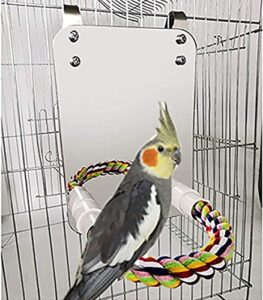
The Keersi Bird Mirror Toy Perch brings social enrichment straight to your cockatiel’s cage with a 13×18cm rectangular mirror mounted on a thick cotton-rope perch, giving solo birds a “companion” to vocalize with and watch.
You’ll find the screw-and-wing-nut hardware mounts securely to vertical bars at perch height, so your feathered friend can grip the textured rope, balance comfortably, and interact with that moving reflection. Just monitor the cotton strands for fraying and check hardware tightness weekly to prevent entanglement or beak injuries.
| Best For | Cockatiels and small parrots that need mental stimulation and mirror interaction, especially solo birds that could benefit from a “companion” to interact with. |
|---|---|
| Material | Wood |
| Weight | 5.3 oz |
| Easy to Clean | Yes |
| Installation | Easy install |
| Bird Size | Various species |
| Color | Natural wood |
| Additional Features |
|
- Thick cotton-rope perch offers comfortable grip and natural foot exercise
- 13×18cm mirror provides visual stimulation and helps reduce loneliness in single birds
- Screw-and-wing-nut hardware allows secure mounting to vertical cage bars
- Cotton rope can fray over time and requires weekly inspection to prevent entanglement
- Mirror may crack if the mounting wire is bent during installation or adjustment
- Some birds can unscrew the hardware and remove components, creating safety hazards
5. Parrot Wooden Ladder Toy
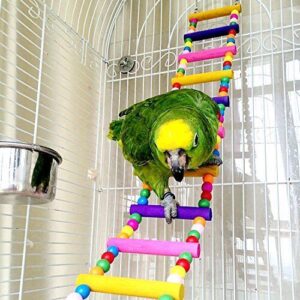
A natural wooden ladder transforms climbing from simple movement into a full-body workout, with rungs around 4.7 inches wide giving your cockatiel’s feet varied grip angles that reduce pressure points and keep leg muscles strong.
You’ll appreciate that most ladders—usually 24 to 32 inches with 6 to 15 rungs—mount with metal hooks or screw eyes, letting you hang them vertically or angle them as bridges between perches. Just inspect regularly for splintered wood and introduce cautiously to young birds, since wide rung spacing can pose entrapment risks for smaller cockatiels.
| Best For | Bird owners looking for an engaging climbing toy that gives their cockatiels, parakeets, or small parrots exercise and mental stimulation while fitting easily into standard cages. |
|---|---|
| Material | Metal/Wood |
| Weight | 6.38 oz |
| Easy to Clean | Difficult |
| Installation | Hook latches |
| Bird Size | Medium parrots |
| Color | Multicolor |
| Additional Features |
|
- Provides real physical exercise with varied grip angles that strengthen leg muscles and reduce foot pressure
- Works as both a vertical climber and a bridge between perches, giving you flexible setup options
- Natural wood construction appeals to birds’ chewing instincts while the 32-inch length offers plenty of climbing space
- Dye can rub off and stain your bird’s feathers during use
- Not built to last if you have an aggressive chewer—paint chips off during cleaning and some ladders break during installation
- Wide rung spacing might create entrapment risks for smaller cockatiels, so you’ll need to supervise younger birds
6. Parrot Wooden Block Puzzle Toy
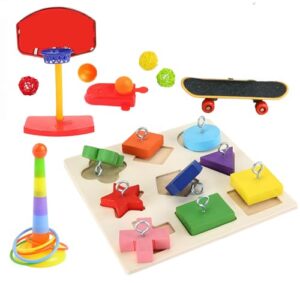
Wooden block puzzles shift play into problem-solving mode, with drilled blocks strung on rope or chain that your cockatiel can twist, pull, and chew to uncover hidden seeds or pellets tucked into grooves.
You’ll notice these softwood toys—often pine or fir dyed with food-grade colors—act like edible Rubik’s cubes, engaging your bird’s natural foraging instinct while trimming that ever-growing beak. Hang one near a favorite perch, rotate it weekly to maintain novelty, and inspect often for frayed rope or sharp splinters.
| Best For | Bird owners looking to give their cockatiel or medium-sized parrot a toy that combines mental stimulation with natural beak maintenance. |
|---|---|
| Material | Plastic/Wood |
| Weight | 0.21 kg |
| Easy to Clean | Difficult |
| Installation | Manual setup |
| Bird Size | Adult birds |
| Color | Multi-colored |
| Additional Features |
|
- Engages your bird’s foraging instinct while keeping their beak naturally trimmed through chewing
- Offers multiple play options with blocks, basketball hoop, skateboard, and ring stand to prevent boredom
- Made with food-grade colored wood that’s safe for birds to chew and interact with
- Some components are fragile and may break during aggressive play
- Not sized appropriately for smaller parrots
- Colors may bleed and certain parts require regular inspection for wear and fraying
7. Prevue Bird Cage Cover
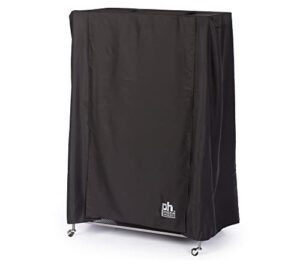
After your cockatiel tires of daytime play, a Prevue Good Night cover becomes your go-to tool for regulating sleep cycles—these black nylon drapes block ambient light and visual distractions so your bird settles into a solid 10 to 12 hours of rest.
The breathable, non-toxic fabric won’t trap stale air, yet it creates that den-like calm cockatiels need to avoid night frights. Sizes range from medium cages (20″ × 20″ × 30″) to extra-large flight setups, and machine-washable care keeps the cover fresh week after week.
| Best For | Cockatiel owners who want to help their birds get consistent, uninterrupted sleep by blocking out light and reducing visual distractions. |
|---|---|
| Material | Nylon |
| Weight | 1 lb |
| Easy to Clean | Machine washable |
| Installation | Easy use |
| Bird Size | Various sizes |
| Color | Black |
| Additional Features |
|
- Breathable, non-toxic fabric keeps air circulating while creating a calm, den-like environment that prevents night frights
- Machine washable and color-fast design makes it easy to keep clean and maintain over time
- Fits a wide range of cage sizes from medium to extra-large, so you can use it as your bird grows or if you upgrade cages
- Material is thinner than some users expect, so it may not block out every bit of light in brightly lit rooms
- Front-only split design can make it tricky to uncover the cage partially without taking the whole cover off
- May require careful handling around cage edges or sharp corners to avoid snagging or tearing the fabric
8. Natural Grape Vine Bird Perches
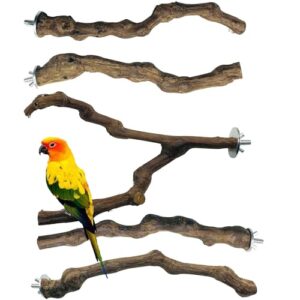
Grapevine perches mimic wild branch textures your cockatiel craves, and models like Allazone’s 9-inch set offer irregular curves that let those toes flex at different angles—essential for preventing bumblefoot and pressure sores.
Because the wood is softer than manzanita yet still sturdy, your bird can nibble safely, wearing down its beak while climbing and balancing. Mount these perches at varying heights, keeping them 2 to 3 inches from cage walls so tail feathers don’t fray, and wipe them down weekly to control bacteria in crevices.
| Best For | Cockatiel owners looking for natural perches that promote foot health and provide safe chewing enrichment. |
|---|---|
| Material | Grapevine |
| Weight | 1.5 lbs |
| Easy to Clean | Challenging |
| Installation | Metal wing nut |
| Bird Size | Medium birds |
| Color | Natural brown |
| Additional Features |
|
- Irregular branch texture exercises toes at multiple angles, helping prevent bumblefoot and pressure sores
- Softer grapevine wood lets birds nibble safely while wearing down beaks naturally
- Comes with both forked and straight perches, giving you setup flexibility for different cage heights
- May be too large for smaller birds like budgies
- Some buyers received perches with stained or dyed wood instead of natural finish
- Challenging to clean thoroughly once the wood gets wet or soiled
9. Stainless Steel Parrot Food Bowls

Stainless steel bowls are the ideal choice for avian feeding stations, and I recommend 304 food-grade models that resist corrosion far better than budget 201 alloys. Their non-porous surfaces won’t harbor bacteria the way scratched plastic does, plus they’re dishwasher-safe for high-temperature sanitization.
Look for screw-on or drop-in cup designs with secure clamp holders—these prevent tipping when your cockatiel climbs near the rim. Choose diameters around 10 to 12 cm and shallow depths so your bird can reach every seed without strain, and you’ll enjoy years of hygienic, chew-proof service.
| Best For | Bird owners who want durable, easy-to-clean feeding bowls that resist tipping and can handle daily use for parrots, cockatiels, budgies, and other small pets. |
|---|---|
| Material | Stainless Steel |
| Weight | 0.44 lbs |
| Easy to Clean | Dishwasher safe |
| Installation | Clamp holder |
| Bird Size | Small animals |
| Color | Stainless steel |
| Additional Features |
|
- Stainless steel construction makes them dishwasher-safe and resistant to bacteria buildup
- Clamp holders keep bowls securely attached to prevent spills when birds climb around
- Versatile enough for both food and water, suitable for various small animals
- Some units arrive with minor dents or scratches from shipping
- Can develop rust over time with heavy water exposure or inadequate drying
- Bowls may be larger than expected, which could be awkward for smaller cages
10. Jmxu’s Cuttlebone For Birds
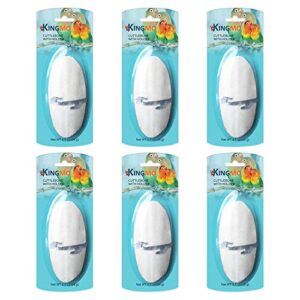
Natural cuttlefish bone supplies the calcium and trace minerals your cockatiel needs for sturdy bones, strong eggs, and healthy beak maintenance. Jmxu’s 5- to 5.5-inch pieces arrive with metal holders that clip directly onto cage bars, positioning the bone near your bird’s favorite perch so it can scrape and nibble at will.
These multi-packs keep backup pieces on hand, and the porous texture means your cockatiel can self-regulate intake without overwhelming its system—perfect for breeding females or growing juveniles.
| Best For | Cockatiel owners who want a natural calcium source that doubles as a beak-trimming tool and cage toy, especially helpful for breeding birds or young cockatiels building bone strength. |
|---|---|
| Material | Natural Cuttlebone |
| Weight | Not specified |
| Easy to Clean | Yes |
| Installation | Aluminum holder |
| Bird Size | All birds |
| Color | Natural |
| Additional Features |
|
- Pure cuttlefish bone with no bleach or additives gives your bird safe, self-regulated calcium and minerals
- Comes with metal clips that attach right to cage bars, keeping the bone accessible near perches
- Six-pack means you always have backups ready when one gets worn down
- Metal holders can be flimsy and sometimes don’t grip cage bars securely
- Some pieces arrive smaller than the listed 5-5.5 inch range or broken during shipping
- Clips can be tricky to install and may pop off if your bird gets too rough with them
Choosing Safe and Bird-Friendly Materials
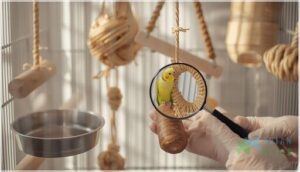
When you’re picking out accessories for your cockatiel’s cage, the materials you choose can make all the difference between a safe haven and a health hazard. Not all products marketed for birds are actually safe for your feathered friend, and knowing what to look for—and what to avoid—is paramount to keeping them healthy and happy.
Let’s walk through the essential criteria you need to evaluate when selecting accessories that are truly bird-friendly.
Non-Toxic and Bird-Safe Materials
Your feathered friend’s safety hinges on choosing materials that dodge toxic material risks and support avian health and wellness, so understanding what’s truly bird safe becomes paramount for cage accessories. When I evaluate products in my clinic, I focus on these non-toxic options that promote proper bird care and maintenance while ensuring cage safety and security.
- Bird safe woods like untreated apple, birch, maple, and manzanita offer natural chewing surfaces without harmful chemicals
- Safe metal options including stainless steel hardware resist rust and eliminate zinc or lead exposure
- Non toxic plastics that are food-grade, BPA-free, and thick enough to prevent splintering into dangerous fragments
- Eco friendly alternatives such as natural hemp, sisal rope, and plain paper provide enrichment without synthetic coatings
Avoiding Choking Hazards and Unsafe Parts
You’ll spot toxic material risks and choking hazard prevention opportunities when you inspect cage accessories daily for parts smaller than a dime—anything your cockatiel can bite off and swallow.
Safe toy design means checking rope for fraying strands that trap toes, replacing bells with narrow openings that catch beaks, and ensuring clips close completely.
These accessory inspection tips keep cage safety and security front and center, supporting bird care and maintenance, avian health and wellness, and genuine bird injury avoidance through vigilant bird safety and hygiene practices.
Durability and Ease of Cleaning
You’ll find that material selection drives both accessory maintenance and hygiene standards—choosing stainless steel food dishes, smooth plastic toys, and paper cage liners lets you sanitize tips come to life with quick scrubs and fast dries.
These cleaning methods keep your cage environment fresh without endless effort, ensuring bird cage accessories and design support lasting hygiene products that protect your feathered companion’s health daily.
Sizing Accessories for Cockatiels
Proper perch diameter—around 0.5 to 1 inch—promotes healthy foot posture, while toy safety depends on pieces too large to swallow and loops under 0.75 inches that prevent head entrapment.
Your cockatiel cage accessories and design must account for beak health through 4- to 6-inch cuttlebones, plus adequate feather space with 2 to 3 inches of clearance around cage accessories.
Maintaining Hygiene in Cockatiel Cages
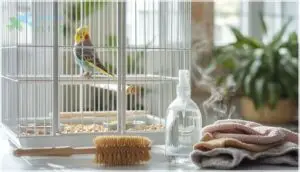
Keeping your cockatiel’s cage clean isn’t just about aesthetics—it’s essential for preventing respiratory infections, bacterial growth, and parasitic infestations that can seriously compromise your bird’s health.
A consistent hygiene routine protects your feathered friend from diseases like aspergillosis and candidiasis while creating a fresh, welcoming environment they’ll thrive in. Let’s explore the essential practices that’ll keep your cockatiel’s home safe, clean, and healthy.
Cleaning Schedules for Accessories
Usually, you’ll want to tackle daily cleaning by washing food and water bowls and swapping out cage liners every morning.
Weekly sanitizing covers perches, toys, and trays—those high-contact bird accessories that accumulate droppings and oils fast.
Monthly deep disinfection means pulling everything out for a thorough scrub, while accessory rotation keeps your cockatiel mentally engaged. Consistent hygiene maintenance with quality hygiene products protects your feathered companion from bacterial buildup and illness.
Best Practices for Disinfection
Once you’re on a consistent cleaning schedule, disinfection becomes your front line in germ prevention for your bird’s cage environment. Here’s how to keep your cockatiel’s space truly safe:
- Choose avian-safe disinfectants that are fragrance-free and skip harsh phenols or ammonia compounds that threaten respiratory health.
- Remove your cockatiel first and ventilate the area to protect delicate airways from chemical fumes.
- Pre-clean all surfaces with warm soapy water before applying any disinfectant—sanitizing methods won’t work over visible debris.
- Allow proper contact time (usually 5-15 minutes) on cage setup and accessories before rinsing thoroughly with warm water.
- Dry everything completely before returning your bird to prevent mold growth and guarantee true bird safety.
Diluted hydrogen peroxide or avian-specific cleaning protocols work wonders without compromising your feathered friend’s well-being.
Selecting Hygienic Liners and Bedding
Once you’ve disinfected the cage, it’s time to lay down thoughtfully chosen cage liners and bedding options.
Newspaper, packing paper, or commercial precut cage liners make routine cage cleaning a breeze and allow close monitoring of your cockatiel’s droppings.
Avoid gritty substrates—those hinder hygiene and odor control. Layer flat paper for simple swaps, supporting both practical bird care and your bird’s comfort.
Preventing Mold and Bacterial Growth
Beyond clean liners, your cockatiel’s cage environment demands proactive mold prevention and bacterial control through humidity management and ventilation systems. Keep indoor humidity between 40 and 60 percent, use a dehumidifier if needed, and point a small fan away from the bird to improve airflow.
- Wash food and water dishes daily with hot soapy water
- Disinfect cage accessories weekly using avian-safe sanitization methods
- Dry perches, toys, and hygiene products completely before returning them
- Monitor cage liners and accessories daily for early signs of mold or biofilm
Creating an Enriching Cockatiel Environment
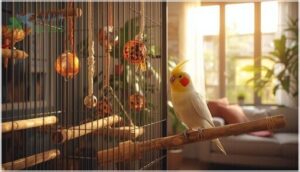
Your cockatiel’s environment isn’t just about filling a cage with accessories—it’s about creating a vibrant space that mirrors their natural curiosity and intelligence. A truly enriching setup requires thoughtful rotation of toys and perches, keen observation of what your bird actually enjoys, and customization based on their unique personality and life stage.
Let’s explore the essential strategies that will transform your cockatiel’s cage from a simple enclosure into a thriving habitat, mentally engaging habitat.
Rotating Accessories for Stimulation
Your cockatiel’s mind thrives on novelty, so rotating accessories every 3 to 7 days keeps boredom at bay and strengthens bird enrichment. Swap puzzle toys, swings, and ladders while adjusting cage layout to spark exploration. During each rotation frequency check, inspect for frayed rope or sharp edges—safety checks and hygiene management are paramount.
Keep 4 to 6 items in rotation for effective cockatiel care and mental stimulation.
| Accessory Type | Rotation Frequency | Cockatiel Care Benefit |
|---|---|---|
| Puzzle Toys | Every 3–5 days | Prevents pattern memorization |
| Swings & Ladders | Every 1–2 weeks | Builds balance and muscle tone |
| Chew Blocks | Weekly | Aids beak health and curiosity |
| Foraging Items | Every 3–5 days | Encourages natural feeding behaviors |
| Climbing Nets | Every 1–2 weeks | Promotes full-body exercise |
Observing Bird Preferences and Behaviors
Daily, your careful observation of bird behavior reveals what truly resonates with your feathered friend—reading body language like relaxed feathers or a raised crest shows comfort or curiosity, while identifying boredom through pacing or repetitive swinging signals a need for change.
Noticing enjoyment signs, such as chirping during play or enthusiastic foraging, guides your cockatiel care and maintenance, ensuring pet owner guidance and advice support bird enrichment and cockatiel health.
Customizing Setups for Age and Activity Level
Juvenile hatchlings under six months thrive with low perches placed four to six inches from the floor, reducing fall injuries and promoting hatchling safety, while seniors with weaker grip need horizontal bars and flat platforms spaced closely for senior mobility.
Active layouts featuring Z-pattern perches and multiple toys engage energetic adults, whereas quiet zones with stable, high sleeping perches support all ages—customizing cage accessories, toys, and perches ensures cockatiel health through every life stage.
Preventing Boredom and Promoting Well-Being
Think of your feathered friend’s cage as a living, breathing playground—when cockatiels face the same toys and routines day after day, boredom breeds feather plucking, screaming, and stress-related behaviors that compromise their health.
- Foraging Techniques with puzzle toys turn mealtime into mental stimulation, keeping your bird engaged for hours instead of seconds
- Social Interactions through daily talking sessions and whistle training channel vocal energy into meaningful behavioral support
- Rotating swings, ladders, and perches alongside introducing shredding materials provides the environmental enrichment that mirrors their wild instincts
Frequently Asked Questions (FAQs)
What accessories should be in a cockatiel cage?
Your feathered friend thrives when its home includes at least three comfortable perches, separate food dishes, a cuttlebone for beak care, and puzzle toys.
Your feathered friend’s environment should also include cage liners, swings, and ladders for climbing and exercise.
What do cockatiels need in their cage?
Your cockatiel needs a spacious cage with varied perches, engaging toys, stainless steel bowls, cuttlebone, paper liners, and proper placement for bird socialization—creating environmental enrichment that fosters natural behaviors and long-term wellness.
What is the best cockatiel cage setup?
Your best setup starts with a cage at least 20 x 20 x 24 inches, varied perches, three to four toys, stainless steel dishes, cuttlebone, and a liner you can change daily.
What do I put at the bottom of my cockatiel cage?
Like keeping your kitchen counter clear, you’ll want plain newspaper, butcher paper, or paper towels lining the tray—they’re safe cage liner options that let you monitor droppings for daily health checks.
How often should I replace cockatiel cage accessories?
Your bird’s accessories don’t follow a single timetable—perches need swapping every three to six months, while food dishes last years.
Watch for wear indicators like fraying rope or cracked plastic, and prioritize replacement schedules that protect bird health.
Can cockatiels share accessories with other bird species?
Sharing between species carries health risks, so I strongly recommend separate cages and accessories for cockatiels and other birds.
Quarantine protocols, territorial behavior, and disease transmission make individual setups paramount for avian health.
What temperature range is safest for cockatiel cages?
Your cockatiel thrives in a stable cage environment between 65 and 80 degrees Fahrenheit, which ensures thermal comfort and avian health while protecting against heat stress, cold risks, and respiratory issues from drafts.
Do cockatiels need nightlights in their cages?
Imagine this: your cockatiel thrashing wildly at 2 a.m., triggering what we vets call night frights.
A dim nightlight isn’t essential for every bird, but it’s life-saving cage lighting for anxious cockatiels prone to panic.
How many accessories are too many for cockatiels?
You’ve crossed into accessory overload when your feathered friend can’t fully extend its wings or hop freely between perches.
Cage clutter causes bird stress, so maintain open space for cockatiel comfort and natural movement.
Conclusion
Think of your cockatiel’s cage as a house—without furniture, it’s just walls. The right bird cage accessories for cockatiels transform that empty shell into a vibrant, enriching home where your feathered companion can thrive physically and mentally.
You’ve now got the vet-backed knowledge to make informed choices that prevent health issues and behavioral problems. Your cockatiel deserves nothing less than a thoughtfully designed environment that promotes their wellbeing for decades to come.
- https://www.naturalbirdco.co.uk/perchsizeguide.html
- https://windycityparrot.com/a-guide-to-choosing-the-best-cockatiel-bird-cages/
- https://bonkabirdtoys.com/collections/cage-accessories
- https://www.swiftailvet.com/exotic-pet-care-sheets/cockatiel
- https://coffeewooddogchew.com/the-role-of-natural-perches-in-bird-foot-health-why-java-wood-is-ideal/