This site is supported by our readers. We may earn a commission, at no cost to you, if you purchase through links.
A bored parakeet is a stressed parakeet — and stress shows up fast. Feather plucking, repetitive movements, and loss of appetite are all signs that something’s missing from their environment.
The good news? The fix is simpler than you’d think. The right bird cage accessories for parakeets can transform a bare cage into a space that keeps your bird active, curious, and healthy. From shreddable toys that wear down their beaks naturally to perches that strengthen their grip, each piece plays a real purpose.
This guide breaks down exactly what to grab — and what to skip.
Table Of Contents
- Key Takeaways
- Best Parakeet Cage Accessories in 2026
- Top Toys That Parakeets Love
- Essential Perches, Swings, and Ladders
- Food Bowls, Liners, and Cage Covers
- What Not to Put in a Parakeet Cage
- Frequently Asked Questions (FAQs)
- What not to put in a parakeet cage?
- What kind of toys do parakeets like to play with?
- How often should you clean a parakeet cage?
- Whats the best cage size for two parakeets?
- How do you introduce new accessories to parakeets?
- Can parakeets live alone without other birds?
- What signs show your parakeet is bored or stressed?
- Conclusion
Key Takeaways
- The right mix of toys, perches, and accessories keeps your parakeet mentally sharp, physically active, and less stressed.
- Always choose bird-safe materials like stainless steel and natural wood, and avoid toxic metals or unsafe toys with small parts.
- Spot clean the cage daily and do a full scrub weekly to maintain hygiene and prevent health issues.
- Gradually introduce new cage accessories and rotate toys regularly to keep your parakeet curious and engaged.
Best Parakeet Cage Accessories in 2026
If you’ve got a parakeet, the right cage accessories can make a huge difference in how happy and healthy your bird stays.
Understanding the key factors behind choosing the right parakeet cage will help you pick accessories that actually fit your bird’s needs.
From toys that keep their minds sharp to perches that give them a place to rest and play, there’s a lot to choose from. Here are the top picks for 2026 to help you build the perfect setup.
Why Cage Accessories Matter for Parakeets
A thriving parakeet starts with the right environment. The bird cage accessories you choose directly shape your bird’s mental sharpness, physical health, and overall avian wellness.
From toys that spark parakeet enrichment to perches that keep feet strong, every piece plays a role in pet bird health. The right avian supplies also support cage hygiene and encourage natural bird socialization, giving your feathered friend a space where it can truly flourish.
For additional insights, explore essential details on enrichment accessories for birds.
How We Picked The Top Products
Not every bird accessory deserves a spot in your cage. We narrowed things down by evaluating Material Selection, Safety Features, and real Customer Reviews. Our Product Testing checked for non-toxic materials, proper sizing, and durability. Quality Control standards guided every pick.
Here’s what mattered most:
- Bird cage accessories were screened for bird-safe materials and secure design
- Toys and perches were sized to fit standard parakeet cages without crowding
- Avian supplies passed durability and cleaning compatibility checks
Top Toys That Parakeets Love
Keeping your parakeet entertained is one of the easiest ways to help them stay healthy and happy.
The right toys can sharpen their minds, keep their beaks in good shape, and give them something fun to do all day. Here are the top picks that parakeets actually love.
Shreddable Toys for Mental Stimulation
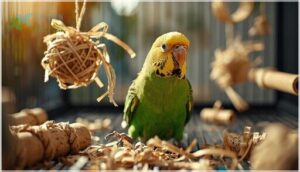
Curiosity is one of the best gifts you can give your parakeet, and shreddable bird toys deliver exactly that. Fiber toys tap into their natural chewing instinct, keeping beaks busy and minds sharp — that’s the mental stimulation your bird craves.
From picking the right perches to placing toys at ideal spots, a solid bird cage setup guide helps you create the perfect environment for all that happy shredding.
For lasting beak health, practice regular toy rotation with these avian accessories. Smart pet bird care starts here.
Foraging Toys to Encourage Problem Solving
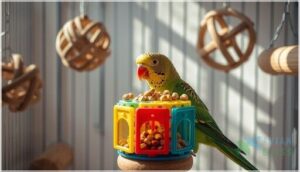
Once your parakeet has mastered shreddable toys, foraging toys take things a step further. These puzzle toys and treat dispensers tap into your bird’s natural foraging instincts, turning snack time into a game of bird intelligence and problem solving.
Hidden rewards behind rotating lids or sliding panels keep avian enrichment fun. Rotate them weekly for lasting curiosity — smart pet bird care made simple.
For additional insight into the mental and physical effects of foraging, see the 4 Benefits of Foraging Bird Toys for more information.
Chew Toys for Beak Health
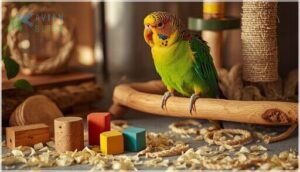
Beak conditioning starts with the right chew toy materials. Untreated woods like maple or birch, paired with natural fiber toys such as seagrass, give your bird safe, effective beak shaping through daily gnawing. Think of it as parrot dental care built into avian enrichment.
Rotate textures weekly for balanced beak wear — a simple habit that promotes lasting pet bird health and bird accessories longevity.
Essential Perches, Swings, and Ladders
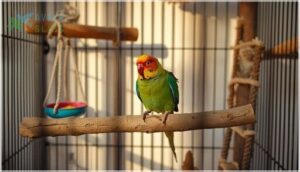
Perches, swings, and ladders are just as important as toys in terms of keeping your parakeet active and healthy.
The right mix of fixed and swinging options gives them places to rest, stretch, and exercise their wings. Here are the essentials worth adding to your cage.
Fixed Vs. Swinging Perches
Your choice of perch type quietly shapes your bird’s daily health. Fixed perches offer Cage Stability, keeping your parakeet grounded and safe, while swinging perches turn rest time into Bird Exercise.
- Fixed perches suit smaller cages where stability matters most
- Swinging perches strengthen leg muscles and encourage active Foot Safety grip
- Varied Perch Material textures support Beak Health naturally
- Mixing both types creates genuine avian enrichment and Cage Furniture variety
- Always inspect perching options monthly for wear
Swing and Ladder Combos for Exercise
Swing and ladder combos are some of the best Exercise Toys for keeping your pet bird active. These Bird Cage Accessories boost Bird Agility and support Parakeet Fitness across your bird habitat.
Swing Variations let your parakeet stretch its wings, while Ladder Safety features keep the Cage Furniture secure. Add these bird accessories to your setup, and you’ll see your parakeet moving, climbing, and thriving daily.
Sizing Perches for Parakeet Comfort
Getting the right size makes all the difference for your parakeet’s comfort. Here’s what to keep in mind:
- Aim for perches between ½ and ¾ inch in diameter, letting your bird’s toes wrap around roughly two-thirds of the surface.
- Mix Perch Material types — natural wood, rope, and textured options — to support Foot Health and Bird Ergonomics.
- Vary heights across your Cage Layout to encourage daily movement and reduce pressure points.
- Rotate perches weekly for lasting bird welfare and Pet Bird Care.
Food Bowls, Liners, and Cage Covers

Once you’ve got the toys and perches sorted, it’s time to focus on the basics that keep your parakeet’s cage running smoothly day to day.
Food bowls, cage liners, and covers mightn’t sound flashy, but they make a real difference in your bird’s comfort and routine. Here are the top picks for each one.
Food and Water Bowls for Easy Access
The right food and water bowls can quietly transform your bird cage setup. Raised bowl placement reduces neck strain, while spill proof designs keep your bird environment tidy. For easy cleaning, look for removable stainless steel or ceramic options — both support water quality and hygiene in pet bird care.
| Feature | Stainless Steel | Ceramic |
|---|---|---|
| Durability | Dent-resistant, long-lasting | Sturdy but chips over time |
| Spill Proof | Rust-resistant coatings hold up well | Heavier base reduces tipping |
| Easy Cleaning | Dishwasher safe, antimicrobial | Wipe-clean, low odor absorption |
| Bowl Placement | Lightweight, easy to reposition | Stable, ideal for active cages |
| Water Quality | Resists corrosion with mineral-rich water | May absorb minerals over time |
Dual bowl systems are worth considering too — they separate food and water in one secure mount, keeping your bird cage setup clean and your parakeet happy.
Absorbent Cage Liners
Keeping your bird cage fresh starts at the bottom. Absorbent cage liners are quiet heroes among bird cage supplies — trapping moisture and reducing cage odor between cleanings.
When exploring liner materials, look for fleece or microfiber blends with waterproof backing. For bird safety, choose non-toxic dyes only.
Simple cleaning tips: wash on gentle, air dry. Good habitat furnishings make cage maintenance easy.
Cage Covers for Better Sleep Patterns
While liners handle what’s below, a good Bird Cage Cover takes care of what happens after dark. Dark Fabric Selection plays a big role in Sleep Pattern Regulation, blocking out light and reducing noise for up to 14 hours of restful sleep.
Here’s what to look for:
- Breathable Fabric Options — cotton blends promote Cover Material Safety while keeping airflow steady
- Noise Reduction Methods — thick, dark material helps block outside sounds
- Cage Maintenance — wash your cover weekly to keep your Bird Cage Environment clean
A well-chosen cover promotes Pet Bird Health and Happiness through simple, consistent Bird Care.
What Not to Put in a Parakeet Cage
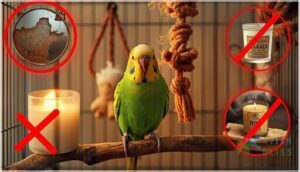
Choosing the right cage accessories is just as important as choosing the wrong ones — because some items can actually put your parakeet at risk.
Not everything you’ll find on a cage accessories shelf is safe, and knowing what to skip can save you a lot of trouble. Here’s what to keep away from your bird’s cage.
Toxic Metals and Unsafe Materials
Metal toxicity is the silent threat hiding inside your bird cage environment. Certain metals — lead, zinc, copper, brass, chrome, and nickel — can chip, corrode, or leach ions that damage your parakeet’s health over time. That’s why choosing bird friendly metals and non-toxic finishes matters so much for pet bird health and happiness.
Toxic metals like lead, zinc, and copper can silently corrode inside bird cages, leaching harmful ions that damage your parakeet’s health over time
| Metal | Risk | Safe Alternative |
|---|---|---|
| Lead | Neurotoxicity, weight loss, tremors | Stainless steel or powder-coated cages |
| Copper/Brass | Digestive irritation, lead impurities | Food-safe stainless steel hardware |
| Chrome | Flaking, mouth and gut irritation | Powder-coated or wooden accessories |
| Nickel | Contact dermatitis, corrosion risk | Nickel-free, fully stainless components |
Always inspect your animal enclosures for chipping or dullness, and stick with certified safe materials to protect avian health and wellness.
Dangerous Toys and Accessories to Avoid
Beyond Toxic Materials, your parakeet faces risks from poorly made Bird Cage Accessories. The wrong Cage Addons and Furnishings can seriously harm your Pet Bird.
When shopping Avian Supplies and Products, watch for these dangers:
- Small Parts and Choking Hazards from detachable toy components
- Sharp Edges on broken plastic or unfinished wood
- Strings and ribbons creating Entanglement Risks
- Batteries or magnets hiding inside Bird Care and Accessories
Choose wisely.
How to Keep Your Parakeet Safe and Healthy
Once you’ve avoided the dangers, the rest is straightforward. Good Cage Sanitation, regular Avian Health Checks, and the right Bird Care and Accessories go a long way.
Stock up on quality Avian Supplies and Products, keep your Bird Cage Liner fresh, and stay on top of Parakeet Nutrition. Encourage Parakeet Socialization daily, and always have a basic Bird First Aid plan ready, just in case.
Frequently Asked Questions (FAQs)
What not to put in a parakeet cage?
A single wrong item could shatter your entire Bird Cage Setup and Design. In terms of Bird Safety, avoid Toxic Materials like lead or zinc, Hazardous Toys with small parts, and anything lacking proper Avian Housing certification to prevent serious Parakeet Risks and Cage Hazards.
What kind of toys do parakeets like to play with?
Your pet bird loves shreddable toys, bells, and foraging games. These support beak exercise and feather stimulation during bird playtime.
With smart toy rotation in your bird cage setup and design, parakeet toy preferences stay fresh and fun as pet accessories go.
How often should you clean a parakeet cage?
Spot cleaning your cage daily keeps things fresh—swap liners, wash bowls, and wipe droppings.
A full weekly scrub prevents buildup, while monthly deep sanitation combats bacteria.
Adjust your cleaning schedules based on flock size and cage space.
Whats the best cage size for two parakeets?
For two parakeets, aim for a Bird Cage at least 30 inches long.
Wider Bird Cage Selection enhances Bird Flight Patterns and Parakeet Behavior.
Following Cage Size Guidelines and Space Requirements, avoid Horizontal Barriers so your birds thrive in proper bird housing.
How do you introduce new accessories to parakeets?
Gradual introduction works best — place one new item at the back of your cage, then move it closer over a few days.
Pair it with a treat for safe desensitization, and watch for stress signals before rotating accessories further.
Can parakeets live alone without other birds?
A solo parakeet can thrive — but only with your daily commitment. Without Social Interaction, Lonely Parakeets often show stress.
Prioritize Solo Care through enrichment in their pet habitat, and Companion Needs stay manageable even without another bird.
What signs show your parakeet is bored or stressed?
Watch for boredom signs like repetitive pacing or feather plucking — key stress indicators. Vocal cues such as shrill screaming signal frustration.
Behavioral changes, including ignoring toys, often point to environmental factors. Upgrading your pet habitat with fresh enrichment helps.
Conclusion
It turns out keeping a parakeet happy doesn’t require a PhD in avian psychology — just the right bird cage accessories for parakeets tucked into their space.
A shreddable toy here, a natural wood perch there, and suddenly your bird’s world shifts from empty cage to playground. You don’t need to overthink it. Pick pieces with purpose, skip anything toxic, and watch your parakeet thrive.
- https://parrotessentials.co.uk/blog/5-fun-parakeet-toys
- https://bonkabirdtoys.com/blogs/default-blog/selecting-a-safe-bird-toy-a-comprehensive-guide-by-bonka-bird-toys
- https://www.omlet.us/guide/parakeets/toys_for_parakeets/unsafe_toys/
- https://squawkboxes.com/blogs/news/how-to-choose-the-right-toys-for-your-birds
- https://janglybirdtoys.com/blogs/fascinating-parrots/why-parrots-need-to-shred-benefits-safe-materials-and-species-preferences