This site is supported by our readers. We may earn a commission, at no cost to you, if you purchase through links.

Your bird’s cage location can mean the difference between a happy, thriving companion and one that struggles with stress-related health problems. Most new bird owners focus on buying the right cage size and toys, but they overlook where they place that cage—and that’s when problems start.
A cage near the kitchen exposes your bird to toxic fumes from nonstick cookware. One by a drafty window creates temperature swings that weaken immunity. Even a spot in a high-traffic hallway can trigger chronic anxiety that leads to feather plucking.
Getting bird cage placement tips for home right from the start protects your feathered friend from preventable illness and behavioral issues. Smart placement considers air quality, temperature stability, light exposure, noise levels, and social interaction—all factors that directly impact your bird’s physical and mental health.
Table Of Contents
- Key Takeaways
- Why Proper Bird Cage Placement Matters
- Choosing The Safest Location at Home
- Optimizing Light and Temperature Conditions
- Enhancing Comfort and Security for Birds
- Daily Maintenance and Placement Adjustments
- Frequently Asked Questions (FAQs)
- Where is the best place to put a bird cage in the house?
- Where not to put a bird cage?
- Should I put my bird cage near a window?
- Can bird cages be placed on balconies or patios?
- Is carpeted flooring safe beneath a bird cage?
- Should cages face windows or interior walls?
- How far from other pets should cages be?
- Conclusion
Key Takeaways
- Cage location directly affects your bird’s physical health and mental wellbeing by controlling exposure to toxic fumes, temperature swings, and stress triggers that lead to illness and behavioral problems like feather plucking.
- Keep cages away from kitchens where nonstick cookware releases deadly fumes, at least three feet from drafty windows, and 6-10 feet from noisy appliances to prevent respiratory damage and chronic anxiety.
- Position cages at eye level (48-72 inches) in quiet corners with partial privacy, natural filtered light, and stable temperatures between 65-80°F to reduce stress while encouraging healthy social interaction.
- Regular cage rotation within the room provides mental stimulation, while monitoring your bird’s reactions like tail flicking or feather ruffling helps you adjust placement for optimal comfort and security.
Why Proper Bird Cage Placement Matters
Where you put your bird’s cage can make or break their health and happiness. The right spot reduces stress, prevents illness, and helps your feathered friend thrive in your home.
Start by choosing the right cage size and design for your bird’s species, then place it in a quiet area with natural light but away from drafts and kitchen fumes.
The right cage location reduces stress, prevents illness, and helps your bird thrive at home
Let’s look at three key ways cage placement directly affects your bird’s wellbeing.
Impact on Bird Health and Wellbeing
Placement shapes every aspect of avian health. The air your bird breathes directly impacts respiratory health, while stable temperatures support immunity and energy balance. Poor air quality from kitchens or fumes threatens bird safety fast.
Good cage placement gives you control over nutrition access, cage hygiene routines, and the daily rhythms that keep your feathery friend thriving for years. To guarantee your pet’s well-being, consider expert guidance on.
Effects on Stress and Behavior
Your bird’s stress levels shift dramatically with where you place the cage. High traffic areas trigger constant vigilance behaviors like head bobbing and tail flicking, while loud noises raise cortisol and cause irritability. Chronic stress leads to feather plucking and repetitive pacing.
Strategic bird cage placement with noise management and environmental enrichment through rotating toys reduces behavioral changes and fosters natural social interactions.
Promoting Socialization and Mental Stimulation
Where you set up the cage also shapes social bonding and mental stimulation. Position it in a room where your family gathers naturally. This visibility invites interactive play and bird socialization without overwhelming your pet.
Pairing compatible birds and adding puzzle feeders promotes environmental enrichment. Short daily sessions of 10 to 15 minutes boost cognitive stimulation and improve bird behavior through positive behavioral therapy.
Choosing The Safest Location at Home
Your bird’s cage location can make or break their health and happiness. Some rooms pose hidden dangers like toxic fumes or temperature swings that stress your feathered friend. Let’s walk through the key spaces to avoid and why they matter.
Avoiding Kitchens and Toxic Fumes

Your kitchen is the most dangerous room for your feathered friend’s cage placement and location. Nonstick cookware releases invisible fumes that can kill birds within minutes. Even with kitchen ventilation like a range hood, toxic fume sources including oil smoke and aerosols threaten bird health and safety.
For a complete safety checklist and expert advice on creating a bird-safe home environment, proper cage placement is just the first critical step.
Use fume reducing strategies such as air fryers or steamers, and keep bird friendly materials like air quality monitors near living areas instead.
Steering Clear of Drafts and Direct Sunlight
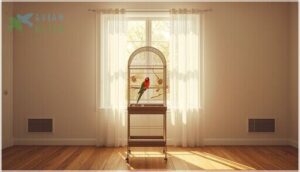
When you position your bird cage placement near windows, keep your cage at least three feet back to reduce chilly drafts from forced air returns. Use sheer curtains for sunlight filtering and draft reduction without blocking all daylight.
Proper cage ventilation and airflow management protect bird health and bird safety. A stable cage location away from vents prevents sudden temperature swings that stress your feathered companions.
Distance From Appliances and Noise Sources
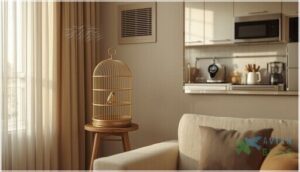
To protect bird health and bird safety, you need smart cage placement and location away from disruptive sounds. Appliance noise and electrical hum stress your bird, so focus on vibration reduction and airflow management.
Here’s how to find a quiet place:
- Keep 6 to 10 feet from blenders and mixers to reduce high-frequency startling sounds.
- Maintain 3 feet from HVAC vents to minimize drafts and whistling noise.
- Use sound barriers like fabric screens to absorb stray fan sounds.
Optimizing Light and Temperature Conditions

Your bird’s environment directly affects its immune system and stress levels. Getting the light and temperature right isn’t complicated, but it does require some planning.
Let’s look at three key factors that will keep your feathered friend comfortable and healthy year-round.
Access to Natural Light Without Overexposure
Your bird needs natural sunlight for strong bones and a healthy mood, but direct sunbeams can overheat your feathery friend fast.
For proper bird cage placement, use window treatments like sheer curtains for light diffusion and UV protection. Choose a quiet place with daylight balance—bright enough to support activity, yet shielded from harsh rays.
Sunbeam control creates a safe, comfortable cage placement and location year-round.
Maintaining Stable Room Temperatures
Keep your room between 65 and 80 degrees Fahrenheit for thermal regulation and bird health and safety. Sudden swings in climate control stress your bird and trigger feather plucking or appetite loss.
Use a smart thermostat for temperature monitoring and ensure cage placement is away from vents. Proper insulation and weatherstripping support cage safety and security.
Consistent conditions anchor avian care and nutrition.
Managing Humidity and Airflow
You want humidity levels between 40 and 60 percent for ideal bird health and safety. A hygrometer tracks moisture, so you can adjust with a humidifier or dehumidifier.
Good ventilation systems keep air quality control sharp by reducing dust and ammonia near your cage placement and location. Gentle airflow management beats strong drafts every time, supporting temperature regulation and healthy avian care and nutrition.
Clean water daily for cage maintenance and cleaning too.
Enhancing Comfort and Security for Birds
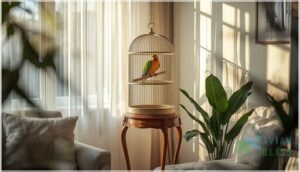
Your bird’s cage location affects more than just convenience—it shapes how safe and secure your feathered friend feels every day. Small adjustments to height, privacy, and noise levels can dramatically reduce stress and anxiety.
Let’s cover three practical ways to create a calming environment that helps your bird thrive.
Placing The Cage at The Right Height
Getting your cage placement and location right starts with the vertical sweet spot. You want your feathery friend at eye level—about 48 to 72 inches from the floor for most parrots.
Here’s why cage height adjustment matters:
- Position the door within easy reach to prevent strain during feeding
- Avoid shoulder-high setups that cause overreaching and stress
- Choose spots away from high traffic but still social
- Use anti-tilt brackets for safe mounting and stability
- Verify proper bar spacing matches your bird’s size
This setup reduces stress and improves owner interaction naturally. For more on minimizing risks and optimizing setup, check the importance of.
Ensuring Partial Privacy and Retreat Areas
Once you’ve nailed cage height, privacy comes next. Your bird needs visual barriers and retreat zones to feel secure without total isolation.
Strategic cage placement and location with partial covers lets your bird control exposure. Here’s what works:
| Privacy Element | Purpose |
|---|---|
| Lightweight outdoor panels | Block sightlines without stopping airflow |
| Perches near back wall | Create natural retreat zones |
| Fabric screens | Provide acoustic shields from sudden noises |
| Partial cage covers | Offer optional seclusion |
| Dense shrubs nearby | Reduce visibility while maintaining bird behavior and socialization |
Position screens at least 1.5 meters from high-traffic areas. Add access control with secure latches to prevent escapes.
Rotate seasonal adaptations—shade cloths in summer, windbreaks in winter—to maintain your bird cage setup year-round. This cage design approach reduces stress naturally.
Minimizing Sudden Movements and Loud Noises
Beyond retreat areas, you’ll want noise reduction to protect your feathered friends. Sudden sounds trigger bird stress and disrupt calm environment needs.
Smart bird cage placement helps. Position the cage away from kitchens, where cooking noises can startle birds. Use these sound absorption strategies:
- Add rugs or curtains near the cage for quiet spaces
- Schedule loud cleaning when birds rest outside
- Place white noise machines to mask sporadic sounds
This cage placement and location approach fosters bird behavior and socialization while ensuring stress reduction for birds through proper avian care and nutrition routines.
Daily Maintenance and Placement Adjustments

Getting the cage placement right is just the first step. You also need to think about daily upkeep and how your bird reacts to its surroundings.
Small adjustments over time can make a big difference in keeping your feathered friend healthy and content.
Easy Access for Cleaning and Feeding
Daily cage maintenance becomes simple when you position the cage with easy access in mind. Choose a spot where you can reach all sides without moving furniture or straining your back. Look for a cage door design that opens wide and feeding stations that detach quickly for washing.
Smart bird cage placement means you won’t dread cleaning day. Position cages at waist height so you can change the cage liner without bending. Access panels on modern designs let you wipe down surfaces in minutes. Sanitary features like smooth, non-porous bars make bird cage setup easier and keep your feathered friend healthier. An easy-to-clean cage paired with strategic placement transforms cage maintenance from a chore into a quick daily routine.
| Feature | Benefit |
|---|---|
| Removable side panels | Full access for sweeping and dish removal |
| Slide out trays | Collect spills for quick cleanup |
| Detachable feeding bowls | Thorough washing in sink or dishwasher |
Rotating Cage Position for Stimulation
Once you’ve nailed the basics of cage maintenance and cleaning, consider cage rotation to keep your bird mentally engaged. Small position shifts within the room offer visual stimulation without overwhelming your feathered friend. This simple bird enrichment strategy facilitates stress reduction through gentle environmental changes.
- Rotate the cage a quarter turn weekly to show different room views
- Face the cage toward family areas for natural bird behavior and socialization
- Keep rotations gradual so your bird adjusts without anxiety
- Avoid moving near noisy appliances during birdcage placement shifts
- Track which locations encourage calmer responses during cage maintenance and cleaning
Monitoring Bird Reactions and Adjusting Placement
Observation is your best tool for stress monitoring and refining placement strategies. Watch for tail flicking or feather ruffling—signs your bird feels restless or cold. Most birds settle within one to three days if cage placement stays quiet and stable.
Log feeding times and activity peaks to spot patterns. When environmental cues shift, adjust your birdcare approach and give your feathered companion time to adapt.
Frequently Asked Questions (FAQs)
Where is the best place to put a bird cage in the house?
The best spot is a quiet corner with two walls providing security, away from kitchens and drafts.
Position the cage at eye level on a stable surface where your bird can observe household dynamics safely.
Where not to put a bird cage?
Keep your bird cage away from the kitchen, drafty areas, direct sun, loud spaces, and floor level. Proper cage placement protects your pet bird from toxic fumes, temperature swings, and stress.
Should I put my bird cage near a window?
Placing your birdcage near a window seems tempting for natural light, but glass blocks essential UV rays and creates temperature swings.
Filtered light from a sheer curtain offers safer cage placement while protecting your bird from drafts and glass hazards.
Can bird cages be placed on balconies or patios?
You can place your bird cage on a balcony or patio with careful precautions. Provide wind protection, stable mounting, predator barriers, and supervised outdoor time.
Monitor weather closely and bring your pet bird indoors during temperature extremes.
Is carpeted flooring safe beneath a bird cage?
You can use carpet beneath your bird cage if you protect it with rubber mats or waterproof interlocking tiles.
These barriers prevent moisture damage, control odors, and simplify cleanup for bird owners.
Should cages face windows or interior walls?
Think of windows as double-edged swords—natural lighting aids your bird’s circadian rhythms, but direct sun can overheat.
Interior walls offer stable temperatures and privacy, shielding your feathery friend from drafts.
How far from other pets should cages be?
Keep your bird cage at least 6 feet from dogs and 4 feet from cats. This spatial separation reduces stress and predation risks.
Use a cage barrier or separate room when small mammals are present for maximum bird safety.
Conclusion
The right spot for your bird’s cage isn’t something you stumble upon by accident—it’s a decision that shapes their entire life. Now that you’ve mastered these bird cage placement tips for home, you’re preventing respiratory issues, stress behaviors, and social isolation before they start.
Your bird will reward you with vibrant feathers, cheerful vocalizations, and years of healthy companionship. That’s the power of getting placement right from day one.
- https://pets.thenest.com/signs-symptoms-acute-dehydration-birds-9918.html
- https://rvetclinic.com/choosing-spot-birdcage/
- https://www.furrycritter.com/pages/health/birds/draft_exposure.htm
- https://finchbuddy.com/the-ideal-temperature-range-for-finches/
- https://avianenrichment.com/learn/physical-needs/environment/cage-placement