This site is supported by our readers. We may earn a commission, at no cost to you, if you purchase through links.

A client rushed her finch into my clinic last month after it fractured both legs between improperly spaced cage bars—an injury that required surgery and months of rehabilitation. This wasn’t a freak accident.
I see preventable cage-related injuries weekly, from zinc poisoning to escape-related trauma, and most stem from features buyers overlook at purchase. The difference between a safe enclosure and a hazardous one often comes down to millimeters in bar spacing, specific material composition, and lock mechanisms you can evaluate in under five minutes.
Your bird’s daily environment directly determines its physical safety, and choosing the right bird cage safety features to look for eliminates the most common risks before they become veterinary emergencies.
Table Of Contents
- Key Takeaways
- Essential Bird Cage Safety Features
- Key Cage Size and Material Considerations
- Top 5 Bird Cage Safety Products
- Environmental and Placement Safety Tips
- Frequently Asked Questions (FAQs)
- What makes a good bird cage?
- What is the safest bird cage?
- How can I make my bird cage safer?
- What cage accessories are safest for birds?
- How often should I replace cage components?
- Can I use second-hand or vintage bird cages?
- What emergency supplies should I keep near the cage?
- Are travel cages safe for daily use?
- Conclusion
Key Takeaways
- Bar spacing matched to species size prevents over 21% of bone fractures—budgies need 1/2-inch gaps, cockatiels require 5/8 to 3/4 inches, and larger parrots demand 3/4 to 1 inch minimum.
- Stainless steel cages with powder-coated finishes eliminate toxic metal poisoning from lead, zinc, and cadmium that develops silently through daily contact with contaminated surfaces.
- Dual-lock mechanisms with deadbolt strength (150+ pounds resistance) and multi-point engagement stop escape injuries before clever beaks manipulate standard latches.
- Weekly inspections catching warped bars, compromised welds, and corroded locks reduce cage-related injuries by 57% compared to reactive maintenance after symptoms appear.
Essential Bird Cage Safety Features
Your bird’s cage isn’t just a home—it’s a life-support system where design flaws translate directly into injury, poisoning, or escape.
Choosing the right setup means understanding how large parrot cages differ in bar spacing, materials, and safety features before your bird pays the price.
A bird’s cage is a life-support system where design flaws translate directly into injury, poisoning, or escape
The wrong materials, spacing, or locks create silent hazards that develop over weeks before you notice symptoms. Here are the five non-negotiable safety features that separate a secure enclosure from a potential death trap.
Sturdy Construction and Design
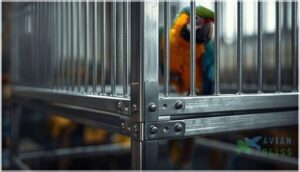
Frame durability determines whether your cage survives daily use or fails when a panicked bird slams against the bars. Look for heavy-gauge steel frames with reinforced corner braces—weld quality matters because poorly joined seams loosen within months.
Structural tests should exceed standard loads by 20 percent minimum. For further assurance, consider cages that exemplify sturdy construction principles, which are essential for long-term safety.
Cage stability depends on base panels anchored with corrosion-resistant fasteners, preventing tipping during territorial displays or climbing sessions.
Safe and Non-toxic Materials
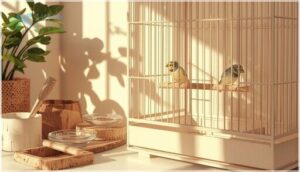
Toxic Material Risks appear whenever manufacturers use leadbased solder, zinc oxide particles, or nonstick coatings—all three trigger silent heavy metal poisoning.
You need stainless steel cages with powder-coated or enamel Safe Cage Finishes containing zero lead or cadmium. Bird Friendly Plastics must be BPA-free, while Eco Friendly Woods require curing with nontoxic materials.
Glass and porcelain accessories eliminate leaching entirely. More information about safe non-toxic materials for birds can be found in these non-toxic material guidelines.
Proper Bar Spacing for Species
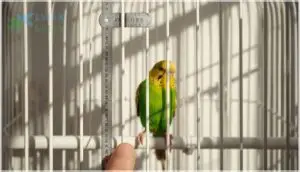
Bar Spacing Guidelines prevent 21% of bone fractures—budgies need 1/4 inch spacing, cockatiels 1 inch, conures 5/8 to 3/4 inch, larger parrots 1 1/2 to 2 inches.
Bird Species Research shows gaps wider than these measurements trap heads and wings, causing beak injury and preventable injuries. Measure center-to-center on tube cages—cage construction quality means nothing if Wing Entanglement Risks aren’t addressed through proper bird cage safety standards.
Secure Locks and Escape Prevention
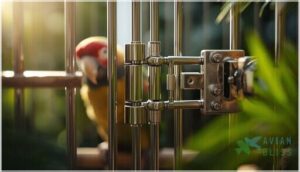
Even perfect bar spacing won’t protect your bird if the cage door swings open mid-flight. Lock Mechanisms must resist clever beaks—deadbolt locks withstand 150 pounds of force, while multi-point locking systems engage at two locations for enhanced Tamper Proofing.
Your secure locks need:
- Internal latches that travel with the door
- Secondary Safety Latches like clips preventing premature release
- Anti-escape overlapping bars blocking tiny claws
- Weekly inspections for rust or bent components
Escape Prevention starts with proper cage locks, period.
Easy Cleaning and Maintenance
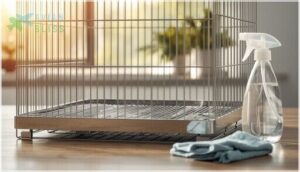
Bacterial buildup cuts your bird’s lifespan by 40%—easy cleaning determines whether cage maintenance happens or gets postponed indefinitely. Look for removable trays that slide out in seconds, smooth non-porous surfaces for quick Daily Wipe sessions, and tool-free panels enabling weekly Cage Sanitizing without hassle.
Prioritizing materials that resist corrosion—like the stainless steel options featured in this guide to choosing bird cages for canaries—ensures long-term durability while keeping toxins away from your bird.
| Feature | Benefit |
|---|---|
| Removable waste tray | Efficient Waste Management—slide, dump, rinse |
| Quick-release clips | Tool-free access for regular maintenance |
| Non-porous coatings | Resist staining, simplify debris guard tasks |
Your Maintenance Schedules stick when Cleaning Tools reach every corner without disassembly—weekly full cage cleaning plus monthly sanitizing with bird-safe solutions prevent respiratory infections before symptoms appear.
Key Cage Size and Material Considerations

Getting the cage dimensions and materials right isn’t optional—it directly affects your bird’s physical safety and long-term health.
Bar spacing alone accounts for over 21% of bone fractures, while toxic metals silently poison birds through daily contact. Here’s what you need to evaluate before bringing any cage home.
Appropriate Cage Size for Movement
Your bird’s cage size directly determines whether they thrive or develop stress-related illness. Calculate movement area by allowing 1.5 times wingspan clearance in width—small parrots need 1.5 to 2 square feet per inch of wingspan.
Flight space requirements demand vertical clearance equaling body height plus 6 inches. Perch height options and bird exercise needs depend on three-dimensional usable area, not just floor measurements. Cage design shapes daily health outcomes.
Recommended Bar Spacing Guidelines
Incorrect bar width safety causes over 21% of all bird bone fractures—your choice of proper spacing between bars is non-negotiable. Match bar spacing to species size: budgies need 1/2-inch gaps, cockatiels require 5/8 to 3/4 inches, larger parrots demand 3/4 to 1 inch.
Bird escape prevention and wing injury risks drop dramatically when you verify cage depth guidelines before purchase.
Durable, Rust-resistant Materials
Your cage’s rust prevention determines how long it protects your bird from metal toxicity and corrosion resistance failures. Stainless steel remains the highest quality standard—chromium creates a protective oxide layer lasting 25 to 50 years in typical conditions.
Aluminum alloys form instant oxide films that block humid-air degradation. Avoid galvanized steel despite its zinc coating—that same zinc becomes a silent poison your bird ingests daily.
Avoiding Toxic Metals and Finishes
Lead, zinc, and cadmium disguise themselves in decorative finishes—you won’t see toxic metal risks until neurological symptoms appear. Demand powder-coat finishes certified heavy-metal-free and stainless steel frames with passivated surfaces.
Non-toxic coatings prevent metal leaching when humidity meets droppings. Inspect quarterly for pitting or flaking where safe finishes fail—corrosion prevention requires vigilance against toxic cage materials and poisoning that develops silently.
Top 5 Bird Cage Safety Products
You need reliable products that address the most critical safety risks—bar entrapment, toxic materials, and escape prevention.
The following five products represent evidence-based solutions I recommend based on clinical outcomes and material safety data. Each item targets a specific hazard that contributes to emergency veterinary visits.
1. Vision Wire Bird Cage Home
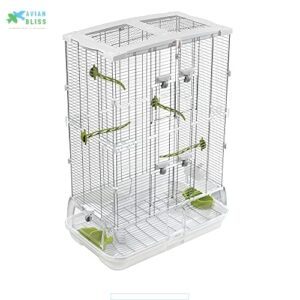
Your bird deserves space that actually aids natural movement—and the Vision Wire Bird Cage Home delivers exactly that. Designed for budgies, canaries, finches, and parrotlets, this cage measures 24.6″L x 15.6″W x 34.3″H with 0.48-inch bar spacing.
The deep base contains debris inside, while exterior cup access reduces handling stress during feeding. Multi-grip perches promote circulation and prevent foot problems.
Tool-free snap assembly takes five minutes, and the detachable base empties directly into waste bins—cutting cleaning time greatly.
| Best For | Bird owners with budgies, canaries, finches, or parrotlets who want a spacious cage that’s easy to clean and reduces stress during daily maintenance. |
|---|---|
| Primary Material | Metal |
| Design Purpose | Full cage housing |
| Target Bird Size | Small birds |
| Ease of Cleaning | Detachable base |
| Assembly Required | Yes |
| Weight | Not specified |
| Additional Features |
|
- Exterior cup access lets you refill food and water without disturbing your birds
- Deep base and debris guards contain most of the mess inside the cage
- Tool-free snap assembly makes setup quick and straightforward
- Birds that prefer ground-level feeding may not adapt well to exterior cups
- Large size makes the cage difficult to relocate once assembled
- Limited accessory options like night covers for the medium size
2. TTBellok Bird Cage Safety Clips
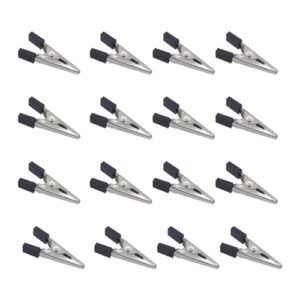
Strong latches aren’t optional—they’re the difference between a secure cage and an empty one. TTBellok Bird Cage Safety Clips deliver that assurance with spring-loaded stainless steel mechanisms that snap onto standard bars without tools.
Each 1.89″ × 0.7″ clip grips tightly, resisting slippage during routine cleaning while remaining easy to remove for access. The rust-resistant finish withstands daily humidity and cleaning agents, and rounded edges prevent feather snags.
You get 40 clips per pack—enough to secure multiple doors and reinforce weak latches across your setup.
| Best For | Bird and small animal owners who need reliable, rust-resistant clips to secure cage doors and prevent escapes. |
|---|---|
| Primary Material | Iron |
| Design Purpose | Security clips |
| Target Bird Size | Various small pets |
| Ease of Cleaning | N/A |
| Assembly Required | No |
| Weight | 3.8 ounces |
| Additional Features |
|
- 40-piece pack gives you plenty of clips to secure multiple doors or reinforce weak latches across your entire setup
- Spring-loaded stainless steel design grips tightly on standard bars without needing tools
- Rust-resistant finish holds up well against daily humidity and cleaning agents
- Size and weight may vary slightly due to manual measurement
- Color might look different in person compared to photos because of monitor variations
- Some customers report receiving rusty clips, which could be a safety hazard for pets
3. Sweet Feet Bird Perch
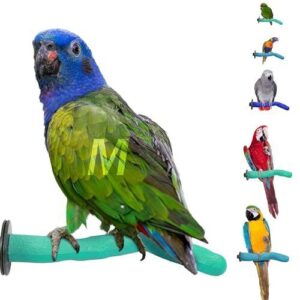
Foot health starts with the right perch—and the Sweet Feet Perch addresses grooming where most cage accessories fail. The dual-surface design pairs a smooth top for comfortable standing with pumice-coated sides that naturally trim overgrown nails and condition beaks during daily movement.
At 1-1/4″ × 12″, the medium size fits Pionus, small Cockatoos, and Mini Macaws without cramping toe spread. The lightweight plastic base—just 6.4 ounces—won’t strain cage bars, and the safety cap prevents exposed metal hardware from injuring your bird during mounting.
| Best For | Medium-sized bird owners looking for a low-maintenance perch that handles nail and beak grooming naturally without vet visits. |
|---|---|
| Primary Material | Plastic and Pumice |
| Design Purpose | Grooming perch |
| Target Bird Size | Medium birds |
| Ease of Cleaning | Easy to clean |
| Assembly Required | Yes |
| Weight | 6.4 ounces |
| Additional Features |
|
- Dual-surface design lets birds self-groom their nails and beaks while perching normally
- Lightweight construction won’t damage cage bars or create instability
- Easy to clean and comes with a safety cap to prevent mounting injuries
- Won’t fit cages with vertical bars or unusual bar spacing without modifications
- The smooth top might be too slippery for some birds while the pumice sides could be too rough for others
- Size might not work for all medium birds—you’ll need to measure your bird’s foot span first
4. Bird Cage Seed Guard Skirt

Containing scattered seeds prevents bacterial buildup and respiratory irritants from accumulating around your bird’s living space. This retrofit plastic skirt fits cages up to 25″ in circumference, catching debris before it hits your floor—though you’ll need 3½” clearance between the cage base and door for proper installation.
At 22″ × 9″ × 5″ and 3 pounds, the guard reduces vacuuming frequency without compromising airflow. Assembly requires patience—some tabs break easily during setup—but most users report capturing seed scatter effectively once mounted correctly.
| Best For | Bird owners who want to cut down on daily cleanup and keep seed mess contained without buying a whole new cage. |
|---|---|
| Primary Material | Plastic |
| Design Purpose | Debris guard |
| Target Bird Size | Multiple sizes |
| Ease of Cleaning | Reduces cleanup time |
| Assembly Required | Yes |
| Weight | 3 pounds |
| Additional Features |
|
- Fits most cages up to 25″ around, so you don’t need to hunt for a specific brand or model
- Cuts down on vacuuming by catching seeds and feathers before they scatter across your floor
- Made from durable plastic that holds up over time and won’t rust or degrade
- Needs 3½” of clearance space between your cage base and door to fit properly
- Assembly instructions aren’t great, and the mounting tabs can snap off if you’re not careful
- Only catches about 25% of debris according to some users, so it helps but doesn’t eliminate mess entirely
5. Metal Bird Cage for Small Birds
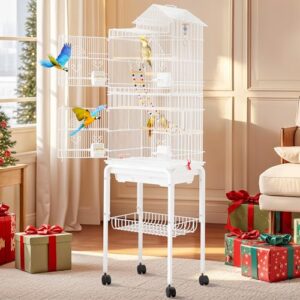
Once seed scatter is controlled, you need a cage that won’t poison your bird. This 62-inch metal option delivers 0.4-inch bar spacing—tight enough for budgies and lovebirds to stay safe—plus powder-coated steel bars that resist chipping when beaks pry at latches.
The four-door design with slide-out tray lets you clean droppings daily without wrestling the entire structure, and 360° wheels move the 17.3″ × 13.8″ footprint easily for weekly deep sanitation. At $72.99, you’re buying verified non-toxic construction without breaking your budget.
| Best For | Bird owners who want a safe, budget-friendly cage for parakeets, budgies, lovebirds, or cockatiels with easy cleaning features and the flexibility to move it around. |
|---|---|
| Primary Material | Metal |
| Design Purpose | Full cage housing |
| Target Bird Size | Small to medium birds |
| Ease of Cleaning | Slide-out tray |
| Assembly Required | Yes |
| Weight | Not specified |
| Additional Features |
|
- 0.4-inch bar spacing keeps small birds secure while the powder-coated steel resists beak damage
- Four-door access with a slide-out tray makes daily cleaning simple without disassembling anything
- Rolling wheels let you reposition the cage for cleaning or rearranging your space
- Wheels aren’t the smoothest—some users report they could roll better
- Assembly instructions can be confusing and take longer than expected
- The stand isn’t heavy-duty enough to withstand households with large dogs or cats that might knock it over
Environmental and Placement Safety Tips

Even the safest cage won’t protect your bird if you place it in the wrong spot. Where you position the cage—and how you manage the surrounding environment—directly impacts your bird’s physical safety and long-term health.
Here are four critical placement and environmental factors that prevent injuries, illnesses, and escapes.
Safe Room Selection and Cage Placement
Your bird’s cage placement determines whether it thrives or struggles daily. Position the cage in a high-traffic room—shoulder height or higher—to satisfy social needs without triggering stress from isolation or chaos. Make certain proper room ventilation while avoiding direct drafts, and maintain consistent temperatures between 65 and 80 degrees Fahrenheit.
Strategic window placement prevents collision risks and escape dangers. Install the cage away from ceiling fans and open windows that create sudden temperature shifts. Choose flooring with non-slip mats beneath the cage to simplify cleaning and prevent spills.
- Install the cage away from ceiling fans and open windows that create sudden temperature shifts
- Choose flooring with non-slip mats beneath the cage to simplify cleaning and prevent spills
- Provide 10 to 12 hours of full-spectrum lighting to support natural circadian rhythms.
Avoiding Household Hazards and Predators
Beyond your cage’s four walls, household hazards for pet birds lurk in every corner—from electrical safety risks posed by exposed cords to toxic substances like Teflon fumes and cleaning agents.
Pet proofing demands window barriers to prevent collisions and predator deterrents that keep curious cats away from vulnerable birds. Secure toxic materials, install fine-mesh screens, and eliminate open water sources to prevent drowning—these steps dramatically reduce escape prevention failures and protect against predatory pets.
Proper Lighting and Temperature Control
Your bird needs stable lighting options and temperature ranges—65 to 80 degrees Fahrenheit with 12 to 14 hours of full-spectrum light daily. Lighting inconsistency and temperature fluctuation stress birds and compromise immunity.
Position avian lighting solutions to provide daylight simulation without direct sun exposure, maintain 40% to 60% humidity control, and guarantee ventilation systems prevent drafts. Proper lighting ranks among critical bird cage safety features.
Regular Inspections and Maintenance Practices
Weekly cage sanitation catches 57% of hazard identification failures before injury occurs. Inspect bar spacing for warping, test locks for secure engagement, and examine welds for metal fatigue every seven days.
Monthly deep cleaning prevents bacterial buildup that compromises bird health. Proper maintenance schedules combined with daily safety checks reduce cage-related injuries substantially—preventive care outperforms reactive treatment every time.
Frequently Asked Questions (FAQs)
What makes a good bird cage?
A well-designed habitat prioritizes bird health through non-toxic materials, proper bar spacing, and secure locks—protecting avian wellness while enabling natural bird behavior.
Cage hygiene features and strategic design prevent common cage design flaws threatening pet safety.
What is the safest bird cage?
Stainless steel cages with powder-coated finishes and species-appropriate bar spacing offer the highest bird cage security and safety with minimal avian health risks.
They have non-toxic finishes and bar spacing—1/2 inch for parakeets, 3/4 inch for conures, 1 inch for macaws.
How can I make my bird cage safer?
Already own a cage? Inspect bar spacing weekly—gaps wider than species-safe ranges cause entrapment.
Add secondary locks for escape prevention, relocate away from drowning hazards and electrocution risks, and eliminate toxic fumes immediately.
What cage accessories are safest for birds?
Choose toxic-free toys, non-slip perches in varied diameters, and easy-clean feeders made from stainless steel or BPA-free plastic.
Bird-safe ladders and durable swings improve enrichment while maintaining cage security through proper birdsafe materials.
How often should I replace cage components?
Like preventive medicine, regular cage maintenance and inspections catch problems early—replace latches showing corrosion immediately, refurbish frames every 3–5 years, and swap cracked plastic components after 1–2 years to prevent bird cage safety risks.
Can I use second-hand or vintage bird cages?
You can use second-hand cages if you thoroughly inspect for bent bars, warping, rust, sharp edges, and toxic materials—but vintage cages often contain lead or zinc, creating severe poisoning risks that outweigh any cost savings.
What emergency supplies should I keep near the cage?
Don’t wing it when trouble strikes—emergency preparedness saves lives.
Keep a bird First Aid Kit, Medical Supplies, 72-hour Emergency Food supply, Water Storage bottles, electrolyte solution, and your veterinarian’s contact details within arm’s reach.
Are travel cages safe for daily use?
Travel cages lack proper bar spacing and ventilation for daily use hazards—cramped quarters stress birds and increase toxic cage materials and poisoning risks.
Invest in permanent housing with escape prevention and safe cage placement instead.
Conclusion
Like a seatbelt in a car, the bird cage safety features to look for become invisible protections—until you need them. Bar spacing prevents fractures, powder-coated steel eliminates toxicity risks, and dual-lock mechanisms stop escape injuries before they happen.
You’ve now got the clinical checklist I use when evaluating enclosures in my practice. Measure twice, purchase once—your bird’s skeletal integrity and neurological health depend on decisions you make today, not corrections you’ll attempt after an emergency.