This site is supported by our readers. We may earn a commission, at no cost to you, if you purchase through links.
 When your bird shows signs of calcium deficiency—muscle tremors, weakness, or egg-laying problems—quick action matters.
You’ll need to provide calcium supplements through oral medications or injections prescribed by an avian vet.
Make certain they’re getting calcium-rich foods like leafy greens and proper UV light exposure for vitamin D synthesis.
Don’t forget to limit high-phosphorus foods that block calcium absorption, which is crucial for rebalancing your feathered friend’s internal chemistry.
While emergency treatment addresses immediate symptoms, long-term success requires understanding the subtle dietary and environmental factors that keep calcium levels stable.
Table Of Contents
- Key Takeaways
- Bird Calcium Deficiency
- Calcium Deficiency Symptoms
- Treatment Options Available
- Dietary Considerations Important
- Maintaining Calcium Levels
- Frequently Asked Questions (FAQs)
- Does a calcium bird supplement help prevent hypocalcaemia?
- How much calcium should I give my hypocalcemic birds?
- What happens if calcium levels are low in birds?
- How do you know if a bird has a calcium deficiency?
- Do birds need a calcium supplement?
- How do you get a good calcium level in a bird?
- How do you treat calcium deficiency in birds?
- What can I give my bird for calcium?
- What are the symptoms of hypocalcemia in birds?
- How long does calcium deficiency recovery take?
- Conclusion
Key Takeaways
- Act fast when you spot symptoms – muscle tremors, weakness, or egg-laying problems require immediate veterinary intervention since calcium deficiency can progress from tremors to life-threatening seizures within days
- Use comprehensive calcium therapy – combine injectable calcium gluconate for severe cases with oral supplements, calcium-rich foods like leafy greens, and proper UVB lighting for vitamin D3 synthesis
- Control phosphorus intake carefully – limit high-phosphorus seeds and grains to maintain the crucial 2:1 calcium-to-phosphorus ratio, as excess phosphorus blocks your bird’s calcium absorption
- Monitor long-term with species-specific care – establish regular vet checkups, blood tests, and personalized nutrition plans since different bird species have varying calcium requirements, especially during breeding seasons
Bird Calcium Deficiency
You’ll notice calcium deficiency symptoms before they become life-threatening if you know what to watch for in your feathered friend.
This condition affects up to 60% of pet parrots and can quickly escalate from muscle tremors to seizures without proper intervention.
Calcium deficiency can progress from tremors to seizures within days—early detection saves lives.
Causes and Risk Factors
Your bird’s calcium deficiency often stems from seed diets lacking essential nutrients.
Excessive phosphorus intake disrupts calcium absorption, while vitamin D deficiency from insufficient sunlight compounds the problem.
Dietary imbalances, parathyroid issues, and hypocalcemia create a perfect storm.
African grey parrots face particularly high risks, with deficiency rates exceeding 50% in captivity, due to calcium deficiency.
Symptoms and Diagnosis
Recognizing calcium deficiency symptoms early can save your bird’s life. Watch for these telltale signs that shouldn’t be ignored.
- Muscle tremors and twitching – Your bird’s muscles contract involuntarily
- Weakness and difficulty walking – Normal perching becomes challenging
- Soft-shelled or malformed eggs – Female birds show reproductive issues
- Seizures or convulsions – Severe hypocalcemia disrupts neural function
- Respiratory distress – Breathing muscles require calcium for proper contraction
Blood tests measuring serum analysis below 8 mg/dL confirm hypocalcemia diagnosis. Clinical signs during physical examination reveal bone deformities and abnormal gait.
Medical imaging through X-rays shows bone density loss, while diagnostic tools help veterinarians assess your bird’s overall calcium status for accurate bird calcium deficiency symptoms identification.
Treatment and Management
Tackle calcium deficiency treatment head-on with targeted calcium therapy and bird rehabilitation protocols.
Injectable calcium gluconate provides immediate relief for severe hypocalcemia, while oral calcium supplementation maintains long-term levels.
Dietary adjustments incorporating calcium-rich foods, supplement options like cuttlebone, and proper avian care with UVB lighting optimize calcium deficiency management for lasting recovery.
Calcium Deficiency Symptoms
Recognizing calcium deficiency symptoms early can save your bird’s life and prevent serious complications.
You’ll notice these warning signs range from subtle muscle tremors to life-threatening seizures that require immediate veterinary attention.
Muscle Tremors and Twitching
Trembling feathers often signal your bird’s calcium levels have dropped dangerously low.
When hypocalcemia strikes, muscle spasms and twitching become the body’s desperate cry for help, as calcium imbalance disrupts normal nerve function and muscle control.
Watch for these warning signs:
- Involuntary muscle tremors affecting wings, legs, or neck areas
- Repetitive twitching that worsens during stress or handling
- Neurological issues progressing from mild spasms to potential seizures
This muscle weakness isn’t just uncomfortable—it’s your bird’s nervous system struggling without adequate calcium for proper nerve transmission and muscle contraction.
Weakness and Lethargy
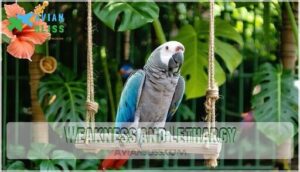
Beyond tremors, you’ll notice your bird moving less and seeming tired all the time.
This weakness and lethargy stems from calcium depletion disrupting nerve signals and muscle function.
Hypocalcemia basically puts your feathered friend’s body into energy-saving mode, causing noticeable physical decline and muscle fatigue.
| Weakness Signs | Energy Levels | Recovery Timeline |
|---|---|---|
| Reduced perching | Sleeping more | 2-4 weeks with treatment |
| Less vocalization | Minimal activity | Daily improvement expected |
| Drooping posture | Poor appetite | Full recovery varies |
| Reluctant movement | Social withdrawal | Depends on severity |
Energy loss becomes obvious when your once-active bird barely moves from their favorite spot, signaling serious calcium deficiency symptoms requiring immediate calcium supplementation.
Difficulty in Standing or Walking
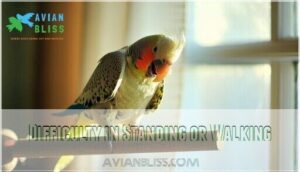
When your bird can’t stand steady, it’s like watching someone walk on ice – they’re wobbly and unsteady.
Calcium deficiency symptoms include muscle weakness and gait problems that make mobility a real challenge.
Hypocalcemia affects nerve signals to muscles, causing balance disorders and bone deformity.
Your feathered friend might stumble or struggle with basic movement tasks, which can be a sign of calcium deficiency.
Egg-Laying Abnormalities
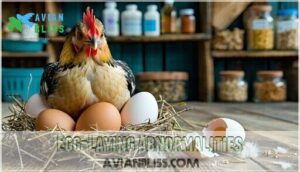
When your feathered friend can’t deliver eggs properly, calcium depletion creates serious reproductive health challenges.
Shell quality suffers dramatically when calcium-deficient birds attempt laying.
- Egg binding – retained eggs cause life-threatening complications
- Soft shells – fragile, malformed eggs indicate severe calcium deficiency symptoms
- Laying cessation – birds stop producing eggs entirely
Consider calcium rich foods and avian calcium supplements for egg binding treatment.
Birds with reproductive tract issues require immediate veterinary attention to prevent further complications.
Seizures or Convulsions
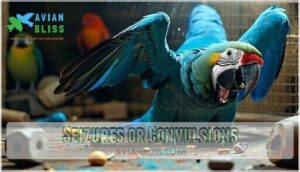
When severe hypocalcemia strikes, seizures become calcium deficiency’s most alarming neurological damage.
When calcium levels crash, your bird’s nervous system can’t function—triggering terrifying seizures that demand immediate veterinary intervention.
These convulsions signal emergency care needs immediately.
Calcium deficiency symptoms escalate when seizure triggers overwhelm your bird’s nervous system.
Proper convulsion management requires understanding avian neurology basics.
Quick calcium deficiency treatment with avian health supplements can prevent life-threatening episodes from recurring.
Treatment Options Available

When calcium deficiency strikes your feathered friend, you’ll need a thorough treatment approach that tackles the problem from multiple angles.
The good news is that with the right combination of supplements, dietary changes, and environmental adjustments, most birds recover well from this serious but treatable condition.
Calcium Supplements
Five calcium supplement types offer different advantages for treating deficient birds. Calcium gluconate provides rapid correction, while cuttlebone offers natural passive supplementation.
Liquid formulations guarantee precise dosing, and calcium carbonate powders mix easily with feed. When selecting a supplement, consider the role of calcium products in maintaining ideal bird health.
- Calcium Types: Gluconate (injectable/oral), carbonate (powder), and lactate (higher absorption)
- Dosage Guidelines: 25-50 mg/kg daily preventive, 50-100 mg/kg for severe cases
- Absorption Factors: Co-administer with vitamin D3, monitor phosphorus levels
Balanced Diet
Creating the right dietary foundation is like building a house – you need solid nutritional blueprints.
A balanced diet prevents calcium deficiency by providing proper nutrient balance and supporting ideal calcium absorption through varied food sources.
| Calcium Sources | Daily Amount | Benefits |
|---|---|---|
| Leafy greens (kale, bok choy) | 2-3 leaves | High bioavailability |
| Cuttlebone | Available always | Self-regulating intake |
| Calcium-rich pellets | 70-80% of diet | Complete avian nutrition |
Your dietary plans should emphasize food variety while maintaining mineral supplements as needed.
Quality calcium supplementation works best when integrated into thorough feeding strategies rather than quick fixes.
Effective calcium management involves understanding proper calcium supplements to support a bird’s overall health.
UV Light Exposure
Natural sunlight provides the gold standard for vitamin D3 synthesis, but UVB lighting offers reliable year-round support.
You’ll need specialized UVB bulbs designed for birds—regular household lights won’t cut it.
Position lights 12-18 inches away for ideal vitamin D production, and most birds benefit from 10-12 hours daily exposure, enhancing calcium absorption substantially and supporting overall bone health management.
Limiting Phosphorus Intake
When balancing your bird’s mineral intake, think of phosphorus as calcium’s pushy neighbor who hogs all the attention.
Excessive phosphorus intake blocks calcium absorption, creating an imbalance that weakens bones.
You’ll need to limit phosphorus-rich foods like seeds and grains while maintaining that golden 2:1 calcium-to-phosphorus ratio for effective mineral management.
Understanding key nutrient deficiencies is vital for addressing calcium deficiency in birds, and recognizing the importance of mineral management and phosphorus intake is crucial.
Monitoring Hormonal Influences
Beyond dietary adjustments, you’ll need to track hormonal influences on calcium metabolism.
Hormone tests reveal whether parathyroid dysfunction or estrogen imbalances affect calcium regulation. Avian endocrinology shows that hormonal balance directly impacts egg production and calcium absorption, making regular monitoring necessary for treating calcium deficiency in birds.
- PTH Level Monitoring – Check parathyroid hormone levels when serum calcium drops below 8.5 mg/dL to identify regulatory dysfunction
- Estrogen Assessment – Monitor estrogen levels in breeding females, as deficiency exacerbates calcium depletion and increases osteoporosis risk
- Corticosterone Testing – Track stress hormones that negatively affect calcium absorption and bone integrity in chronically stressed birds
- Vitamin D Metabolite Analysis – Measure vitamin D levels to guarantee proper hormonal balance for calcium homeostasis
- Serial Endocrine Panels – Schedule regular hormone checks for birds with prior calcium deficiency episodes or reproductive abnormalities
Dietary Considerations Important
Your bird’s recovery depends heavily on what goes in their food bowl every day. Strategic dietary changes work alongside medical treatment to restore calcium levels and prevent future deficiency episodes.
Calcium-Rich Foods

You’ll discover leafy greens like kale and spinach pack serious calcium punch for your feathered friend.
Cuttlebone remains the gold standard – easy to hang and naturally appealing. Crushed eggshells offer budget-friendly calcium rich foods, while mineral blocks provide slow-release nutrition.
Grit supplements aid calcium absorption in birds, supporting effective calcium sources for birds. Understanding natural calcium sources is vital for maintaining a balanced diet for your bird.
Vitamin D Supplementation
You’ll need Vitamin D3 to activate calcium’s power in your bird’s body.
Without adequate vitamin D supplementation, calcium absorption drops substantially, leaving your feathered friend vulnerable to deficiency.
Here’s your vitamin D3 action plan:
- Provide daily UVB lighting for 15-30 minutes to enable natural D3 synthesis
- Choose cholecalciferol (D3) over ergocalciferol (D2) for maximum effectiveness
- Use oil-based liquid D3 drops for better bioavailability than powder forms
- Monitor plasma 25-hydroxyvitamin D levels during annual veterinary check-ups
- Adjust dosage based on sunlight exposure – indoor birds need more supplementation
Understanding Vitamin D3 supplements is essential for effective treatment.
Remember, calcium and vitamin D3 balance is like a dance partnership – one can’t perform without the other in bird calcium deficiency treatment.
Phosphorus Intake Limitation
You’ll want to limit dietary phosphorus since too much blocks your bird’s calcium absorption.
High phosphorus creates mineral interaction problems that worsen calcium deficiency in birds.
Think of it like a seesaw – when phosphorus tips up, calcium absorption falls down.
Keep that calcium ratio at 2:1 by reducing phosphorus-heavy seeds and grains.
This phosphorus restriction helps restore proper calcium and phosphorus balance naturally, ensuring a healthy environment for your bird.
Tailored Management Plans
Each bird’s unique needs demand personalized care beyond cookie-cutter approaches.
Your avian vet will craft specific calcium deficiency treatment protocols based on your bird’s species, age, and health status.
Consider these customized management essentials:
- Personalized Care protocols matching your bird’s specific calcium requirements and absorption patterns
- Calcium Monitoring through regular blood tests to track treatment progress and adjust supplementation
- Dietary Adjustments customized to your bird’s preferences while ensuring ideal bird nutrition balance
- Health Checkups scheduled according to your bird’s risk factors and calcium supplementation response rates
Maintaining Calcium Levels

Once you’ve successfully treated your bird’s calcium deficiency, you’ll need to maintain those healthy levels for the long haul.
Think of it like keeping your car’s oil topped up – regular maintenance prevents bigger problems down the road.
Regular Veterinary Check-Ups
Establishing consistent veterinary care creates your best defense against calcium deficiency complications.
Your avian vet can perform blood tests to monitor calcium levels before symptoms appear, catching problems early when they’re easier to treat.
These regular checkups allow experts to adjust your bird’s calcium supplementation and diet based on actual test results, not guesswork.
Regular visits also involve creating a personalized veterinary care plan to guarantee your bird receives the best health support with a well-planned approach to prevent complications.
Hormonal Monitoring
While vet visits track your bird’s overall health, hormone tests reveal the hidden forces driving calcium metabolism.
Breeding females face unique challenges as reproductive hormones can dramatically spike calcium demands, sometimes depleting reserves faster than you’d expect.
Here’s what effective hormonal monitoring involves:
- Baseline Hormone Tests – Establish normal levels before breeding season hits
- Calcium Level Tracking – Monitor serum calcium during peak reproductive periods
- Breeding Season Surveillance – Watch for calcium deficiency symptoms when hormones surge
- Egg Production Monitoring – Count clutches and assess shell quality indicators
- Recovery Period Assessment – Test hormone balance after breeding cycles end
Your monitoring systems should catch hormonal influences before they trigger hypocalcemia treatment needs.
Bird health depends on understanding how hormone balance affects calcium metabolism – think of it as watching the puppet strings that control your feathered friend’s calcium story.
Outdoor Exposure or UV Lighting
Sunshine therapy offers your feathered friend a natural vitamin D boost that’s essential for calcium absorption.
You’ll need 15-30 minutes of direct sunlight or full-spectrum UV lighting daily. Think of it as nature’s pharmacy—UVB exposure triggers vitamin D synthesis, which acts like a key releasing calcium’s benefits in your bird’s body.
| UV Light Option | Benefits |
|---|---|
| Natural Sunlight | Free vitamin D synthesis, natural behavioral stimulation |
| UVB Lighting Systems | Year-round consistency, weather-independent access |
| Full-Spectrum Bulbs | Mimics natural conditions, supports circadian rhythms |
| Outdoor Aviaries | Maximum UVB exposure, environmental enrichment |
| UV Light Therapy Sessions | Controlled dosing, targeted treatment approach |
Dietary Adjustments
You’ll need to make smart swaps in your bird’s meal plan to boost calcium absorption.
Replace high-phosphorus seeds with calcium rich foods like leafy greens and mineral blocks.
Food variety matters – rotate calcium sources to prevent boredom while maintaining nutrient balance.
Dietary planning should include calcium supplementation through bird diet supplements when natural options fall short, supporting effective calcium deficiency prevention.
Species-Specific Calcium Needs
Different bird species have varying calcium requirements that you’ll need to match for ideal health.
African Greys need higher calcium intake due to their dense bone structure, while cockatiels require only 0.3-0.35% dietary calcium.
Budgerigars need 0.85% during egg-laying, compared to chickens requiring 3.3%.
Understanding these species differences in calcium absorption and avian calcium metabolism helps prevent calcium deficiency in birds through proper supplementation.
Maintaining proper calcium homeostasis is essential for preventing calcium-related disorders in birds.
Frequently Asked Questions (FAQs)
Does a calcium bird supplement help prevent hypocalcaemia?
Yes, calcium supplements effectively prevent hypocalcemia in birds.
They’re essential for maintaining proper blood calcium levels, especially during egg-laying periods when calcium demands increase substantially.
Preventing dangerous neurological and musculoskeletal complications is crucial, and calcium supplements play a key role in this process.
How much calcium should I give my hypocalcemic birds?
Picture your feathered friend’s fragile bones crying for calcium‘s healing touch.
You’ll need veterinary guidance for exact dosing, but injectable calcium gluconate (10%) treats acute cases while oral supplements provide ongoing support.
What happens if calcium levels are low in birds?
Low calcium in birds triggers muscle weakness, tremors, and seizures. You’ll notice soft-shelled eggs, difficulty walking, and lethargy. Severe cases cause respiratory distress and convulsions requiring immediate veterinary intervention.
How do you know if a bird has a calcium deficiency?
Ironically, your feathered friend might seem perfectly healthy while calcium silently wreaks havoc beneath the surface.
You’ll spot muscle tremors, weakness, soft-shelled eggs, seizures, difficulty walking, and lethargy.
Blood tests confirm deficiency below 8 mg/dL.
Do birds need a calcium supplement?
Most birds benefit from calcium supplements, especially seed-eating species and egg-laying females. Since seed diets lack sufficient calcium and 60% of pet parrots show deficiency, supplementation helps prevent serious health issues.
How do you get a good calcium level in a bird?
You’ll achieve ideal calcium levels by providing daily cuttlebone access, calcium-rich leafy greens, proper 2:1 calcium-to-phosphorus ratio diet, UVB lighting for vitamin D3 synthesis, and regular veterinary monitoring.
How do you treat calcium deficiency in birds?
Don’t let calcium deficiency clip your bird’s wings.
Administer calcium gluconate injections for severe cases, supplement with cuttlebone or calcium powder.
Provide UVB lighting for vitamin D3 synthesis, and consult your avian veterinarian immediately.
What can I give my bird for calcium?
You can offer your bird cuttlebone, crushed eggshells, leafy greens like kale, calcium powder supplements, or mineral blocks. These provide essential calcium for strong bones and healthy egg production.
What are the symptoms of hypocalcemia in birds?
When calcium levels drop dangerously low, you’ll notice muscle tremors, weakness, and difficulty walking.
Watch for soft-shelled eggs, seizures, breathing trouble, and your bird stumbling around like it’s had one too many.
How long does calcium deficiency recovery take?
Recovery time varies widely based on severity and treatment response.
Mild cases typically improve within days to weeks with proper supplementation and diet changes.
Severe hypocalcemia may require weeks to months for complete recovery.
Conclusion
Like a bird’s delicate balance between flight and fall, successful bird calcium deficiency treatment requires precise coordination of multiple factors.
You’ll find that combining immediate veterinary intervention with long-term dietary management creates the strongest foundation for recovery.
Remember that calcium supplements alone won’t solve the problem—you need proper vitamin D exposure, phosphorus control, and species-specific nutrition plans.
With consistent monitoring and environmental adjustments, you can prevent future calcium crises and keep your feathered companion healthy and strong.
- https://www.merckvetmanual.com/exotic-and-laboratory-animals/pet-birds/nutritional-diseases-of-pet-birds
- https://www.versele-laga.com/en/gb/for-your-animal/cage-and-aviary-birds/care/how-to-recognise-and-avoid-calcium-deficiency-in-birds
- https://lafeber.com/pet-birds/species/african-grey-parrot/
- https://jwpr.science-line.com/attachments/article/24/J%20World's%20Poult%20Res%204(2)%2030-36,%202014.pdf
- https://www.tvmf.org/articles/egg-binding-birds/