This site is supported by our readers. We may earn a commission, at no cost to you, if you purchase through links.
A Northern Cardinal lands at your feeder just after sunrise, and you miss the shot because you weren’t looking out the window at that exact moment. This scenario repeats itself dozens of times each week for backyard birders who rely on chance encounters.
Bird cameras for backyard bird watching solve this problem by recording activity 24 hours a day, capturing species you didn’t know visited your yard and behaviors you’d never witness in person.
Modern cameras detect motion in 0.2 seconds, record in 4K resolution, and identify species through AI—technology that transforms casual observation into serious documentation. The right camera setup turns your backyard into a research station where you won’t miss another rare visitor or interesting interaction.
Table Of Contents
Key Takeaways
- Modern bird cameras with 0.2-second trigger speeds and 4K resolution capture species and behaviors you’d miss through manual observation, turning casual backyard watching into documented wildlife research.
- Smart feeders with AI identification recognize over 6,000 species automatically and send real-time alerts to your phone, eliminating the guesswork of what visited while you were away.
- Mount your camera 1.5 to 2.5 meters high, facing north when possible, and keep it 1.5 to 4 meters from feeders to balance image quality with minimizing bird disturbance.
- Solar-powered trail cameras with WiFi connectivity eliminate battery swaps and SD card retrieval, letting you download footage remotely while maintaining weeks of continuous operation.
Essential Features of Bird Cameras for Backyards
You can’t capture great bird footage without the right camera features. The difference between blurry shots and crystal-clear images comes down to a few key capabilities that matter most in your backyard.
A quality bird watching camera trap combines fast autofocus, high resolution, and weather resistance to capture those fleeting moments.
Here’s what you need to look for before you buy.
Night Vision Capabilities
Night vision transforms your backyard into a 24-hour bird observatory. Infrared illumination extends your trail camera’s WiFi 4K 64MP detection range up to 30 meters, capturing clear night footage without disturbing roosting birds. Most wildlife monitoring systems rely on low-light performance through IR LEDs rather than thermal imaging. The use of sophisticated methodological rigor can improve the accuracy of bird monitoring systems.
- 850–940 nm wavelengths provide invisible illumination for backyard bird monitoring
- Wide-aperture lenses (f/1.8–f/2.0) collect more ambient light during dusk
- Night mode processing reduces grain while preserving feather detail
Motion Detection and Trigger Speed
Once darkness falls, you’ll want instant alerts when birds arrive at dawn. Trail Camera WiFi 4K 64MP models detect motion in 0.2 to 0.5 seconds—fast enough to catch warblers landing on feeders. Most wildlife monitoring systems use passive infrared sensors that spot heat changes, while programmable detection zones help you avoid false triggers from swaying branches. To better understand the terminology used in bird watching, you can research language patterns to improve your knowledge.
| Feature | Budget Models | Premium Systems |
|---|---|---|
| Trigger Speed | 0.4–0.5 seconds | 0.2–0.3 seconds |
| Detection Range | 10–15 meters | 20–30 meters |
| Zone Control | Fixed field | Adjustable zones |
| False Trigger Rate | 15–25% | 5–10% |
| Sensor Calibration | Manual only | Auto + manual |
You can fine-tune sensitivity settings to match your backyard’s bird traffic. Higher motion sensor settings catch more visits but may record wind-blown leaves. Camera traps with zone-based detection let you focus on perches and feeders, cutting irrelevant clips. Pre-trigger buffering captures the moment before a bird enters the frame—perfect for identifying fast sparrows.
Weather Resistance and Durability
You need cameras built to survive months of rain, snow, and summer heat without fading. Look for IP66 rating or higher—that’s protection against water jets and dust intrusion. Weather sealing with rubber gaskets keeps moisture out of battery compartments, while UV-stable housings resist cracking under direct sun.
- Polycarbonate or aluminum construction withstands impacts from falling branches
- Operating ranges from -20°C to 60°C handle frozen mornings and scorching afternoons
- Sealed lens covers prevent condensation that blurs your shots
- Stainless steel mounts resist rust in humid or coastal backyards
Connectivity (WiFi, Bluetooth, App Support)
After weatherproofing, you’ll want cameras that talk to your phone without dragging an SD card inside every week. Most wireless cameras connect over 2.4 GHz WiFi—better range through walls than 5 GHz—though check your router settings before setup. Smart bird feeder cameras pair via Bluetooth first, then switch to WiFi for downloading clips and pushing real-time alerts when birds land.
| Feature | What It Does |
|---|---|
| 2.4 GHz WiFi | Longer range, penetrates obstacles better for backyard distances |
| Bluetooth pairing | Wakes camera at close range, saves battery during standby |
| Mobile apps | Live preview, species ID notifications, clip review from anywhere |
| Cloud storage | Automatic upload to remote servers; paid tiers extend retention days |
| Local SD backup | Saves footage on-device when internet drops or cloud quota fills |
WiFi trail cameras like the GardePro E6 create a short-range hotspot you connect to directly—no home network required if you’re mounting deep in the yard. App connectivity means you adjust motion zones and download videos without climbing a ladder, while remote access lets you check feeder traffic from work or vacation.
Cloud storage adds a safety net, uploading clips automatically so a stolen camera doesn’t erase your footage. Free tiers cover basics; paid plans access weeks of history and higher resolution uploads.
Power Options and Battery Life
Most trail cameras run on AA or AAA batteries—lithium packs stretch life to six months in cold weather. Solar-powered cameras keep rolling without battery swaps if sunlight hits the panel daily, while rechargeable Li-ion cells need periodic charging but outlast disposables over years. Night vision and high resolution drain power fast, so tweak settings for energy efficiency.
For setups near bird feeders for seniors, a 3.7 to 5.5 watt solar panel can power your camera for six to twelve months with minimal maintenance.
Solar trail cameras with solar panels and solar charging offer long-lasting power between recharge options.
Types of Bird Cameras for Backyard Watching
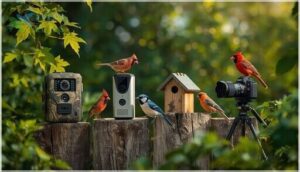
You have several camera options to choose from depending on your budget and monitoring goals. Each type offers different features that suit specific backyard setups and bird-watching needs.
Let’s look at the four main categories you’ll encounter when shopping for a bird camera.
Before diving into those categories, it’s worth noting that some advanced models can even detect what birds eat hummingbird feeders and other unexpected feeder visitors.
Trail Cameras
You want coverage without dragging power cables across your yard. Trail cameras solve that. Models like the Trail Camera WiFi 4K 64MP deliver sharp images through quality camera lens quality and fast trigger modes—GardePro units hit 0.1-second speeds.
Night vision range reaches 100 feet with infrared. Solar trail cameras pair panels with rechargeable batteries for weeks of battery efficiency.
WiFi trail cameras let you download footage remotely via apps.
Pair them with bird feeders designed for wildlife photography to create a reliable setup that attracts subjects and records their behavior automatically.
Smart Bird Feeder Cameras
Smart bird feeders merge a feeder design with integrated cameras and AI recognition. Models like Bird Buddy and Birdfy identify over 6,000 bird species automatically through app notifications. You get 1080p to 2K camera resolution, WiFi trail camera connectivity, and solar charging.
These smart bird feeders support wildlife conservation by logging visits, creating timestamped species records, and enabling community sharing for backyard bird watching.
Solar-Powered Bird Cameras
Solar powered cameras free you from outlet hunting and extension cord hassles. These bird cameras harvest energy through solar panels, storing charge in internal batteries for continuous operation.
You’ll need 4 to 6 hours of direct sunlight daily for reliable performance. Panel orientation matters—angle your solar trail camera southward at your latitude for best charging efficiency. Battery life extends through the night using stored solar power.
Budget-Friendly Security Cameras for Birds
Camera cost drops sharply when you repurpose security hardware for backyard bird watching. Models like Wyze Cam Outdoor v2 and Blink Outdoor 4 deliver 1080p resolution and infrared night vision under $80.
You’ll need to adjust motion settings for small bird species—default sensitivity often misses feeder activity. These WiFi cameras lack AI identification but capture clear plumage detail at typical feed placement distances of 1 to 3 meters.
Top 5 Bird Cameras for Backyard Bird Watching
You’ve narrowed down what you need in a bird camera. Now it’s time to look at actual models that can handle your backyard conditions.
Here are five cameras that deliver reliable performance for watching and recording birds.
1. Punvoe Wifi Trail Camera
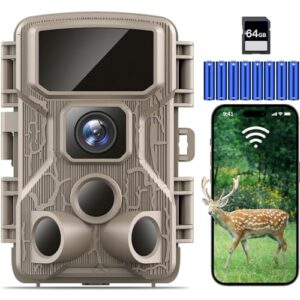
You’ll find serious capabilities packed into the Punvoe Camera for backyard bird watching. This WiFi trail camera captures 4K video and 64-megapixel stills with a 130-degree lens—ideal for recording detailed bird behavior at feeders or perches. The 0.1-second trigger speed won’t miss quick movements during wildlife observation.
Forty-five infrared LEDs provide 100-foot night vision without spooking nocturnal visitors. You can adjust camera placement using the included mount, then control settings remotely through the TrailCam GO app.
Image quality stays sharp in rain thanks to IP67 waterproofing. Outdoor camera installation takes minutes with the mounting strap.
| Best For | Wildlife enthusiasts and property owners who want high-resolution footage of backyard animals with remote viewing capabilities. |
|---|---|
| Video Resolution | 4K |
| Night Vision | 45pcs LEDs |
| Weatherproof Rating | IP67 |
| Connectivity | WiFi |
| Trigger Speed | 0.1s |
| Power Source | 8 batteries |
| Additional Features |
|
- 4K video with 64MP photos and fast 0.1-second trigger captures sharp images of quick-moving wildlife
- WiFi app control lets you adjust settings and download footage without disturbing the camera location
- 45 no-glow infrared LEDs provide 100-foot night vision without scaring away nocturnal animals
- WiFi range maxes out around 10-45 feet, limiting how far you can place the camera from your phone
- Battery life can be surprisingly short with some users reporting only 2 hours of use
- Connection stability issues and app glitches have frustrated multiple users trying to access footage
2. GardePro Trail Camera
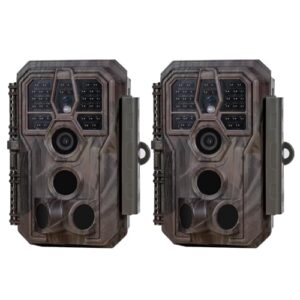
GardePro’s E5S trail camera brings 64-megapixel image quality and 1296P video to your backyard setup. Three PIR sensors deliver 0.1-second trigger speed across a 100-foot detection range—fast enough to catch warblers and finches mid-flight during wildlife observation.
No-glow infrared LEDs provide night vision without disturbing roosting birds. The IP66-rated housing withstands rain and temperature swings, while eight AA batteries support weeks of motion detection recording.
You’ll need an SD card up to 512GB for extended outdoor camera installation at feeders or birdbaths.
| Best For | Wildlife enthusiasts and backyard birders who want fast, high-resolution capture of animals and birds without spending on cellular subscriptions. |
|---|---|
| Video Resolution | 1296P HD |
| Night Vision | 100ft no-glow |
| Weatherproof Rating | IP66 |
| Connectivity | Wired only |
| Trigger Speed | 0.1s |
| Power Source | 8 AA batteries |
| Additional Features |
|
- 0.1-second trigger with three PIR sensors catches fast-moving wildlife before they leave the frame
- 100-foot no-glow night vision records nocturnal visitors without spooking them with visible light
- IP66 waterproof rating and long AA battery life handle weeks of outdoor use in rain or temperature swings
- No WiFi or cellular means you have to physically retrieve the SD card to view footage
- Some users report inconsistent night vision quality, especially in fog or heavy moisture
- Instructions skip guidance on rechargeable batteries, leaving you to guess compatibility and runtime
3. Smart Bird Feeder Camera
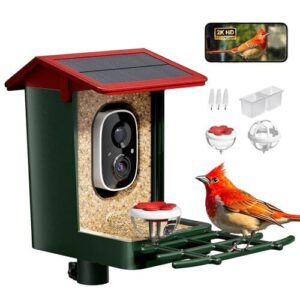
HEAPETS offers 2K HD video streaming combined with AI recognition that identifies over 10,000 bird species during your backyard bird watching sessions. This smart bird feeder integrates a built-in solar panel to maintain continuous operation without frequent battery swaps.
The 360-degree perch design accommodates small and medium-sized birds, while weatherproof camera durability withstands outdoor conditions year-round.
You’ll receive instant alerts through the smartphone app when visitors arrive at the feeder, though bird species identification requires a subscription after the first month.
| Best For | Bird enthusiasts who want to watch and identify backyard visitors in real-time without constantly checking the feeder in person. |
|---|---|
| Video Resolution | 2K HD |
| Night Vision | Not specified |
| Weatherproof Rating | Weatherproof |
| Connectivity | WiFi/Solar |
| Trigger Speed | Instant alerts |
| Power Source | Solar-powered |
| Additional Features |
|
- 2K HD video with AI recognition of 10,000 bird species turns your feeder into an interactive learning experience
- Solar-powered design means you won’t be climbing ladders to swap batteries every few weeks
- Instant smartphone alerts let you catch birds as they arrive, so you never miss interesting visitors
- AI bird identification requires a paid subscription after the first free month
- Feeder design limits you to small and medium-sized birds, so larger species won’t be able to use it
- Extreme weather can drain the battery faster, even with the solar panel helping out
4. Birdfy Smart Bird Feeder Camera
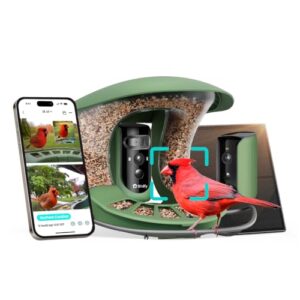
The Birdfy 2 Smart Bird Feeder features three lenses that simultaneously capture different angles. You can observe birds feeding from multiple perspectives using the 2K close-up lens alongside 1080p wide-angle and side-angle cameras.
The AI Recognition system identifies over 6,000 species during Wildlife Monitoring sessions. Solar Power ensures your Bird Watching Equipment operates without the need for battery changes.
The feeder streams live video to up to 20 guests via the Birdfy app. Bird Identification activates automatically when motion triggers recording.
The Feeder Design supports various seed types and integrates seamlessly with 2.4GHz WiFi networks.
| Best For | Bird enthusiasts who want detailed multi-angle footage and automated species identification without dealing with battery maintenance. |
|---|---|
| Video Resolution | 2K/1080P |
| Night Vision | HD night vision |
| Weatherproof Rating | Weatherproof |
| Connectivity | WiFi 2.4GHz |
| Trigger Speed | AI tracking |
| Power Source | Solar-powered |
| Additional Features |
|
- Triple-camera setup captures close-ups, wide angles, and side views simultaneously so you don’t miss any bird activity
- AI identifies over 6,000 bird species automatically and stores the results with your video clips
- Solar-powered operation means no battery swaps or downtime once you’ve got it set up
- Only works with 2.4GHz WiFi, so you’ll need to make sure your network supports that frequency
- At $420, it’s a significant investment compared to basic bird feeders or simpler camera models
- Some buyers report customer service issues and occasional missing parts in their orders
5. LantooCam Solar Trail Camera
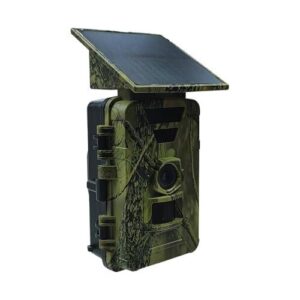
The LantooCam Solar Trail Camera records 5K video and 60MP photos through a 120-degree lens. Solar Power keeps the 5200mAh battery charged during extended Wildlife Observation sessions. The 940nm infrared LEDs support nighttime Bird Behavior documentation up to 65 feet without disturbing roosting species.
WiFi connectivity transfers Image Quality files to your phone without removing the 64GB card. This Solar Trail Camera achieves IP66 Weather Resistance for year-round Outdoor Surveillance.
Trail Camera enthusiasts value the 0.2-second trigger speed that captures rapid feeder visits.
| Best For | Wildlife watchers and backyard birders who want hands-off monitoring with solar power and high-resolution recording without constant maintenance. |
|---|---|
| Video Resolution | 5K |
| Night Vision | 120° 65ft range |
| Weatherproof Rating | IP66 |
| Connectivity | WiFi |
| Trigger Speed | Motion activated |
| Power Source | Solar + battery |
| Additional Features |
|
- Solar panel and 5200mAh battery keep it running for weeks, even in cloudy weather, with backup AA slots for extra peace of mind.
- 5K video and 60MP photos capture sharp details during the day, and the 940nm infrared works well at night without spooking animals.
- WiFi lets you check footage and adjust settings from your phone without climbing up to pull the SD card every time.
- Some users report video files getting corrupted or SD cards failing after a few weeks of heavy use.
- WiFi range is limited to about 45 feet, so you need to stay pretty close to connect and download clips.
- Settings can be finicky and might need tweaking to avoid false triggers or missed shots, especially if you’re new to trail cameras.
Tips for Installing and Using Bird Cameras
Getting your bird camera up and running isn’t complicated, but a few smart choices make all the difference. Where you mount it, how you adjust the sensors, and which settings you tweak will determine whether you capture stunning footage or just empty frames.
Here’s what you need to know to set up your camera the right way from day one.
Optimal Camera Placement and Mounting Options
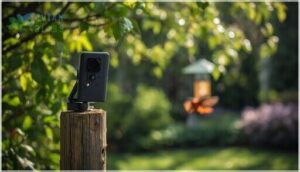
Getting your bird camera in the right spot makes the difference between grainy bird butts and stunning close-ups. You want that sweet spot where birds feel at home and your footage looks sharp. Here’s what actually works for backyard bird monitoring:
- Mount cameras 1.5 to 2.5 meters high and about 1.5 to 4 meters from feeders—close enough for detail but far enough that birds don’t spook.
- Angle slightly downward toward feeding areas to catch birds moving through the frame’s center, boosting motion detection accuracy.
- Face north when possible to dodge harsh backlighting from morning and evening sun that turns your subjects into silhouettes.
- Skip direct nest placement—studies show cameras too close mess with breeding success, so keep your distance and let nature do its thing.
Use adjustable brackets so you can tweak mounting height and field view adjustment during the first few days without constantly bothering your feathered visitors. Trim any vegetation right in front of the lens—swaying leaves trick motion sensors into thinking every breeze is a rare warbler.
For camera angle optimization and sun exposure management, reassess your setup each season since the sun’s path shifts and what worked in summer might blast your sensor come winter. Stable shade beats patchy light every time for consistent outdoor camera performance.
Bird disturbance minimization isn’t just ethical—it’s practical. If birds won’t visit, your wildlife camera reviews will be pretty boring slideshows of empty feeders and questioning squirrels.
Ethical camera placement isn’t just good for birds—if they won’t visit, your footage becomes a documentary of empty feeders and curious squirrels
Setting Up Motion Detection Zones
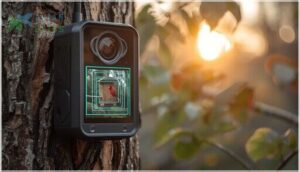
Before you stick your camera on a tree and call it done, zone configuration matters more than you’d think. Draw detection boxes around your feeder and perch—not the whole yard—to cut false alerts from swaying branches.
Adjust motion sensitivity higher for small birds but watch for trigger speed lag. Most wildlife camera reviews skip this step, then wonder why their night vision logs record squirrels and wind instead of actual backyard bird monitoring gold.
Using Apps for Remote Bird Monitoring
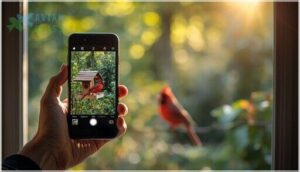
Most bird monitoring systems depend on WiFi connectivity to access remote alerts and app features. You’ll get real-time alerts when a bird lands—no more staring out the window hoping something shows up.
- Camera controls let you snap photos or start recording from your phone while you’re miles away
- Bird tracking logs species, visit times, and frequency so you can spot patterns in your yard
- Data analytics dashboards show which birds dominate your feeder and when they’re most active
Maintaining and Protecting Outdoor Cameras
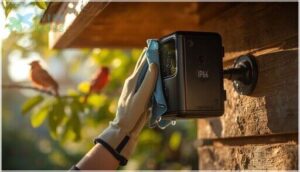
Your outdoor cameras won’t last if you ignore basic upkeep. Clean lenses every 3 to 4 months with a microfiber cloth to remove pollen and water spots. Check camera housing for cracks and moisture buildup monthly.
Weather resistant cameras with IP66 rating handle rain, but UV exposure still yellows plastic over time. Mount units under eaves for weather protection.
Update WiFi camera firmware every 2 to 3 months as a cybersecurity measure against vulnerabilities.
Frequently Asked Questions (FAQs)
How do I attract more birds to my camera?
You’ll see more activity when feeders sit 5–6 feet high near cover—about 10–15 feet from bushes. Add native plants and a birdbath with moving water for year-round backyard birdwatching success.
Can bird cameras identify species automatically?
Many modern cameras feature AI recognition for auto detection, but species accuracy varies widely. AI bird identification works best with common species in good lighting. Always verify results—AI technology learns over time but isn’t perfect yet.
What SD card size works best for recording?
Your camera’s recording modes determine storage needs. For 4K video and 64MP photos, start with 32GB cards; upgrade to 64GB when shooting HighRes images or clear night footage regularly to maintain proper storage management.
Do bird cameras disturb or scare away birds?
Poorly placed systems trigger alarm responses in sensitive species, but most backyard setups cause minimal stress.
Birds habituate quickly when you install cameras at safe distances, avoid repeated visits, and choose quiet, camouflaged designs.
How do I prevent squirrels from blocking cameras?
Position your camera at least 10 feet from trees and 5 feet high to limit squirrel access.
Install smooth dome baffles on mounting poles and use metal lockboxes to prevent chewing and lens obstruction.
Conclusion
Your backyard becomes a stage where every bird plays a part you’ll finally see. Bird cameras for backyard bird watching eliminate guesswork and capture species you’d otherwise miss entirely.
Install one near your feeder, adjust the motion zones, and let technology handle the surveillance. You’ll document behaviors most birders never witness and build a visual record of every visitor.
No more wondering what landed while you were away—you’ll have proof of everything.
- https://betterwithbirds.com/blogs/birding-gear/best-bird-feeder-cameras
- https://reolink.com/blog/bird-watching-cameras-buying-setup-guide/
- https://www.facebook.com/groups/PunkrockGardeningAndBirdwatching/posts/3355573064578588/
- https://www.walmart.com/ip/GardePro-E6-Trail-Camera-WiFi-Bluetooth-24MP-1296P-Game-Camera-Glow-Night-Vision-Motion-Activated-Waterproof-Wildlife-Deer-Scouting-Hunting-Property/629683739
- https://play.google.com/store/apps/details?id=com.birdbuddy.app&hl=en_US