This site is supported by our readers. We may earn a commission, at no cost to you, if you purchase through links.
 Bird conservation awareness programs offer you hands-on ways to protect threatened species while connecting with fellow nature enthusiasts.
You can join organizations like BirdLife International, which coordinates efforts across 100+ countries, or participate in local community initiatives through groups like the Northern Virginia Bird Alliance.
These programs include weekend birding festivals, expert-led workshops, citizen science projects, and habitat restoration volunteer opportunities.
You’ll find options ranging from beginner-friendly bird counts to advanced policy advocacy work, whether you prefer donating to reputable research labs, attending educational webinars, or organizing community events, there’s a conservation role that matches your interests and schedule perfectly, allowing you to make a difference in threatened species protection and habitat restoration.
Table Of Contents
- Key Takeaways
- Leading Bird Conservation Awareness Programs
- Ways to Support Bird Conservation Efforts
- Engaging in Bird Conservation Education
- Raising Awareness and Inspiring Action
- Advocating for Bird-Friendly Policies and Habitats
- Frequently Asked Questions (FAQs)
- How much does bird conservation program participation cost?
- What age groups can join conservation awareness programs?
- Do programs offer certification or continuing education credits?
- How are program effectiveness and conservation outcomes measured?
- What equipment or materials are needed for participation?
- Conclusion
Key Takeaways
- You can participate in bird conservation through diverse programs ranging from citizen science projects and habitat restoration to educational workshops and policy advocacy, with options available for all experience levels and time commitments.
- Organizations like BirdLife International, National Audubon Society, and local community groups offer hands-on opportunities including weekend birding festivals, expert-led walks, and volunteer restoration projects that connect you with fellow nature enthusiasts.
- You’ll make measurable impact through activities like contributing to eBird data collection, joining Christmas bird counts, donating to reputable conservation charities, and advocating for legislation that protects threatened species and their habitats.
- Educational resources including live webinars, recorded sessions, and community events help you develop identification skills, learn conservation techniques, and raise awareness through social media campaigns and youth education initiatives.
Leading Bird Conservation Awareness Programs
You’ll find dozens of organizations working to protect birds, from massive international groups like BirdLife International to local community chapters that meet in your neighborhood library.
These programs range from hands-on habitat restoration projects to educational workshops that teach you how to identify endangered species in your own backyard.
National and International Organizations
You can support bird conservation through established organizations that offer diverse awareness programs and funding mechanisms.
The National Audubon Society, American Bird Conservancy, and Cornell Lab of Ornithology lead conservation strategies through research initiatives and policy advocacy.
These global partnerships coordinate large-scale efforts, with BirdLife International managing projects across 100+ countries and connecting over 120 member organizations worldwide, which is a key part of conservation strategies.
Regional and Community-Based Initiatives
Regional groups transform bird conservation through grassroots action.
Organizations like the Northern Virginia Bird Alliance connect community members with local birding opportunities and habitat restoration projects.
These initiatives create lasting impact through:
- Community Engagement events that attract thousands annually
- Citizen Science programs collecting migration data
- Policy Advocacy protecting wetlands and nesting areas
- Conservation Outreach reaching rural landowners and farmers
Maryland also implements conservation education initiatives that align with state standards.
Educational Workshops and Public Events
Educational workshops and public events transform bird conservation from abstract concepts into hands-on experiences.
You’ll find organizations hosting weekend birding festivals that combine expert-led walks with interactive learning stations.
These gatherings offer workshop accessibility through recorded sessions and online learning materials, ensuring everyone can participate regardless of schedule constraints.
Event engagement peaks when you contribute program suggestions, helping shape future educational programs that address your community’s specific conservation needs and interests, and this leads to hands-on experiences, workshop accessibility, expert-led walks, and community’s specific conservation needs.
Ways to Support Bird Conservation Efforts
You can make a real difference for bird populations by taking action in your own community and beyond.
Whether you’re donating to established organizations, getting your hands dirty with habitat work, or joining the growing movement of citizen scientists, there are concrete ways to contribute to conservation efforts that actually matter.
Donating to Reputable Charities and Labs
Financial contributions serve as the lifeblood of bird conservation charities worldwide.
Every donation plants seeds of hope for tomorrow’s birdsongs
When you’re ready to donate, check Charity Navigator ratings to verify your philanthropy makes maximum donation impact.
Top-rated bird conservation donations support critical research funding at labs studying migration patterns and disease prevention.
Consider legacy giving for long-term conservation goals, while enjoying potential tax deductions that make your generosity even more rewarding, ultimately supporting the cause with maximum donation impact.
Volunteering for Habitat Restoration Projects
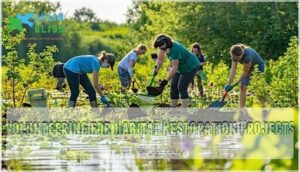
Hands-on habitat restoration puts you directly in the field, making a real difference for bird populations.
Transform your backyard into a bird sanctuary through direct conservation action
You’ll learn proper native plantings techniques, invasive removal methods, and how to build nesting structures during volunteer training sessions.
These conservation projects improve water quality and provide essential bird habitat protection.
Selecting the right restoration project tools is essential for effective habitat management.
Many organizations offer weekend restoration events where community engagement creates lasting conservation efforts that benefit local ecosystems.
Participating in Citizen Science and Bird Counts
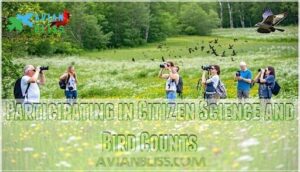
Participation transforms everyday observations into valuable conservation data.
You can contribute through eBird submissions, documenting species during casual walks or dedicated bird surveys.
The Christmas Count engages thousands annually in thorough bird monitoring across communities.
Programs like Monitoring Raptors provide volunteer training for specialized data analysis.
These citizen science initiatives require minimal experience—smartphone apps guide identification while structured protocols guarantee accuracy.
Consider using the eBird mobile app for convenient data submissions.
Your contributions join millions of observations that inform critical conservation decisions and habitat protection efforts.
Joining Local Birding and Conservation Groups
Local groups create lasting friendships while advancing bird conservation awareness through shared passion.
You’ll discover mentorship opportunities from experienced birders who share identification skills and habitat knowledge.
Group benefits include organized field trips, skill sharing sessions, and collective local advocacy efforts.
These bird community networks amplify conservation initiatives through coordinated citizen science projects, creating measurable community impact that protects regional bird populations.
Engaging in Bird Conservation Education
You can substantially expand your bird conservation knowledge through structured learning opportunities offered by organizations like NVBA and major conservation groups.
These educational programs range from live workshops and webinars to recorded sessions you can access anytime, giving you flexible ways to deepen your understanding of regional birds and their habitats, which can help you substantially expand your bird conservation knowledge through structured learning opportunities.
Attending Classes, Webinars, and Workshops
Beyond just reading about birds, immersing yourself in live bird education programs offers hands-on learning that books can’t match.
These interactive sessions connect you with experts and fellow enthusiasts while building practical skills.
Consider these workshop benefits and class content options:
- Field identification workshops – Learn to distinguish similar species through sight and sound
- Habitat restoration classes – Discover native plant selection and ecosystem management techniques
- Bird photography webinars – Master camera settings and ethical wildlife photography practices
- Migration tracking seminars – Understand seasonal patterns and citizen science monitoring methods
- Conservation policy workshops – Explore legislation impacting local bird populations
Event registration typically closes two hours before start times, so sign up early.
Many organizations offer both in-person and online programs, making skill development accessible regardless of location.
Webinar access often includes live Q&A sessions with researchers and field biologists.
Accessing Recordings and Online Learning Materials
If you can’t make it to live workshops, you’ve got options.
Missed sessions become available as Vimeo recordings, letting you catch up on your own schedule.
Registration deadlines close two hours before events start, so early registration helps secure your spot.
If plans change, refund policies cover canceled registrations when you notify organizers promptly.
Passive Acoustic Monitoring can help researchers reliably estimate bird species richness, as seen in this study.
| Resource Type | Access Method |
|---|---|
| Live Webinars | Real-time participation with Q&A |
| Vimeo Recordings | On-demand viewing after events |
| Online Programs | Self-paced learning modules |
| Workshop Materials | Downloadable resources and guides |
Suggesting and Shaping New Program Offerings
Organizations thrive when members contribute fresh ideas for bird conservation awareness and educational programs.
Your suggestions help shape programming that meets real community needs and interests.
Here’s how to influence program development:
- Submit Program Feedback – Share which skill workshops or event themes resonated most with participants and suggest timing preferences for future sessions
- Identify Community Needs – Propose topics that address local conservation efforts or gaps in current environmental education offerings
- Recommend Event Formats – Suggest innovative approaches like hybrid workshops, field trips, or community engagement activities that enhance learning experiences
Consider suggesting programs that incorporate Next Generation Science standards to enhance educational impact.
Raising Awareness and Inspiring Action
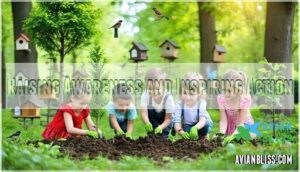
You’re not just a birdwatcher anymore—you’re a catalyst for change in your community.
Creating awareness isn’t about preaching to the choir; it’s about turning curious neighbors into passionate advocates.
Through engaging events, smart social media strategies, and hands-on youth programs that make bird conservation feel urgent and achievable.
Organizing Community Events and Festivals
Community events bring bird conservation to life in neighborhoods across the country.
Festival Planning starts with choosing peak migration seasons when birds are most visible.
Partner with local parks, nature centers, and schools for Event Marketing reach.
Community Outreach involves contacting birdwatching clubs, environmental groups, and families through social media and flyers.
Effective Volunteer Management assigns roles like registration, guided walks, and educational booths.
Sponsorship Acquisition from local businesses helps cover costs while building the bird conservation community around shared conservation awareness goals.
Promoting Bird Conservation on Social Media
Three powerful strategies can amplify your bird conservation awareness through digital outreach.
Share stunning bird photography with conservation facts, join online campaigns using hashtags like #BirdConservation, and create educational content about local species.
Social media platforms multiply your conservation marketing reach exponentially.
Tag conservation organizations to boost visibility and inspire others to protect our feathered friends, which is crucial for effective bird conservation.
Leading School and Youth Education Initiatives
You can spark lifelong conservation passion by bringing bird conservation education directly into classrooms.
Partner with teachers to develop conservation curriculum that includes hands-on student workshops and field trips to local habitats.
Create youth outreach programs that connect students with wildlife education experts.
Environmental education initiatives like school bird counts and nest box building projects give students real conservation experience while building environmental stewardship skills.
By incorporating conservation education programs into school curricula, students can develop a deeper understanding of the importance of conservation efforts.
Advocating for Bird-Friendly Policies and Habitats
You can’t just watch birds disappear—you need to champion the policies that protect them.
By advocating for conservation legislation, promoting sustainable community practices, and working directly with local governments, you’ll help create the regulatory framework that guarantees healthy habitats for future generations, which will ultimately guarantees a better environment.
Supporting Conservation Legislation and Policy Changes
Your voice matters regarding bird protection through policy reform.
Contact your representatives about pending bird conservation legislation like the Recovering America’s Wildlife Act, which proposes $1.4 billion annually for wildlife conservation.
Join advocacy campaigns that have already influenced over 150 federal and state conservation policy changes since 2010.
Support organizations lobbying for environmental policy improvements—their efforts restricted harmful neonicotinoids in 2024, benefiting migratory birds nationwide.
Promoting Sustainable Practices in Communities
You can champion eco friendly practices that directly support bird conservation awareness programs through simple yet impactful green initiatives.
Start neighborhood composting programs to reduce pesticide use, install native plant gardens that provide bird habitat, and organize community clean-up events near waterways.
These sustainable living approaches create healthier environments while building community engagement around environmental stewardship and conservation efforts, promoting a culture of conservation.
Collaborating With Stakeholders and Local Governments
Building government partnerships requires reaching out to city planners, environmental agencies, and elected officials who shape local conservation policies.
You’ll strengthen bird conservation partnerships through regular stakeholder engagement meetings with zoning boards, parks departments, and wildlife agencies.
Present data-driven proposals showing how collaborative conservation benefits communities economically and environmentally.
These conservation collaborations create lasting policy development opportunities that protect critical habitats.
Creating Personal and Community Conservation Plans
Develop your personal conservation plan with specific, measurable goals like creating native plant gardens or reducing window strikes.
Track progress monthly and celebrate small wins. Partner with neighbors to establish community conservation initiatives focusing on habitat restoration and sustainable living practices.
Join local bird conservation efforts through citizen science projects and advocacy groups. Your individual actions, when multiplied across communities, create lasting impact for bird populations.
Citizen science also empowers individuals to contribute through data collection efforts, making a difference in bird populations.
Frequently Asked Questions (FAQs)
How much does bird conservation program participation cost?
Many bird conservation programs are free or low-cost.
You’ll find free citizen science projects, volunteer opportunities, and educational workshops.
Some specialized training or certification programs may charge fees ranging from $20-
What age groups can join conservation awareness programs?
Like a welcoming campfire that draws everyone into the circle, conservation programs open their doors to all ages.
You’ll find offerings spanning from preschoolers to seniors, with many organizations designing activities specifically for different developmental stages and interests.
Do programs offer certification or continuing education credits?
Most bird conservation awareness programs don’t offer formal certification or continuing education credits. However, you’ll find workshops and training sessions that provide certificates of completion for professional development purposes.
How are program effectiveness and conservation outcomes measured?
How do you know if your efforts truly make a difference?
Program effectiveness gets measured through participant surveys, pre/post knowledge assessments, behavior change tracking, and long-term conservation outcome monitoring like habitat restoration success rates.
This approach allows for a comprehensive understanding of the impact, incorporating both immediate and long-term effects.
What equipment or materials are needed for participation?
You’ll typically need binoculars, field guides, notebooks, and comfortable walking shoes for most programs.
Some events provide equipment, while specialized workshops might require cameras or specific gear that’s usually listed during registration. Field guides and walking shoes.
Conclusion
Joining bird conservation awareness programs connects you with like-minded individuals, empowers you to protect vulnerable species, and helps create lasting environmental change.
Whether you’re participating in citizen science projects, volunteering for habitat restoration, or advocating for conservation policies, your involvement makes a measurable difference.
These programs offer accessible ways to contribute regardless of your experience level or available time, allowing you to make a significant impact for bird populations worldwide through small actions that collectively create change, and by working with local organizations.