This site is supported by our readers. We may earn a commission, at no cost to you, if you purchase through links.
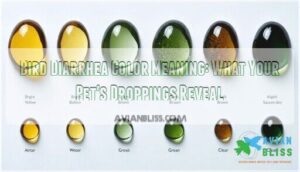 Your bird’s dropping colors tell a story about their health.
Yellow diarrhea often signals liver problems or infections that need quick attention.
Brown watery droppings usually point to digestive issues or dietary problems.
Green liquid stools can mean your bird isn’t eating enough or has an illness brewing.
Clear watery droppings might indicate stress, poor diet, or bacterial infections.
Normal bird droppings should have three parts: dark feces, white urates, and clear urine.
When you notice persistent color changes in your bird’s waste, it’s time to call your vet.
Understanding bird diarrhea color meaning helps you catch health problems before they become serious emergencies.
Table Of Contents
- Key Takeaways
- Bird Diarrhea Colors
- Diarrhea Color Meaning
- Bird Health Issues
- Bird Care Essentials
- Recognizing Bird Illness
- Frequently Asked Questions (FAQs)
- Why is my bird’s poop watery and yellow?
- What does diarrhea color say?
- What do sick bird droppings look like?
- What does it mean if a bird’s poop is brown?
- What causes sudden changes in dropping consistency?
- How often should healthy bird droppings occur?
- When do seasonal diet changes affect droppings?
- Which medications can alter dropping appearance?
- How does stress impact bird digestive health?
- Conclusion
Key Takeaways
- Yellow diarrhea means liver trouble – You’ll need immediate vet care since liver problems can rapidly worsen without treatment.
- Brown watery droppings signal digestive issues – Check your bird’s diet and watch for internal bleeding signs that require urgent attention.
- Green liquid stools indicate eating problems – Your bird might not be eating enough or has an illness brewing that needs monitoring.
- Normal droppings have three parts – You should see dark feces, white urates, and clear urine; persistent color changes mean it’s time to call your vet.
Bird Diarrhea Colors
Your bird’s diarrhea color tells you important things about their health. Changes in dropping color can signal illness or dietary issues that need your attention.
Yellow Bird Diarrhea
Yellow bird diarrhea typically signals liver issues or digestive problems.
Yellow droppings in your feathered friend often mean their liver needs immediate veterinary attention.
This bird poop color often indicates hepatitis, bacterial overgrowth, or parasitic infections like Chlamydia psittaci.
Dietary causes include contaminated food or high-fat diets.
When diagnosing bird diseases, yellow parrot diarrhea requires immediate veterinary attention since liver dysfunction can rapidly worsen without proper treatment.
Brown Bird Diarrhea
Brown bird poop signals serious health concerns you shouldn’t ignore.
Liver problems often cause this dark coloration in abnormal bird droppings.
Internal bleeding within your bird’s digestive system creates brown-tinted diarrhea.
Dietary causes include iron-rich foods temporarily darkening parrot diarrhea.
Medication side-effects sometimes produce brown bird health signs.
Digestive disorders and heavy metal poisoning require immediate avian fecal analysis.
Bird poop color changes demand veterinary attention.
Serious health concerns should be addressed promptly to ensure the bird’s well-being.
Watery Bird Droppings
When you notice watery bird poop, it’s often a sign your feathered friend needs attention.
Watery droppings are your bird’s way of saying something’s wrong—don’t ignore this important health clue.
Watery bird droppings can indicate dehydration issues or diet problems.
Check for abnormal bird droppings daily as part of your observation routine, and consider Dietary changes may be the cause.
Monitor hydration levels and diet impact on your bird’s health signs carefully, as Avian fecal analysis shows these bird illness symptoms need quick prevention measures.
Diarrhea Color Meaning
Understanding your bird’s droppings can reveal important health information.
Green diarrhea often signals liver problems or bacterial infections.
Yellow bird poop typically indicates liver disease or bile issues.
Red diarrhea suggests intestinal bleeding requiring immediate veterinary care.
Black diarrhea may mean gastrointestinal bleeding or iron consumption.
White diarrhea beyond normal urates points to kidney problems.
Orange diarrhea isn’t common but warrants attention.
Budgie poop color and cockatiel diarrhea follow similar patterns.
Green bird poop from healthy birds differs from concerning bird digestive issues, often indicating a need for immediate veterinary care.
Bird Health Issues
When your bird’s droppings change color or consistency, it often signals underlying health problems that need immediate attention.
Early detection of these symptoms can help you get proper veterinary care before minor issues become serious conditions.
Sick Bird Symptoms
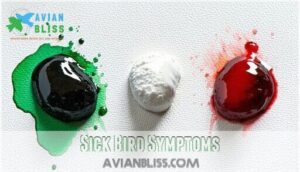
Looking beyond the obvious messy cage, your feathered friend sends distress signals through their entire body.
Watch for these critical warning signs:
- Lethargy Signs – sitting fluffed up for hours
- Feather Changes – dull or plucked patches
- Appetite Loss – ignoring favorite seeds
- Breathing Problems – tail bobbing with each breath
- Vomiting – regurgitating undigested food
Bird digestive issues often appear alongside behavioral shifts.
Canary poop analysis becomes essential when finch diarrhea persists.
Budgie poop color changes paired with cockatiel diarrhea require immediate attention from an avian veterinarian.
Bird Disease Diagnosis
Your vet uses several diagnostic techniques to identify what’s causing your bird’s unusual droppings.
Dropping cytology examines cells under a microscope to spot bacteria or parasites. Fecal flotation tests detect intestinal worms.
Culture and sensitivity testing identifies specific bacterial infections and determines which antibiotics work best.
PCR tests can diagnose viral infections like Chlamydia psittaci in cases of persistent yellow-green diarrhea.
Early detection can also involve monitoring for behavioral changes, such as reduced vocalization, to aid in early detection.
Treatment Options

Once your vet diagnoses the problem, you’ll have several treatment paths to restore your bird’s health.
Each option targets specific causes while supporting overall recovery.
Here are 5 key treatment approaches:
- Medication Options – Antibiotics fight bacterial infections while antifungals tackle yeast problems that cause abnormal bird stool consistency
- Probiotic Supplements – These restore healthy gut bacteria after antibiotic treatment and improve white bird poop issues
- Dietary Adjustments – Temporary diet changes help firm loose droppings and prevent red bird poop from dietary irritants
- Hydration Therapy – Electrolyte solutions replace fluids lost through diarrhea and prevent dangerous dehydration
- Veterinary Care – Professional monitoring guarantees black bird poop or severe symptoms receive proper attention using this bird droppings guide.
Some infections require prescription bird antibiotics.
Bird Care Essentials
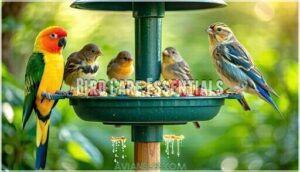
Proper nutrition and hydration form the foundation of your bird’s health and can prevent many digestive issues.
You’ll want to focus on three key areas: providing a balanced diet appropriate for your bird’s species, ensuring clean fresh water is always available, and maintaining a spotless living environment to prevent bacterial infections.
Nutrition and Diet
Your bird’s diet directly impacts their bird stool consistency.
Seed-only diets lack vitamins A and D, causing nutritional deficiencies that produce white bird poop or red bird poop.
Food variety prevents black bird poop from toxins, and healthy treats like leafy greens improve droppings.
Supplement options help balance dietary needs, and a balanced diet may include specialized options for birds.
Following a proper bird droppings guide guarantees a healthy bird through nutrition.
Hydration and Water Quality
Clean water sources prevent waterborne illnesses that cause abnormal droppings.
Change water daily and use filtered options when possible. Watch for dehydration signs like sunken eyes or lethargy.
Proper electrolyte balance supports healthy digestion. Monitor your bird’s bathing habits as changes may indicate illness.
Multiple water stations can encourage hydration. Quality water directly impacts customer satisfaction with your pet’s health outcomes, ensuring overall well-being.
Cleanliness and Hygiene
Maintain spotless conditions to prevent disease transmission and guarantee your bird’s health thrives. Proper sanitation creates a safe environment that supports recovery from digestive issues. To guarantee a safe habitat, use a suitable disinfectant.
- Handwashing Practices: Wash hands before and after handling your bird or cleaning cages
- Surface Sanitization: Disinfect perches, toys, and cage bars weekly with bird-safe cleaners
- Food Handling: Store seeds in airtight containers and replace fresh foods daily
- Waste Disposal: Remove droppings immediately and deep-clean cage bottoms twice weekly
- Pest Control: Seal food properly and maintain clean surroundings to prevent contamination
Recognizing Bird Illness
You can spot illness in your bird by watching for changes beyond just their droppings.
Early detection through careful observation of behavior and physical symptoms can save your feathered friend’s life, which is a complete concept that encompasses the importance of vigilance in bird care.
Dropping Inspection
Check your bird’s droppings twice daily for early detection of health issues.
Normal droppings show three distinct parts while abnormal dropping consistency signals trouble.
Monitor frequency analysis patterns since sudden changes indicate illness.
Diet correlation affects appearance so track what your bird eats.
Environmental factors like stress also influence droppings.
Document changes to share with your veterinarian for accurate diagnosis and understand the impact of health issues.
Behavior Changes
Beyond monitoring your bird’s droppings, watch for behavioral shifts that signal illness. Sick birds often show dramatic changes in their daily routines and social habits.
Here are key behavior changes to monitor:
- Activity Levels – Decreased movement, reluctance to fly, or excessive lethargy throughout the day
- Social Interaction – Withdrawal from family members, other birds, or avoiding usual play activities
- Vocalization Changes – Reduced singing, altered call patterns, or complete silence when normally vocal
- Sleep Patterns – Sleeping during daylight hours, restlessness at night, or unusual perching positions
These shifts often appear before physical symptoms become obvious. Changes in appetite frequently accompany behavioral modifications, making early detection essential for your bird’s recovery.
Physical Symptoms
Looking beyond droppings reveals vital health indicators you shouldn’t ignore. Ruffled feathers signal illness while healthy birds maintain smooth plumage.
Appetite changes often precede serious problems – watch for reduced food consumption. Breathing difficulty appears as tail bobbing or open-mouth breathing.
Activity level drops noticeably in sick birds. Weight loss happens quickly in small birds.
Monitor these physical symptoms daily for early illness detection. Annual checkups can also aid in detecting hidden problems to ensure complete health and early detection of issues, which is crucial for bird health.
Frequently Asked Questions (FAQs)
Why is my bird’s poop watery and yellow?
Something’s clearly wrong when your bird’s droppings turn watery and yellow. Liver disease, kidney issues, infections, food allergies, poisoning, or parasites could be the culprit here.
What does diarrhea color say?
Diarrhea color reveals your bird’s health status.
Green indicates liver problems or infections.
Yellow suggests liver disease or poor diet.
Black means internal bleeding.
White shows kidney issues.
Red signals intestinal bleeding or parasites.
What do sick bird droppings look like?
Sick bird droppings show changes in color, consistency, and frequency.
You’ll notice watery, loose stools instead of firm pellets.
Colors may shift to yellow, green, or bright red, indicating infection or internal bleeding concerns, which can be a sign of a serious issue, such as internal bleeding.
What does it mean if a bird’s poop is brown?
Like back in grandma’s day reading tea leaves, brown bird poop usually means your feathered friend’s eating pelleted food. It’s normal and healthy, just showing what’s on the menu today.
What causes sudden changes in dropping consistency?
Sudden dropping changes typically happen from diet shifts, stress, illness, dehydration, or temperature changes. You’ll notice consistency varies when your bird eats new foods or feels anxious about environmental changes.
How often should healthy bird droppings occur?
Healthy birds typically produce droppings every 15-20 minutes when awake.
You’ll notice more frequent elimination after meals or when they’re active.
This regular pattern indicates good digestive health and proper metabolism functioning.
When do seasonal diet changes affect droppings?
Birds experience droppings changes during spring and fall migrations when they switch between insects, seeds, and berries. You’ll notice color shifts within days of dietary shifts, especially during breeding seasons.
Which medications can alter dropping appearance?
Antibiotics can change dropping color to green or yellow. Pain medications may cause darker stools. Vitamins often create bright orange or red droppings. Always consult your vet about medication effects.
How does stress impact bird digestive health?
When you’re stressed, your bird’s digestive system slows down substantially.
This creates poor nutrient absorption, irregular bowel movements, and potential bacterial imbalances.
Stress hormones directly affect gut health, making droppings appear watery or discolored.
Conclusion
Surprisingly, your bird’s waste works like a health report card that updates daily.
Understanding bird diarrhea color meaning helps you spot problems early. Yellow signals liver issues. Brown shows digestive troubles. Green means eating problems. Clear points to stress or infections.
You’ll save your bird’s life by checking droppings regularly. Quick vet visits prevent small issues from becoming deadly emergencies.
Your attention to these details keeps your feathered friend healthy and happy.