This site is supported by our readers. We may earn a commission, at no cost to you, if you purchase through links.
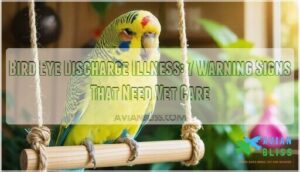 If your bird has sticky or runny eyes, you might be dealing with bird eye discharge illness.
You’ll notice signs like redness, crusting, or even your bird squinting in the sunlight—kind of like someone who watched a movie marathon without a single nap.
The culprits range from bacteria and viruses to fungi and parasites, each bringing its own set of headaches.
Catching these signs early matters since untreated eye problems can get serious fast.
A quick trip to the vet, a little cleanup, and some TLC can make all the difference.
Stick around for tips that’ll help keep those curious eyes sparkling.
Table Of Contents
- Key Takeaways
- Bird Eye Discharge Causes
- Common Eye Disorders
- Symptoms of Bird Eye Infections
- Diagnosing Eye Problems
- Treating Bird Eye Infections
- Preventing Eye Infections
- Managing Eye Discharge
- Recovery and Complications
- Frequently Asked Questions (FAQs)
- What is conjunctivitis in birds?
- What are common eye disorders in birds?
- What happens if a bird has a swollen eye?
- How do you treat bird conjunctivitis?
- How do I know if my bird has an eye infection?
- How do you treat eye disorders in birds?
- Can birds recover from conjunctivitis?
- What sickness has eye discharge?
- What is bird eye disease?
- How do you know if a bird has conjunctivitis?
- Conclusion
Key Takeaways
- You need to act fast if your bird has sticky, runny, or red eyes—early vet care stops minor issues from turning serious.
- Cleanliness matters: keep feeders, water dishes, and your bird’s cage spotless to lower infection risks.
- Don’t ignore crusting, squinting, or appetite loss—these symptoms often signal infections needing quick treatment.
- A balanced diet rich in vitamin A gives your bird’s eyes the best defense against common eye illnesses.
Bird Eye Discharge Causes
You’ll encounter four main types of pathogens that cause eye discharge in birds: bacterial, viral, fungal, and parasitic infections.
Each type creates distinct symptoms and requires different treatment approaches to restore your bird’s eye health, addressing the specific needs of viral infections among others.
Bacterial Infections
Bacterial infections cause nearly 40% of avian eye discharge cases, making them your bird’s most common eye threat.
Bacterial infections dominate bird eye problems, striking 4 out of 10 cases.
Bacterial infections top the list for avian eye troubles, responsible for nearly 40% of all bird eye discharge cases
Chlamydia infections, E. coli, and Staphylococcus species enter through respiratory systems or direct contact with contaminated surfaces.
Mycoplasma gallisepticum particularly targets house finches, creating thick yellow discharge and conjunctivitis in birds.
You’ll notice bacterial infections produce more severe symptoms than other causes.
Antibiotic resistance can complicate treatment, but early intervention matters for effective management, and it’s crucial for the bird’s health to address the issue promptly with proper care.
Viral Infections
Viral strains like herpesvirus and avian poxvirus cause watery discharge in your bird’s eyes.
These avian infections spread through direct contact between birds or contaminated items like feeders. Viral transmission happens when infected droplets land on surfaces your bird touches.
Unlike bacterial conjunctivitis in birds, viral infections often include respiratory symptoms. You’ll notice clear discharge that may become thick, making viral infections particularly concerning for bird eye discharge cases, which can be caused by viral transmission.
Fungal Infections
Unlike bacterial culprits, fungal infections create stubborn bird eye discharge illness through environmental sources.
Immunocompromised birds face the greatest risk from these persistent pathogens that resist simple treatments. One common cause is *Aspergillus spp.
*, which can lead to fungal respiratory infections.
Watch for these fungal infection warning signs:
- Aspergillosis – thick, crusty discharge around eyes
- Candidiasis – white, shiny colonies in eye area
- Severe swelling that doesn’t respond to basic care
- Treatment challenges requiring prolonged antifungal therapy
- Environmental contamination from dust and soil exposure
These avian eye infections demand immediate veterinary intervention.
Parasitic Infections
Parasites present another serious threat to your bird’s eye health.
Trichomonas gallinae causes pus-like bird eye discharge in pigeons, while trematodes like Philophthalmus gralli trigger severe conjunctivitis in waterfowl.
Eyeworms such as Oxyspirura mansoni infest game birds, creating swelling and discharge.
These bird parasites spread through contaminated water and crowded conditions, requiring specific treatment options and preventative measures.
Common Eye Disorders
You’ll encounter four primary eye disorders when your bird shows discharge symptoms. These conditions range from treatable infections to serious complications that can affect your bird’s vision permanently.
Conjunctivitis
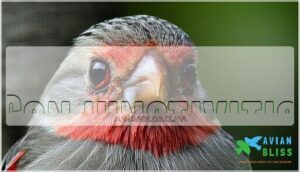
Conjunctivitis strikes as the most common bird eye discharge cause you’ll encounter.
Mycoplasma Gallisepticum triggers avian conjunctivitis, especially in House Finch Disease outbreaks.
You’ll notice red, swollen eyelids with thick discharge crusting around your bird’s eyes.
Transmission factors include direct contact and contaminated feeders, affecting species susceptibility differently across bird populations, involving direct contact and contaminated feeders.
Cataracts
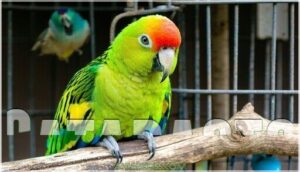
Nearly 16% of captive parrots over eight develop cataracts, creating lens opacity that clouds bird vision.
Age-related cataract causes include genetic predisposition, UV exposure, and nutritional deficiencies.
You’ll notice gradual vision impairment as your bird struggles with movement and feeding.
While cataract surgery offers 85% success rates, early detection prevents bird blindness and related eye symptoms from worsening substantially.
Glaucoma
Glaucoma strikes when pressure builds inside your bird’s eye, potentially causing permanent vision loss.
This serious condition affects 10-15% of captive birds with eye problems, particularly older parrots and those with chronic inflammation.
Key glaucoma warning signs include:
- Eye enlargement – The affected eye appears noticeably larger than normal
- Corneal cloudiness – A milky or hazy appearance covers the eye surface
- Reduced light response – Your bird’s pupil doesn’t contract properly in bright light
- Periocular swelling – Tissue around the eye becomes puffy and inflamed
- Vision changes – Your bird bumps into objects or seems disoriented
Early glaucoma diagnosis through pressure testing offers the best treatment outcomes.
Veterinarians use carbonic anhydrase inhibitors for pressure reduction, while surgical options may help severe cases.
Genetic factors increase risk in certain species, making regular eye exams essential for high-risk birds.
Corneal Ulcers
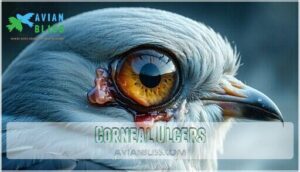
Through damage and debris, corneal ulcers create painful open wounds on your bird’s eye surface.
These ulcer causes include trauma, infections, or foreign objects scratching the cornea.
Ulcer symptoms involve severe squinting, thick bird eye discharge, and visible cloudiness.
Without prompt avian veterinary treatment, ulcer complications can lead to permanent vision loss.
Ulcer prevention requires removing sharp objects from your bird’s environment and maintaining proper hygiene.
Symptoms of Bird Eye Infections
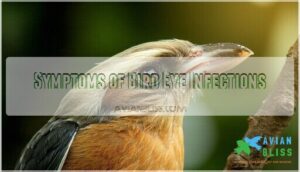
You’ll recognize bird eye infection symptoms through several key warning signs that require immediate attention. These symptoms often appear together and can quickly worsen without proper veterinary care.
Redness and Swelling
You’ll notice red swollen eyes as the first visible sign of bird eye infection symptoms.
Eyelid inflammation occurs when blood vessel dilation increases circulation to fight infection.
This bird eye inflammation creates three distinct warning signs:
- Tissue damage around the orbital area
- Secondary infections from bacterial overgrowth
- Severe eye swelling requiring pain management.
Redness and swelling indicate your bird needs immediate veterinary attention.
Discharge and Crusting
When redness appears, discharge and crusting often follow quickly behind.
You’ll notice thick, sticky secretions collecting around your bird’s eyes, creating crusty formations on the eyelids.
This ocular discharge varies in consistency from watery bird eye fluid to thick, yellow-green mucus.
Feather matting occurs as discharge spreads, while crusting severity increases daily without treatment, potentially causing eyelid closure and vision impairment.
Squinting and Blinking
When your bird’s eye discharge worsens, you’ll often spot excessive blinking and squinting behaviors.
These protective reflexes indicate pain and vision impairment from bacterial or viral bird eye disease. Your pet’s blinking frequency increases dramatically as neurological causes trigger defensive responses against bright light.
Birds may also exhibit signs of avian conjunctivitis signs, indicating a potential infection.
Key squinting severity indicators:
- Persistent eye closure – Bird keeps affected eye shut for extended periods
- Light sensitivity – Squinting worsens under normal lighting conditions
- Head tilting – Bird compensates for vision loss by adjusting head position
- Reduced activity – Pain indication affects normal foraging and social behaviors
- Asymmetric blinking – One eye blinks more frequently than the healthy eye
Loss of Appetite
When your feathered friend stops eating, it’s often the first red flag signaling underlying illness or stress factors.
Sick bird symptoms like eye discharge frequently coincide with behavioral changes including reduced appetite.
Nutritional deficiency worsens as birds avoid food, creating a cycle where digestive issues compound existing problems, making immediate veterinary attention imperative, as the situation can quickly escalate due to digestive issues.
Diagnosing Eye Problems
When you notice eye discharge in your bird, getting a proper diagnosis is essential for effective treatment.
Your veterinarian will perform a physical examination, run laboratory tests, and determine the best care plan to restore your feathered friend’s eye health.
Physical Examination
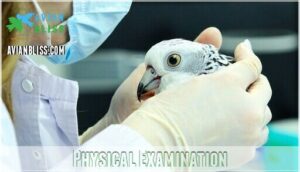
When examining your bird’s eye, your vet will perform a thorough Eye Examination to assess the severity of bird eye discharge symptoms.
They’ll conduct Swelling Assessment around the eyelids, perform detailed Discharge Analysis to identify bird eye discharge causes, and evaluate Vision Testing responses.
The veterinarian will also check Feather Condition surrounding the affected area, helping establish an accurate bird eye discharge diagnosis for proper treatment planning.
Laboratory Tests

After completing your bird’s physical examination, diagnostic labs offer precise bird eye infection diagnosis through several key diagnostic methods.
Sample collection from affected eyes provides material for thorough testing.
Here are four essential laboratory diagnostics:
- Culture Analysis – Identifies specific bacteria or fungi causing the infection
- PCR Testing – Detects viral DNA and hard-to-culture pathogens quickly
- Cytology Exams – Reveals inflammatory cells and organisms under microscopic evaluation
- Diagnostic Criteria – Combines results to determine exact pathogen and treatment approach
Veterinary Care
Professional expertise becomes your lifeline when bird eye discharge treatment demands immediate attention.
Exotic veterinarians specializing in avian ophthalmology can diagnose complex conditions that general practitioners might miss.
You’ll need specialist referrals for severe cases requiring emergency treatment or surgical intervention. Post-op care instructions guarantee proper healing, while ongoing veterinary care prevents complications from untreated avian eye infections.
Treating Bird Eye Infections
Once you’ve identified the specific eye infection affecting your bird, treatment typically involves a combination of antibiotics, anti-inflammatory medications, and supportive care adapted to the underlying cause.
Your veterinarian will prescribe the most effective treatment plan based on whether the infection is bacterial, viral, or fungal in nature, ensuring the best possible outcome with supportive care.
Antibiotics
When bacterial infections strike your bird’s eyes, antibiotics become the primary treatment weapon.
Your veterinarian will prescribe specific medications based on culture results to combat antibiotic resistance effectively.
- Tetracyclines and fluoroquinolones target most bacterial eye pathogens
- Dosage guidelines require species-specific adjustments to prevent toxicity
- Side effects include digestive upset and potential resistance development
- Probiotics help restore healthy gut bacteria during treatment
- Alternative therapies support recovery alongside conventional antibiotic treatment
Anti-Inflammatory Medications
Anti-inflammatory medications complement antibiotics by reducing swelling and pain in your bird’s affected eyes.
NSAIDs and topical corticosteroids target inflammation through different mechanisms, with corticosteroids achieving symptom resolution in 82% of avian conjunctivitis cases.
Proper dosage guidelines require veterinary supervision, as prolonged use may cause side effects like delayed healing. Administration methods involve precise drop placement into the conjunctival sac.
Supportive Care
Beyond medication, supportive care helps your bird recover faster from eye discharge illness.
You’ll need proper hydration methods like fresh water access and nutritional support through vitamin-rich foods.
Stress reduction involves quiet environments and isolation protocols to prevent spread.
Comfort measures include gentle eye cleaning and monitoring, which are essential for healing and should be done with proper hydration to support the bird’s recovery alongside treatment.
Preventing Eye Infections
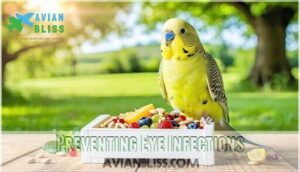
You can prevent most eye infections in birds by maintaining clean feeders, providing proper nutrition, and creating a healthy environment.
These simple steps substantially reduce your bird’s risk of developing painful eye discharge and serious complications.
Cleaning and Hygiene
Every feeder cleaning session you schedule prevents countless bacteria from thriving where your birds eat.
Clean nonporous feeders weekly with feeder disinfectant, removing all bird feeder waste before refilling.
Fresh water source maintenance matters too—change water daily and scrub containers thoroughly.
Proper handwashing importance can’t be overstated when handling feeding equipment, protecting both you and your feathered friends.
To further enhance hygiene, remember that regular bird bath cleaning is also essential for maintaining a clean environment, which is crucial for proper bird care.
Nutrition and Diet
Your bird’s diet directly impacts eye health more than you might think.
Vitamin deficiencies, especially vitamin A, dramatically increase infection risk.
A balanced diet prevents 40% more eye problems than seed-only diets.
You may also want to explore options for specialized bird vitamins.
Essential bird nutrition guidelines:
- Vitamin A sources – Sweet potatoes, carrots, leafy greens support tear production
- Seed variety – Mix different seeds with pelleted diets for complete nutrition
- Hydration needs – Fresh fruits and vegetables maintain healthy eye moisture
- Nutritional supplements – Consider lutein and omega-3s for ideal bird eye nutrition
Environmental Factors
Poor air quality creates a breeding ground for bird eye discharge and related infections.
Dust, smoke, and chemical irritants weaken your bird’s natural defenses against bacterial invaders.
Keep feeders away from high-traffic areas where exhaust fumes accumulate.
Regular bird feeders cleaning prevents mold growth that triggers respiratory issues.
Using a quality feeder cleaner will help maintain a healthy environment.
Monitor humidity levels—excessive moisture encourages harmful bacteria while dry conditions cause eye irritation.
Managing Eye Discharge
Once your bird shows signs of eye discharge, proper management becomes critical to prevent complications and speed recovery.
You’ll need to clean the affected area gently, apply prescribed medications correctly, and track your bird’s progress closely to confirm treatment works effectively.
Cleaning The Eyes
Gently wipe your bird’s eyes using sterile saline solutions and soft, lint-free materials like cotton balls.
Clean from inner to outer corners with a fresh swab for each eye. Maintain daily cleaning frequency during active infections for proper bird eye hygiene.
For specialized cleaning, consider using dedicated pre-moistened options.
Always use gentle technique specifics to avoid irritation while supporting bird eye discharge recovery and preventing reinfection through consistent bird eye care practices.
Applying Medications
Following your veterinarian’s prescription, you’ll need precise dosage calculation for bird eye discharge medications.
Most antibiotic drops require 1-2 drops per affected eye twice daily. Store medications in cool, dry places away from direct sunlight.
Watch for side effects like increased irritation or behavioral changes during treatment duration. Never adjust dosages without veterinary supervision, as antibiotic risks increase with improper administration techniques, which can lead to serious health issues.
Monitoring Progress
Track your bird’s recovery by watching for clear signs that bird eye discharge treatment is working.
Notice if discharge decreases, redness fades, and your bird stops squinting.
Behavioral shifts matter too—appetite return and improved plumage condition signal healing.
Document symptom changes daily, noting treatment efficacy.
If bird conjunctivitis recovery stalls or worsens after starting bird eye medications, contact your vet immediately for adjustments.
Recovery and Complications
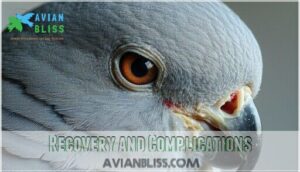
Understanding your bird’s recovery timeline helps you know what to expect and when to worry.
While most treated eye infections clear up within one to two weeks, complications from delayed treatment can threaten your pet’s vision and overall health.
Recovery Time
Bird eye recovery timeline depends on infection severity and treatment response.
Most bacterial conjunctivitis cases improve within 5-7 days with proper antibiotics.
Post-treatment care includes monitoring for recurrence prevention and supporting recovered bird immunity through nutrition.
Wild bird rehab facilities report longer recovery periods due to stress factors.
Supportive therapies help minimize long-term effects on vision and overall health during bird disease recovery phases, which is crucial for maintaining the bird’s immunity.
Risks of Untreated Infections
Don’t brush off bird eye discharge or untreated bird eye infections—these can snowball fast.
Ignoring bird eye discharge risks their sight—act quickly to prevent lasting damage and protect their health
Infection consequences aren’t limited to a little crust; birds may face vision loss and even full blindness risk.
Conjunctivitis in birds, when ignored, can lead to disease spread, organ damage, and a long recovery.
Avian eye infections deserve your quick, attentive action, and understanding avian eye infections is essential for effective treatment and prevention.
Challenges With Wild Birds
How can you help wild birds when veterinary care isn’t an option?
Wild bird care faces significant obstacles since less than 5% receive treatment in managed programs.
House Finches and other species can’t access bird eye treatment like pet birds.
Untreated risks include blindness and death, with mortality rates reaching 25%.
Limited treatment options mean supportive measures focus on contagion control through feeder cleaning.
Swollen bird eye problems spread rapidly among flocks, making bird eye infections particularly challenging in wild populations, involving mortality rates and contagion control.
Frequently Asked Questions (FAQs)
What is conjunctivitis in birds?
See red eyes, notice swelling, find a milky discharge? That’s conjunctivitis in birds—a common infection, usually from bacteria like Mycoplasma gallisepticum.
It makes your bird itch, blink, squint, and sometimes even lose its appetite, which is a result of conjunctivitis.
What are common eye disorders in birds?
You might notice birds get conjunctivitis, cataracts, chlamydiosis, glaucoma, or even corneal ulcers.
Each can sneak up on your feathered friends, causing red eyes, swelling, discharge, or cloudy vision—definitely worth a closer look if symptoms appear, especially to check for corneal ulcers.
What happens if a bird has a swollen eye?
Like a lighthouse’s beacon signaling rough waters, a swollen eye in a bird tells you trouble’s near.
Usually, it means infection, injury, or irritation.
It’s smart to keep the area clean and seek a vet’s advice.
How do you treat bird conjunctivitis?
Gently clean around your bird’s eye with a damp, warm cloth.
Then call your vet—conjunctivitis often needs antibiotics or special drops.
Keep the cage spotless, offer fresh water, and don’t let other birds share dishes.
How do I know if my bird has an eye infection?
Picture your bird blinking more than usual, its eye red and crusting over.
If you spot swelling, discharge, or your bird rubbing its face on the cage, it’s time for a vet visit—don’t wait.
How do you treat eye disorders in birds?
Treat bird eye disorders by cleaning the area with saline, keeping your bird’s space spotless, and giving prescribed medications.
Check with your vet early, since untreated infections can cause bigger problems, like blindness or ongoing illness.
Can birds recover from conjunctivitis?
Yes, birds can recover from conjunctivitis if you spot it early and provide prompt treatment, such as antibiotics or saline rinses.
Keep their environment clean and monitor symptoms, since untreated cases can sometimes lead to lasting eye damage.
What sickness has eye discharge?
If you spot eye discharge, your bird could have conjunctivitis, a common sickness caused by bacteria, viruses, or even parasites.
Watch for other signs like swelling or squinting—it’s smart to get them checked by a vet.
What is bird eye disease?
Imagine birds squinting like they’re reading tiny print—except it’s “bird eye disease,” a contagious infection, usually caused by Mycoplasma gallisepticum.
You’ll see redness, swollen eyelids, and discharge, making simple routines feel like tough algebra.
How do you know if a bird has conjunctivitis?
You’ll notice conjunctivitis in a bird if its eyes look red, swollen, or watery, and there’s crust or discharge around the lids.
If the bird keeps blinking or rubs its face, that’s another clue.
Conclusion
Sometimes, you’ll notice a clean cage and a bright room, yet your bird still shows those classic bird eye discharge illness symptoms.
Recognizing discharge, squinting, or redness means you’ve already done half the work by staying observant.
Prompt vet care and daily hygiene can prevent small issues from becoming major ones.
Keep monitoring changes in your bird’s behavior or appetite, and with timely action, you’ll help those curious eyes stay healthy and avoid the pitfalls of untreated eye problems.
- https://audubonportland.org/blog/patient-of-the-week-house-finch-can-see-clearly-now-the-conjunctivitis-is-gone/
- https://feederwatch.org/learn/house-finch-eye-disease/
- https://www.ladygouldianfinch.com/conjunctivitus.aspx
- https://avianreport.com/house-finch-eye-disease/
- https://petpettypaw.com/bird-eye-infection/