This site is supported by our readers. We may earn a commission, at no cost to you, if you purchase through links.
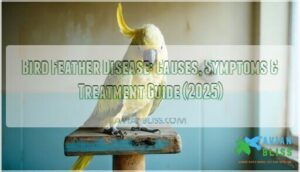 Bird feather disease treatment focuses on easing symptoms and protecting your bird’s overall health. There’s no cure for this stubborn virus, but quick action and strong beneficial care—think excellent nutrition, hydration, and a clean environment—can keep your feathered friend more comfortable.
Secondary infections sneak in easily, so staying ahead of them is half the battle. Hygiene is your shield, so disinfect cages and tools frequently.
Some veterinarians may explore experimental treatments, but tried-and-true care is still your bird’s best ally. With steady attention and compassion, you can help your companion weather the storm—there’s more to know about keeping hope alive.
Table Of Contents
- Key Takeaways
- What is Psittacine Beak and Feather Disease?
- How Do Birds Contract Feather Disease?
- Key Symptoms of Beak and Feather Disease
- Diagnosing Bird Feather Disease
- Treatment Options for Infected Birds
- Managing and Preventing Disease Spread
- Prognosis, Recovery, and Future Solutions
- Frequently Asked Questions (FAQs)
- How do you treat psittacine beak & feather disease in a cockatoo?
- What is beak and feather disease in birds?
- Do Avian Veterinarians treat feather disorders?
- How do you treat PBFD in cockatoos?
- How do you care for a bird’s feathers?
- Is there a cure for bird pygma?
- Can healthy birds become asymptomatic carriers of PBFD?
- Are there reliable home tests for feather disease?
- How can pet owners safely introduce new birds?
- Does PBFD affect the breeding success of parrots?
- Conclusion
Key Takeaways
- There’s no cure for bird feather disease, so treatment centers on strong supportive care, good hygiene, and preventing secondary infections.
- The virus spreads easily through direct contact, contaminated surfaces, and even healthy-looking carriers, making quarantine and disinfection essential.
- Early diagnosis through physical exams and PCR testing gives you a chance to isolate affected birds and slow the spread in your flock.
- Vaccines and antiviral drugs aren’t available yet, so the focus remains on nutrition, environmental cleanliness, and compassionate veterinary care.
What is Psittacine Beak and Feather Disease?
Psittacine Beak and Feather Disease affects parrots worldwide, and understanding what it is can help you protect your birds.
Let’s break down this virus: where it comes from, and what it really means for your birds.
Overview of PBFD and BFDV
If your parrot’s feathers look stunted or their beak seems oddly brittle, you might be dealing with Psittacine Beak and Feather Disease.
PBFD is caused by BFDV, a member of the Circovirus family discovered in the 1970s. This virus is incredibly stable in the environment and can infect all psittacine species, making it a serious concern for parrot owners worldwide.
History and Affected Bird Species
PBFD wasn’t always recognized as a global concern. Early documentation traces back to 1907 in South Australia, where featherless red-rumped grass parakeets puzzled observers. Dr. Ross Perry formally described the disease in 1975, and detection advances in the 1990s revealed its true scale. Today, Psittacine beak and feather disease affects over 78 species worldwide:
- Cockatoos remain highly susceptible, including sulphur-crested and galah varieties
- African grey parrots face significant infection rates in captive populations
- Lovebirds show the highest global prevalence among all psittacine species
- Non-psittacines like rainbow bee-eaters can carry the virus
Historic threats to endangered species, like the orange-bellied parrot with only three wild breeding pairs by 2017, demonstrate PBFD’s devastating potential. A key indicator of the disease is progressive feather loss, involving malformed feathers.
Species expansion continues through international bird trade, making global prevalence estimates now reach 16.3% in tested populations.
How The Virus Attacks Birds
Understanding how this virus wreaks havoc starts with knowing its target—the cells your bird needs most for growth and protection. BFDV attacks rapidly dividing epithelial cells in feather follicles, beaks, and nails while simultaneously crippling immune organs like the thymus and bursa. This dual assault causes visible deformities and leaves your bird defenseless against secondary infections.
| Attack Stage | Target Tissue | Result |
|---|---|---|
| Cellular Invasion | Feather follicles, beak keratinocytes | Viral replication begins |
| Tissue Damage | Epithelial cells, nail beds | Malformed structures form |
| Immune Suppression | Thymus, bursa of Fabricius | Immune system collapse |
| Viral Replication | Blood cells, organs | Systemic psittacine circovirus spread |
| Organ Failure | Multiple systems | Secondary infections, death |
How Do Birds Contract Feather Disease?
Understanding how PBFD spreads helps you protect your birds from this serious viral infection.
The virus can move between birds through several pathways, and some species face greater risk than others.
Transmission Routes (Direct and Indirect)
Your bird doesn’t need to touch an infected parrot to catch this virus—BFDV spreads through multiple pathways that make it surprisingly easy for the disease to move between birds. Direct transmission occurs when healthy birds contact infected feathers, feces, or crop secretions. Fomite contamination spreads the virus through cages, food bowls, and toys. Aerosol spread happens when dust particles carry viral material through the air. Vertical transmission passes the disease from parent to chick.
Asymptomatic carriers shed the virus without showing symptoms, creating hidden risks. Environmental persistence means BFDV survives months on surfaces, making environmental contamination a serious concern for disease prevention and control.
Species Most at Risk
Cockatoos, lovebirds, budgerigars, African grey parrots, eclectus parrots, lories, and lorikeets face the highest risk of infection. Lovebird prevalence reaches 26.6%, while cockatoo infections affect roughly 34% of captive populations. African greys show infection rates above 58%.
Geographic patterns reveal that Australian, African, and Asian populations carry greater disease burdens. Endangered vulnerability intensifies in threatened species with small breeding populations.
Viral shedding from asymptomatic carriers makes disease control particularly challenging in these high-risk groups. PCR testing is essential to detect the virus before symptoms manifest.
Environmental Stability of BFDV
The virus survives for months—even years—on contaminated surfaces, making it one of the toughest pathogens bird owners face. This circovirus resists common disinfectants, persisting in soil contamination, dust, and dander.
Environmental factors like humidity don’t weaken its transmission risk. Standard cleaners won’t protect against contagious diseases like BFDV—you’ll need hospital-grade disinfectants to combat this viral infection.
Key Symptoms of Beak and Feather Disease
Recognizing the symptoms of PBFD early can make a real difference in managing your bird’s care.
The disease shows up in three distinct forms, each with its own timeline and warning signs.
Forms of PBFD (Peracute, Acute, Chronic)
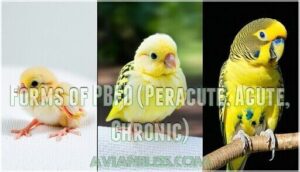
PBFD presents in three distinct forms, varying based on a bird’s age and immune response. The peracute form strikes newly hatched chicks suddenly, often causing death from septicemia before symptoms appear.
Acute progression affects young birds, leading to rapid feather loss and depression, which can be fatal within weeks.
Chronic management becomes necessary in older birds, who show gradual feather abnormalities and beak deformities. Some survivors become lifelong disease carriers despite appearing healthier.
Feather and Beak Abnormalities
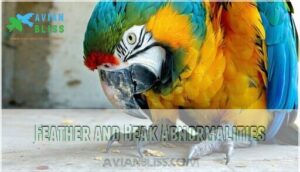
Affected birds don’t just lose a few feathers—they develop striking, unmistakable changes that transform their appearance and compromise their survival.
Feather dystrophy appears as stubby, clubbed, or misshapen plumage that breaks easily. Beak lesions show up as dry, irritated patches, while beak overgrowth creates brittle, cracked structures.
You’ll notice nail malformation alongside continuous feather shedding—classic symptoms of beak and feather disease that signal the virus attacking fast-growing tissues.
Immune System Complications

What you can’t see are the devastating immune system complications working beneath the surface. Lymphoid depletion destroys essential immune organs—up to 62% of infected birds show viral persistence in the spleen—leaving your bird defenseless against secondary infections.
Over 80% of PBFD deaths result from bacterial, fungal, or viral infections that healthy birds easily fight off. Age vulnerability matters: juveniles infected before six weeks develop profound immunosuppression and often die within weeks, while adults may clear the viral infection naturally.
Diagnosing Bird Feather Disease
If you suspect your bird has PBFD, getting an accurate diagnosis is the first step toward proper care. Your veterinarian will use a combination of physical examination and laboratory testing to confirm whether the virus is present.
Physical Examination and Clinical Signs
When your vet examines your bird for PBFD, they’re looking for telltale signs that can’t hide—abnormal feathers, beak lesions, and physical changes that paint a clear diagnostic picture.
They’ll check feather morphology for stunted or clubbed growth, assess beak condition for cracks or brittleness, and evaluate skin integrity for scaling or infection.
Weight loss often signals immune compromise, while organ palpation can reveal underlying damage. These symptoms of beak and feather disease guide accurate diagnosis of beak and feather disease.
Importance of Early Detection
Catching PBFD early isn’t just helpful—it’s your best defense against a virus that spreads fast and hits hard. PCR testing detects viral DNA weeks before you’ll notice feather loss or beak damage, giving you time to isolate infected birds and protect your flock.
Early diagnosis improves prognosis impact through palliative treatment and transmission prevention, reducing economic implications in aviaries.
Diagnostic advances now identify asymptomatic carriers, offering conservation benefits for endangered species while strengthening overall disease management strategies.
Treatment Options for Infected Birds
While there’s no cure for PBFD, you can take steps to improve your bird’s comfort and extend its life.
To help your bird feel its best and possibly live longer, focus on building up its health, preventing secondary issues, and looking into any treatments that might be available.
Supportive Care and Nutrition

Since there’s no cure for PBFD, your focus shifts to keeping your bird as comfortable and healthy as possible.
Helping care starts with proper nutrition—offer complete, high-quality diets rich in vitamins and minerals to strengthen immunity. Probiotic supplements help maintain gut health, while immune boosters may reduce the severity of symptoms.
Always follow supplement dosages recommended by your vet, and guarantee consistent hydration strategies to keep your parrot healthy during this challenging time.
Managing Secondary Infections
Birds with weakened immune systems can’t fight off even the simplest bacterial or fungal infections that a healthy parrot would shrug off in days.
That’s why infection monitoring becomes critical—watch for respiratory distress, diarrhea, or skin lesions. Your vet will prescribe antibiotics or antifungal options based on specific pathogens, though antibiotic resistance can complicate treatment.
Symptom management through comprehensive care and consistent veterinary care helps your bird maintain quality of life despite these secondary infections.
Antiviral and Experimental Therapies

No antiviral medications have been approved for Psittacine Beak and Feather Disease or Circovirus infections as of 2025. Antiviral efficacy remains minimal—experimental compounds like acyclovir show no consistent viral reduction.
Gene therapy and immunomodulation trials offer temporary relief in under 18% of cases. Vaccine progress continues, but candidates aren’t commercially available yet.
Treatment centers on palliative care, managing symptoms rather than eliminating infection. Experimental outcomes haven’t improved survival beyond standard care approaches.
Managing and Preventing Disease Spread
Keeping your feathered companion safe means staying a step ahead of disease. Here are some proven ways to help limit the spread in your bird’s environment.
Quarantine and Biosecurity Measures
Keeping your flock safe starts with a single decision: will you draw a careful line between newcomers and your cherished birds, or leave the door open to unseen risks?
Proper quarantine and biosecurity aren’t luxuries—they’re your front line. Pay close attention to:
- Quarantine Duration
- Testing Protocols
- Biosecurity Training
- Isolation Facilities
Thoughtful disease prevention and control protect every feather.
Disinfection and Hygiene Practices
A few simple changes in your daily cleaning routine can make all the difference in protecting your birds from dangerous viruses. Choose proven cleaning agents for all cage materials, wash your hands before and after interacting with birds, and keep air quality high.
Focus on food safety—regularly disinfect bowls. Thoughtful parrot care, with veterinary guidance, is important for disease prevention and control.
Flock Screening and Isolation Protocols
You can think of flock screening like a safety net, catching trouble before it spreads. Strong breeder responsibility includes PCR testing at regular intervals and a strict quarantine duration—often 90 days—when adding new birds.
Reliable isolation facilities, along with clear biosecurity enforcement, and professional veterinary guidance make accurate avian disease diagnosis possible, directly reducing the risk of disease transmission.
Prognosis, Recovery, and Future Solutions

When a bird is dealing with beak and feather disease, understanding what comes next is just as important as early care.
Here’s what you need to know about outcomes, choices, and promising developments ahead.
Life Expectancy and Quality of Life
Have you ever wondered how long a bird can thrive after a diagnosis like beak and feather disease? The prognosis for affected birds varies: with dedicated bolstering care and attentive veterinary guidance, you can often slow symptom progression.
Thoughtful management, nutrition, and a low-stress environment help improve wellbeing and extend lifespan, turning long-term care into compassionate parrot health management.
Ethical Considerations and Euthanasia
Knowing when to let go is never easy, but weighing a bird’s comfort and dignity can be the most caring choice you’ll ever make. Discussions about Euthanasia Timing often arise when Quality of Life fades, or care is overshadowed by Financial Burden, Caregiver Stress, and Emotional Impact.
Compassionate veterinary care honors your bond throughout avian diseases, supporting treatment decisions for your bird’s health.
Vaccine Development and Research Advances
Because every goodbye weighs heavy, you might wonder if new hope is coming soon. Researchers are pushing boundaries with Vaccine Candidates, from Plant-Based Vaccines to Recombinant Proteins and VLP Platforms, turning breakthroughs into reality.
While no PBFD shot exists yet, substantial Research Funding fuels innovation in veterinary medicine, offering a real chance to outsmart psittacine circoviral disease.
Frequently Asked Questions (FAQs)
How do you treat psittacine beak & feather disease in a cockatoo?
In treating beak and feather disease in cockatoos, focus on Beneficial Cockatoo Care and Infection Management.
Emphasize nutrition, hygiene, stress reduction, and prompt treatment of infections to safeguard parrot health and improve Quality of Life.
What is beak and feather disease in birds?
Imagine a silent storm sweeping through a flock—the kind that leaves no feather untouched. Beak and Feather Disease is an incurable, viral threat targeting parrots’ growing tissues, sparing few species.
PBFD defines devastation among bird diseases.
Do Avian Veterinarians treat feather disorders?
Catching feather disorders early is key, and you can count on avian veterinarians’ Diagnostic Expertise and Training.
Their specialization in Veterinary Medicine ensures accurate Diagnosis, thoughtful Treatment options, and honest conversation about Ethical Considerations for Avian Health and Owner Education.
How do you treat PBFD in cockatoos?
Treating PBFD in cockatoos is like tending a fragile sapling in rocky soil—sustaining Cockatoo Care, powerful Infection Management, and vigilant Veterinary care work together to sustain Quality of Life.
Experimental Treatments and Ethical Considerations always guide decisions.
How do you care for a bird’s feathers?
Feather health basics matter—so offer clean water for bathing, encourage normal preening behavior, and provide a balanced diet packed with vitamins and minerals.
During molts or feather loss, gentle care and proper bathing techniques help maintain strong, vibrant plumage.
Is there a cure for bird pygma?
No current PBFD cure exists for beak and feather disease, but careful symptom management, palliative care, and strict veterinary treatment can help affected birds live longer.
Experimental treatments and antiviral research offer hope for future therapies in parrot care.
Can healthy birds become asymptomatic carriers of PBFD?
A perfectly healthy parrot can carry PBFD silently, like a shadow on a sunny day. Asymptomatic Carrier Risks are real—subclinical transmission rates complicate disease transmission, making Carrier Detection Methods and vigilant management essential for protecting bird health.
Are there reliable home tests for feather disease?
No truly reliable home tests exist yet for bird feather diseases like PBFD.
DNA probe tests, which you need at a vet, provide higher accuracy and better sample collection methods.
Professional bird disease diagnosis remains essential.
How can pet owners safely introduce new birds?
Bringing home a new bird? Start with a 45- to 90-day quarantine, thorough testing protocols, and environmental preparation.
Gradual introduction and stress reduction are key for parrot care and prevention of contagious disease, boosting avian health.
Does PBFD affect the breeding success of parrots?
When PBFD enters your aviary, breeding pairs face lowered fertility and higher chick mortality rates.
Genetic predisposition and egg transmission risk complicate matters further—this avian disease can quietly undermine even healthy parrot breeding programs.
Conclusion
An ounce of prevention is worth a pound of cure—especially with bird feather disease treatment. While there’s currently no cure, focused care, fast action, and hygiene are your strongest tools.
Monitor your birds regularly, provide excellent nutrition, and seek veterinary advice at the first sign of trouble.
By staying informed and proactive, you help slow the spread, reduce suffering, and give your feathered companion the best possible quality of life despite this challenging disease.
- https://pmc.ncbi.nlm.nih.gov/articles/PMC7762593/
- https://sciencemediacentre.es/en/antiviral-already-market-could-be-more-effective-oseltamivir-tamiflu-against-avian-influenza
- https://www.sciencedirect.com/topics/veterinary-science-and-veterinary-medicine/psittacine-beak-and-feather-disease
- https://journals.sagepub.com/doi/10.1177/10406387251333410
- https://www.ivis.org/library/avian-health-and-disease/psittacine-beak-and-feather-disease-an-overview