This site is supported by our readers. We may earn a commission, at no cost to you, if you purchase through links.
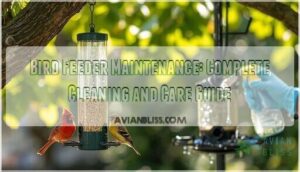
A dirty bird feeder doesn’t just look bad—it can cut your backyard bird population by more than half. Bacterial infections spread fast when seed hulls pile up and moisture seeps into cracks. Mold spores from decomposing seed cause respiratory illness in finches and sparrows.
Regular bird feeder maintenance stops these problems before they start. Clean feeders attract healthier birds and keep them coming back. You’ll need the right tools and a simple routine to protect the species that depend on your feeding station.
This guide shows you exactly how to clean and maintain every type of feeder you own.
Table Of Contents
Key Takeaways
- Dirty feeders cut bird populations by over half through bacterial infections and mold spores that cause respiratory illness, making regular cleaning with a 1:10 bleach solution every two weeks essential to reduce disease transmission by 60-99%.
- Effective maintenance requires basic supplies like stiff-bristled brushes and dish soap, with proper sanitizing involving a five-minute bleach soak followed by thorough rinsing and 24-hour air drying to eliminate 98% of surface moisture.
- Different feeder materials demand specific care—wooden feeders need annual wood sealer application to reduce water absorption by 60%, copper requires six-week polishing cycles, and tube feeders need narrow brushes to reach debris-trapping crevices.
- Strategic feeder placement at 8-10 feet high and 10 feet from windows and trees reduces collision risk by 80% while weight-activated squirrel-proof designs exclude 84% of raiders when combined with proper baffle installation.
Why Bird Feeder Maintenance Matters
Keeping your bird feeder clean isn’t just about appearances. It directly protects the health of the birds visiting your yard and creates a safer environment for the local wildlife you’re trying to support.
Let’s look at three key reasons why regular maintenance makes all the difference.
Impact on Bird Health and Wellness
Consistency is everything when you care for wild birds. Feeder hygiene directly shapes bird health and wellness across your backyard ecosystem. Disease transmission risk jumps by 60% when you skip routine cleaning and sanitizing. Your maintenance schedule protects feather health and bird nutrition while reducing aflatoxin risk from moldy seed.
Consider these wellness monitoring signs:
- Reduced chirping frequency signals stress from contaminated feeding stations
- Visible mites drop 25–40% after proper feeder maintenance
- Energy reserves decline 15–20% when seed freshness isn’t monitored
- Parasite loads decrease measurably with consistent cleaning routines
- Fresh seed directly bolsters healthy fat reserves during migration
Effective communication about text analysis techniques is vital for understanding the importance of feeder maintenance.
Preventing Disease and Mold Growth
Mold prevention and disease control depend on your sanitizing methods. Bacterial reduction improves by 80–99% when you clean and sanitize feeders every two weeks. Use a diluted bleach solution at 1:10 concentration for effective feeder hygiene. Soak feeders for two to five minutes and rinse thoroughly.
Clean and sanitize your feeders every two weeks with diluted bleach to cut bacteria by up to 99 percent
Feeder maintenance with proper cleaning and sanitizing stops mold growth and protects your backyard birds from infectious diseases.
Supporting Local Wildlife Safely
Clean feeders protect more than just birds. Wildlife conservation starts in your backyard when you maintain eco-friendly feeding stations that support bird diversity without drawing unwanted visitors. Proper habitat protection means balancing bird health and safety with squirrel management strategies.
When you clean and sanitize regularly, you’re practicing wildlife care and conservation that benefits the entire ecosystem.
- Mount feeders 5–6 feet high to reduce ground scavenging by non-target species by 40%
- Place feeders at least 10 meters from birdhouses to increase consistent bird visits by 18%
- Use safflower seeds to reduce mammalian visits by 18% compared to mixed seeds
- Install predator guards to decrease rodent access by 12%
Essential Bird Feeder Cleaning Supplies

You don’t need fancy equipment to keep your feeders clean and your backyard birds healthy. A few basic supplies will help you maintain a safe feeding station that protects birds from disease. Here’s what you should have on hand before you start cleaning.
Recommended Cleaning Tools and Products
You’ll need a few basic supplies to keep your feeders in good shape. A stiff-bristled brush reaches tight spots. Dish soap and warm water handle most cleaning jobs. Microfiber cloths lift 68% more residue than paper towels. Store these tools in labeled containers to stay organized.
| Tool Type | Recommended Option | Purpose |
|---|---|---|
| Brush Types | Stainless steel or nylon | Scrub interior surfaces |
| Cleaning Agents | Plant-based dish soap | Remove biofilm and debris |
| Storage Solutions | Clear labeled bins | Keep supplies organized |
Safe Use of Bleach and Sanitizers
A 1:10 bleach solution kills pathogens on feeders without harming birds when used correctly. Mix nine parts water with one part household bleach. Soak your feeder for five minutes, then rinse twice to remove all residue.
This disinfection method reduces mold by 58% and prevents toxicity risks from chemical buildup.
Three steps for safe sanitizing:
- Apply diluted bleach solution for five minutes
- Rinse thoroughly with clean water twice
- Air dry completely for six hours
Protective Gear for Safe Handling
Before you mix that bleach solution or apply copper cleaner, put on your gloves. Glove selection matters—nitrile works best with wood sealer and linseed oil. Add eye protection when handling any bleach solution to prevent splashes.
A respirator isn’t usually needed outdoors, but it helps during heavy mold cleanup. Skin safety starts here. Finish with hand hygiene using warm soapy water.
Step-by-Step Bird Feeder Cleaning Guide
Cleaning your bird feeder doesn’t have to feel overwhelming once you know the process. A consistent routine keeps your backyard visitors healthy and your feeders in good shape.
Here’s how to clean your feeder thoroughly from start to finish.
Removing Old Seed and Debris
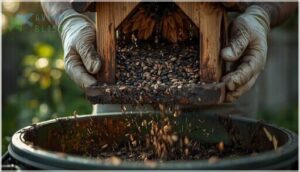
Before you start any feeder maintenance, empty all old seed and debris from inside. This simple step prevents mold growth and cuts seed spoilage by 40% in weekly cleaning schedules.
Old remnants harbor bacteria that multiply quickly in neglected feeders. Dump contents into compost or trash. Check corners and crevices where moisture-trapped debris hides.
Complete seed removal is your foundation for effective feeder sanitation.
Scrubbing and Washing Techniques
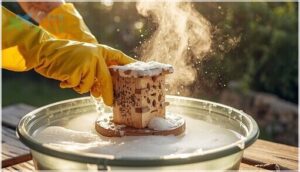
After you’ve emptied your feeder, fill a tub with soap and water at 104–140°F for ideal soil removal. This temperature improves lipid-based residue breakdown by up to 34%.
Use a soft-bristle brush to scrub all surfaces for about 60 seconds. Pre-soaking cuts your cleaning time by 28% and protects wooden feeders from excessive wear during maintenance.
Proper Rinsing and Drying Methods
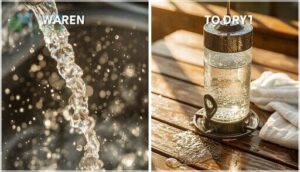
A thorough rinse removes soap residue that 12% of feeders retain after standard washing. Use warm water at 104–122°F and rinse for at least 20 seconds to achieve 95% microbial reduction.
- Run clean water over all surfaces until no soap film remains
- Check crevices and feeding ports where residue accumulates
- Air-dry feeders completely for 24 hours to eliminate 98% of surface moisture
- Place feeders in direct sunlight to reduce drying time by 15–20%
Sanitizing Feeders Effectively

Sanitizing drops pathogen levels by 99% when you use the right approach. A bleach solution at a 1:10 dilution delivers proven microbe reduction and pathogen control on plastic and metal feeders.
| Sanitizer Type | Contact Time | Efficacy |
|---|---|---|
| Diluted bleach solution | 5–10 minutes | 99.9% kill rate |
| Hydrogen peroxide | 15 minutes | 85% mold reduction |
| UV cleaning | 2 minutes | 90% bacterial reduction |
Soak your feeder completely. Rinse thoroughly and air-dry for effective feeder disinfection.
Maintenance Tips for Different Feeder Types
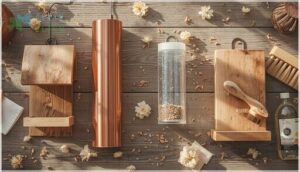
Each feeder material requires its own care approach to stay functional and safe for birds. Wood needs protection from the elements, copper demands attention to prevent tarnish, and tube feeders face unique cleaning challenges.
Here’s how to maintain each type so your feeders last season after season.
Caring for Wooden Bird Feeders
Wooden feeders bring natural charm to your yard but need consistent attention. Cedar and pine models can last five years or longer when you clean them properly—untreated softwood degrades 40% faster without care. Protect wooden feeder durability and support bird attraction methods with these wood preservation techniques:
- Apply wood sealer or linseed oil annually to reduce water absorption by 60%
- Sand rough edges after each seasonal maintenance cycle to prevent injuries
- Inspect mounting hardware and feeder mounting options before winter storms arrive
Cleaning and Polishing Copper Feeders
Copper feeders resist corrosion naturally but discolor within months when exposed to moisture and air. Polish your feeder every six weeks using non-abrasive copper cleaner to reduce tarnish buildup by 75%. After cleaning, apply microcrystalline wax to extend shine for four to six months.
Sanitize copper surfaces using 3% hydrogen peroxide for one minute. Rinse thoroughly with distilled water to prevent mineral deposits that dull the finish.
| Maintenance Task | Frequency | Purpose |
|---|---|---|
| Polish with copper cleaner | Every 6 weeks | Removes tarnish and restores luster |
| Apply protective wax | Every 4–6 months | Extends time between polishing cycles |
| Sanitize with 3% hydrogen peroxide | Every 2 weeks | Eliminates avian pathogens safely |
| Rinse with distilled water | After each cleaning | Prevents mineral deposits on surface |
Maintaining Tube and Plastic Feeders
Tube feeders with armored feeding stations and seed deflectors trap debris in tight spaces. Use a narrow bottle brush with warm water to reach all crevices—non-abrasive bristles remove dried seed residues without damaging the feeder material.
Soak plastic feeders in a 1:9 bleach solution for five minutes to eliminate mold. Air-dry them completely for 24 hours to cut fungal growth by 60% and boost seed retention efficiency.
Preventing Pests and Ensuring Safety
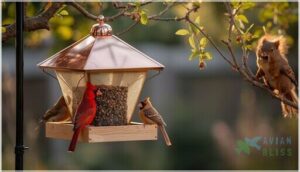
A well-maintained feeder does more than keep birds healthy—it keeps unwanted visitors at bay and prevents accidents that could harm your backyard flock.
Squirrels, weather damage, and poor placement can all compromise your feeding station’s safety.
Here’s how to protect your feeders and the birds that depend on them.
Squirrel Deterrence Strategies
Squirrels can empty feeders in hours, but combining proven deterrent devices cuts seed loss dramatically. Weight-activated squirrel proof feeders exclude roughly 84% of raiders while welcoming songbirds. For reliable pest control, install baffles at least 1.2 meters above ground and position feeders three meters from jump-off points. You’ll also reduce squirrel activity by choosing safflower over sunflower seeds:
- Mount pole feeders with proper baffle installation
- Select squirrel proof feeders with metal ports
- Adjust feeder placement away from trees
Inspecting Feeders for Damage
Check your feeders weekly for cracks, rust, or loose hardware. Structural damage affects 48% of feeders within twelve months. Run your hands along edges to detect splinters on wooden models. Look for bent perches or jammed seed ports.
Routine cleaning reveals hidden issues like rot prevention needs or squirrel damage. Catching wear early protects both birds and your investment.
Safe Feeder Placement and Height
Position your feeder 8-10 feet high to balance bird visibility with squirrel prevention. Keep it at least 10 feet from trees and structures for effective squirrel control. Place feeders 10 feet from windows to cut collision risk by up to 80%.
This setup promotes predator avoidance while keeping your backyard birding tips practical. Proper bird feeder setup makes bird feeder maintenance safer and more rewarding for local wildlife.
Frequently Asked Questions (FAQs)
How often should I replace my bird feeder?
Replace your bird feeder every one to three years depending on material durability and wear factors.
Wooden feeders need replacement sooner due to rot, while metal versions last longer with proper bird feeder care.
Whats the best seed for attracting specific birds?
You’d think all bird seed works the same magic, but birds are pickier than toddlers at dinner. Black-oil sunflower seeds draw chickadees and nuthatches, while nyjer attracts goldfinches during migration—choose seed mixtures matching your backyard birds’ preferences.
Understanding the universal themes in literature, such as common life themes, can help us appreciate the diversity of bird species and their unique preferences.
Can I use vinegar instead of bleach solution?
White vinegar works for routine cleaning but doesn’t kill pathogens as effectively as bleach solution.
You’ll get modest bacterial reductions with vinegar, though bleach remains the benchmark for sanitizing feeders against avian diseases.
How do I store birdseed to keep it fresh?
A backyard birder once lost an entire bag of seed to weevils—she’d left it in the garage all summer. Store your birdseed in airtight containers below 39°F.
Cool temperatures and moisture control prevent mold and pests effectively.
Should I take feeders down during certain seasons?
Seasonal removal for 1–2 weeks in late summer helps with disease prevention and mold reduction.
This wildlife safety practice reduces pathogen loads by 40–60% while supporting natural foraging and feeder storage during high-risk periods.
Conclusion
Picture a chickadee landing on your feeder tomorrow morning—bright-eyed, healthy, and safe from the threats that lurk in neglected feeding stations. Your commitment to bird feeder maintenance creates that reality.
The ten minutes you spend each week scrubbing and sanitizing protects entire flocks from illness. Your backyard becomes a true sanctuary when you make cleanliness routine.
Clean feeders mean thriving birds. That’s the difference you make.