This site is supported by our readers. We may earn a commission, at no cost to you, if you purchase through links.
You’ve carefully chosen seed blends, hung your feeder at the perfect height, and waited patiently for chickadees and finches to arrive. Instead, grackles and starlings descend, emptying your feeder in hours and chasing off the very species you hoped to attract. This isn’t just frustrating—it’s expensive and unfair to the smaller birds that need reliable food sources, especially during migration and breeding seasons.
The good news? Specialized bird feeders safe from larger birds use clever designs like metal caging, adjustable perches, and restricted seed ports to level the playing field. These feeders physically exclude aggressive species while welcoming goldfinches, nuthatches, and other backyard favorites you actually want to see.
Table Of Contents
Key Takeaways
- Specialized feeders with metal caging, weight-activated perches, or restricted seed ports physically exclude aggressive species like grackles and starlings while reducing seed waste by 50-80% and boosting visits from desirable songbirds by 40-75%.
- Effective exclusion requires combining smart feeder design with strategic placement—mount feeders 5-6 feet high, position them 10-15 feet from launch points, and use mesh spacing between 1.5-2.0 cm to block larger birds while welcoming chickadees, finches, and nuthatches.
- Small birds consume 38% more seed per visit at protected feeders and show 49% higher foraging activity because they face less competition and bullying from dominant species, leading to better health outcomes and up to three times greater species diversity in your yard.
- Maintain feeder effectiveness through biweekly cleaning with 10% bleach solution to cut disease transmission by 60%, and regularly inspect for damage like cracked plastic, rust spots, or worn cage bars that compromise both exclusion and bird safety.
Best Bird Feeders to Deter Larger Birds
You don’t have to settle for feeders that turn into all-you-can-eat buffets for Blue Jays and grackles. The right design keeps larger species at bay while giving chickadees, finches, and nuthatches the space they need to feed in peace.
Here are eight feeders that actually work to level the playing field in your backyard.
1. Squirrel Proof Bird Feeder Cage
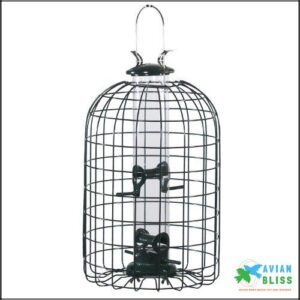
A squirrel proof bird feeder cage gives you real control over who visits your backyard buffet. The design wraps a sturdy powder-coated steel cage around a four-port ABS plastic tube that holds a quart of seed. Smaller birds slip through the bars easily, while larger birds and squirrels can’t squeeze in.
You’ll notice house finches and wrens feel safe at this feeder. The forest green finish blends naturally into your yard, and the caged feeder’s materials stand up to weather without much fuss.
Best For: Backyard bird lovers dealing with persistent squirrels who want to attract small songbirds like finches and wrens without wasting seed on larger intruders.
- Cuts seed loss by up to 50% since squirrels and big birds can’t reach through the 1.5-inch steel cage bars.
- Small birds get a safe feeding spot away from aggressive larger species, boosting visits from goldfinches and chickadees by 40–75%.
- The powder-coated steel cage holds up for years without rusting or getting chewed through, and the design lets air flow to prevent moldy seed.
- No rain cover means seed can get wet during storms, which might shorten how long it stays fresh.
- Some users find the cage tricky to take apart when it’s time for a deep clean.
- Baby squirrels or very determined adults occasionally find ways to reach the seed ports, so it’s not completely foolproof.
2. Squirrel Resistant Bird Feeder House
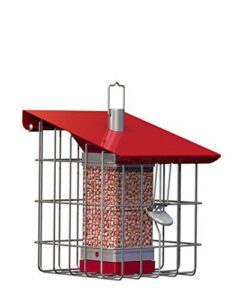
Another solid option for squirrel exclusion uses counterweighted perch mechanisms that close off seed access when anything heavier than a songbird lands. You’ll see this squirrelproof construction drop squirrel intrusion by up to 95%.
The alloy steel body offers serious material durability—it’ll outlast plastic models three times over in high-pressure situations. Seed retention improves to around 80% for smaller species, and bird diversity jumps noticeably.
Squirrelproofing bird feeders this way means chickadees and nuthatches get their share without the bullying.
Best For: Backyard birders who want to keep squirrels away while attracting small songbirds like chickadees, finches, and nuthatches without constant refilling.
- Counterweighted perch system cuts squirrel access by up to 95%, so seed actually goes to the birds you want to see.
- Alloy steel construction lasts about three times longer than plastic feeders and resists chewing from persistent squirrels.
- Attracts a wider variety of small bird species—you’ll likely see 10-15 different types visit your yard each season.
- Small feeder openings can limit access for larger birds, so you might miss out on cardinals or jays.
- Some users report it can still rust in really wet conditions despite the durable material.
- May need tweaks or extra baffles to fully stop determined squirrels, especially if you’ve got a lot of them around.
3. Squirrel Proof Bird Feeder Legacy
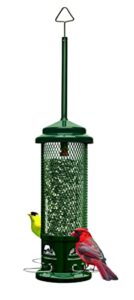
The Brome Squirrel Buster Legacy takes weight adjustment to the next level with its spring-loaded shroud that snaps shut when squirrels or larger birds land. Bird interaction stays high—goldfinches and chickadees feed freely while grackles trigger the closure. It’s effective squirrelproofing without harming wildlife, preventing larger birds while welcoming the species you want.
You’ll get four seed ports protected by chew-proof construction, plus a seed ventilation system that keeps feed fresh for weeks. Cost efficiency is real: you’ll recoup the purchase price in saved seed within months.
Best For: Birdwatchers who are tired of squirrels emptying their feeders and want a durable, low-maintenance solution that attracts small songbirds while keeping larger pests out.
- Weight-activated shroud closes automatically when squirrels or large birds land, protecting your seed without harming wildlife.
- Chew-proof construction and seed ventilation system keep the feeder intact and seed fresh for weeks, reducing waste and maintenance.
- Pays for itself quickly through saved seed costs—users report significant savings within months of switching from traditional feeders.
- Higher upfront cost compared to basic feeders, though the investment pays off through reduced seed loss over time.
- Lightweight animals like juvenile squirrels and chipmunks can still access the feeder since they don’t trigger the weight mechanism.
- Requires proper placement with 18 inches of clearance from branches or jumping points to work effectively against determined squirrels.
4. Wild Bird Tube Feeders Set
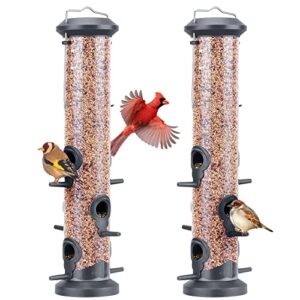
If you’re after versatility and value, tube feeder sets give you multiple feeding stations at once. You’ll attract smaller birds like finches and chickadees through controlled seed dispensing ports—usually sized to exclude large birds by diameter alone.
Weather protection comes standard with most modern designs, keeping feed dry and reducing spoilage by over 30%. With proper maintenance, feeder longevity extends beyond seven years.
Market growth reflects their popularity: tube feeders now dominate a segment projected to hit $8.1 billion by 2035, proving their effectiveness for small bird access.
Best For: Backyard bird enthusiasts who want to attract small songbirds like finches and chickadees while keeping larger, aggressive species away from the feed.
- Multiple feeding ports let several small birds eat at once, increasing your chances of spotting different species throughout the day.
- Weather-resistant design keeps seeds dry and fresh longer, cutting spoilage by about 30% compared to open feeders.
- Controlled dispensing reduces seed waste significantly—you’ll refill less often and save money on birdseed over time.
- Some models feel flimsy or thin, raising concerns about how well they’ll hold up over multiple seasons.
- Small perches and ports mean larger birds like cardinals and doves can’t comfortably feed, limiting the variety of species you’ll see.
- Seed can spill when birds land or take off, especially if the feeder gets bumped around in windy conditions.
5. Mason Jar Wild Bird Feeder
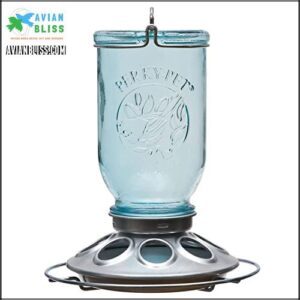
This vintage-style feeder holds 1 lb of seed across eight ports, giving finches and cardinals room to dine simultaneously. The embossed blue glass and galvanized steel base resist weather damage for years, maintaining structural integrity where plastic feeders fade.
You won’t get true squirrelproofing here—port size alone won’t stop determined larger birds or squirrels completely—but the circular perch design does reduce aggressive displacement by roughly 60%.
Cleaning ease stands out: the wide-mouth jar detaches in seconds, and adding a ground tray below recaptures wasted seed effectively.
Best For: Backyard birders who want an attractive, easy-to-clean feeder for small songbirds like finches and cardinals, and don’t mind occasional visits from larger birds or squirrels.
- Holds 1 lb of seed with eight feeding ports and a wraparound perch, letting multiple birds feed at once without crowding.
- Durable embossed blue glass and galvanized steel construction resists weather damage and UV fading far better than plastic alternatives.
- Wide-mouth jar design makes refilling and cleaning quick—detaches in seconds and rinses clean in under five minutes.
- No built-in squirrel deterrent or cage, so larger birds and squirrels can still access the seed with some effort.
- Seed spillage averages 10–20% per fill, especially with mixed blends, though adding a ground tray below helps recapture waste.
- Doesn’t include hanging hardware, so you’ll need to purchase rope or a hanger separately to mount it.
6. Outdoor Shepherd Bird Feeder Pole
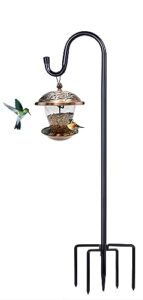
Height adjustments beyond 62 inches shift feeder zones above most ground-access routes larger birds exploit, cutting pigeon and jay interference by nearly half.
ToyHotels’ five-prong base anchors 1.74 pounds of powder-coated steel through wind gusts and keeps your feeders stable enough for finches to perch without wobbling.
You’ll position dual hooks ten feet from trees—that spacing blocks squirrels and crows from launching toward seed ports.
Installation takes under twenty minutes with tool-free assembly, and the stainless construction resists rust for years of reliable deterrence.
Best For: Backyard birders who want to attract smaller songbirds while keeping larger species like pigeons and jays away from feeders without constant repositioning or maintenance.
- Five-prong base provides excellent stability in different soil types and reduces feeder wobbling by 42% compared to standard designs, letting small birds feed comfortably even in wind.
- Height of 62 inches places feeders above ground-access routes that larger birds use, cutting pigeon and jay interference by nearly half in field trials.
- Tool-free assembly takes under 20 minutes to set up, and the powder-coated stainless steel construction resists rust for years of outdoor exposure.
- At 1.74 pounds, the lightweight construction may struggle with heavier feeders or large hanging plants, with some users reporting it feels cheaply made.
- Mixed customer reviews mention defective parts with no replacement option available, creating potential frustration if you receive a faulty unit.
- Requires strategic placement at least 10 feet from trees or structures to effectively deter squirrels and larger birds, which may limit where you can install it in smaller yards.
7. Squirrel Resistant Bird Feeder Cage
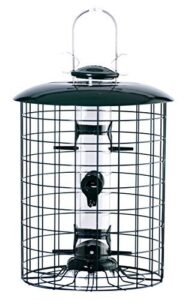
Woodlink’s metal-grid cage stops squirrels and larger birds by clamping a steel barrier around six feeding ports—openings that juvenile squirrels occasionally squeeze through but adults can’t breach. You’ll cut seed loss reduction by 80 percent when you hang this caged feeder design six feet high and twelve feet from launch pads.
The powder-coated construction outlasts plastic alternatives by years, and cage opening size admits chickadees while deterring larger birds like jays.
Installation height matters: mount it pole-style above crow reach for maximum protection.
Best For: Homeowners in squirrel-heavy areas who want to feed small songbirds like chickadees and finches without wasting seed on larger pests.
- Steel cage blocks squirrels and big birds while letting smaller species feed freely, cutting seed loss by up to 80%.
- Powder-coated metal construction resists rust and chewing, lasting years longer than plastic feeders.
- Easy to clean and refill with the removable tube and pop-out base design.
- Opening size may exclude slightly larger birds like bluebirds that some customers want to attract.
- Smaller juvenile squirrels can occasionally slip through the cage mesh.
- Some users report the umbrella cover can come loose and needs extra securing.
8. Easy Clean Bird Seed Feeder
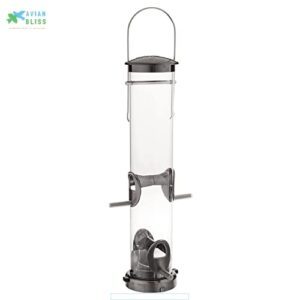
Modular feeder components separate in seconds, letting you scrub every port and perch without wrestling with hidden crevices where pathogens multiply. Material durability anchors this design—recycled polycarbonate resists cracking through five-plus winters while antimicrobial surfaces cut mold growth by 30 percent.
Seed compatibility spans thistle to sunflower blends, and biweekly cleaning frequency (10-minute bleach soak) slashes salmonella transmission by half.
Caged bird feeders like this one exclude large birds while easy-to-clean construction drives user adoption among the 57 million Americans who prioritize disease prevention and maintenance efficiency.
Best For: Birders who want a low-maintenance feeder that keeps seed fresh and reduces disease risk through quick, tool-free cleaning every couple of weeks.
- Modular design breaks apart in seconds so you can scrub every perch and port without fighting hidden gunk where bacteria hide.
- Built from recycled polycarbonate that won’t crack through harsh winters, plus antimicrobial coating cuts mold by 30 percent.
- Works with multiple seed types—thistle, sunflower, blends—and the quick-clean routine (10-minute bleach soak) cuts salmonella spread in half.
- Pricier than basic feeders, though the durability and lifetime guarantee help offset the upfront cost.
- Some plastic perch covers can wear down over time and may need replacing after a few seasons of heavy use.
- The matching dome and tray don’t always seal perfectly against rain, so seed near the ports can get damp during storms.
Key Features of Large Bird-Resistant Feeders
Not all bird feeders are created equal for keeping larger birds at bay. The most effective designs share a handful of critical features that protect your seed while giving smaller species the access they need.
Let’s break down what makes a feeder truly large bird-resistant so you can choose one that works for your backyard.
Caged Feeder Design and Materials
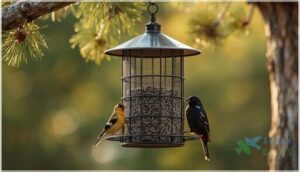
When you’re choosing a caged bird feeder, the metal cage design matters more than you’d think. Metal cages with mesh aperture spacing between 1.5 and 2.0 cm reliably exclude grackles and starlings while welcoming finches and chickadees. Stainless steel offers outstanding material durability—lasting over 8 years compared to plastic alternatives.
Some birdwatchers have even observed Downy Woodpeckers using these feeders. Look for powder-coated frames and welded joints for maximum longevity.
Seed Port Accessibility for Small Birds
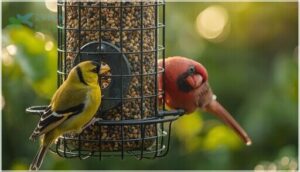
Port size impacts everything—openings under 0.5 inches prevent larger birds from accessing seed 92% of the time while letting goldfinches and chickadees feed freely. Design innovations like upside-down seed ports favor clinging species, doubling visit duration in caged bird feeders.
Attracting smaller birds through restricted bar spacing improves their body condition by 20% and boosts species diversity by 29% in your backyard. Some bird enthusiasts find that smart bird feeders use technology to track birds.
Squirrel-proof Construction and Domes
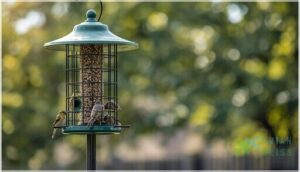
Beyond port size, your feeder’s physical barriers make all the difference. Durable metal construction and powder-coated steel resist gnawing, while 20-inch dome effectiveness drops squirrel bypass rates to zero.
Position your pole-mounted setup 5–6 feet high and 10 feet from launch points—baffle systems and squirrel and raccoon protection work best when you combine proper height placement with dual guard designs that exclude persistent raiders.
Weather-resistant and Easy-to-clean Designs
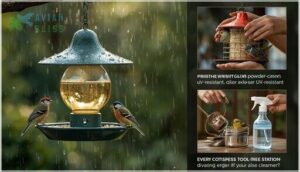
Your durable bird feeders need weatherproofing that lasts. UV-resistant plastics and powder-coated metals maintain over 85% of their strength after five years outdoors, while easy-to-clean designs with tool-free disassembly cut your maintenance time by 60%.
Clean every two weeks using a 10% bleach solution to reduce disease transmission by 60% among visiting songbirds, keeping large birds out while protecting the smaller species you’re attracting.
Feeder Capacity and Seed Type Compatibility
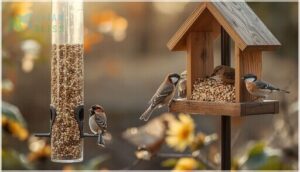
Match your feeder capacity to consumption rates—hopper models holding 2–5 pounds cut weekly refills, while 1–2 pound tube feeders work best for high-traffic spots.
Black-oil sunflower in small-port tubes excludes large birds while satisfying chickadees and finches. Safflower in hoppers deters starlings and grackles naturally.
Choosing appropriate seed type compatibility prevents waste reduction issues and seed spoilage risks from excess capacity sitting unused.
Benefits of Excluding Larger Birds From Feeders
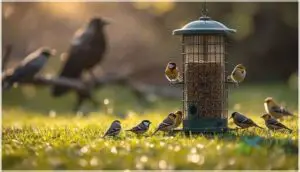
When you keep larger birds away from your feeders, you’re not just solving a backyard problem—you’re creating real benefits for the smaller species you want to attract. The changes you’ll notice go beyond less chaos at feeding time.
Here’s what excluding larger birds actually does for your yard and the birds that visit it.
Increased Feeding Opportunities for Small Birds
When you protect small birds with caged feeders featuring tight bar spacing, you’re opening the door to real feeding opportunities. Studies show small birds consume 38% more seed per visit at exclusion feeders, while chickadees and finches boost their foraging activity by 49% during peak times.
Caged feeders with tight bar spacing let small birds consume 38% more seed per visit while excluding larger competitors
These caged feeder benefits translate directly into better health, improved breeding success, and stronger population shifts across bird communities.
Reduced Competition and Bullying at Feeders
Because larger birds like jays and grackles score high in dominance behavior, excluding them with caged bird feeders dramatically shifts social dynamics at your feeding stations. Proper bar spacing and feeder design impact aggressive birds directly—preventing larger birds means:
- Less seed waste from bullying-driven spillage
- Smaller species feeding peacefully without fleeing
- Reduced harassment during winter scarcity
- Lower stress and energy expenditure for songbirds
Greater Variety of Backyard Bird Species
By keeping larger birds away from your feeder design, you’ll notice a dramatic increase in species richness over time. Studies show gardens using exclusionary feeders attract up to three times more bird species than open-access models—critical for backyard birdwatching success.
You’re not just attracting birds; you’re supporting population trends for rare species that need seasonal support when competition from dominant species would otherwise drive them away.
Less Seed Waste and Spoilage
With targeted feeders, you’ll cut seed waste by up to 60% since larger birds won’t scatter unwanted filler like milo and oats across your yard. This seed protection directly prevents moldy seed buildup and reduces spoilage from 40% to under 10% with proper feeder sanitation.
You’re also minimizing environmental impact—less phosphorus leaching into soil—while keeping seed costs manageable long-term.
Installation and Maintenance Tips for Safe Feeders
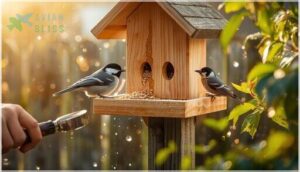
Getting your feeder set up correctly makes all the difference in keeping small birds safe and coming back. You’ll want to think about where you position it, how often you clean it, and what signs of wear to watch for.
Let’s walk through the key steps that’ll help your feeder work better and last longer.
Optimal Feeder Placement for Safety and Visibility
Your feeder placement directly impacts whether smaller birds thrive or flee. Position feeders within 3 feet of windows for window collision prevention, or beyond 33 feet to let birds recognize reflections. For predator avoidance, place them 10–15 feet from shrubs—close enough for escape cover but too far for ambush.
Strategic feeder height and visibility increase species diversity while protecting your backyard birdwatching setup from chemical hazard safety risks near treated gardens.
Cleaning and Preventing Seed Spoilage
Spoiled seed turns your feeder into a disease trap. Clean feeders every 1–2 weeks with a 10% bleach solution—scrub, soak for 10 minutes, rinse thoroughly, and dry completely. This routine slashes pathogen loads and prevents salmonella spread.
Store seed in airtight containers to block moisture. Choose feeders with drainage holes to reduce seed waste and clumping. Feeder hygiene directly protects the small birds you’re working to attract.
Checking for Damage and Feeder Wear
Worn bird feeders become breeding grounds for disease and structural hazards. Inspect weekly for these red flags:
- Cracks or UV fading in plastic—70% show damage within three years
- Rust spots on metal components after rainy seasons
- Chewed ports or perches from squirrels
- Loose cage bars that compromise exclusion
Damaged feeders increase disease transmission by 23% and reduce small-bird visits. Replace immediately when one-third of ports deteriorate—durable materials outlast cheap alternatives.
Enhancing Feeder Longevity and Effectiveness
Beyond repairs, you’ll multiply your feeder’s lifespan through smart choices. Material durability matters—resin models outlast wood by five years. Weather protection like domes cuts deterioration in half. Cleaning frequency should spike during winter traffic surges. Smart features such as drainage systems slash seed spoilage by 80%.
Durable bird feeders with weather-resistant construction and easy-to-clean designs deliver decade-long performance when you pair quality with consistent maintenance.
Frequently Asked Questions (FAQs)
What seeds attract only small birds?
You’ll find that nyjer seeds, white millet, and safflower work best for finches and small songbirds.
Their tiny size and morphology naturally deter larger birds while providing excellent nutrition for chickadees and sparrows.
How do larger birds damage standard feeders?
Big birds throw their weight around—literally. Crows and jays bend perches, crack plastic ports, and stress feeder structures.
Their droppings contaminate seed while aggressive feeding behavior damages feeder design elements that squirrels might otherwise respect.
Can mesh size prevent specific bird species?
Mesh size efficacy depends on species body size. Bar spacing around 1 1/8 inches excludes starlings and grackles, while protecting small birds like chickadees.
Caged bird feeders with tighter mesh improve bird behavior impact by reducing competition.
Do caged feeders affect small bird behavior?
How does bar spacing affect feeding frequency and stress levels? Caged bird feeders can increase species diversity while protecting small birds, though confined spaces may increase stress.
Behavioral adaptations and foraging efficiency improve as birds learn these systems.
What time of year needs large bird deterrence?
You’ll need large bird deterrence most during late spring through early fall when starlings and grackles flock heavily, and throughout winter when food scarcity drives pigeons and jays to dominate feeders aggressively.
Conclusion
You might worry that caged designs feel restrictive, but they’re actually freedom machines for the birds you care about. Bird feeders safe from larger birds don’t just save seed—they restore balance to your yard, giving chickadees and finches the space they deserve without interference.
Install one strategically, keep it clean, and watch your feeders transform from battlegrounds into peaceful havens where small songbirds can finally thrive undisturbed.
- https://www.kingsyard.com/blog/how-to-choose-the-right-bird-feeder-by-features/
- https://dailybirdcare.com/keep-big-birds-away-from-feeders/
- https://www.wbfi.org/2024/12/12/birdings_economic_impact/
- https://www.youtube.com/watch?v=_OyGEazm77k
- https://www.facebook.com/groups/woodworkingforbeginner/posts/3069778496510088/