This site is supported by our readers. We may earn a commission, at no cost to you, if you purchase through links.
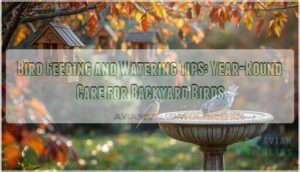 A single feeder stocked with quality sunflower seeds can attract over 40 different bird species to your yard, transforming an ordinary backyard into a wildlife sanctuary. But keeping those feathered visitors healthy and coming back requires more than just filling a feeder and hoping for the best.
The difference between a thriving bird haven and an abandoned feeding station often comes down to understanding what different species need throughout the year. From selecting seeds that deter squirrels while appealing to cardinals, to maintaining water sources that don’t become disease breeding grounds, effective bird feeding and watering tips involve strategic choices that benefit both you and your avian neighbors.
When you match the right food to the right feeder at the right time, you’re not just watching birds—you’re supporting their survival through migration, nesting, and harsh winter months.
Table Of Contents
Key Takeaways
- Offering diverse seed types like black oil sunflower, millet, and Nyjer attracts over 40 bird species, while high-fat foods such as suet and peanuts provide essential energy during winter months when survival rates double for birds with feeder access.
- Strategic feeder placement within 3 feet or beyond 30 feet of windows prevents fatal collisions, while positioning feeders 5 feet high and 10-15 feet from shrubs balances predator protection with escape routes.
- Weekly feeder cleaning with a 10% bleach solution prevents disease transmission like salmonellosis, and storing seed in airtight containers below 50% humidity stops mold growth that threatens bird health.
- Year-round water sources with 1-2 inch depth positioned near shrubs double bird visitation rates, and heated baths during winter provide critical hydration when natural sources freeze.
Attracting Birds With The Right Food
The secret to attracting a thriving variety of birds to your backyard lies in offering the right foods at the right times. Different species have distinct dietary preferences, from seed-eating finches to insect-loving woodpeckers. Understanding which foods appeal to which birds will help you create a feeding station that welcomes diverse avian visitors throughout the year.
Popular Seed Types and Their Benefits
Sunflower seeds offer the highest energy and attract over 40 species, including cardinals and chickadees. They are also beneficial for healthy plumage and reproduction in birds.
Millet provides essential nutrients for ground-feeders like sparrows, while Nyjer seeds deliver concentrated energy for finches during migration.
Safflower’s thick shells deter squirrels but appeal to cardinals.
High-quality seed mixes combining these varieties increase species diversity by 52%, helping you support a thriving backyard community.
Suet, Peanuts, and Alternative Foods
Beyond seeds, energy-packed suet and peanuts attract woodpeckers, nuthatches, and chickadees—species that might otherwise skip your yard. Suet’s concentrated fat content helps birds survive cold weather, while peanuts deliver 45% fat and 24% protein. Choose premium, aflatoxin-tested peanuts to protect bird health.
You can also create homemade suet recipes using peanut butter mixed with cornmeal, offering specialized nutrition through suet feeders positioned at least five feet high. The popularity of peanuts in bird feed is partly due to their high nutritional value.
Offering Diverse Seed Mixes for Species Variety
A single seed type won’t bring you the variety you’re hoping for. Mixed seed blends containing black oil sunflower, white proso millet, and hulled peanuts dramatically increase species richness at your feeders. Research shows these diverse mixes attract up to 40 different bird species, from cardinals to chickadees.
Effective mix composition includes:
- Black oil sunflower seeds (88.8% of species prefer these)
- White proso millet for sparrows and doves
- Hulled peanuts and tree nuts for woodpeckers
Providing Nectar and Fruit for Specialized Feeders
While seeds draw the majority, nectar feeders and fruit offerings attract a whole new crowd. Sugar-water ratios of 1:4 work best for hummingbirds, with nectar feeder types like port designs outperforming basic models.
For fruit preparation safety, slice apples and oranges seedless—those seeds contain toxins. Seasonal fruit choices matter too: berries in summer attract waxwings and bluebirds, while dried fruit prevents mold in your fruit feeder options year-round.
Choosing and Placing Bird Feeders
The right feeder in the right spot can make all the difference in who shows up to your backyard buffet. Different bird species have distinct feeding habits, and your feeder choices should reflect those preferences.
Let’s look at the types of feeders you’ll need and where to place them for the best results.
Types of Feeders for Different Birds
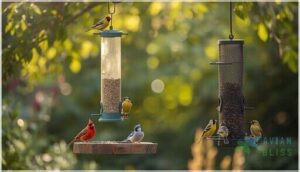
You’ll want to match your feeder types to the birds you’re hoping to attract. Tube feeders work well for finches and small songbirds, offering 8 to 10 perches with antimicrobial protection reducing harmful bacteria.
Platform feeders accommodate 88 out of 98 North American feeder-visiting species, including cardinals, jays, and doves.
Ground feeders attract mourning doves and sparrows, while Nyjer seed feeders bring in goldfinches and siskins.
Strategic Feeder Placement for Safety and Diversity

Where you position your feeders shapes both safety and diversity. Follow these feeder placement strategies for best results:
- Collision Reduction: Place feeders within 3 feet or beyond 30 feet from windows to minimize deadly strikes
- Predator Avoidance: Raise feeders at least 5 feet high, positioned 10–15 feet from shrubs for escape routes
- Habitat Integration: Locate near native plants to boost species diversity by 35%
These safe locations balance predator protection with accessibility.
Using Baffles and Squirrel-Proofing Techniques
To keep squirrels from raiding your feeders, you’ll need reliable squirrel proofing methods. Install baffles at least 4 feet high on poles, maintaining a 10-foot clearance from launch points. Double baffle setups achieve zero breach rates, while cone-shaped metal designs block climbers completely.
Weight-activated feeders and metal cage designs with 1.5-inch openings provide excellent squirrel control. Regular maintenance and secure mounting help your squirrel deterrents stay effective year-round.
Reducing Window Collisions and Predator Risks
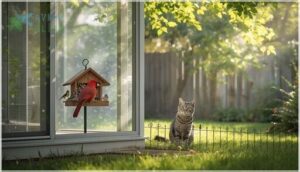
Window collisions kill hundreds of millions of birds annually in the U.S., while cats account for billions more deaths. You can protect your feathered visitors with these proven predator deterrent strategies:
Window collisions and cats kill billions of birds yearly, but strategic feeder placement and predator barriers can protect your backyard visitors
- Position feeders within 3 feet of windows or beyond 10 feet to prevent fatal window collisions
- Apply external window decals spaced 2–4 inches apart for effective window safety
- Keep cats indoors and use predator control barriers near feeding stations
Ensuring Cleanliness and Bird Health

Keeping your feeders clean isn’t just about appearances—it’s about protecting the birds that depend on you. Dirty feeders can spread diseases like salmonellosis and aspergillosis, which move quickly through bird populations.
Let’s walk through the essential practices that’ll keep your backyard visitors healthy and thriving.
Regular Feeder Cleaning Practices
Your feeders need consistent attention to keep birds healthy and thriving. Clean seed feeders every two weeks during summer and weekly in winter, when moisture and heavy activity increase contamination risks.
Ground feeders require even more frequent washing since they accumulate droppings faster. Project FeederWatch recommends stepping up feeder cleaning during rainy periods or when disease outbreaks occur.
Safe Disinfecting Methods and Frequency
A 10% bleach solution—one part bleach to nine parts water—eliminates Salmonella and other pathogens when you soak feeders for 10 minutes. Wildlife agencies recommend weekly disinfection for disease prevention, though vinegar solutions (4:1 water to vinegar) work as bleach alternatives if mold isn’t present.
Always rinse thoroughly and air-dry your clean feeders before refilling to prevent chemical residue from harming birds.
Preventing Mold, Disease, and Contamination
Your diligence with bleach-based feeder sanitation pays off—it cuts bacterial loads by over 99%, but disease prevention requires broader attention to bird hygiene and water quality. Mold thrives when humidity tops 75% for two days, making clean feeders and waste management non-negotiable.
Follow these mold prevention and crowding reduction strategies:
- Choose hopper feeders to reduce seed moisture by 45%
- Rake hulls and droppings twice weekly beneath feeding stations
- Space multiple feeders several meters apart
- Relocate your setup 20 feet every few months
Proper Birdseed Storage Tips
Clean feeders alone won’t protect birds if your seed spoils before they eat it. Store birdseed in airtight containers—metal bins outperform plastic when squirrels prowl—and keep humidity below 50% to prevent mold.
Buy just a two-week supply during warm months, rotate stock using older seed first, and never mix fresh with aged batches. These seed storage methods cut contamination incidents by 28%.
Providing Water for Birds Year-Round
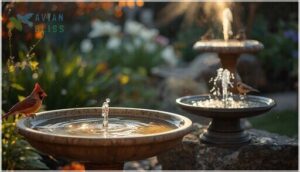
Water is just as essential as food for keeping your backyard birds healthy and hydrated throughout the year. Birds need reliable water sources for drinking and bathing, especially during extreme temperatures when natural sources freeze or dry up.
Here are four practical ways to provide water that birds will use all year long.
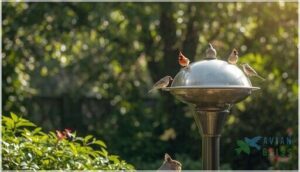
Setting Up Bird Baths and Water Features
Beyond traditional feeders, providing water for birds through a well-placed bird bath draws diverse species to your yard. Consider these essentials when setting up water features:
- Bath placement near shrubs (10–15 feet away) offers escape routes while maintaining visibility
- Water depth of 1–2 inches suits most small birds safely
- Moving water from drippers doubles visitation rates
- Bath materials like concrete withstand weather best
- Species preferences vary—elevated baths attract smaller birds, ground-level ones welcome larger species
Keeping Water Clean and Fresh
Once your bird bath is in place, maintaining water quality becomes your next priority. You’ll need to refresh the water every 1–3 days during warm months, scrubbing away droppings and biofilm with a brush.
For algae control, try adding copper tubing or a vinegar solution (one part vinegar to nine parts water) to keep water sources clean without harming visiting species.
Ensuring Winter and Summer Hydration
During temperature extremes, your backyard’s water features become critical survival tools. In summer heat, when small birds can lose over 5% of body mass hourly through evaporative cooling, you’ll want fresh water available throughout the day.
Winter brings different challenges—birds need open water at least twice daily when snow provides minimal hydration. Heated bird baths prevent freezing, ensuring year-round access while supporting both resident and migrating species through seasonal stress.
Positioning Water Sources for Maximum Use
Proper birdbath placement dramatically increases avian use while safeguarding visitors. Position your water sources with these safety and accessibility factors in mind:
- Keep birdbaths at least 10 feet from feeders to reduce contamination from droppings and seed debris
- Place in open areas with clear sightlines so birds can detect approaching predators from 15 feet away
- Position 5–8 feet from shrubs for quick escape cover without ambush risks
- Avoid windows closer than 5 feet to prevent collision injuries
Seasonal Bird Feeding Strategies
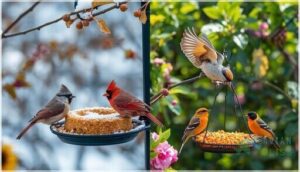
Birds’ nutritional needs shift throughout the year, and your feeding strategy should shift with them. Winter demands high-fat foods to fuel survival, while spring and summer call for protein to support migration and nestling growth.
Understanding these seasonal patterns helps you provide the right foods at the right times, keeping your backyard visitors healthy no matter what the calendar says.
Winter Feeding Essentials and High-Energy Foods
When temperatures plummet, your backyard birds need fuel that packs a serious punch. You’ll want to offer black oil sunflower seeds, which deliver twice the calories of striped varieties, along with suet providing 9 calories per gram. Studies show birds with feeder access have 69% survival rates versus just 37% without, especially when temperatures drop below 0°F for extended periods.
| Food Type | Caloric Density | Best For |
|---|---|---|
| Suet | 9 cal/gram | Woodpeckers, chickadees, nuthatches |
| Black oil sunflower | High fat/protein | Cardinals, finches, jays |
| Hulled peanuts | High protein/fat | Winter seed mix staple |
During winter, songbirds may consume up to 70 sunflower seeds daily to meet their caloric needs. You can increase species diversity by offering winter seed blends containing black oil sunflower, peanuts, niger seed, and white millet. These high-energy foods help birds build fat reserves for those long, cold nights when temperatures test their survival limits.
Spring and Summer Adjustments for Migrants and Nestlings
When migratory birds arrive in your yard, they’re running on empty after journeys spanning hundreds of miles. You’ll want to shift your feeding practices to protein-rich options like mealworms, which contain 50% protein, and peanut pieces to support muscle recovery.
For nesting birds, live mealworms become essential—parents make 12–14 feeding trips hourly, delivering protein-critical insects that nestlings need for proper growth and feather development.
Changing Foods and Feeder Types by Season
You’ll need to rotate seed mixes as daylight hours shift—moving from nectar and fruit feeders in spring to sock feeders with nyjer for winter finches. Autumn foods like peanut blends boost migrants’ energy reserves before departure, while winter feeding demands suet feeders and high-fat sunflower seeds.
Strategic feeder placement and seasonal bird feeding considerations directly affect which species visit your yard throughout the year.
Supporting Birds During Extreme Weather Conditions
Extreme Weather transforms your yard into a critical lifeline—especially during heatwaves, storms, and harsh winters when natural resources vanish. You can protect local populations by adjusting your approach to match these challenges:
- Heatwave Mitigation: Provide shaded feeding stations and refresh water sources twice daily, ensuring bird hydration when temperatures exceed 40°C and evaporative water loss spikes.
- Storm Damage Prevention: Position feeders near dense vegetation that absorbs rainfall and offers shelter, reducing exposure during heavy rain.
- Winter Bird Feeding Guidelines: Stock high-fat foods like suet for Climate Resilience, supporting thermoregulation and bird health when ice limits foraging.
Proper seed storage and providing fresh water year-round strengthen survival rates during these vulnerable periods.
Frequently Asked Questions (FAQs)
How do I attract hummingbirds to my yard?
You’ll attract hummingbirds by hanging nectar feeders with a 1:4 sugar-to-water ratio, planting native tubular flowers like Coral Honeysuckle, and adding shallow water features with gentle misters that encourage bathing.
What native plants support local bird populations?
You can support local bird species by choosing native plants like oaks, serviceberries, and elderberries, which provide essential berries, seeds, and insects.
Native plant selection enhances biodiversity conservation while creating essential backyard habitat for wildlife.
Can I feed bread or kitchen scraps safely?
You might think bread helps birds, but it actually causes malnutrition and deformities like angel wing.
Instead, offer nutritious alternatives like black oil sunflower seeds, suet, or peanuts for proper bird health.
How do I identify common backyard bird species?
You can identify backyard birds by observing their size, plumage colors, and distinctive markings. Listen for unique calls and songs, and watch their feeding behaviors and flight patterns to confirm bird species accurately.
Should I remove feeders during migration seasons?
You don’t need to remove feeders during migration season. Maintaining clean feeding stations actually aids birds with depleted energy reserves, especially during adverse weather, without disrupting their natural migration patterns or timing.
Conclusion
Your backyard isn’t just a patch of grass—it’s a lifeline for dozens of species traversing migration routes, harsh winters, and nesting challenges. By applying these bird feeding and watering tips consistently, you’re creating a refuge that sustains avian survival while rewarding yourself with daily encounters most people only see in documentaries.
Clean feeders, fresh water, and seasonal adjustments aren’t chores—they’re investments in a living ecosystem that thrives right outside your window.
- https://besjournals.onlinelibrary.wiley.com/doi/10.1002/pan3.10566
- https://www.allaboutbirds.org/news/analysis-do-bird-feeders-help-or-hurt-birds/
- https://www.wbfi.org/2025/08/26/new-wbfi-market-research-report-key-future-insights-revealed-copy/
- https://www.nature.com/articles/s44185-025-00080-y
- https://feederwatch.org/research-news/impacts-supplemental-feeding-bird-populations/