This site is supported by our readers. We may earn a commission, at no cost to you, if you purchase through links.
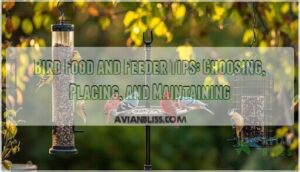
A single feeder stocked with the wrong seed can sit untouched for weeks, while a thoughtfully chosen setup just fifteen feet away might host a dozen species before noon. The difference isn’t luck; it’s understanding what birds need and how they behave.
Your feeder placement, seed selection, and maintenance routine determine whether you create a thriving feeding station or an empty perch that collects dust. Black oil sunflower seeds attract cardinals and chickadees, but goldfinches ignore them entirely in favor of nyjer thistle; platform feeders welcome ground-feeders like mourning doves, while tube feeders suit clinging species with smaller bills.
Getting these bird food and feeder tips right transforms your backyard into a reliable sanctuary where birds return daily, offering you close-up views of their striking feeding behaviors and seasonal patterns.
Table Of Contents
- Key Takeaways
- Choosing The Best Bird Food
- Selecting The Right Bird Feeder
- Effective Bird Feeder Placement
- Maintaining Feeders for Healthy Birds
- Managing Pests and Promoting Diversity
- Frequently Asked Questions (FAQs)
- How often should I refill my bird feeders?
- What attracts unwanted wildlife to bird feeding stations?
- Can bird feeding alter natural migration patterns?
- When should I temporarily stop feeding birds?
- How do weather conditions affect bird feeding?
- How do I attract hummingbirds to my yard?
- What plants provide natural food for birds?
- When should I start feeding birds each year?
- Can bird feeders spread diseases among birds?
- How do weather conditions affect bird feeding habits?
- Conclusion
Key Takeaways
- Black oil sunflower seeds attract the widest range of songbirds due to their high fat content and thin shells, while nyjer thistle specifically draws goldfinches and white proso millet appeals to ground-feeders like doves and sparrows.
- Position feeders 4 to 6 feet above ground and 10 to 15 feet from windows to reduce predator access and prevent collisions, while placing them within 16 to 50 feet of trees provides natural cover that increases bird visits by up to 30%.
- Clean feeders with hot soapy water every 1 to 2 weeks and disinfect with a 1:9 bleach-to-water solution for 10 minutes to prevent disease transmission, while storing seed in airtight containers prevents mold growth that threatens bird health.
- Weight-activated squirrel-proof feeders and baffles mounted six feet high block mammals while allowing birds access, and combining multiple feeder types with varied seed offerings at different heights encourages species diversity throughout the year.
Choosing The Best Bird Food
Selecting the right bird food determines which species visit your yard and how well they thrive throughout the year. Different birds have distinct nutritional needs and feeding preferences, so understanding seed types, specialty foods, and seasonal variations helps you create a feeding station that sustains diverse populations.
Matching the right seeds to your local birds starts with learning about common bird seed types and their typical prices before you stock your feeders.
You’ll also need to know which foods pose risks to birds, ensuring your feeding efforts promote health rather than harm.
Common culprits like bread, chocolate, and salty snacks can cause serious digestive issues or even toxicity in backyard birds.
Popular Seed Types and Varieties
Seed selection determines which birds you’ll attract to your feeders, so understanding varieties helps you create a welcoming space. Black oil sunflower seeds draw the widest range of songbirds; their high fat content and thin shells make them accessible to cardinals, chickadees, and finches.
Nyjer seeds work especially well for goldfinches and pine siskins, while a comprehensive seed feeding guide for birds can help you match specific seeds to your local species.
Nyjer thistle appeals to goldfinches and smaller passerines, while white proso millet attracts ground-feeders like doves and sparrows effectively.
Beginners can explore comprehensive seed selection guides for backyard bird feeding to match specific species with their preferred feed types and feeder placement strategies.
Suet, Nectar, and Specialty Foods
High-energy foods like suet support woodpeckers and other insect-eaters, especially when natural prey is scarce. Suet feeders should hold beef or mutton fat blends with seeds or peanut pieces, providing concentrated calories.
For hummingbirds, nectar feeders require a simple 4:1 water-to-sugar ratio; boil this mixture to prevent microbial growth, and skip red dyes entirely for bird nutrition safety.
Seasonal Food Recommendations
Your bird feeders should shift with the calendar to match avian energy demands. Winter feeding centers on black oil sunflower seeds and suet feeders rich in fat, while spring migration calls for protein-dense seed blends and nyjer thistle. Summer diet emphasizes no-melt suet and nectar; autumn fruits and high-calorie seeds fuel southbound travelers, ensuring year-round nutrition across all seasons.
Providing the right food is vital for successful bird feeding tips to attract various bird species.
Foods to Avoid for Bird Safety
Alongside seasonal feeding, pay close attention to Toxic Foods and Hazardous Substances that threaten bird health and nutrition. Processed snacks, salted nuts, chocolate, and dairy can cause Bird Poisoning or digestive distress. It’s essential to understand the risks of chocolate toxicity to protect birds from poisoning.
Mold Prevention matters—discard any spoiled seed promptly. Reliable bird feeder maintenance and squirrel proofing with squirrel deterrents help safeguard Avian Nutrition while keeping your feeding station safe for all visitors.
Selecting The Right Bird Feeder
Choosing the right feeder makes a big difference in which birds visit your yard. There are several styles, each with its own strengths and purpose.
Here’s what you need to know before picking one for your space.
Tube, Platform, and Hopper Feeders
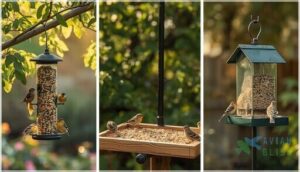
If you’re aiming for maximum bird attraction, Feeder Comparison is key. Tube Feeders excel at drawing finches and chickadees, while Platform Feeders welcome sparrows and doves with open arms. Hopper Feeders offer generous capacity, though Bird Feeder Maintenance is vital to prevent clogging.
For budget-conscious birders, homemade bird feeding recipes offer nutritious alternatives that attract diverse species while cutting costs significantly.
Vary Feeder Placement and Seed Selection—using Seed Blends—to support species diversity and keep feeding stations vibrant.
Suet and Nyjer Feeders Explained
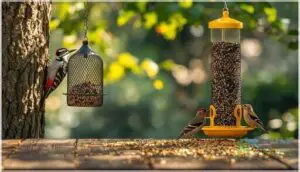
Energy-rich foods like suet and Nyjer thistle can transform your Bird Feeders into magnets for species diversity. For best results, focus on:
- Suet Placement in shaded areas to prevent spoilage.
- Metal Suet Feeders for small species protection.
- Nyjer Seeds in specialized Feeder Designs to limit waste.
- Seed Storage in airtight containers to preserve freshness and Bird Attraction.
Window Feeders and Their Benefits
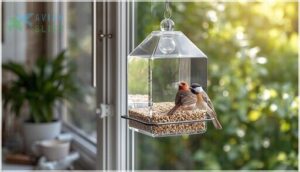
A well-placed window feeder offers exceptional Visual Access, letting you observe plumage and foraging up close while reducing bird distress. Careful Feeder Design and Window Placement minimize window collisions, supporting Bird Safety.
For backyard bird feeding tips, choose models with protective barriers and shatter-resistant materials. These squirrel proof bird feeders bring nature to your window, fostering daily connection and safe observation.
Feeder Materials and Drainage Tips
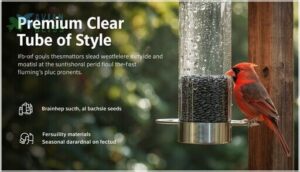
If you want your bird feeders to last through every season and keep seed fresh, choosing the right materials and making sure water drains away is just as important as what you put inside. Prioritize Feeder Durability and Water Resistance; look for Tube Feeders with built-in Drainage Systems.
Good Moisture Control and Seed Protection mean less waste, easier Feeder Maintenance, and better SquirrelProofing Your Feeders.
Effective Bird Feeder Placement
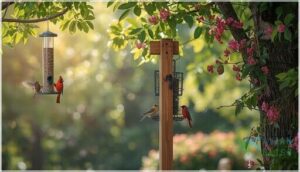
Where you position your feeders determines which birds will visit and how safe they’ll feel while feeding. The right placement balances accessibility for birds with protection from predators and environmental hazards.
Consider these key factors when setting up your feeding stations to create a welcoming environment for your feathered visitors.
Height and Distance Considerations
Proper feeder placement starts with mounting your bird feeders 4 to 6 feet above ground, which reduces predator access while keeping seeds accessible for songbirds.
Space multiple feeders 15 to 20 feet apart to encourage species diversity and minimize competition.
Position feeders at least 10 feet from windows for window safety and bird collision prevention; these distance guidelines help you create a secure yard layout that fosters healthy backyard bird feeding tips.
Proximity to Trees and Shelter
Placing bird feeders within 16 to 50 feet of trees or shrubs offers natural cover that boosts visitation by up to 30%, giving your feathered visitors quick escape routes from predators. When selecting shelter types and planning your backyard bird feeding tips, consider these practical steps:
Position feeders 16 to 50 feet from trees to boost bird visits by 30% while providing quick escape routes from predators
- Position feeders near trees with open sightlines for predator avoidance.
- Verify flight paths remain uncluttered by dense ground cover.
- Use tree proximity to create habitat diversity.
- Install squirrel proof bird feeders with clear overhead branches nearby.
Minimizing Window Collisions
Trees and shrubs provide cover, but window collisions remain a serious threat in backyard bird conservation.
Position bird feeders within 3 to 6 feet of glass to reduce high-velocity strikes, or relocate them at least 3 feet away from reflective surfaces.
Apply window film or UV-reflective patterns covering 1 square foot per 4 to 6 feet of glass, creating wildlife-friendly gardens that protect visiting species.
Creating Diverse Feeding Zones
Beyond preventing collisions, zone placement amplifies bird diversity by reducing competition among species.
Establish three feeding zones separated by 6 to 10 feet, using varied feeder styles—hopper feeder for seed blends, tube feeder for finches, suet feeder for woodpeckers. Position one zone near shrubs, another in open space, and a third along tree lines; rotate food types monthly to sustain interest and support creating a bird friendly yard with squirrel proof bird feeders.
Maintaining Feeders for Healthy Birds
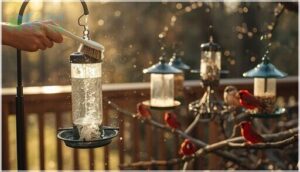
You can’t just fill a feeder and forget about it; birds depend on clean, well-maintained feeding stations to stay healthy.
Regular upkeep prevents disease, keeps food fresh, and ensures your feeders last season after season. Here’s what you need to know to maintain a safe feeding environment for your backyard birds.
Cleaning and Sanitizing Best Practices
Regular feeder maintenance protects your backyard visitors from illness and keeps them coming back throughout the year. You’ll want to wash feeders with hot, soapy water every 1–2 weeks during peak feeding periods, then disinfect with a diluted bleach solution (1 part bleach to 9 parts water) for 10 minutes, rinse thoroughly, and air-dry completely before refilling.
- Use food-safe brushes to reach small crevices where bacteria can hide
- Clean nectar feeders weekly to prevent bacterial spoilage and fermentation
- Store sanitizing solutions away from bird food and maintain a cleaning log
Preventing Mold and Spoiled Food
Mold prevention starts with keeping feeders dry before refilling, which reduces fungal growth by eliminating moisture and residues. Store all seeds in airtight, moisture-resistant containers to minimize exposure, and discard moldy or spoiled food immediately to prevent contamination.
Food rotation helps guarantee fresh supplies, while replacing cracked or warped feeders eliminates hiding spots for mold—simple steps that support bird health and nutrition through effective spoilage control.
Checking for Damage and Wear
Feeder inspection every 2–4 weeks during peak seasons catches cracks, rust, and warped parts before they compromise bird safety. Check plastic for UV degradation, metal for pitting, and wood for soft spots or mold.
Wear detection protects against material degradation that widens ports or weakens seals. Maintenance scheduling—with photos and date stamps—ensures timely part replacement, supporting effective cleaning and maintaining feeders for reliable, healthy bird feeding.
Safe Handling of Bird Food
Food storage in sealed, moisture-proof containers prevents mold growth and safeguards bird health and nutrition. Wash hands before and after handling seed to reduce cross contamination; use clean utensils and sanitize serving dishes between refills. Discard moldy or rancid food immediately, then clean feeders thoroughly.
These bird feeding tips and tricks—combined with squirrel proofing and attention to bird seed and food options—support cleaning and maintaining feeders effectively.
Managing Pests and Promoting Diversity
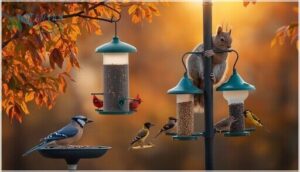
Your feeding station will inevitably attract more than just birds, and squirrels rank among the most persistent visitors you’ll encounter. Managing these resourceful creatures while supporting a diverse bird population requires strategic planning and the right tools.
The following approaches will help you discourage unwanted guests and create an environment that welcomes multiple bird species throughout the year.
Squirrel-Proofing Strategies
Squirrels can empty feeders in hours, but you don’t have to surrender your seed supply. Hardware-based squirrel deterrents—like weight-activated SquirrelProof feeders and Squirrel Buster models—block access for animals over four ounces, reducing seed loss by up to 90%.
Tube feeders with small perches limit grip, while mounting poles six feet from structures cuts easy access routes. These feeder designs support bird safety and effective pest control.
Using Baffles and Capsaicin
Baffles mounted above feeders create vertical barriers that block squirrels while allowing birds to access seed from perches; proper baffle installation requires positioning six feet high and extending well beyond feeding openings.
Capsaicin-treated seed repels mammals without harming birds, though you’ll want to handle it carefully and store it separately.
Together, these squirrel deterrents complement SquirrelProof feeders and Squirrel Buster models for complete wildlife management and feeder protection.
Attracting a Variety of Bird Species
Planting native vegetation within 15–30 feet of feeding areas creates species habitat that draws nectar-feeders and insectivores. Combining this with seed variety in multiple feeder types at different heights encourages bird diversity and reduces competition.
You’ll attract different bird species by offering sunflower, millet, and nyjer alongside suet blocks, while shallow water sources support backyard bird watching in wildlife-friendly gardens year-round.
Balancing Food Supply With Natural Sources
Native plantings form the backbone of ecosystem balance, supplying wild birds with insects and seeds that artificial feeders can’t replicate. Seasonal supplements work best when you:
- Reduce seed quantities as spring berries ripen
- Rotate food types monthly to prevent selective feeding
- Plant native shrubs that fruit at different times
- Maintain fat-rich suet during temperature drops
- Monitor food variability to support wildlife conservation
Gardening for Wildlife Month reminds us that backyard habitat creation strengthens bird feeding strategies through wildlife support and thoughtful bird feeder maintenance and cleaning.
Frequently Asked Questions (FAQs)
How often should I refill my bird feeders?
You’ll find that refill frequency shifts with the seasons; during peak migration or winter, your feeders may need attention every one to three days to support heavily feeding birds.
What attracts unwanted wildlife to bird feeding stations?
Exposed seeds, accessible low-height feeders, and spilled grain attract squirrels, raccoons, and bears to feeding stations, especially near dense cover.
Poor food placement and unsecured feeder design increase unwanted backyard wildlife encounters markedly.
Can bird feeding alter natural migration patterns?
Supplemental feeding may influence local stopover timing and energy budgets during migration, but large-scale changes to migratory routes remain limited and species-specific, with broader ecological factors playing more significant roles.
When should I temporarily stop feeding birds?
Pause bird feeding during extreme weather that increases bird stress, when feeder contamination risks disease spread, or when natural food sources become abundant—ensuring your seasonal pause aids backyard bird conservation and wildlife-friendly gardens effectively.
How do weather conditions affect bird feeding?
Temperature effects and weather patterns shift bird feeding behavior markedly. Cold increases reliance on high-fat foods, while rain reduces insect availability, prompting more backyard bird feeding activity near sheltered bird feeders during seasonal adaptation periods.
How do I attract hummingbirds to my yard?
Like tiny jeweled helicopters, hummingbirds arrive when you offer fresh sugar water in red nectar feeders positioned near flowering shrubs, provide hummingbird perches for resting, and place feeders with partial shade to maintain nectar quality.
What plants provide natural food for birds?
Native shrubs like serviceberry and elderberry offer berries year-round, while cone trees such as pines provide winter forage.
Wildflowers and herbaceous perennials support insectivorous birds, creating a truly wildlife-friendly backyard habitat.
When should I start feeding birds each year?
You can begin bird feeding in late winter or early spring, aligning with migration patterns and natural food scarcity.
Climate considerations and regional guidelines help determine the best timing for supporting backyard birds year-round.
Can bird feeders spread diseases among birds?
Yes, feeders can spread avian diseases like salmonellosis and conjunctivitis through contaminated surfaces and crowded conditions.
Regular feeder hygiene, proper bird feeder maintenance and cleaning, and thorough drying control pathogen transmission and protect bird health effectively.
How do weather conditions affect bird feeding habits?
Cold weather drives birds to consume more seed for energy, while rainfall and wind patterns reduce foraging by 30–60%.
This makes backyard bird feeding essential during temperature fluctuations and seasonal shifts in food availability.
Conclusion
The proof is in the pudding: when you apply these bird food and feeder tips consistently, your yard becomes a destination rather than a stopover. Clean feeders stocked with appropriate seed, positioned where birds feel secure, will draw reliable traffic throughout the year.
Monitor your setup, adjust based on what you observe, and remember that even small improvements compound over time. Your attention to these details creates a habitat where birds thrive and return.
- https://www.audubon.org/magazine/addictive-homemade-suet-will-keep-your-birds-returning-more
- https://www.nwf.org/garden-for-wildlife
- https://birdallianceoregon.org/blog/patient-of-the-week-pine-siskins-and-salmonella/
- https://naturestorepdx.squarespace.com/
- https://georgiawildlife.com/out-my-backdoor-my-winter-bird-feeding-strategy