This site is supported by our readers. We may earn a commission, at no cost to you, if you purchase through links.
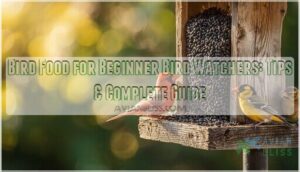
You fill the feeder, step back, and wait—but the birds don’t come, or worse, they scatter seed everywhere and ignore half of it. That first attempt at backyard bird feeding often involves more guesswork than success, and it’s easy to wonder if you picked the wrong seeds or placed the feeder in the wrong spot.
The truth is, most beginners don’t realize that black oil sunflower seeds alone can attract 80-90% of backyard visitors, while those colorful “wild bird” mixes often contain filler that ends up rotting on the ground.
Once you understand which seeds match the birds in your area and how to present them properly, you’ll see cardinals, finches, and chickadees become regular guests rather than occasional passersby.
Table Of Contents
Key Takeaways
- Black oil sunflower seeds alone attract 80-90% of backyard bird species and should be your primary seed choice, while colorful “wild bird” mixes often contain filler that gets wasted and can rot on the ground.
- Store bird food in airtight containers in cool, dry locations to prevent mold and aflatoxin contamination, and always choose unsalted, human-grade peanuts that have been tested for safety.
- Clean your feeders monthly with hot soapy water followed by diluted disinfectant to prevent disease transmission, and position them 10 feet from windows at 5-10 feet height with nearby cover for bird safety.
- Match seed types to specific birds—nyjer for goldfinches, white proso millet for ground feeders like doves and sparrows, and safflower for cardinals while naturally deterring squirrels.
Essential Bird Foods for Beginners
When you’re just getting started with bird feeding, the sheer number of seed options can feel overwhelming. The good news is that you don’t need a dozen different varieties to attract a great mix of backyard visitors.
Let’s break down the essential seeds that will serve you well as a beginner and explain what makes each one worth keeping on hand.
Top Birdseed Choices for New Feeders
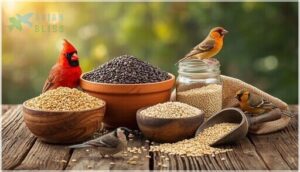
When you’re starting out, black oil sunflower seeds should be your go-to choice—they account for 80–90% of seed consumption by backyard birds and pack serious energy due to their fat content. For peanuts and other high-protein options, look for raw, aflatoxin-screened varieties formulated for safe backyard feeding.
Nyjer seeds attract goldfinches and certain finches, while millet appeals to ground-foraging sparrows and doves. For birds with peanut allergies or sensitivities, try these homemade bird food recipes without peanuts that use seeds and safe alternatives.
Safflower works well for cardinals and chickadees, offering less waste than sunflower in many setups. If you’re just getting started with backyard birding, safflower is a smart first seed choice since it attracts favorites while deterring squirrels.
Sunflower, Millet, Safflower, and Nyjer Explained
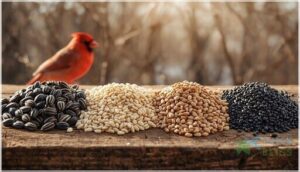
Each seed type brings something different to your feeder. Black oil sunflower seeds deliver roughly 50–60% fat by weight, fueling finches and woodpeckers through cold snaps. White proso millet’s softer shell suits ground-feeders like doves and sparrows. Safflower’s thick coat deters some pests while cardinals crack it easily. Nyjer’s tiny, oil-rich kernels need specialized feeders but goldfinches can’t resist them—proper seed storage keeps all options fresh.
Scientists use methodological rigor to study the effects of different bird food types.
Pros and Cons of Seed Mixes
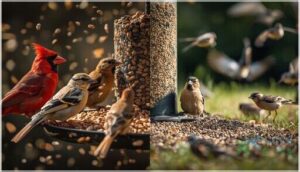
Seed mixes promise convenience, but filler seeds often pile up uneaten beneath your feeder. You’ll see seed waste climb while mix quality varies—some brands load up on cheap grains birds ignore. Still, seed diversity can pull in cardinals, finches, and sparrows at once. Weigh nutrient balance against cost, and watch what actually gets eaten during your first week of bird feeding. If you stick with mixes, prioritize brands that list sunflower or nyjer prominently, and check avian nutrition advice to ensure your blend meets wild bird dietary needs.
| Advantages | Drawbacks |
|---|---|
| Attracts multiple species with seed diversity | Filler seeds increase waste and mold risk |
| Simplifies bird food shopping | Nutrient balance harder to control |
| Offers varied seed selection in one bag | Mix quality varies widely by brand |
Matching Bird Food to Local Birds
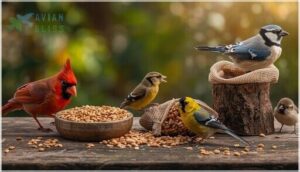
Not all birds eat the same foods, so matching your seed to the birds in your area saves money and cuts down on waste. Different species have distinct preferences based on their beak shape, body size, and seasonal needs, which means the right food can turn your backyard into a hot spot for the birds you want to see.
Let’s look at which seeds work best for common backyard visitors and how their needs shift throughout the year.
Which Seeds Attract Which Birds
Matching seed preferences to your backyard visitors transforms casual feeding into true bird attraction. BlackOil Sunflower seeds draw the widest crowd—sparrows, finches, and cardinals can’t resist them. Nyjer seeds are goldfinch magnets, while white proso millet brings ground feeders like mourning doves straight to your platform. Safflower attracts cardinals while discouraging some seed hogs.
Understanding these seed varieties helps you customize your feeder selection for better bird nutrition and more reliable visitors.
Seasonal Preferences and Migration Needs
Bird nutrition shifts as seasons turn and migration patterns reshape your backyard community. You’ll notice goldfinches and cardinals hitting feeders harder in late fall and winter when natural forage disappears.
During spring and fall migrations, high-fat black-oil sunflower and suet become critical fuel sources. Smart seasonal adjustments to your bird feeding strategies—switching seed preferences and fine-tuning feeder placement—support these energy-hungry travelers.
Common Backyard Birds for Beginners
Five species anchor backyard birding for beginners, each bringing distinct feather care needs and flock behavior to your feeding stations:
- House Sparrows thrive in urban settings year-round, gregarious visitors at any seed feeder
- American Robins forage on the ground, migratory in northern zones but resident further south
- Northern Cardinals offer vivid red plumage at sunflower and safflower stations
- Blue Jays demonstrate intelligent feeding strategies, particularly around peanuts
- Black-capped Chickadees visit feeders constantly, mastering suet and sunflower with acrobatic precision
Understanding bird identification and nesting habits helps you anticipate which species will respond to your bird feeding setup.
Safe and Nutritious Feeding Practices
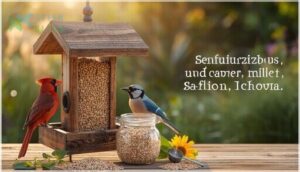
Feeding birds isn’t just about filling up a feeder and calling it a day—the quality and safety of what you offer matters just as much as the variety. Poor storage can turn nutritious seeds into harmful toxins, and not all products labeled “birdseed” are created equal.
Let’s walk through three essential practices that’ll keep your feathered visitors healthy and coming back for more.
Storing Bird Food to Prevent Spoilage
Your bird food won’t last forever—poor storage can lead to mold, pests, and rancid oils that harm visiting birds.
Seed storage tips start with airtight containers kept in cool, dry spots away from sunlight, which slows spoilage and preserves bird nutrition and health. Moisture control matters: use silica gel inside bins and keep humidity below 60%. For seed types like high-fat nyjer or sunflower, refrigeration extends freshness.
Label purchase dates, rotate stock, and always inspect for musty odors before refilling feeders.
Choosing Safe Peanuts and Corn
Not all peanuts and corn are created equal—some can harbor dangerous aflatoxin risk when stored improperly. You’ll want to buy unsalted, human-grade peanuts from grocery stores and livestock-grade corn from feed stores, both tested for safety.
Keep them dry and use them quickly to prevent mold. Proper seed quality protects bird nutrition and keeps your backyard visitors healthy all season long.
Recognizing and Avoiding Filler Seeds
Many commercial seed mixes stretch your dollar with red millet and cheap corn that most backyard birds toss aside, reducing bird nutrition needs and creating waste beneath your feeder. Single-species options like black-oil sunflower offer better bird seed selection, improving seed mix evaluation while supporting essential bird nutrition through effective filler reduction strategies.
Check labels for exact seed percentages to verify proper seed quality control and filler seed impact awareness.
Choosing The Right Bird Feeder
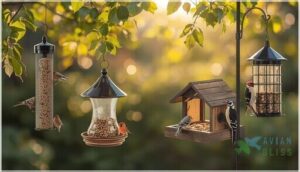
The feeder you choose matters just as much as the food you put in it, since different designs attract different birds and work better in different settings. Some feeders are built for tiny finches, while others welcome larger birds or ground feeders that prefer an open platform.
Let’s look at the main feeder types you’ll encounter and what makes each one useful for beginner bird watchers.
Tube, Hopper, Platform, and Window Feeders
Choosing the right bird feeder can feel overwhelming, but understanding four basic types makes it simple. Tube feeders excel at seed dispensing for small songbirds while offering squirrel resistance through narrow ports. Hopper feeders reduce refill frequency with larger reservoirs, and platform feeders allow multiple birds to dine together. Window feeders bring close-up viewing into your home, though feeder maintenance requires extra attention to prevent debris buildup.
Feeder Size and Placement Tips
Once you’ve picked your feeder, location matters just as much as type. Here’s how to set yourself up for success with proper bird feeder placement:
- Feeder Height: Position feeders 4–6 feet above ground to minimize hazards while deterring ground predators.
- Seed Capacity: Choose a size holding 1–2 weeks of seed based on your backyard’s bird activity.
- Bird Visibility: Place feeders 10–15 feet from cover—close enough for safety, far enough to discourage ambush predators.
- Predator Deterrence: Space multiple feeders 6–8 inches apart to reduce competition and territorial disputes.
- Feeder Rotation: Shift locations every 1–2 weeks to diversify foraging areas and prevent overcrowding.
Strategic placement transforms feeder maintenance from frustrating to smooth, giving you clearer bird visibility and healthier feeding patterns.
Feeder Materials and Maintenance
Your feeder’s material directly affects its longevity and how often you’ll need to replace it. Metal bird feeders resist chewing and corrosion, lasting 5–10 years with proper care, while polypropylene options stay lightweight and budget-friendly but may crack in cold weather. Wooden feeders require regular treatment to prevent rot, normally lasting 1–3 years depending on your climate and maintenance routine.
Best Tips for Successful Backyard Bird Feeding
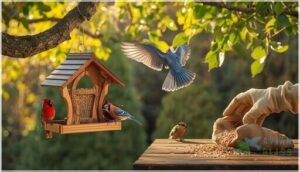
Setting up your feeder is only half the battle—the real success comes from maintaining it properly and placing it where birds feel safe.
You’ll want to think about regular cleaning schedules, smart placement strategies, and how to handle the little problems that pop up along the way.
Let’s walk through the practical steps that’ll keep your backyard feeding station healthy, safe, and buzzing with activity.
Cleaning Feeders to Prevent Disease
To keep your backyard flock healthy, you’ll want to scrub feeders monthly with hot, soapy water. This simple bird feeding tip removes harmful microbes and prevents disease in birds.
After washing, rinse with a diluted disinfectant made for wildlife gear, then let everything air-dry completely.
This cleaning schedule and feeder maintenance routine protects bird health through proper feeder sanitation and stops mold before it starts.
Placing Feeders for Bird Safety
Once your feeders are spotless, you’ll need to think about where they go. For window safety and predator control, position bird feeders at least 10 feet from glass to prevent bird collision. Feeder placement matters for height too—aim for 5 to 10 feet off the ground.
Morning sun with afternoon shade keeps seeds fresh, and nearby bushes offer quick cover, making your backyard bird feeding tips work better for wildlife-friendly gardening and bird-watching success.
Troubleshooting Common Feeding Issues
Sometimes you’ll notice birds avoiding your feeder despite fresh seed—often a sign you need better placement or accessibility. If seed piles up below, try switching types or adjusting height for Bird Attraction.
Mold Prevention requires keeping corn and peanuts dry, while regular Feeder Maintenance stops disease spread. Smart Seed Selection and attention to Bird Health transform common Feeding Errors into Bird Feeding Tips that work.
Frequently Asked Questions (FAQs)
How often should I refill my bird feeders?
There’s no one-size-fits-all answer—refill frequency depends on bird activity, seed spoilage, and feeder type.
Most feeders need checking every 2–4 days during peak seasons, with adjustments for weather and consumption patterns.
Can I feed birds during summer months?
Yes, you can feed birds during summer months. Focus on fresh food importance and heat-resistant seeds like nyjer and safflower.
Summer bird feeding requires seasonal feeder care, frequent cleaning, and attention to bird hydration needs.
What time of day do birds eat most?
Your feathered friends aren’t night owls—they’re morning larks with strategic appetites. Birds concentrate feeding during early morning hours and late afternoon, though daily feeding patterns shift with seasonal feeding shifts, weather, and local avian nutrition needs.
How do I keep squirrels away from feeders?
Weight-activated feeders and metal baffles work best—position your bird feeders 8–10 feet from trees, use safflower or Nyjer seeds, and rotate squirrel-proofing strategies every month to outsmart persistent visitors.
Should I provide water along with bird food?
Absolutely—fresh water attracts more species than feeders alone. Bird hydration and feather maintenance depend on clean sources, so place water away from feeders, change it daily, and watch your backyard transform into a thriving bird-watching haven.
Conclusion
Think of your feeder as a restaurant—you wouldn’t keep serving dishes no one orders. By sticking with black oil sunflower seeds, storing food properly, and cleaning feeders weekly, you’ll transform random visitors into loyal regulars.
The right bird food for beginner bird watchers isn’t about variety; it’s about consistency and quality. Once you nail those basics, watching cardinals and chickadees become part of your daily routine stops feeling like luck and starts feeling inevitable.
- https://www.nwf.org/garden-for-wildlife
- https://academichelpexpress.blog/2024/08/please-use-the-bulleted-points-and-the-rubric-below-to-guide-your-work-your-pa/
- https://x.com/godofprompt/status/1990526288063324577
- https://www.sciencedirect.com/science/article/pii/S0749208123000268
- https://www.scribd.com/document/683678057/Academic-Research-Manual-V1-1-April-2016