This site is supported by our readers. We may earn a commission, at no cost to you, if you purchase through links.
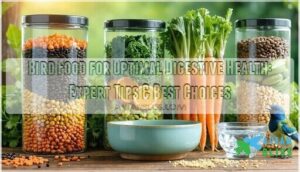 You’ll want to focus on bird food for ideal digestive health by choosing high-quality pellets over seed-only diets.
Mix in fresh vegetables like leafy greens and carrots for fiber. Include probiotics and prebiotics to support gut bacteria.
Provide clean water daily and offer appropriate grit to help your bird’s gizzard break down food. Avoid high-fat foods and processed treats that can disrupt digestion.
A balanced diet with 70% pellets, 20% fresh foods, and 10% healthy seeds works best for most birds. Your feathered friend’s digestive system is surprisingly complex, and understanding how each component works together can transform their health in ways you might not expect.
Table Of Contents
Key Takeaways
- Choose high-quality pellets over seeds – You’ll get complete nutrition with pellets that prevent selective eating, while seeds should only make up 10% of your bird’s diet as treats
- Add fresh vegetables and fiber – You’ll support healthy gut motility and digestion by mixing in leafy greens, carrots, and other fresh produce that provide essential fiber
- Include probiotics and prebiotics – You’ll maintain beneficial gut bacteria balance that’s crucial for nutrient absorption and immune system health
- Provide clean water and appropriate grit daily – You’ll support your bird’s gizzard function for proper food breakdown while preventing harmful bacteria growth that disrupts digestion
Bird Digestive Health
Your bird’s digestive system works like a specialized food processing plant, with each organ playing a vital role in breaking down and absorbing nutrients.
Understanding how the crop stores food, the gizzard grinds it, and the small intestine absorbs nutrients helps you choose the right foods to keep your feathered friend healthy and thriving.
Avian Digestive System Anatomy
Your bird’s avian digestive system starts with beak morphology designed for food gathering.
The crop function involves storing and softening food before it moves through the gastrointestinal tract.
The proventriculus enzymes break down proteins while the gizzard uses grit for mechanical grinding.
The small intestine contains three intestinal sections that absorb nutrients efficiently throughout your bird’s digestive journey.
Role of Gizzard and Crop
Your bird’s crop and gizzard work together as a two-stage food processing system.
The crop stores and softens food before digestion, while the gizzard uses grit to grind tough materials into digestible particles.
Here’s how these organs support bird digestion:
- Crop health prevents crop impaction by properly storing and moistening food
- Gizzard function requires gizzard grit to mechanically break down seeds and pellets
- Proventriculus function adds digestive enzymes before food reaches the gizzard
- Digestion motility moves food smoothly through the avian digestive system
- Avian beaks select appropriate food sizes that won’t overwhelm these organs
Importance of Small Intestine
The powerhouse of your bird’s digestive system lies in the small intestine, where most nutrient absorption occurs.
This essential organ uses specialized villi to maximize surface area for ideal digestive health.
| Component | Function |
|---|---|
| Villi Absorption | Increases surface area for nutrient uptake |
| Enzyme Action | Breaks down food into usable compounds |
| Harmful Bacteria | Controlled by beneficial gut microbiome |
| Intestinal Health | Maintains gut energy and bird digestion |
Your bird’s small intestine works tirelessly to extract essential nutrients from food, making proper nutrition indispensable for maintaining this complex system.
Nutrient Absorption Mechanisms
Your bird’s small intestine works like a highly efficient nutrient factory.
Folds and tiny projects called villi greatly increase the surface area for nutrient absorption. Transport proteins act as specialized doorways for specific nutrients.
Here’s how nutrient absorption mechanisms work:
- Villi Surface Area – Finger-like projections called villi increase the surface area for absorption and allow for more efficient uptake of nutrients
- Sugar Breakdown – Digestive enzymes convert complex carbs into simple sugars for easy uptake
- Lipid Hydrolysis – Fats get broken down into fatty acids through specialized enzyme action
- Amino Assimilation – Enhanced paracellular pathway for intestinal absorption of water-soluble nutrients such as glucose and amino acids
- Transport Proteins – Specific carriers move nutrients from intestines into bloodstream efficiently.
The bird’s gizzard grinds food with muscular contractions.
Optimal Bird Food
Your bird’s digestive system works best when you provide the right balance of nutrients that support healthy gut function.
The key is choosing foods that contain essential vitamins, minerals, and beneficial compounds that promote proper digestion and nutrient absorption, which is crucial for healthy gut function.
Balanced Diet Essentials

When building your bird’s ideal avian diet, focus on essential nutrients that support bird digestion and gut health. Your balanced diet should include vitamin importance through A, D3, and E supplementation needs.
Probiotic benefits come from beneficial bacteria that enhance nutrient absorption. Yeast influence improves microbial balance while omega acids support cellular health and proper bird food processing.
Fresh fruits, like apples, offer essential vitamins for overall health, which is crucial for a balanced diet and supports bird digestion with the right nutrient absorption.
Nutritional Requirements of Birds
Your feathered friend needs a balanced mix of nutrients to thrive.
Species Diet Needs vary widely – finches require different Protein Sources than parrots.
Water makes up 60-70% of their body weight, making hydration essential for nutrient absorption.
Quality avian diet includes carbohydrates for Energy Requirements, proteins for growth, and fats for vitamin uptake.
Vitamin Supplementation prevents common deficiencies, while proper minerals support bone health and prevent Mineral Deficiencies that compromise digestive health.
A common error is unbalanced bird diets, which can cause health issues.
Common Avian Nutritional Needs
Your bird’s body craves five essential nutrients for superior digestion.
Protein Sources like legumes and insects build strong feathers and muscles.
Fat Benefits include energy storage and vibrant plumage colors.
Carb Importance lies in quick fuel for daily activities.
Mineral Balance supports bone health and egg production.
Vitamin Essentials prevent disease and boost immunity.
This avian diet foundation guarantees healthy birds maintain superior digestion with essential nutrients and proper Mineral Balance.
Diet Composition
High fiber content in bird food supports healthy digestion by promoting gut motility.
Balanced protein levels prevent digestive strain while supporting enzyme function.
You’ll want to avoid excessive fats to reduce digestive upset and obesity risks.
A diverse seed variety and quality pellet mix improves nutrient absorption and maintains ideal digestive health through enhanced gut function, ensuring overall well-being.
Factors Affecting Digestion
Your bird’s digestive health depends on more than just good food choices. Several key factors work together to determine how well your feathered friend processes nutrients and maintains gut balance.
Environmental Factors

Beyond your bird’s food bowl, environmental factors shape digestive health dramatically.
Clean surroundings prevent harmful bacteria while stress reduction through natural lighting promotes beneficial gut microbes.
Poor water quality and inadequate sanitation create toxin exposure that disrupts digestion.
Maintaining a stress-free environment with proper hygiene practices protects your bird’s digestive system from environmental threats, including the impact of natural lighting.
Hydration Considerations

Water intake directly affects your bird’s digestive health.
Fresh water supports enzyme function and nutrient transport throughout the digestive system.
Dehydration slows gut motility and reduces feed intake.
Clean water sources prevent bacterial growth that disrupts electrolyte balance.
Monitor water quality daily and provide multiple water sources including bird baths for ideal hydration impact on avian dehydration prevention.
Microbial Diversity in Gut
Your bird’s gut microbiome contains diverse microorganisms that directly impact digestive health.
A thriving gut means a thriving bird – diverse microbes are your feathered friend’s digestive superheroes.
Beneficial bacteria types like Lactobacillus aid microbial vitamin synthesis and fermentation processes.
This gut microflora creates pathogen competition, protecting against harmful invaders.
Gut flora balance depends on proper nutrition, with prebiotics feeding good bacteria and probiotics introducing helpful strains, boosting microbial diversity for ideal digestion.
Gut Balance and Health
Your bird’s gut microbiome functions like a bustling ecosystem that requires careful balance.
When beneficial bacteria thrive, they support proper digestion and nutrient absorption. However, dysbiosis effects can disrupt this harmony, leading to digestive problems and weakened immunity.
A balanced diet with essential vitamins and minerals is vital for maintaining gut health.
- Fermentation benefits – Gut bacteria break down fiber into essential nutrients your bird needs
- Avian probiotics – These supplements restore healthy gut balance after illness or stress
- Beneficial bacteria – They crowd out harmful pathogens and boost immune function
- Gut microbiome diversity – Multiple bacterial species create a stronger digestive system
Choosing Right Bird Food
You’ll need to match your bird’s food to its digestive system for ideal health and nutrient absorption.
The right choice between seeds, pellets, and supplements can make the difference between a thriving bird and one struggling with digestive issues, which is crucial for a bird’s overall health.
Seeds or Pellets
Choosing between seed variety and pellet formulation affects your bird’s digestive health substantially.
Seeds offer natural diversity but lack consistent nutritional comparison across different types.
Pellets provide balanced nutrition with superior digestibility factors, though they cost more than traditional seed mix.
Consider selecting optimal seeds for a balanced diet.
Most veterinarians recommend pellets for ideal bird digestion since they eliminate selective eating habits that compromise overall health.
High Fiber Content
Fiber benefits your bird’s digestive health by promoting gut motility and supporting digestive enzymes.
High-fiber bird food keeps things moving smoothly through your pet’s system. Look for seed variety that includes natural fiber sources like millet and oats.
Quality pellet composition should contain moderate fiber levels without overwhelming your bird’s delicate digestive system. Proper dietary fiber helps maintain ideal gut health.
Black oil sunflower seeds are a great option, providing a good source of natural fiber and supporting overall bird health with digestive enzymes.
Prebiotics and Probiotics
Beyond fiber content, probiotics and prebiotics transform your bird’s digestive health.
These beneficial supplements support gut flora balance and boost probiotic effectiveness through natural prebiotic sources.
You can find probiotic bird food online.
Consider these key benefits for your feathered friend:
- Gut flora balance – Probiotics restore healthy bacteria populations
- Immune system support – Strengthens natural defenses against illness
- Enhanced nutrient absorption – Prebiotics feed beneficial gut bacteria
- Avian-specific strains – Target bird digestive systems effectively
- Digestive health maintenance – Prevents common gut issues
Quality probiotic bird food containing both prebiotics and probiotics creates ideal gut health conditions.
Avoiding Excessive Fats
Too much fat in bird food creates problems your feathered friend doesn’t need.
Excessive fats lead to obesity prevention concerns and liver health issues.
High-fat diets mess with energy balance and can cause cardiovascular risks.
Poor feather quality often results from fatty food overload.
Choose bird food with moderate fat content to support ideal digestion and avian wellbeing.
Maintaining Gut Health

You can maintain your bird’s gut health through three key strategies that work together for ideal digestive function.
Focus on providing adequate dietary fiber, minimizing environmental stressors, and conducting regular health checks to catch digestive issues early, which includes regular health checks.
Dietary Fiber and Fermentation
Your bird’s digestive system thrives on dietary fiber through microbial fermentation.
Beneficial bacteria in the cecum break down fiber into short-chain fatty acids (SCFA), which provide energy and lower gut pH.
This fermentation process supports gut motility while reducing harmful pathogens.
High-fiber diets enhance nutrient digestibility and promote healthy gut microbiome development for ideal digestive health.
Reducing Stress and Toxins
Creating a stress-free environment protects your bird’s digestive health from harmful toxins and psychological pressure. Clean surroundings and quality care prevent digestive disruption. Implementing avian parasite prevention can also reduce stress.
- Water Quality: Change water daily and use filtered sources to prevent bacterial growth
- Clean Feeders: Wash food dishes weekly with bird-safe cleaners to eliminate contamination
- Airtight Containers: Store bird food in sealed containers to prevent staleness and pests
- Moldy Food: Check and discard any spoiled seeds or pellets immediately
- Safe Foods: Research toxic plants and chemicals before introducing new items to your bird’s diet
Regular Health Monitoring
Regular health monitoring serves as your early warning system for digestive problems.
Watch for behavior changes like decreased appetite or unusual lethargy. Track your bird’s weight weekly using a digital scale.
You can purchase a bird digital scale online.
Monitor vomiting frequency and examine droppings through fecal analysis. These simple appetite monitoring steps help catch digestive health issues before they become serious, ensuring your bird food supports ideal digestion.
Frequently Asked Questions (FAQs)
Is it better to give birds seeds or pellets?
Don’t put all your eggs in one basket – pellets win hands down.
They’re nutritionally complete, preventing selective eating that leaves gaps in your bird’s diet.
Seeds work as treats only.
What is the miracle meal for birds?
There’s no single "miracle meal" for birds. You’ll get the best results by combining high-quality pellets with fresh vegetables, some seeds, and clean water daily for complete nutrition.
What two foods should you not put in a bird feeder?
Never feed chocolate or avocado to birds. Chocolate contains theobromine which is toxic to their systems, while avocado has persin that can cause heart problems and breathing issues in birds.
What foods are toxic to birds?
Like medieval alchemists warned of poison, you must avoid chocolate, avocado, caffeine, salt, onions, garlic, and fruit pits. These foods damage your bird’s organs and can prove fatal.
How often should birds eat daily?
Most birds thrive on two to three meals daily, with smaller species needing more frequent feeding.
You’ll want to provide fresh food morning and evening, removing uneaten portions to prevent spoilage and maintain digestive health.
Can birds eat human food scraps?
Some human foods can be safe for birds, but you’ll want to avoid anything with salt, sugar, chocolate, or avocado.
Fresh fruits and vegetables work well as treats, but stick to bird-specific diets for their main nutrition.
What temperature should bird food be?
Room temperature works best for most bird food.
You’ll want to avoid serving cold food straight from the fridge or hot food that could burn their crops.
Let fresh food sit out briefly to reach comfortable eating temperature.
How to transition birds to new food?
Gradually mix increasing amounts of new food with current food over 7-10 days. Start with 25% new food, then 50%, 75%, and finally 100%. Monitor your bird’s appetite and droppings throughout the switch.
Conclusion
Your feathered friend’s digestive system will literally transform when you prioritize bird food for superior digestive health.
You’ve learned that quality pellets beat seeds every time, fresh vegetables add essential fiber, and probiotics keep gut bacteria thriving.
Remember the 70-20-10 rule: pellets, fresh foods, and healthy seeds.
Clean water and proper grit support your bird’s gizzard function.
By avoiding high-fat processed treats and maintaining this balanced approach, you’ll give your bird the digestive foundation they need for vibrant health and longevity.
- https://birdfact.com/anatomy-and-physiology/digestive-system/bird-digestive-tract
- https://dev.cffm.umn.edu/avian-digestive-system
- https://talis-us.com/blogs/news/the-best-bird-food-for-vibrant-feathers-and-optimal-health
- https://edis.ifas.ufl.edu/publication/VM067
- https://www.greencrossvets.com.au/pet-library/articles-of-interest/nutrition-for-birds/