This site is supported by our readers. We may earn a commission, at no cost to you, if you purchase through links.
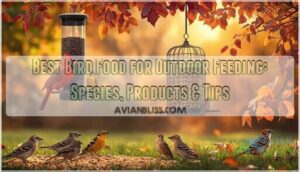
Your backyard can become a rest stop for dozens of bird species when you stock the right food. Black-oil sunflower seeds attract cardinals and chickadees, while nyjer seed draws goldfinches by the flock. White proso millet brings ground feeders like sparrows and doves to your feeding station, and suet cakes keep woodpeckers coming back through winter’s coldest days.
Each seed type delivers specific nutrients that mirror what birds find in nature, from the 25 percent fat content in nyjer to the 7 grams of protein packed into every ounce of peanuts.
Smart placement matters too—position feeders 6 to 10 feet from cover to prevent predator ambush while keeping birds safe from window strikes.
Table Of Contents
- Key Takeaways
- Best Bird Foods for Outdoor Feeding
- Top Bird Food Products for Outdoor Use
- Choosing The Right Bird Food
- Bird Feeder Placement Strategies
- Attracting Specific Bird Species
- Maintaining Outdoor Bird Feeders
- Seasonal Bird Feeding Tips
- Enhancing Nutrition and Bird Health
- Squirrel and Pest Control for Feeders
- Safety Practices for Outdoor Bird Feeding
- Frequently Asked Questions (FAQs)
- Conclusion
Key Takeaways
- Black-oil sunflower seeds deliver 38 to 50 percent oil content and attract the widest variety of backyard birds, including cardinals, chickadees, and finches, while their thin shells make them accessible even to smaller species.
- Position feeders 6 to 10 feet from cover to prevent predator ambush and either within 3 feet of windows or beyond 30 feet to minimize fatal collision speeds that kill millions of birds annually.
- Different species require distinct food types year-round—nyjer seed with 25 percent fat content draws goldfinches, suet cakes sustain woodpeckers through winter, and white proso millet attracts ground-feeders like sparrows and doves.
- Weekly feeder cleaning with a nine-to-one water-bleach solution prevents disease transmission, while storing seeds in airtight containers at 50 to 70 degrees Fahrenheit with humidity below 30 percent stops mold growth and spoilage.
Best Bird Foods for Outdoor Feeding
You’ll find a wide range of bird foods on the market, but not all of them deliver the nutritional punch your backyard visitors need. The right choice depends on the species you want to attract and the season you’re feeding in.
If you’re looking for a budget-friendly option that doesn’t skimp on quality, check out this comparison of the best value wild bird food mixes to find one that works for your feathered friends.
Here are seven bird food options that consistently perform well for outdoor feeding stations.
Black-oil Sunflower Seed
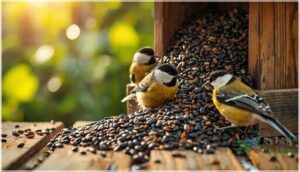
Black-oil sunflower seed stands out as the premier choice for wild bird food. You’ll attract finches, chickadees, and nuthatches with these energy-packed seeds containing 38 to 50 percent oil content by weight. The thin shells make cracking easier for smaller birds, while high linoleic acid promotes healthy feather condition. For more details on the of black oil sunflower seeds, explore expert resources.
Bird feeding tips for sunflower seeds:
- Store black oil sunflower seed in airtight containers away from moisture to prevent mold and extend shelf life for several months
- Place feeders in open areas where seed aroma attracts birds from moderate distances without specialized hardware
- Mix with other bird seed types to diversify wild bird nutrition for different species visiting your yard
- Provide these seeds year-round since their concentrated calories promote energy needs during cold weather and feather molt
White Proso Millet
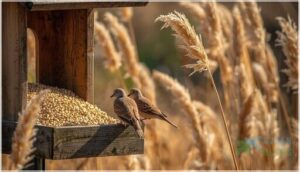
White Proso Millet delivers 11 percent crude protein and excels at attracting ground-feeding birds like doves, quail, and sparrows.
This warm-season grass produces small oval seeds in 65 to 90 days, offering you excellent seed production in hot weather. Its drought tolerance and gluten-free composition make it a reliable wild bird food choice, while wildlife benefits extend to multiple species seeking nutritious supplemental feeding options.
For more details on cover crop and wildlife habitat uses, review planting recommendations before introducing White Proso Millet to your yard.
Peanuts
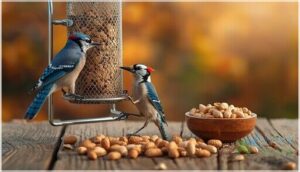
Peanuts provide 7 grams of protein per ounce and attract woodpeckers, jays, chickadees, and nuthatches to your feeders. You can offer them shelled or in-shell through tube-shaped metal mesh feeders designed specifically for peanuts.
Three ways to boost peanut feeding:
- Store shelled peanuts in a cool, dry location to prevent rancidity
- Choose unsalted roasted peanuts for ideal wild bird nutrition
- Crush peanuts into smaller pieces for chickadees and titmice
Their high fat content aids birds during temperature extremes and migration.
Suet Cakes
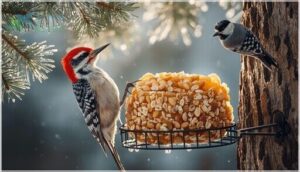
Suet cakes combine rendered fat with seeds, oats, and mealworms, creating a high-energy treat that woodpeckers, nuthatches, and chickadees find irresistible.
You’ll want to place these fat-rich blocks in standard suet feeders during winter months when birds need extra calories to maintain body heat. Choose no-melt formulations for warmer weather, and clean your suet feeders every two weeks to prevent mold buildup.
Nyjer Seed
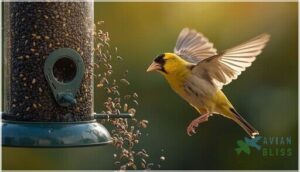
Nyjer or thistle seed—also called Niger seed—draws American goldfinches, house finches, and pine siskins to your yard with its 25 percent fat content and 16 percent protein level. You’ll need specialized tube feeders or mesh socks with tiny holes to dispense these slender seeds effectively.
Follow these Seed Storage Tips for best Finch Attraction Methods:
- Store birdseed in airtight containers away from sunlight
- Use within several months to prevent rancidity
- Keep feeders dry and clean every two weeks
Fruit and Dried Fruit Options
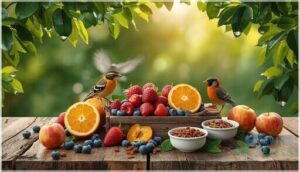
Fresh fruit benefits become clear when you see robins and orioles flocking to your feeder. Offer sliced oranges for citrus fruit options, berries for attraction tips, and chopped apples to support bird nutrition. Dried fruit nutrition provides concentrated energy—raisins and apricots work well when soaked overnight.
Here’s how fruit size matters for different species:
| Fruit Type | Preparation | Target Species |
|---|---|---|
| Fresh berries | Whole or halved | Bluebirds, robins |
| Citrus slices | Halved with peel | Orioles, tanagers |
| Dried raisins | Soaked overnight | Woodpeckers, finches |
Wash all fresh fruit to remove pesticides, and rotate varieties to prevent spoilage while broadening bird food preferences across your backyard visitors.
Cracked Corn and Nuts
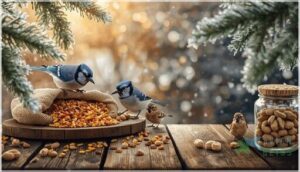
Ground feeders like jays and sparrows thrive on cracked corn benefits paired with peanuts hearts for wild bird nutrition. This combination meets bird energy needs during winter while supporting outdoor feeding strategies across species.
- Store nuts in airtight containers to prevent spoilage and pest access
- Scatter cracked corn on clean platforms to reduce mold risks
- Combine with peanuts for high-fat content in cold months
- Use moderate portions and refresh every few weeks
- Keep nut storage tips in mind—cool, dry locations work best
Top Bird Food Products for Outdoor Use
Once you know which foods work best for your backyard birds, the next step is finding quality products that deliver the nutrition they need. The market offers numerous seed blends and specialized feeds designed to attract specific species while minimizing waste.
Here are eight proven bird food products that balance nutritional value with practical outdoor use.
1. Wagner’s Wild Bird Food
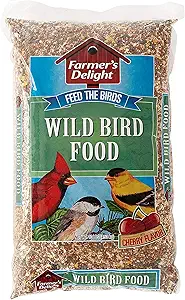
Wagner’s offers several blends designed to bring a variety of birds to your yard. Their Classic Wild Bird Food combines sunflower seeds and millet to attract perching species like chickadees and sparrows, while the Greatest Variety mix includes black oil sunflower and nyjer seed for both songbirds and finches.
If you’re tired of cleaning up hulls, the Waste Free formula uses hulled kernels to minimize mess.
Regional blends target local species, and each bag provides guaranteed analysis information so you know exactly what you’re offering.
| Best For | Budget-conscious bird watchers who want to attract a wide variety of backyard birds without breaking the bank. |
|---|---|
| Primary Ingredients | Sunflower, mixed seeds |
| Target Species | Variety of backyard birds |
| Weight | 10 pounds |
| Form | Seeds |
| Life Stage | All life stages |
| Made In | USA |
| Additional Features |
|
- Economical mix that works well in most standard feeders
- Attracts multiple bird species with its sunflower seed blend
- Made in the USA with quality grains
- Strong cherry scent may be off-putting to some users
- Likely to attract squirrels and other unwanted wildlife
- May require frequent refills due to popularity with birds
2. Kaytee Wild Bird Food Seed Blend
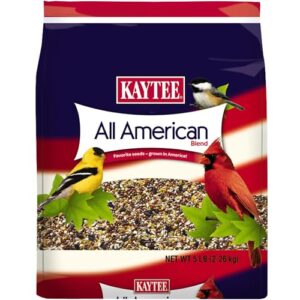
Kaytee Wild Bird Seed Blend combines black oil sunflower seeds and millet to deliver energy-rich nutrition for cardinals, chickadees, and nuthatches throughout the year.
You’ll find vitamins A and D3 added to support overall health, along with calcium carbonate for bone strength.
The mix works well in hopper and tube feeders, providing at least 4 percent crude fat to fuel birds during winter’s coldest days.
Store your seed in a cool, dry location and discard old portions before refilling to prevent mold growth.
| Best For | Backyard bird enthusiasts who want to attract a variety of songbirds like cardinals, chickadees, and nuthatches year-round with a vitamin-enriched seed blend. |
|---|---|
| Primary Ingredients | Black oil sunflower, grains |
| Target Species | Wild birds |
| Weight | 5 pounds |
| Form | Chunk |
| Life Stage | All life stages |
| Made In | USA |
| Additional Features |
|
- Black oil sunflower seeds and millet provide high-energy nutrition that attracts multiple bird species
- Fortified with vitamins A and D3 plus calcium carbonate to support bird health and bone strength
- Works in most standard feeders including hopper, tube, hanging, and window styles
- May contain filler ingredients that some birds ignore, leading to waste
- Attracts squirrels and can create mess as birds scatter seeds while feeding
- Requires proper storage in sealed containers to prevent moth infestations and mold
3. Audubon Park Cardinal Bird Seed
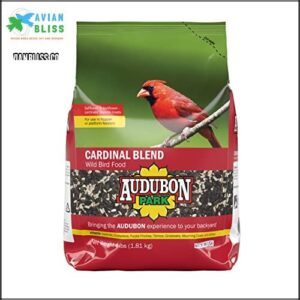
Audubon Park Cardinal Bird Seed delivers a 50-50 blend of black oil sunflower and safflower seeds, attracting cardinals, chickadees, titmice, and grosbeaks to your backyard feeders. The safflower component naturally deters squirrels while providing oil-rich nutrition that aids energy needs during colder months.
You can use this blend in hopper, tube, or platform feeders without worrying about filler waste. The high fat content keeps cardinals visiting year-round, though you’ll want to sift through the mix occasionally to remove any stalk debris before filling your feeders.
| Best For | Backyard birders who want to attract cardinals and other songbirds while keeping squirrels away from their feeders. |
|---|---|
| Primary Ingredients | Sunflower, safflower |
| Target Species | Cardinals, titmice, finches |
| Weight | 4 pounds |
| Form | Seed |
| Life Stage | All life stages |
| Made In | Not specified |
| Additional Features |
|
- 50-50 blend of black oil sunflower and safflower seeds with no cheap fillers
- Safflower naturally discourages squirrels while still attracting desirable bird species
- Works in multiple feeder types including hopper, tube, and platform styles
- Some bags contain sunflower stalk debris that needs to be sifted out before use
- May attract fewer bird species than expected, with some users reporting only cardinals
- Requires occasional cleaning to remove unwanted plant material from the mix
4. Kaytee Wild Bird Seed Blend
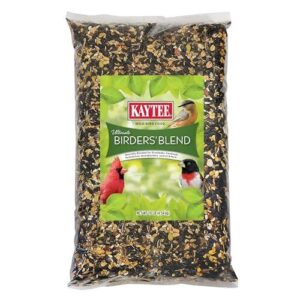
If you’re looking for a budget-friendly option that still attracts variety, Kaytee Wild Bird Seed Blend combines black oil sunflower seeds and white proso millet with cracked corn to bring cardinals, finches, chickadees, and juncos to your yard.
The blend sits at around 8 percent crude protein and 4 to 5 percent crude fat, offering reliable nutrition without heavy fillers.
You’ll notice ground-feeders cleaning up the millet and corn below while perching birds work the sunflower content above, creating activity at multiple feeder levels throughout the seasons.
| Best For | Budget-conscious birders who want to attract a variety of songbirds without spending top dollar. |
|---|---|
| Primary Ingredients | Sunflower, mixed seeds |
| Target Species | Variety of backyard birds |
| Weight | 20 pounds |
| Form | Grains, seeds |
| Life Stage | All life stages |
| Made In | USA |
| Additional Features |
|
- Brings in diverse species like cardinals, finches, chickadees, and juncos with a mix of sunflower seeds, millet, and cracked corn
- Creates feeding activity at multiple levels—perching birds and ground-feeders both get something they like
- Made in the USA with a balanced blend that provides decent nutrition at an affordable price point
- Peanuts in the mix can attract squirrels, which may dominate your feeder
- Gets messy quickly with shells and scattered seeds landing below the feeder
- Some buyers have noticed price increases that make it less of a bargain compared to competitors
5. Bird Feeders With Wild Bird Food
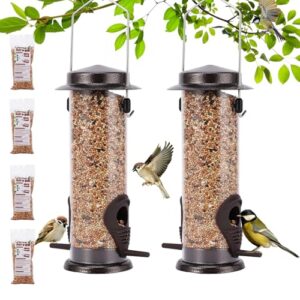
When you’d rather skip assembly and start watching birds right away, the BOWEITI all-in-one feeder arrives with four packs of seed already included for $15.99.
The transparent plastic housing and wide ports accommodate multiple species, while built-in drainage prevents mold buildup during wet weather.
Some users report that hole placement can challenge smaller birds, and the lightweight build may not withstand harsh conditions, but you’re getting immediate function and convenience without searching for compatible seed or mounting hardware.
| Best For | Beginners who want to start birdwatching immediately without buying seed separately or dealing with complicated setup. |
|---|---|
| Primary Ingredients | Safflower, peanuts, millet |
| Target Species | Songbirds, cardinals, jays |
| Weight | 10 pounds |
| Form | Seeds, peanuts |
| Life Stage | All life stages |
| Made In | USA |
| Additional Features |
|
- Comes with four packs of premium bird food included, so you can start attracting birds right out of the box
- Transparent design lets you easily see when seed levels are running low without opening the feeder
- Built-in drainage system keeps seed dry and fresh even during rain
- Lightweight plastic construction may not hold up well in storms or harsh weather conditions
- Feeding hole placement makes it difficult for smaller birds to access the seed comfortably
- Some birds ignore the feeder entirely or eat very slowly, possibly due to the hole design or seed type
6. Audubon Park Wild Bird Seed Mix
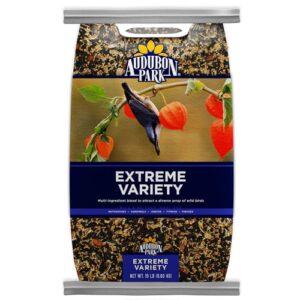
For adaptable year-round feeding that accommodates both hopper and platform setups, the Audubon Park Wild Bird Seed Mix offers a balanced blend of white proso millet, black oil sunflower seeds, cracked corn, and safflower seeds.
You’ll attract cardinals, sparrows, finches, and juncos with this formula, which provides the fat and protein birds need during molting and daily activity.
Available in 5 to 10 pound bags through retailers like Chewy and Target, the mix combines crude fat from sunflower seeds with carbohydrates from millet for sustained energy.
| Best For | Backyard birders who want a premium, year-round seed blend that attracts a wide variety of species to multiple feeder types. |
|---|---|
| Primary Ingredients | Premium bird seed |
| Target Species | Bluebird, variety |
| Weight | Includes 4 packs |
| Form | Seed |
| Life Stage | Not specified |
| Made In | Not specified |
| Additional Features |
|
- Premium ingredients like black oil sunflower seeds, peanuts, and raisins attract diverse birds including cardinals, finches, nuthatches, and titmice
- Works in tube, hopper, or platform feeders for flexible setup options
- Nutritious blend provides essential fats and proteins for birds throughout all seasons
- Higher price point compared to basic seed mixes
- May contain filler seeds that some birds won’t eat, leading to waste
- Larger nuts like walnuts and almonds can clog certain feeder styles
7. Kaytee Hummingbird Nectar Food
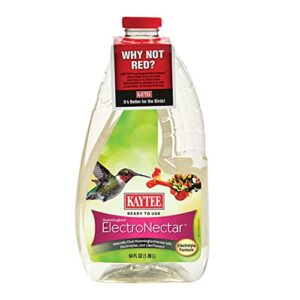
While seed blends serve most backyard visitors, hummingbirds need a completely different fuel source. Kaytee’s ElectroNectar delivers a ready-to-use formula that mimics natural flower nectar without artificial dyes, which can harm these high-metabolism birds.
You’ll find electrolytes added to support the rapid wing beats that define hummingbird flight—up to 80 beats per second during hovering. The 64-ounce bottle fits standard feeders and requires no mixing, though you should refrigerate after opening and refresh regularly to prevent fermentation.
| Best For | Hummingbird lovers who want a convenient, bird-safe nectar solution without mixing their own sugar water. |
|---|---|
| Primary Ingredients | Sunflower, peanuts, raisins |
| Target Species | Nuthatches, cardinals, finches |
| Weight | 15 pounds |
| Form | Seed |
| Life Stage | All life stages |
| Made In | Not specified |
| Additional Features |
|
- Ready to use straight from the bottle with no measuring or mixing required
- Contains electrolytes to support hummingbirds’ intense energy needs
- Clear formula with no artificial dyes that could harm birds
- More expensive than making homemade nectar from plain sugar and water
- Needs refrigeration after opening and regular feeder changes to prevent spoilage
- Some customers report receiving damaged bottles or missing caps
8. Pennington Wild Finch Bird Seed Blend
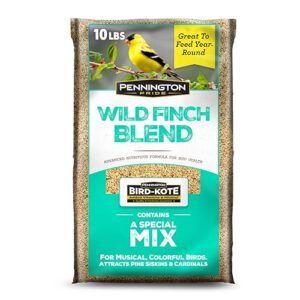
Finches favor high-oil seeds that fuel their active foraging behavior, and this 10-pound blend combines black oil sunflower and thistle enriched with vitamins through BIRD-KOTE technology.
You’ll attract goldfinches, purple finches, and pine siskins to hopper or tube feeders year-round, though the sunflower-heavy ratio may draw sparrows and squirrels alongside your target species.
Store the bag in a sealed metal container to prevent moisture damage, and monitor consumption rates—busy feeding stations can empty ten pounds within a week during migration periods.
| Best For | Birdwatchers who want to attract colorful finches and songbirds to their feeders year-round with a nutrient-enriched seed blend. |
|---|---|
| Primary Ingredients | Liquid nectar |
| Target Species | Hummingbirds |
| Weight | 64 ounces |
| Form | Liquid |
| Life Stage | Not specified |
| Made In | USA |
| Additional Features |
|
- Combines thistle and black oil sunflower seeds that finches love, enriched with vitamins through BIRD-KOTE technology
- Works with multiple feeder types including hoppers, tubes, and gazebos for flexible setup options
- Attracts a variety of musical songbirds like goldfinches, purple finches, and pine siskins throughout all seasons
- High sunflower seed ratio may attract unwanted squirrels and sparrows instead of just finches
- The 10-lb bag gets consumed quickly at busy feeding stations, sometimes within a week during peak migration
- Requires proper storage in sealed metal containers to prevent moisture damage and keep seeds fresh
Choosing The Right Bird Food
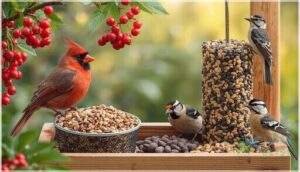
Selecting the right bird food starts with understanding which species visit your yard and what they need throughout the year. Different birds have distinct dietary requirements, and their nutritional needs shift dramatically with the seasons.
By matching food types to local species and timing your offerings strategically, you’ll create a feeding station that truly nourishes the birds in your area.
Identifying Local Bird Species
You can’t pick the right bird food without knowing which wild birds visit your backyard. Start your bird identification by observing field marks like beak shapes and feather patterns—a stout conical beak signals seed eaters, while slender bills point to insect lovers.
Listen to bird calls during morning hours, and note species habitats to confirm what you’re seeing through bird watching.
Seasonal Feeding Needs
Birds adjust their feeding habits as the calendar shifts, making seasonal bird nutrition a cornerstone of winter bird care and migration patterns. During temperature extremes, you’ll need to adapt your offerings to support avian metabolism and climate adaptation through strategic bird feeding tips.
- Double high-fat seed types like suet during freezing months to fuel energy demands
- Introduce protein-rich sunflower seeds and peanuts in spring for molt and breeding
- Reduce feeding frequency in summer when insects peak naturally
- Offer fortified blends in autumn as shorter days limit foraging time
- Provide fresh water daily year-round to aid nutrient cycling and digestion
Nutritional Value of Bird Foods
You can think of Fat Content and Protein Sources as the building blocks that power daily flight and feather health. Black oil sunflower birdseed delivers 40 to 50 percent fat, while peanuts contribute 25 to 30 percent protein—both critical for wild bird food choices.
Seed Quality matters too, as fresh blends with Vitamin Supplements and Mineral Balance support bird nutrition, preventing mold and ensuring superb bird health across seed types.
Bird Feeder Placement Strategies
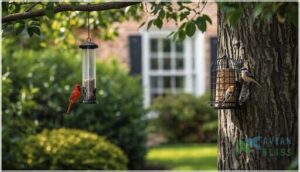
Where you place your feeders matters just as much as what you put in them. Smart positioning keeps birds safe from predators while giving them easy access to food, and it protects them from hazards like window collisions that claim thousands of birds each year.
Let’s look at three key placement strategies that’ll help your backyard visitors thrive.
Safe Distances From Cover
You’ll want to give your backyard birds a sweet spot—not too close to cover, not too far. Think of Predator Free Zones: place bird feeders 6 to 10 feet from dense ground cover and 15 feet from brushy edges to keep cats and other hunters from ambushing their next meal.
Smart feeder placement tips also mean positioning stations 8 to 12 feet from windows for Bird Collision Prevention and Window Safety Measures, while mounting feeders at least 4 feet high.
Ground Cover Management means spacing multiple feeders 6 feet apart, giving bird feeding tips that help backyard birds escape quickly if danger appears.
Positioning to Reduce Predation
Your feeder placement becomes a key factor when you follow strategic bird feeding tips. Raise bird feeders 5 to 6 feet high—that’s your Safe Feeding Zones sweet spot for Feeder Height and Predator Deterrents.
Position feeders 10 meters from heavy Shelter Placement to create open sightlines for backyard birds, while spacing multiple feeders 6 feet apart ensures Bird Escape Routes work smoothly when danger strikes, even with squirrel control measures in place.
Minimizing Window Collisions
Windows kill millions of birds each year, but smart placement stops the carnage. Set feeders within 3 feet of glass or beyond 30 feet—birds won’t gain fatal speed at close range.
Place feeders within three feet of windows or beyond thirty feet—anything in between gives birds fatal collision speed
Apply exterior decals 3 to 4 inches apart to boost Glass Visibility, angle feeders 45 to 90 degrees from panes, and plant dense Landscape Buffers near windows to create bird-friendly habitat.
Attracting Specific Bird Species
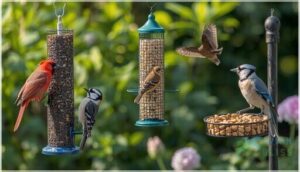
Different bird species have distinct food preferences, and matching the right feed to the right bird makes all the difference. When you know what each species craves, you can transform your backyard into a hub that attracts exactly the visitors you’re hoping to see.
Let’s look at which foods work best for some of the most popular backyard birds.
Foods for Cardinals and Finches
Seed preferences shift when winter foraging begins, so you’ll want to offer cardinals safflower, nyjer seed, and black-oil sunflower seed in platform feeders near shrub cover.
Finches favor white proso millet and sunflower chips in tube feeders with small ports.
During finch migration, mixed seed blends with high fat content attract both species, meeting their cardinal diet and energy needs efficiently.
Foods for Woodpeckers and Chickadees
Woodpeckers and chickadees thrive when you mount suet cakes on durable metal suet feeders attached to tree trunks or branches. Their woodpecker diets and chickadee nutrition needs are met through high protein foods like unsalted peanut halves and black-oil sunflower seed offered in shallow tray feeders.
Bird seed mixes should include:
- Sunflower kernels for quick energy access
- Peanut granules to supplement protein intake
- Insect-rich mealworms during breeding season
- Suet cakes mounted in elevated compartments
Foods for Jays and Sparrows
Jays thrive on larger seed mixes with safflower and cracked corn placed on platform feeders, while sparrows prefer white proso millet and black oil sunflower seeds at ground-level stations. For ideal bird nutrition and jay attraction, add chopped peanuts during colder months. You can also offer apple or pear pieces to draw in jays without overwhelming your feeding area.
| Bird Species | Seed Preferences & Feeder Placement |
|---|---|
| Jays | Safflower, cracked corn, chopped peanuts on platform feeders |
| Sparrows | Millet, sunflower seeds, cracked corn at ground-level feeders |
| Both Species | Mixed seed blends with millet and sunflower seeds |
| Jays (Fruit Option) | Apple or pear pieces on elevated platforms |
| Sparrows (Winter) | White proso millet and nyjer seed in tube feeders |
Foods for Hummingbirds and Orioles
Hummingbirds need 100 percent sucrose nectar in feeders with red accents, while orioles favor sliced orange halves and grape jelly alongside sugar water.
You’ll attract both species by placing nectar feeders in protected spots away from strong winds.
Change the nectar every 2–3 days during hot weather to prevent fermentation and keep your visiting birds healthy throughout their migration periods.
Foods for Bluebirds and Nuthatches
Mealworm benefits extend beyond protein content—you’re supporting bluebird migration and year-round nuthatch diets when you offer these high-energy foods on platform feeders with clear access.
Feed both species effectively with these proven options:
- Live or dried mealworms attract bluebirds during spring nesting
- Peanut halves and sunflower seeds support nuthatches clinging to feeder edges
- Black-oil sunflower seed provides winter fat reserves
- Suet cakes supplement insect-based diets during cold snaps
- Elevated feeder placement reduces ground-feeding and maintains seed preferences
Maintaining Outdoor Bird Feeders
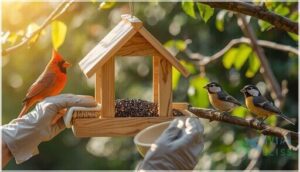
Regular maintenance keeps your feeders safe and functional for the birds that depend on them. A clean feeding station prevents disease transmission and ensures seed stays fresh and appealing.
The following practices will help you maintain a healthy environment for your backyard visitors throughout the year.
Cleaning Frequency and Methods
Daily sanitation keeps your bird feeders from becoming disease hotspots. Wipe down high-touch surfaces each day, removing droppings and scattered birdseed to protect bird health and safety.
Once weekly, disassemble feeders completely and wash them with nine parts water to one part bleach, then air dry thoroughly. This cleaning schedule ensures safe bird feeding while preventing pathogen buildup on feeders holding suet cakes or seed blends.
Preventing Mold and Spoilage
Moisture turns birdseed into a breeding ground for mold, threatening bird health and safety. You can protect your black oil sunflower and nyjer seed by following these storage essentials:
- Store birdseed in airtight metal containers in cool, dry areas between 50 and 70 degrees Fahrenheit
- Place desiccant sachets near loose seeds to maintain humidity below 30 percent
- Monitor storage spaces with a hygrometer, keeping levels under 50 percent
- Discard damp or discolored seeds immediately to prevent mold transfer
- Rotate stock using older seed first to minimize spoilage risk
Replace suet cakes and refill bird feeders with fresh food weekly during humid months.
Managing Spilled Seed
Spilled bird seed attracts unwanted pests and creates health risks for visiting species. You need to address ground-level accumulation within two hours of detecting it to maintain bird safety measures.
| Cleanup Action | Timing & Method |
|---|---|
| Hard surface spills | Sweep into dustpan within 2 hours |
| Bird feeder hoppers | Vacuum or brush after each refill |
| Storage containers | Inspect for cracks; use sealed bins |
| Equipment tools | Rinse with water; dry completely |
Rake scattered black oil sunflower seed and nyjer seed weekly around feeders, preventing squirrel attraction and germination hotspots.
Seasonal Bird Feeding Tips
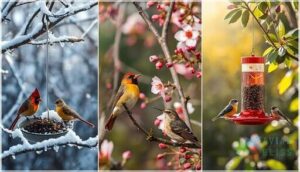
Birds have different nutritional needs throughout the year, and adjusting your feeding strategy with the seasons can make a real difference in their survival and health. Understanding when to offer high-energy foods versus when to pull back helps support natural foraging behaviors while still lending a hand during critical times.
Here’s how to align your feeding efforts with what birds need most during winter, spring, and summer.
Winter Feeding Essentials
When winter arrives, your bird feeder becomes a lifeline for species facing frozen food storage challenges and cold weather nutrition demands. Black oil sunflower seed delivers essential fats, while suet cakes provide concentrated calories that help birds survive temperature extremes.
Nyjer seeds attract finches during winter bird migration periods, and these frosty feeding tips support snowy habitat creation when natural forage disappears beneath ice.
Spring and Migration Support
Spring brings northbound travelers that need quick energy after long flights over water and barren terrain. Offer black oil sunflower seeds, suet cake with nuts, and protein-rich mealworms to support exhausted migrants rebuilding strength along their migration routes.
Hummingbirds arrive before flowers fully bloom, so early nectar feeders give them essential spring nutrition. Bird-friendly plants and clean water near feeders complete essential seasonal feeding support throughout shifting migratory patterns.
Summer Feeding Considerations
Summer bird feeding shifts focus to heat stress prevention and hydration needs. Place feeders in shade to reduce heat buildup, and offer fresh water daily at all feeding stations.
Black oil sunflower seed works year-round, but swap suet for fruit-based options that won’t spoil quickly. Nyjer seed and unsalted peanuts attract finches and nuthatches when offered in breathable feeders with proper warm weather supplements.
Enhancing Nutrition and Bird Health
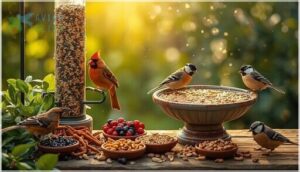
Beyond choosing the right seeds and feeders, you can take extra steps to support the overall health of birds visiting your yard.
Smart nutrition means offering a variety of foods that mirror what birds would find in nature, while also avoiding anything that could harm them.
Fresh water and careful ingredient selection round out a feeding strategy that keeps your backyard visitors thriving year-round.
Supplementing With Fruits and Nuts
You can boost nutrient balance in your wild bird food mix by adding fresh or dried fruits alongside nuts. Fruits deliver vitamin C and antioxidants that support immune function, while nuts provide healthy fats and protein for sustained energy.
This combination meets diverse bird food preferences and complements seed supplements without relying on processed options for your bird diet.
Avoiding Harmful Ingredients
Not all bird food on the shelf meets avian nutrition standards, so you need to check labels for harmful additives. Preservative risks and salt dangers lurk in many commercial blends, while artificial additives can stress digestive systems and compromise bird health and safety.
Protect your flock by avoiding these ingredients:
- BHA and BHT preservatives that accumulate in tissues over time
- Added salt or sodium blends that cause dehydration and kidney strain
- Artificial colorings and flavorings that irritate sensitive species
- Moldy or spoiled seeds containing mycotoxins that trigger illness
Providing Fresh Water
Beyond seed and suet, your backyard habitat needs clean water to support bird health and safety. Fresh sources improve bird hydration year-round, especially when natural pools dry up or freeze over.
| Water Quality Factor | Recommended Practice | Frequency |
|---|---|---|
| Water temperature | Keep near ambient (50-70°F) | Monitor daily |
| Cleaning methods | Mild soap scrub, thorough rinse | Weekly |
| Bird bath refills | Replace with filtered water | Daily minimum |
A well-maintained bird bath completes your bird-friendly habitat while advancing wildlife conservation in your own yard.
Squirrel and Pest Control for Feeders
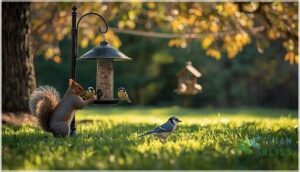
Squirrels and other pests can empty your bird feeders in hours, leaving little for the birds you’re trying to support. You’ll need a combination of physical barriers, smart storage, and strategic placement to keep these opportunistic visitors at bay.
Here are three practical approaches that work together to protect your bird food investment.
Using Baffles and Barriers
Think of baffles as invisible shields that turn your feeding station into a fortress your backyard bird feeding friends can trust. Install cone-shaped mounting baffles 6 to 12 inches below feeding ports to block squirrel control methods and protect your suet and seed preferences. Here’s what transforms feeder placement strategies:
- Material durability matters — choose powder-coated metal or UV-resistant polycarbonate that withstands weather extremes
- Baffle designs work best when positioned 10 feet from branches, creating a bird friendly habitat creation zone
- Smooth barrier edges prevent feathers from snagging while deterring climbing pests effectively
- Monthly inspections catch cracks early, maintaining your defenses season after season
Secure Seed Storage
Your seed stays fresh and safe when stored in airtight containers made of metal or glass. Monitor humidity control using desiccant packets to prevent mold, while pest prevention begins with lockable bins placed off concrete floors. Practice seed rotation by labeling dates and using older black oil sunflower seeds first. This storage security protects your investment while supporting effective squirrel control methods.
| Storage Factor | Best Practice |
|---|---|
| Container Type | Metal or glass with airtight seals |
| Temperature Range | 32–60°F in stable location |
| Humidity Level | Below 60% with desiccant packets |
Placement to Deter Pests
Strategic location transforms your feeding station into a bird sanctuary rather than a pest buffet. Position feeders 10 to 20 feet from structures, using pole mounting at a feeder height of 5 to 6 feet.
Maintain a clear radius of 2 to 3 feet around each station, and keep water proximity separate to preserve cleanliness.
This placement promotes wildlife conservation while maximizing bird attraction strategies.
Safety Practices for Outdoor Bird Feeding
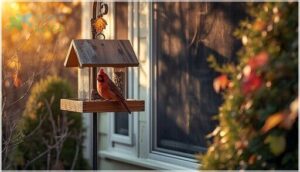
Setting up a bird feeder is only half the battle—you also need to protect your feathered visitors from everyday hazards. Window collisions, predators, and poorly chosen locations can turn a feeding station into a danger zone rather than a safe haven.
The following practices will help you create a feeding environment where birds can eat without unnecessary risk.
Preventing Bird Collisions
Window collisions kill millions of birds annually, but you can prevent bird strike incidents with simple glass treatments. Apply window decals or films every 2 inches to break reflections that confuse birds. Position feeders within 3 feet of glass or beyond 30 feet to reduce collision risk.
Creating a bird-friendly habitat with thoughtful urban planning aids both bird conservation and wildlife conservation efforts.
Protecting Birds From Predators
Predators turn even the best bird-friendly habitat into a danger zone without proper feeder security. Install metal predator guards on poles and mount feeders 5 to 6 feet high to block raccoons and snakes.
Keep ground cover mowed within 6 feet of feeding stations to eliminate ambush cover, supporting both bird conservation and wildlife protection while enhancing bird watching and identification opportunities.
Safe Feeder Locations
You’ll want to position your feeders 15 feet from windows to reduce strikes during active feeding times, while keeping them at least 10 feet from patios and play areas.
Mount feeders 8 to 12 feet high on sturdy poles with clear approach paths from multiple directions, supporting effective bird watching while creating a bird habitat that balances feeder placement, predator control, and window safety throughout your yard layout.
Frequently Asked Questions (FAQs)
What is the best bird food for outdoor feeders?
Black oil sunflower seeds attract the widest variety of backyard birds thanks to their thin shells and high fat content, making them your go-to choice for year-round feeding.
How often should I refill my bird feeders?
Refill schedules depend on feeder capacity, seed consumption rates, and weather impact on wild bird food.
Check daily during cold snaps, refilling tube feeders at half-empty to maintain consistent backyard bird feeding and nutrition.
Can I make homemade bird food safely?
Yes, you can create homemade bird food safely by using unsalted ingredients, clean suet, and fresh seeds.
Avoid toxic items like chocolate and avocado, and store mixes in cool, dry containers.
What attracts unwanted birds like starlings or grackles?
These “less welcome guests” show up when you scatter whole seeds and mixed blends with high sunflower content near roosting sites.
Their flock behavior means they quickly dominate feeders offering easy access to quality, calorie-dense food.
Should I remove feeders during bird flu outbreaks?
During active bird flu outbreaks, local authorities may recommend temporary feeder removal to reduce disease transmission at congregation points.
If feeders stay up, weekly disinfection protects wild birds and aids backyard bird feeding while minimizing public health risks.
Do different feeder styles attract different species?
Different feeder styles attract distinct species based on feeding behaviors and physical abilities. Platform trays draw sparrows and doves, while tube feeders favor finches and chickadees that cling to small ports comfortably.
Conclusion
Your feeder might stay empty for days, then suddenly erupt with color as migrating warblers discover your suet cakes or a cardinal pair claims your sunflower station. That transformation happens when you match bird food for outdoor feeding to the species passing through your yard.
Keep feeders clean, position them near cover, and rotate seed types with the seasons—you’ll build a feeding station that aids birds through migration, nesting, and winter survival while bringing nature’s best show to your doorstep.
- https://feederwatch.org/
- https://www.beyourownbirder.com/2025/09/09/best-foods-for-migrating-birds/
- https://www.lyricbirdfood.com/birding-hub/seasonal-tips/how-to-prepare-your-yard-for-spring-bird-migration/
- https://pmc.ncbi.nlm.nih.gov/articles/PMC6624420/
- https://www.kaytee.com/learn-care/wild-bird/spring-migrating-birds