This site is supported by our readers. We may earn a commission, at no cost to you, if you purchase through links.
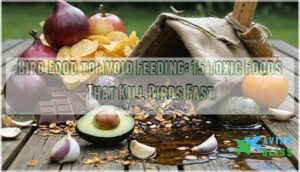 You’ll want to steer clear of chocolate, avocado, fruit pits, onions, and garlic in regard to bird food to avoid feeding your feathered friends.
These common household items pack serious toxins that can harm birds fast. Chocolate contains theobromine, while avocados have persin – both spell trouble for bird health.
Don’t forget about moldy seeds, salty snacks, or bread either. Even honey poses risks due to potential botulism.
Your kitchen might seem bird-friendly, but many everyday foods hide dangerous surprises that could turn your good intentions into a health crisis for visiting birds.
Table Of Contents
- Key Takeaways
- Toxic Foods to Avoid
- Unhealthy Bird Foods
- Harmful Additives in Food
- Foods to Feed in Moderation
- Safe Feeding Practices
- Frequently Asked Questions (FAQs)
- What should you not feed a bird?
- What is the 5 7 9 rule for bird feeders?
- What bird seeds should I avoid?
- What is one food that is highly toxic to birds?
- Can birds eat cooked rice safely?
- Is peanut butter safe for wild birds?
- What about feeding birds leftover pizza?
- Are dried fruits okay for birds?
- Can birds have carbonated drinks or soda?
- Conclusion
Key Takeaways
- Never feed chocolate or avocado – Both contain deadly toxins (theobromine and persin) that can kill birds within hours, even in tiny amounts.
- Remove all fruit seeds and pits – Apple seeds, cherry pits, and stone fruit kernels release cyanide when cracked, causing fatal poisoning in birds.
- Skip bread, salt, and processed foods – These cause malnutrition, organ damage, and attract harmful bacteria while providing zero nutritional value.
- Check for mold and spoilage regularly – Moldy birdseed contains lethal aflatoxins, so you’ll need to inspect and replace food weekly to prevent poisoning.
Toxic Foods to Avoid
You need to know which foods can seriously harm or kill the birds you’re trying to help.
These toxic treats might look harmless, but they contain dangerous chemicals that can damage a bird’s heart, liver, or nervous system within hours.
Chocolate and Theobromine
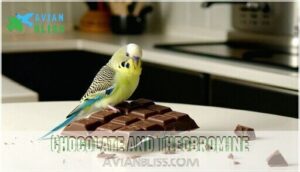
Never give your bird chocolate – it’s deadly poison that kills fast.
Chocolate to birds is like poison to humans – deadly and fast-acting.
Birds can’t process theobromine, the toxic compound in chocolate that causes seizures and heart failure within hours.
Here’s what you need to know about chocolate toxicity:
- Dark chocolate is 10x more dangerous than milk chocolate due to higher theobromine levels
- Less than 1 ounce can kill small birds like budgies or cockatiels
- Symptoms appear in 6-12 hours including vomiting, tremors, and collapse
- No antidote exists – only emergency vet care can help
- Safe alternatives include fresh fruits, unsalted nuts, and bird-safe treats
Keep all chocolate products away from your feathered friends.
Avocado and Persin
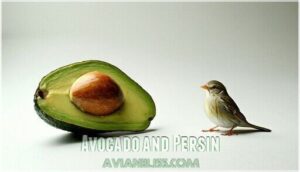
Avocado’s creamy goodness becomes a deadly trap for birds. Every part contains persin, a toxin causing heart damage and respiratory distress in most bird species. Even small amounts prove fatal within hours.
| Avocado Part | Persin Level | Bird Reaction | Timeline |
|---|---|---|---|
| Flesh | High | Heart failure | 12-24 hours |
| Pit | Extremely high | Respiratory distress | 6-12 hours |
| Skin | High | Weakness, collapse | 8-16 hours |
| Leaves | Moderate | Digestive upset | 4-8 hours |
Skip the guacamole sharing. Offer safe alternatives like apple slices or berries instead.
Fruit Seeds and Cyanide
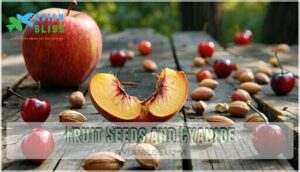
Those innocent-looking apple cores hide a deadly secret. Cyanide exposure from fruit seeds can kill birds faster than you’d expect.
When birds crack open these seeds, they release hydrogen cyanide that stops their cells from breathing.
Safe fruits require seed removal before feeding:
- Apple seeds – Remove every single one
- Cherry pits – Highest cyanide levels of common fruits
- Peach stones – Crack easily, releasing lethal dose amounts
- Plum kernels – Small size tricks many bird species
- Apricot pits – Regulated in Europe due to bird toxins
Always offer seedless fruit flesh only.
Alliums Like Onions and Garlic
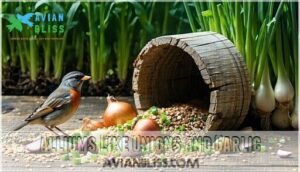
Alliums like onions and garlic pose serious threats to bird health.
These common kitchen staples contain compounds that cause sulfur toxicity and allicin anemia in birds.
Even small amounts can trigger dangerous health problems, making these toxic foods for birds particularly concerning for backyard enthusiasts.
| Allium Type | Toxic Compound | Health Risk | Safe Alternatives | Dosage Concerns |
|---|---|---|---|---|
| Onions | High sulfur content | Ulcers, anemia | Seeds, berries | Any amount dangerous |
| Garlic | Allicin | Severe anemia | Nuts, grains | Excess causes harm |
| Shallots | Sulfur compounds | Blood disorders | Fresh fruits | Avoid completely |
| Chives | Mild toxins | Digestive upset | Vegetables | Small doses risky |
| Leeks | Sulfur elements | Organ damage | Native plants | No safe level |
Cooking effects don’t eliminate these harmful foods’ dangers to birds.
The toxic compounds remain active even after heating, making cooked onions and garlic equally dangerous.
Mushrooms and Liver Failure
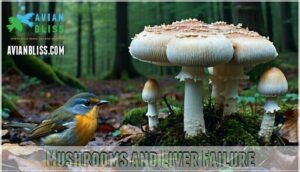
Wild mushrooms pose deadly threats to birds through toxic compounds called amatoxins.
Wild mushrooms deliver deadly amatoxins that destroy bird livers within days.
These poisonous mushrooms cause rapid liver damage that’s often fatal.
You can’t tell safe mushrooms from toxic ones without expert knowledge.
Three deadly mushroom facts that’ll shock you:
- Death cap mushrooms kill 90% of birds that eat them through liver failure
- Cooking doesn’t help – these toxins survive heat and remain lethal
- Symptoms appear harmless at first, then birds suddenly collapse from organ damage
Mushroom toxicity creates a false recovery period where birds seem fine before liver damage destroys them.
Safe identification requires mycology expertise you probably don’t have.
Bird symptoms start with stomach upset, then progress to fatal liver failure within days.
Remove all wild mushrooms from areas where birds feed – it’s not worth the gamble with these harmful foods.
These mushrooms can be especially dangerous because of hepatotoxic mushroom varieties that cause liver failure.
Unhealthy Bird Foods
Not all bird foods are created equal, and some seemingly harmless snacks can seriously harm your feathered friends.
While these foods won’t kill birds as quickly as toxic options, they still cause real problems that can weaken birds over time, which is a complete concept to consider when choosing the right food for them.
Potato Chips and Salt
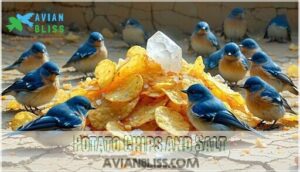
You can’t give birds potato chips or salty snacks.
Salt toxicity happens fast because birds can’t process salt like we do.
Even tiny amounts damage their nervous system and kidneys.
Skip the chips entirely – there’s no safe amount.
Instead, try chip alternatives like unsalted seeds or plain air-popped popcorn.
Remember, hydration importance increases with any treats, so always provide fresh water for safe snacking.
High salt intake can disrupt their electrolyte balance, potentially leading to organ failure due to the impact of salt toxicity and the importance of maintaining proper electrolyte levels.
Bread and Malnutrition
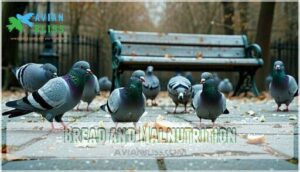
Bread lacks the essential nutrients your feathered friends need, creating a deceptive trap that fills their bellies without fueling their bodies.
This unhealthy bird food leads to serious nutritional deficiency and compromises bird nutrition fundamentally.
Here are five critical bread-related risks for bird health:
- Angel wing deformity – affects waterfowl health permanently, preventing flight
- Nutritional deficiency – disrupts proper bird digestion and development
- Malnutrition – weakens immune systems and reduces survival rates
- Dependency – birds ignore natural, nutritious food sources
- Moldy bread toxins – cause respiratory infections and organ damage
Choose bread alternatives like seeds, fruits, and grains instead.
Dairy and Digestion Issues
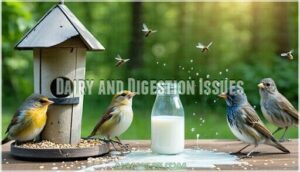
Your feathered friends can’t handle dairy products like milk and cheese.
Birds lack the digestive enzymes needed to break down lactose, leading to lactose intolerance symptoms.
When birds consume fermented dairy or regular milk, they’ll experience diarrhea risks and dehydration concerns that can quickly turn dangerous.
Bird digestion simply wasn’t designed for these foods.
Stick to safe alternatives like fresh water instead.
Raw Meat and Spoilage
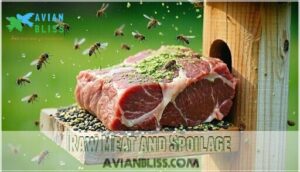
Raw meat poses serious risks you shouldn’t ignore when feeding birds. Bacterial growth happens fast, creating dangerous conditions that lead to avian illness and attract unwanted pests to your yard.
Here’s why raw meat causes problems:
- Rapid spoilage – Meat deteriorates quickly in outdoor temperatures, becoming a breeding ground for harmful bacteria
- Pest attraction – Flies, rodents, and other unwelcome visitors swarm to rotting meat scraps
- Bird food contamination – Bacteria spreads to nearby feeders, creating widespread health hazards
Safe handling means avoiding raw meat entirely for backyard birds.
Junk Food and Nutrition Deficits
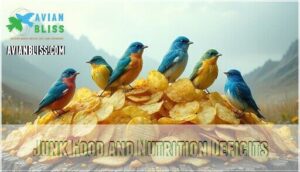
Just like we shouldn’t fuel our bodies with junk food, feeding birds processed snacks creates serious health problems.
Empty calories from chips, cookies, and crackers lack essential nutrients birds need to thrive.
| Junk Food | Health Impact | Why It’s Dangerous |
|---|---|---|
| Potato Chips | Angel Wing deformity | High salt damages organs |
| Cookies/Crackers | Malnutrition risks | Sugar spikes harm metabolism |
| Processed snacks | Nutritional deficiencies | Missing vitamins cause illness |
These unhealthy foods don’t just fail to nourish—they actively harm bird nutrition by filling stomachs without providing proper nutritional value.
Harmful Additives in Food
You can’t always spot harmful additives in bird food just by looking at them.
Even seemingly safe treats like salted nuts or honey can poison your feathered friends faster than you’d think.
Salted Nuts and Seeds
When you think salted nuts make great bird food, think again.
These seemingly innocent snacks pack a dangerous punch for our feathered friends. Salt toxicity hits birds hard, causing serious nervous system damage and kidney problems.
Here’s why salted nuts spell trouble:
- Salt Toxicity – Birds can’t process salt like humans can
- Nervous System damage occurs with even small amounts
- Kidney Damage develops quickly from excess sodium
- Dehydration follows as birds struggle to balance fluids
- Death can result from severe salt poisoning
Instead of reaching for that bag of salted peanuts, choose raw, unsalted alternatives. Your backyard visitors will thank you for keeping moderation levels in check and avoiding this toxic bird food trap.
Aflatoxin in Peanuts
Salt’s not the only bird food danger. Peanuts can hide aflatoxin—a nasty bird food toxin from Fungal Growth if storage methods aren’t right.
Testing standards matter. You want “bird-safe” peanuts. Poor Peanut Sourcing harms Bird Health fast. Always check labels and toss moldy nuts.
It’s like playing hot potato with toxic bird food!
| Bird Food Danger | Tip |
|---|---|
| Aflatoxin | Buy tested, safe peanuts |
| Moldy Peanuts | Remove from feeders |
| Poor Storage | Use sealed containers |
| Lax Testing | Choose trusted brands |
Honey and Botulism
Despite honey’s natural appeal, it harbors deadly Clostridium botulinum spores that cause bird botulism.
These bird food toxins trigger paralysis and respiratory failure within hours.
Botulism symptoms include wing weakness and inability to perch.
Skip honey entirely—safe sweeteners like pure grape jelly or sugar water provide energy without honey sourcing risks or nectar contamination dangers, avoiding bird botulism.
Moldy Birdseed and Toxins
That innocent bag of birdseed sitting in your garage might be a death trap.
Old or spoiled birdseed grows mold that produces fatal toxins, making Visual Inspection and proper Seed Storage critical for Toxin Prevention.
Watch for these deadly signs of Fungal Growth:
- Black or green fuzzy patches – Aflatoxin Exposure starts here
- Musty, sour smell – Your nose knows danger
- Clumped, sticky seeds – Moisture breeds bird food toxins
- Discolored kernels – Even small amounts kill fast
Pesticide Contamination
Commercial bird foods hide a dirty secret – over 70% contain pesticide residues that poison your feathered friends.
Neonicotinoid risks from soybean coating and fertilizer sprays create chemical poisoning nightmares. These contamination sources turn seemingly safe bird food into harmful bird seed.
Unsafe bird feed with organophosphates causes liver damage, while bad bird food affects reproduction. Check bird food safety labels and choose organic options to avoid these bird food dangers lurking in your backyard feeder.
These pesticides contribute to annual bird deaths.
Foods to Feed in Moderation
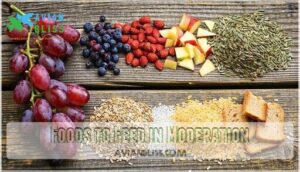
Some foods aren’t completely off-limits but need careful limits to keep your feathered friends healthy.
Think of these as the "sometimes foods" – they won’t kill birds instantly like chocolate or avocado, but they can cause problems if you overdo it, which is why careful limits are essential.
Healthy Cereals and Grains
Whole grains pack nutritional punch for backyard birds when offered correctly.
Choose unsweetened cereals like plain oats, millet, and quinoa from the unsafe bird feed aisle.
Grain nutrition improves when you select sprouted grains over processed options.
Safe grains include barley and wheat berries.
Seed variety matters – mix different grains for balanced nutrition.
Avoid sugary cereals that create bird food dangers.
Consider protein for bird growth by supplementing with peanuts or mealworms.
Plain Rice and Pasta
You can safely offer plain rice and pasta as bird food when prepared correctly.
Cook them without salt, butter, or seasonings to protect bird health. These simple carbohydrates provide decent nutritional value and support bird digestion when served in safe amounts.
However, they shouldn’t dominate a wild bird diet since birds need varied nutrition for peak wellness.
Cooked Meat and Beans
You can offer cooked meat and beans as protein sources, but moderation is key.
Unsalted, cooked chicken or turkey provides excellent nutritional benefits without bird hazards.
Cooked beans like kidney, pinto, and navy are safe alternatives to raw varieties that contain toxic compounds.
Avoid feeding birds seasoned meats or uncooked beans, as these bird food risks can cause serious health problems.
Fresh Fruits and Vegetables
Fresh fruits make wonderful Garden Treats when you prep them right. Safe Fruits without fruit pits keep birds healthy and happy.
You’ll want to remove those sneaky seeds first – they’re major bird food hazards that contain cyanide.
Here’s your Fruit Variety checklist for bird safety:
- Remove all seeds from apples, pears, and stone fruits
- Cut into appropriate sizes for different bird species
- Offer Native Plants like elderberries and wild grapes
- Check for freshness – spoiled fruit attracts harmful bacteria
Vegetable Prep follows similar rules. Fresh corn, peas, and squash make excellent safe foods. Just skip anything with pesticides or chemical treatments.
Unsalted Nuts and Seeds
Nuts and seeds provide excellent Nutritional Benefits for wild birds, but choosing the right ones matters for bird safety. You’ll want to stick with unsalted varieties since salt damages their nervous systems.
| Seed Variety | Bird Preferences | Storage Guidelines |
|---|---|---|
| Sunflower seeds | Cardinals, finches | Cool, dry place |
| Peanuts (unsalted) | Woodpeckers, jays | Refrigerate after opening |
| Nyjer/thistle | Goldfinches, siskins | Airtight containers |
Safe Preparation means avoiding salted or flavored options entirely. Store bird food properly to prevent mold growth, which creates deadly toxins. Fresh nuts beat stale ones every time for effective bird feeding.
Safe Feeding Practices
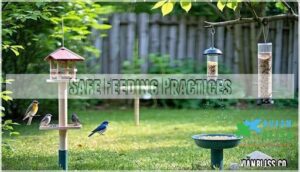
Now that you know what foods can harm birds, you need to create a safe feeding environment that protects them from danger.
Smart feeding practices turn your backyard into a bird haven rather than an accidental hazard zone.
Choosing Birdseed Wisely
When purchasing birdseed, quality matters more than price.
Check expiration dates and avoid cheap mixes with fillers that birds won’t eat.
Store seeds in cool, dry places to prevent mold growth.
Choose varieties that match your local species’ preferences for proper nutritional balance.
To further prevent issues, consider using seeds resistant to mold to ensure the best for the birds.
Skip anything on the no bird food list or labeled as worst bird food to avoid dangerous bird seed containing toxic foods.
Planting Native Plants
Beyond avoiding toxic foods, bird food warnings, and dangerous bird seed, you can transform your yard into a natural bird buffet.
Native plants create healthier Local Ecosystems and Bird Habitats than any feeder could. Here’s why Garden Diversity matters:
- Native Berries provide 30% more antioxidants than store-bought options
- Natural Seed Sources support 95% of bird species versus 6% from non-natives
- Reduced disease risk by 25% compared to artificial feeding stations
- Double the insect population for protein-hungry nestlings
Avoiding Red Dyes and Additives
Red food coloring and bird food additives pose serious health risks to your feathered friends.
Skip artificial dyes in hummingbird nectar – they can damage organs and disrupt digestion. Natural nectar made with plain sugar works perfectly.
Choose safe jelly without high fructose corn syrup for orioles. Dye alternatives like natural red flowers attract birds safely.
A 1:4 ratio mimics natural nectar’s sugar content. Always check labels for additive risks before purchasing bird food, and opt for natural nectar to ensure the health and safety of your birds, by avoiding artificial dyes and using plain sugar.
Using Safe Feeders and Water
Safe feeders need smart placement away from windows and predators.
Choose materials like stainless steel or BPA-free plastic that won’t leach toxins. Clean feeders weekly with hot water to prevent bacteria buildup.
Fresh, clean water matters just as much as food quality. Position water sources where birds can spot danger while drinking.
Many retailers offer a variety of safe bird feeders for purchase. Proper feeder materials and water hygiene prevent common bird feeding mistakes that threaten bird safety.
Discarding Spoiled Food and Water
Check your feeders weekly for spoiled bird food and stagnant water.
Mold growth and bacterial contamination happen fast in warm weather. Old seeds attract pests and create toxin buildup that kills birds quickly.
Clean feeders prevent these bird food problems. Fresh water stops disease spread.
When feeder hygiene fails, birds pay the price. Consider purchasing safer bird feeders to minimize contamination and ensure a healthy environment for the birds.
Frequently Asked Questions (FAQs)
What should you not feed a bird?
Don’t feed birds chocolate, avocado, fruit seeds, onions, garlic, mushrooms, raw beans, bread, dairy, or salty foods. These can cause poisoning, malnutrition, or death in our feathered friends.
What is the 5 7 9 rule for bird feeders?
Let me save your bird feeder from becoming a squirrel snack bar.
The 5-7-9 rule prevents squirrels from reaching feeders: place them 5 feet high, 7 feet from jumping points, and avoid 9-foot drop zones from above.
Installing baffles on feeders can also stop squirrels from climbing the poles, following the 5-7-9 rule that actually works to squirrel-proof your bird feeders.
What bird seeds should I avoid?
Skip cheap seed mixes with filler seeds that birds won’t eat.
Avoid moldy or old birdseed containing deadly aflatoxins.
Don’t buy seeds treated with pesticides or chemicals that’ll poison your feathered friends.
What is one food that is highly toxic to birds?
Ever wonder what innocent treat could kill your feathered friend?
Chocolate is extremely toxic to birds.
It contains theobromine, which their bodies can’t process, leading to poisoning and potentially death even in small amounts.
Can birds eat cooked rice safely?
Yes, you can safely feed birds cooked rice.
Plain, unsalted rice works perfectly as an occasional treat.
Just make sure it’s cooled down first and avoid adding butter or seasonings that could harm them, this is a complete concept to consider for the birds’ safety.
Is peanut butter safe for wild birds?
While you might worry about additives, plain peanut butter is generally safe for wild birds.
Choose natural, unsalted varieties without xylitol or excess sugar.
The high fat content provides excellent energy, especially during winter months.
What about feeding birds leftover pizza?
Don’t feed birds leftover pizza. The high salt content, processed ingredients, cheese, and potential toxic toppings like garlic can seriously harm their health and digestion.
Are dried fruits okay for birds?
Like a sweet trap, dried fruits seem harmless but pack concentrated sugar that’s tough on tiny bird digestive systems.
You’re better off offering fresh fruit instead.
The high sugar content can cause digestive upset and isn’t nutritionally balanced for wild birds.
Can birds have carbonated drinks or soda?
No, don’t give birds carbonated drinks or soda. The bubbles can cause serious digestive problems, and the sugar, caffeine, and artificial ingredients are toxic to their tiny systems.
Conclusion
Amazingly, over 5 billion birds die yearly from human-related causes, making proper feeding knowledge essential.
Remember these dangerous bird food to avoid feeding your backyard visitors: chocolate kills with theobromine, avocados contain deadly persin, and moldy seeds hide lethal toxins.
Skip the bread, salty snacks, and honey too.
Instead, offer fresh fruits, quality birdseed, and clean water, you’ll protect these amazing creatures while enjoying their company for years to come, with clean water.