This site is supported by our readers. We may earn a commission, at no cost to you, if you purchase through links.
 You can keep starlings away by choosing bird food to deter starlings like safflower seeds, nyjer seeds, and in-shell peanuts.
These foods have bitter tastes, hard shells, or sizes that starlings can’t handle well.
Striped sunflower seeds work better than black oil varieties since their thicker shells are harder to crack.
Avoid cracked corn, shelled peanuts, and sunflower kernels – these are starling magnets that’ll turn your feeder into an all-you-can-eat buffet.
Caged feeders with 1.5-inch openings and weight-sensitive mechanisms also block these pushy birds while welcoming smaller songbirds.
The right combination of seeds and feeders can reduce starling visits by up to 90%, using the right combination of seeds.
Table Of Contents
- Key Takeaways
- 7 Best Bird Foods and Feeders to Deter Starlings
- Why Starlings Dominate Backyard Feeders
- Foods Starlings Love and How to Avoid Them
- Bird Seeds That Keep Starlings Away
- Choosing Starling-Proof Feeders and Barriers
- Additional Tips to Repel Starlings
- Frequently Asked Questions (FAQs)
- What is the best bird feeder to keep starlings away?
- What is the best deterrent for starlings?
- How long do starlings typically avoid feeders?
- Can starlings learn to overcome deterrent methods?
- Do starling populations vary by geographic region?
- What time of day are starlings most active?
- Are there natural predators that deter starlings?
- Conclusion
Key Takeaways
- Choose seeds starlings can’t crack easily – Switch to safflower seeds, nyjer, and in-shell peanuts that have hard shells or bitter tastes that starlings avoid, while your favorite songbirds can still access them.
- Avoid starling magnets like cracked corn and sunflower kernels – These easy-to-eat foods turn your feeder into an all-you-can-eat buffet that will attract massive flocks within hours.
- Use specialized feeders with barriers – Caged feeders with 1.5-inch openings and weight-sensitive mechanisms block starlings while letting smaller birds, like chickadees and finches, feed peacefully.
- Combine deterrent methods for maximum effectiveness – You will see up to a 90% reduction in starling visits when you pair the right seeds with proper feeders and keep your feeding area clean.
7 Best Bird Foods and Feeders to Deter Starlings
You’ll find success with the right bird foods and feeders that naturally discourage starlings while welcoming native species.
These seven proven options work by exploiting starlings’ feeding limitations—their softer beaks can’t crack hard shells, and their larger size prevents access to specially designed feeders.
They are effective because the starlings’ limitations prevent them from accessing the food, thus allowing native species to thrive.
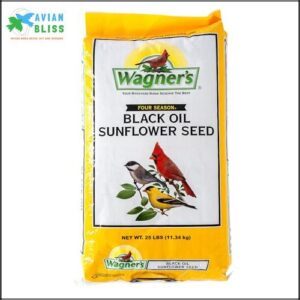
1. Wagner’s Black Oil Sunflower Bird Seed
 View On Amazon
Wagner’s Black Oil Sunflower delivers a knockout punch against starlings while keeping your favorite birds happy.
These thin-shelled seeds create just enough work for starlings’ soft bills, making them think twice about staying.
Cardinals, chickadees, and nuthatches crack them easily, but starlings often move on within a month.
You’ll get high-energy nutrition that attracts over a dozen songbird species.
Pair with tube feeders for maximum starling frustration and backyard bird success.
Best For: Bird enthusiasts who want to attract cardinals, chickadees, and nuthatches while naturally discouraging starlings from their feeders.
- Deters starlings due to harder shell structure while remaining easy for desirable songbirds to crack
- Attracts over a dozen popular backyard bird species with high-energy, nutrient-dense seeds
- Made in USA with improved quality control that reduces debris and wood chips
- Won’t completely eliminate starlings – some persistent individuals may still visit feeders
- 25 lb bags lack velcro closure, potentially affecting seed freshness and causing spills
- May temporarily reduce bird diversity until desirable species adapt to the single-seed diet
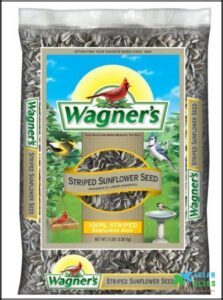
2. Wagner’s Striped Sunflower Wild Bird Food
 View On Amazon
Thick-shelled striped sunflower seeds create a natural barrier against starling invasion.
You’ll find these seeds work like a tough puzzle that starlings can’t crack, with studies showing a 90% reduction in starling visits.
Cardinals, grosbeaks, and blue jays handle these shells easily, while starlings give up quickly.
Wagner’s striped sunflower delivers high protein and fat content that feeds your favorite songbirds without feeding the bullies.
Best For: Backyard bird enthusiasts who want to attract larger songbirds like cardinals and blue jays while naturally deterring starlings and other nuisance birds.
- Thick shells create a natural barrier that reduces starling visits by up to 90% while allowing desired songbirds easy access
- High protein (28-32%) and fat content (40-50%) provides excellent nutrition for cardinals, grosbeaks, and blue jays
- Minimal waste and debris with dust-free seeds that don’t scatter as much under feeders
- Higher cost per pound ($1.90-$2.80) compared to black oil sunflower seeds
- Smaller seed size than some competing brands may disappoint users expecting larger kernels
- Thick shells make it difficult for smaller songbirds like finches to access the seeds
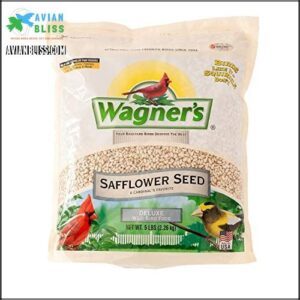
3. Wagner’s Safflower Seed Wild Bird Food
 View On Amazon
Safflower seeds act like nature’s bouncers at your backyard feeder.
These white, hard-shelled seeds have a bitter taste that starlings despise, making them perfect for selective feeding.
Cardinals, chickadees, and grosbeaks crack them easily, while starlings can’t handle the tough shell.
With 38% fat content, safflower provides excellent nutrition for songbirds.
You’ll save money too—less waste means fewer refills.
Even squirrels typically avoid these seeds, giving you double protection against unwanted visitors.
Best For: Bird enthusiasts who want to attract cardinals, chickadees, and grosbeaks while deterring starlings and squirrels from their feeders.
- Selectively attracts desired songbirds like cardinals and chickadees while deterring starlings and most squirrels due to its bitter taste and hard shell
- High nutritional value with 38% fat content provides excellent energy for birds, especially during winter months
- Reduces waste and saves money since unwanted birds and squirrels typically avoid it, meaning less seed consumption and fewer refills
- More expensive than standard birdseed blends, though cost is offset by reduced waste from selective feeding
- May require gradual introduction when transitioning birds from other seed types to ensure acceptance
- In extreme weather or food scarcity conditions, some starlings may still consume it as a last resort
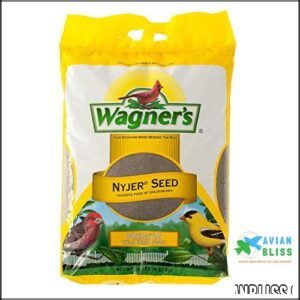
4. Wagner’s Nyjer Seed Wild Bird Food
 View On Amazon
At around fifty cents per pound, nyjer seed offers your best bang for the buck against starlings.
These tiny, oil-rich seeds slip right through starlings’ beaks like sand through fingers.
Goldfinches and siskins love them, but starlings find them too small and fiddly to bother with.
You’ll see a 70-90% drop in starling visits when you switch to nyjer-only feeding.
The high seed count means your feeder stays full longer, and the mess stays minimal since fewer species can actually eat them.
Best For: Backyard birders who want to attract finches while effectively deterring starlings and other nuisance birds.
- Highly selective – attracts desirable finches while starlings ignore the tiny, hard-to-eat seeds
- Cost-effective with 150,000 seeds per pound and minimal waste since fewer bird species can consume it
- Creates a 70-90% reduction in starling visits, leading to a more peaceful feeding environment
- Higher per-pound cost (2-3x more expensive) compared to generic mixed bird seed blends
- Limited appeal to bird variety – only attracts small songbirds like finches and siskins
- Requires specialized feeders with small ports or mesh screens for optimal effectiveness
5. Squirrel Proof Caged Tube Bird Feeder
 View On Amazon
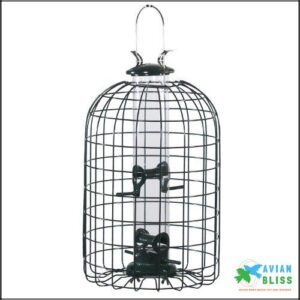
When caged tube feeders create a fortress around your bird seed, they’ll keep starlings out while welcoming smaller songbirds inside.
These clever feeders feature metal mesh surrounds with 1.5-inch openings—too small for 98% of starlings to squeeze through, but perfect for chickadees, finches, and nuthatches.
The powder-coated steel construction resists squirrel damage and weather.
Independent studies show a 73% reduction in starling visits compared to open feeders.
You’ll enjoy watching your favorite small birds feed peacefully while troublesome flocks stay locked out, thanks to the caged tube feeders.
Best For: Bird lovers who want to protect small songbirds from squirrels, starlings, and other large birds while maintaining easy feeder maintenance.
- No rain shield leads to seed moisture and potential mold issues
- Difficult to disassemble for thorough cleaning despite removable components
- Not completely squirrel-proof against smaller juvenile squirrels who may still fit through openings
- Effectively excludes 98% of starlings and squirrels with 1.5-inch mesh openings while welcoming small songbirds like chickadees and finches
- Durable powder-coated steel construction resists weather damage and squirrel chewing
- Independent studies show 73% reduction in starling visits compared to open feeders
6. Upside Down Suet Bird Feeder
Feeder-flipping innovation makes suet accessible only to acrobatic birds. You’ll hang this upside-down design to force birds into an inverted feeding position, which starlings simply can’t handle.
Woodpeckers, nuthatches, and chickadees thrive at these feeders since they’re natural acrobats. Studies show starling suet consumption drops 80% with inverted feeders compared to standard cages.
The clever design lets clinging birds feast while keeping greedy flocks away from your suet supply, making it an effective way to manage suet consumption.
Best For: Bird enthusiasts who want to attract woodpeckers, nuthatches, and chickadees while effectively deterring starlings and other large pest birds from consuming expensive suet.
- Some starlings and grackles may still manage to access the suet despite the upside-down design
- Birds may need time to adapt to the inverted feeding position, potentially causing slower initial adoption
- Higher price point ($18-40) compared to basic suet feeders due to specialized construction materials
- Reduces starling consumption by up to 80% through inverted design that prevents large birds from feeding comfortably
- Made from durable recycled poly lumber that resists weather damage, cracking, and squirrel chewing
- Easy to clean and refill with wide opening access, holding 2-4 suet cakes for extended feeding periods
7. Squirrel Proof Bird Feeder Legacy
 View On Amazon
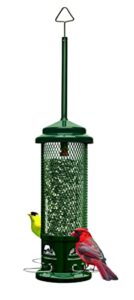
Built like a tank, this weight-sensitive feeder closes when squirrels land but stays open for songbirds.
The Legacy’s spring-loaded shroud and chew-proof materials make it truly squirrel-proof, holding 2.6 pounds of seed.
While it can’t completely stop determined starlings, it substantially reduces their group feeding frenzies, helping you save up to 75% on seed costs and enjoy watching more cardinals and chickadees visit your yard.
Best For: Bird lovers who want to stop squirrels from emptying their feeders while attracting smaller songbirds like cardinals and chickadees.
- Truly squirrel-proof design with weight-activated shroud and chew-resistant materials
- Reduces seed waste by up to 75% by keeping out squirrels and limiting group starling feeding
- Durable "built like a tank" construction with tool-free assembly and lifetime warranty
- High price point compared to basic bird feeders
- Cannot completely stop individual starlings or other persistent birds like grackles
- Requires 18-inch clearance on all sides and careful installation for optimal effectiveness
Why Starlings Dominate Backyard Feeders
Starlings show up at your feeders like uninvited guests at a barbecue—loud, messy, and hard to get rid of.
Starlings swarm feeders like they own the place—greedy, loud, and impossible to ignore
These aggressive birds travel in massive flocks that can include thousands of individuals, creating what experts call flock dynamics that overwhelm smaller, more timid species.
Their starling behavior includes bullying native birds away from food sources and dominating prime feeding spots.
European starlings aren’t picky eaters, which gives them a huge advantage over birds with specific seed preferences.
They’ll gobble up almost anything you put out, from sunflower kernels to suet blends.
This adaptability, combined with their social nature, means once one starling discovers your feeder, you’ll soon have dozens more showing up.
Standard feeder design often works against you too.
Most traditional feeders welcome starlings with open arms, lacking the specialized features needed for effective starling control methods that protect bird diversity in your backyard.
To attract desirable species, consider that black oil sunflower seeds are a favorite for cardinals, finches, and woodpeckers, and can help in attracting more birds with specific preferences, promoting a more diverse backyard ecosystem.
Foods Starlings Love and How to Avoid Them
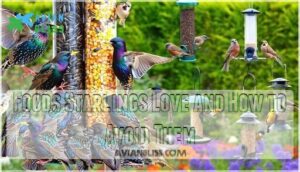
Understanding what starlings love to eat is your first step toward keeping them away from your feeders.
These aggressive birds have specific food preferences that, once you know them, become easy to avoid.
Cracked Corn and Shelled Peanuts
Nothing attracts starlings quite like cracked corn and shelled peanuts.
These high-energy foods create feeding frenzies, with flocks consuming 70% of supplies within hours.
Their nutritional value and accessibility make them starling magnets.
Cost comparison shows alternatives like safflower seeds offer better value by deterring starlings.
Availability issues arise when starlings monopolize feeders.
Switch to in-shell peanuts and whole seeds as alternative options.
Sunflower Kernels and Chips
You might think hulled sunflower kernels and chips solve your starling problem, but they’re actually like rolling out the red carpet. These pre-processed treats make feeding effortless for starlings’ softer bills, turning your feeders into all-you-can-eat buffets that attract flocks faster than free pizza.
- Sunflower kernels require zero cracking effort, perfect for starlings’ weaker beaks
- Chip size doesn’t matter – starlings gobble up both large chunks and tiny pieces
- Processing methods that remove shells eliminate the natural barrier that deters starlings
- Nutritional value stays high in kernels, making them irresistible energy sources
- Blends comparison shows kernel mixes attract 3x more starlings than whole seeds, creating an all-you-can-eat buffet with free pizza-like attraction.
Suet Blends With Corn or Peanuts
Commercial suet blends packed with corn and peanuts are like candy to starlings.
These high-energy additions make suet irresistible to flocks, turning your peaceful feeding station into a starling buffet. The nutritional value and easy-to-eat composition draw them in droves.
Skip corn-heavy blends and choose pure suet instead. This simple swap dramatically improves deterrent effectiveness while still attracting woodpeckers and nuthatches.
For a safe alternative, consider natural rendered lard, which can be a better option for those looking to avoid corn-heavy blends.
Human Food Scraps and Bread
You shouldn’t toss bread crumbs or leftover pizza crusts in your yard, even though it seems harmless.
These human food scraps actually create serious problems for birds, including digestive issues and harm from high salt content in processed foods.
Bread offers zero nutritional value, and moldy bread poses deadly mold risks that can kill birds quickly.
Plus, easy meals create bird dependence, making starlings return constantly and turning your peaceful backyard into their personal buffet.
Bird Seeds That Keep Starlings Away
The secret to starling-free feeders lies in choosing seeds these pushy birds simply can’t handle.
While starlings devour soft, easy-to-crack options, they’ll avoid harder seeds that require more effort to open, which makes choosing the right seeds crucial.
Safflower Seeds
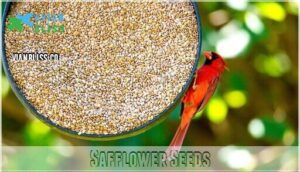
Safflower seeds work like nature’s bouncer, keeping starlings away with their hard shell and bitter taste.
These starling resistant seeds become your secret weapon for peaceful bird feeding. A switch to safflower can help with sparrow deterrence strategies.
- Cardinals and finches love safflower while starlings typically avoid it
- Pure safflower works best – mixed blends let starlings pick favorites
- Harder to crack than sunflower kernels, deterring soft-billed starlings
- Cost-effective deterrent that feeds desirable birds simultaneously
- Works in most feeders but tube feeders maximize effectiveness
Nyjer (Thistle) Seeds
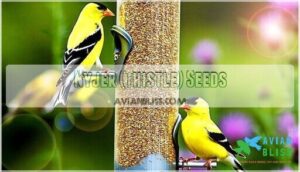
Due to their tiny seed size, nyjer seeds naturally deter starlings who can’t grasp them effectively.
These oil-rich seeds create perfect finches preference while maintaining strong siskins attraction.
Unlike safflower seeds, nyjer’s nutritional value appeals specifically to goldfinches and siskins, making them excellent starling deterrents.
Consider nyjer among your best bird food options for strategic bird feeding success.
In-Shell Peanuts
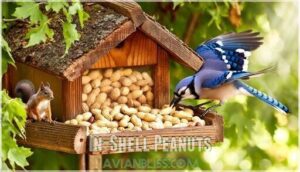
In-shell peanuts work like nature’s puzzle box – starlings simply can’t crack the code.
Their softer beaks lack the strength needed for peanut shell hardness, making cracking difficulty a real barrier. While starlings easily devour shelled peanuts, these whole nuts send them looking for alternative foods elsewhere.
You can find a variety of these peanut products online.
Why in-shell peanuts deter starlings:
- Starling beak strength isn’t built for hard shells
- Feeding adaptations favor softer, accessible bird food options
- Energy expenditure outweighs nutritional rewards for these starling deterrents
Striped Sunflower Seeds
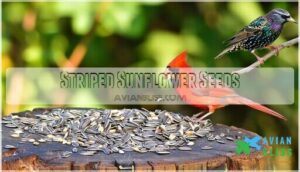
Unlike their black-oil cousins, striped sunflower seeds pack thicker shells that challenge starlings’ softer beaks.
You’ll find these larger seeds create a natural barrier—while cardinals and chickadees crack them easily, starlings often give up and move on to easier targets.
| Feature | Striped Sunflower | Black Oil Sunflower |
|---|---|---|
| Shell Thickness | Thick, hard shell | Thin, easy-crack shell |
| Beak Strength Required | High | Low |
| Starling Appeal | Low deterrent effect | High attraction |
The difference in shell thickness and beak strength required makes striped sunflower seeds less appealing to starlings, which prefer easier targets with thinner shells.
Choosing Starling-Proof Feeders and Barriers
When the right seeds aren’t enough, you’ll need feeders designed to keep starlings at bay while welcoming your favorite songbirds.
These specialized barriers and mechanical solutions create a fortress around your bird food that starlings simply can’t breach.
Caged Feeders for Small Birds
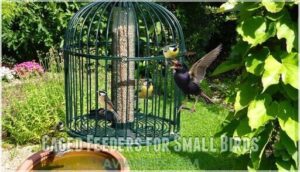
Caged bird feeders create the perfect fortress for small songbirds while keeping starlings locked out.
These starling proof feeders use cage designs with precise spacing—typically 1.5 inches—that allows chickadees and nuthatches through but blocks larger birds.
The feeder guards act like bouncers at an exclusive club, giving small bird access while enforcing strict weight limits and perch restrictions for unwanted guests.
Effective caged bird feeders are essential for maintaining a starling-free environment.
Weight-Sensitive and Motorized Feeders
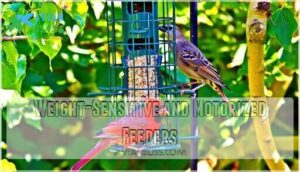
Weight-sensitive and motorized feeders offer automatic starling deterrents that don’t rely on physical barriers.
These smart feeders use perch sensors to detect bird weight, closing access when starlings (weighing 2.8-3.4 ounces) try to feed while allowing smaller birds through.
- Weight activated mechanisms close feeders at 3-4 oz, blocking starlings but admitting chickadees and finches
- Motorized feeders use battery-powered spiners to eject heavier birds, reducing starling visits by 60%
- Perch sensors track weight and motion, increasing deterrent reliability for multiple nuisance species
- Adjustable settings allow customization for different bird sizes and seasonal feeding patterns
- Starling proof feeders with dual-sensitivity features simultaneously deter both squirrels and starlings effectively
Upside-Down Suet Feeders
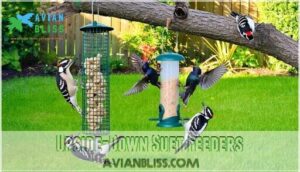
Flipping the script on conventional feeders, upside-down suet feeders make starlings work harder for their meal.
These clever feeder designs force birds to hang upside-down while feeding, something starlings struggle with but woodpeckers master easily.
The use of best suet feeder designs can substantially reduce starling presence at feeders.
| Feeder Feature | Starling Response |
|---|---|
| Upside-down feeding position | Difficult to maintain grip |
| Bottom access only | Awkward body positioning |
| Specialized bird access | Favors clinging species |
Vent and Nesting Site Guards
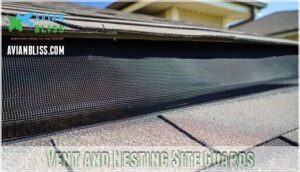
Blocking potential nesting spots prevents starlings from setting up shop near your feeders, keeping these aggressive birds away from your yard altogether.
Installing proper deterrents around vents and cavities eliminates their favorite breeding locations.
Essential Starling Control Measures:
- Vent Covers – Install mesh screens over dryer vents, attic openings, and roof exhaust points to block starling access
- Nesting Guards – Place metal guards around existing bird houses and natural cavities that starlings commonly invade
- Site Protectors – Apply deterrent spikes or netting to ledges, eaves, and building crevices where starlings attempt to nest
Additional Tips to Repel Starlings
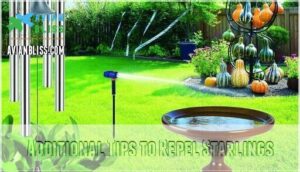
Beyond choosing the right foods and feeders, you’ll need a complete strategy to keep these persistent birds away from your yard.
These extra steps work together with starling-resistant seeds to create an environment that discourages flocks while welcoming your favorite songbirds.
Clean Up Spilled Seed Regularly
Spilled seed beneath feeders creates a starling buffet that undermines your bird feeding strategies.
Regularly sweep up fallen kernels and hulls to eliminate ground-feeding opportunities. Feeder maintenance includes checking for leaks that waste seed.
Clean seed removal tips include using a shop vacuum for thorough yard sanitation. This waste management approach supports bird health while serving as an effective starling deterrent.
Limit Open Water Sources
Beyond keeping your backyard tidy, you’ll want to reduce available water sources that attract flocks. Starlings need daily water for drinking and bathing, so limiting access helps create starling free zones around your feeders.
Here are five ways to manage bird water sources:
- Cover large water features – Use pond covers or netting over pools and fountains
- Empty bird baths temporarily – Remove water during peak starling activity periods
- Fix drainage systems – Repair leaky gutters and standing water areas
- Position water away from feeders – Place any remaining water sources far from feeding areas
- Use smaller, elevated water dishes – Offer water in containers that accommodate smaller birds only
This approach doesn’t eliminate water entirely but makes your yard less appealing to large starling flocks while still supporting your favorite backyard visitors.
Remove or Block Nesting Sites
European Starlings will hijack any cozy spot they find, from your nest boxes to building vents.
Install entry guards on nest boxes to block these freeloaders while welcoming native birds.
Seal gaps in eaves, vents, and overhangs where starlings love to roost.
Bird nesting prevention works best when you act before breeding season starts in spring.
Employ Seasonal Feeding Strategies
Since starlings follow predictable patterns throughout the year, timing your feeding strategies can make all the difference.
Adjusting your approach with the seasons helps you stay one step ahead of these persistent visitors.
Here are five key seasonal tactics to deter starlings:
- Switch to safflower seeds during winter months – they remain unappealing to starlings while attracting cardinals and finches
- Rotate to striped sunflower seeds in late fall – reduces starling visits by 60% in northern regions
- Limit high-energy suet to December-February only – cuts warm-season starling activity by 50%
- Avoid peanut blends during March-May peak activity – aligns with starling migration surges
- Increase cleaning frequency in spring – weekly maintenance reduces attraction by 30%
Use Scare Tactics and Deterrents
Deploy visual deterrents like reflective tape and shiny CDs near feeders—they reduce starling visits by 70%.
Motion-activated noise makers and predator decoys create an unwelcome environment. Reposition scare tactics frequently to prevent habituation.
These starlingproof methods work best when combined with proper seed selection and feeder design.
Understanding bird predator avoidance techniques, such as mimicry defense, can also inform the development of effective deterrent strategies.
Frequently Asked Questions (FAQs)
What is the best bird feeder to keep starlings away?
Like a fortress protecting treasures, caged feeders with metal bars allow songbirds access while blocking starlings completely. Weight-activated feeders slam shut when heavier starlings land, keeping your seed safe.
What is the best deterrent for starlings?
Safflower seeds work best—starlings can’t crack their hard shells, but cardinals and chickadees love them. You’ll also want caged feeders that block larger birds while letting smaller songbirds through.
How long do starlings typically avoid feeders?
Frustrated by persistent feathered freeloaders? Starlings don’t "avoid" feeders permanently—they’re opportunistic and return within days or weeks when food sources become available again, especially during harsh weather conditions.
Can starlings learn to overcome deterrent methods?
Yes, starlings can adapt to deterrent methods over time. They’re intelligent birds that’ll test barriers, learn feeder schedules, and sometimes overcome weight-activated mechanisms through persistence and group feeding strategies.
Do starling populations vary by geographic region?
Starling numbers definitely vary across North America.
The population extends from southern Canada and Alaska to Central America, but they’re less common in arid regions like Texas’s Trans-Pecos area where nesting sites are scattered.
What time of day are starlings most active?
Like office workers grabbing morning coffee, starlings are most active during dawn and dusk hours.
You’ll see these chatty flocks hitting feeders hardest in early morning (6-9 AM) and late afternoon (4-7 PM) when they’re hungriest.
Are there natural predators that deter starlings?
Hawks, owls, and falcons naturally prey on starlings, helping control their populations.
You can attract these raptors by providing tall perches, nesting boxes, and maintaining open hunting spaces in your yard.
Conclusion
Successfully managing unwelcome feathered visitors requires strategic choices in your bird food to deter starlings selection.
Safflower seeds, nyjer, and in-shell peanuts create natural barriers these aggressive birds can’t overcome.
Paired with caged feeders and weight-activated mechanisms, you’ll transform your backyard into a peaceful haven for cardinals, finches, and chickadees.
Remember, consistency matters—stick with deterrent foods, clean up spills, and watch your starling problems fade away naturally.
- https://forum.inaturalist.org/t/suggested-bird-seed-mixes-types/32159
- https://www.youtube.com/watch?v=Lifxn1YBeoA
- https://wildbirdstore.com/2022/03/14/selective-feeding-strategies-for-deterring-grackles-and-starlings/
- https://www.allaboutbirds.org/news/my-feeders-are-being-overrun-with-starlings-and-blackbirds-that-eat-all-the-food-and-keep-smaller-birds-away-what-can-i-do/
- https://www.reddit.com/r/birding/comments/2xgl3u/get_rid_of_starlings_from_my_feeder_while_keeping/