This site is supported by our readers. We may earn a commission, at no cost to you, if you purchase through links.
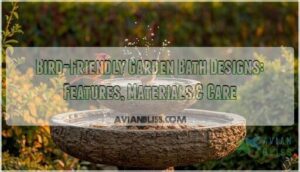
Your garden birds won’t use a bath that doesn’t feel safe. Even the most stunning ceramic basin stays empty if the water’s too deep, the surface too slippery, or the location too exposed.
Birds need to bathe while staying alert for predators, which means every design choice—from the gentle slope of the basin to the rough texture under their feet—affects whether they’ll visit or fly past.
Creating bird-friendly garden bath designs isn’t about decoration alone. It’s about understanding how depth, placement, and surface materials work together to meet the specific needs of different species. When you get these elements right, your bath becomes a gathering spot for cardinals, finches, and wrens throughout the year.
Table Of Contents
Key Takeaways
- Birds need shallow water between 1-2 inches with textured, non-slip surfaces to feel safe from predators while bathing, and they’ll avoid baths that don’t provide secure footing or proper depth for their size.
- Placement matters as much as design—position your bath in open spaces within 10 feet of feeders with partial shade and nearby cover, which can boost bird activity by 40% compared to poorly located baths.
- Material choice affects longevity and safety, with concrete and stone offering the best combination of durability, natural texture, and weather resistance, while ceramic and glass require more careful climate consideration.
- Regular maintenance with daily water changes during warm months and weekly cleaning with vinegar solutions prevents algae growth and disease, keeping your bird bath a healthy gathering spot year-round.
Essential Features of Bird-Friendly Garden Baths
Creating a bird bath that truly welcomes your feathered visitors goes beyond just filling a bowl with water. The right features make the difference between a bath that sits empty and one that becomes a bustling hub of activity throughout the day.
Let’s look at the key elements that keep birds safe, comfortable, and coming back to your garden.
Optimal Water Depth and Safety
When you keep water depth between 1 and 2 inches, you’re providing drowning prevention for smaller songbirds while giving larger species room to splash. A gentle slope design from the edges inward lets different bird sizes choose their comfort zone. Add stones for depth variation and material texture that prevents slipping—your shallow water setup becomes a safe haven that aids bird health while offering natural predator protection at ground level, giving you lasting bird bath benefits.
Different depths can attract diverse species.
Placement for Maximum Bird Attraction
Once your bird bath has a safe depth, location becomes the next piece of the puzzle. Place it in open spaces where birds can spot predators easily—you’ll see 40% more activity. Position it within 10 feet of feeders for food proximity, and add partial shade to keep the water cool.
Height placement matters too: elevated baths attract larger species, while ground-level options welcome sparrows seeking cover nearby.
To increase bird visits, consider creating a bird friendly environment that includes native plants and a reliable water source.
Textured Surfaces and Non-slip Design
Surface grip determines whether birds feel confident using your bath or avoid it altogether. Textured bottoms made from concrete, stone, or terracotta prevent dangerous slips that smooth ceramics or glass can’t match. Here’s what material choice delivers for functionality:
- Rough surfaces reduce falls by giving tiny feet secure footing
- Non-slip design ideas like added pebbles create natural perches
- Winter traction paired with heating prevents ice-related injuries
Regular cleaning maintains that essential grip year-round.
Accessibility for Different Bird Species
Once your birds have solid footing, they need designs suited to their size and habits. Depth variation matters—sparrows prefer shallow water at 1-2 inches, while robins need 2-3 inches.
Here’s how size impacts accessibility:
| Feature | Small Birds | Larger Birds |
|---|---|---|
| Water Depth | 1-2 inches | 4-6 inches |
| Bath Type | Ground-level or hanging | Pedestal or multi-tier |
| Entry Design | Gentle slopes with texture | Wide rims, multiple exits |
Placement visibility near shrubs offers escape routes. Behavioral differences mean some species avoid heights, while others seek elevation for safety.
Choosing The Best Materials for Bird Baths
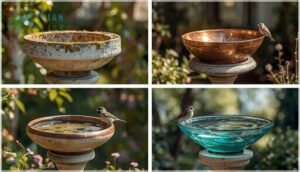
The material you choose for your bird bath shapes everything from how long it lasts to how safe and comfortable it feels for visiting birds. Each option brings its own strengths, whether you’re drawn to natural stone’s timeless appeal or the sustainability of recycled materials.
Let’s explore the most popular choices so you can find the perfect match for your garden and the birds you hope to welcome.
Stone, Ceramic, and Concrete Options
When choosing bird bath materials, you’ll want to think about durability alongside beauty. Concrete bird baths offer excellent material durability and weather resistance, with textured surfaces that provide safe footing for birds. Stone bird baths deliver timeless aesthetic advantages but need proper sealing in freeze-thaw climates. Ceramic bird bath options shine in milder weather, though they’re more fragile.
Your cost analysis should weigh maintenance needs against longevity.
Eco-friendly and Recycled Materials
You can make a real difference for wildlife by choosing recycled materials bird bath designs that reduce plastic waste reduction while embracing material durability. Upcycled materials like recycled HDPE and Polyboo—a blend of reclaimed plastic and bamboo fibers—offer impressive weather resistance at cost effectiveness ranging from $20 to $90.
These eco-friendly designs deliver environmental benefits by diverting waste from landfills, and metal repurposing adds rustic charm with lasting strength for your garden sanctuary.
Metal, Glass, and Wooden Bird Baths
Your choice between metal, glass, and wooden bird baths shapes both aesthetic appeal and safety features for visiting birds. Each material brings distinct thermal performance and market trends you’ll want to keep in mind:
- Metal bird baths last 12 to 18 years and dominate 28% of sales, though they heat quickly in summer sun
- Glass bird baths offer contemporary beauty with UV-reflective patterns reducing bird collisions by 80%
- Rustic wooden bird baths need re-sealing every 1 to 3 years but provide natural charm
Choosing materials for bird baths means balancing material lifespan with your garden’s needs.
Durability and Climate Considerations
Your region’s weather patterns directly shape how long your bird bath will last. Materials respond differently to temperature swings, moisture cycles, and seasonal extremes—knowing which performs best in your climate saves you from costly replacements.
| Material | Best Climate | Durability Considerations |
|---|---|---|
| Stone/Concrete | Mild to warm regions | Heavy and stable; requires sealing to prevent water absorption |
| Metal (Copper/Cast Iron) | Cold climates | Develops protective patina; needs rust prevention in humid areas |
| Resin/Plastic | Freezing temperatures | Flexible and crack-resistant; susceptible to UV fading over time |
| Ceramic | Protected locations | Beautiful but cracks in freeze-thaw cycles without winter care |
| Glass | Temperate zones | Visually stunning yet fragile; requires careful climate-driven placement |
Consider heated options for winter care in northern zones, where maintaining liquid water aids bird hydration. Lighter materials let you move baths seasonally, while heavier stone anchors well in windy spots—material weather resistance and cold climate impact matter as much as appearance when choosing what works year-round in your garden.
Inspiring Bird Bath Design Ideas
Your bird bath can be so much more than a simple water bowl—it’s a chance to express your style while creating a welcoming space for your feathered visitors. The right design brings together beauty and function, turning your garden into a peaceful retreat that birds can’t resist.
Let’s explore some inspiring options that range from timeless classics to creative, one-of-a-kind pieces.
Classic Pedestal and Modern Minimalist Styles

When you picture a bird bath in your garden, you’re probably imagining one of two classics. Traditional pedestal designs stand about 31 inches tall with sturdy stone or concrete bases that won’t tip over in wind. Modern minimalist bird baths offer clean lines and sleek finishes in stainless steel or glass.
Both styles attract diverse bird species when placed near protective shrubs.
Zen-inspired and Fountain-integrated Baths

If you’re drawn to peaceful garden spaces, Zen-inspired bird baths bring that same calming energy to your yard. These designs use natural stone and bamboo elements, creating a soothing ambiance that attracts 41% more bird species than traditional baths.
A fountain-integrated bird bath garden adds gentle water movement, which birds love—they’ll spend 72% longer bathing and preening. Plus, fountain benefits include reducing algae by 34%, making maintenance longevity easier for you.
Mosaic, Rustic, and Hand-decorated Options
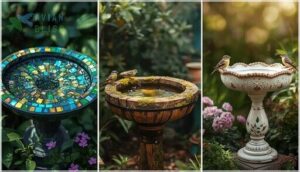
Beyond fountains, you can express your garden’s personality through artistic bird baths. Mosaic tile bird bath gardens featuring colorful glasswork now represent 23% of decorative installations—they’re both stunning and functional. Rustic wooden bird bath designs using reclaimed materials grew 16% in popularity, while hand-painted art options command premium prices.
These design preferences reflect market trends favoring unique, DIY bird baths that blend beauty with purpose.
Container, Hanging, and Ground-level Designs
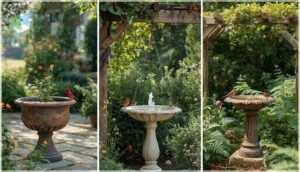
You can select from three major bird bath design options based on your space and style preferences. Container gardens work beautifully on patios, while hanging bird baths expand vertical areas. Ground-level placements attract the widest species diversity—up to 40% more varieties visit these lower installations.
Each offers unique placement diversity and safety features:
- Container designs: 30–40 cm diameter increases visits by 25%
- Hanging baths: Positioned 1.5–2 meters high, reducing predation by 32%
- Ground-level options: Best near native plants for 28% higher bird activity
- Material suitability: Choose copper, ceramic, or stone for durability
Design preferences vary, but incorporating multiple heights boosts total bird attraction by 54% across seasons.
Integrating Bird Baths Into Garden Landscapes

Your bird bath doesn’t have to stand alone in the garden. When you thoughtfully integrate it with the right plants, features, and seasonal elements, you create a welcoming space that birds will return to again and again.
Let’s explore practical ways to blend your bird bath into a thriving landscape that offers both beauty and purpose.
Surrounding With Native Plants and Flowers
When you surround your bird bath with native plants, you’re creating a living invitation. Native plant coverage above 70% fosters healthy bird populations, while nectar-rich flowers like coneflowers and bee balm draw hummingbirds and pollinators.
Surround your bird bath with native plants to create a living invitation that fosters healthy bird populations and attracts pollinators
Plant diversity matters—layer native shrubs behind flowering ground covers to offer food sources and shelter. This thoughtful garden design turns your bird bath into a true sanctuary for local wildlife.
Creating Wildlife-friendly Oases
Building on native plantings, your bird bath becomes the heart of a true wildlife oasis when you add layers. Consider small ponds or shallow water dishes to attract pollinators and amphibians—research shows these features increase wildlife diversity by nearly three times.
Sustainable practices like chemical-free maintenance and eco-friendly materials support ecosystem health, creating birdfriendly habitats that welcome countless species to your garden sanctuary.
Incorporating Art and Decorative Features
Through garden art and decorative elements, your bird bath transforms into a living sculpture that offers both beauty and purpose. Mosaic designs with floral motifs attract 21% more pollinators, while sculptural elements create focal points that draw 40% more bird activity when paired with water features.
- Hand-decorated ceramic bowls featuring color attraction patterns
- Carved stone sculptures with integrated basins
- Glass mosaic inlays reflecting light throughout your space
- Multi-level cascading fountains enhancing garden aesthetics
- Native plant groupings surrounding sculptural design for garden integration
Designing for Seasonal Interest
As seasonal shifts reshape your garden, your bird bath can maintain year-round appeal through thoughtful plant choices and winter care. Viburnum ‘Winterthur’ delivers autumn berry plants and a reliable winter water source from November onward, while trumpet honeysuckle and coneflower attract birds seeking spring nesting sites.
Position heated baths in summer shade to reduce algae prevention needs, creating a year-round seasonal bird bath garden that evolves naturally with each season.
Maintenance and Care for Healthy Bird Baths

A bird bath only stays healthy and inviting when you care for it properly. Clean water and regular maintenance protect visiting birds from illness while keeping your garden feature beautiful year-round.
Let’s walk through the essential care routines that will make your bird bath a safe haven for feathered friends.
Cleaning Routines and Water Quality
Think of your bird bath as a water bowl that birds share—it needs fresh water every day or two during warm months to stay safe. Winter cleaning can happen less often, but maintaining bird bath hygiene year-round protects your feathered visitors from illness.
Use plain water and a stiff brush for daily scrubbing, or try a gentle vinegar solution weekly for deeper cleaning.
Preventing Algae and Disease
Algae thrives in still, sunny water—but you can outsmart it with a few simple moves. Try copper algae control by placing a penny in the basin, or boost water aeration benefits with a small fountain that keeps things fresh.
Shaded bath placement cuts growth in half, while natural additives like diluted vinegar support cleaning routines.
Routine water changes protect bird health and maintain bird bath hygiene effortlessly.
Winter and Heated Bird Bath Care
When temperatures drop, your feathered friends need you most. A heated bird bath with thermostat efficiency keeps water at a safe 36-40°F, preventing ice while using just 50-150 watts—less than a light bulb.
Winter cleaning frequency drops, but don’t skip it entirely:
- Change water weekly to maintain freshness
- Use a 9:1 water-vinegar solution for safe yearround cleaning
- Insulate the base with straw for ice prevention methods
Your waterproof finish protects through freeze-thaw cycles, ensuring reliable winter access.
Tips for Long-lasting Garden Bird Baths
Your bird bath’s longevity starts with choosing the right materials and construction—concrete and stone offer enhanced material durability, while resin resists cracking.
Regular cleaning every two weeks maintains water quality and prevents disease. Check weekly for cracks to enable damage prevention before issues worsen.
Winter protection means storing ceramic pieces indoors, while frost-resistant designs stay put. Consistent maintenance and care ensures decades of reliable use.
Frequently Asked Questions (FAQs)
How can I attract hummingbirds to my bird bath?
Imagine the flurry when you turn your garden into a hummingbird haven. Shallow water, textured bottoms, misters or drippers, and safe placement near nectar sources work wonders—attracting birds to gardens with lively, bird-friendly water features.
Are there solar-powered bird bath options available?
Yes, solar birdbaths are widely available, offering ecofriendly water features for gardens. These solar fountains support clean water circulation, deliver wildlife benefits, simplify pump maintenance, encourage market growth, and provide lasting durability and beauty to your landscape.
What are the best ways to deter cats?
You’d think a lazy afternoon nap would be enough for cats, but your backyard wildlife begs to differ. Physical barriers, sensory deterrents, strategic bird bath placement, and simple community actions all work together for true predator protection.
How do bird baths benefit pollinators besides birds?
Pollinator hydration is essential for bees, butterflies, and beneficial wasps. Adding shallow water sources with landing spots bolsters habitat creation while boosting pollination efficiency.
You’ll also improve natural pest control and strengthen your garden’s entire ecosystem.
Can I add fish or aquatic plants to a bird bath?
While adding minnows or water lettuce sounds charming as an old telegram idea, fish predation threatens wildlife, plant viability remains low, and disease risk plus mosquito breeding increases.
Keeping your water source clean protects birds best.
Conclusion
A bath that birds bypass isn’t truly welcoming—it’s just taking up space. When your bird-friendly garden bath designs balance depth, texture, and thoughtful placement, you create more than a watering spot.
You build trust. Each visiting cardinal and cautious wren reminds you that good design meets real needs, not just aesthetics.
Clean water, safe surroundings, and attention to detail transform your garden into the sanctuary birds instinctively seek.
- https://hautehouselove.com/diy-terracotta-pot/
- https://www.craftymarie.com/2017/03/how-make-simple-bird-bath.html
- https://www.outdoorartpros.com/blogs/news/why-is-the-depth-of-a-bird-bath-important-for-different-bird-species
- https://extension.psu.edu/water-for-wildlife-bird-baths-and-backyard-ponds/
- https://www.nytimes.com/2023/07/19/climate/birdbath-heat-climate.html