This site is supported by our readers. We may earn a commission, at no cost to you, if you purchase through links.
 You’ll find bird habitats and ecosystems everywhere from towering forests to sprawling wetlands, each supporting unique species with specialized adaptations.
Forest canopies shelter colorful parrots and songbirds, while grasslands host ground-nesters like meadowlarks. Desert ecosystems support water-efficient species like roadrunners, and wetlands serve as essential stopovers for millions of migrating birds.
These interconnected systems provide specific food sources, nesting sites, and shelter that directly influence bird behavior and survival.
However, habitat destruction, climate change, and pollution threaten these delicate environments.
Understanding how birds adapt to different ecosystems reveals surprising strategies these remarkable creatures use to thrive against mounting environmental pressures, and highlights the importance of preserving unique species and their specialized adaptations.
Table Of Contents
- Key Takeaways
- Bird Habitat Types
- Ecosystem Characteristics
- Bird Nesting Habits
- Human Impact Factors
- Creating Bird Friendly Spaces
- Frequently Asked Questions (FAQs)
- What ecosystem do birds live in?
- What are the characteristics of a bird’s habitat?
- What is a bird habitat called?
- What is the best habitat for a bird?
- How do migratory patterns affect seasonal ecosystem balance?
- What role do predator-prey relationships play in habitats?
- How do birds adapt to urban environmental changes?
- Which diseases commonly spread through bird populations?
- How do invasive bird species impact native ecosystems?
- Conclusion
Key Takeaways
- You can transform any outdoor space into vital bird habitat by planting native vegetation, installing feeders, providing water sources, and reducing pollution – these simple actions directly support local species facing habitat destruction.
- Four main ecosystem types support different bird communities – forests shelter the most diverse species in canopy layers, grasslands host ground-nesters, deserts support water-efficient species, and wetlands serve as critical migration stopovers.
- Human activities are destroying bird habitats faster than species can adapt – habitat destruction, climate change, and pollution have eliminated over 3 billion North American birds since 1970, with specialist species suffering four times more than generalists.
- Bird nesting strategies reflect millions of years of evolution – from tree-dwelling songbirds using camouflaged foliage to ground-nesters relying on minimal materials and superior egg camouflage, each approach maximizes survival in specific environments.
Bird Habitat Types
Birds occupy four main habitat types that determine their survival and reproduction success.
Forest ecosystems support the largest diversity of species, while grasslands, deserts, and wetlands each provide specialized environments that different bird communities have adapted to thrive in, which is crucial for their reproduction.
Forest Ecosystems
Throughout forest habitats, you’ll discover complex bird ecosystems that depend on multiple vertical layers for survival.
The forest canopy provides nesting sites and food sources, while tree species diversity creates specialized niches for different birds.
Ecosystem balance relies on wildlife interactions between the forest floors and upper branches.
- Canopy dwellers like warblers and woodpeckers thrive in upper tree layers
- Understory species including thrushes forage among shrubs and saplings
- Ground-nesting birds such as ovenbirds utilize leaf litter and forest floors
Grassland Ecosystems
You’ll find grassland ecosystems support specialized bird species through their wide-open spaces and native grasses.
These habitats provide essential nesting sites for ground-dwelling birds like meadowlarks and bobolinks.
Grassland conservation maintains ecosystem balance by preserving biodiversity management systems.
Wildlife preservation depends on protecting these areas from agricultural conversion.
Habitat restoration projects focus on replanting native vegetation to support avian ecology and essential ecosystem services for migrating species.
Effective conservation efforts rely on understanding grassland bird habitats to preserve biodiversity.
Desert Ecosystems
You’ll discover desert ecosystems support remarkable avian adaptations through specialized cactus habitats and arid wildlife communities.
Desert plants like palo verde and mesquite create essential nesting sites, while sand dunes provide thermal regulation zones.
Desert conservation efforts focus on protecting these fragile bird habitats where ecosystem services depend on precise water management and ecosystem management strategies supporting avian ecology and habitat restoration.
Wetland Ecosystems
You’ll find wetland ecosystems serve as nature’s water filters, supporting countless bird species through marsh ecology and aquatic plants.
These areas provide essential ecosystem services like water quality improvement and flood control.
Wetland conservation protects critical bird habitats where herons wade through shallow waters and ducks dive for food.
However, habitat fragmentation threatens these aquatic habitats.
Bird conservation efforts focus on wetland preservation to maintain these essential ecosystems for waterfowl and shorebirds.
Ecosystem Characteristics
Understanding ecosystem characteristics helps you appreciate how bird habitats function.
Each ecosystem supports different species through unique environmental conditions and resource availability.
Here are 5 key ecosystem characteristics that determine bird survival:
- Food Chains – Primary producers support herbivorous birds, which feed carnivorous species in complex networks
- Species Diversity – Higher biodiversity creates more niche opportunities and stable bird populations
- Ecosystem Services – Natural processes like pollination and seed dispersal sustain bird communities
- Habitat Fragmentation – Broken landscapes reduce territory size and limit species movement
- Biodiversity Conservation – Protected areas maintain essential breeding and feeding grounds
These characteristics work together.
When one element changes, it affects the entire system.
Bird ecology depends on these interconnected factors for long-term survival and reproduction success.
Many face threats in tropical bird ecosystems.
Bird Nesting Habits
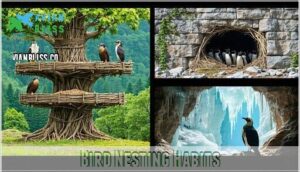
You’ll discover that birds have adapted four distinct nesting strategies to survive in their environments.
Each method reflects millions of years of evolution, from eagles building massive tree platforms to penguins huddling in underground burrows, showcasing their ability to adapt and thrive in various environments with evolution.
Tree Nesting
Above the forest floor, countless bird species select specific tree species based on nest height requirements and available nest materials.
You’ll observe how different avian habitats support varied bird behavior patterns.
Songbirds prefer dense foliage for camouflage, while raptors choose tall canopies for predator avoidance.
Bird ecology studies show that nest materials vary from twigs to moss, depending on the bird species and their specific habitat needs within these diverse ecosystems.
Ground Nesting
Many ground-nesting birds strategically choose open habitats with adequate ground cover for nest predation protection.
You’ll spot species like killdeer using minimal nesting materials while relying on superior egg camouflage techniques.
These birds don’t require deep burrows like burrowing species, instead depending on vegetation density and terrain features.
Effective bird habitat conservation must prioritize maintaining diverse ground cover that supports these vulnerable nesting strategies throughout critical breeding seasons, focusing on diverse ground cover and critical breeding seasons.
Cave Nesting
Cave dwelling birds like swiftlets and oilbirds create remarkable Nest Architecture using saliva and plant materials against Rock Faces.
These species evolved Dark Adaptation features including enhanced echolocation and enlarged eyes for traversing Cave Formation environments.
You’ll find their roosts deep within limestone caverns where consistent temperatures protect developing chicks.
Cave Safety becomes essential as human disturbance disrupts these sensitive bird habitats, making bird habitat protection essential for species survival.
Burrow Nesting
Burrowing birds create sophisticated underground homes that rival cave dwellers in complexity.
You’ll find kingfishers excavating tunnel systems up to three feet deep in riverbanks, while puffins dig burrows in coastal cliffs.
These architects select soil quality carefully – it must be firm enough to prevent collapse yet soft enough for digging.
Burrow architecture includes entrance tunnels, nesting chambers, and drainage systems.
Nesting materials like grass and feathers line chambers for warmth.
Bird habitat management programs protect these underground sanctuaries through soil conservation and burrow safety monitoring.
Understanding bird nesting habits involves recognizing the importance of nest site selection strategies that guarantee the survival of species.
Human Impact Factors

You’re watching decades of careful ecosystem balance crumble under human pressure. Modern industrial activities destroy bird habitats faster than species can adapt, creating cascading effects throughout entire food webs.
Human activities are reshaping ecosystems at breakneck speed, outpacing nature’s ability to adapt.
Habitat Destruction
You’re witnessing unprecedented ecosystem loss as habitat destruction claims over 3 billion North American birds since 1970.
Looking at the paragraph about habitat destruction and the tone of the content, here’s a short, engaging blockquote:
**Every minute we wait, another piece of their world disappears forever.
Deforestation and urbanization fragment essential breeding grounds, while agricultural expansion destroys 70% of threatened bird habitats.
- Land fragmentation isolates populations, increasing nest predation rates
- Human activity converts 75% of terrestrial habitats beyond recognition
- Bird habitat degradation affects specialist species four times more than generalists
Climate Change
Rising temperatures are reshaping bird habitats faster than you’d imagine.
Global warming forces species to shift migration patterns and breeding grounds as weather patterns become unpredictable.
Sea level rise floods coastal nesting sites while changing temperatures disrupt food chains.
Your carbon footprint directly impacts these vulnerable ecosystems.
Bird habitat fragmentation accelerates as suitable areas shrink, making bird conservation efforts more critical than ever, due to the impact of global warming.
Pollution Effects
You’ll spot pollution wreaking havoc on bird habitats everywhere.
Chemical runoff contaminates water sources while air pollution chokes respiratory systems.
These toxic threats create a domino effect across ecosystems.
Key pollution impacts on bird habitats:
- Water contamination – Industrial chemicals poison aquatic food chains, reducing fish and invertebrate populations by 50%
- Air pollution – PM2.5 particles cause respiratory distress and lower survival rates in urban bird populations
- Soil degradation – Heavy metals accumulate in earthworms, creating toxic food sources for ground-foraging species
- Noise pollution – Urban sounds disrupt migration patterns and reduce feeding efficiency by 60%
- Chemical runoff – Agricultural pesticides thin eggshells and cause reproductive failures across multiple species
This toxic cocktail destroys ecological balance, forcing birds to abandon traditional nesting sites.
Bird habitat fragmentation worsens as pollution spreads between clean areas.
Bird habitat loss accelerates when contaminated zones become uninhabitable.
Conservation Efforts
Despite threats facing wildlife, conservation efforts are making real progress protecting bird habitats worldwide.
You’ll find these programs work through multiple strategies that directly support species diversity and biodiversity hotspots.
| Conservation Type | Key Strategy | Impact |
|---|---|---|
| Wildlife Preservation | Protected area management | 25% reduction in extinction risk |
| Habitat Restoration | Wetland/forest rebuilding | 37% waterfowl increase since 1970 |
| Species Protection | Breeding programs | 23 species saved from extinction |
| Eco Conservation | Community stewardship | 500+ species protected in reserves |
These sustainable practices demonstrate how targeted bird conservation efforts create lasting change for wildlife conservation across diverse ecosystems.
Creating Bird Friendly Spaces
You can transform any space into a bird sanctuary with four simple strategies that support local wildlife populations.
These habitat improvements provide essential resources birds need to thrive in urban and suburban environments, which is crucial for the well-being of the birds, and the wildlife populations.
Planting Native Vegetation

Native plants transform your yard into a bird habitat powerhouse.
Choose species that thrive in your soil quality and support local biodiversity boost.
Smart seed selection creates layered garden design – ground covers, shrubs, and canopy trees.
This strategic approach enhances bird habitat quality while supporting 96% more bird species than non-native alternatives.
Using native plant seed sources is essential for maintaining ecosystem balance.
Installing Bird Feeders
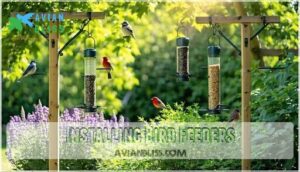
You’ll attract more birds by strategically placing feeders around your yard.
Different feeder types serve specific bird species – tube feeders work best for small songbirds, while platform feeders accommodate larger birds.
Hang feeders five feet from windows to prevent collisions, and fill with high-quality bird seeds like sunflower or nyjer.
Clean feeders monthly to prevent disease spread in bird habitats, and understanding proper bird feeder maintenance is essential for the health of visiting birds.
Providing Water Sources

Water sources can make or break your backyard wildlife habitat.
Fresh, clean water draws more birds than any feeder ever will.
Set up shallow bird baths with rough surfaces for grip.
Add dripping water features or small fountains – the sound acts like a dinner bell.
Change water every few days to prevent mosquito breeding and maintain water quality for visiting species.
Proper bird bath maintenance involves understanding bird bath products to create an ideal environment for visiting species.
Reducing Urban Pollution

You can dramatically improve Air Quality in your neighborhood through targeted Urban Planning approaches.
Green Roofs on buildings filter pollutants while supporting bird migration routes. Smart Waste Management reduces harmful chemicals entering bird habitats.
Here’s your action plan:
- Plant native trees – They capture airborne toxins and provide nesting sites
- Support electric transit – Reduces vehicle emissions in nature reserves
- Install proper lighting – Shields reduce bird collisions during migration
- Advocate for clean zones – Push for pesticide-free areas near parks
These Sustainable Living practices create healthier environments where conservation biology principles actually work, giving our feathered friends fighting chances in concrete jungles.
Effective urban bird habitats design, such as urban green spaces, can greatly enhance local biodiversity and support wildlife conservation efforts.
Frequently Asked Questions (FAQs)
What ecosystem do birds live in?
You’ll find birds thriving in diverse ecosystems worldwide—from tropical rainforests and temperate grasslands to arctic tundra, desert oases, wetlands, and urban environments.
They’ve adapted remarkably to virtually every habitat Earth offers.
What are the characteristics of a bird’s habitat?
Bird habitats feature specific structural elements you’ll observe: suitable nesting sites like tree cavities or cliff ledges.
Abundant food sources including insects, seeds, or fish, fresh water access for drinking and bathing, are essential components.
Appropriate shelter from predators and weather is also crucial, as it directly impacts the birds’ ability to thrive in their habitats.
What is a bird habitat called?
Scientists call a bird’s habitat its "niche" or "microhabitat." You’ll find these terms describe where specific species live, feed, and breed within larger ecosystems like forests or wetlands.
What is the best habitat for a bird?
You’ll want diverse habitat types that match your bird’s natural needs.
Forest edges, wetlands, grasslands, and gardens with native plants provide ideal food sources, nesting sites, and shelter for maximum survival.
How do migratory patterns affect seasonal ecosystem balance?
Migrating millions manifest major ecosystem modifications.
You’ll witness populations cycling through breeding grounds, creating cascading effects.
Predator-prey relationships shift seasonally.
Pollination networks reorganize.
Nutrient distribution changes as species transport resources across continents, maintaining delicate ecological balance.
What role do predator-prey relationships play in habitats?
You observe how predator-prey relationships create natural checks and balances that regulate population sizes.
When predators hunt effectively, they prevent prey species from overconsuming resources, maintaining habitat stability and biodiversity across ecosystems.
How do birds adapt to urban environmental changes?
You’ll notice birds developing behavioral flexibility in cities – they’re changing feeding patterns, nesting sites, and communication methods.
Urban species adapt through phenotypic plasticity, adjusting vocalizations above traffic noise and exploiting new food sources.
Which diseases commonly spread through bird populations?
West Nile virus swept through crow populations in 1999, killing thousands.
You’ll see avian influenza, salmonella, and Newcastle disease spread rapidly through flocks via respiratory droplets and contaminated surfaces, threatening both wild and domestic birds, including the impact of respiratory droplets.
How do invasive bird species impact native ecosystems?
You’ll find invasive birds disrupt native ecosystems by outcompeting local species for food and nesting sites, spreading diseases,
altering vegetation through selective feeding,
and sometimes hybridizing with natives, weakening genetic diversity.
Conclusion
Protecting bird habitats and ecosystems isn’t rocket science, though apparently it’s harder than launching rockets given our track record.
You can make a difference by planting native vegetation, installing feeders, and providing water sources in your backyard.
These simple actions support local species facing habitat destruction and climate pressures.
Every small effort counts when preserving critical bird habitats and ecosystems for future generations.
- https://www.google.com/maps?s=web&lqi=ChRjaXR5YmlyZCBhbWVsaWEgb2hpbyIDiAEBWhYiFGNpdHliaXJkIGFtZWxpYSBvaGlvkgESY2hpY2tlbl9yZXN0YXVyYW50qgFLEAEqDCIIY2l0eWJpcmQoADIfEAEiGyQ2s650UlzacpxuwUz8qAoUnUgS7JZcmXkBSDIYEAIiFGNpdHliaXJkIGFtZWxpYSBvaGlv4AEA&vet=12ahUKEwiFseekppiHAxXgg4kEHdO8A7cQ1YkKegQIHhAB..i&cs=0&um=1&ie=UTF-8&fb=1&gl=us&sa=X&geocode=KXfp8CCXB0GIMQBhRtvr7y2C&daddr=1301+Ohio+Pike+Suite+1,+Amelia,+OH+45102
- https://order.incentivio.com/c/citybird/
- https://theeaglerestaurant.wufoo.com/forms/zpp06us1hx98rx
- http://www.allaboutbirds.org/building-skills-the-4-keys-to-bird-identification/