This site is supported by our readers. We may earn a commission, at no cost to you, if you purchase through links.
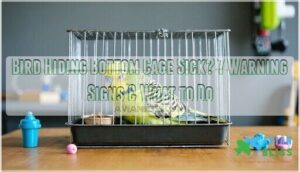 When your bird is hiding at the bottom of the cage, it’s often a red flag that something’s wrong.
Birds naturally perch high when they’re healthy, so ground-dwelling behavior can signal illness, injury, or stress. You might notice fluffed feathers, labored breathing, or changes in appetite alongside this behavior.
Sometimes it’s hormonal changes or environmental factors, but don’t take chances. Young birds or newly adopted ones might also exhibit this behavior temporarily.
Watch for other symptoms like discharge, lethargy, or unusual droppings. Quick action matters because birds hide illness well until they’re quite sick.
Understanding these warning signs could be the difference between a quick recovery and a serious health crisis.
Table Of Contents
- Key Takeaways
- Bird Hiding Bottom Cage
- Reasons Birds Sit Bottom
- Sick Bird Symptoms
- When to Call The Vet
- Bird Recovery and Care
- Frequently Asked Questions (FAQs)
- Do birds hide when they are sick?
- What does it mean when a bird stays at the bottom of the cage?
- How do birds act when they are sick?
- How to tell if a bird has pneumonia?
- How long can birds survive without eating?
- What temperature is too cold for birds?
- Can stress alone make birds seriously ill?
- Do male birds show different symptoms?
- Which bird species hide illness best?
- Conclusion
Key Takeaways
- Watch for multiple warning signs together – If you notice your bird at the cage bottom plus fluffed feathers, labored breathing, or loss of appetite, do not wait to contact your vet.
- Don’t assume it’s always illness – Your bird might be exploring, foraging for food, seeking warmth, or adjusting to hormonal changes, especially if they’re young or newly adopted.
- Act quickly when symptoms persist – Birds hide illness well until they’re critically sick, so if bottom-dwelling behavior lasts over 12 hours with other concerning signs, seek emergency care.
- Create proper recovery conditions – Set up a warm hospital cage (85-90°F) with easy access to food and water at floor level while working closely with an avian veterinarian.
Bird Hiding Bottom Cage
You’ve noticed your bird spending time at the bottom of its cage, and you’re wondering if something’s wrong.
While this behavior can signal illness in birds, it’s not always a cause for alarm since birds naturally explore their environment and may sit on the floor for various reasons, including the fact that they may be exploring.
Signs of Illness in Birds
When something seems off with your feathered friend, early indicators like fluffed feathers and persistent hiding signal trouble ahead.
Behavioral changes such as staying at the cage bottom often point to respiratory infections or digestive issues.
Physical symptoms include decreased vocalization, reduced appetite, and labored breathing.
Emergency signs demand immediate attention, while preventative measures help you spot sick bird symptoms before they worsen, using preventative measures.
Normal Behavior in Birds
Not every bird hiding at the bottom of the cage signals illness. Your feathered friend might exhibit normal behavior like foraging instincts, searching for fallen seeds or treats.
Bird vocalizations often continue during healthy cage bottom exploration. Preening habits remain consistent when birds rest on cage floors for comfort.
Social interaction and sleep patterns stay regular during typical bird behavior phases. Understanding common bird behavior problems is essential to distinguish between normal and abnormal behaviors.
Environmental Factors
Poor air quality and temperature control can trigger bird hiding behavior at the cage bottom.
Your feathered friend seeks refuge when lighting effects are too harsh, humidity levels drop, or noise reduction is needed.
Check your bird cage environment regularly – drafts, overheating, or stuffy air often drive birds to cage bottom hiding as their natural response to uncomfortable cage floor conditions, which can be caused by poor air quality and inadequate temperature control.
Reasons Birds Sit Bottom
Not all birds sitting on the cage floor are sick – many normal behaviors can explain this position.
Your bird might be responding to hormones, age, or simply seeking warmth and food scraps.
Hormonal Behavior
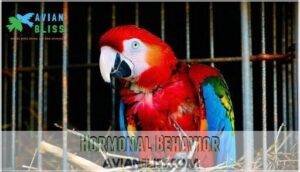
When your bird’s natural instincts kick in, you’ll notice some interesting changes. Birds ready for mating rituals or egg laying often seek out the cage floor as their preferred spot.
Your bird’s instincts are taking over – floor time often signals natural nesting or mating behaviors kicking in.
Female birds especially show strong nesting behavior, viewing dark corners as perfect nurseries even without a male around.
- Your heart might skip when you see territorial marking behaviors – but it’s completely normal
- Watching courtship displays can feel overwhelming when you’re unsure if something’s wrong
- Hormonal triggers create bird hiding behavior that looks alarming but signals healthy instincts
Young Birds
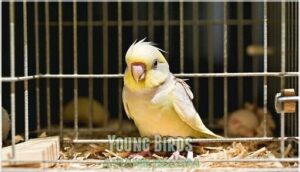
Young birds often feel safer on the cage floor since it mimics their natural nest environment.
Your fledgling might lack confidence to perch like adult birds, but this behavior typically resolves as they mature.
Watch for normal eating and preening to confirm healthy growth stages.
| Age Stage | Floor Behavior | Normal Signs | When to Worry |
|---|---|---|---|
| 0-3 months | Frequent floor time | Active eating/drinking | Lethargy, fluffed feathers |
| 3-6 months | Learning to perch | Playful exploration | Loss of appetite |
| 6+ months | Confident perching | Strong vocalizations | Persistent hiding |
| Adult | Occasional visits | Alert posture | Labored breathing |
Recently Adopted Birds

Moving to a new home overwhelms recently adopted birds, triggering adoption stress that drives them to seek security on the cage floor.
Newly adopted birds need time to feel safe—hiding shows they’re adjusting, not necessarily sick.
Your bird hiding at the bottom isn’t necessarily sick—it’s likely experiencing environmental adjustment challenges.
New bird care requires patience as cage acclimation takes time, and bird socialization happens gradually in unfamiliar surroundings.
Warmth and Food
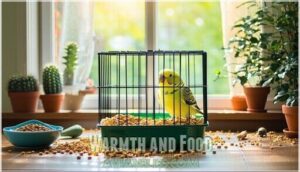
Food scraps act like magnets for hungry birds seeking easy meals on your cage floor.
Your feathered friend naturally gravitates toward dropped seeds and treats, mimicking ground-foraging instincts.
When room temperatures drop below 68°F, the cage floor provides vital warmth therapy your bird craves.
Proper cage heating and maintaining consistent food temperature guarantees healthy dietary needs while preventing unnecessary bird hiding behaviors that concern worried owners.
Understanding parakeet health issues is essential to address potential problems that may cause birds to hide at the bottom of their cage, which can be related to parakeet health issues.
Sick Bird Symptoms
When your bird starts hiding at the bottom of its cage, you need to watch for specific warning signs that signal illness.
Recognizing these symptoms early can make the difference between a quick recovery and a serious health crisis.
Fluffed Feathers and Lethargy
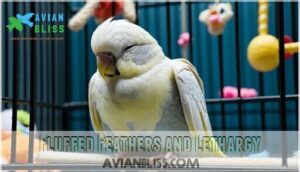
When fluffed up feathers meet persistent lethargy, your bird’s sending clear distress signals.
This combination indicates your pet’s conserving body heat due to illness or weakness.
A lethargic bird showing bird illness signs like closed eyes, reluctance to move, and staying at the cage bottom needs immediate attention.
These lethargy signs and bird health issues require urgent health monitoring to prevent serious complications.
Loss of Appetite and Vocalization
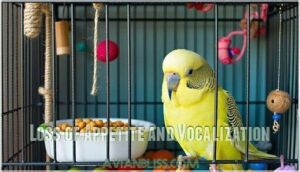
A sick bird’s appetite changes tell you everything you need to know.
When your feathered friend stops eating their favorite treats or ignores food completely, feeding issues signal serious trouble ahead.
Vocalization loss accompanies these appetite changes – once-chatty birds go silent when they’re unwell.
These eating habits shift dramatically in sick birds, making monitoring essential for early detection of trouble.
Labored Breathing and Droppings
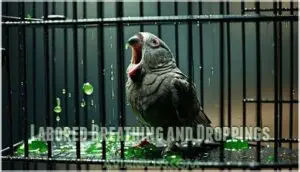
Breathing problems in birds can escalate quickly from mild respiratory issues to life-threatening emergencies.
You’ll notice tail bobbing with each breath, open-mouth breathing, or unusual sounds like wheezing and clicking that signal serious respiratory distress.
- Tail bobbing with every breath – Your bird’s tail moves up and down dramatically
- Open-mouth breathing – They’re gasping for air like a fish out of water
- Watery or green droppings – Normal brown droppings turn suspicious colors for over 24 hours
- Wheezing or clicking sounds – Strange respiratory noises that weren’t there before
When to Call The Vet
Knowing when your bird needs emergency care can save its life.
If your feathered friend shows signs like difficulty breathing, sitting motionless at the cage bottom for over 12 hours, or refusing food and water for 8+ hours, it’s time to call your avian vet immediately.
Emergency Indicators
When your bird hides at the bottom of the cage, certain symptoms signal critical care situations.
Respiratory failure shows through open-mouth breathing and tail bobbing. Severe trauma includes visible wounds or inability to move.
Poisoning symptoms appear as seizures or uncontrolled bleeding. Heat stroke causes rapid panting and collapsed posture.
These emergency signs require immediate veterinary attention.
Lethargy and Fluffed Feathers
When you spot persistent lethargy in your feathered friend, it’s time to pay close attention.
Birds showing unwell bird signs like fluffed up feathers for hours or Bird Stress behaviors need immediate care.
These lethargy symptoms often signal serious illness requiring quick action.
- Fluffed feathers lasting more than 12 hours indicates potential infection
- bird not eating combined with weakness suggests critical bird illness signs
- Isolation behavior and reluctance to perch signals deteriorating health
Difficulty Breathing and Discharge
Watch for clicking sounds or wheezing when your bird breathes – these respiratory issues signal serious airway obstructions.
Nasal discharge, especially if thick or colored, points to respiratory infections requiring immediate care.
Eye infections with discharge or beak problems like crusty buildup need prompt attention.
Drooping wings combined with difficulty breathing means emergency vet time.
Birds experiencing respiratory distress issues require careful monitoring and swift action to prevent further complications.
Bird Recovery and Care

Once you’ve identified that your bird needs medical attention, creating the right recovery environment becomes your next priority.
Working closely with an avian veterinarian and setting up proper home care will give your feathered friend the best chance at a full recovery.
Creating a Hospital Cage
Recovery comfort starts with proper isolation. Your sick bird needs a warm, secure space away from household chaos and other pets.
Setting up an effective hospital cage requires attention to these recovery essentials:
- Temperature control – Maintain 85-90°F using ceramic heat lamps or heating pads under half the cage
- Cage design modifications – Remove high perches and add soft towel lining to prevent falls
- Easy access placement – Position food and water at floor level to reduce energy expenditure
This isolation cage setup promotes healing while ensuring your bird hiding at the bottom of cage receives proper bird therapy through controlled cage sanitation and medical equipment accessibility. Providing essential bird cage heaters is vital for maintaining a stable environment.
Training Birds to Accept Medicine
Once your bird’s comfortable in their hospital cage, getting them to take medicine becomes the next hurdle. Start by desensitizing your feathered patient to syringes using treats and positive reinforcement. Hand-taming helps tremendously with Medicine Administration success.
Understanding proper bird injury care is essential for a successful recovery. Your sick bird will respond better to bird medication administration when they trust you.
| Training Method | Timeline | Success Rate | Notes |
|---|---|---|---|
| Syringe desensitization | 3-5 days | 85% | Use empty syringe with treats |
| Target training | 1-2 weeks | 90% | Builds Bird Trust effectively |
| Flavored medications | Immediate | 75% | Fruit juice improves taste |
| Consistent timing | Daily | 95% | Maintains therapeutic levels |
Work with your vet’s Treatment Plans to establish dosing schedules that support Recovery Techniques. Close observation after giving bird medicine confirms proper ingestion and helps you spot adverse reactions quickly. This approach ensures your bird receives the necessary care for a full recovery.
Working With a Veterinarian
Three words can make the difference between a stressful experience and smooth healing: find an avian vet.
These specialized veterinarians offer advanced bird diagnosis tools and medical treatment that general vets simply can’t match.
Your sick bird deserves someone who speaks their language fluently.
Schedule vet visits promptly when symptoms appear, and don’t skip follow-up health checks during recovery.
Frequently Asked Questions (FAQs)
Do birds hide when they are sick?
Yes, birds naturally hide illness as a survival instinct.
They instinctively mask symptoms to avoid appearing vulnerable to predators in the wild.
You’ll notice fluffed feathers, staying at the cage bottom, decreased vocalization, and reduced appetite.
What does it mean when a bird stays at the bottom of the cage?
When your bird sits at the bottom of its cage, it’s often signaling illness or distress.
Birds naturally perch, so floor-dwelling usually indicates they lack strength to climb, feel overheated, or are experiencing respiratory issues.
How do birds act when they are sick?
Sick birds typically fluff their feathers, stay at the cage bottom, lose their appetite, and become less vocal.
You’ll notice decreased activity, labored breathing, and unusual droppings before more severe symptoms appear.
How to tell if a bird has pneumonia?
Look for labored breathing, tail bobbing with each breath, open-mouth breathing, lethargy, fluffed feathers, and loss of appetite.
You’ll notice respiratory distress and wheezing sounds when your bird tries to breathe normally, which can be a sign of serious health issues, including lethargy.
How long can birds survive without eating?
Sophie’s canary stopped eating Monday morning – by Wednesday evening, she rushed him to the vet, but it was too late.
Most small birds can’t survive more than 24-48 hours without food, while larger parrots might last 72 hours maximum before critical organ failure occurs.
What temperature is too cold for birds?
Most birds start feeling uncomfortable when temperatures drop below 65°F (18°C). You’ll want to keep your feathered friend’s environment above 70°F (21°C) for ideal comfort and health.
Can stress alone make birds seriously ill?
Chronic stress weakens your bird’s immune system like a leaky umbrella in a storm.
Yes, stress alone can trigger serious infections, respiratory issues, and digestive problems that require immediate veterinary care.
Do male birds show different symptoms?
Male birds don’t typically show vastly different illness symptoms than females.
You’ll notice the same key warning signs – fluffed feathers, floor sitting, reduced appetite, and labored breathing regardless of gender.
Which bird species hide illness best?
While all birds naturally hide illness, parrots—especially budgerigars, cockatiels, and finches—are masters of deception. You’ll find they mask symptoms until critically ill, making early detection challenging.
Conclusion
Picture your feathered friend suddenly abandoning their favorite perch, choosing the cold cage floor instead.
This dramatic shift signals trouble brewing. When you notice your bird hiding bottom cage sick behaviors, don’t wait—act immediately.
Birds mask illness until they’re critically unwell, making early intervention essential. Monitor breathing patterns, appetite changes, and energy levels closely.
Contact your avian veterinarian within hours, not days. Quick recognition and professional care can transform a potential crisis into a manageable recovery, keeping your beloved companion healthy and happy.