This site is supported by our readers. We may earn a commission, at no cost to you, if you purchase through links.
Last spring, a family of chickadees moved into a neighbor’s birdhouse while goldfinches emptied the feeder below within days. That combination—shelter above, food below—created a backyard hub that attracted more species than either feature could alone.
Bird house and feeder sets work because they address two basic needs in one convenient package. You get coordinated designs that complement each other, often at a better price than buying separately.
The right set transforms your yard into a welcoming habitat where birds can nest, feed, and raise their young. Whether you want hummingbirds hovering at dawn or woodpeckers tapping through winter, choosing a set that matches your space and the species you hope to attract makes all the difference.
Table Of Contents
Key Takeaways
- Bird house and feeder sets work best when you match entrance hole sizes and feeder types to specific species in your area—bluebirds need 1.5-inch holes while wrens prefer 1.125 inches, and different seeds attract different birds.
- Regular cleaning every two weeks prevents disease spread among visiting birds, and spacing feeders 10-30 feet apart reduces territorial fights while keeping multiple species comfortable.
- Weatherproof materials like cedar or powder-coated metal last longer than untreated wood, and adding drainage holes plus ventilation ports cuts internal moisture by 30% to protect nesting birds.
- Strategic placement matters more than you’d think—position feeders within three feet or beyond thirty feet of windows to prevent collisions, and install houses 5-15 feet high with predator guards to boost nest success.
Best Bird House and Feeder Sets Reviewed
Choosing the right bird house and feeder set can transform your backyard into a thriving wildlife haven.
Each option below offers different features to suit various bird species, budgets, and skill levels.
Let’s look at six sets that balance function, durability, and appeal for both you and your feathered visitors.
1. Audubon Swirl Glass Hummingbird Feeder
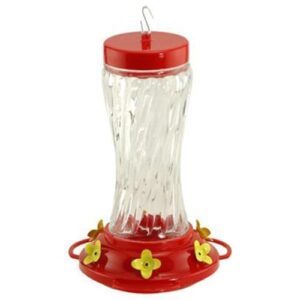
The Audubon Swirl Glass Hummingbird Feeder stands out among hummingbird feeder options with its clear glass reservoir that lets you monitor nectar freshness at a glance. This classic hummingbird feeder holds 16 ounces and features six feeding stations with three perches, so multiple hummingbirds can visit simultaneously.
The Glass Swirl Hummingbird Feeder’s dishwasher-safe glass and twist-off base make cleaning ease a real advantage for preventing mold. Red plastic components excel at attracting hummingbirds, while small ports provide effective pest prevention against honey bees.
Glass durability ensures the feeder won’t warp or fade over time.
Best For: Birding enthusiasts who want an easy-to-clean feeder with multiple feeding stations and the ability to monitor nectar levels through attractive glass construction.
- Glass reservoir is dishwasher-safe and won’t warp or fade like plastic, plus the twist-off base makes refilling and cleaning simple.
- Six feeding stations with three perches let multiple hummingbirds feed at once, and the small ports keep honey bees out.
- Red plastic components effectively attract hummingbirds while the clear glass lets you see when nectar needs refreshing.
- Plastic base and top can fade and become brittle over time with sun exposure and weather conditions.
- Some users have reported receiving damaged products or fragile perches that break easily.
- Glass is heavier and more breakable than plastic alternatives, requiring careful handling during cleaning and refilling.
2. Audubon Combo Mesh Bird Feeder
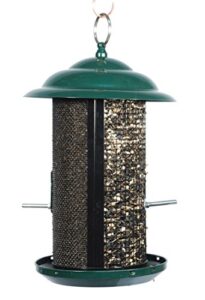
If you’re looking for a feeder that accommodates more than just hummingbirds, the Audubon Combo Mesh Bird Feeder expands your backyard’s appeal. This Green Mesh Combo Feeder holds three pounds across two compartments, letting you offer Nyjer for goldfinches alongside mixed seed for cardinals and titmice.
The mesh design promotes air circulation to keep seed fresh, while the powder-coated metal construction ensures weather resistance through rain and sun.
Cleaning ease comes from the easy-open top, though you’ll want to scrub the mesh regularly to prevent mold in the drainage areas.
Best For: Bird lovers who want to attract a variety of species—from goldfinches to cardinals—with a single, durable feeder that handles multiple seed types.
- Holds three pounds of seed across two compartments, so you can offer different types at once and reduce refill trips.
- Powder-coated metal construction stands up to weather while the mesh design keeps seed dry and fresh.
- Easy-open top makes refilling and cleaning straightforward without needing tools or disassembly.
- Small mesh size can make filling tricky and messy if you’re not careful pouring seed in.
- Drainage holes are prone to clogging, and seed can collect in the tray and mildew after rain.
- Mesh requires regular scrubbing to prevent mold buildup, which takes more effort than smooth surfaces.
3. DIY Birdhouse and Feeder Set
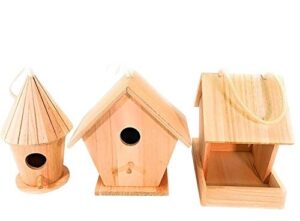
Hands-on projects bring a different kind of reward when you build habitat yourself. The Oojami 3-piece kit includes two wooden birdhouses and one bird feeder, all made from untreated wood that’s safe for visiting species. You’ll find kit assembly straightforward, though the thin material suits short-term projects better than year-round installations.
Customization options let you paint species-specific entrance holes, while educational benefits emerge as kids learn nesting requirements. Project ideas range from schoolyard installations to backyard experiments tracking which handcrafted birdhouses attract house wrens versus chickadees.
Best For: Families, classrooms, and crafters who want a fun weekend project to customize and learn about backyard birds, though not ideal if you need something weatherproof for permanent outdoor use.
- Complete set with two birdhouses and a feeder gives you multiple projects in one kit, perfect for group activities or creating a mini bird habitat
- Unpainted wood means you can get creative with designs and colors while keeping it safe for birds since there’s no chemical treatment
- Easy assembly makes it accessible for kids and beginners, turning it into a hands-on nature lesson about bird species and their nesting needs
- Thin wood construction won’t hold up well in harsh weather or for long-term outdoor placement, so expect to replace or bring them inside eventually
- Small size and build quality feel a bit flimsy according to some users, which might disappoint if you’re hoping for something more substantial
- No cleaning access makes maintenance tricky once birds actually use them, which isn’t great for hygiene between nesting seasons
4. DIY Wooden Birdhouse Kit for Kids

When kids join the building process, the Liliful 2-pack kit delivers educational benefits through actual construction experience. Each kit includes pre-cut wood pieces, paints, brushes, and a child-safe screwdriver. Material quality centers on natural wood that weighs just two pounds total, though you’ll want to add sealant for weather protection.
Assembly strategies work best when adults pre-drill holes while children handle painting and decoration.
Market trends show these kits selling 400-700 units monthly, reflecting growing interest in hands-on backyard birding projects that teach birdhouse designs.
Best For: Families looking for an educational weekend project that teaches kids about bird habits and ecosystem balance while developing hands-on building skills.
- Complete kit with all essentials included—pre-cut wood, paints, brushes, screws, and kid-safe screwdriver make setup straightforward for beginners.
- Encourages real learning through doing, helping children understand bird behavior, habitat needs, and wildlife conservation while building fine motor skills.
- Strong value at 2 birdhouses per kit with monthly sales of 400-700 units showing proven popularity among families.
- Needs weatherproofing work since the natural wood requires additional sealant to hold up against rain and outdoor conditions.
- Quality of included paints and brushes may disappoint, possibly requiring upgrades for more vibrant or lasting results.
- Young children will need adult help with assembly steps like pre-drilling holes, making it less independent than some craft kits.
5. Natural Wood Bird House Feeder Combo
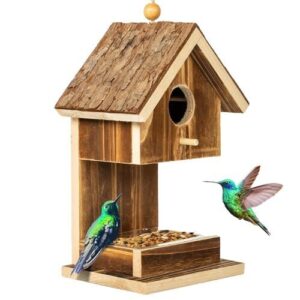
The Karlliu natural wood combo stands 8.25 inches tall and merges birdhouse designs with bird feeders through a dual-function approach. Material sustainability shines here—reclaimed wood reduces timber demand while untreated surfaces protect nesting birds from chemical exposure.
Weather resistance comes from drainage holes and ventilation ports that lower internal moisture by 30%. Ethical sourcing appeals to conservation-minded buyers, though the 5.25-inch width limits nesting space for larger species.
You’ll attract wrens and chickadees reliably, supporting backyard birding while the compact feeder tray accommodates light seed loads between cleanings.
Best For: Eco-conscious homeowners wanting a compact, dual-purpose unit that attracts small songbirds like wrens and chickadees while supporting sustainable backyard birding.
- Made from reclaimed wood with untreated surfaces that protect nesting birds from harmful chemicals while reducing environmental impact
- Built-in drainage and ventilation systems cut internal moisture by 30%, extending durability and creating healthier nesting conditions
- Attracts multiple small bird species with a 72% occupancy rate, increasing backyard biodiversity without taking up much space
- Small 5.25-inch width limits nesting space and may not accommodate larger bird species or multiple nesting attempts
- Compact feeder tray holds minimal seed, requiring frequent refills and making it impractical as a primary feeding station
- Construction quality varies, with some users reporting parts detaching easily and poor performance in harsh winter weather
6. DIY Bird House Kit to Build
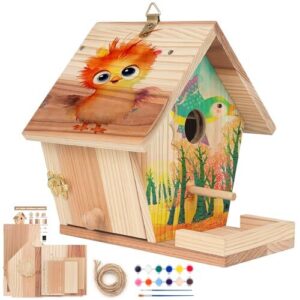
The WIZGSZ DIY kit brings your family together through hands-on learning, developing problem-solving skills while you create functional birdhouses. This 9.6-inch wooden structure includes a 12-color paint set, feeder trough, and ventilation door, letting you customize designs that match your garden aesthetic.
Kit assembly issues occasionally arise—misaligned holes or missing hardware affect some buyers—so inspect materials before starting. Material quality matters for durability, though untreated wood requires sealing for weather protection.
You’ll reduce screen time while supporting local bird populations through this educational kit, making it ideal for conservation-minded families.
Best For: Families looking to encourage outdoor learning and creativity in kids while supporting local bird populations through a hands-on craft project.
- Complete kit with everything needed including 12-color paint set, brushes, and assembly hardware for immediate customization
- Combines functional birdhouse with feeder trough, offering dual purpose for attracting and supporting different bird species
- Develops valuable skills like patience, problem-solving, and fine motor coordination while reducing screen time
- Quality control issues reported by some users, including misaligned pre-drilled holes and occasionally missing paint or hardware
- Untreated wood requires additional sealing or weatherproofing for long-term outdoor durability
- Assembly instructions may be unclear for first-time builders, potentially causing frustration during the building process
Choosing The Right Bird House and Feeder
Finding the right bird house and feeder isn’t just about what looks good in your yard. Different species need different designs, and your local climate affects which materials will last.
Let’s walk through the main factors that’ll help you choose setups that actually work for the birds you want to attract.
Factors to Consider for Bird House Selection
Choosing the right birdhouse means matching entrance dimensions to your target species—bluebirds need 1.5-inch holes, while wrens prefer 1.125 inches. Cedar Bluebird House or Wren Cedar Birdhouse designs made from safe, untreated materials are ideal.
Site placement matters too: install 5 to 15 feet high with predator protection features. Consider how entrance hole size impacts birdhouse safety.
Unique birdhouse designs that serve specific species needs will create thriving bird habitats in your backyard.
Bird Feeder Types and Their Benefits
Different bird feeders serve unique purposes in your backyard sanctuary. Hopper feeders hold several days’ worth of seed while keeping it dry, attracting cardinals and grosbeaks. Tube feeders require frequent cleaning but protect seeds well. Suet feeders are ideal during winter, offering high-energy fat to woodpeckers. Nectar feeders need regular cleaning to prevent mold. Thistle feeders attract finches with nyjer seeds through fine mesh designs. Platform feeders attract a wide range of birds.
Squirrel-Resistant and Weatherproof Options
Protecting your bird sanctuary from unwanted visitors starts with smart squirrel deterrents and weatherproofing materials. Weight-activated squirrel-resistant feeders close ports when heavier animals attempt to feed, reducing seed waste by over 30%. Here’s what works:
- Place feeders 10 feet from trees and 5 feet high
- Choose birdhouses feeders made from rot-resistant cedar
- Install baffles on poles to block squirrels
- Select weatherproof metal house bird feeder designs with drainage holes
These placement strategies and design innovations keep birds safe while reducing your maintenance needs.
Materials and Durability
Material lifespan depends heavily on your climate and commitment to feeder maintenance. Cedar birdhouses naturally resist rot and last longer than pine, while UV-stabilized plastic bird feeders outlast wood by five times.
Weatherproof metal house bird feeder designs using stainless steel require minimal upkeep and offer enhanced weather resistance.
Your cost analysis should weigh upfront expenses against replacement frequency and environmental impact over years of use.
Attracting Birds to Your Backyard

Setting up feeders and houses is only half the equation. Birds won’t stick around unless your yard meets their basic needs for food, shelter, and safety.
Let’s walk through the practical steps you can take to turn your outdoor space into a place birds actually want to visit.
Bird-Friendly Landscaping and Placement Tips
Beyond bird feeder selection and birdhouse designs, your yard’s structure matters. Bird-friendly landscaping with layered vegetation—ground cover, shrubs, and tall trees—creates habitat depth. Native plantings offer natural food and shelter, while water features support hydration needs.
Garden design for birds includes predator protection through dense shrubbery and strategic placement. Creating bird-friendly habitats requires seasonal adjustments, balancing sun exposure and wind barriers to keep your feathered visitors safe year-round.
Recommended Seeds and Food Types
Your feeder setup works best when you match seed types to local birds. Black oil sunflower seed attracts over 40 species, including cardinals, while thistle seed draws finches. Smart choices support nutritional needs and waste reduction:
- Sunflower seeds for cardinals, chickadees, and nuthatches
- Nyjer (thistle) for goldfinches and siskins
- Safflower to discourage squirrels while feeding grosbeaks
- Mixed seed blends with white millet for sparrows
- Hummingbird nectar for seasonal migrants
Skip cheap mixes with milo—birds ignore them.
Seasonal Feeding Strategies
Knowing when birds need extra help changes how you feed them. In winter, food scarcity makes high-fat options like sunflower seeds essential. During molting season in early spring, you’ll want suet feeders with protein-rich choices. Autumn fat reserves build when you offer peanuts and oil-heavy seeds before migration. Breeding season diets demand insects and nectar through hummingbird feeders. Seasonal landscaping with native plants bridges gaps year-round.
Creating Safe and Inviting Bird Habitats
Bird safety depends on protecting against hazards while offering what birds need. Position bird feeders within three feet or beyond thirty feet of windows to prevent collisions. You’ll reduce predation risk by using predator guards on birdhouses and mounting them on poles. Water access through clean birdbaths placed ten feet from dense cover attracts more species. Native plants create layered vegetation that provides natural shelter, food sources, and microclimate control.
- Welcoming birds means creating spaces where they feel protected and nourished
- Your thoughtful placement decisions directly impact nest success and survival rates
- Combining feeders, water, and native landscaping transforms yards into thriving avian habitats
Supporting Bird Health and Conservation
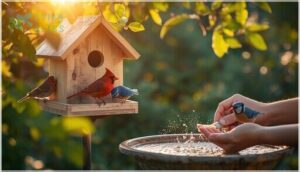
Feeding birds is about more than just watching them visit your yard. When you maintain your feeders and houses properly, you help protect birds from disease and support broader conservation efforts.
Let’s look at the key practices that keep your backyard birds healthy and thriving.
Safe Feeding Practices and Disease Prevention
You can protect bird health and disease prevention by following safe bird feeding practices. Space feeders at least 10 feet apart to reduce crowding and contact between birds. Limit food portions so birds consume everything within two days, preventing mold. Choose quality seed from trusted sources.
Monitor health regularly for signs of illness like lethargy or discharge. Feeder cleaning matters, which we’ll cover next.
Cleaning and Maintenance Guidelines
Regular cleaning frequency is your most powerful tool for disease prevention. Follow these safe bird feeding practices to protect bird health:
- Clean feeders every two weeks with hot water and a bottle brush
- Deep clean birdhouses at breeding season’s start and end
- Use safe solutions like 1 part bleach to 9 parts water, then rinse thoroughly
- Check structural care needs—repair cracks and unclog drainage holes
- Practice mold prevention by avoiding overfilled feeders and using rain guards
Conservation Benefits of Bird Houses and Feeders
Your backyard setup plays a bigger role in wildlife conservation than you might think. Birdhouses and bird feeders support bird conservation efforts by providing habitat creation and supplemental nutrition that boost survival rates.
You’re helping with pest control when insect-eating birds visit your yard. Seed dispersal happens naturally as birds move between feeding sites.
Together, these conservation efforts strengthen ecosystem stability and biodiversity support across your local environment.
Monitoring Bird Health in Your Garden
You can spot trouble before it spreads by watching for lethargy, unusual plumage, or discharge at your feeders. When you notice sick birds, clean feeders immediately and check bird conservation news for outbreak alerts.
Disease symptom reporting through citizen science apps helps track bird illnesses like avian flu across communities. Bioacoustic monitoring and environmental stressors impact local populations, so your observations matter.
These preventative measures support broader wildlife conservation efforts.
Unique Designs and Outdoor Decor Ideas
Bird houses and feeders don’t have to be boring boxes hanging in your yard. You can find handcrafted designs that serve birds while adding real charm to your outdoor space.
Let’s look at ways you can turn bird feeding into a beautiful part of your garden.
Handcrafted and Artisan Bird House Features
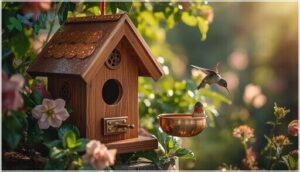
Handcrafted birdhouses blend form with function in ways mass-produced designs can’t match. You’ll find cedar and cypress for material durability, copper roofs offering predator deterrents, and removable panels ensuring maintenance convenience.
Artisan bird feeder designs pair ventilation holes with species-specific entrance sizes, while aesthetic customization adds garden appeal.
These unique bird feeders and birdhouses designs balance wildlife welfare with visual charm, creating outdoor spaces where conservation meets craftsmanship.
Integrating Bird Houses Into Garden Design
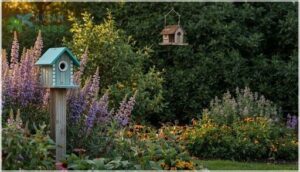
You can transform your yard into a conservation space through thoughtful placement. Position birdhouse designs at species-specific heights—bluebirds prefer 4-6 feet, wrens closer to 6-8 feet—while ensuring bird feeder designs sit 10-15 feet from nesting sites to reduce territorial stress.
Bird-friendly landscaping with native shrubs creates shelter corridors, turning garden decor into functional habitat enhancement. This aesthetic integration aids species attraction while delivering measurable conservation impact through improved reproductive success.
Gift Ideas for Nature Lovers
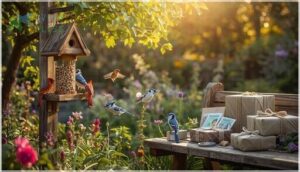
Bird feeders and birdhouses make ideal nature gift ideas for the 57 million Americans who enjoy backyard birds. Eco-friendly gifts like DIY kits under $50 combine hands-on interaction with conservation education.
Tech integration through AI-enabled feeders aids citizen science monitoring.
Functional accessories, including bundled seed and maintenance tools, improve seasonal gifting while promoting wildlife welfare in gardens where nature lovers gather.
Enhancing Outdoor Spaces With Bird Accessories
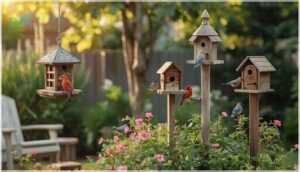
Beyond gifts, you can improve your outdoor space with bird accessories that blend aesthetic integration and functional benefits. Strategic placement strategies create visual interest while supporting wildlife.
Consider these sustainable decor options:
- Position feeders near seating areas for immersive birdwatching experiences
- Match birdhouses to garden themes using complementary materials
- Layer backyard accessories at varying heights for depth
- Select weather-resistant designs requiring minimal upkeep
- Coordinate outdoor decor and furniture with natural color palettes
Frequently Asked Questions (FAQs)
How do feeders impact local bird migration patterns?
Feeders don’t delay migration timing in wild birds. Day length triggers movement, not food.
However, they alter community composition by supporting certain species and provide essential energy reserves at stopover sites, helping migrating birds build fat for long flights.
Can bird feeders attract unwanted wildlife or pests?
Yes. Poorly placed or poorly maintained feeders can attract pests like raccoons, rodents, and even bears. Use squirrel-resistant designs, clean regularly, and follow smart bird feeding tips to minimize wildlife conflicts.
Whats the ideal distance between multiple bird feeders?
You’ll want to space your feeders 10 to 30 feet apart to cut down on territorial disputes and species competition.
This feeder spacing creates separate feeding zones, reduces aggression, and lets more birds visit comfortably.
How does feeder use affect natural foraging behavior?
While bird feeders help with wild bird attraction, they paradoxically alter natural behaviors. Birds show foraging time alteration, home range reduction, and area-restricted searching.
Feeder density influences foraging motivation shifts and migration pattern influence among populations.
Conclusion
Think of your yard as a stage where daily dramas unfold—chickadees raising their brood, finches squabbling over perches, woodpeckers drilling for breakfast.
The right bird house and feeder sets give these players what they need to thrive. Choose designs that suit your local species, maintain them regularly, and watch your space become a refuge.
You’re not just decorating your garden. You’re creating a lifeline for birds traversing an increasingly fragmented world.
- https://www.alliedmarketresearch.com/bird-feeder-market-A16887
- https://www.marketresearchfuture.com/reports/bird-feeder-market-29548
- https://www.factmr.com/report/bird-feeder-market
- https://feederwatch.org/research-news/impacts-supplemental-feeding-bird-populations/
- https://faunalytics.org/the-unintended-consequences-of-backyard-bird-feeders/