This site is supported by our readers. We may earn a commission, at no cost to you, if you purchase through links.
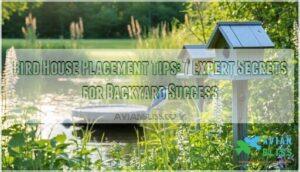 Successful bird house placement tips for your backyard start with choosing quiet, secure locations away from high-traffic areas and feeders.
Mount houses 4-8 feet high on metal poles with baffles to deter predators like cats and raccoons. Face entrances northeast for morning sun while avoiding prevailing winds.
Different species have specific preferences – bluebirds favor open areas, while chickadees prefer woodland edges.
Position houses within 100 feet of water sources and 30 feet of natural cover for ideal attraction.
Proper spacing prevents territorial disputes, while nearby native plants provide perching spots and natural food sources. Strategic placement transforms your yard into a thriving bird sanctuary with surprising species-specific secrets.
Table Of Contents
- Key Takeaways
- General Placement Considerations for Bird Houses
- Choosing The Best Location in Your Yard
- Birdhouse Height and Orientation Tips
- Protecting Bird Houses From Predators
- Spacing and Accessibility for Birdhouses
- Enhancing Backyard Habitat for Birds
- Placement Preferences for Specific Bird Species
- Frequently Asked Questions (FAQs)
- Conclusion
Key Takeaways
- Position houses 4-8 feet high on metal poles with baffles – You’ll deter cats, raccoons, and climbing predators while providing an ideal viewing height for different species
- Face entrances northeast for morning sun protection – You’ll shield nestlings from harsh afternoon heat and prevailing winds while providing gentle dawn warmth
- Space houses 10-15 feet apart in quiet backyard areas – You’ll reduce territorial disputes between birds and minimize stress from human activity and pet disturbance
- Place houses within 100 feet of water and 30 feet of natural cover – You’ll create an irresistible habitat that meets birds’ drinking, bathing, and safety needs for successful nesting
General Placement Considerations for Bird Houses
Successful bird house placement starts with selecting quiet, private areas of your backyard where birds feel secure from disturbances.
You’ll want to position houses away from busy feeders, bird baths, and high-traffic zones while maintaining safe distances from chemical treatments that could harm nesting birds, and also ensure that these areas provide a secure environment for the birds to thrive, which is crucial for their security.
Quiet and Private Backyard Areas
Selecting secluded spots for bird house placement tips guarantees successful nesting by minimizing human activity and pet exclusion zones.
Privacy considerations include natural screening from shrubs or trees, creating quiet refuges away from foot traffic.
Noise reduction helps birds feel secure during breeding season, giving birds the freedom they crave, and position houses in backyard corners or behind garden structures where predators can’t easily approach, is key to successful nesting, with natural screening from shrubs or trees, and quiet refuges.
Distance From Feeders and Bird Baths
Position your birdhouse at least 30 feet away from bird feeders and bird baths to prevent resource competition.
Feeder proximity creates territorial disputes that discourage nesting.
Bath interference from constant bird traffic disrupts breeding pairs seeking privacy.
While you want water sources and supplemental food nearby, excessive activity around these areas stresses nesting birds.
Strategic birdhouse placement away from high-traffic zones guarantees peaceful breeding conditions.
Avoidance of Human and Pet Disturbance
Constant human activity creates stress for nesting birds, reducing their reproductive success rates substantially.
Your backyard’s busiest zones should remain off-limits for bird house placement to guarantee the best breeding conditions.
- Pet proximity – Keep birdhouses away from dog runs, cat territories, and outdoor play areas where predators roam freely
- Child activity – Avoid swing sets, trampolines, and sandbox areas where frequent noise disrupts nesting behaviors
- High-traffic avoidance – Skip pathways, garden gates, and deck entrances where daily foot traffic causes constant disturbance
- Human visibility – Choose secluded spots away from windows and patios to minimize disturbance from indoor activities
Safe Distance From Chemicals and Pesticides
During springtime chemical applications, keep bird house placement away from areas treated with pesticides or herbicides.
These toxins cause direct harm through pesticide exposure and eliminate insects that birds rely on for feeding their young.
Chemical runoff creates water contamination that affects entire ecosystems.
Instead, embrace organic gardening practices and safe alternatives around nesting sites.
Position houses in naturally maintained areas or bird friendly gardens where chemicals won’t threaten successful reproduction and healthy nestling development.
This approach ensures a safe environment for birds to thrive, free from the harmful effects of chemical runoff.
Choosing The Best Location in Your Yard
Your yard’s unique features determine which birds will call it home. Strategic location choices based on habitat preferences can triple your nesting success rates compared to random placement.
Open Areas for Visibility and Safety
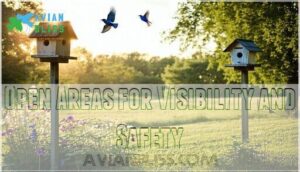
You’ll want open areas that give birds clear predator visibility and safe flightpaths for quick escapes.
Unobstructed views help birds spot threats early, while species preferences vary—bluebirds love expansive meadows, while Purple Martins need wide-open spaces for their aerial acrobatics.
Open areas provide these safety advantages:
- Clear sightlines in all directions for early threat detection
- Unimpeded escape routes during predator encounters
- Reduced ambush points where cats or hawks might hide
- Adequate space for territorial boundaries between nesting pairs
Woodland Edges and Tree Cavities
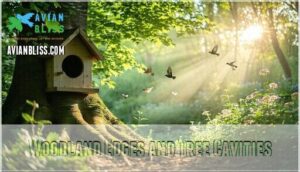
Woodland edges create perfect bird house placement tips by offering natural shelter and protection.
These boundary zones between forests and open areas provide species diversity through varied cavity size options.
Edge benefits include wind protection while maintaining visibility for safety.
Your nesting box should utilize habitat mimicry by positioning near tree cavities where birds naturally nest, attracting cavity-dwelling species to your backyard sanctuary.
Consider native plants for shelter to further enhance the backyard sanctuary and create a welcoming environment for birds, utilizing natural shelter and species diversity.
Near-Water Sites for Aquatic Birds
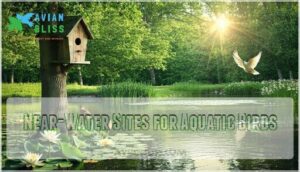
Aquatic species like Tree Swallows and Prothonotary Warblers thrive near water sources.
Position your bird house placement within 100 feet of ponds, streams, or wetland edges for ideal species attraction. Mount boxes 4-8 feet high near water for safety while maintaining nesting heights these birds prefer.
Water proximity creates ideal bird habitats, offering insects and nesting materials these near-water specialists need for successful breeding in your location, with water sources and successful breeding being key to their survival.
Birdhouse Height and Orientation Tips
Getting your birdhouse height and orientation right makes the difference between empty boxes and bustling bird families.
You’ll need to match specific height requirements to your target species while positioning the entrance to catch morning sun and dodge harsh winds, which involves considering complete concepts such as the impact of harsh winds.
Recommended Heights for Different Species
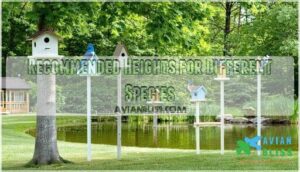
Setting the right birdhouse height transforms your backyard into prime real estate for feathered families.
Different bird species have distinct height preferences that mirror their natural nesting behaviors and predator avoidance strategies.
Every bird species chooses nest heights that match their survival instincts and natural behaviors
- Eastern Bluebirds: Mount boxes 4-6 feet high in open areas for ideal monitoring and 70% nesting success rates
- Chickadees and Nuthatches: Install at 5-15 feet, with chickadees preferring 6-12 feet for maximum territorial comfort
- Wood Ducks: Require dramatic heights of 6-30 feet over water, with 60% higher fledging rates near natural cover
- Purple Martins: Position houses 10-20 feet high with clear flight paths for colony establishment success
Directional Placement for Sun and Wind Protection

Position your birdhouse entrance facing east or northeast to capture morning sun while avoiding harsh afternoon heat.
This directional mounting shields nestlings from prevailing winds and rain protection, creating ideal microclimate influences for successful breeding.
| Direction | Wind Protection | Sunlight Exposure | Rain Shield | Species Success |
|---|---|---|---|---|
| East | Excellent | Morning warmth | Good | Bluebirds, Tree Swallows |
| Northeast | Superior | Gentle dawn light | Excellent | Most cavity nesters |
| South | Poor | Intense midday heat | Fair | Cold climate species only |
| West | Very Poor | Dangerous afternoon sun | Poor | Not recommended |
| North | Good | Minimal warmth | Excellent | Shade-preferring birds |
Weather protection starts with understanding your local prevailing winds.
It’s also important to take into account nesting comfort for the birds.
Most regions benefit from eastward-facing entrances that dodge wind-driven rain while providing gentle morning warmth for chick development.
Balancing Sunlight and Shade
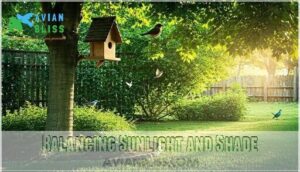
Your birdhouse needs the Goldilocks treatment—not too much sun, not too little.
Morning solar exposure warms nestlings perfectly, while afternoon shade prevents overheating that can kill young birds.
Smart bird house placement near trees or shrubs creates natural wind shields and microclimate influences that regulate temperature.
This thoughtful sun shading approach guarantees optimal nestling comfort without compromising birdhouse sun exposure needs.
To further enhance the environment, consider facing away from winds to create a more natural and comfortable space for the birds.
Protecting Bird Houses From Predators
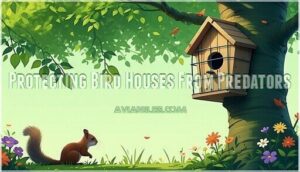
Protecting your birdhouse from predators requires strategic mounting and defensive barriers to guarantee nesting success.
Smart placement combined with physical deterrents can reduce predation rates by up to 90%, giving your feathered tenants the safe haven they need to raise their young, which is crucial for nesting success.
Mounting on Poles or Free-Standing Structures
Why risk losing feathered tenants to clever predators? Freestanding poles offer superior bird house placement protection compared to trees.
Pole Material Choices for Ideal Security:
- Metal poles – Smooth surfaces prevent climbing mammals from reaching nests
- PVC mounting – Slippery texture deters raccoons and squirrels effectively
- Height considerations – Install 5-15 feet high for maximum safety
- Stability solutions – Use concrete footings to prevent wobbling in wind
- Aesthetic integration – Choose earth-tone finishes that blend naturally
Poles eliminate predator highways that overhanging branches create.
Using Baffles and Predator Guards
Against climbing predators, stovepipe baffles prove most effective for bird house protection.
Install these Baffle Materials at least 8 inches wide and 24 inches long on metal poles.
Guards increase nest success by 6.7% on average, with Species Specificity showing Carolina Wrens benefiting up to 15.7%.
To deter climbing predators, consider installing nestbox predator guards.
Guard Maintenance requires checking secure mounts and wobble function.
Pole Mounting with Visual Deterrents creates the ultimate bird house security system against raccoons, snakes, and cats.
Avoiding Overhanging Branches and Climbing Routes
Smart predators turn your bird house into a drive-through dinner if you’re not careful about climbing route obstruction.
Tree access prevention starts with strategic birdhouse placement away from overhanging branches and nearby trunks.
- Mount houses 8+ feet from tree branches to block squirrel jumping routes
- Choose poles over trees for safer mounting practices and predator access point control
- Install baffles below houses to stop snakes and raccoons from climbing
- Position houses away from fences, decks, and structures that create climbing highways
Proper location planning keeps your feathered tenants safe from unwanted visitors, ensuring a safe and secure environment, and this is crucial for predator access point control.
Spacing and Accessibility for Birdhouses
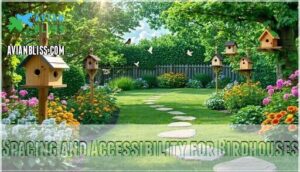
Strategic spacing prevents territorial battles between bird species while maximizing your yard’s nesting potential. You’ll need to balance accessibility for both feathered tenants and your own bird-watching enjoyment.
Proper Spacing to Reduce Competition
Once predators can’t reach your birdhouses, positioning them correctly prevents bird species from battling over prime real estate.
Territorial boundaries matter—space birdhouses 10-15 feet apart to minimize stress and competition. Different bird species need visual barriers and resource availability to coexist peacefully in your backyard habitat.
You can find supplies for creating a thriving bird sanctuary online.
| Spacing Distance | Bird Species | Territory Size |
|---|---|---|
| 10-15 feet | Bluebirds, Wrens | Small territories |
| 25-30 feet | Purple Martins | Medium territories |
| 100+ feet | Wood Ducks | Large territories |
Ensuring Easy Access for Birds
Birds need clear flight paths to your birdhouse entrance without obstacles blocking their approach.
Position your birdhouse with at least three feet of open space around the entrance for unobstructed entry. Verify proper entrance size matches your target species—1.25 inches for chickadees, 1.5 inches for bluebirds.
Avoid placing perches directly below the entrance, as they help predators access nests. Instead, provide nearby landing space on natural branches.
Ideal backyard setups require careful birdhouse placement for a successful and safe environment.
Making Birdhouses Accessible for Bird Watching
The perfect birdhouse placement balances Clear Views for your enjoyment with minimal disturbance to nesting birds.
Strategic positioning transforms your backyard into a natural observatory.
Consider these essential birdhouse observation factors:
- Position houses 20-30 feet from windows for Ideal Distance viewing
- Install Camera Mounting brackets on nearby posts for documentation
- Use natural landscaping rather than Hiding Houses completely
- Place viewing benches where Binocular Use won’t startle inhabitants
- Create clear sight lines to multiple houses for diverse bird species monitoring
Thoughtful birdhouse placement enhances both nesting success and your backyard birding experience.
To enhance your bird watching experience, consider using a birdhouse camera mount.
Enhancing Backyard Habitat for Birds
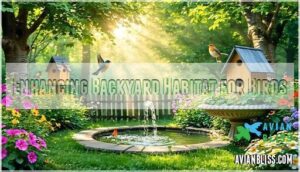
Creating a thriving backyard habitat means thinking beyond just hanging up a birdhouse—you’re building a complete ecosystem that meets all your feathered visitors’ needs.
The right combination of food sources, water features, and natural shelter transforms your yard into an irresistible bird magnet that’ll keep species coming back season after season.
Proximity to Food and Water Sources
Supplemental nutrition becomes your secret weapon once accessibility is secured.
Position bird houses within 30 feet of bird feeders to create feeding stations that attract nesting pairs.
Water proximity matters too—bird baths placed strategically near your houses provide drinking and bathing opportunities.
This feeder placement strategy transforms your backyard into a bird habitat creation hub, supporting both nesting and foraging behaviors for successful backyard birding.
Providing Natural Cover and Perching Spots
Nearby shrubs and trees create safe havens where birds can quickly escape predators.
Install perches within ten feet of your bird house placement using native plants like dogwood or elderberry. These natural cover spots give birds confidence to explore their new homes.
Consider adding native berry-producing shrubs for a natural food source. Strategic branch arrangement provides multiple escape routes, making your backyard birding tips more effective for attracting cautious species.
Offering Nesting Materials Nearby
Smart bird house placement includes providing readily available nesting materials to boost occupancy rates.
Natural material types like twigs, moss, and animal hair outperform artificial options. Position materials within 30 feet of your nesting box for ideal accessibility.
Consider these material placement strategies:
- Natural vs. Artificial: Offer cotton balls, pet fur, and dried grass over synthetic fibers
- Seasonal Timing: Stock materials during peak breeding seasons (March-July)
- Maintenance Needs: Replace weathered materials monthly to prevent mold contamination.
This thoughtful approach supports bird nesting preferences while enhancing your backyard habitat’s appeal.
Placement Preferences for Specific Bird Species
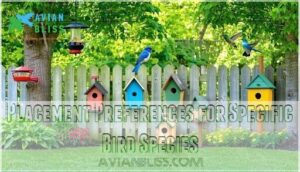
Different bird species have distinct preferences for house placement that match their natural nesting behaviors and habitat requirements.
Understanding these species-specific needs helps you position birdhouses where your target birds will actually use them, rather than leaving them empty season after season, which can be influenced by their natural nesting behaviors.
Bluebird Nesting Sites
For successful bluebird attraction, position your nest box placement in open areas like fields or large lawns, away from dense woods.
Mount boxes 4-6 feet high on poles with east-facing entrance direction to shield from storms. Space boxes 250-300 feet apart to prevent territorial disputes.
| Placement Factor | Bluebird Requirement | Success Impact |
|---|---|---|
| Open Areas | Grassy fields, large lawns | High visibility for hunting |
| Box Height | 4-6 feet above ground | Ideal predator deterrents |
| Entrance Direction | East-facing preferred | Weather protection |
| Spacing Distance | 250-300 feet apart | Reduces competition |
| Monitoring Nests | 50+ feet from buildings | Easy observation access |
Tree Swallow and Chickadee Preferences
Tree swallows crave swallow openness in fields near water, requiring entrance direction facing east at 5-15 feet high with 100-foot spacing.
Chickadees prefer chickadee shelter in mature hardwood stands, needing forest locations 5-15 feet up with clear flight paths.
These bird species show distinct habitat overlap preferences – swallows favor open birdhouse placement while chickadees choose wooded nesting materials locations for maximum species success.
Consider using natural cedar materials for birdhouse construction to guarantee durability.
Wood Duck and Kestrel Placement Needs
Wood ducks and kestrels demand specialized birdhouse placement for successful nesting.
Wood duck boxes need waterfowl proximity—mount 6-30 feet high near water with predator guards.
Kestrels require raptor heights of 10-30 feet in open hunting areas.
Both species benefit from habitat mimicry: south-facing entrances, proper box material selection, and strategic entrance size matching their needs while deterring predators.
Frequently Asked Questions (FAQs)
How often should bird houses be cleaned?
Clean birdhouses annually after breeding season ends, typically in late fall. Remove old nesting materials, scrub with dilute bleach solution, rinse thoroughly, and let dry completely before reinstalling.
When is the best time to install?
Like planting seeds before spring’s arrival, you’ll want to install birdhouses in late winter or early spring, typically February through March, giving birds time to discover and claim their new homes before nesting season begins.
What materials work best for construction?
Cedar and untreated pine offer natural insulation and weather resistance.
You’ll want thick walls for temperature control.
Avoid treated lumber—chemicals harm nestlings.
Metal hardware prevents corrosion while natural wood breathes, keeping moisture levels balanced.
Should entrance holes face specific directions?
Face your entrance holes east or southeast for ideal morning sun exposure and protection from harsh afternoon heat and prevailing winds, improving nesting success rates.
How do you winterize bird houses?
While many ignore winter maintenance, you’ll want to remove old nesting material, clean thoroughly with mild bleach solution.
Check for damage, seal cracks, and consider temporarily plugging entrance holes to prevent unwanted winter occupants from moving in, which involves complete concepts like checking and sealing, and also includes considering temporary solutions.
Conclusion
Perfectly positioned bird houses produce phenomenal results when you’ve mastered these bird house placement tips for your backyard.
Strategic site selection, ideal height mounting, and predator protection create ideal nesting conditions that attract diverse species year after year.
Remember that different birds have unique preferences – bluebirds need open spaces while chickadees prefer woodland edges.
You’ll maximize success by combining proper spacing, natural habitat features, and species-specific requirements to transform your yard into a thriving avian sanctuary.
- https://nestwatch.org/learn/all-about-birdhouses/nest-box-placement/
- http://abc.museucienciesjournals.cat/files/ABC_44-1_pp_103-108.pdf
- https://jaysbirdbarn.com/birdhouse-dos-donts/
- https://tbc3d.com/best-practices-for-placement-and-mounting-a-bird-house/
- https://www.adfg.alaska.gov/index.cfm?adfg=livingwithbirds.birdhousetips