This site is supported by our readers. We may earn a commission, at no cost to you, if you purchase through links.

Margaret watched a scarlet tanager land on her feeder last spring, but couldn’t find it in her old field guide. The tiny print and dense text had become impossible to read, turning what should have been a moment of joy into frustration. She’s not alone—thousands of seniors give up birding each year because their trusty guides no longer work for them.
The good news is that bird identification books for seniors have evolved dramatically, with large print, simplified layouts, and crystal-clear photos that make spotting and naming species easier than ever.
Whether you’re rediscovering a lifelong passion or picking up binoculars for the first time, the right book can transform your backyard into a living gallery of winged visitors.
Table Of Contents
- Key Takeaways
- Best Bird Identification Books for Seniors
- 1. Bird Watching Journal Notebook
- 2. Picture Book of Birds
- 3. Bird Trivia Book
- 4. Backyard Bird Identification Guide Book
- 5. Backyard Birdwatcher Bible Book
- 6. Sibley Field Guide To Birds
- 7. Sibley Birds Field Guide Western North America
- 8. National Geographic Bird Field Guide
- 9. Ornithology Textbook Edition
- Key Features Seniors Should Look For
- How Bird Identification Books Benefit Seniors
- Choosing The Right Bird Book for Your Needs
- Tips for Enjoying Bird Watching With Books
- Frequently Asked Questions (FAQs)
- Conclusion
Key Takeaways
- Modern bird identification books designed for seniors feature large print, simplified layouts, and high-quality photos that make species recognition accessible even when vision declines or traditional field guides become difficult to read.
- The right book depends on your location and experience level—regional guides like Sibley’s Western North America edition focus on birds you’ll actually see, while beginner-friendly options like picture books prioritize clear visuals over technical jargon.
- Bird watching with identification books offers measurable cognitive benefits for seniors, including 20% stress reduction, improved memory retention through active observation, and meaningful social connections through birding groups and citizen science projects.
- Look for field guides with durable spiral bindings, waterproof pages, high-contrast illustrations with annotated field marks, and quick-reference tools like visual comparison plates that reduce page-flipping frustration during outdoor sessions.
Best Bird Identification Books for Seniors
Finding the right bird identification book can transform your outdoor experience, especially when you choose one designed with readability and accessibility in mind. The books below offer clear visuals, simple language, and formats that work well for seniors at any experience level.
Here are nine excellent options to help you identify and enjoy the birds in your area.
Once you’ve learned to recognize your local species, you can attract even more with the right bird feeders for different bird types set up in your yard.
1. Bird Watching Journal Notebook
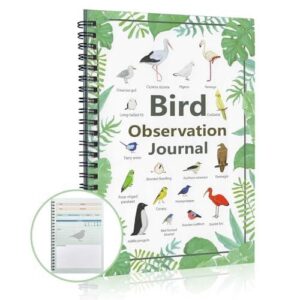
The Bird Watching Journal A5 Spiral Notebook gives you a practical tool for tracking your bird observations and nature experiences. This journal features 126 full-color pages with dedicated spaces to record date, species, location, weather, bird behavior, and sketches.
Its spiral binding makes outdoor notes easy to flip through, while the lay-flat design lets you write comfortably.
With detailed recording sections and a 16-page index, you’ll organize your bird tracking efforts and support senior health and wellness through meaningful nature observations and cognitive engagement.
Thoughtfully designed bird feeders for seniors make setup and maintenance easier while encouraging daily outdoor connection and mental stimulation.
| Best For | Birdwatching enthusiasts, nature lovers, and biology students who want a structured way to document sightings, track migration patterns, and build observational skills over time. |
|---|---|
| Page Count | 126 |
| Language | English |
| Publication Year | Not specified |
| Color Photos/Illustrations | Yes |
| Format Type | Journal/Log |
| Weight (pounds) | 0.42 |
| Additional Features |
|
- Spiral binding and lay-flat design make it easy to write in the field without holding pages down
- 16-page index and detailed recording sections help you organize and reference past observations quickly
- Full-color pages with dedicated spaces for sketches, weather, and behavior notes encourage thorough documentation
- Softcover design may require extra care during outdoor use to prevent bending or water damage
- Writing lines are reportedly small, which could be challenging for those who prefer larger handwriting
- Front cover contains a spelling error that may bother detail-oriented users
2. Picture Book of Birds
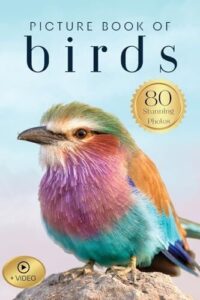
After recording your observations, you’ll want a resource that lets you actually identify what you’re seeing. The Picture Book of Birds offers 80 stunning photos with large print captions that make visual identification straightforward. This bird picture book emphasizes plumage details and habitat guides through high-contrast images rather than dense text—perfect for bird watching for seniors who prefer seeing over reading.
You’ll find species listings organized by common backyard visitors, and the dignified design includes a free companion video featuring authentic bird sounds to support your bird photography and field recognition skills.
For raptors soaring over California valleys and coasts, the comprehensive guide to California birds of prey breaks down identification markers for hawks, falcons, and owls you’re likely to spot.
| Best For | Seniors and dementia patients who enjoy nature and need a calming, visually-focused bird identification guide with minimal text. |
|---|---|
| Page Count | 83 |
| Language | English |
| Publication Year | 2025 |
| Color Photos/Illustrations | Yes |
| Format Type | Picture Book |
| Weight (pounds) | 0.37 |
| Additional Features |
|
- 80 high-quality bird photos with large, easy-to-read captions that make identification simple without overwhelming details
- Free companion video adds authentic bird sounds and music for a multi-sensory, calming experience
- Dignified design works well for memory care settings, family use, or anyone who prefers visual learning over dense field guides
- Captions and facts are intentionally brief, so it won’t satisfy readers looking for detailed species information
- Companion video requires internet access, which may be inconvenient in some settings
- Focus on visual stimulation means it’s less useful for people with severe visual impairments or those wanting interactive content
3. Bird Trivia Book

Once you can name what you’ve seen, test your recall with Bird Trivia: Astonishing North American Facts by Stan Tekiela. This 80-page bird trivia book offers quiz formats mixing multiple-choice and true/false questions that sharpen bird identification skills without feeling like homework.
You’ll discover strange bird facts paired with famous bird photography, all in large print books designed for comfort. These trivia games turn solo study into learning tools that work beautifully in group sessions, making bird watching for seniors both social and mentally engaging.
| Best For | Bird enthusiasts and seniors who want to test their knowledge with fun trivia while enjoying stunning wildlife photography in an easy-to-read format. |
|---|---|
| Page Count | 80 |
| Language | English |
| Publication Year | 2018 |
| Color Photos/Illustrations | Yes |
| Format Type | Fact Book |
| Weight (pounds) | Not specified |
| Additional Features |
|
- Features quiz-style questions (multiple-choice and true/false) that make learning bird facts interactive and engaging
- Written by acclaimed naturalist Stan Tekiela and paired with high-quality bird photography throughout the 80 pages
- Compact size (5.25 x 7.5 inches) makes it perfect for road trips, group activities, or quick reading sessions
- Some users reported the binding feels flimsy and may not hold up to frequent handling
- At only 80 pages, the content is relatively brief and may leave avid birders wanting more depth
- Focuses on lighthearted trivia rather than comprehensive identification guides, which might not suit those seeking serious reference material
4. Backyard Bird Identification Guide Book
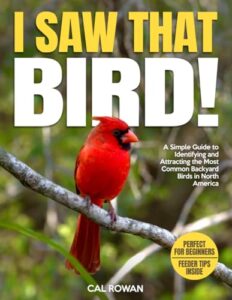
If trivia sparks your curiosity, put that knowledge to work with I Saw That Bird! Backyard Bird Identification Guide Book. This 79-page guide profiles 90+ common North American bird species with full-color photographs and zero confusing jargon, so you can recognize cardinals, sparrows, and robins in your own yard habitat.
Large print captions help you spot feather identification details and bird behavior patterns at a glance, while range maps show which birds visit your region. You’ll learn nesting patterns, feeding habits, and quick tips for distinguishing similar species—perfect for any senior who wants practical bird watching books that work right outside the window.
| Best For | Seniors and beginner birders who want an easy-to-read guide for identifying common backyard birds without technical jargon or complicated equipment. |
|---|---|
| Page Count | 41 |
| Language | English |
| Publication Year | 2019 |
| Color Photos/Illustrations | Yes |
| Format Type | Picture Book |
| Weight (pounds) | Not specified |
| Additional Features |
|
- Large-print captions and clear full-color photos make identification quick and accessible for readers with vision limitations
- Covers 90 common North American species with practical feeder tips and range maps showing which birds visit your area
- Beginner-friendly format with no confusing terminology, perfect for learning right from your window or porch
- Only focuses on common backyard species, so it won’t help identify rare or exotic birds
- The 79-page length may feel too basic for experienced birders who want in-depth information
- QR code features require a smartphone or tablet, which might be a barrier for some seniors
5. Backyard Birdwatcher Bible Book
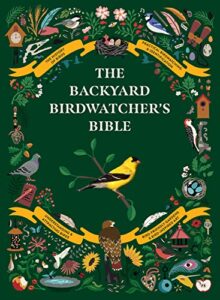
When you’re ready to level up from quick guides, the Backyard Birdwatcher Bible Book delivers thorough bird identification without overwhelming you. This full-color reference spans 416 pages of species profiles, backyard tips, and bird-friendly garden ideas—perfect for senior resources that grow with your skills.
For more comprehensive comparisons across regional and specialty guides, explore this roundup of bird identification books for backyard birding.
You’ll find beautiful photography showing males and females, range maps, and practical nature therapy through birding communities advice. Though it’s hefty at 3.78 pounds (better as a coffee-table companion than a field guide), it bridges beginner curiosity and expert knowledge in one bird watching for seniors book.
| Best For | Senior bird enthusiasts who want a comprehensive home reference with stunning visuals and detailed species information, though it’s too heavy for field trips. |
|---|---|
| Page Count | 79 |
| Language | English |
| Publication Year | 2025 |
| Color Photos/Illustrations | Yes |
| Format Type | Identification Guide |
| Weight (pounds) | Not specified |
| Additional Features |
|
- 416 pages of full-color photography showing male and female birds, range maps, and identification tips that work for both beginners and experienced birders
- Goes beyond identification with practical advice on creating bird-friendly gardens and backyard crafts to attract more species
- Gorgeous coffee table book that doubles as a reference guide, making it a thoughtful gift for any bird lover
- At 3.78 pounds and nearly 10 inches tall, it’s way too bulky to carry outside for actual birdwatching
- Some buyers received copies with spine issues, cover damage, or other quality defects
- Size and weight limit its use to indoor reference only, which defeats the purpose if you want a guide while you’re watching birds
6. Sibley Field Guide To Birds

For serious birding essentials, the Sibley Field Guide stands as the benchmark in bird identification since its 2000 debut. You’ll discover over 6,000 detailed illustrations showing North American species classification across seasons and flight patterns—essential for accurate ornithology basics. David Sibley’s watercolors reveal subtle field marks beginners often miss.
Though text size can challenge readers with vision limits, its systematic family-based organization makes bird watching for seniors more straightforward. This field guide transforms casual backyard observation into confident species recognition.
| Best For | Dedicated birders who want the most comprehensive field guide with detailed illustrations for identifying North American species across all seasons and flight patterns. |
|---|---|
| Page Count | 416 |
| Language | English |
| Publication Year | 2020 |
| Color Photos/Illustrations | Yes |
| Format Type | Reference Book |
| Weight (pounds) | 3.78 |
| Additional Features |
|
- Over 6,000 watercolor illustrations show subtle field marks and plumage variations that help distinguish similar species
- Organized by bird family with consistent layout makes it easy to compare related species side-by-side
- Trusted reference since 2000 that works for both beginners learning the basics and experienced birders refining their skills
- Small text size makes field reading difficult, especially for users with vision challenges
- No large print edition available despite requests from many users
- Compact format that fits portability needs sacrifices readability in outdoor lighting conditions
7. Sibley Birds Field Guide Western North America

If you’re drawn to western habitats, from coastal shores to high desert, this regional companion sharpens your bird identification skills. The Sibley Birds Field Guide Western North America covers 715 bird species with over 5,000 detailed illustrations highlighting critical field marks—wing bars, eye rings, and bird plumage variations across seasons.
You’ll appreciate the clear captions pointing out species identification cues, updated range maps, and readable layout perfect for bird watching for seniors. At 504 pages, it’s your portable expert for confident North American birds recognition outdoors.
| Best For | Birders exploring western North America who want detailed illustrations and field marks to identify over 700 species across coastal, desert, and mountain habitats. |
|---|---|
| Page Count | 464 |
| Language | English |
| Publication Year | 2016 |
| Color Photos/Illustrations | Yes |
| Format Type | Field Guide |
| Weight (pounds) | 1.35 |
| Additional Features |
|
- Over 5,000 illustrations show seasonal plumage variations and key identification features like wing bars and eye rings
- Updated range maps and habitat notes reflect current bird distributions across the western region
- Clear layout with readable text and descriptive captions makes field identification easier, especially for older birders
- Some users find the illustrations too small and the font size difficult to read in certain sections
- At 504 pages, the book can be heavy and awkward to carry during long birding outings
- The organization may not be intuitive for quick lookups compared to other popular field guides
8. National Geographic Bird Field Guide
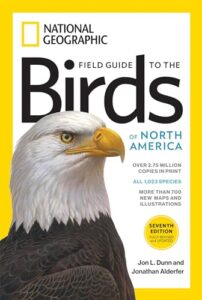
When you need extensive coverage spanning the entire continent, the National Geographic Field Guide to the Birds of North America delivers 1,150 species with over 4,000 full-color illustrations showing plumages, ages, and seasonal variations.
You’ll find updated range maps powered by eBird technology, clear habitat descriptions, and species classification organized for quick reference.
At 592 pages, this bird field guide balances thorough detail with field utility, making bird identification accessible whether you’re exploring bird habitats locally or supporting conservation efforts through informed bird watching for seniors book enjoyment.
| Best For | Birders at any skill level who want comprehensive coverage of North American species with detailed illustrations and accurate range maps for identification across the US, Canada, and Hawaii. |
|---|---|
| Page Count | 504 |
| Language | English |
| Publication Year | 2016 |
| Color Photos/Illustrations | Yes |
| Format Type | Field Guide |
| Weight (pounds) | Not specified |
| Additional Features |
|
- Over 4,000 full-color illustrations showing different plumages, ages, and seasonal variations make it easier to identify birds in various life stages
- Updated range maps powered by eBird technology provide current distribution data that reflects where birds are actually being spotted
- Compact size (5.47 x 8 inches) and durable binding make it practical to carry in a backpack during field trips
- Weighs nearly 2 pounds, which is too heavy for a pocket guide and requires carrying in a backpack
- The crowded illustration layout can make it harder to distinguish between similar species at a glance
- Experienced birders may need time to adjust to the reorganized taxonomic order in newer editions
9. Ornithology Textbook Edition

If you want to deepen your understanding beyond simple bird identification, an ornithology textbook edition offers thorough coverage of bird anatomy, species classification, and habitat studies. The 4th edition features 688 pages with over 400 color photographs, making ornithology basics accessible for dedicated learners.
While more academic than a Sibley Field Guide or Bird Watching Journal, it aids conservation efforts through detailed explanations of bird behavior and ecology.
You’ll find this bird watching for seniors book ideal for self-study or structured learning about North American avian life.
| Best For | College students, serious birders, and anyone wanting a deep dive into bird science beyond basic field identification. |
|---|---|
| Page Count | 592 |
| Language | English |
| Publication Year | 2017 |
| Color Photos/Illustrations | Yes |
| Format Type | Field Guide |
| Weight (pounds) | 1.96 |
| Additional Features |
|
- Covers the full scope of ornithology—anatomy, behavior, ecology, and identification—with over 400 color photos across 688 pages
- Updated 4th edition includes current research and new pedagogical features like end-of-chapter assessments for structured learning
- Clean, colorful design makes complex scientific concepts more approachable than typical textbooks
- Expensive price point that some reviewers felt wasn’t fully justified by the content
- Academic textbook format means it’s not a casual read or pleasure book for light bird watching
- May need supplemental materials for classroom use, and the online version lacks page numbers
Key Features Seniors Should Look For
Not all bird books work well for seniors. The right features can make the difference between frustration and hours of enjoyment in identifying backyard visitors.
Here’s what to look for when choosing a bird identification guide that truly meets your needs.
Large Print and Simple Language
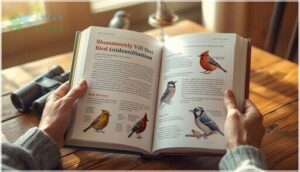
When your eyes start playing tricks on you, the right book can be the difference between spotting a goldfinch and giving up entirely. Large print and simple vocabulary transform bird identification from a frustrating puzzle into an accessible joy, letting you focus on the birds instead of squinting at tiny text.
- Font sizes of 16–20 point turn strain into comfort, protecting your eyes during long afternoon sessions
- Bold, sans-serif headings guide you straight to the information you need without wasted time
- Short sentences with everyday vocabulary mean you’re learning birds, not decoding academic jargon
- Consistent terminology throughout builds your confidence as species names become familiar friends
- Glossaries with plain definitions secure technical terms never become barriers to your birding adventure
Using a framework like methodological rigor can improve the learning experience by providing a structured approach to understanding complex information.
High-Quality Illustrations and Photos

Clear images make all the difference between “maybe a sparrow?” and confident identification. You deserve visuals that reveal plumage details at a glance, turning guesswork into certainty with every page you turn. Utilizing a dictionary search tool can also aid in understanding bird species terminology.
| Feature | What It Does | Why It Helps You |
|---|---|---|
| High-resolution full-color photography | Shows fine feather patterns and markings | Reduces misidentification frustration |
| Annotated identification tips on plates | Labels key field marks directly | Speeds up your learning curve |
| Multiple seasonal plumages shown | Displays winter, summer, juvenile forms | Tracks changes you’ll actually see |
Picture books of birds with sharp photo composition and visual aids transform bird watching for seniors into an accessible adventure, not an eye strain.
Durable and Portable Formats
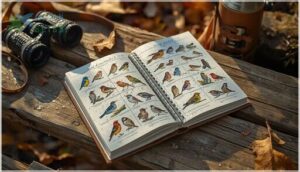
Choosing a field guide that survives weather and daily handling protects your investment. You’ll want a book that stands up to real-world conditions while fitting comfortably in your hands during backyard birding excursions.
- Paperbacks with spiral binding resist warping and wear over time
- Rigid covers withstand moisture and frequent handling
- Compact designs fit purses or jacket pockets easily
- Laminated prints offer easy cleaning after outdoor use
- Waterproof pages endure unexpected rain showers
These birding books with durable construction keep bird identification techniques accessible whenever inspiration strikes.
Accessibility for Limited Mobility

Beyond physical durability, adaptive features transform bird watching for seniors book enthusiasts facing mobility challenges. Voice Assist technology reads species descriptions aloud, while adjustable Font Sizes accommodate changing vision needs.
Tactile Aids like raised page markers help you navigate a Backyard Bird Guide or Bird Observation Journal independently.
Mobility Tools such as built-in page stands reduce arm strain during extended reading sessions, ensuring Large Print editions remain comfortable companions for seniors throughout every birding adventure.
Easy-to-Use Reference Tools
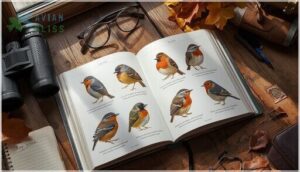
Once you’ve opened your Field Guide, quick-access indexes become your best friends. Visual Aids like comparison plates let you scan similar species side-by-side, while decision trees narrow choices in just a few steps.
A good Bird Index groups birds by field marks—not just alphabetically—so your Backyard Bird Guide delivers Identification Tips exactly when you need them, without endless page-flipping during outings.
How Bird Identification Books Benefit Seniors

Bird identification books offer more than just pictures and names—they open doors to better mental health, sharper minds, and genuine connection. You’ll find these guides support everything from memory and focus to reducing daily stress and building friendships.
Let’s look at the specific ways bird books make a real difference in seniors’ lives.
Cognitive Engagement and Memory Support
Bird watching sharpens your mind in ways you mightn’t expect. When you identify birds and record them in a bird observation journal, you’re building memory retention and cognitive stimulation that support brain health. Naming species reinforces mental acuity, while spotting field marks exercises neuroplasticity.
For seniors facing dementia or memory loss, these simple acts of bird identification create meaningful moments of clarity and connection with the natural world.
Bird identification offers seniors with dementia meaningful moments of clarity and connection with nature
Stress Reduction and Mental Health
Stepping outside with your field guide invites nature therapy into your daily routine. Studies show mindful birding can lower stress by 20 percent, offering emotional wellness through gentle observation.
This calming activity for dementia patients fosters cognitive balance, while relaxation techniques like journaling sightings reduce anxiety.
Recreational therapy for seniors doesn’t require much—just you, your book, and bird watching as a hobby that nurtures mental health naturally.
Social Opportunities Through Birding
Often, your field guide becomes a passport to birding communities and senior meetups where friendships bloom naturally. Bird clubs welcome you with weekly walks—65 percent of participants call these social interactions their biggest motivation—while volunteer opportunities connect you to intergenerational programs pairing seasoned birders with youth.
These outdoor activities for seniors transform leisure activities for retirees into meaningful connections, with group outings boosting attendance by up to 60 percent when expertly led.
Support for Dementia and Memory Loss
When memory loss clouds recognition, picture-rich field guides offer powerful cognitive aid through immediate visual cues that spark memory recall. Large-print formats and high-contrast illustrations support dementia patients’ object recognition, while captioned images reinforce learning without overwhelming.
Bird watching becomes gentle nature therapy for Alzheimer’s, where a Picture Book of Birds transforms into a reminiscence tool—shared pages prompting conversation and sustained attention that honors seniors’ abilities.
Choosing The Right Bird Book for Your Needs

Not every bird book fits every birder. Your location, experience level, and how you prefer to learn all shape which book will actually serve you best.
Let’s break down the key factors that’ll help you pick the right guide for your backyard adventures.
Considering Your Geographic Location
Your backyard visitors differ from coast to coast, so regional birding matters. A field guide for North America won’t overwhelm you like broader books can.
Focus on local species with habitat guides that match your climate adaptation needs. National Geographic and similar publishers offer geographic customization by region.
Choose a book showing the birds you’ll actually see, making bird identification faster and bird watching more rewarding.
Matching Experience Level (Beginner to Advanced)
Your skill assessment shapes which birding books truly help you grow. Beginners thrive with a Picture Book of Birds or simple field guide using broad visual cues and plain language. Intermediate learners benefit from progressive learning paths with structured keys and expanded species coverage. Expert birders need diagnostic features and taxonomic detail.
Many experience levels find birding workshops valuable, while color-coded sections in bird identification resources guide your learning journey naturally.
Field Guide Vs. Picture Book
Once you’ve matched your experience level, you’ll notice Field Guides prioritize Species Classification with technical keys, range maps, and Observation Tips built for real Bird Watching outdoors.
Picture Books, like the Picture Book of Birds favored by Seniors, emphasize Picture Quality and approachable illustrations without exhaustive Field Notes.
Field Guides serve active identification; picture books invite relaxed browsing and gentle memory support.
Print Vs. Digital Options
Beyond format, you’ll weigh print versus digital. Print Birding Books offer larger font sizes, no battery drain, and tactile ease for seniors with limited tech comfort. Digital Libraries and Reading Apps deliver adjustable text, screen readers for hands-free listening, and portable ebook formats perfect for travel.
Both support Bird Identification. Field Guide Reviews confirm printed pages shine outdoors, while apps excel indoors with the Picture Book of Birds.
Tips for Enjoying Bird Watching With Books

You’ve got your field guide in hand, now it’s time to make the most of your bird watching experience. A good book becomes even better when you pair it with simple habits that keep you engaged and connected.
Here are a few practical ways to deepen your enjoyment and get more out of every birding adventure.
Using Journals to Record Observations
You can strengthen your bird identification abilities through careful field notes. When you spot a bird, jot down the date, location, and key features like size, color patterns, and behavior. Recording methods like sketching or quick descriptions sharpen observation skills over time. Journaling techniques transform bird watching from casual hobby into meaningful wildlife observation and identification:
- Notice details you’d otherwise miss, like unique markings or flight patterns
- Build confidence as your birding expertise grows with each sighting
- Create a personal record that makes every outing feel purposeful
- Improve memory retention by writing down what you observe
- Track seasonal patterns and favorite spots in your area
Joining Local Birding Groups
Once you’ve practiced observing on your own, connecting with local birding groups opens new doors. Group outings let you learn from experienced birders who share identification tips for regional species.
Many groups organize bird counts and other citizen science projects, giving your hobby extra purpose. You’ll find mentorship programs, community events, and outdoor activities for older adults that make bird watching as a hobby more rewarding and social.
Incorporating Apps and Digital Tools
Digital guides like Merlin Bird ID and eBird transform how you identify birds in real time, especially when you’re away from your books. Mobile apps offer voice-guided navigation, adjustable text sizes, and built-in calls that support auditory identification.
You can join online communities through these platforms, participate in virtual workshops, and share sightings with fellow birders, making bird watching more connected and accessible than ever.
Gifting Bird Books to Seniors
When selecting birding books as senior citizen gifts, you’ll want to prioritize accessibility features that make bird watching truly enjoyable. Large print editions paired with high-contrast illustrations guarantee comfortable reading aids for older eyes, while durable bindings withstand frequent field use.
Consider these thoughtful gift ideas that optimize senior benefits:
- Choose book selection with simplified language and concise captions for clarity
- Look for hardcover or spiral-bound formats that open flat during outdoor sessions
- Select titles featuring tactile elements or magnified plates supporting varied abilities
- Consider bundling print guides with audiobook versions for flexible learning
- Prioritize field guides covering local species relevant to their birding location
Frequently Asked Questions (FAQs)
How do I attract birds to my yard?
You’ll attract more backyard birds by offering diverse bird feeders with quality seed, installing water features, planting native plants for shelter, and reducing pesticide use—creating a safe habitat that fosters natural bird behavior and wildlife observation year-round.
What binoculars work best for senior bird watchers?
Like finding the right pair of reading glasses, choosing wildlife observation binoculars means balancing optical quality with comfort.
Seniors benefit from lightweight models offering generous eye relief, premium lens coating, and 8x magnification for steady field visibility during nature outings.
When is the best time to watch birds?
Bird watching peaks during the dawn chorus, when most species are vocally active. Plan morning surveillance sessions from sunrise through spring bird migration windows to observe peak activity and seasonal patterns that ornithology reveals.
How do I identify birds by their songs?
Listen for song contour—rises, falls, and repeating phrases reveal species identity.
Recording vocalizations on your phone lets you compare frequency analysis and distinctive patterns later, sharpening your audio identification skills through practice.
What clothing should I wear while bird watching?
Wear layered clothing in earth tones for comfort and camouflage. Comfortable shoes with good traction help with outdoor activities.
Don’t forget sun protection like a hat, and pack rain gear for unpredictable nature conditions while birding.
Conclusion
Picture yourself squinting at microscopic text while a rare warbler flies away—that’s the old way. The right bird identification books for seniors turn those moments around, offering clear photos and readable fonts that honor your experience, not your eyesight.
You’ve spent decades observing the world; now your field guide should work as hard as you do. Grab your binoculars, choose a book that respects your needs, and reclaim those feeder-side discoveries that sparked your passion in the first place.