This site is supported by our readers. We may earn a commission, at no cost to you, if you purchase through links.

You can’t identify what you can’t see clearly, and fumbling through a thousand-page field guide while a rare warbler vanishes into the canopy isn’t anyone’s idea of successful birding. I’ve watched countless travelers miss extraordinary sightings because their reference materials were either too bulky to bring along, too exhaustive to navigate quickly, or too fragile to survive a sudden downpour.
The right bird identification books for travel need to balance portability with completeness, offering enough detail to distinguish between similar species without weighing down your daypack. Whether you’re chasing endemics in Costa Rica or exploring local trails an hour from home, your field guide becomes your most trusted companion—assuming you’ve chosen one that actually fits your destination, your experience level, and your luggage constraints.
Table Of Contents
- Key Takeaways
- Top 10 Bird Identification Books for Travel
- 1. Backyard Birdwatcher Bible Book
- 2. Sibley Field Guide To Birds
- 3. Sibley Birds Field Guide Western North America
- 4. Bird Trivia Book
- 5. National Geographic Bird Field Guide
- 6. Ornithology Textbook Edition
- 7. National Audubon Bird Field Guide
- 8. The Bird Way Book
- 9. What It’s Like To Be A Bird Book
- 10. Florida Bird Field Guide Book
- How to Choose Travel Bird Guides
- Key Features of Travel Bird Books
- Regional Travel Bird Guides Worth Packing
- Digital Versus Print Bird Guides
- Essential Bird Guide Features for Travelers
- Frequently Asked Questions (FAQs)
- Conclusion
Key Takeaways
- The right travel bird guide balances portability with completeness—regional guides like Stan Tekiela’s Florida Birds (384 pages, 2.31 pounds) deliver focused coverage for specific destinations, while comprehensive references like the National Geographic Field Guide (592 pages, 1,023 species) serve multi-region adventures despite weighing nearly 2 pounds.
- Physical features matter more than page count when you’re in the field—waterproof covers, color-coded sections for rapid identification, and compact dimensions (4-7 inches) that fit jacket pockets prove essential during sudden rainstorms or fast-moving sightings where fumbling through exhaustive guides costs you the bird.
- Illustrations outperform photographs for consistent field identification because artistic renderings in guides like Sibley’s highlight diagnostic field marks with standardized poses and accurate color representation, while photos struggle with variable lighting conditions that obscure critical details when you need quick visual confirmation.
- Digital tools like Merlin Bird ID and eBird Mobile complement rather than replace physical guides—apps excel at audio identification and GPS tracking in connected areas, but offline-capable print guides remain superior during multi-day backcountry trips where screen glare, battery drain, and lack of cell service render electronic options useless.
Top 10 Bird Identification Books for Travel
The right bird guide can transform your travels from casual sightseeing into a genuine ornithological adventure. But choosing from hundreds of available titles feels overwhelming.
I’ve spent years testing field guides across continents, from Costa Rican cloud forests to Alaskan tundra, and I know which books actually earn their space in your luggage.
Here are ten bird identification books that strike the perfect balance between thorough coverage, practical portability, and reliable accuracy for travelers who refuse to miss a single species.
1. Backyard Birdwatcher Bible Book
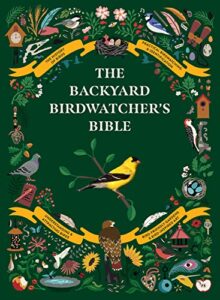
You won’t find the Backyard Birdwatcher’s Bible in your field bag—at 3.78 pounds and nearly 10 inches tall, it’s built for your coffee table, not the trail. Published by Abrams in 2020, this 416-page volume excels at bird identification for suburban species through stunning full-color photography and detailed range maps.
It’s your home base for backyard birding tips, bird feeding strategies, and creating bird-friendly gardens. Think of it as your gateway guide before graduating to portable field guides like the Sibley Field Guide for actual travel adventures.
| Best For | Beginner to experienced birders who want a comprehensive home reference for identifying and attracting common backyard birds, with no plans to carry it outdoors. |
|---|---|
| Page Count | 416 |
| Language | English |
| Publisher | Abrams Books |
| Publication Year | 2020 |
| Weight | 3.78 lbs |
| Target Audience | Backyard bird enthusiasts |
| Additional Features |
|
- Gorgeous full-color photography showing male and female birds plus detailed range maps make identification straightforward for suburban species
- Goes beyond ID with practical advice on feeders, garden design, and bird-friendly backyard projects
- At 416 pages, it’s packed with enough content to serve both as a learning tool and an attractive coffee table display
- Weighs nearly 4 pounds and measures 10 inches tall, making it completely impractical for field use
- Multiple customers report quality control issues including damaged spines, torn covers, or defects upon arrival
- Size and heft limit its usefulness to home study only—you’ll need a separate portable guide for actual birdwatching trips
2. Sibley Field Guide To Birds

David Sibley’s field guide transforms how you identify birds on the road. At 1.35 pounds and just under 8 inches tall, it slips into any daypack while delivering over 4,600 detailed bird illustrations across 464 pages.
You’ll appreciate the current taxonomic order covering 810+ North American species, with range maps showing seasonal distributions—winter, summer, migration routes.
The Sibley Field Guide excels at species identification through plumage variations and behavioral notes, though some travelers find the text size challenging in dim morning light when conservation efforts and birding books matter most.
| Best For | Birders who want a portable, comprehensive reference with detailed illustrations for identifying North American species in the field. |
|---|---|
| Page Count | 464 |
| Language | English |
| Publisher | Knopf |
| Publication Year | 2016 |
| Weight | 1.35 lbs |
| Target Audience | Beginners and seasoned birders |
| Additional Features |
|
- Over 4,600 accurate illustrations showing plumage variations, making visual identification quick and reliable
- Updated range maps display seasonal distributions including winter, summer, year-round, migration, and rare sightings
- Compact size (4.82 x 7.78 inches, 1.35 pounds) fits easily in a daypack for field use
- Small text size makes reading difficult, especially in low light conditions during early morning birding
- Not suitable for users with vision impairments who need larger print
- The compact design sacrifices readability for portability
3. Sibley Birds Field Guide Western North America

If you’re exploring the West, this regional companion sharpens your focus dramatically. The Sibley Field Guide Western North America zeroes in on 715 species—plus regional populations—with 5,046 illustrations showing subtle field marks like wing bars and eye rings.
You’ll navigate 504 pages of western species using habitat preferences, seasonal occurrence notes, and revised regional maps that reflect current distribution patterns. The Sibley Guide’s watercolor-style plates compare look-alikes side-by-side, offering identification tips that help distinguish raptors from songbirds.
Though compact at 4.7 x 7.7 inches, some find illustrations small—but the focused coverage beats lugging exhaustive field guides through canyon trails.
| Best For | Birdwatchers focusing on western North America who want detailed illustrations and regional-specific coverage without carrying a nationwide guide. |
|---|---|
| Page Count | 504 |
| Language | English |
| Publisher | Knopf |
| Publication Year | 2016 |
| Weight | Not specified |
| Target Audience | Beginners and experienced birders |
| Additional Features |
|
- Over 5,000 illustrations with side-by-side comparisons make identifying look-alike species much easier
- Revised range maps and seasonal notes help you know exactly what to expect in your area
- Compact size (4.7 x 7.7 inches) fits in a backpack better than comprehensive national guides
- Illustrations can be too small for some users to see fine details comfortably
- The book’s weight and organization may not work well for quick field identifications
- Small font size in certain sections makes reading difficult for some birders
4. Bird Trivia Book

Between field guides, you might crave a break that still keeps your birding mind sharp. Stan Tekiela’s 80-page Bird Trivia Book delivers rapid facts, strange behaviors, and identification tips paired with stunning wildlife photography—perfect for unplugged moments on road trips or campsite evenings.
At $9.49, it complements your Peterson Field Guide and National Geographic Field Guide with quiz formats and birding challenges that test knowledge beyond standard field marks. Though some find the binding flimsy, this compact companion turns downtime into engaging trivia games that sharpen your recognition skills for tomorrow’s sightings.
| Best For | Bird enthusiasts looking for a fun, lighthearted companion to their field guides that offers quirky facts and trivia to enjoy during downtime on birding trips or as a gift for casual and serious birders alike. |
|---|---|
| Page Count | 80 |
| Language | English |
| Publisher | Adventure Publications |
| Publication Year | 2018 |
| Weight | Not specified |
| Target Audience | Bird enthusiasts |
| Additional Features |
|
- Packed with unusual facts and bird behaviors that go beyond standard field guide information, keeping your birding knowledge sharp between outings
- Features high-quality wildlife photography from acclaimed photographer Stan Tekiela that pairs beautifully with the trivia content
- Compact size and affordable price ($9.49) make it an easy addition to your birding library or a thoughtful gift for bird lovers
- Binding quality is reportedly flimsy, which may not hold up well to repeated use or travel conditions
- At only 80 pages, the content is relatively brief and may leave readers wanting more in-depth coverage
- Lighthearted trivia format won’t satisfy those seeking comprehensive scientific or identification information
5. National Geographic Bird Field Guide
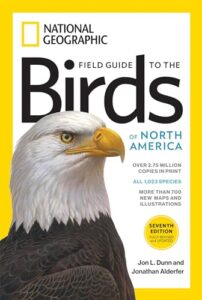
When you need scientific precision wrapped in traveler-friendly design, the National Geographic Field Guide to the Birds of North America stands apart. This 592-page reference covers 1,023 species with detailed color illustrations, range maps, and habitat notes that support quick identifications on the trail.
The 7th edition includes 37 new species, 80 updated maps, and revised taxonomy reflecting American Ornithological Society standards. At 1.96 pounds, it balances thorough species accounts with portable durability, offering conservation tips and field marks that serve beginning through expert birders equally well.
| Best For | Birders of all skill levels who want a comprehensive, scientifically accurate field guide that’s portable enough for travel and detailed enough for serious identification work. |
|---|---|
| Page Count | 592 |
| Language | English |
| Publisher | National Geographic |
| Publication Year | 2017 |
| Weight | 1.96 lbs |
| Target Audience | Beginning to advanced birders |
| Additional Features |
|
- Covers 1,023 species with 250 new illustrations and regularly updated range maps that reflect current distribution patterns
- Uses the latest American Ornithological Society taxonomy with standardized banding codes, making it reliable for research and record-keeping
- Compact design at 5.47 x 8 inches fits easily in a backpack while still offering detailed species accounts, habitat notes, and quick-find tools
- Experienced birders may need time to adjust to the new taxonomic order used in recent editions
- At nearly 2 pounds, it’s heavier than some ultralight alternatives designed specifically for minimalist travel
- Range maps may lag behind real-time climate-driven distribution changes, requiring cross-reference with online tools for the most current data
6. Ornithology Textbook Edition

Understanding bird anatomy, avian physiology, and species classification transforms casual observers into confident identifiers. Ornithology, 4th Edition (W. H. Freeman, 2019) delivers 688 pages of scientific foundation with over 400 color photographs covering bird evolution and ornithology basics that complement field guides like Peterson Field Guide and National Geographic Field Guide.
At 3.3 pounds, it’s not trail-ready, but this exhaustive textbook deepens your identification skills before departure, helping you grasp morphology, behavior patterns, and taxonomy that pocket guides simply can’t accommodate during pre-trip preparation.
| Best For | Students and serious birders who want to understand the science behind bird identification—anatomy, physiology, and taxonomy—before heading into the field. |
|---|---|
| Page Count | 688 |
| Language | English |
| Publisher | W. H. Freeman |
| Publication Year | 2019 |
| Weight | 3.3 lbs |
| Target Audience | Students and laypeople |
| Additional Features |
|
- Covers foundational ornithology topics like avian anatomy, evolution, and behavior that deepen your understanding beyond what field guides offer
- Packed with over 400 color photographs and updated research from the 4th edition to support visual learning
- Includes end-of-chapter questions and pedagogical tools that help reinforce concepts for classroom or self-study use
- Too heavy (3.3 pounds) and large to carry on birding trips—it’s strictly for home study
- Expensive for what some reviewers consider a textbook that may need supplemental materials
- Online version lacks page numbers, making it harder to reference specific sections quickly
7. National Audubon Bird Field Guide
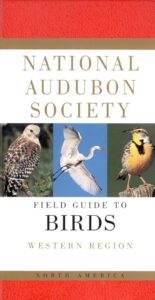
You’ll recognize the National Audubon Society Field Guide instantly—that color-coded spine system makes species accounts practically jump off the shelf. With regional coverage customized for travelers and quick-reference features that rival Peterson Field Guide and Sibley Guide precision, it balances National Geographic-level detail with on-the-go accessibility.
The guide emphasizes bird conservation through habitat notes and migratory maps, helping you understand not just what you’re seeing, but where species thrive across varied environments—essential intel for adventurous field identification beyond predictable backyard encounters.
| Best For | Travelers and general birders who want a conservation-focused guide with color-coded organization and detailed migratory maps for exploring birds across different North American regions. |
|---|---|
| Page Count | 822 |
| Language | English |
| Publisher | Knopf |
| Publication Year | 1994 |
| Weight | 1.32 lbs |
| Target Audience | Beginners and experienced birdwatchers |
| Additional Features |
|
- Color-coded spine system and quick-reference features make field identification fast and intuitive, even in varied environments
- Comprehensive migratory maps and regional distribution data help you plan trips and understand where species appear seasonally
- Conservation-focused approach with detailed habitat notes and behavioral information goes beyond basic identification
- Photos and detailed text are in separate sections, which can be frustrating when you need quick cross-referencing in the field
- At 1.32 pounds and over 800 pages, it’s bulky and heavy compared to more portable field guides
- Some users find the organization less intuitive than competitor guides, and the Kindle version reportedly has formatting issues
8. The Bird Way Book

While most field guides show you what birds look like, Jennifer Ackerman’s The Bird Way reveals how they think. Exploring bird intelligence, avian behavior, and bird cognition through compelling ornithology research, this book offers a unique perspective.
You’ll discover social learning in corvids, communication strategies across species, and behavioral cues that transform bird identification techniques beyond static illustrations.
Though not a pocket-sized field guide, it’s essential reading for travelers seeking deeper wildlife conservation perspectives and richer birding book experiences that connect identification with the fascinating ecology behind every feathered encounter.
| Best For | Birders and nature enthusiasts who want to understand the fascinating intelligence and social behaviors behind the birds they observe, rather than just identifying them. |
|---|---|
| Page Count | 367 |
| Language | English |
| Publisher | Penguin Books |
| Publication Year | 2020 |
| Weight | Not specified |
| Target Audience | Bird lovers |
| Additional Features |
|
- Turns bird watching into something deeper by explaining the cognitive science and complex social behaviors that make birds so remarkable
- Written in an engaging, narrative style by a bestselling author that makes scientific research accessible and enjoyable
- Complements traditional field guides by helping you recognize behavioral patterns and communication strategies when you’re out birding
- Not a portable field guide you can carry on trails—it’s a dense, detailed read better suited for home
- Lacks photos or illustrations, which some readers missed for visual reference
- Small print and occasionally technical content can make it challenging to get through
9. What It’s Like To Be A Bird Book
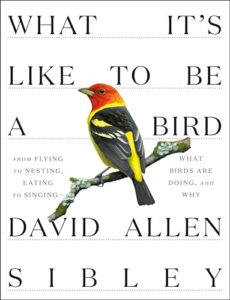
David Sibley’s What It’s Like to Be a Bird breaks free from traditional field guides by immersing you in avian perception and sensory worlds. With over 330 life-sized illustrations across 240 pages, you’ll explore bird cognition, environmental awareness, and bird migration through a bird’s eyes.
This large-format volume complements standard birding books and field guides like the Peterson Field Guide by deepening your bird identification skills with behavioral insights. Perfect for travelers who want to understand, not just spot, the species they encounter on every adventure.
| Best For | Birders and nature lovers who want to go beyond simple identification and understand how birds actually experience the world around them. |
|---|---|
| Page Count | 240 |
| Language | English |
| Publisher | Knopf |
| Publication Year | 2020 |
| Weight | 3.17 lbs |
| Target Audience | Birders and nonbirders |
| Additional Features |
|
- Over 330 life-sized illustrations make it easy to see accurate details of 200 species without squinting at tiny field guide images.
- Covers bird behavior, senses, and cognition in an accessible way that works for both beginners and experienced birders.
- Large coffee-table format makes it perfect for sharing with kids or just browsing casually.
- Focuses mainly on common backyard birds, so it won’t cover every species you might encounter.
- The casual writing style might feel too light if you’re looking for a technical or comprehensive ornithology reference.
- Some details may require additional fact-checking since the approach prioritizes accessibility over scientific rigor.
10. Florida Bird Field Guide Book
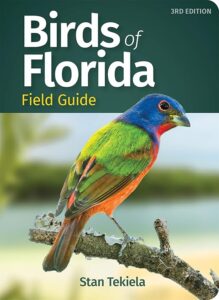
When you’re exploring Florida’s bird habitats—from the Everglades to coastal wetlands—you’ll want Stan Tekiela’s Florida Birds field guide in your pack. This compact, 384-page companion covers 146 species with crisp, full-page photographs and color-coded sections that make species identification swift and accurate.
The compare feature helps you distinguish between look-alikes, while Stan’s Notes add naturalist insights that deepen your understanding of regional guides.
Unlike exhaustive references like the Peterson Field Guide or Sibley Guide, this regional guide zeroes in on Florida’s unique avifauna, supporting both bird identification skills and bird conservation awareness.
| Best For | Bird watchers exploring Florida’s diverse ecosystems who need a portable, beginner-friendly guide that focuses on the state’s most commonly spotted species. |
|---|---|
| Page Count | 384 |
| Language | English |
| Publisher | Adventure Publications |
| Publication Year | 2020 |
| Weight | 2.31 lbs |
| Target Audience | Beginners and experienced birders |
| Additional Features |
|
- Color-coded sections and full-page photos make identifying birds quick and intuitive, even for beginners
- Compare feature helps distinguish between similar-looking species, reducing confusion in the field
- Compact size (4.25 x 6 inches) fits easily in a backpack or pocket for on-the-go reference
- Doesn’t cover every bird species found in Florida, so serious birders may need supplemental resources
- Some users report that certain photos could better represent species variations or seasonal plumage changes
- At 2.31 pounds, it’s heavier than some pocket guides, though most find the weight manageable
How to Choose Travel Bird Guides
Choosing the right bird guide for your travels isn’t about grabbing the thickest book on the shelf—it’s about matching the guide to where you’re going and how you’ll use it in the field. You need a book that won’t weigh down your pack but still delivers accurate identifications when a mystery bird lands three meters away.
Let’s break down the key factors that’ll help you select a field guide that actually earns its place in your luggage.
Consider Your Travel Destinations
Your trip itinerary shapes everything about field guide selection. When you’re traveling to California’s coastal wetlands, you’ll spot species that never appear in Maine’s boreal forests, so regional guides become essential tools for accurate bird identification.
Research your destination’s bird habitats before departure—coastal, forest, wetlands, or urban parks—then choose field guides that match those environments for successful regional birding adventures. Understanding the importance of methodological rigor is vital for making informed decisions about field guides.
Regional Versus Comprehensive Guides
Once you’ve pinpointed your destinations, you’ll face the regional versus all-encompassing guides decision. Regional guides deliver detailed, location-specific coverage with localized species lists, while all-encompassing guides like the Peterson Field Guide span broader geographic areas for cross-regional comparisons.
Your travel planning determines which works best—regional focus excels for concentrated trips, but all-encompassing field guides support multi-state adventures where bird range and identification tips vary dramatically across territories.
Size and Portability for Packing
After settling on regional versus exhaustive guides, you’ll want something that won’t weigh down your pack. Most field guides clock in between 12 and 36 ounces—pocket-sized editions measuring 4 to 6 inches fit easily into daypacks, while spiral bindings reduce bulk.
The Peterson Field Guide and Sibley Guide both offer compact formats, perfect for travelers who need portable bird identification without sacrificing essential range maps and illustrations.
Durability and Weather Resistance
Lightweight books turn to mush after one rainstorm—that’s why you need synthetic materials and waterproof covers. Look for laminated card stock or vinyl jackets that shed moisture, especially in coastal or tropical zones.
Reinforced spines handle constant folding, while sealed plastic resists salt spray and humidity. The Peterson Field Guide offers durable editions built for real field conditions, not just coffee-table browsing.
Key Features of Travel Bird Books

When you’re out in the field, the right features can make the difference between a frustrating guessing game and a confident identification. Your travel bird guide needs to work as hard as you do, delivering clear information exactly when you need it most.
Let’s break down the essential elements that separate a mediocre field companion from one that’ll actually earn its spot in your pack.
Illustrations Versus Photographs
You’ll notice illustrated field guides versus photographic ones spark real debate among birders. Artistic renderings in guides like the Peterson Field Guide and Sibley Guide offer excellent visual clarity—especially for color accuracy and diagnostic field marks. Photographs provide photorealism but struggle with lighting variables. Here’s how they compare for bird identification:
| Feature | Illustrations | Photographs |
|---|---|---|
| Visual Clarity | Highlights key field marks precisely | Variable depending on lighting conditions |
| Color Accuracy | Consistent across all plumages | Can shift with camera settings |
| Image Quality | Optimized for identification features | Shows natural context and behavior |
| Field Utility | Faster pattern recognition in varied light | Confirms real-world appearance expectations |
| Extensive Guides | Standardized poses aid comparison | Captures individual variation authentically |
Range Maps and Distribution Information
Range maps transform bird identification from guesswork into precision. You’re no longer stumbling through possibilities—accurate distribution trends and habitat associations narrow your search instantly. Modern field guides like the Sibley Guide incorporate range updates based on citizen science, reflecting real migration patterns and seasonal shifts. Here’s what makes range maps essential:
- Seasonal shading distinguishes breeding, winter, and year-round residents
- Regional guides offer county-level distribution for pinpoint accuracy
- Vagrant indicators alert you to rare out-of-range sightings
- Habitat notes connect species to wetlands, forests, or grasslands directly
Quick Reference Indexes
You’ll flip to a quick reference index dozens of times in a single morning—that’s where field marks, bird codes, and rapid ID tools earn their weight. Extensive guides like the Sibley Guide organize species lists alphabetically and by family, so you’re never hunting blindly.
Travel-focused field guides often feature thumbnail galleries grouped by habitat or size, turning chaos into clarity when you need bird identification fast.
Color-Coded Sections for Fast Identification
Color coding turns your field guide into a fast-track identification tool—you’ll match bird families and field markers in seconds instead of minutes. When extensive guides like the Sibley Guide apply color-coded tabs by region or taxa, visual identification becomes instinctive:
- High-contrast palettes improve legibility in bright light
- Colorblind-accessible patterns supplement hues
- Bold section headers stand out from text
- Edge tabs enable rapid flipping between species sorting categories
- Consistent keys across volumes build familiarity
Pair these cues with detailed descriptions for accurate bird recognition in unfamiliar habitats.
Regional Travel Bird Guides Worth Packing
You’ll get the most from your field guide when it’s customized to where you’re actually going. A regional guide cuts through the noise by showing only the species you’ll encounter, which means faster identifications and less frustration flipping through birds that don’t belong.
Let’s look at the regional options that deserve a spot in your travel pack.
State-Specific Field Guides

You won’t regret packing a state-specific field guide when you’re chasing down regional birding hotspots. These focused birding books sharpen your bird identification skills by eliminating species that don’t occur locally, making all-inclusive guides feel bloated by comparison.
California’s guides tackle deserts and redwoods, while Florida editions zero in on subtropical species distribution. Each regional guide reflects local conservation priorities and habitat focus you’ll actually encounter.
Habitat-Focused Identification Books

Habitat-focused identification books link species distribution directly to ecosystems, so you’ll stop guessing whether that warbler belongs in oak canopy or marsh edge. These field guides organize birds by vegetation associations and microhabitats, sharpening your bird identification through habitat analysis rather than plumage alone.
Color-coded sections and habitat checklists accelerate recognition, supporting conservation efforts by mapping species to threatened ecosystems you’re exploring.
International Birding Guides

When your passport gets as much use as your binoculars, international field guides become your multi-continent companions. These extensive guides emphasize migratory patterns and global bird trends across regions, helping you identify species in conservation hotspots from Costa Rica to Kenya.
Color plates simplify cross-region bird identification, while sections on international laws and avian research ground your observations in broader ecological context—making regional guides obsolete for globe-trotting adventures.
Digital Versus Print Bird Guides

You’re standing at a crossroads every birder faces: do you pack a trusty field guide or rely on your smartphone? Both approaches have earned their place in modern birding, and honestly, the best choice depends on where you’re headed and how you like to work in the field.
Let’s break down the practical strengths of digital apps and traditional books so you can decide what belongs in your travel kit.
Merlin Bird ID App Features
Think of Merlin Bird ID as your pocket ornithologist—it’s revolutionized how we identify species on the go. The app tracks your location to suggest relevant possibilities, downloads field guides for offline access, and logs observations with GPS coordinates. It’s like carrying decades of birding books and ornithology expertise in one lightweight package.
- Snap and identify: Upload photos for instant species matching through sophisticated image recognition
- Master vocalizations: Access extensive audio playback collections for bird call analysis across regions
- Go offline anywhere: Download complete field guides and regional data without internet connectivity
- Track your discoveries: Automatic location tracking logs every sighting with precise GPS coordinates
- Get smart suggestions: Location-aware algorithms filter possibilities to birds actually occurring in your area
EBird Mobile Applications
While Merlin Bird ID manages identification, eBird Mobile Applications turn your sightings into Citizen Science data that shapes conservation worldwide.
You’ll track every species with real-time checklists, attach photos and audio recordings, and explore regional hot spots—all in Offline Mode when you’re beyond cell towers.
It’s Bird Tracking that matters, transforming your field observations into Mobile Data that ornithologists actually use for research.
Offline Digital Field Guides
When your trail disappears into canyon country or crosses a border without signal, Field Guide Apps in Offline Mode become your liberation.
Digital Storage lets you pack extensive guides without the weight—preloaded illustrations, range maps, and searchable indexes all ride in your pocket.
Mobile Optimization means instant species lookups, while Data Synchronization updates your Birding Books when you’re back online.
When to Choose Physical Books
Sometimes, you’ll choose physical Field Guides over apps when Screen Glare washes out digital displays in bright sunlight. Travel Restrictions on electronics, spotty Offline Access, and enhanced Field Durability make Extensive Guides essential companions.
Birding Books offer a reliable Tactile Experience—waterproof pages survive downpours, and quick visual scanning beats scrolling through menus when a rare warbler won’t wait for your phone to load.
Essential Bird Guide Features for Travelers

When you’re chasing down a rare warbler in the rainforest or scanning mudflats for shorebirds, your field guide needs to work as hard as you do. The best travel bird books share specific features that make identification faster, protect against the elements, and won’t weigh down your pack.
Let’s break down the essential characteristics that separate a truly travel-worthy guide from one that’s better left on your bookshelf at home.
Compact Design for Easy Carrying
When you’re hiking mountain trails or traversing crowded airports, the last thing you want is a bulky field guide weighing you down. Look for birding books between 5 and 7 inches—these travel sizes slip into jacket pockets while maintaining legibility.
Lightweight materials and slim formats with single-column layouts create portable bindings that won’t bog down your daypack, giving you freedom to explore unburdened.
Waterproof or Weather-Resistant Covers
Rain and humidity can turn ordinary field guides into papery mush, so you’ll want weather resistance built in. Coated or laminated pages resist warping and staining, while treated cloth covers shield against moisture intrusion during wet-season expeditions.
Independent testing shows waterproof materials dramatically reduce page damage after 50+ hours of field use, protecting your birding investment through countless tropical downpours and misty mountain mornings.
Quick Visual Identification Systems
When you’re scanning tree canopy at dawn, you won’t have time to flip through exhaustive guides page by page. That’s why the best field guides deploy color-coded sections, annotated bird silhouettes, and highlighted field marks—those decisive visual cues like wing bars or tail shape—that let you identify species in seconds.
Quick reference indexes and simplified color patterns turn your birding resources into rapid-fire identification tools.
Audio Call Integration Options
Audio playback in field guides transforms your identification game—you’ll match songs to species instantly with realtime identification tech like Merlin Bird ID. Call recording lets you tag vocalizations on the fly, while offline libraries guarantee your birding resources work beyond cell service.
Crossplatform search syncs eBird observations across devices, turning audio into your most powerful identification tool when visual cues fall short.
Frequently Asked Questions (FAQs)
How do you identify birds without field marks?
You can identify birds through vocalizations, behavioral traits like feeding postures, habitat analysis, flight patterns including wingbeat frequency, and morphological features such as overall silhouette—techniques that bolster any birding library’s field guides.
Understanding bird behaviour is vital, and observing their social behaviour patterns can help distinguish between species.
Which guides cover rare or vagrant species effectively?
The Sibley Field Guide and National Geographic Field Guide excel at documenting vagrant species through detailed range maps and migration notes.
Regional guides like Florida Bird Field Guide spotlight rare visitors with precise timing and location data for dedicated birding library enthusiasts.
Conclusion
The best bird identification books for travel always seem to appear when you need them most—tucked in a daypack during an unexpected sighting, ready when that mystery species lands overhead.
You’ve now got ten proven guides matched to different destinations, experience levels, and field conditions. Pick the one that fits your next adventure, keep it within arm’s reach, and watch how quickly those “I think that’s a…” moments transform into confident identifications you’ll remember for years.
- https://birdwatchireland.ie/faq/how-can-i-identify-a-bird-from-their-call-or-song
- https://www.rte.ie/radio/radio1/mooney/generic/2015/0425/696783-identifying-birds-by-sound
- https://www.allaboutbirds.org/news/how-to-start-identifying-birds-their-songs-and-calls
- https://www.sibleyguides.com/bird-info/the-basics-of-identifying-bird-sounds/pitch-and-bird-song-identification
- https://www.audubon.org/magazine/beginners-guide-common-bird-sounds-and-what-they-mean