This site is supported by our readers. We may earn a commission, at no cost to you, if you purchase through links.
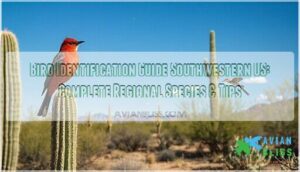 You’ll find success with a bird identification guide southwestern US by focusing on three key elements: visual field marks, habitat preferences, and seasonal timing.
Start by noting size, color patterns, and distinctive features like the roadrunner’s ground-running behavior or a vermilion flycatcher’s bright red plumage.
Pay attention to where you spot birds—desert washes attract different species than mountain forests.
The Southwest hosts over 400 species, from year-round residents like Gambel’s quail to seasonal migrants such as painted buntings.
Learning common calls helps distinguish similar-looking species, while understanding migration patterns reveals when rare visitors appear in your area.
Table Of Contents
- Key Takeaways
- Bird Identification Basics
- Southwest Bird Species Overview
- Regional Birding Hotspots
- Conservation and Engagement
- Frequently Asked Questions (FAQs)
- How can I identify a bird I took a picture of?
- What is the best free app for identifying birds?
- What are the 5 S’s of birding?
- How to find out what birds are in your area?
- What equipment do beginners need for birding?
- When is the best season for birding?
- How do migration patterns affect bird sightings?
- What safety precautions should desert birders take?
- How do weather conditions impact bird behavior?
- Conclusion
Key Takeaways
- Focus on three essential identification methods – You’ll succeed by combining visual field marks (size, color patterns, distinctive features), auditory cues (calls and songs), and habitat observation to accurately identify the Southwest’s 400+ bird species.
- Target prime birding locations and timing – You’ll find the best results by visiting water sources during dawn and dusk, exploring diverse habitats from desert washes to mountain forests, and timing your visits with seasonal migration patterns.
- Use technology and community resources – You’ll enhance your birding experience with apps like MERLIN Bird ID for instant identification, join local Audubon chapters for guided walks, and participate in citizen science programs like eBird to contribute valuable data.
- Prepare for desert birding challenges – You’ll need to carry plenty of water, wear sun protection, start early to avoid extreme heat, watch for rattlesnakes, and understand how weather conditions affect bird behavior and migration patterns.
Bird Identification Basics
You’ll master bird identification by combining three essential techniques: examining visual features like size, color, and behavior patterns, listening carefully to unique calls and songs, and observing the specific habitats where different species prefer to live.
These methods work together to help you confidently identify the Southwest’s diverse bird population, from desert roadrunners to mountain hummingbirds.
Visual Identification Methods
Visual bird identification relies on recognizing distinct Field Marks like wing bars, eye rings, and tail patterns.
Study Body Shape differences between species – hawks have broad wings while finches show compact builds.
Notice Plumage Variation across seasons and ages.
Observe Flight Patterns, from hummingbird hovering to hawk soaring.
Watch for Behavioral Cues like feeding habits and perching preferences for accurate southwest bird identification. Knowing distinct plumage features can greatly aid identification.
Auditory Identification Techniques
Beyond simply watching birds, your ears become powerful identification tools in the Southwest’s diverse soundscape.
Bird vocalizations reveal species through distinct song structure and call types, from the Great Horned Owl‘s deep hoots to Blue Jay’s harsh calls.
Many Southwest species display mimicry abilities.
Sound recording apps help you capture and compare bird calls for accurate identification later, utilizing sound recording apps.
Habitat Observation Importance
Observing bird habitats serves as your roadmap to successful identification in the southwestern US.
Different species prefer specific environments, making habitat observation essential for narrowing down possibilities during birdwatching expeditions.
Key habitat indicators to watch for:
- Water sources – attract different species than dry areas
- Vegetation types – determine which birds you’ll encounter
- Elevation changes – influence species distribution patterns
- Seasonal microhabitat shifts – affect bird presence and behavior
Southwest Bird Species Overview
The southwestern United States hosts an impressive array of nearly 600 documented bird species, making it a paradise for enthusiasts using any southwest bird guide. This remarkable species diversity stems from the region’s incredible habitat variety, spanning four major deserts, mountain ranges, and river systems across Arizona, New Mexico, southern California, and Nevada.
From desert saguaros to mountain peaks, the Southwest’s 600 bird species make every trail an adventure waiting to unfold.
You’ll encounter everything from the iconic Roadrunner darting through saguaro forests to elegant trogons in Arizona’s Cave Creek Canyon. Common birds New Mexico birders spot include Gambel’s Quail and various hummingbird species, while bird species Arizona showcases range from recovering California condors to colorful Pyrrhuloxia.
The region’s conservation status varies dramatically, with some species thriving while others face habitat threats. Regional endemics like the Curve-billed Thrasher make bird identification southwest particularly rewarding. Seasonal changes bring migration waves, transforming your birding experience throughout the year as different species arrive and depart.
Regional Birding Hotspots
You’ll find the Southwest’s most productive birding locations span diverse habitats, from Arizona’s Cave Creek Canyon where elegant trogons nest to California’s coastal areas that host migrating shorebirds.
These fifty documented hotspots across Arizona, New Mexico, southern California, and southern Nevada offer reliable access to the region’s 450+ documented species throughout different seasons.
Desert Birding Locations

Desert birding locations across the Southwest offer incredible opportunities for spotting unique species in their natural desert bird habitats. You’ll discover that water sources become magnets for both resident and migratory birding species, especially during dawn and dusk hours.
You can find a desert bird guide to help identify species.
- Joshua Tree National Park – Home to greater roadrunners, cactus wrens, and Gambel’s quail year-round
- Sonoran Desert regions – Perfect for spotting verdins, white-winged doves, and phainopeplas
- Oasis areas – Critical water source importance attracts hundreds of turkey vultures during migration
- Dawn and dusk periods – Best times for observing nocturnal desert birds like owls
- Remote desert washes – Where rare desert species like Le Conte’s thrashers hide
Mountain Birding Areas
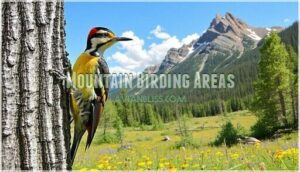
Mountains offer spectacular birding adventures across the Southwest’s diverse elevations.
You’ll find Williamson’s Sapsuckers breeding at Santa Fe Ski Basin, while Chiricahua Mountains host Spotted Owls and Gray-crowned Rosy Finches.
These high-altitude species thrive in montane habitats, from ponderosa pines to subalpine zones.
Rocky Mountain songbirds like Western Tanagers and nuthatches make mountain birdwatching unforgettable throughout southwestern US forests.
Coastal Birding Sites

Coastal habitats offer exceptional birding opportunities along the southwestern US shoreline.
These tidal zones and estuary birding locations attract diverse species during shorebird migration seasons. Seabird colonies thrive in these dynamic environments, making them prime birdwatching sites for enthusiasts seeking coastal birds.
- South Padre Island Nature Center – 300+ species in protected wetland habitat
- Morro Bay Estuary – diverse ecosystems attract various bird species
- Great Texas Coastal Birding Trail – year-round birding with seasonal highlights
Online Birding Communities

While physical locations offer amazing birding experiences, online forums connect you with fellow enthusiasts year-round.
Popular birdwatching websites provide ID assistance when you’re stumped by unusual species. Photo sharing platforms let you showcase discoveries and learn from experts.
Many sites organize community events and conservation action projects. Bird identification apps like MERLIN complement these digital birdwatching resources, creating supportive birdwatching community networks.
Conservation and Engagement

You can help protect Southwest birds by joining citizen science programs that track migration patterns, monitor nesting sites, and report species observations to researchers.
These conservation efforts, combined with community engagement through volunteer opportunities and habitat restoration projects, directly support the survival of over 450 bird species that call this diverse region home, which is a result of conservation efforts.
Threats to Bird Habitats
Multiple environmental pressures threaten southwest US birds and their precious habitats.
The Southwest’s feathered residents face an uphill battle against mounting environmental challenges threatening their survival.
Climate change accelerates habitat loss while invasive species disrupt delicate ecosystems.
Your bird identification guide becomes more meaningful when you understand these challenges:
- Habitat Loss – Over 80% of riparian areas have vanished due to human development
- Climate Change – Aridification forces habitats to shift upward or northward
- Invasive Species – Non-native plants destroy traditional nesting areas
- Human Development – Urban sprawl fragments critical bird conservation zones
Community Engagement Opportunities
Local birding groups offer countless ways to connect with fellow enthusiasts while supporting bird conservation efforts.
You’ll find educational workshops, guided walks, and volunteer programs that welcome beginners and experts alike.
These community science initiatives let you contribute meaningful data while learning from experienced birders.
Join Audubon chapters, nature centers, or online forums to discover birdwatching events that match your interests and schedule perfectly, and support local community efforts.
Citizen Science Programs
Beyond connecting with local groups, citizen science programs offer hands-on ways to make real conservation impact.
You’ll contribute valuable data collection while learning bird identification skills firsthand.
Popular programs include:
- eBird – Track songbirds southwest US sightings using their bird identification app
- NestWatch – Monitor breeding success through species monitoring efforts
- Christmas Bird Count – Join annual birdwatching southwest events for habitat restoration insights.
Many resources offer eBird birding products for enthusiasts.
Frequently Asked Questions (FAQs)
How can I identify a bird I took a picture of?
Like a detective following clues, you’ll solve your bird mystery by uploading your photo to the free MERLIN Bird ID app.
The app instantly identifies species using visual recognition technology and provides detailed information.
What is the best free app for identifying birds?
You’ll want MERLIN Bird ID from Cornell Lab of Ornithology.
It’s completely free and uses your photos, bird sounds, and location to identify species.
The app works offline and covers birds worldwide with incredible accuracy.
What are the 5 S’s of birding?
Like a compass guiding explorers, the 5 S’s of birding navigate you through successful bird watching: Size, Shape, Silhouette, Song, and Setting.
These fundamental elements help you identify species by observing physical characteristics and environmental clues.
How to find out what birds are in your area?
You’ll discover local birds by using apps like MERLIN Bird ID, checking regional field guides, joining birding groups, visiting nearby parks, and observing your backyard regularly to spot common species.
What equipment do beginners need for birding?
You’ll need binoculars (8×42 works great), a field guide or birding app like Merlin, and a notebook.
Start simple—these basics let you identify birds clearly while building your skills before investing in fancier gear.
When is the best season for birding?
Spring and fall offer peak birding opportunities when you’ll spot migrating species alongside year-round residents.
Early morning hours provide the most activity, though winter brings unique visitors to southwestern feeders and water sources, making it a great time for birding.
How do migration patterns affect bird sightings?
While resident birds stay put year-round, migrating species create dramatic seasonal shifts in what you’ll spot.
Spring and fall bring waves of travelers, doubling your potential sightings as birds follow ancient flyways through southwestern landscapes.
What safety precautions should desert birders take?
You’ll want to carry plenty of water, wear sun protection, and tell someone your birding route.
Start early to avoid extreme heat, watch for rattlesnakes, and stick to established trails in remote desert areas.
How do weather conditions impact bird behavior?
Like ancient mariners reading wind patterns, you’ll notice birds adjust their routines based on weather.
Cold fronts trigger migration waves, while storms send them seeking shelter in dense vegetation or protected areas.
Conclusion
Mastering avian identification in the desert landscape isn’t just about memorizing feathers and beaks—it’s about connecting with nature’s remarkable diversity.
Your journey through this bird identification guide southwestern US opens doors to countless discoveries, from spotting elusive roadrunners to identifying migrating warblers.
Remember, every birding expedition builds your expertise.
Whether you’re exploring desert washes or mountain trails, each observation contributes to conservation efforts while enriching your understanding of the Southwest’s incredible feathered residents, and this journey is part of a larger mission to understand and protect nature’s diversity.