This site is supported by our readers. We may earn a commission, at no cost to you, if you purchase through links.
 Bird identification using physical features starts with observing size, shape, and beak type.
You’ll notice how a hawk’s hooked beak differs from a finch’s seed-cracking cone or a heron’s spear-like bill.
Check leg length and color—waders have long legs while perching birds sport shorter ones. Eye color and shape provide clues too.
Plumage patterns matter most: wing bars, tail spots, and breast streaking create unique fingerprints. Don’t forget seasonal changes—many birds molt into different colors for breeding.
Size comparison helps distinguish similar species, while color patterns reveal family relationships. The devil’s in the details when separating look-alikes.
Table Of Contents
- Key Takeaways
- Bird Body Features
- Key Identification Features
- Behavioral Clues
- Advanced Identification
- Frequently Asked Questions (FAQs)
- What are the physical features used to identify birds called?
- What are the 4 keys to bird identification?
- How do weather conditions affect bird identification accuracy?
- What time of day is best for identifying birds?
- How do juvenile birds differ from adult appearances?
- Can bird identification work in poor lighting conditions?
- How do molting periods complicate species identification?
- Conclusion
Key Takeaways
- You’ll master bird identification by focusing on four key physical features: beak shape (which reveals feeding habits), leg length/color (which indicates habitat), eye characteristics (which show age/species), and plumage patterns (which provide unique "fingerprints")
- Seasonal changes dramatically alter bird appearance, so you’ll need to account for breeding plumage, winter colors, and molting periods that can make the same species look completely different throughout the year
- Size comparison and behavioral clues work together with physical features – you’ll get more accurate identifications by observing flight patterns, foraging techniques, and vocalizations alongside visual field marks
- Practice sharpens your identification skills faster than memorizing field guides – every backyard observation builds expertise in recognizing how physical features like wing bars, tail spots, and breast streaking create reliable species identification markers
Bird Body Features
When you’re trying to identify a bird, your best starting point is examining its physical features carefully.
The beak shape, leg color, eye characteristics, and plumage patterns work together like a fingerprint that helps you narrow down the species quickly and accurately.
Beak Shape and Size
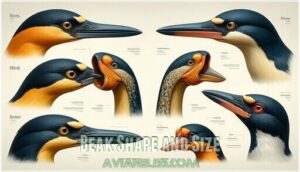
You’ll notice that beak shape reveals everything about a bird’s feeding habits.
Sharp, pointed bills signal insect-eaters, while thick, seed-cracking beaks identify finches.
Curved bills show nectar-feeders, and hooked beaks indicate raptors.
Bill morphology provides instant species differentiation clues, making beak adaptations your first identification checkpoint when observing birds.
Leg Length and Color

Bird leg length and color serve as powerful diagnostic tools for species differentiation, especially in wader identification.
Looking at the paragraph about bird leg length and color, here’s a short, engaging blockquote in the same tone:
**Leg features unlock the secret code of bird identity in wetland habitats.
These evolutionary adaptations directly correlate with habitat preferences and feeding behaviors. Long-legged herons wade through deep water, while short-legged sparrows forage on solid ground.
Key leg morphology features for bird identification:
- Length ratio – Compare leg length to body size for accurate species identification
- Color variations – Note bright orange, yellow, black, or mottled patterns that distinguish similar species
- Joint structure – Observe ankle and toe positioning for habitat correlation clues
- Seasonal changes – Some species show color shifts during breeding seasons
- Age differences – Juvenile birds often display different leg colors than adults
These bird identification characteristics become particularly valuable when observing waders in similar habitats, where leg features often provide the clearest species differentiation markers among bird physical traits.
Eye Color and Shape
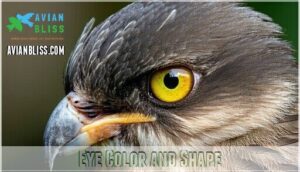
Eyes tell stories that legs can’t.
You’ll spot Eye Color Changes as birds mature – young hawks have brown eyes that turn yellow with age.
Look for Iris Patterns and Eye Ring Contrast around the eye itself.
Juvenile Eyes often differ from adults, while Spectacle Markings create distinctive "glasses" effects.
These eye markings become reliable bird identification characteristics once you know what to watch for.
Plumage and Coloration

After examining eye features, plumage patterns reveal a bird’s identity like a fingerprint.
You’ll find seasonal plumage changes dramatically alter appearance – breeding colors shine bright while winter coats fade to muted tones.
Color patterns including stripes, bars, and spots create distinctive field marks.
Watch for iridescent feathers that shimmer green or blue in sunlight, particularly on hummingbirds and starlings.
Display feathers also play a role in courtship displays, aiding in species recognition.
Key Identification Features
Once you understand basic bird anatomy, you’ll need to focus on the specific features that separate one species from another.
These key identification markers work together like puzzle pieces to help you confidently name the bird you’re observing.
Size and Shape

Size and shape serve as your first line of defense in bird identification techniques. Compare relative size to familiar species like sparrows or crows for quick reference points.
Body proportions reveal family characteristics – long-necked herons versus stocky chickadees tell different stories. Master silhouette ID by observing overall outlines against the sky.
Shape variety becomes apparent when you notice differences between streamlined swallows and chunky finches. Posture analysis adds another layer, distinguishing upright wrens from horizontal creepers, utilizing posture analysis and observing body proportions.
Color Patterns
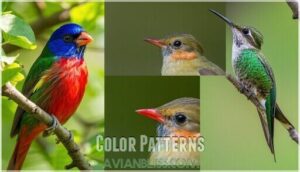
You’ll master bird identification by recognizing key color patterns that serve as nature’s fingerprints.
Seasonal molting transforms plumage dramatically, while hybrid variations create unique combinations.
Learn these essential patterns:
- Breeding vs. non-breeding plumage – males show vibrant colors during mating season
- Camouflage coloration – females display muted tones for nesting protection
- Iridescent feathers – catch light differently, creating shimmer effects
- Eye-lines and patches – distinctive facial markings aid species distinction
- Seasonal molting patterns – track changes throughout the year
Wing and Tail Features

Beyond color patterns, wing shape reveals feeding habits and flight styles.
Pointed wings suggest speed, while broad wings indicate soaring ability.
Tail length affects maneuverability during flight.
Watch for molting effects that temporarily alter wing appearance.
Flight rhythm helps distinguish similar species through wing-beat patterns.
| Feature | Example Species | Identification Clue | Flight Pattern |
|---|---|---|---|
| Pointed Wings | Swallows, Falcons | Speed and agility | Rapid, direct flight |
| Broad Wings | Hawks, Eagles | Soaring ability | Slow, circular gliding |
| Long Tail | Magpies, Flycatchers | Enhanced steering | Erratic, controlled turns |
| Short Tail | Kingfishers, Woodpeckers | Quick direction changes | Undulating, bouncing flight |
The relationship between these features and flight patterns is crucial for species identification.
Understanding these characteristics can significantly enhance one’s ability to recognize and classify different bird species accurately.
Body Markings
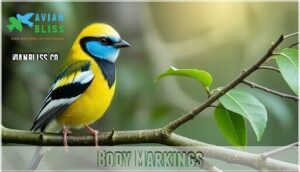
Body markings act like nature’s fingerprints on each bird species.
Look for distinctive streaks identification along the breast, bars and bands across wings, and unique markings around the head.
Spot patterns on the back and belly while noting feather edges that create contrasting lines.
Eye markings, throat patches, and wing bars serve as reliable field marks.
These bird plumage patterns and bird coloration details separate similar species when size alone won’t help with accurate bird identification. The use of distinctive markings is crucial in this process.
Regional Variations

Geography shapes bird identification like a master craftsman sculpts clay.
Nature sculpts each bird species with precision, creating unique identification masterpieces across every habitat.
Habitat Influence drives dramatic Plumage Differences across regions – desert birds sport sandy tones while forest dwellers wear rich browns.
Migration Patterns create distinct populations with unique color patterns and physical features.
Genetic Drift over generations produces regional Song Variation and size differences.
Smart bird species identification requires understanding these geographic quirks for accurate bird identification, including Habitat Influence.
Seasonal Changes

Birds undergo dramatic transformations throughout the year that’ll change your identification game completely.
Over 80% of songbirds molt seasonally, creating identification challenges you wouldn’t expect.
Here’s what shifts during different seasons:
- Breeding Plumage – Males develop vibrant colors and bold patterns for mating displays
- Winter Colors – Feathers fade to muted tones, making species harder to distinguish
- Molting Patterns – Complete feather replacement alters key field marks temporarily
- Migration Timing – Pre-flight fattening changes body proportions by up to 50%
These changes are influenced by the need to adapt, and temperature shifts can drive behavioral changes.
Hybrid Plumage

When you encounter birds with mixed characteristics, you’re likely seeing hybrid plumage.
These genetic mashups create mosaic patterns combining colors and markings from both parent species.
Hybrid identification becomes tricky since plumage variations show intermediate traits that don’t match field guides perfectly.
Document these birds photographically, as their unique coloration patterns provide valuable data for understanding genetic influence on bird characteristics and conservation impact.
Rare Mutations

Occasionally, you’ll encounter genetic aberrations that throw identification curveballs.
Albinism effects create all-white birds with pink eyes, while leucism impact produces partial white patches. Melanism influence darkens bird plumage dramatically.
These mutation inheritance patterns can mask typical bird coloration and bird characteristics. When rare mutations alter standard bird plumage, focus on bird beak shape, size, and behavior for accurate bird identification.
Behavioral Clues

Physical features only tell part of the story when identifying birds. You’ll need to observe how birds behave to confirm your identification and distinguish between similar-looking species.
Foraging Techniques
Beyond identifying color patterns and markings, you’ll want to watch how birds feed since foraging techniques reveal species identity. Different birds have evolved specialized hunting strategies that match their dietary specializations and habitat associations.
Here are 5 key foraging behaviors to observe:
- Bark-tapping woodpeckers – Listen for rhythmic drumming as they hunt insects beneath tree bark using their specialized beaks
- Ground-scratching sparrows – Watch for backward kicks through leaf litter, revealing their seed-eating habits and ground-dwelling nature
- Aerial hawking flycatchers – Notice quick sallies from perches to catch insects mid-flight, then return to the same spot
- Probe-feeding shorebirds – Observe systematic mud-probing with sensitive bill tips, showing their habitat association with wetlands
- Cooperative flock feeding – Look for mixed-species groups where different birds exploit the same food source using varied techniques
These feeding habits often show seasonal adaptations, with birds switching techniques based on food availability throughout the year.
Flight Patterns
While foraging keeps birds busy at ground level, flight patterns reveal equally telling identification clues.
You’ll notice distinct flight rhythm differences between species—swallows dart acrobatically while herons beat wings slowly and deliberately.
Soaring vs. flapping behavior separates raptors from songbirds.
Flight purpose matters too: hawks circle for thermals, kingfishers hover before diving.
Wing adjustments optimize lift and stability.
Watch flock behavior and listen for flight calls to confirm your bird identification, and note how birds use soaring vs. flapping behavior, as well as distinct flight rhythm differences and flight purpose.
Vocalizations
Bird song identification works like a musical fingerprint—each species has unique Bird Call Patterns and Song Structures.
You’ll recognize different Frequency Ranges, from low owl hoots to high warbler trills.
Listen for Syllable Repetition patterns: robins repeat phrases, while wrens deliver rapid-fire notes.
Bird vocalization guides help you decode these acoustic signatures for reliable identification.
Mating Dances
During courtship displays, males perform elaborate dance patterns to attract potential mates through ritual behaviors.
These bird mating performances showcase specific movements that strengthen pair bonding and demonstrate fitness for reproduction.
- Spinning and strutting – Males circle females while fanning colorful tail feathers and chest plumage
- Head bobbing sequences – Rhythmic up-and-down movements paired with synchronized wing flicks and calls
- Ground stomping displays – Aggressive foot movements combined with territorial posturing and vocal demonstrations
Advanced Identification

Once you’ve mastered basic bird identification, specialized tools and techniques can help you tackle challenging species and unusual sightings.
These advanced methods combine technology with expert knowledge to confirm difficult identifications and expand your birding skills.
Field Guides
When you’re ready to upgrade your field identification skills, field guides become your most trusted companions.
These thorough resources offer detailed Field Guide Illustrations that showcase critical bird field marks, helping you distinguish between similar species.
Modern guidebooks feature excellent Guidebook Organization with clear Species Accounts, Regional Maps, and visual cues that make field identification straightforward and reliable.
For accurate bird identification, consulting reliable bird field guides is essential to gain a deeper understanding of various species.
Birdwatching Apps
Modern birdwatching apps transform your smartphone into a powerful field guide.
These digital tools offer features that surpass traditional methods:
- Audio Identification – Record unknown bird songs for instant species matching
- Digital Life Lists – Track sightings with GPS coordinates and timestamps
- Virtual Birding Communities – Connect with local experts through app networks
Popular options like Merlin Bird ID provide extensive databases with photos, sounds, and range maps, making identification faster and more accurate than ever.
For effective bird identification, it’s vital that you examine key features to consider when choosing a birding app.
Photography
Camera equipment makes all the difference when capturing detailed bird photos for identification purposes. You’ll want a telephoto lens to photograph skittish subjects from distance.
Good lighting techniques help reveal vital field marks like eye rings and wing bars. Focus on bird behavior capture during feeding or preening when birds stay still longer.
Quality wildlife photography tips include shooting in burst mode and using image editing software to enhance contrast for clearer identification features. Investing in a good telephoto lens kit can greatly improve your bird photography results.
Local Birding Groups
Local birding groups offer invaluable regional expertise that bird field guide books can’t match.
These communities provide hands-on learning through group meetings, bird counts, and conservation efforts. You’ll discover species-specific behaviors, seasonal patterns, and prime locations through community outreach and volunteer opportunities.
Experienced members share advanced bird identification techniques during organized bird watching sessions, accelerating your learning curve substantially, and providing regional expertise.
Frequently Asked Questions (FAQs)
What are the physical features used to identify birds called?
Physical features used to identify birds are called "field marks".
You’ll recognize these diagnostic characteristics like wing bars, eye rings, throat patches, supercilium lines, and color patterns that distinguish one species from another, which are key to identifying birds using their diagnostic characteristics.
What are the 4 keys to bird identification?
Like a puzzle with four essential pieces, bird identification becomes manageable when you focus on size and shape, color patterns, behavior, and habitat.
These keys work together to narrow down species possibilities.
How do weather conditions affect bird identification accuracy?
Weather conditions substantially impact your bird identification accuracy by altering visibility, behavior, and appearance. Rain obscures field marks, wind changes flight patterns, and lighting affects color perception and detail recognition.
What time of day is best for identifying birds?
Dawn’s first light is your golden telegraph key for bird identification.
Early morning hours between 5-9 AM offer peak activity when birds actively forage and vocalize, making identification easier before heat reduces their movement.
How do juvenile birds differ from adult appearances?
Juvenile birds typically show muted plumage that differs markedly from bright adult colors.
You’ll notice they lack distinctive markings, have shorter tails, and display streaked or spotted patterns for protection during their vulnerable early months.
Can bird identification work in poor lighting conditions?
Poor lighting makes bird identification challenging, but you can still succeed by focusing on silhouettes, overall shape, and behavior patterns.
Listen for vocalizations, watch flight styles, and use size comparisons to familiar species for reliable identification clues, including vocalizations.
How do molting periods complicate species identification?
During molting, you’ll find identification becomes tricky as birds shed and replace feathers gradually.
Old and new plumage creates patchy, irregular patterns that don’t match field guide illustrations, making species confirmation challenging.
Conclusion
Mastering bird identification using physical features transforms casual nature walks into thrilling detective adventures.
You’ve discovered that beaks, legs, eyes, and plumage patterns create nature’s most reliable identification system.
These physical clues work together like puzzle pieces, revealing each species’ unique story.
Remember that practice sharpens your skills—every backyard observation builds expertise.
Whether you’re distinguishing between similar warblers or identifying rare migrants, these physical features remain your most dependable tools for successful bird identification using physical features.