This site is supported by our readers. We may earn a commission, at no cost to you, if you purchase through links.
 A well-placed nest box can boost occupancy rates by 80%, while poor placement leads to empty boxes season after season. The difference isn’t luck—it’s understanding how cavity-nesting birds assess habitat quality, predation risk, and microclimate conditions before committing to a site.
Most backyard birders install boxes at the wrong time, in the wrong location, or with designs that don’t match their target species’ behavioral requirements. Proper placement requires matching regional breeding schedules, selecting habitat that mirrors natural nesting territories, and positioning boxes to minimize thermal stress and predator access.
Strategic installation transforms a simple wooden structure into a viable breeding site that fosters reproductive success across multiple seasons.
Table Of Contents
Key Takeaways
- Installing nest boxes by early February in southern regions and mid-to-late March in northern areas aligns with species-specific breeding schedules and can boost occupancy rates by up to 80%, while late installation reduces success by 20% or more.
- Matching habitat to species requirements is essential—bluebirds need open grasslands with minimal canopy, Carolina wrens select woodland edges with high tree density, and proper habitat selection eliminates territorial competition through natural niche partitioning.
- Predator deterrence through metal pole mounting, cone baffles, and proper entrance hole sizing (1.5 inches for bluebirds, 1.125 inches for chickadees) increases nest success rates by 6.7% while strategic spacing of 250-300 feet between bluebird boxes prevents territorial conflicts.
- Annual maintenance between September and February, including removal of old nesting material and boiling water sterilization for parasite control, combined with legal compliance under the Migratory Bird Treaty Act protects both current and future breeding success.
When to Install Bird Nesting Boxes
Timing your nest box installation right can make the difference between an empty box and a thriving family of fledglings. The ideal window shifts depending on where you live and which species you’re hoping to attract.
Let’s break down the key timing considerations to improve your success.
Timing by Region (North Vs. South)
When you install your nest box depends on where you live. In southern regions, you’ll want your boxes up by early February, while northern installations should be complete by mid to late March. Climate impact matters—southern bird species start nesting in late February, but northern populations wait until late March or April. Installing outside these windows can drop occupancy rates by 20% or more.
Breeding differences between regions mean southern nesters claim their nesting site weeks earlier, so timing your nest box placement right gives every bird species the best chance to discover and use your boxes. To improve your chances, consider species-specific placement needs.
Early Nesters and Breeding Seasons
Some species don’t wait for spring’s official arrival—owls, woodpeckers, and chickadees start scouting for nest sites as early as February, weeks before most backyard birds even think about breeding. Understanding these regional variations in breeding season timing helps you avoid nesting competition. Climate impact varies dramatically:
- Owls begin owl nesting in February across most regions
- Early nesters claim prime nesting sites by mid-March
- Multiple broods require established nest box placement
- Late installation reduces access for nesting birds and bird species
Benefits of Early Placement
When you give birds a head start on discovering your boxes, you’re not just being helpful—you’re stacking the odds in favor of successful nesting, stronger broods, and species that might otherwise get shut out of prime real estate. Early placement lets bird species claim territory before competition heats up, establishes familiarity with the nesting habitat, and promotes multiple broods throughout the season.
Early nest box installation stacks the odds for nesting success by letting birds claim territory before competition peaks
Your birdhouse becomes part of their mental map, increasing nesting success when breeding instincts kick in.
Choosing The Best Location for Nest Boxes
Finding the right spot for your nest box can make all the difference between a thriving bird family and an empty box. The habitat around your box determines which species will claim it as home.
Let’s look at the key environments that attract different birds and how to avoid common placement mistakes.
Matching Habitat to Bird Species
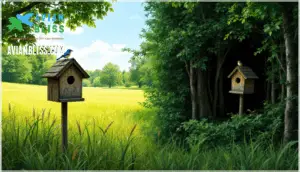
You can’t expect bluebirds in deep woods or Carolina wrens in open fields—each bird species picks habitat based on hardwired preferences shaped by their ecological niche. Matching the habitat around your nest box to species-specific requirements determines whether birds will actually move in.
- Eastern Bluebirds occupied 11 boxes in grassland habitats with over 80% annual ground cover and minimal canopy, showing strong preference for open fields with scattered trees
- Carolina Wrens nested exclusively in woodland settings with high tree density and overhead canopy, choosing boxes near forest edges rather than open clearings
- Carolina Chickadees selected all 3 boxes in grassland habitats, demonstrating site specificity similar to bluebirds despite different foraging behavior
- Western Bluebirds showed occupancy tied to distance from streams (99% of models), grassland percentage (86%), and oak woodland proximity (85%), illustrating how multiple habitat features drive species distribution
Niche partitioning prevents competition—bluebirds and wrens showed near-zero overlap in box location preferences, allowing both species to coexist without territorial conflict. Different nest box materials can affect fledgling success rates.
Forest Edges, Meadows, and Water Sources

Forest edges, meadows, and water sources act as ecological magnets—each landscape feature pulls in different species based on what they need to survive and reproduce. Chickadees and nuthatches choose forest edges where mature trees meet open spaces, while bluebirds claim meadows with scattered perches.
Tree swallows and wood ducks settle near aquatic habitats, drawn by insect abundance and nesting resources that water sources provide.
Urban and Cultivated Settings

Urban gardens and cultivated landscapes succeed as nesting sites when they mirror the structural elements birds evolved to recognize—open sightlines, perching opportunities, and adequate shelter. Suburban nesting habitat sustains diverse avian populations when nest box placement follows these principles:
- Golf courses provide open sightlines with scattered trees that bluebirds prefer
- Gardens with mixed vegetation offer shelter and foraging zones for multiple species
- Cultivated fields create meadow-like conditions when pesticide-free
Urban habitats work when birdhouses replicate natural conditions these species need.
Avoiding Hazardous Areas (Pesticides, Herbicides)

Chemical contamination transforms otherwise suitable habitats into death traps, where nestlings consume poisoned insects or absorb toxins through their developing tissues. Pesticide exposure decimates insect populations essential for nestling growth, while herbicide effects eliminate seed-producing plants crucial for adult survival. Organic gardening practices and pesticide-free management create safe habitats that sustain bird conservation efforts.
Wildlife management requires maintaining buffer zones between treated areas and nest boxes. By choosing locations with documented pesticide-free practices, you can protect nesting birds.
| Hazard Type | Impact on Nesting Success |
|---|---|
| Lawn pesticides | Contaminated insects reduce nestling survival rates |
| Agricultural herbicides | Eliminate foraging habitat and reduce food availability |
| Water contamination | Affects aquatic insects essential for swallows and waterfowl |
| Treated wood structures | Direct toxin exposure through contact with nest materials |
| Spray drift zones | Airborne chemicals settle on nearby vegetation and water |
Selecting and Building The Right Nest Box

Once you’ve chosen the right location, the nest box itself becomes your next consideration. The materials you select, the dimensions you measure, and the design features you incorporate all determine which species will nest successfully.
Let’s examine the key construction elements that make a nest box both safe and appealing to your target birds.
Wood Selection and Natural Materials
Cedar, oak, and beech don’t just resist rot—they’re nature’s insurance policy for a nest box that lasts. Look for nontreated wood with walls at least ¾-inch thick—material thickness matters because it provides insulation properties that buffer temperature swings.
Natural alternatives like cypress work too, mimicking the natural environment cavity-nesting birds seek.
Ethical sourcing promotes your wood selection upholds sustainable forestry while creating safe nesting material conditions.
Species-Specific Dimensions and Entry Holes
Entry hole diameter functions as your first line of defense—getting it wrong invites disaster. Bluebirds need 1.5 inches to deter starlings, chickadees thrive with 1.125 inches, and owls require up to 3 inches for access.
Proper birdhouse specifications boost fledgling survival by 35% and prevent nest abandonment.
- Interior depth matters: Bluebirds use 8–10 inches, chickadees 8 inches, Wood Ducks 24 inches
- Hole placement deters predators: Position 6–10 inches above floor for bluebirds, 6 inches for chickadees
- Shape variation increases box occupancy: Carolina Wrens prefer slots, Barn Owls elliptical designs
Ventilation, Drainage, and Roof Design
Without proper airflow and moisture control, even a perfectly sized entrance hole can’t prevent lethal overheating or fungal infections inside the nest cavity. Drill ¼-inch ventilation holes near the roof to regulate temperature—essential during heat waves. Add drainage holes in the floor to expel rainwater that seeps inside.
Your roof overhang should extend 1–2 inches forward, shielding the entrance from direct sun exposure and rain penetration while maintaining stable nest box conditions.
Safe Paints and Non-Toxic Finishes
The paint you choose can leach toxins directly into porous wood, contaminating the nest cavity where eggs and nestlings develop over weeks of exposure.
Use nontoxic paint in earth tones—browns, grays, greens—on the exterior only to deter predators while weatherproofing nest box materials.
Leave the interior unpainted to prevent chemical contact with developing birds, as untreated wood surfaces support natural nest-building behavior without introducing synthetic compounds into the birdhouse environment.
Installing Nest Boxes for Maximum Success

Getting your nest box up is just the first step—how you install it determines whether birds will actually move in. The height, direction, spacing, and protective features all play critical roles in attracting your target species while keeping them safe.
Let’s walk through the practical steps that turn a good nest box into a thriving home.
Ideal Height and Direction
Mount your nest box at the right height and direction, and you’ll transform a simple wooden structure into prime real estate for cavity-nesting birds. Height range varies by species—bluebirds thrive at 5–6 feet, while chickadees prefer 6–15 feet for predator avoidance. Face openings northeast or east for ideal nest box direction, minimizing sun exposure while providing wind protection and mounting stability.
Key nest box placement guidelines:
- Protect vulnerable nestlings by balancing height for safety—too low invites predators, too high complicates monitoring.
- Shield growing families from afternoon heat stress by directing entrances away from prevailing winds and harsh western sun.
- Honor species variation in your installations, recognizing that cavity-nesters have evolved distinct preferences for vertical territory.
Proper Spacing and Pairing Techniques
Once you’ve secured the perfect height and orientation, spacing your boxes properly becomes the deciding factor between peaceful nesting success and territorial chaos. Most species defend territories vigorously—bluebirds need 250–300 feet between nest boxes to prevent conflict, while chickadees require 100–150 feet. Paired nest boxes placed 10–25 feet apart can reduce competition by allowing tree swallows and bluebirds to claim separate territories within shared nesting habitat.
| Species | Minimum Spacing | Colonial Nesting |
|---|---|---|
| Bluebirds | 250–300 feet | No |
| Chickadees | 100–150 feet | No |
| Tree Swallows | 100 feet (or paired) | No |
| Purple Martins | Clustered compartments | Yes |
Understanding species compatibility and density impact prevents abandonment while honoring territorial boundaries.
Predator Deterrence and Safety Features
Your carefully spaced boxes deserve strong predator protection. Mounting on smooth metal poles rather than trees blocks climbing predators like raccoons and snakes, while cone-type or stovepipe baffles boost nest success rates by 6.7% on average. Smaller entrance holes deter squirrels, and roof extensions exceeding five inches prevent overhead attacks.
These behavioral strategies and material durability measures—combined with guard effectiveness and thoughtful mounting considerations—create solid predator prevention that transforms hole modifications into lifesaving deterrents.
Considering Microclimates and Wind
Because wind exposure and temperature pockets shape nesting success as much as predator guards do, you’ll want to study your site’s microclimates before finalizing box placement. Wind direction matters—position entrances away from prevailing winds to prevent rain infiltration and chilling.
Sun exposure and thermal mass interact with local humidity to create elevation effects that influence bird nesting habits, so east-facing nest box locations in sheltered spots often yield the strongest outcomes across varied microclimates and wind conditions.
Maintaining and Monitoring Nest Boxes

Installing a nest box is just the beginning—keeping it functional and safe requires regular attention. Proper maintenance protects nesting birds from parasites and structural failures, while monitoring helps you track breeding success and address problems early.
Understanding the legal requirements for interacting with nests and eggs makes sure you’re supporting birds responsibly.
Annual Cleaning and Parasite Control
Between September and February, you’ll want to thoroughly clean your nest boxes to prevent parasite buildup and bacterial infections that can harm next season’s residents. This annual maintenance involves removing old nesting material and flushing the interior with boiling water, which naturally kills parasites without harsh chemicals.
Safe cleaning methods protect both you and future occupants, while proper disposal methods guarantee parasites don’t spread to nearby boxes or natural cavities where birds nest.
Inspecting for Damage and Repairs
After your winter cleaning session, examine each box for structural integrity. Cracked walls, loose hinges, warped roofs, and entrance holes enlarged by woodpeckers all compromise nesting success and require immediate attention.
Weather damage weakens joints and splits wood, while predator damage may widen openings or scratch interior surfaces. Replace deteriorated components with untreated repair materials that match original specifications, guaranteeing nest box safety remains uncompromised.
Regular monitoring of nest boxes prevents small issues from becoming safety hazards that discourage occupancy during critical breeding periods.
Monitoring During Breeding Season
Weekly checks during the breeding season transform you from a passive landlord into an active partner in your birds’ nesting success. Observe egg development stages, assess chick health indicators, and document predator activity without disturbing occupants.
Monitoring nest boxes reveals patterns in nest abandonment risks while tracking nestling survival rates. Your attentive presence during breeding season directly influences fledgling success and overall nesting outcomes.
Legal Considerations for Eggs and Old Nests
Federal law under the MBTA protects nesting birds and makes MBTA violations costly—fines reach $250,000 for destroying active nests. You can only remove inactive nests after birds finish breeding. Permit applications for egg removal require months of processing and multi-agency approval. Enforcement actions have resulted in substantial penalties, like the $372,750 fine for unpermitted cliff swallow nest removal.
Regional laws vary, so verify state requirements. Between September and January, you can clean empty boxes without permits, supporting bird conservation and species preservation through responsible wildlife conservation practices.
Frequently Asked Questions (FAQs)
What attracts specific bird species to my yard?
Different bird species show up when you meet their habitat requirements: food sources like native plants, water features for drinking and bathing, shelter availability through vegetation layers, and predator control measures determine which cavity-nesting birds choose your yard.
How do I deter non-native or invasive birds?
House Sparrows and European starlings disrupt native species support through aggressive nest box competition.
Active management includes reducing entrance holes to 25 inches, blocking boxes temporarily, and habitat modification that discourages invasive species while favoring target birds through strategic box design.
Can multiple species share one nesting box?
Multiple bird species can’t share one nest box simultaneously, as territory overlap triggers direct competition.
Species compatibility breaks down when resource partitioning fails—competing predators and invasive species disrupt coexistence strategies entirely.
What materials make nest boxes predator-proof?
Thick wood planks with metal sheathing around entrance guards create effective barriers against predators. Baffle designs beneath boxes prevent climbing access.
Location matters—predator guards and deterring predators through proper placement reduce risks more than predator decoys or prevention materials alone.
How do weather extremes affect nesting success?
Extreme weather can be absolutely catastrophic to nesting outcomes. Heat stress kills embryos when ventilation fails, while flood impact destroys ground-level boxes. Drought effects reduce insect availability, and storm damage compromises structural integrity.
Climate change intensifies these challenges, making temperature regulation through partial shade and proper sun exposure critical for survival.
Conclusion
Think of bird nesting box placement guide strategy like mastering an old telegraph system—precision in timing and location determines whether your message arrives. Successful installation hinges on early placement that aligns with regional breeding schedules, habitat selection that mirrors natural territories, and positioning that reduces predation while managing microclimate stress.
Each variable—height, orientation, spacing, ventilation—compounds to create conditions cavity-nesters instinctively recognize as viable. When you match species-specific requirements to site characteristics, you’re not just offering shelter; you’re engineering reproductive opportunity that persists across seasons.
- https://www.frontiersin.org/journals/ecology-and-evolution/articles/10.3389/fevo.2023.1258185/full
- https://www.vinehousefarm.co.uk/partner/bto
- https://www.allaboutbirds.org/guide/Western_Bluebird/lifehistory
- http://nestwatch.org/learn/all-about-birdhouses/
- http://nabluebirdsociety.org/PDF/FAQ/NABS%20factsheet%20-%20Getting%20Started%20-%2024May12%20DRAFT.pdf