This site is supported by our readers. We may earn a commission, at no cost to you, if you purchase through links.
 Bird nesting season behavior in Alabama transforms from February through July as different species follow unique timing patterns.
Eastern Bluebirds start late February, while Carolina Wrens lay eggs by mid-March. You’ll notice year-round residents like Northern Cardinals and Blue Jays can breed multiple times annually, but seasonal visitors like Ruby-throated Hummingbirds time their arrival with peak food availability.
Environmental factors play pivotal roles – temperature swings reduce grassland species’ success, while heavy rainfall triggers nest abandonment more than cold snaps. Urban birds face ten times higher abandonment rates due to human activity stress.
Understanding these intricate timing patterns reveals fascinating survival strategies that determine breeding success across Alabama’s diverse bird communities, influenced by peak food availability and human activity stress.
Table Of Contents
Key Takeaways
- You’ll find Alabama’s nesting season runs February through July, with year-round residents like cardinals starting earliest while seasonal visitors like hummingbirds time their arrival with peak food sources.
- Environmental factors dramatically impact success rates – temperature swings hit grassland species hardest, heavy rainfall causes more nest abandonment than cold snaps, and urban birds face ten times higher abandonment rates due to human activity stress.
- You can support nesting birds by installing properly placed nest boxes 5-15 feet high, planting native species like oaks and elderberries, providing consistent water sources, and avoiding yard chemicals during breeding season.
- Different species show distinct nesting strategies – some like mourning doves raise up to five broods annually, while others focus on single clutches, with males and females sharing construction duties differently across species.
Bird Nesting Season in Alabama
Alabama’s nesting season kicks off in early spring when resident birds like Northern Cardinals and Carolina Wrens begin their breeding rituals.
While summer visitors such as Ruby-throated Hummingbirds arrive to establish territories, you’ll notice peak activity from March through July.
Though some species like Mourning Doves can nest multiple times extending into early fall, this period marks the culmination of the breeding season for most species, with peak activity being a notable characteristic of this time.
Timing of Nesting for Common Species
Alabama’s nesting cycles typically start surprisingly early, with some species beginning their breeding seasons in late February.
Understanding nesting timing helps you better support local bird populations during these critical periods.
- Eastern Bluebird – Starts nesting late February, peaks March-April
- Carolina Wren – First eggs by mid-March, earlier than most songbirds
- Mourning Dove – Begins late February, raises up to five broods
- American Robin – Initial clutches late March to early May
- Northern Cardinal – Initiates nesting in March with multiple opportunities
Year-Round Vs. Seasonal Nesters
You’ll notice dramatic differences in how Alabama’s birds approach their breeding cycles.
Some species stick around all year, while others follow strict migration patterns tied to seasonal changes.
| Year-Round Nesters | Spring/Summer Visitors | Winter Breeders |
|---|---|---|
| Northern Cardinal | Summer Tanager | Yellow-rumped Warbler |
| Carolina Wren | Ruby-throated Hummingbird | White-throated Sparrow |
| Blue Jay | Wood Duck | American Robin |
Year-round residents like cardinals and wrens can breed multiple times annually, starting as early as March.
Their nesting strategies include flexible site selection and adaptive nesting materials.
Seasonal visitors time their breeding cycles with peak food availability, while winter species capitalize on reduced competition for prime nesting locations.
Environmental Factors Influencing Nesting
Weather patterns shape every aspect of your birds’ nesting success, from timing to survival rates.
Climate change disrupts traditional nesting habitat conditions, while temperature extremes and rainfall directly impact nest site selection and food availability.
Urban birds are also affected by human activity stress, which can lead to nest abandonment.
- Temperature swings during early breeding reduce nesting success, especially for grassland species
- Heavy rainfall triggers nest abandonment more than cold snaps in species like Great Tits
- Timing mismatches between insect emergence and peak nesting affect chick survival rates
Mating Rituals and Courtship Behaviors

You’ll notice Alabama’s birds get busy with singing, dancing, and even a few flashy feather displays when breeding season arrives.
These courtship behaviors help attract mates, defend territories, and sometimes look a lot like a backyard talent show.
Song and Display Behaviors
During spring’s peak activity, male birds exhibit elaborate courtship songs and visual displays to attract potential mates.
You’ll hear Northern Cardinals whistling sharp "birdy-birdy-birdy" calls while flashing crimson plumage.
Carolina Wrens belt out loud "tea-kettle" serenades, and Blue Jays perform acrobatic flights with spread wings.
These bird vocalizations and mating calls demonstrate complex avian mating rituals essential for successful bird pair bonding.
Territorial Defense During Breeding
Male birds transform from melodic singers into fierce warriors when breeding season arrives.
Territorial marking intensifies as they chase intruders from property lines, while breeding aggression peaks during mate guarding periods.
You’ll observe border disputes escalating into aerial battles, with nest vigilance driving constant patrols.
These bird nesting habits showcase how avian mating rituals include aggressive territorial defense behaviors.
Mate Selection Strategies
Alabama birds use complex mate choice strategies that shape nesting season behavior.
Cardinals prefer partners displaying vibrant plumage—bright red males signal genetic compatibility and health. Blue Jays select mates through elaborate courtship displays involving head-bobbing and feeding rituals.
These mating signals help guarantee pair bonding success. Wrens choose partners who demonstrate superior nest-building skills, while mockingbirds favor mates with extensive song repertoires, indicating cognitive fitness for raising offspring.
Understanding bird behavior patterns is vital for recognizing the importance of courtship displays in mate selection, which ultimately contributes to the birds’ overall genetic compatibility.
Nest Building and Site Selection
Once you’ve witnessed the courtship displays, you’ll discover that nest construction reveals each species’ unique architectural preferences and material choices.
The division of labor between male and female birds during this critical phase varies dramatically across Alabama’s diverse bird community, and this variation is a key aspect of their unique behaviors.
Types of Nests Built by Alabama Birds
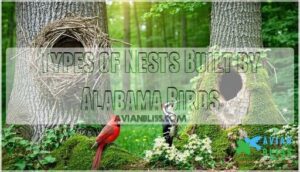
You’ll discover fascinating diversity among Alabama’s bird architects during nesting season behavior.
Cardinals craft cup-shaped structures using twigs and grass, while woodpeckers excavate cavities in trees.
Wrens weave dome-like nests with small entrances for protection.
These nesting strategies reflect each species’ unique needs within Alabama habitats, showcasing remarkable bird architecture that maximizes survival rates.
The variety of nests, including those with nesting location adaptations, demonstrates the complexity of bird nesting behaviors in different environments, highlighting the importance of unique needs.
Preferred Nesting Locations and Materials
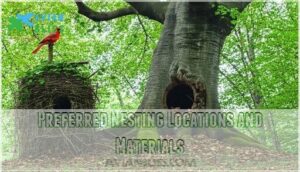
When choosing where to build, birds prioritize safety and accessibility over convenience. Nest site selection involves careful evaluation of predator protection, food access, and structural support for successful breeding.
- Tree cavities in snags and mature trees attract woodpeckers, bluebirds, and wrens seeking secure shelter
- Dense, thorny shrubs provide branch preferences for cup-nesting species like cardinals and mockingbirds
- Nesting materials include twigs, moss, feathers, and spider silk for structural integrity and insulation
- Water proximity increases habitat features appeal, especially for herons, kingfishers, and waterfowl
- Urban birds adapt nesting material collection to include safe artificial options alongside natural fibers
Birds often gather nesting plant materials to construct their nests.
Role of Males and Females in Nest Construction

You’ll find that nest construction divides labor between partners, with Male Builders often handling structural framework while Female Gatherers collect specific Nest Material.
This Cooperative Breeding approach varies by species – cardinals share duties equally, while wrens see males constructing multiple options for female approval.
Understanding these nesting cycles helps with proper bird nesting boxes placement and nesting habitat preservation efforts in your yard.
Effective nest box installation requires knowledge of ideal bird nesting boxes to support local species.
Parental Care and Feeding Young
Once the eggs hatch, Alabama’s parent birds enter their most demanding phase, working tirelessly to feed hungry chicks every few minutes from dawn to dusk.
You’ll witness remarkable teamwork as both parents coordinate feeding schedules, with some species like cardinals and blue jays making over 100 feeding trips per day to satisfy their rapidly growing offspring.
Incubation Roles and Patterns
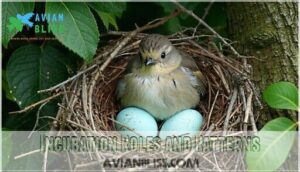
Once eggs are laid, you’ll observe fascinating egg incubation and brooding behavior patterns among Alabama’s birds.
Parental roles vary substantially – cardinals share duties equally, while mockingbirds rely heavily on females.
Incubation periods range from 11-14 days for most songbirds.
Temperature regulation becomes critical, with parents rotating shifts to maintain ideal warmth.
These avian reproductive cycles showcase nature’s remarkable precision in timing.
Feeding Methods and Diet of Chicks
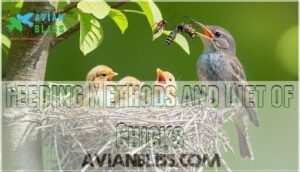
Once incubation ends, parent birds switch to round-the-clock Chick Nutrition and Feeding Techniques.
Nestling Diet consists primarily of protein-rich insects and larvae, delivered through mouth-to-mouth regurgitation that mimics natural Feeding Techniques.
Brood Management involves these critical feeding patterns:
- Newborns need 6-10 daily feeds – exhausting work for parents
- Crop monitoring prevents overfeeding – gentle pressure tells the story
- High-protein insects fuel rapid growth – caterpillars and spiders dominate
- Feeding frequency drops as chicks mature – from hourly to every few hours
Fledgling Care begins when parents demonstrate proper foraging behaviors to their young.
Understanding bird seed feeding strategies can also support the overall health of bird populations.
Fledging and Juvenile Development

Once chicks grow strong enough, they’ll leave their nest in a process called fledging.
Young birds don’t instantly become independent – they need weeks of parental guidance to master foraging and predator avoidance.
During this vulnerable period, fledglings depend on adults for survival skills.
| Development Stage | Duration | Key Behaviors |
|---|---|---|
| Nest Departure | 10-21 days | Short flights, ground hopping |
| Juvenile Feeding | 2-8 weeks | Begging calls, following parents |
| Bird Maturation | 3-12 months | Independent foraging, territory establishment |
Challenges and Conservation During Nesting Season
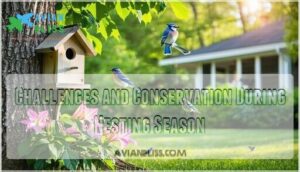
Nesting season brings serious survival challenges that you can help address through smart backyard management.
From nest predators to habitat loss, breeding birds face mounting pressures that directly impact their reproductive success and long-term population stability, which is a critical aspect of their survival and can be influenced by smart backyard management.
Predators and Nest Threats
Many threats lurk around nesting sites, turning bird reproduction into a survival challenge.
Raccoons account for 40% of suburban nest predation, while domestic cats kill over 2.4 billion birds annually.
Snake threats from rat snakes target cavity nests, and hawk attacks increase pressure on exposed locations.
These nest predators and egg eaters force careful nesting site selection, driving nesting colony formation for protection.
Understanding bird nesting behavior is essential for addressing these challenges and conservation efforts.
Human Impact and Habitat Disturbance
Despite Alabama’s natural beauty, human activities substantially disrupt nesting birds through habitat destruction and urbanization effects.
Noise pollution from traffic and construction forces birds to abandon territories, while light pollution throws off their natural timing.
Urban birds abandon nests ten times more often than rural ones, and climate change further stresses nesting site selection, making bird conservation efforts essential for protecting Alabama’s feathered residents.
Ways to Support Nesting Birds in Backyards
You can transform your backyard into a nesting sanctuary through strategic planning.
Proper nest box placement and bird-friendly plants create ideal backyard habitat conditions for breeding pairs.
- Install nesting box installation at 5-15 feet height with entrance holes facing away from prevailing winds
- Plant native bird friendly plants like elderberries, oaks, and sumacs for nesting materials and food supplements
- Provide consistent water sources through shallow birdbaths or dripping fountains for drinking and bathing
- Create bird nesting platforms using natural brush piles and dense shrubs for ground-nesting species
- Maintain nesting habitat preservation by avoiding lawn chemicals and postponing major yard work during bird nesting cycles
These practices support bird species conservation while giving you front-row seats to fascinating parental behaviors.
Effective bird nesting requires proper nesting box designs to guarantee the safety and well-being of the birds.
Frequently Asked Questions (FAQs)
How do birds choose between multiple potential mates?
Birds evaluate potential partners through courtship displays, vocalizations, and territory quality.
You’ll observe males showcasing bright plumage, elaborate dances, or nest-building skills.
Females typically choose mates who demonstrate good genes, resources, and parenting potential for maximum reproductive success.
What happens when nests are accidentally destroyed?
When nature’s nursery faces an unexpected setback, you’ll witness remarkable resilience in action.
Parent birds quickly assess the damage and typically rebuild nearby within days.
They’ll salvage usable materials, relocate if necessary, and restart their reproductive cycle with determination that’s truly inspiring.
Do birds reuse nests from previous seasons?
Most species don’t reuse old nests—they’re usually too weathered or infested with parasites.
You’ll find exceptions like eagles and osprey who renovate their massive stick platforms, adding fresh materials each year.
How do weather patterns affect egg laying?
Weather patterns substantially influence when you’ll see birds laying eggs.
Warmer temperatures and stable conditions trigger earlier egg-laying, while cold snaps, storms, or droughts can delay reproduction or cause birds to skip breeding entirely, which is a significant factor in their reproduction.
Can birds successfully relocate if habitat changes?
Like chess masters eyeing a new board, you’ll find most birds can adapt and relocate if their habitat shifts.
Success depends on available resources, territorial competition, and timing.
Quick moves boost survival, but risks always linger.
Conclusion
Research shows that 67% of Alabama’s native bird species adjust their nesting schedules based on local microclimates rather than statewide weather patterns.
Understanding bird nesting season behavior helps you become a better backyard steward and wildlife observer. You’ve learned how timing varies dramatically between year-round residents and seasonal visitors, plus the environmental pressures they face.
By recognizing these patterns and reducing human disturbances, you’ll support successful breeding cycles. Your efforts matter—creating bird-friendly spaces directly impacts reproductive success rates across Alabama’s diverse avian communities.
- https://cincinnati.wbu.com/about-nesting
- https://www.birdsbesafe.com/blogs/news/when-do-birds-leave-their-nests
- https://birdertown.com/blogs/birds-on-a-wire-wild-bird-blog/how-to-get-ready-for-nesting-season
- https://www.birdwatchingdaily.com/birds/david-sibleys-id-toolkit/david-sibley-explains-use-nesting-behavior-help-identify-birds/
- https://www.beautifulhayscounty.org/hays-humm/for-the-love-of-nesting-birds