This site is supported by our readers. We may earn a commission, at no cost to you, if you purchase through links.
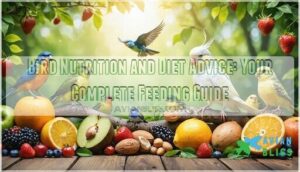 Last month, a cockatiel arrived at my clinic with brittle feathers, labored breathing, and a beak so overgrown it couldn’t crack seeds. The owner had fed nothing but millet for three years—unaware that this single-seed diet was slowly starving her bird of essential nutrients. Within weeks of switching to balanced pellets, fresh vegetables, and calcium supplements, the transformation was striking.
Proper bird nutrition and diet advice isn’t just about filling a food bowl; it’s about understanding the precise balance of proteins, minerals, and vitamins that keep your feathered companion thriving. Whether you’re caring for an African Grey, a finch, or a macaw, knowing what to feed—and what to avoid can mean the difference between a bird that merely survives and one that truly flourishes.
Table Of Contents
Key Takeaways
- A balanced diet for birds should consist of 80% high-quality pellets, 15% fresh vegetables and fruits, and only 5% seeds or nuts as treats—seed-only diets cause nutritional deficiencies in 65% of birds and lead to serious health problems like brittle feathers and weakened immune systems.
- Different species have drastically different nutritional needs: African Greys require extra calcium (1-2% of daily intake) to prevent metabolic disorders, Macaws need higher fat content from nuts to mirror their natural diet, while smaller birds like canaries and finches thrive on varied seeds and leafy greens.
- Life stage matters significantly—juvenile birds need up to 30% protein daily for rapid growth, breeding and molting birds require 22-30% protein plus increased calcium and omega-rich foods, while senior birds need easily digestible proteins and reduced fat intake to accommodate their slowing metabolism.
- Warning signs of nutritional deficiency show up clearly in your bird’s physical condition: watch for dull or brittle feathers, beak overgrowth, sudden weight changes, white plaques around the mouth and eyes, respiratory problems, or changes in water consumption—catching these early through weekly monitoring prevents serious health emergencies.
What Should Pet Birds Eat?
Feeding your bird the right foods isn’t just about filling the bowl—it’s about building a foundation for a long, healthy life. Your bird’s nutritional needs include specific proteins, minerals, and vitamins that work together to support everything from feather growth to immune function.
A bird’s diet isn’t just food—it’s the foundation for lifelong health, from vibrant feathers to strong immunity
Let’s look at the essential nutrients your bird needs and how to provide them safely.
Key Nutrient Requirements for Birds
Your bird’s dietary needs form the foundation of lifelong health. Meeting nutrient requirements means understanding what keeps feathers vibrant, bones strong, and energy levels stable.
- Protein Sources: Adult birds need 12-18% protein daily, while growing chicks require up to 22% for proper development
- Mineral Balance: Calcium and phosphorus work best in a 2:1 ratio to support bone strength and metabolic function
- Vitamin Needs: Vitamin A deficiencies compromise immune health and vision, making varied nutrition essential
Fresh water completes your bird’s nutritional foundation, supporting digestion and overall wellness. A balanced diet is vital, and following bird nutrition guidelines can help prevent many health issues.
Protein, Calcium, and Vitamin Ratios
Getting these three nutrients working together isn’t just about hitting numbers—it’s about creating the right balance that lets your bird’s body actually use what you’re feeding. Protein levels support feather growth and tissue repair, while calcium sources strengthen bones and prevent deficiencies. Vitamin supplements fill nutritional gaps, but mineral ratios determine absorption—too much phosphorus blocks calcium uptake, creating problems even when you’re offering the right nutrition tips.
| Nutrient | Daily Requirement | Key Sources | Balance Notes |
|---|---|---|---|
| Protein | 12-18% (adults), 22% (chicks) | Pellets, legumes, egg food | Higher during growth/molting |
| Calcium | 0.5-1.0% of diet | Dark greens, cuttlebone | Requires 2:1 ratio with phosphorus |
| Vitamins | Varies by type | Fresh produce, fortified pellets | Vitamin A critical for immunity |
Importance of Fresh Water and Hydration
While getting those nutrient ratios right matters, none of it works if your bird doesn’t have access to clean, fresh water throughout the day. Water quality affects everything from digestion to temperature regulation, and birds can show dehydration signs within hours. Watch your bird’s drinking habits closely:
- Change water twice daily to prevent bacterial growth
- Use shallow dishes that won’t tip easily
- Monitor for decreased drinking, which signals illness
Fresh sources of hydration support every aspect of your bird’s health and help their body absorb those carefully balanced nutrients.
Foods to Avoid for Bird Safety
Just as important as providing fresh water is knowing which foods you should never put in your bird’s dish. Avian poisoning from human food risks happens more often than most owners realize. Toxic foods like avocado, chocolate, and caffeine can cause life-threatening reactions within hours.
| Toxic Food | Why It’s Dangerous | Symptoms to Watch |
|---|---|---|
| Avocado | Contains persin, fatal to birds | Respiratory distress, sudden death |
| Chocolate/Caffeine | Cardiac stimulants | Hyperactivity, seizures, heart failure |
| Salt/Salty Foods | Causes kidney damage | Excessive thirst, tremors |
| Onions/Garlic | Destroys red blood cells | Weakness, anemia |
Hazardous treats masquerading as healthy options—like fruit pits containing cyanide—create hidden dangers that lead to malnutrition and vitamin deficiencies when birds refuse their regular diet after tasting them.
Choosing The Best Bird Food
Walking into a pet store can feel overwhelming when you’re staring at shelves packed with colorful bags and bins of bird food. The good news is that choosing quality nutrition doesn’t have to be complicated once you understand what actually matters.
Let’s break down your options so you can make informed choices that keep your feathered friend thriving.
Pellets Vs. Seeds: Pros and Cons
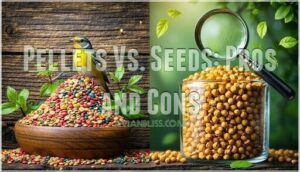
When you’re standing in the pet store aisle staring at rows of colorful bags and containers, the pellets-versus-seeds debate isn’t just about preference—it’s about your bird’s long-term health.
Pellets deliver complete, balanced nutrition with proper vitamin and mineral ratios, eliminating guesswork from dietary needs. Seeds satisfy natural foraging instincts but often lack essential nutrients, leading to deficiencies over time.
For ideal avian health, think of pellets as your foundation and seeds as occasional treats—this feeding method creates the dietary balance your bird truly needs.
Recommended Commercial Food Brands
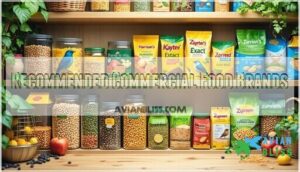
Choosing high-quality pellets means comparing nutrient profiles, certification standards, and brand reputation to verify your bird gets science-backed nutrition.
Consider these trusted commercial food brands for pet bird nutrition:
- Harrison’s Bird Foods – Certified organic options with 18% crude protein, non-GMO formulas, and omega-fatty acid balance for all-encompassing avian diet support.
- Zupreem – Antioxidant-enriched pellets in FruitBlend and Natural varieties, offering species-specific formulations with fortified vitamins.
- Lafeber – Over 35 years producing naturally balanced pellets suitable for all life stages, emphasizing ingredient transparency.
- Higgins Premium Pet Foods – 100% natural, preservative-free pellets since 1972, featuring safflower gold and fruit-nut blends for varied bird feeding.
Brand comparison reveals that organic options usually show lower recall rates and better quality assurance than conventional alternatives.
The global market is driven by increasing demand for bird food products and specialized nutrition.
Safe Fresh Fruits and Vegetables
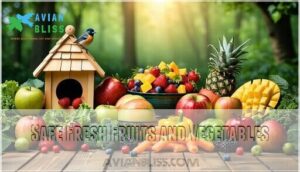
Fresh produce acts as nature’s multivitamin for your bird, delivering phytonutrients and fiber that pellets alone can’t match. Safe fresh fruits include apples, berries, and mango, while vegetables like carrots, bell peppers, and leafy greens prevent nutritional deficiencies.
Always check toxic plant lists—avocado, onion, and mushrooms pose serious risks. Rotating these healthy treat ideas into your bird’s balanced diet ensures ideal nutrient content and variety.
Using Seeds and Nuts as Treats
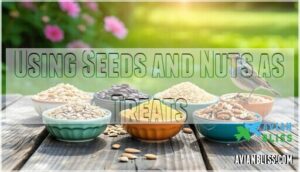
Seeds and nuts aren’t the dietary foundation your bird needs—they’re high-value rewards that turn training sessions into wins and foraging activities into exciting challenges.
Use sunflower seeds and almonds sparingly—about 5-10% of daily intake—as treat portions in reward systems or foraging toys.
Smart seed selection promotes bird nutrition without tipping into excess fat, keeping dietary needs balanced while enriching your bird’s day.
When to Use Vitamin and Mineral Supplements
Your bird’s diet might look complete on paper, but gaps in nutrition can sneak in when pellets sit uneaten or picky eaters push aside their greens. Vitamin deficiencies and dietary gaps show up as dull feathers or low energy—that’s when mineral supplements become nutrient boosters rather than routine additions.
You’ll need calcium supplements during breeding or if your bird refuses calcium-rich foods, but avoid over-supplementing—health optimization comes from targeted use, not daily doses for every bird.
Species-Specific Dietary Considerations
Not all birds thrive on the same diet—what works for a canary won’t meet the needs of a macaw.
Your bird’s species determines its unique nutritional requirements, from calcium levels to fat content.
Let’s look at how different species need different approaches to stay healthy.
African Greys: Calcium and Nutrient Needs
African Greys face a unique challenge: their bodies struggle to absorb and maintain adequate calcium levels, making them vulnerable to serious metabolic disorders. You’ll need to pay close attention to their Grey Parrot Diet to prevent nutritional deficiencies and support both Beak Health and Feather Nutrition through careful Nutrient Balance.
- Calcium supplements should provide 1-2% of their daily intake, paired with vitamin D3 for proper absorption and avian health
- A balanced diet requires high-quality pellets plus calcium-rich vegetables like collard greens and broccoli
- Monitor for deficiencies by watching for tremors, weak bones, or poor feather quality that signal inadequate nutrition
Macaws: Higher Fat and Nut Requirements
While African Greys need extra calcium to stay healthy, Macaws thrive on a diet that’s higher in fat—one that mirrors the calorie-dense nuts and palm fruits they’d crack open in the wild.
Your Macaw Diet should include almonds, walnuts, and Brazil nuts to meet their Fat Intake needs while supporting Feather Health and Beak Care. This balanced approach to healthy fats prevents nutritional deficiencies and maintains the Nutrient Balance these vibrant birds require for peak bird nutrition.
Canaries and Finches: Seed and Greens Preferences
Canaries and finches don’t need the high-fat diet that keeps macaws thriving—instead, they flourish on small seeds, fresh leafy greens, and the occasional protein boost from egg food.
Your canary nutrition plan should center on millet, canary seed, and nyjer—the seed preferences that match their natural finch diets. Add kale, spinach, and dandelion greens as greens supplements to round out their small bird feeding routine and support ideal bird nutrition.
Dietary Adaptations for Other Popular Species
Beyond finches and canaries, many other popular companion birds—from cockatiels to lovebirds—come with their own distinct nutritional blueprints that you’ll need to understand for their long-term health. Cockatiels thrive on pellets, millet sprays, and dark leafy greens that support budgie health and parrot nutrition basics.
Eclectus parrots need low-fat, high-fiber diets rich in fruits and vegetables—eclectus care demands attention to their unique digestive systems.
Lovebirds and budgies benefit from varied seeds, fresh produce, and species-specific dietary needs that prevent obesity while supporting avian diet and wellness through proper nutrition planning for pet birds.
Feeding Strategies for Life Stages and Seasons
Your bird’s nutritional needs aren’t static—they shift with age, activity, and the changing seasons. What works for a growing chick won’t suit a senior bird, and breeding season demands different support than the quiet months.
Let’s look at how to adjust your feeding strategy through each life stage and seasonal change.
Juvenile and Developing Birds
Growing birds aren’t just small versions of adult birds—they’re feathered construction projects, building everything from bones to flight muscles at a pace that demands precise nutritional fuel. Chick development requires up to 30% protein daily to support explosive growth rates and proper nutrient uptake during critical development windows.
Your growing bird’s nutrition checklist:
- High-protein pellets (22-30%) for feather growth and beak formation
- Calcium-rich foods to prevent skeletal nutritional deficiencies
- Frequent small meals matching their lightning-fast metabolism
Breeding and Molting Season Adjustments
When breeding season or molting rolls around, your bird’s body kicks into overdrive—feather synthesis alone burns through 25% of total body protein. During breeding, boost dietary protein to 22-30% with cooked eggs and sprouted seeds, while calcium sources like cuttlebone support eggshell formation.
Molting nutrition demands similar protein levels plus omega-rich nuts for feather health, as resting metabolic rate can spike 82% during this period. These seasonal adjustments prevent nutritional deficiencies that compromise breeding outcomes and new plumage quality.
Senior Bird Nutrition and Digestibility
As your bird’s calendar pages turn from energetic years to quieter ones, its digestive system starts working less like a well-oiled machine and more like a vintage engine that needs premium fuel.
Support senior bird nutrition through these easy digestion strategies:
- Soften pellets with warm water to ease nutrient absorption
- Increase digestible proteins like well-cooked eggs
- Add probiotics to support digestive health
- Reduce high-fat nuts that strain aging systems
- Monitor for nutritional deficiencies through regular weight checks
These dietary needs address age-related issues while preventing malnutrition in your companion’s golden years.
Adapting Diets to Climate and Activity Changes
When temperatures climb or your bird’s activity level shifts, its nutritional needs change just as dramatically as a marathon runner’s diet differs from a couch potato’s. Hot weather demands increased hydration and electrolyte-rich foods like cucumber, while cold spells require extra calories from healthy fats.
Active birds need more protein for muscle repair, so adjust portions based on environmental factors—your bird’s body will thank you for this dietary flexibility in nutrition planning.
Monitoring and Supporting Bird Health
Even with the best diet plan, your bird’s health needs regular monitoring to catch problems before they spiral. Small changes in weight, feather quality, or water intake can signal nutritional gaps that require immediate attention.
Let’s walk through the key warning signs to watch for and how to address them effectively.
Recognizing Signs of Nutritional Deficiency
Your bird won’t always tell you when something’s wrong—but their body will. Nutritional deficiencies show up as white plaques around the mouth and eyes, affecting 65% of birds on seed-only diets.
Watch for beak issues like overgrowth, respiratory problems including nasal discharge, and feather health changes such as dullness or picking.
Malnutrition symptoms like listlessness appear in 31% of nutrient-deficient birds, while appetite loss signals trouble in nearly half of all cases.
Monitoring Weight, Feathers, and Hydration
Keeping tabs on your bird’s weight, feather quality, and water intake gives you a reliable early warning system before small problems turn into veterinary emergencies. Regular monitoring catches issues like malnutrition or dehydration before they escalate.
Key indicators to track:
- Weight management: Weigh weekly using a gram scale—sudden drops signal illness
- Plumage quality: Healthy feather condition means smooth, vibrant feathers without stress bars
- Hydration levels: Monitor water quality and consumption—changes in drinking patterns often indicate health problems
Transitioning to a Healthier Diet
Switching your bird from a seed-heavy diet to balanced nutrition isn’t like flipping a switch—it’s more like teaching an old habit a new trick, and patience is your best tool. Gradual diet change over 4-8 weeks prevents stress and ensures your bird accepts healthier food introduction without compromising nutrition planning.
Monitor weight weekly throughout dietary adjustments to catch nutritional deficiencies early and guarantee your bird thrives on their new balanced diet.
| Week | Dietary Transition Tips |
|---|---|
| 1-2 | Mix 25% pellets with seeds; offer colorful vegetables separately |
| 3-4 | Increase to 50% pellets; introduce varied produce during active feeding times |
| 5-6 | Shift to 75% pellets; use seeds only as training rewards |
| 7-8 | Establish balanced meal prep with 80% pellets, 15% fresh produce, 5% treats |
Role of Veterinary Check-Ups and Expert Advice
Even with the perfect feeding plan in place, your bird’s health story isn’t complete without regular visits to an avian veterinarian who can spot problems you might miss at home. Expert consultation provides nutrition counseling customized to your bird’s unique needs, ensuring your diet planning stays on track through every life stage.
Here’s what vet-approved health monitoring delivers:
- Early detection of nutritional deficiencies before they become serious
- Customized veterinary guidance on species-specific dietary adjustments
- Professional oversight of weight trends and body condition scoring
When you ask a vet about bird health and wellness, you’re investing in veterinary care that transforms good intentions into measurable results.
Frequently Asked Questions (FAQs)
How often should I change my birds food?
Daily meals need renewing every 12 hours—stale pellets and wilted greens won’t cut it.
Your bird deserves dietary variety and nutrient balance, so rotate food types weekly.
Fresh water? Change it twice daily for peak bird nutrition and meal frequency consistency.
Can birds eat table scraps or leftovers?
Some table scraps are safe, but most human foods carry risks like toxic ingredients, high salt, or bacterial contamination.
Avoid table foods with seasonings, dairy, or preservatives—they can cause digestive issues or worse, violating birds’ dietary requirements.
Whats the ideal feeding schedule for birds?
Most birds thrive on twice-daily feedings—morning and evening—mimicking natural foraging schedules. This feeding frequency aids metabolism while preventing selective eating and ensures your bird receives balanced dietary requirements throughout the day.
Offer pellets as the main staple, rotating fresh produce daily for nutrient cycling.
How do I introduce new foods gradually?
Start with patience—your bird’s taste buds need time to adjust. Mix tiny portions of new foods with familiar favorites, gradually increasing amounts over several weeks.
This gradual diet change prevents stress and encourages dietary shift through positive food introduction tips.
Should I leave food available all day?
You’ve probably heard that grazing all day keeps metabolism humming—but for birds, free feeding can backfire.
Leaving pellets available works well, but remove fresh foods after two hours to prevent spoilage and overeating risks while supporting natural foraging behavior.
Conclusion
Think of feeding your bird like tuning a vintage radio—get the frequency wrong, and you’ll only hear static. Solid bird nutrition and diet advice means dialing in the right balance of pellets, fresh produce, and species-specific nutrients so your companion radiates energy instead of fading into silence.
Watch for brittle feathers, weight shifts, and lethargy—they’re your early warning system. A thriving bird doesn’t happen by accident; it’s built on informed choices, regular vet visits, and genuine commitment to their well-being.
- https://www.petmd.com/bird/nutrition/evr_bd_feeding-birds-101
- https://www.aspca.org/pet-care/small-pet-care/bird-care
- https://www.aav.org/page/basicbirdcare
- https://www.harrisonsbirdfoods.com/product/high-potency-fine/
- https://www.kookshop.com/best-bird-food-pellets-available-must-haves-from-kookaburra-bird-shop