This site is supported by our readers. We may earn a commission, at no cost to you, if you purchase through links.
Your elderly parrot’s favorite perch might be slowly damaging their arthritic feet. Aging birds lose the grip strength and joint flexibility they once had, making those thin dowel perches—standard in most cages—increasingly painful to stand on for hours each day.
The constant pressure on swollen joints can lead to bumblefoot, balance problems, and a reluctance to move around their home. Thankfully, bird perches for elderly birds have evolved far beyond basic wooden dowels. Today’s options include cushioned platforms, textured surfaces that prevent slipping, and ergonomic designs that cradle aging feet instead of straining them.
Finding the right perch setup can mean the difference between your senior bird spending their golden years in discomfort or enjoying stable, pain-free mobility around their space.
Table Of Contents
- Key Features of Perches for Elderly Birds
- Health and Safety Considerations
- Top 9 Bird Perches for Elderly Birds
- 1. Natural Wood Bird Perch Playground
- 2. Niteangel Wooden Parrot Perch Platform
- 3. Parrot Perch Stand Bird Accessories
- 4. Natural Wood Bird Perch Stand
- 5. Arfubye Large Wooden Bird Perch Stand
- 6. Natural Wood Bird Perches Set
- 7. Natural Wooden Bird Perch Set
- 8. Natural Wooden Bird Perch Stand
- 9. Jusney Bird Rope Perch Toy
- Choosing The Right Perch for Senior Birds
- Maintenance and Replacement Tips
- Frequently Asked Questions (FAQs)
- What age is a senior bird?
- Do birds like their cages covered at night?
- What is the best bird for the elderly?
- What do birds do when they get old?
- Can elderly birds use rope perches safely?
- What perch diameter works best for arthritic feet?
- Should perches be heated for senior birds?
- Do elderly birds need perches near food?
- When should I switch to platform perches?
- Conclusion
Key Features of Perches for Elderly Birds
As your bird gets older, their physical needs change—and the right perch can make all the difference in keeping them comfortable and safe.
Make sure the perch setup matches your cage dimensions so your senior bird can move around easily without strain.
You’ll want to look for features that reduce strain on aging joints, prevent slips and falls, and support their changing mobility. Let’s walk through the key things to keep in mind when choosing a perch that’ll help your senior bird stay steady and comfortable.
Importance of Comfort and Joint Support
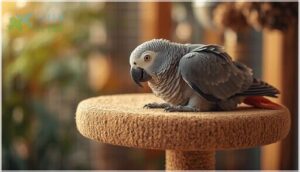
Comfort and support aren’t just nice extras—they’re essential for your elderly bird’s joint health and overall wellness. As birds age, their feet and joints need extra care to stay healthy and pain-free.
For elderly birds, comfort and joint support are vital to keeping their feet healthy and pain-free as they age
- Ergonomic design with wide, flat surfaces reduces pressure on tired joints
- Platform perch options distribute weight evenly across their footpads
- Comfort features like gentle textures prevent circulation problems
- Senior support through cushioned surfaces minimizes painful hotspots
Choosing perches with these elements protects your bird’s wellbeing every day.
Non-slip and Textured Surfaces for Safety
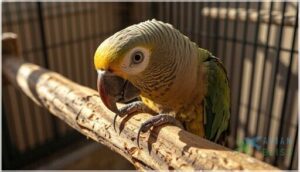
A stable grip matters even more as your bird’s coordination changes. Textured surfaces with grip patterns—like rubberized coatings or natural wood grain—provide slip resistance, keeping your senior bird secure during daily movement.
| Texture Options | Slip Resistance | Surface Coatings |
|---|---|---|
| Rubberized grip | High friction coefficient | Anti-slip, non-toxic finishes |
| Natural wood grain | Micro-roughness aids foothold | Clear nonslip sealants |
| Fine grit coatings | Gentle yet secure | Silicone-based additives |
| Deep grooves | Channels moisture away | Wear-resistant treatments |
Safety testing ensures these nonslip designs maintain traction after cleaning, giving you confidence your platform perch won’t become slippery when wet.
For more details about the importance of non-slip surface benefits, visit this dedicated guide.
Wide, Flat, or Platform Designs
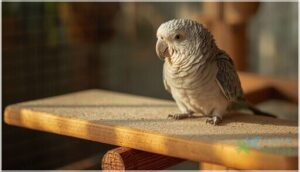
Platform perch designs with flat surface areas spanning 6 to 24 inches give elderly birds room to shift weight and rest without gripping.
Wide perch options reduce joint support strain by distributing pressure evenly across their feet.
Bird ergonomics research shows these nonslip design platforms minimize pressure points, offering the comfort and support aging birds need for bird health and mobility.
Material Safety and Non-toxicity

Just as important as comfort is choosing perches made from safe materials that protect your bird’s health. Toxic Material Risks lurk in treated woods and synthetic coatings, so stick with Safe Wood Options like untreated beech or fir.
Look for:
- Chemical Free Finishes using water-based formulas
- Natural wood without stains or varnishes
- BPA-free plastics for easy-clean sections
- Eco Friendly Materials free from heavy metals
These choices safeguard pet health while supporting animal comfort.
Stability and Secure Installation
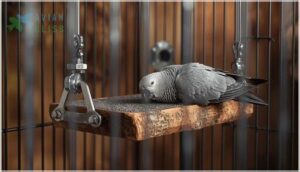
When your older bird shifts weight or climbs, you need a perch that won’t budge. Secure Fastening using locking clamps and stainless steel hardware keeps Mounting Techniques rock-solid.
Platform perches with wide bases resist tipping, while Installation Tips like anchoring to cage walls prevent rotation. Easy installation with wing nuts means you can adjust quickly, and Safety Features like rubberized sleeves dampen vibrations for true Stable Designs.
Health and Safety Considerations
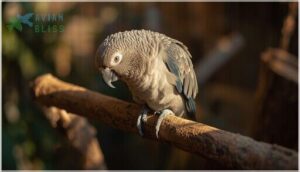
Choosing the right perch is just the beginning—keeping your elderly bird healthy and safe requires a bit more attention to their environment and daily care.
As birds age, they become more vulnerable to foot problems, infections, and injuries from worn-out equipment.
Let’s walk through the key health and safety considerations that will help your senior bird stay comfortable and secure.
Preventing Foot and Joint Problems
Your elderly bird’s feet carry them through every day, so perch design matters more than you might think. Wide, flat perches reduce pressure points that lead to bumblefoot and arthritis in older birds and senior parrots.
Choose perch materials with gentle textures—not too rough, not too smooth—to support natural foot positioning. Proper bird ergonomics through thoughtful avian care means your feathered friend can rest comfortably without straining aging joints.
Easy-to-clean and Hygienic Materials
A clean perch protects your elderly bird from infections that aging immune systems can’t fight off easily. Look for non-porous materials like sealed natural wood with non-toxic finishes or stainless steel that meet hygiene standards and resist bacterial growth.
Sanitary coatings on perch materials simplify cleaning and maintenance—just wipe down surfaces with safe disinfectants. Easy installation means you can swap perches during deep cleaning, keeping avian care simple and thorough.
Placement and Height Adjustments in Cages
Where you place perches in your bird cage can make or break your senior bird’s daily comfort. Thoughtful cage design transforms vertical zones into safe pathways, letting your bird move confidently without straining aging joints.
- Position primary perches at mid cage height to reduce reach strain
- Keep 2 to 3 inches clearance space between perches and cage bars
- Place at least one perch near food and water for easy access
- Distribute cage accessories across three vertical zones for variety
- Install a low perch stand near the base to aid stepping down
For more adaptable setups, consider exploring adjustable shelving options for cages to support changing needs as your bird ages.
Recognizing Signs of Perch Wear or Damage
Your bird’s perches won’t last forever, and spotting trouble early protects those aging feet. Run your fingers along wooden platforms weekly—rough patches, splintering, or soft spots mean it’s time for a swap.
Watch for wobbly mounts, cracked joints, or fading finishes on platform perches. If you notice your bird avoiding a favorite spot or developing redness on foot pads, inspect that perch immediately.
Top 9 Bird Perches for Elderly Birds
Now that you know what to look for in a safe perch, let’s explore some specific options that work well for elderly birds.
I’ve gathered nine perches that prioritize comfort and stability, and ease of use based on what older birds truly need. Each one offers something different, so you can find the right fit for your feathered friend.
1. Natural Wood Bird Perch Playground
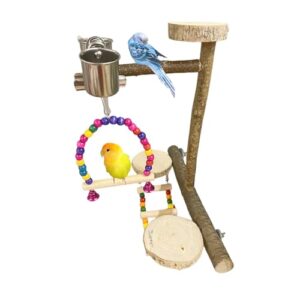
When your senior parrot needs a safe, engaging space to stretch and move, this natural wood playground delivers. Made from solid ash or beech with no synthetic coatings, it includes ladders, swings, and varied perch thicknesses to keep aging feet active without strain.
The stainless steel bottom tray makes cleanup simple, while sturdy hardware keeps everything wobble-free. At 13.74 x 6.97 inches, it fits standard cages and assembles without tools—you’ll have it ready in minutes.
| Best For | Owners of small to medium parrots who want a sturdy, natural wood play area that’s easy to clean and keeps senior birds active without overwhelming them. |
|---|---|
| Material | Metal and Wood |
| Color | Natural Wood |
| Installation | Tool-free assembly |
| Target Bird Size | Small to medium |
| Cleaning | Easy to clean |
| Safety | Metal safety parts |
| Additional Features |
|
- Solid ash or beech construction with metal parts creates a stable, wobble-free setup that’s safe for aging birds
- Tool-free assembly and stainless steel tray make setup and daily cleaning incredibly simple
- Varied perch widths, swings, and ladders encourage movement and reduce boredom without requiring acrobatics
- Natural wood may arrive with bark imperfections or uneven cuts that don’t look polished
- Platform areas can eat up cage space while offering limited play value compared to other features
- Only works for small to medium birds—larger parrots will need a different setup entirely
2. Niteangel Wooden Parrot Perch Platform
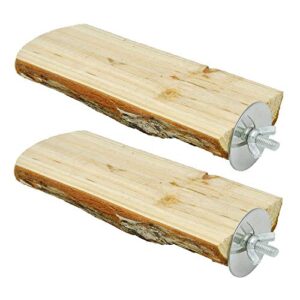
For older birds who need a gentler landing spot, the Niteangel platform—sold in a two-pack—offers something most perches can’t: a wide, flat surface that lets your bird spread their toes completely.
This untreated natural wood design distributes weight evenly across aging feet, reducing pressure points that narrow dowels create. The textured grip prevents slips during movement, while stainless steel hardware keeps everything steady through climbing and grooming.
You’ll find the low profile won’t block food dishes or toys, and cleaning takes just minutes.
| Best For | Older birds or those with foot issues who need a wider, flatter resting surface that reduces pressure on their feet. |
|---|---|
| Material | Wood |
| Color | Natural Wood |
| Installation | Metal wing nut |
| Target Bird Size | Small to medium |
| Cleaning | Standard cleaning |
| Safety | Natural wood |
| Additional Features |
|
- Wide platform design lets birds spread their toes fully, preventing pressure points that can cause bumblefoot
- Natural wood texture provides secure grip while doubling as a safe chewing surface for beak maintenance
- Easy to clean and install with sturdy stainless steel hardware that stays secure
- May not support larger or heavier bird species due to size limitations
- Some users report the bolt or screw can strip over time with regular use
- Bark coating can peel or come loose, requiring occasional maintenance
3. Parrot Perch Stand Bird Accessories
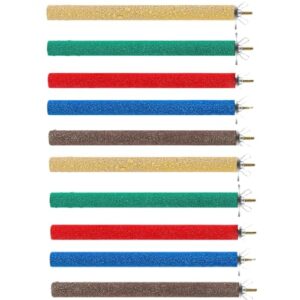
For birds with arthritis concerns, rough-textured surfaces offer a safer grip than smooth wood alone. These ten-piece parrot perch stands include paw-grinding bumps along each 6-inch bar—surfaces that help prevent slips while letting your bird work their foot muscles gently during perching.
The wood construction stays safe if nibbled, and screw-mounted installation keeps everything stable. Just watch for birds with sensitive feet who might find the texture uncomfortable rather than helpful.
| Best For | Bird owners looking for a textured perch that helps with claw maintenance and provides a secure grip, especially for birds that need extra foot exercise or have mobility concerns. |
|---|---|
| Material | Wood |
| Color | Random Colors |
| Installation | Screw attachment |
| Target Bird Size | All sizes |
| Cleaning | Standard cleaning |
| Safety | Natural wood |
| Additional Features |
|
- Natural wood material is safe if chewed, and the bumpy texture helps birds trim their claws and beaks naturally
- Comes in a 10-pack with easy screw installation, giving you multiple perches to arrange around the cage
- Works well for various bird sizes from parakeets to cockatiels, adding both function and visual interest with random colors
- The rough texture might be uncomfortable for birds with sensitive feet or those who prefer smoother surfaces
- Birds that love to chew may gnaw through the wood perches over time, requiring replacements
- The 0.6-inch diameter could be too thick for very small birds like finches to grip comfortably
4. Natural Wood Bird Perch Stand
Sometimes simplicity works best. Natural wood perch stands offer untreated hardwood branches with textured surfaces that give your senior bird reliable grip without overwhelming features.
The wide-footed base resists tipping when your bird stretches or shifts weight—important for older birds who move more cautiously. You’ll find varying diameter options to match different foot sizes, and the slightly rounded edges prevent pressure points on aging toes.
Installation fits standard cage bars, and cleanup takes just warm water and mild soap.
| Best For | Bird owners with senior or arthritic birds who need a stable, textured platform that’s easy on aging feet and prevents slipping. |
|---|---|
| Material | Wood |
| Color | Wood |
| Installation | Metal washers included |
| Target Bird Size | Small to medium |
| Cleaning | Easy to clean |
| Safety | Non-toxic |
| Additional Features |
|
- Extra-large natural wood surface gives birds plenty of room to move around and play safely
- Textured wood provides excellent grip for birds with arthritis or mobility issues
- Works for multiple birds or small animals like hamsters and guinea pigs, not just birds
- Edges can be sharp out of the box and may need sanding before use
- Large size might not fit smaller cages or enclosures
- Wood can warp or crack if exposed to moisture or direct sunlight
5. Arfubye Large Wooden Bird Perch Stand
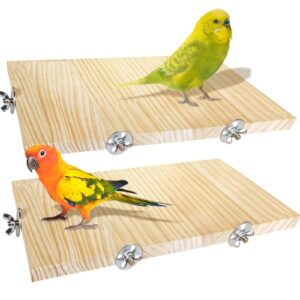
When you need both stability and flexibility, the Arfubye Large Wooden Bird Perch Stand delivers. Its solid pepper wood base gives older birds a secure foundation—especially helpful during those wobbly landings.
You can adjust the height from 18 to 40 inches with just one wing nut, making it easy to match your bird’s mobility level as they age. The textured surface keeps claws engaged without strain, and the foldable design means you can move it room to room for companionship time without hassle.
| Best For | Bird owners looking for a sturdy, adjustable platform that grows with their pet—especially useful for older birds who need reliable footing and easy height changes. |
|---|---|
| Material | Natural Wood |
| Color | Natural |
| Installation | Wing nuts included |
| Target Bird Size | Small to medium |
| Cleaning | Easy to clean |
| Safety | Odorless natural wood |
| Additional Features |
|
- Natural wood construction resists impact and stays odor-free, while the textured surface keeps claws healthy
- Adjustable design works for multiple species and life stages, from small parakeets to medium-sized birds
- Easy to install in cage corners and simple to clean with basic maintenance
- May have a slight wood smell right out of the box that needs to air out
- Requires manual assembly with included hardware before use
- Not suitable for very large or heavy birds due to size limitations
6. Natural Wood Bird Perches Set
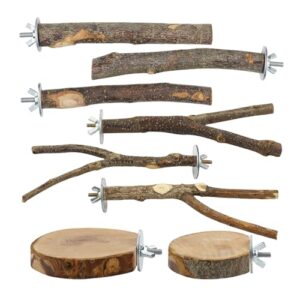
An 8-piece variety pack gives your senior bird options without cluttering the cage. This set from Rliguanrui includes natural wood perches with bark and textured surfaces that help aging claws maintain grip strength.
The different diameters—ranging across the collection—let your bird shift weight and ease pressure on tender joints throughout the day. At 12 ounces total, it’s lightweight enough to rearrange as your bird’s preferences change. Just watch the clamp fittings; some users find they need occasional tightening to stay secure.
| Best For | Bird owners with smaller senior birds who need varied perch textures and diameters to maintain grip strength and relieve joint pressure. |
|---|---|
| Material | Wood |
| Color | Brown |
| Installation | Clamp system |
| Target Bird Size | Small birds |
| Cleaning | Durable and easy |
| Safety | Paint-free |
| Additional Features |
|
- Natural wood with bark provides textured surfaces that help aging birds maintain claw grip and strength
- Eight-piece variety offers multiple perch diameters so birds can shift weight and ease pressure on sore joints
- Lightweight set is easy to rearrange as your senior bird’s mobility needs and preferences change
- Perches may be too small for medium or large birds, limiting use to smaller species only
- Clamp fittings can slip or loosen over time and may need regular tightening to stay secure
- Limited variety in perch lengths means fewer options for cage layout customization
7. Natural Wooden Bird Perch Set
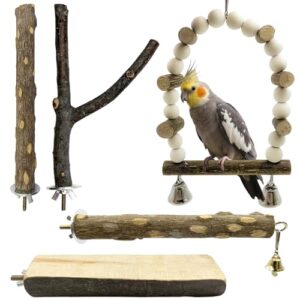
This handcrafted hardwood set offers secure footing through its rough-textured surface, which lets your senior bird grip confidently even when shifting weight. You’ll get multiple diameter options—from 0.5 to 1.25 inches—so arthritic feet can find the width that feels most comfortable.
The wing nut mounting makes repositioning simple when you need to adjust the cage layout, and the untreated finish means no chemical exposure if your bird nibbles. The natural branch shapes encourage gentle movement without demanding acrobatics from aging joints.
| Best For | Bird owners with senior or arthritic pets who need varied perch widths and textured gripping surfaces that support aging joints without demanding too much movement. |
|---|---|
| Material | Wood |
| Color | Brown |
| Installation | Built-in wing nuts |
| Target Bird Size | Small to medium |
| Cleaning | Hand wash only |
| Safety | Paint-free natural |
| Additional Features |
|
- Multiple diameter options (0.5 to 1.25 inches) let you match perch size to your bird’s comfort level and foot condition
- Rough, natural texture provides secure grip for birds with weakened legs or balance issues
- Wing nut installation makes it easy to reposition perches as your bird’s mobility needs change
- Natural wood sheds bark during shipping, so expect some cleanup when you first open the package
- Textured surfaces trap more debris than smooth perches, meaning you’ll need to scrub them more often
- Hardware quality can be inconsistent—some customers report mismatched bolts or threading issues
8. Natural Wooden Bird Perch Stand
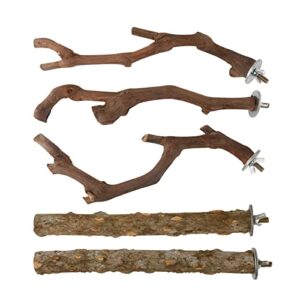
This freestanding design gives your older bird a secure resting spot outside the cage, with a flat base that won’t tip when they settle in. The untreated hardwood resists splintering even when your companion gnaws, and the natural irregular shapes let their toes wrap around without strain.
You can remove the perch arms for quick cleaning—catching droppings is simple with the base tray—and the hidden screws keep curious beaks safe. The textured surface helps arthritic feet maintain their grip through every shift.
| Best For | Bird owners with small to medium-sized pets like parakeets or cockatiels who want a natural, safe perch that encourages exercise and gives their birds a comfortable place to rest outside the cage. |
|---|---|
| Material | Grape Wood |
| Color | Brown |
| Installation | Metal washers and screws |
| Target Bird Size | Small to medium |
| Cleaning | Hand wash only |
| Safety | No artificial materials |
| Additional Features |
|
- Natural grape wood is safe for chewing and provides varied textures that help birds exercise their feet and beaks
- Anti-slip surface with irregular shapes gives older birds or those with arthritis a secure, comfortable grip
- Easy to clean and maintain with removable parts and a base tray that catches droppings
- Size and appearance vary due to natural wood, so you might not get exactly what’s pictured
- Perches wear down over time from chewing and will need replacing eventually
- Costs more than synthetic perch options
9. Jusney Bird Rope Perch Toy
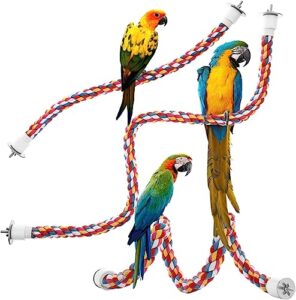
This soft cotton rope perch shapes into curves and loops your elderly bird can actually grip, thanks to the flexible metal core inside. You can bend it around cage bars to create gentle pathways that reduce jumping strain on aging joints.
The textured rope prevents slipping better than smooth dowels, and at 33.5 inches long, you’ll have plenty of length to customize the layout. Just watch for fraying during your weekly checks—worn spots can snag delicate feet.
| Best For | Bird owners with elderly or arthritic birds who need a customizable, slip-resistant perch that reduces strain on aging joints. |
|---|---|
| Material | Cotton and Metal |
| Color | Multicolor |
| Installation | Easy-to-use connectors |
| Target Bird Size | Medium to large |
| Cleaning | Easy to clean |
| Safety | Non-toxic dyes |
| Additional Features |
|
- Bendable metal core lets you shape custom pathways around the cage to minimize jumping and strain
- Textured cotton rope provides better grip than smooth perches, helping prevent slips and falls
- 33.5-inch length gives you plenty of material to create multiple levels or curved routes
- Rope can fray over time and needs regular inspection to avoid snagging delicate feet
- Some users report quality control issues with durability not meeting expectations
- May require modifications to fit cages with widely spaced bars
Choosing The Right Perch for Senior Birds
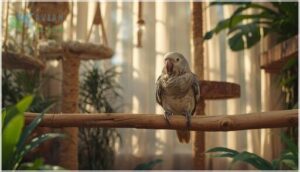
Picking the right perch style for your senior bird means thinking about more than just what fits in the cage. You’ll want to match the perch style to your bird’s specific needs, consider how multiple perches can help, and even think about visibility if your bird’s eyesight isn’t what it used to be.
Here’s what to keep in mind as you make the best choice for your feathered friend.
Matching Perch Type to Bird Species and Needs
Your bird’s size determines which perch sizes work best. Smaller species like budgies need 0.75 to 1.25 inch diameters for proper foot care, while larger parrots require 1.0 to 2.0 inches.
Natural wood perches support beak health through gentle conditioning. Consider textured surfaces for older birds with arthritis—they won’t slip as easily. Match perch variety to your bird’s specific needs for ideal comfort and safety.
Benefits of Multiple and Varied Perches
Adding multiple and varied perches transforms your parrot cage into a senior-friendly haven. Here’s why perch variety matters for older birds:
- Different textures and diameters prevent foot health problems by reducing pressure on the same spots
- Multiple heights encourage gentle bird exercise, keeping muscles toned without strain
- Varied cage layout gives your bird choices for resting in light or shade
- Strategic placement near food reduces long flights while maintaining senior comfort
Rotating perches regularly promotes both bird safety and mental engagement.
Customization and Adaptability for Disabilities
When your parrot faces mobility challenges, cage modification becomes essential. Adaptive perches with adjustable heights support disabled parrot needs, while special needs solutions like padded grips ease arthritis.
Here’s how accessible designs help:
| Disability | Perch Adaptation | Benefit |
|---|---|---|
| Weak grip | Foam-wrapped rails | Reduces slip risk |
| Limited mobility | Platform with rails | Prevents falls |
| Joint pain | Wide flat surfaces | Eases pressure |
| Balance issues | Stabilizing bars | Improves confidence |
Specialized ergonomics support animal welfare and parrot care and maintenance.
Color and Visibility Considerations for Aging Birds
As your bird’s vision fades, color perception and perch visibility become essential for bird welfare and comfort. Proper contrast importance and visual signals help older birds navigate confidently, supporting avian health and bird behavior.
Boost perch visibility with these lighting effects tips:
- Choose high-contrast colors – light perches against dark backgrounds help aging eyes spot safe landing zones
- Use matte finishes – they prevent confusing glare in bright rooms
- Add indirect lighting – softer light reveals perch edges without harsh shadows
Maintenance and Replacement Tips
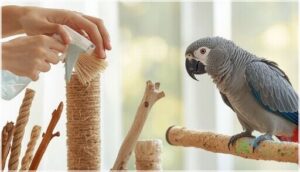
Even the best perch won’t stay safe forever—regular upkeep keeps your senior bird healthy and comfortable.
You’ll need to know how often to clean, when to replace worn materials, and which disinfectants are bird-safe. Here’s what to watch for and how to maintain perches that support your aging companion.
Cleaning Routines for Perch Hygiene
Keeping your elderly bird’s perches clean doesn’t have to feel overwhelming. Daily maintenance means wiping down surfaces with unscented mild soap and warm water, then rinsing thoroughly.
Weekly deep cleaning with bird-safe disinfectants prevents bacterial growth that threatens avian health. Here’s a simple cleaning schedule to protect your bird’s wellness:
| Task | Frequency |
|---|---|
| Remove droppings and food debris | Daily |
| Wipe with mild soap solution | Daily |
| Deep clean with enzymatic cleaner | Weekly |
| Inspect for damage or wear | Weekly |
Always dry perches completely before your feathered friend uses them again.
How Often to Inspect and Replace Perches
Regular perch inspection protects your older bird’s safety and comfort. Check perches daily for looseness before each morning, then perform weekly formal inspections to catch cracks or wear in wooden perches.
Replace rope perches every three to six months when fibers fray, and swap wooden perches every six to twelve months. After cleaning or cage changes, always recheck connections within twenty-four hours to prevent accidents.
Safe Disinfection Practices
When disinfecting perches, you’re protecting your bird’s health through smart cleaning protocols. Follow these surface sanitizing steps to guarantee chemical safety:
- Remove dirt with soap and water before applying any disinfectant types.
- Choose EPA-registered products safe for pet accessories and animal enrichment items.
- Allow proper contact time per label instructions.
- Use ventilation methods like open windows to protect bird health.
- Rinse thoroughly before returning perches to the cage.
Monitoring Bird Behavior for Comfort and Safety
Your bird’s daily habits tell you everything about perch comfort and safety. Watch for these behavioral signs and comfort indicators:
| Health Alerts | What to Watch |
|---|---|
| Grip changes | Reluctance to perch, foot flipping |
| Activity shifts | Less hopping, more resting |
| Discomfort cues | Vocalizations when landing, toe splay |
These animal behavior patterns guide your safety protocols and help you spot problems before they worsen.
Frequently Asked Questions (FAQs)
What age is a senior bird?
Most birds reach senior status around the halfway point of their species’ life expectancy. Larger parrots may hit this benchmark at 20 to 30 years, while smaller species age faster.
Do birds like their cages covered at night?
Most older birds prefer cage covering at night for better bird sleep and bird comfort, though darkness preference varies.
Reduced light exposure promotes bird health, while breathable covers maintain safety without disrupting their night vision or causing stress.
What is the best bird for the elderly?
Like a steady companion through life’s quieter chapters, budgies and canaries make wonderful senior companions.
These gentle birds offer calming bird therapy, require manageable pet care, and bring daily joy—perfect for elderly care and emotional support.
What do birds do when they get old?
As aging patterns emerge, your feathered friend will reduce flight changes and rest more often.
Older birds show health decline through slower movement, weaker gripping, and quieter social interactions—signs that call for gentler bird perches.
Can elderly birds use rope perches safely?
You’d think rope perches would be too risky for elderly birds, but they can actually work well—if you choose soft rope, inspect regularly for fraying, and keep them spotlessly clean.
What perch diameter works best for arthritic feet?
For arthritic feet, choose perches between 3/4 and 1 1/4 inches in diameter. This range allows comfortable grip without forcing tight toe curling.
Rotate several sizes to ease joint pressure and support bird health naturally.
Should perches be heated for senior birds?
Warmth draws senior birds like a magnet, yet heated perches aren’t always necessary.
They offer foot warmth and thermal regulation benefits during cold months, easing arthritis and improving circulation—but monitor temperature carefully to prevent burns.
Do elderly birds need perches near food?
Yes, elderly birds need perches near food. Stable footing during meals prevents slips and aids arthritic joints.
Proper cage design with accessible feeding areas ensures nutrition support, eating comfort, and feeding safety for senior parrots.
When should I switch to platform perches?
Switch to platform perches when your bird shows toe fatigue, cramping, or balance issues on round perches.
Senior comfort improves with flat surfaces that reduce joint pressure and support natural foot health in elderly birds.
Conclusion
Think of your senior bird’s perch as their home base—the place where they’ll spend most of their day resting, observing, and finding comfort.
Choosing the right bird perches for elderly birds isn’t just about convenience; it’s about preserving their quality of life as their bodies age. By selecting supportive and safe options and monitoring how your feathered companion uses them, you’re giving them the gift of dignity and ease in their golden years.