This site is supported by our readers. We may earn a commission, at no cost to you, if you purchase through links.
Your finch won’t tell you her feet hurt. Small birds mask discomfort until serious damage sets in. Foot problems—bumblefoot, pressure sores, arthritis—develop silently on uniform dowels. Those smooth cylindrical perches that come standard in cages? They force birds to grip the same way all day.
Imagine standing in one position for hours. Your feet would ache too. Natural wood perches with varied diameters let your bird shift grip and redistribute pressure. Different textures exercise foot muscles.
Branches that taper and curve mimic wild roosting spots. The right perch setup doesn’t just prevent injury—it actively strengthens feet, files nails naturally, and keeps your bird mentally engaged through texture and positioning variety.
Table Of Contents
- Key Takeaways
- Benefits of Perches for Small Birds
- Choosing The Right Perch Material
- Ideal Perch Sizes and Designs
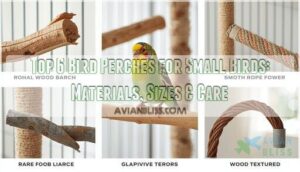
- Top 6 Bird Perches for Small Birds
- Perch Placement and Maintenance Tips
- Frequently Asked Questions (FAQs)
- What do small birds like to play with?
- Why do birds need different sized perches?
- Do birds like their cages covered at night?
- What size hole for small birds?
- Can I make DIY perches at home?
- How many perches does one bird need?
- Do outdoor perches differ from indoor ones?
- What signs indicate a perch needs replacement?
- Are heated perches safe for small birds?
- Conclusion
Key Takeaways
- Small birds need perches with variety to prevent foot injuries like bumblefoot and pressure sores that develop silently from gripping the same smooth dowel all day.
- Natural wood perches (manzanita, apple, birch) with irregular shapes mimic wild branches, strengthen foot muscles, and naturally file nails while providing mental stimulation through texture variety.
- Proper perch diameter for small birds ranges from 6-12mm depending on species and age, with multiple sizes in one cage preventing toe stress and promoting healthy grip distribution.
- Rotate perch positions weekly, inspect for damage monthly, and clean with mild soap or diluted bleach to maintain bird health—four to six perches per cage works best for small species.
Benefits of Perches for Small Birds
Perches aren’t just a place for your bird to sit—they’re essential for keeping those tiny feet healthy and strong.
Different perch materials and diameters let your bird shift their grip naturally throughout the day, which is why choosing the right bird perches for outdoor aviaries makes such a difference in their long-term foot health.
The right perch setup can naturally file down nails and beaks while giving your feathered friend mental stimulation throughout the day.
Let’s look at how these simple additions make such a big difference in your small bird’s daily life.
Exercise and Foot Health
Your bird’s foot strength matters. Proper avian foot care prevents injury. Weight-bearing activity strengthens intrinsic muscles.
Natural perches support healthy foot posture. Different diameters reduce pressure points. This keeps nail health in check.
Smart perch selection means confident gripping. Your feathered friend stays active. Exercise routines on varied perches boost circulation. Tissue resilience improves. Fewer slips occur. Better stability follows.
Natural Nail and Beak Trimming
Natural perches promote avian grooming without trimming tools. Textured surfaces gently file nails. Your bird self-maintains. Beak shaping happens through daily climbing. Nail trimming needs decrease. Bird hygiene improves naturally.
Rough bark wears overgrown keratin. This prevents foot disorders. Avian foot care becomes passive. Bird health thrives. Natural wear beats manual intervention. Your small companion stays comfortable. Less handling stress occurs.
Reducing Stress and Boredom
Perches reduce captivity stress. Varied textures stimulate bird behavior. Natural perches encourage exploration. Your small bird stays mentally active. Behavioral wellness improves daily. Foot dexterity exercises happen naturally.
Environmental design matters critically. Multiple perch heights promote movement. Bird enrichment prevents repetitive behaviors. Stress management becomes passive. Calming techniques include routine perch rotation. Your bird’s avian foot care improves. Small birds thrive mentally. Bird health depends on stimulation.
Encouraging Social Interaction
Social bonding happens on shared perches. Flock dynamics emerge naturally. Your small birds communicate better. Bird socialization needs group enrichment. Natural perches become meeting points. Bird behavior shifts positively.
Cooperative play increases daily. Multiple perches support interaction. Bird cage accessories enable togetherness. Small birds preen together. They vocalize more freely. Companionship reduces isolation stress. Your flock thrives socially.
Choosing The Right Perch Material
Your bird’s feet spend all day gripping perches, so the material you choose really matters.
Since your bird’s feet grip perches all day, choosing the right material is critical for their health and comfort
Some woods naturally file down nails and beaks while others can actually hurt your bird’s feet. Let’s look at which materials keep your small bird safe and happy.
Safe Natural Woods for Small Birds
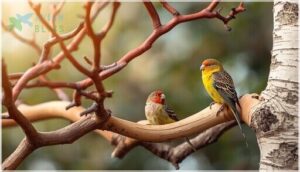
You want your bird’s feet to be happy and healthy. Wood selection matters—choose untreated hardwoods. Manzanita wood tops the list. Safe woods support your feathered friend:
- Manzanita and apple resist wear
- Birch and basswood stay gentle
- Tree branches mimic natural environments
- Fruitwoods provide excellent grip
Natural texture promotes foot exercise. Avoid chemically treated perch materials. Natural perches deliver bird safety first. Learn more about choosing bird-safe wood options to keep your feathered friend healthy.
Pros and Cons of Rope, Plastic, and Ceramic
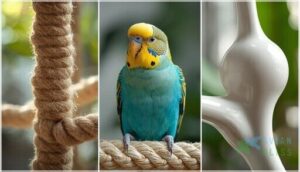
Each perch material supports foot health differently. Rope perches offer grip variability. Fibers encourage natural contortion. Risk: fraying creates entanglement hazards.
Plastic alternatives clean easily. Smooth surfaces resist odor potential. Downside: slippery grip potential. Ceramic perches enable ceramic sanitization. Non-porous design reduces bacteria.
Rope durability varies with chewing habits. Monitor all perch material safety regularly. Inspect weekly. Replace worn options. Your bird’s comfort depends on it.
Eco-Friendly and Non-Toxic Options
Your bird deserves safe woods. Choose untreated maples. Select kiln-dried bamboos. Manzanita resists mold naturally.
Apple wood offers smooth texture. Pear prevents splintering. Birch suits small species well.
Seal surfaces with water-based products. Beeswax polish works perfectly. Food-grade mineral oil conditions without toxicity.
Cork bark reduces pressure points. Natural fiber ropes stay chemical-free. Stone perches diversify grip textures. Sustainable materials protect avian foot care daily.
Ideal Perch Sizes and Designs
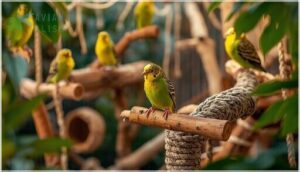
Getting the size right matters more than you think. Your small bird needs perches that let their feet wrap comfortably around—not too thick, not too thin.
Here’s what works best for keeping those tiny feet healthy and happy.
Recommended Diameters for Small Birds
Your small bird’s foot health depends on proper perch diameter—usually six to twelve millimeters for budgies and canaries. Here’s what you need:
- Juvenile birds: five to seven millimeters for developing grip strength
- Adults: seven to nine millimeters for comfortable standing
- Aging birds: eight to twelve millimeters to relieve toe stress
- Narrow options: four to six millimeters for flexibility exercise
- Multiple diameters prevent pressure sores through diameter variation
Just as perch size is important for birds, play a vital role in effective birdhouse design for different species.
Importance of Varying Perch Shapes
Different perch shapes strengthen your bird’s grip through Foot Muscle Balance. Natural Perching Behavior thrives when you mix rounded wood perches with textured rope perches—each engages different toe muscles.
Here’s how Perch Shape Diversity helps:
| Shape Type | Muscle Benefit | Health Impact |
|---|---|---|
| Round natural perches | Even grip distribution | Prevents pressure sores |
| Angled bird perches | Varied toe flex | Builds Bird Grip Strength |
| Textured perch design | Active toe engagement | Reduces fatigue |
Perch Texture Variation keeps feet healthy and active.
Adjustable and Custom Perch Solutions
You’ll find Perch Height Adjustment systems that shift from 6 to 12 inches using tool-free clamps. Adjustable Diameter fittings swap between 0.5 and 1.25 inches for growing birds.
Modular Perches with hinged joints create Reconfigurable Shapes—tilting up to 15 degrees like natural perches. Customizable Materials include untreated birch and coconut shell. These bird cage accessories support bird health through varied perch design without needing a DIY guide.
Top 6 Bird Perches for Small Birds
You’ve got plenty of perch options that’ll keep your small bird happy and healthy. Natural wood stands out as the safest bet, but the right choice depends on your bird’s size and habits.
Here are six perches that balance safety, comfort, and natural wear for tiny beaks and feet.
1. Natural Wood Bird Perch Stand
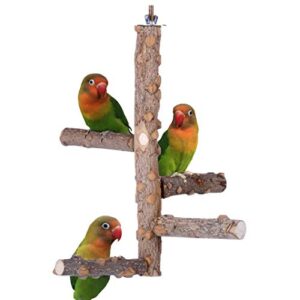
Untreated prickly ash wood. Stable tripod base. Sanded smooth ends. Branch diameter 1.0–2.5 cm. This KINTOR stand measures 11 x 4 x 11 inches. Weighs 5.5 ounces.
Holds 3–4 small parrots. Designed for parrotlets, parakeets, cockatiels, lovebirds. Natural texture promotes foot muscle development. Varied gripping surfaces prevent bumblefoot. Rougher bark areas trim nails naturally. Smooth sections reduce pressure points.
Stainless steel connections guarantee durability. Wide base prevents tipping. Non-slip feet available. Some users note middle branch runs short. Requires threaded wood insert for tripod attachment.
| Best For | Owners of small to medium parrots like parrotlets, parakeets, cockatiels, and lovebirds who want a natural perch that encourages healthy foot development and social play. |
|---|---|
| Material | Natural prickly ash wood |
| Installation | Stainless steel connections |
| Size Category | Small to medium birds |
| Weight | 5.5 ounces |
| Color | Brown |
| Primary Benefit | Social interaction and play |
| Additional Features |
|
- Made from 100% natural prickly ash wood with varied textures that help trim nails and exercise foot muscles
- Sturdy tripod base with stainless steel connections prevents tipping and holds multiple birds at once
- Easy to clean and maintain while providing a comfortable, cage-free play area
- Not suitable for larger bird species due to size and weight limitations
- Middle branch may be too short for some cage configurations
- Requires drilling and a threaded wood insert for proper tripod attachment
2. Mogoko Natural Wood Bird Perches
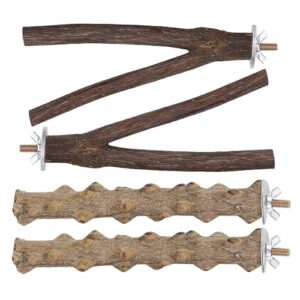
Mogoko’s perches use untreated hardwood. Model MMUS9024 includes two branch and two straight stick pieces. Dimensions: 9.88 x 4.45 x 1.97 inches. Weight: 8.8 ounces.
Irregular surfaces promote foot exercise. Natural texture helps file nails. Screw and disc installation system.
Suitable for canaries, finches, budgies, cockatiels, parakeets. Some users report minor screw tightening issues. Rough areas may need buffing. Not for large birds.
Natural wood color. No paint applied. Non-toxic material. Creates climbing stairs effect. Adds living space. Relieves boredom.
| Best For | Small bird owners looking for a safe, natural perch that encourages exercise and helps with nail maintenance. |
|---|---|
| Material | Natural wood |
| Installation | Screw and disc system |
| Size Category | Small birds |
| Weight | 8.8 ounces |
| Color | Natural wood |
| Primary Benefit | Relieves boredom |
| Additional Features |
|
- Made from untreated, non-toxic hardwood that’s safe for birds
- Irregular branch surfaces promote foot exercise and naturally file nails
- Easy to install with screw and disc system, adds climbing space to the cage
- Some users report the tightening screw can be finicky
- May have rough or sharp spots that need sanding down before use
- Not strong enough for larger bird species or heavy use
3. Portable Parrot Play Stand Perch
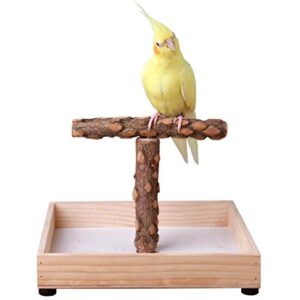
KINTOR’s tabletop stand uses prickly ash wood. Measures 10.2 x 9 x 6.2 inches. Weighs 1.72 pounds. Base: 26 x 23 cm.
Hidden screw design. Easy assembly. Non-skid feet provide stability. Lets you train your bird outside the cage.
Works for small to medium parrots. Cockatiels included. Not for tiny finches. Some branches feel rough. Platform gets chewed quickly.
Natural finish. No paint. No toxic sealants. Encourages hand training. Limits mischief. Moves easily room to room.
Clean weekly. Check screws monthly. Replace damaged wood promptly.
| Best For | Bird owners with small to medium parrots like cockatiels who want a portable training perch made from natural wood. |
|---|---|
| Material | Natural prickly ash wood |
| Installation | Easy assembly/disassembly |
| Size Category | Small to medium birds |
| Weight | 1.72 pounds |
| Color | Natural wood |
| Primary Benefit | Training and interaction |
| Additional Features |
|
- Made from 100% natural prickly ash wood with no paint or toxic finishes
- Easy to assemble and move between rooms for training sessions
- Stable base with non-skid feet and hidden screws for safety
- Branches can feel rough on some birds’ feet
- Platform gets chewed up quickly by destructive birds
- Not suitable for very small birds like finches
4. Natural Wood Bird Perch Toy
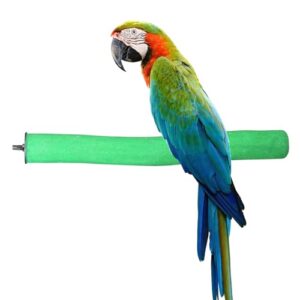
This toy perch combines rest with play. Hardwood branches create texture. Grape wood works well. Resists chewing longer.
Central perch holds feet. Outer branches wear beaks. Stainless steel hardware. Won’t rust. Stays secure.
Measures 4 to 6 inches. Fits standard small cages. Safe for parakeets. Good for canaries too.
Your bird grips the center. Gnaws surrounding wood. Gets exercise. Keeps beak trim. No clippers needed.
Dense wood lasts. Provides lasting fun. Enriches daily life.
| Best For | Bird owners looking for a natural perch that doubles as a nail and beak trimmer while providing foot exercise for small to medium-sized birds like parakeets, cockatiels, and parrotlets. |
|---|---|
| Material | Natural wood with quartz sands |
| Installation | Easy install and clean |
| Size Category | Multiple sizes available |
| Weight | 12 ounces |
| Color | Green |
| Primary Benefit | Foot exercise and nail trimming |
| Additional Features |
|
- Natural quartz sand surface keeps nails and beaks trimmed without clippers
- Made from durable natural materials (wood and quartz) that resist wear
- Easy to clean with water and comes in three size options to fit different cages
- Rough surface may be too abrasive for smaller or sensitive birds, risking foot discomfort
- Some buyers found the perch too long for their cages or prone to breaking if not carefully installed
- Birds may need an adjustment period before accepting the perch
5. Manzanita Bird Perch
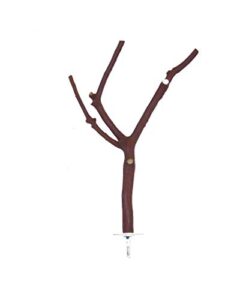
Smooth hardwood branches. No sap present. Zero toxins found. Natural multi-branch design. Exercises foot muscles. Prevents pressure sores.
Diameter varies naturally. Half inch to eighth. Different grip points. Strengthens bird feet. Reduces nail overgrowth.
Dense wood resists gnawing. Lasts months longer. Won’t splinter easily. Kiln-dried for stability. Stays secure once mounted.
Comes with hardware. Bolts attach firmly. Fits standard cages. Measures 7 to 8 inches. Perfect for parakeets. Good for finches. Suitable for conures.
Clean with mild soap. Air dry completely. Inspect for cracks. Rotate when needed.
| Best For | Small bird owners looking for a natural, long-lasting perch that promotes healthy feet and provides varied grip positions for parakeets, finches, and conures. |
|---|---|
| Material | Manzanita wood |
| Installation | Includes mounting hardware |
| Size Category | Small birds |
| Weight | 2 pounds |
| Color | Brown |
| Primary Benefit | Healthy feet exercise |
| Additional Features |
|
- Dense manzanita wood resists chewing and splintering, lasting significantly longer than softer perch materials
- Natural multi-branch design with varying diameters exercises foot muscles and prevents pressure sores
- Comes with mounting hardware for secure installation in standard cages
- May not support larger or heavier bird species due to its size and weight capacity
- Natural branch shape varies, so you can’t predict the exact configuration you’ll receive
- Some birds may ignore the perch entirely, preferring other surfaces in their cage
6. Natural Grape Vine Bird Perches
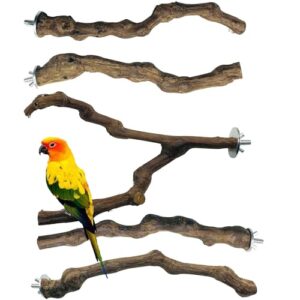
Twisted vines create nature. Irregular diameters present. Half inch to one and three quarters. Lengths vary. Eight to eleven inches. Fits small birds perfectly.
Non-toxic when untreated. Safe for chewing. Safe for gripping. Unique shapes each time. Mimics wild branches. Exercises tiny feet. Bark texture aids beaks.
Natural wear occurs. Birds rasp constantly. Gnawing keeps beaks healthy. Mount horizontally or vertically. Cage top works. Interior placement fine. Design depends on cage.
Clean carefully when wet. Drying takes time. Inspect for damage regularly.
| Best For | Bird owners with small to medium parrots, cockatiels, or parakeets who want a natural perch that supports foot health and provides enrichment through chewing and climbing. |
|---|---|
| Material | Natural grapevine |
| Installation | Metal wing nut and bolts |
| Size Category | Medium-sized birds |
| Weight | 1.5 pounds |
| Color | Natural brown |
| Primary Benefit | Rest and exercise |
| Additional Features |
|
- Natural grapevine material is safe for chewing and mimics wild branches with varied diameters that exercise feet and keep beaks healthy
- Includes multiple perches (5 total) with unique shapes and textures that offer climbing, swinging, and resting options
- Easy to install with included hardware and can be mounted in different positions inside the cage
- May be too large for very small birds like budgies, limiting versatility across bird sizes
- Some customers received perches with stained or dyed wood instead of purely natural material
- Difficult to clean when wet and takes considerable time to dry, plus higher price point than some alternatives
Perch Placement and Maintenance Tips
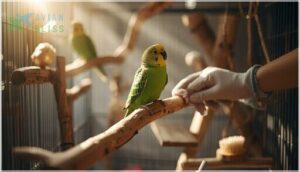
You’ve got the right perch. Now put it where your bird will actually use it.
Smart placement keeps your small bird happy and healthy. Regular cleaning and quick checks mean those perches stay safe for the long haul.
Optimal Perch Arrangement in Cages
Think vertical. Space perches two to three inches apart to give your bird room to climb. Mix heights—low, middle, high—so they can hop and explore.
Use natural perches and varied cage furniture to work different foot muscles. Avoid crowding. Keep water bowls clear below. Secure each piece.
This layout promotes bird movement patterns and optimizes vertical space management for happier, healthier feet.
Cleaning and Disinfecting Perches
Dirty perches harbor bacteria and fungi that threaten bird health. Scrub them weekly with mild soap and warm water. Rinse thoroughly. Disinfect using diluted bleach—one part to thirty-two parts water—or a vet-approved solution.
- Natural perches need scrubbing before disinfection
- Plastic and ceramic types dry completely
- Rinse twice to remove all residue
- Air dry in sunlight or ventilation
- Increase frequency during humid months
This perch sanitation routine protects foot health and avian wellness.
Rotating and Inspecting Perches for Safety
Regular Perch Rotation and Safety Checks prevent injuries and maintain bird health. Inspect natural perches weekly for cracks or splinters. Check mounting points monthly for corrosion. Rotate locations weekly to promote varied foot health and prevent boredom.
| Safety Checks | Material Durability | Bird Monitoring |
|---|---|---|
| Monthly inspections | Replace splintered wood | Watch stress signals |
| Tighten fasteners | Check rope fraying | Monitor foot placement |
| Clear pinch points | Verify smooth surfaces | Track activity levels |
Mark Rotation Schedules with color-coded tags. This bird cage accessories maintenance protects avian wellness.
Frequently Asked Questions (FAQs)
What do small birds like to play with?
Shreddable toys captivate small birds like a treasure hunt. They love foraging puzzles, bell rattles, and natural wood perches.
Bamboo skewers and paper strips offer sensory stimulation. Interactive fun strengthens your bond daily.
Why do birds need different sized perches?
Different diameter perches spread pressure across your bird’s feet. Varied sizes strengthen grip. Prevent bumblefoot.
Exercise toes naturally. Mimic wild branches. Reduce soreness. Promote healthy foot muscles.
Essential for small birds‘ wellbeing.
Do birds like their cages covered at night?
Many small birds sleep better with cage covering. Darkness promotes rest. Reduces stress. Mimics natural roosting.
Make sure breathable fabric. Watch your pet bird’s behavior. Some prefer partial coverage. Prioritize airflow for bird health.
What size hole for small birds?
Like finding the perfect doorway for your home, small birds need a nesting box entrance of 1⅛ to 1¼ inches diameter—allowing safe access while keeping larger intruders out.
Can I make DIY perches at home?
You can craft natural wood perches at home. Select untreated branches. Sand rough edges smooth. Drill secure anchor holes. Use stainless steel hardware.
Bake wood first. Inspect for mold before use.
How many perches does one bird need?
Four to six perches. Ideal bird space management. Different diameters needed. Foot health priority.
Natural perches preferred. Wood perches recommended.
Varied cage layout essential. Prevents pressure sores. Helps maintain muscle balance. Bird perch selection matters.
Do outdoor perches differ from indoor ones?
Yes. Outdoor perches need weather resistance and UV protection. Natural wood perches withstand rain. Rope perches trap moisture outdoors.
Indoor options stay dry. Durability tests matter. Check anchoring strength. Bird perches require different materials outside.
What signs indicate a perch needs replacement?
Wondering when to swap out your bird’s favorite spot? Watch for deep gouges, cracks, or rot. Fraying rope, foot disorders, and pressure sores signal trouble. Cleaning issues mean it’s time.
Are heated perches safe for small birds?
Heated perches pose burn risks. Target 85–95°F surface temps. Check thermostats. Inspect cords daily.
Monitor foot redness. Offer non-heated alternatives. Rotate perch types.
Maintain electrical safety. Observe stress signals. Prioritize thermal comfort and bird health.
Conclusion
Healthy feet need variety. Strong legs need movement. Content birds need choice. Your perches create that foundation. Mix textures. Rotate diameters. Change heights regularly.
Those six bird perches for small birds give you starting options—natural wood for grip strength, rope for comfort, branches for mental stimulation. Watch your finch’s stance. Notice which perches she favors. Adjust accordingly. Small shifts prevent big problems.
Your attention to perch quality directly translates to years of active, pain-free hopping.