This site is supported by our readers. We may earn a commission, at no cost to you, if you purchase through links.
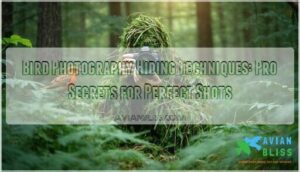 You’ll need solid bird photography hiding techniques to get close without spooking your subjects.
Start with natural camouflage using earth-toned clothing and local vegetation. Build portable hides from lightweight fabric or use your car as a mobile blind.
Position hides along flight paths or near feeding areas, staying downwind to avoid scent detection. Keep movements slow and minimal once birds arrive.
Photography blinds work best when placed days before shooting, letting birds adjust to the new structure. Ghillie suits offer ultimate concealment for ground-level shots.
The secret lies in understanding specific bird behavior patterns that determine your hiding strategy’s success.
Table Of Contents
- Key Takeaways
- Bird Hiding Techniques
- Camouflage Strategies
- Building Photography Hides
- Bird Photography Concealment
- Advanced Hiding Methods
- Frequently Asked Questions (FAQs)
- What is the best camo for bird photography?
- What is the secret of bird photography?
- What F stop is best for bird photography?
- How to build a photography hide?
- What weather conditions work best for hiding?
- How do seasonal changes affect hide effectiveness?
- When should photographers arrive at their hides?
- What backup plans help when hides fail?
- How do different bird species react to hides?
- Conclusion
Key Takeaways
- Master natural camouflage by wearing earth-toned clothing and positioning yourself within existing foliage rather than against it, so you’ll blend into the landscape like part of the scenery.
- Build or use portable hides with lightweight frames and camouflage netting, placing them days before shooting near feeding areas or flight paths so birds can adjust to the new structure.
- Control your scent and sound by staying downwind, using scent-elimination sprays, and employing silent camera modes or remote shutters to avoid spooking birds with human odors or equipment noise.
- Time your arrival 30-60 minutes before dawn and practice patience – you’ll need to wait hours in position while birds settle and begin their natural behavior patterns for the best shots.
Bird Hiding Techniques
You’ll need effective hiding techniques to get close to birds without spooking them. The key is blending into their world so they act naturally while you capture stunning shots.
Natural Camouflage Methods
You’ll blend into nature like a shadow when you master leaf litter positioning and tree bark patterns.
Natural shadows become your best friend during golden hour shoots. Study seasonal changes in vegetation cover – autumn’s browns and spring’s greens demand different camouflage techniques.
Position yourself within existing foliage rather than against it. Understanding cryptic and disruptive coloration can further enhance your concealment.
Your bird photography hide works best when you become part of the landscape, not an obvious addition.
Become the landscape, not the intruder watching it.
Artificial Hide Construction
Modern artificial hides beat natural blinds through smart engineering.
You’ll construct portable hide frames using lightweight aluminum that cuts weight by 35%.
Add camouflage netting with 3D leaf patterns – they reduce bird detection by 50%.
Waterproofing materials like PVC coatings boost water resistance 40%.
Consider exploring a photography hide’s features for ideal concealment.
Include ventilation systems to prevent condensation and multiple observation windows for better shots.
Photography Blind Materials
Anyone can build professional photography blinds with the right materials.
Smart fabric choices and sturdy frame materials make all the difference.
- Fabric Choices: Ripstop nylon or canvas for weather resistance
- Frame Materials: Lightweight aluminum poles or PVC pipes
- Camouflage Patterns: Natural colors that match your shooting location
- Weather Resistance: Waterproof coatings and sealed seams
- Portability Options: Collapsible designs for easy transport
For superior durability, consider options for high tensile strength.
Camouflage Strategies
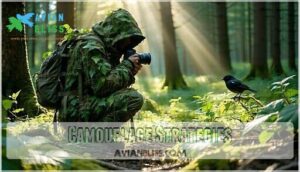
Disguising yourself among nature’s backdrop requires mastering several key camouflage techniques that fool even sharp-eyed birds.
Background matching forms your foundation – choose colors and patterns that blend with your surroundings.
Disruptive coloration breaks up your outline using contrasting patches.
Mimicry techniques help you copy natural textures like bark or leaves.
Your ghillie suit becomes invisible when you add local vegetation.
Seasonal camouflage means switching patterns as environments change.
Shadow management keeps you hidden by avoiding harsh light contrasts.
Woodland hide construction works best when you understand these principles of disguise and concealment.
Building Photography Hides
You’ll need a well-built hide to get close to birds without scaring them away. The right hide design can mean the difference between amazing shots and empty memory cards.
Portable Hide Designs
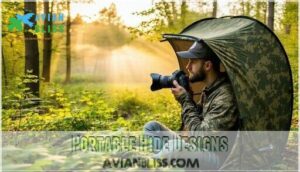
Pop-up Blinds offer game-changing mobility for bird photographers.
These Lightweight Materials fold into backpack-friendly sizes yet deploy in under two minutes.
Quality Camo Patterns break up your outline while integrated shooting ports maintain full camera access.
Many models include Stool Integration for comfort during long waits.
Effective camouflage is essential for successful bird watching.
Quick Setup means you’ll catch those fleeting golden hour moments instead of wrestling with complex hide construction, providing an opportunity for successful bird watching with effective camouflage.
Permanent Hide Installation
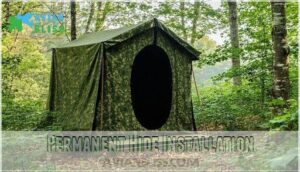
Permanent photography blind installation requires careful site selection and foundation construction.
Choose spots near water sources or feeding areas where birds naturally gather.
Your foundation needs solid ground and proper drainage.
Key installation priorities:
- Weatherproofing protects your investment from rain and wind damage
- Interior design with shelving at 72cm height optimizes tripod placement comfort
- Maintenance schedule prevents structural issues and preserves camouflage effectiveness
Use sturdy wood framing with diagonal supports.
To photograph elusive animals, consider building a photography hide.
Install roofing felt and camouflage tarpaulin for weather protection.
Add carpet flooring to minimize noise that disturbs bird behavior during photography sessions.
Hide Placement Techniques
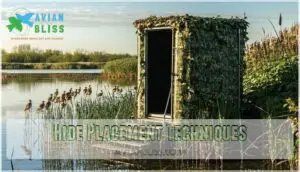
Positioning your hide requires strategic thinking about ideal positioning and sun direction.
Place your lakeside hide where morning light illuminates birds from behind you.
Consider background considerations like avoiding busy patterns that reveal your outline.
Field hide placement works best near natural cover.
Bird behavior dictates timing – watch feeding patterns first.
Scent control means positioning downwind.
Keep a low profile below the bird’s eye level.
Blind placement succeeds when you become part of the habitat integration.
Bird Photography Concealment
You’ll need to master concealment techniques that go beyond basic hiding to capture stunning bird photos.
The right combination of vehicle hides, scent control, and sound reduction can make you nearly invisible to even the most skittish species.
Vehicle-Based Hides
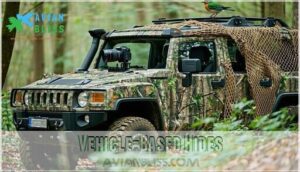
Your car becomes the perfect mobile blind when you master these techniques. Vehicle Camouflage starts with earth-tone covers and mesh netting to break up your outline. Window Mounts let you stabilize cameras while staying hidden inside.
- Interior Modifications – Remove headrests and install swivel seats for better shooting angles
- Driving Techniques – Approach slowly with engine off the last 100 yards when possible
- Location Scouting – Find spots where your vehicle looks natural in the landscape
- Low Profile positioning keeps birds comfortable while maintaining shooting distance. To further improve your chances, consider planting native trees to create natural perches.
Scent Control Methods
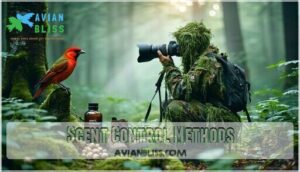
Wind direction matters most when you approach birds.
Position yourself downwind so your human odor drifts away from them.
Use scent elimination sprays on clothes and gear before early morning shoots.
Some photographers apply natural scents like vanilla to mask their presence.
Clean boots and wash with scent-free soap help too.
It’s important to note that human scent can bias research results.
Remote shutter release keeps you farther back while minimizing disturbance through patient observation techniques.
Sound Minimization Techniques
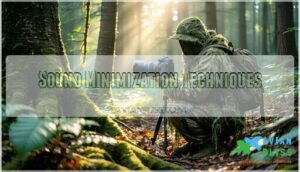
Your camera’s clicking sounds like a dinner bell to birds.
Muffling equipment wraps your camera body to dampen noise.
Silent shutters or electronic modes eliminate the mirror slap completely.
Early morning sessions work best when ambient sounds mask your movements.
Practice stealth movement techniques at home first.
Remote shutters let you trigger shots from distance.
Patience and observation pays off more than chasing the perfect angle, requiring patience.
Advanced Hiding Methods
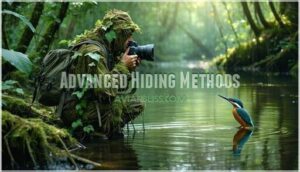
When basic hiding methods aren’t enough, you’ll need advanced techniques that make you nearly invisible to even the wariest birds.
These professional-grade approaches require more effort but deliver stunning close-up shots that standard blinds simply can’t achieve.
Ghillie Suit Construction
Building your own ghillie suit gives you the best camouflage for bird photography.
Start with lightweight burlap or jute for suit materials. Choose camouflage patterns that match your local environment.
Use simple stitching techniques to attach vegetation directly to the fabric. For sourcing materials, consider options for ghillie suit burlap.
Keep suit weight under ten pounds so you can move easily. This construction approach lets you get closer to birds than store-bought options.
Netting and Fabric Hides
Netting Camouflage offers versatility that ghillie suits can’t match. You’ll find fabric hides easier to set up and move between locations.
Choose patterns that match your local environment. Weather Resistance matters – invest in waterproof materials with proper Hide Ventilation.
Pattern Selection should blend with surrounding vegetation. Test Fabric Durability before field use.
To further improve your chances, consider planting native trees for natural perches. Smart approach techniques and patience observation will reward you with stunning shots.
Underground Hide Designs
Underground hides put you below ground level for eye-level shots with ground birds.
Get underground for eye-level shots that ground birds can’t resist.
They require careful planning, including proper drainage systems and ventilation design to prevent flooding and CO2 buildup.
Plan your burrow entrance carefully – make it long enough to control light and scent.
Install sturdy camera mounts and verify structural integrity supports soil weight.
These hiding techniques require patience observation but deliver stunning results.
Frequently Asked Questions (FAQs)
What is the best camo for bird photography?
Like a shadow melting into dawn, you’ll vanish among feathers when wearing earth-toned camo patterns.
Choose muted greens and browns that match your local environment.
Avoid bright colors and shiny materials that’ll spook birds away, ensuring you blend in seamlessly with the environment.
What is the secret of bird photography?
Patience beats speed every time. You’ll wait hours for the perfect shot, stay still when your back aches, and learn each bird’s habits like clockwork.
What F stop is best for bird photography?
You’ll want f/6 to f/8 for sharp results. These apertures balance depth of field with shutter speed. They keep your subject crisp while blurring distracting backgrounds nicely.
How to build a photography hide?
You’ll need sturdy materials like camouflage netting or burlap fabric stretched over a lightweight frame.
Choose materials that match your environment.
Position it near water sources or feeding areas where birds gather naturally, using burlap to blend in.
What weather conditions work best for hiding?
Birds change behavior during 70% of weather patterns.
Overcast days with light rain work best. Thick clouds diffuse harsh sunlight, creating even lighting.
Birds stay active longer. Wind masks your movements and sounds.
Avoid bright sunny days when birds seek shade, as they are less active during these times, and even lighting is not present.
How do seasonal changes affect hide effectiveness?
Seasonal changes dramatically shift hide effectiveness.
Spring’s fresh foliage provides better cover than winter’s bare branches.
Summer’s thick vegetation offers maximum concealment.
Fall’s changing leaves create camouflage opportunities but require color adjustments.
When should photographers arrive at their hides?
Arrive at your hide well before dawn – ideally 30-60 minutes early.
This gives birds time to settle after you’re positioned and guarantees you’re ready when activity peaks at first light.
What backup plans help when hides fail?
Like switching tools when your hammer breaks, you’ll need flexible alternatives.
Move to natural cover like bushes or trees.
Use your car as a mobile blind. Try stalking techniques with telephoto lenses.
Pack a portable pop-up blind for quick setup.
How do different bird species react to hides?
Ground-dwelling birds like quail often ignore well-placed hides completely.
Tree-dwelling species such as warblers stay more alert, checking your setup frequently.
Raptors circle overhead, suspicious of anything new in their territory, acting like raptors.
Conclusion
Like Ansel Adams waiting hours for perfect light, mastering bird photography hiding techniques requires patience and preparation.
Your success depends on choosing the right concealment method for each situation.
Natural camouflage works for quick setups. Portable hides offer flexibility. Permanent blinds provide comfort for long sessions. Vehicle hides keep you mobile.
Remember that birds adapt to your presence over time. Practice these techniques regularly. Your camera skills mean nothing without proper concealment first.
- https://www.divebombindustries.com/blogs/news/camouflage-tips-for-staying-hidden-while-taking-photos
- https://wildlifephotoapprentice.com/2024/02/02/the-art-and-science-of-camouflage-in-wildlife-photography-hide-and-seek-in-the-natural-world/
- https://wdophoto.com/2023/10/29/the-surprising-value-of-camouflage/
- https://www.allaboutbirds.org/news/how-to-get-close-to-birds-4-strategies-from-a-photography-pro/
- https://insider.kelbyone.com/capturing-wildlife-from-photo-blindsby-tom-bol/