This site is supported by our readers. We may earn a commission, at no cost to you, if you purchase through links.
 You’d think bird poop would just wipe away, but that white splatter hardens like concrete within minutes, and the uric acid starts eating through paint, metal, and stone faster than most people realize.
I’ve seen car hoods permanently etched, deck furniture ruined, and patio stones stained beyond recognition—all because someone waited a few days to clean it off.
The trick isn’t just removing the mess; it’s knowing which method works for each surface without causing more damage. Different materials need different approaches, and using the wrong cleaner can turn a five-minute fix into an expensive repair.
Table Of Contents
- Key Takeaways
- Cleaning Bird Poop Effectively
- Bird Droppings Composition
- Surface Specific Cleaning Methods
- Removing Bird Poop From Various Materials
- Preventing Future Bird Poop Stains
- Frequently Asked Questions (FAQs)
- What is the best way to remove bird poop?
- Does vinegar dissolve bird poop?
- What dissolves bird poo?
- What is the best product for removing bird droppings?
- How to clean bird poop off electronics?
- Does bird poop damage solar panels?
- Can bird droppings be composted safely?
- How to protect outdoor furniture covers?
- Are enzymatic cleaners effective on bird droppings?
- What tools help minimize damage during cleaning?
- Conclusion
Key Takeaways
- Bird droppings harden within minutes and their uric acid eats through paint, metal, and stone fast—cleaning within 24-48 hours prevents permanent etching and cuts damage depth by up to 70%.
- Different surfaces need specific cleaning methods: vinegar works for most materials, baking soda paste protects delicate surfaces, dish soap handles fabrics, and you should never use the same approach on wood that you’d use on concrete or car paint.
- Bird poop isn’t just gross—it carries over 60 diseases including salmonella (in 2-3% of droppings) and E. coli (up to 45% in some areas), so always wear gloves and a mask during cleanup to avoid bacterial infections.
- Prevention beats cleanup every time: applying protective wax or ceramic coatings reduces dropping adhesion by 40-70%, while bird spikes cut pigeon populations by up to 70% and save you from repeated scrubbing sessions.
Cleaning Bird Poop Effectively
You’ve got the right cleaning agents in your arsenal—now it’s time to put them to work. Each method addresses bird droppings in a slightly different way, so you can match your approach to what you’ve got on hand.
Here’s how to use each one to get your surfaces spotless without breaking a sweat.
Using Seltzer Water for Stain Removal
Seltzer water can tackle fresh bird poop, but let’s get real about its efficacy—it’s no miracle worker. Pour plain seltzer (skip the flavored stuff) directly onto the mess and let it sit for five minutes. The carbonation softens the gunk, making it easier to wipe away with a microfiber cloth.
Here’s the catch: seltzer only removes about 30% of dried, stubborn stains on its own. For tougher jobs, use it as a pre-treatment, then follow up with dish soap or a dedicated cleaner to boost removal rates by 40%.
Avoid using it on untreated wood—it can cause warping. Seltzer’s gentle on paint and metal, so it’s perfect when you need quick, safe cleaning solutions without harsh chemicals. Just don’t expect it to outperform soap for removing bird poop stains completely.
Applying White Vinegar for Tough Stains
When seltzer falls short, white vinegar steps up to the plate. Its acidic properties (about 5-8% acetic acid) dissolve the uric acid in dried bird droppings—the stuff that turns them into cement on your deck.
Here’s your battle plan for removing bird poop stains:
- Mix it right: Combine white vinegar and water in a 1:1 ratio in a spray bottle for easier application.
- Soak it good: Spray the solution generously on the stain and let that vinegar dwell time work—wait 5-15 minutes for penetration.
- Scrub gently: Use a soft-bristled brush or microfiber cloth to wipe away softened droppings without scratching.
- Rinse thoroughly: Flush with warm water to remove all residue and prevent surface damage from prolonged acid exposure.
- Go full-strength if needed: For stubborn stains, apply undiluted vinegar for up to 30 minutes—but skip this on marble or granite.
This cleaning solution works on most surfaces, from car paint to metal, making it your go-to vinegar benefit for tough jobs.
Utilizing Baking Soda for Mild Scrubbing
When vinegar doesn’t quite cut it, baking soda steps in as your gentle warrior. This mild abrasive removes bird droppings without scratching delicate surfaces—think car paint, birdbaths, or patio furniture.
Here’s how to utilize those Baking Soda Benefits for surface cleaning:
Mix 2-3 tablespoons of baking soda with enough water to form a thick paste. Spread it directly onto the stain and let it sit for 10-30 minutes. The alkalinity neutralizes the acidic uric acid while the paste softens hardened droppings.
After the wait, grab a soft sponge or microfiber cloth and gently scrub in circular motions—this Gentle Scrubbing lifts grime without damage. Rinse thoroughly with water.
Baking soda shines as an Eco Friendly Cleaning option: non-toxic, pet-safe, and biodegradable. Plus, it absorbs odors while you work. For stubborn stains, reapply or combine with a drop of dish soap for extra punch. This Surface Protection method works on wood, metal, concrete, and fabric—your all-around cleaning bird poop solution.
Removing Stains With Dish Soap and Water
Baking soda manages gentle jobs, but when you need Dish Soap Effectiveness for fabrics and cushions, grab your kitchen staple. Mix 1 tablespoon of dish soap with 2 cups of warm water—this Soap Water Ratio dissolves oils and uric acid in bird droppings without harsh chemicals.
Spray or sponge it on, let it soak for 5-10 minutes, then blot (don’t scrub aggressively) to lift stains. Fresh messes wipe away fast; dried ones need patience. Rinse thoroughly to avoid sticky residue.
These Stain Removal Tips work because dish soap cuts through grime while staying surface-safe. Follow Cleaning Safety Precautions—test delicate materials first. Bonus: it’s biodegradable, reducing Environmental Impact while removing stains from your outdoor space.
Bird Droppings Composition
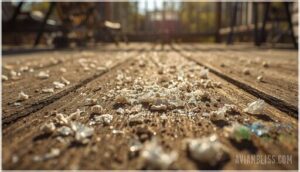
Bird poop isn’t just gross—it’s a chemical cocktail that can wreak havoc on your property if you don’t understand what you’re dealing with.
The composition of bird droppings determines how they stain, corrode, and spread potential health risks.
Here’s what’s really happening when those white splatters land on your deck.
Uric Acid and Its Effects on Surfaces
You know what’s eating away at your deck, car, or patio right now? Uric acid from bird droppings—and it doesn’t play nice. This stuff crystallizes fast, bonding to surfaces with a grip that water can’t break. Research shows uric acid triggers pitting corrosion on metals like titanium within just seven days, stripping away protective layers and ramping up corrosion rates.
Here’s what makes it so destructive:
- Insoluble in water—rinsing alone won’t touch it.
- Acidic corrosion degrades paint, metal, and stone coatings quickly.
- Surface erosion worsens under moisture and sunlight.
- Chemical reactions create rough, pitted textures that trap more grime.
- Material degradation costs thousands in repairs if you wait.
Act fast. The longer it sits, the deeper the acidic damage goes.
Factors Affecting Dropping Color and Consistency
What you’re looking at isn’t random—bird droppings vary wildly based on dietary influence and environmental factors. Berry-heavy diets create purple or dark stains thanks to anthocyanins, while seed-based meals produce brown droppings. Hydration matters too: dehydrated birds leave clumpier, darker deposits, while well-hydrated ones create wetter messes with higher liquid content.
Bird species also play a role—carnivorous gulls produce lighter, more liquid droppings compared to seed-eating songbirds. Temperature shifts dropping viscosity by up to 50%, affecting how the acidic content spreads and stains. Understanding this chemical composition helps you tackle bird poop removal strategically.
Bacterial and Disease Risks in Bird Droppings
Here’s the truth: bird droppings pack more than just a nasty surprise. They’re loaded with bacterial exposure risks and fungal infections that can seriously harm you. Over 60 diseases link back to bird poop, including cryptococcosis and histoplasmosis—both airborne threats that hit your lungs hard when you breathe in dried fecal dust.
The health hazards don’t stop there:
- Salmonella shows up in roughly 2-3% of wild bird droppings, causing food poisoning symptoms
- E. coli appears in up to 45% of samples in some regions, risking severe infections
- Zoonotic risks multiply in urban areas where pigeons and starlings concentrate
- Pathogen spread happens through direct contact, contaminated surfaces, or aerosolized particles
- Disease transmission peaks in damp, shaded spots where bacteria thrive longest
Always wear gloves and a mask during cleanup—these aren’t suggestions, they’re your defense against serious bacterial and disease risks in bird droppings.
Surface Specific Cleaning Methods
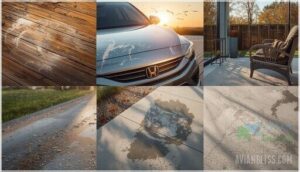
Not all surfaces play by the same rules regarding bird poop cleanup. What works on your deck might wreck your car’s paint, and what’s safe for concrete could scratch glass.
Here’s how to tackle the mess on wood, metal, plastic, glass, wicker, and large outdoor areas without causing more damage than the birds already did.
Cleaning Wood Surfaces With Caution
Wood is like a sponge—let moisture linger too long, and you’re asking for warping or finish damage. When cleaning bird poop from wood decks or furniture, act fast. Use a cleaning solution of diluted white vinegar (1:1 with water) to neutralize uric acid without stripping the finish.
A soft-bristle scrub brush lifts residue gently, protecting delicate surfaces. After acid removal, seal the area with a wood-safe protectant—this step is essential for wood protection and surface restoration. Quick action plus smart wood finishing keeps your deck looking sharp and damage-free.
Effective Techniques for Metal and Plastic
Metal and plastic don’t back down easily, but bird droppings still pack a corrosive punch—uric acid can etch metal surfaces within days.
Start by soaking hardened deposits with a 3:1 water-to-vinegar solution for ten minutes; this acid removal trick cuts scrubbing time in half. Use microfiber cloths on metal to prevent micro-scratches, and baking soda paste on plastic for gentle stain lifting.
Finish with a ceramic or polymer coating for surface protection—it reduces future dropping adherence by up to 80% and delays corrosion prevention markedly.
Cleaning Delicate Surfaces Like Glass and Wicker
Glass and wicker demand your gentlest touch—uric acid etches glass within 48 hours and degrades wicker coatings fast. Clean within 24 hours to cut etch depth by 70%, and consider bird deterrents to stop the mess before it starts.
For glass etching prevention, mix 1:1 vinegar-water, spray generously, and wipe with microfiber cloths to avoid scratches. A baking soda paste neutralizes acid on both delicate surfaces.
Wicker restoration needs a soft-bristle scrub brush dipped in mild dish soap solution—work gently through weaving without soaking. A baking soda paste neutralizes acid on both delicate surfaces.
Power Washing for Large Areas
When delicate surfaces are spotless, it’s time to tackle big spaces where bird droppings pile up fast. Power washing blasts away buildup on patios, decks, and sidewalks without hours of scrubbing—pressure washers generate 750 to 4,000 PSI, demolishing what garden hoses can’t touch.
Start with surface preparation: wet droppings thoroughly and let enzyme cleaners sit for 5 minutes to soften dried waste. Use adjustable nozzles (fan tips work best) to avoid damaging wood or paint. Keep pressure between 1,500–3,000 PSI for most outdoor surfaces.
Equipment safety matters—wear goggles and gloves, and never aim at people or pets. Power washing saves 50% of your water compared to manual methods and cuts cleaning time in half. For stubborn stains, add eco-friendly cleaning solutions directly through your washer’s detergent tank for serious cleaning power on large areas.
Removing Bird Poop From Various Materials
Not every surface manages bird poop the same way—what works on your car might wreck your patio cushions.
The trick is matching your cleaning method to the material you’re dealing with, whether it’s paint, fabric, concrete, or something else.
Here’s how to tackle the most common surfaces without making things worse.
Cleaning Bird Poop From Cars and Painted Surfaces
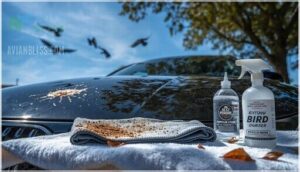
Your car’s clear coat is under attack the moment bird droppings land—uric acid starts etching within hours. Don’t let those splattered messes win. Here’s your battle plan for cleaning bird poop from cars:
- Strike within 120 minutes—delaying doubles your corrosion risk and increases surface etching damage.
- Spray distilled water directly on the dropping to soften it for 2–5 minutes before touching anything.
- Grab a microfiber cloth—it cuts scratching risk by 80% compared to paper towels when removing bird poop from surfaces.
- Apply pH-neutral car shampoo in gentle circles for acid removal without stripping your wax layer.
- Seal with car waxing—monthly application reduces etching probability by 42% for enhanced paint protection and dropping prevention.
For hardened bird poop stains, place a damp towel over the mess for 15 minutes, then wipe clean.
Removing Stains From Fabric Cushions and Canvas

Painted surfaces need speed, while fabric cushions require a more strategic approach. Bird droppings on outdoor cushions demand quick attention, but a gentler touch than what you’d use on your car. Here’s your fabric stain removal playbook:
Mix 1 tablespoon of dish soap with 2 cups of water for cleaning bird poop from canvas and cushions. Pour seltzer directly onto hardened droppings to loosen the mess before scrubbing. For tougher stains, create a thick paste using 2 tablespoons of baking soda and water, let it sit for 5-10 minutes, then blot clean. This method also eliminates bird dropping odor.
White vinegar, mixed 1:1 with water, dissolves the uric acid in bird droppings when stain removal becomes tricky. Spray the solution, wait several minutes, then scrub gently. Always use cold water, as hot water can permanently cook proteins into fabric fibers.
Your Cleaning Techniques Arsenal:
| Solution | Best For |
|---|---|
| Dish soap + water | Fresh droppings, routine cleaning |
| Baking soda paste | Dried stains, odor removal |
| White vinegar spray | Tough acidic stains, canvas cleaning tips |
Air-dry cushions in the shade to prevent mildew.
Cleaning Concrete and Cracks With Ease
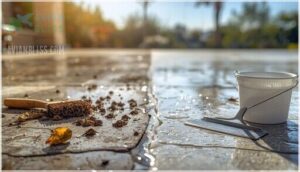
Concrete surfaces take a beating from bird droppings, but you’ve got this. That porous restoration challenge starts with one simple rule: hydrate before you scrub. Pour water directly on dried droppings—this softens the uric acid buildup and makes removing bird poop from surfaces way easier than brute-force scrubbing.
Here’s your concrete cleaning game plan:
- Gently scrape bulk waste with a flat-edged tool to avoid surface damage
- Apply diluted white vinegar (1:1 with water) for acid removal and stain lifting
- Scrub with a stiff brush using dish soap mixed with warm water for cleaning bird poop from decks
- Rinse thoroughly and inspect for stubborn stains needing repeat treatment
For cracks, fill them with water before cleaning—this drives your solution deeper. A toothbrush works wonders in tight crevices. If bird droppings are seriously stubborn, oxygen bleach (like Oxiclean) handles organic stains without harming concrete. For large areas, pressure washing gets the job done fast, but keep pressure moderate around existing cracks to prevent widening.
After cleaning concrete, seal it. Surface protection prevents future absorption and makes next time’s cleanup a breeze.
Using Bird Poop Remover for Easy Removal
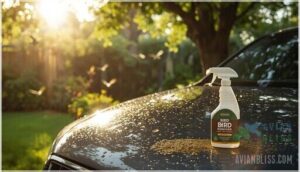
For cleaning bird poop effectively, specialized enzyme cleaners eliminate the guesswork. These removal tools break down uric acid crystals in just 3–5 minutes—no elbow grease required. Products like Simple Green Pro HD or Dissolve-It make removing bird poop from various materials incredibly easy, whether you’re tackling your car, deck, or patio furniture.
Why opt for a bird poop remover over DIY methods? Here’s why:
- Enzyme cleaners dissolve droppings faster than vinegar or soap alone
- Eco-friendly formulas reduce environmental toxicity by 45% compared to harsh chemicals
- Surface protectors preserve paint and metal without corrosion risk
- Bird deterrents pair perfectly with cleanup to prevent future messes
Using bird poop remover for easy removal means spray, wait, wipe—done. The best product for removing bird droppings? One that acts quickly and keeps surfaces safe.
Preventing Future Bird Poop Stains
You’ve scrubbed away the mess, but let’s be honest—you don’t want to do this again next week. The good news is that a few simple steps can keep birds from turning your surfaces into their personal target practice.
Here’s how to protect your property and cut down on future cleanup time.
Applying Wax and Protective Coatings
Think of protective coatings as armor for your surfaces—they’re your best defense against acidic bird droppings. Wax Application creates a hydrophobic layer that causes debris to bead up and roll off instead of bonding. Ceramic Coating takes protection further, forming a glass-like shield that resists pH 3-4 droppings for up to 48 hours. Paint Sealants offer six-month durability, while Nano Coatings deliver superhydrophobic performance with contact angles exceeding 150 degrees.
Here’s your surface treatment game plan:
| Protection Type | Reapply Schedule |
|---|---|
| Carnauba Wax | Every 60-90 days |
| Polymer Sealants | Every 6-9 months |
| Ceramic Coating | Annual maintenance |
| Hydrophobic Layers | 6-12 months |
| Nano Coatings | Multi-year stability |
These protective measures reduce adhesion by 40-70%, slash cleaning time dramatically, and prevent that nasty etching that costs serious money to fix.
Using Bird Spikes and Repellents
Your deck doesn’t need to be a landing pad for birds—Bird Spike Installation blocks perching spots without harm, cutting pigeon populations by up to 70%. These deterrent devices physically prevent birds from settling on railings and ledges, forcing them to relocate. Pair spikes with Repellent Chemicals like methyl anthranilate (a grape-derived irritant) or ultrasonic deterrents for complete bird deterrent strategies for decks.
Here’s your prevention toolkit:
- Install stainless steel or polycarbonate bird spikes on railings, eaves, and ledges where birds perch most—field data shows 90%+ effectiveness at preventing landings
- Apply Eco Friendly Repellents like MA-based gels or sprays to surfaces, creating sensory barriers through touch and smell that discourage return visits
- Perform Spike Maintenance quarterly by removing debris buildup that can reduce effectiveness and provide nesting material
This combo approach to preventing bird poop on decks saves you serious cleaning time while keeping surfaces cleaner longer.
Regular Cleaning and Maintenance
Let’s be real—cleaning bird poop once isn’t a victory if you’re doing it every other day. Regular Cleaning and Maintenance keeps your surfaces from turning into acidic war zones. Surfaces exposed to droppings need weekly attention in high-traffic spots to prevent permanent etching and staining. Skip this, and you’re looking at double the work later.
Here’s your maintenance game plan:
- Scheduled Inspections: Check twice weekly for new droppings—especially during breeding seasons when bird activity spikes.
- Cleaning Frequency: Hit problem areas every 7–14 days to prevent acid buildup that eats through paint and wood.
- Maintenance Logs: Track your cleaning routine to stay consistent and catch problem spots early.
- Surface Protection: Apply protective coatings or wax every 30–60 days using Eco Friendly Methods to reduce adhesion and make future cleanup easier.
Understanding the risks of health damage issues is essential for effective bird poop removal. This cleaning process isn’t glamorous, but it saves you from expensive repairs down the road.
Disposing of Waste and Cleaning Tools Properly
You’re not done until the waste is bagged and your tools are sanitized—bird droppings aren’t just messy; they’re biohazardous. Double-bag droppings in thick plastic bags for proper Waste Disposal Methods, following local regulations since some areas classify them as hazardous material.
For Cleaning Tool Sanitation, disinfect brushes and scrapers with EPA-approved solutions to kill bacteria and spores—Proper Disinfection prevents cross-contamination. Dispose of gloves in outdoor trash immediately after Glove Disposal.
Wet droppings before removal to avoid airborne pathogens, and manage Water Disposal carefully to protect waterways. Biohazard Removal done right means you’re protecting your health and the environment. Sanitation isn’t optional—it’s your final defense. It’s vital to follow proper bird dropping protocols to guarantee safety.
Frequently Asked Questions (FAQs)
What is the best way to remove bird poop?
Like a drop of lemon juice on fresh paint, bird droppings can etch and stain in no time—so speed matters. Your best bet? Equal parts white vinegar and water.
This simple mix breaks down that stubborn uric acid, making bird poop removal a breeze without harsh scrubbing or toxic chemicals.
Does vinegar dissolve bird poop?
Yes, white vinegar works wonders on bird droppings. Its acidic properties help break down the uric acid that makes bird waste so stubborn.
Mix equal parts vinegar and water, spray it on, wait about ten minutes, then wipe away—easy as that.
What dissolves bird poo?
White vinegar breaks down uric acid fast, dissolving stubborn deposits naturally. Acidic cleaners work similarly, while baking soda paste handles lighter messes.
Enzyme cleaners and chemical removers handle dried stains, though dish soap with warm water often does the trick for fresh droppings.
What is the best product for removing bird droppings?
For tough jobs, enzyme cleaners work wonders—they dissolve droppings naturally without harsh scrubbing.
White vinegar and dish soap handle everyday messes, while oxygen bleach cleaner removes set-in stains on hard surfaces beautifully.
How to clean bird poop off electronics?
Power down your device first. Then use a microfiber cloth dampened with 70% isopropyl alcohol to gently dab away bird droppings—don’t rub or spray directly onto screens or ports to avoid circuitry damage.
Does bird poop damage solar panels?
Bird droppings absolutely wreck solar panels if you let them sit. The uric acid eats away at protective coatings and frames, while dried droppings block sunlight—slashing panel efficiency by 20% to 30%, sometimes hitting a shocking 89%.
Bird droppings slash solar panel efficiency by 20-30%—sometimes 89%—as uric acid corrodes protective coatings and blocks sunlight
Quick cleaning with soft cloths prevents corrosion effects and keeps your panels cranking out power.
Can bird droppings be composted safely?
Think of composting bird droppings like taming fire—powerful if you respect it, dangerous if you don’t. Yes, you can compost bird poop safely using hot composting methods that hit 131°F for three days, killing pathogens like Salmonella.
Mix droppings with brown materials (4:1 ratio) to balance nutrients, wear protective gear, and turn your pile regularly for proper waste management.
How to protect outdoor furniture covers?
Your covers need serious weatherproofing to survive outdoor cleaning and bird droppings attacks. Spray with a UV-resistant waterproof coating, then secure them tightly with straps or clamps.
Store covers in shaded spots between uses to prevent fabric breakdown and maintain protection.
Are enzymatic cleaners effective on bird droppings?
Enzymatic cleaners absolutely crush bird droppings by targeting uric acid molecules directly. The enzymes break down proteins and organic waste in about 15 minutes, dissolving what scrubbing alone can’t budge—no harsh chemicals needed, just smart chemistry doing the heavy lifting for you.
What tools help minimize damage during cleaning?
Grab microfiber cloths and soft-bristle brushes—they’re your first line of defense. Plastic scrapers and silicone spatulas lift dried messes without scratching delicate surfaces, while disposable gloves keep your hands clean.
For bigger jobs, pressure washers work wonders when used correctly.
Conclusion
A single drop of bird poop left on your car hood for just 48 hours can permanently etch through clear coat—that’s how fast the clock starts ticking.
Bird poop removal isn’t about flawlessness; it’s about speed and the right method for each surface. Catch it early, match the cleaner to the material, and you’ll save yourself from expensive repairs and permanent stains.
The mess doesn’t have to win—you just need to move faster than the acid does.
- https://memorialaftercare.com/memorial-maintenance-tips/how-to-clean-bird-droppings-on-headstones/
- https://jracenstein.com/expert-advice-learning/how-to-safely-clean-bird-droppings-from-a-building
- https://meridianbirdremoval.com/why-proper-bird-droppings-cleaning-is-essential/
- https://www.birdbgone.com/content/Education-Tips-to-Clean-Up-Bird-Droppings.pdf
- https://www.birdfy.com/blogs/blogs/a-detailed-guide-on-how-do-you-clean-hardened-bird-poop