This site is supported by our readers. We may earn a commission, at no cost to you, if you purchase through links.
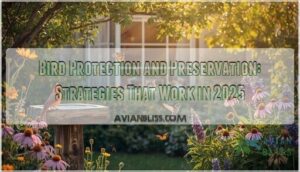
Every year, roughly 1 billion birds in North America alone die from preventable causes—crashing into windows, falling victim to outdoor cats, or succumbing to habitat destruction that strips away their food and shelter. These losses aren’t just statistics. They represent the unraveling of ecosystems that depend on birds to pollinate plants, control insect populations, and disperse seeds across landscapes.
The good news? Bird protection and preservation doesn’t require a biology degree or massive funding. Simple changes in your backyard, combined with community action and smarter policies, can reverse these trends. From planting native shrubs that support local species to advocating for wildlife corridors that connect fragmented habitats, proven strategies are already bringing birds back from the brink in 2025.
Table Of Contents
Key Takeaways
- North America has lost 2.9 billion birds since 1970, driven primarily by habitat destruction, window collisions (up to 1 billion deaths annually), and outdoor cats (2.6 billion deaths yearly)—yet simple actions like installing window decals, keeping cats indoors, and planting native vegetation can cut these losses by 50-95%.
- Native plants are the single most effective backyard intervention because they support eight times more birds than ornamental landscaping by providing the insects breeding birds need, while also requiring less water and zero fertilizers.
- Community participation in citizen science projects like eBird and the Great Backyard Bird Count (838,000+ participants in 2025) generates critical data that shapes conservation policy and tracks population trends across 8,000+ species worldwide.
- Recent legal rollbacks have weakened the Migratory Bird Treaty Act by removing industry liability for incidental bird deaths, eliminating financial incentives for companies to install deterrents or reduce pollution—making individual advocacy and support for protective legislation more urgent than ever.
Major Threats to Bird Populations
Birds are vanishing at an alarming pace, and the reasons aren’t always obvious. From disappearing forests to everyday hazards lurking in our backyards, the challenges they face come from many directions at once.
Let’s look at the biggest threats putting bird populations at risk right now.
Habitat Loss and Degradation
Since 1970, North America has lost 2.9 billion birds—with habitat loss driving much of that decline. Deforestation impacts and habitat fragmentation reduce the core spaces birds need for breeding and survival.
Since 1970, North America has lost 2.9 billion birds, driven largely by habitat destruction and fragmentation
When you protect what remains and support habitat restoration, you’re directly countering these threats. Protecting bird habitats isn’t just about saving species; it’s about preserving the ecosystems we all depend on. Deforestation especially destroys the natural habitats of birds.
Pollution and Chemical Hazards
Beyond losing habitat, birds face a toxic landscape. Air pollution reduces bird abundance—every 8.4 ppb ozone increase means 11.7% fewer birds. Pesticides kill directly and decimate insect food sources. Heavy metals, plastic ingestion, and legacy toxins like DDT continue poisoning birds decades after bans.
Reducing chemical use protects both birds and the ecosystems supporting them:
- Pesticide residues in nests increase offspring mortality and leave eggs unhatched
- Plastic pollution blocks digestive tracts and damages kidneys in seabirds
- Lead poisoning causes tremors and seizures in affected populations
- Industrial chemicals biomagnify through food chains, threatening top predators
Pesticides can affect birds’ foraging, and reduce their appetite.
Climate Change Impacts
Climate change disrupts bird populations in ways few other threats can match. Rising temperatures shift migration patterns, dry up stopover sites, and push breeding seasons out of sync with food availability. Two-thirds of North American species face extinction risks as their habitats transform faster than they can adapt.
| Climate Impact | Effect on Birds |
|---|---|
| Migration shifts | Routes altered, stopover sites lost |
| Breeding impacts | Timing mismatched with food peaks |
| Habitat alteration | Ranges move poleward, upward |
Tropical birds now endure tenfold more extreme heat days than four decades ago—jumping from 3 to 30 annually. Heat stress reduces fertility and offspring survival while fragmenting critical nesting areas. Over 500 species worldwide could vanish this century, with projected extinction rates three times higher than all losses since 1500.
Environmental sustainability efforts must address these accelerating threats to guarantee conservation success.
Window Collisions and Domestic Cats
Glass surfaces and free-roaming cats present immediate, deadly risks you can address today. Window collisions kill between 98 million and nearly a billion birds annually in the U.S., while cats claim over 2.6 billion lives each year across North America. Bird-safe building design cuts collision odds by 84%:
- Apply decals or films to reflective windows
- Install Acopian BirdSavers or screens
- Keep cats indoors or leashed outdoors
- Plant native vegetation away from glass
- Use bird-friendly glass in new construction
These mitigation strategy effectiveness measures protect vulnerable species immediately.
Industrial and Legal Challenges
Industrial hazards kill roughly 1 billion birds annually through oil waste pits, powerlines, and communication towers—yet a 2025 legal ruling weakened the MBTA, removing industry liability for incidental deaths.
This policy framework shift eliminates incentives for bird deterrents and pollution control measures. You’re watching environmental policies erode protections that once drove conservation strategies, threatening bird populations while industries face no consequences for their environmental impact.
Essential Strategies for Bird Conservation
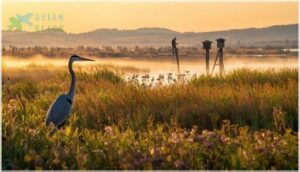
Bird conservation isn’t just about sounding the alarm—it’s about taking real action that has an impact. The good news? Scientists and conservationists have identified proven strategies that actually work to protect bird populations and reverse decades of decline.
Let’s look at the most essential approaches that are saving birds right now.
Preventing Bird Extinctions
You can help prevent bird extinctions through proven conservation strategies. Captive breeding programs have pulled species like the California condor back from the brink, boosting genetic diversity and ensuring species recovery.
International treaties and habitat protection have increased bird populations by 66% in countries with strong enforcement. Since the 1990s, these avian conservation efforts have saved over 48 species from disappearing forever.
Improving and Restoring Habitats
Wetland restoration and forest management transform landscapes into thriving sanctuaries. When you support habitat preservation efforts, you’re protecting wetlands and forests that can boost bird biodiversity by up to 50%. Planting native trees and shrubs accelerates recovery—restored areas see impressive results:
- Endangered shorebird populations increased over 30% in restored coastal habitats
- Riparian habitats attract more non-breeding species during critical migration periods
- Grassland recovery benefits sensitive species when invasive plants are removed
Creating bird-friendly habitats through urban habitat projects and targeted restoration brings measurable success for bird habitat preservation.
Creating Wildlife Corridors
Wildlife corridors act like highways for birds, connecting fragmented habitats and enabling safe migration routes. Strategic corridor design improves habitat connectivity and boosts genetic diversity across wildlife populations.
Studies show vegetated overpasses reduce road mortality by 70%, protecting ecosystem health.
You’ll support sustainable land use and habitat preservation when you back corridor projects—these pathways guarantee birds can travel, feed, and thrive across landscapes.
Reducing Environmental Pollution
Pollution silently devastates bird populations, but you can push back against these threats. Reducing environmental impact starts with understanding the stakes:
- Air pollution, especially ground-level ozone, has contributed to billions of bird losses, though regulations have averted 1.5 billion deaths.
- Chemical toxicity from pesticides kills birds outright, with over 40 active ingredients proven deadly.
- Oil pollution damages feathers and causes internal organ failure in seabirds.
- Noise and light pollution disrupt breeding and migration patterns.
Cutting plastic pollution and pesticides protects birds you’ll never see but desperately need your help.
Sustainable Land Use Practices
Your land choices ripple through entire ecosystems. Sustainable land use practices blend agricultural productivity with habitat preservation—over 100 ranches covering nearly 3 million acres now support bird-friendly grazing.
Urban planning with green corridors, habitat restoration on working lands, and policy incentives for private engagement create adaptive management systems.
These ecofriendly practices prove environmental conservation and bird conservation can thrive alongside human needs.
Creating Bird-Friendly Habitats at Home
You don’t need a sprawling estate to make a real difference for birds—even a small backyard or balcony can become an important refuge. The key is creating spaces that offer food, water, shelter, and safety from common hazards.
Here are five practical ways to transform your outdoor space into a haven for local bird populations.
Planting Native Trees and Shrubs

Native plants are the cornerstone of bird-friendly gardening. They support insect abundance essential for breeding birds—think eight times more birds in yards with native species versus ornamental landscapes. Urban restoration with these plants can even bring back locally disappeared species. Plus, you’ll reduce maintenance needs while creating habitat connectivity that helps birds move and thrive.
- Choose locally adapted trees and shrubs that require less water and zero fertilizers
- Plant diverse native species to support birds through all seasons
- Create layered vegetation connecting fragmented habitats for better movement
- Focus on fruit-bearing and insect-supporting natives for year-round food sources
Providing Feeders, Baths, and Shelter
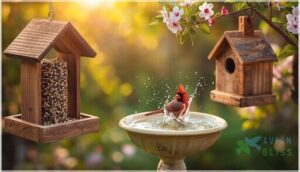
Beyond native plants, you can enhance your bird-friendly space with feeders, baths, and shelter. Over 50 million North Americans already provide bird feeders—and species using them show stronger population trends.
Keep your birdbath clean to prevent disease, change water frequently, and add nest boxes for safe nesting sites.
Smart feeders with app controls are growing fast, letting you monitor visiting birds while supporting conservation right from your backyard.
Offering Variety in Heights and Textures

Creating bird-friendly habitats means thinking vertically. Vertical structure—combining ground cover, shrubs, and canopy trees—boosts more bird species by offering varied nesting and foraging spots at layered heights.
Studies show habitat complexity with native plantings increases bird diversity considerably, with structural variety explaining roughly one-third to over half of bird richness:
- Plant tall natives at your yard’s backdrop with shorter species forward
- Add native vines for vertical complexity in tight spaces
- Mix dense shrubs with open areas to bolster different species
Even small yards benefit from this approach.
Installing Window Screens or Decals
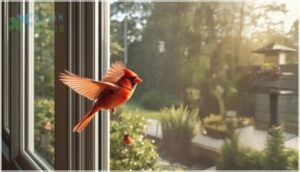
Window collisions kill up to 1 billion birds annually—mostly at homes, not skyscrapers. You can nearly eliminate this threat by installing external screens or applying decals following the “2×2 rule” (spaced 2 inches apart). Studies show proper decal effectiveness reaches 95% reduction in strikes. Screen installation averages $1.83 per square foot, though DIY solutions and retrofit options make bird-safe windows accessible for any budget.
| Solution Type | Effectiveness |
|---|---|
| External Decals (2×2 spacing) | 95% reduction |
| External Screens/Netting | Nearly 100% |
| UV-Patterned Glass | Significant reduction |
| Internal Markers | Minimal benefit |
Reducing Pesticide and Plastic Use
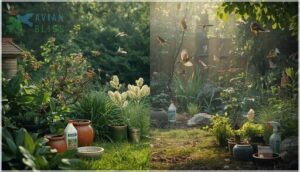
You’ve probably noticed how often we reach for pesticides and single-use plastics without thinking twice. Yet these consumer choices directly affect bird survival—nests with lower pesticide residues show 30% fewer deaths, and plastic pollution kills roughly 1 million seabirds yearly. Here’s how reducing pollution impact helps:
- Switch to organic pest control methods and habitat contamination decreases
- Choose shade-grown coffee that protects bird habitats
- Replace single-use plastics with reusable alternatives
- Support reduction policies through local advocacy
- Practice proper plastic recycling to keep debris from ecosystems
Studies confirm areas cutting neonicotinoid use see 2.2% population increases, while coastal cleanups reduce seabird entanglement by 40%. Small shifts in pesticide alternatives matter—your yard becomes safer habitat when chemicals stay out.
Community Involvement in Bird Protection
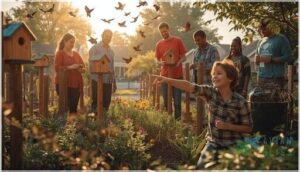
You don’t have to be a scientist to make a real difference for birds. Communities across the country are proving that everyday people can play an important role in conservation when they work together.
Here are five practical ways you can join the effort and help protect the birds in your area.
Participating in Bird Counts and Surveys
Your sightings during annual bird counts become data that drives bird conservation policy. Over 838,000 people across 217 countries participated in the 2025 Great Backyard Bird Count, documenting more than 8,000 species. These community science efforts track global trends and strengthen data quality for conservation decisions.
| Event | Participants | Species Documented |
|---|---|---|
| Great Backyard Bird Count 2025 | 838,113 | 8,078 |
| Christmas Bird Count 2024–2025 | 83,186 | Varies by region |
| Global Big Day | Tens of thousands | 7,000+ |
| MAPS Program | Hundreds of stations | North American landbirds |
Survey methods now offer flexibility—you can submit observations anytime using apps like Merlin and eBird. Inclusion efforts welcome first-time participants from Angola to Samoa, requiring no prior experience. Your contributions support policy impact by identifying population declines and prioritizing conservation areas. Think of it as democracy for birds: every checklist counts.
Supporting Citizen Science Projects
When you support community science projects, you improve data quality and volunteer motivation while enabling project funding for bird conservation. Citizen scientist contributions through platforms like eBird—holding over 1 billion records—drive technological integration and educational impact.
Your participation helps researchers track population trends, identify threats, and shape protection strategies. Community science projects rely on people like you to strengthen conservation outcomes.
Educating Others About Bird Conservation
When you share what you know about birds, you spark change that ripples through entire neighborhoods. School bird programs boosted student identification skills by 59%, while public awareness campaigns reached 40 million people yearly.
Try these approaches:
- Host backyard bird identification workshops for neighbors
- Partner with local schools to introduce citizen science projects
- Share digital media education resources on community boards
- Organize visits to under-resourced communities needing outreach
- Create social media content highlighting bird-friendly practices
Your voice matters more than you think.
Advocating for Local Habitat Preservation
Land-use policies shape your local wildlife habitat more than you might realize. Your advocacy directly counters the ongoing habitat losses that threaten local wildlife populations.
You can push for bird habitat preservation by partnering with land trusts and NGOs—these community partnerships have protected nearly 60,000 acres in 2024 alone. Attend zoning meetings, support economic incentives like tax breaks for green roofs, and use habitat monitoring data to address legal challenges.
Joining Conservation Organizations
Membership benefits go beyond good intentions—they fuel real-world conservation strategies. When you join organizations like American Bird Conservancy or your regional Audubon chapter, your support directly powers wildlife conservation efforts that deliver measurable results.
Your involvement unlocks volunteer opportunities and advocacy impact through:
- Funding allocation toward protecting over 1.1 million acres of bird habitat
- Scientific contributions via citizen science, with 36 million observations guiding regional actions
- Policy wins securing state pesticide bans and habitat legislation
Supporting conservation efforts means backing bird conservation efforts that work.
Policy, Advocacy, and Sustainable Practices

You’ve done the hard work in your yard and community—now it’s time to think bigger. Real change happens when we push for stronger laws, smarter farming practices, and policies that put birds first.
Here are five practical ways you can support bird-friendly policies and make your voice heard where it matters most.
Strengthening Legal Protections for Birds
Beyond backyard birdfeeders, you can protect birds through legislative action and environmental advocacy. CITES enforcement and habitat protection laws work—when enforced.
Yet policy gaps leave many species vulnerable to industrial impacts, and recent legal changes have weakened safeguards.
Contact your representatives about bird conservation efforts. Support wildlife protection organizations pushing for stronger laws. Your voice matters in advocating for bird solutions that close these dangerous loopholes.
Promoting Bird-Friendly Agriculture (e.g., Shade-Grown Coffee)
Your coffee choices can directly support bird conservation. Shade-grown coffee farms in Ethiopia host twice as many bird species as nearby forests, making them essential bird-friendly habitats.
Look for certification marks like Rainforest Alliance—these farms maintain diverse native trees and sustainable land use while reducing pesticides.
Market incentives reward farmers who protect ecosystem services birds provide, like natural pest control worth $125 per acre annually.
Encouraging Responsible Pet Ownership
Keeping cats indoors protects bird populations from predation—free-roaming cats kill 2.4 billion birds annually in the U.S. alone. You can use catios for safe outdoor time or add brightly colored collar patterns that reduce bird catches by over 50%.
Support legislation advocacy and community awareness campaigns that promote cat containment methods. Indoor cat benefits include better wildlife protection and healthier pets.
Minimizing Light and Noise Pollution
Artificial light and human noise create synergistic effects that disorient migrating birds and disrupt breeding cycles. Urban skyglow increases by 10% annually, while noise impacts delay nesting in sensitive species.
Your mitigation strategies make a difference:
- Turn off exterior lighting from 11 pm to 6 am during migration seasons
- Install motion-activated, downward-facing lights to reduce light trespass
- Close curtains at night to minimize indoor light pollution
These policy solutions work when communities act together.
Supporting Eco-Friendly Legislation and Initiatives
When you cast your vote for bird-friendly building codes, you’re joining 64% of urban residents who back eco-friendly policy effectiveness. Legislative advocacy works—Washington, D.C.’s 2024 mandate cut collisions by 50%, while conservation incentives like the U.S. Farm Bill protected 4.5 million birds in 2016.
Public support drives international agreements and sustainable practices that transform environmental protection from wishful thinking into measurable conservation efforts.
Frequently Asked Questions (FAQs)
How do birds communicate with each other?
Birds blend vocal complexity with non-vocal signals—songs, calls, wing sounds, and visual displays.
Understanding bird behavior reveals acoustic adaptation to habitats, while social functions and signal range shape communication across avian species and migration patterns.
What is the average lifespan of common birds?
You’ll notice lifespan factors vary widely among avian species—house sparrows live 3–5 years, while albatrosses can reach
Juvenile mortality, captive lifespans, and species variation dramatically affect maximum longevity in wildlife populations.
How can I identify different bird species?
You can master birdwatching with a million subtle clues—visual identification features, behavioral cues, field guides like Merlin Bird ID, habitat data, and eBird reports help overcome identification challenges while exploring species diversity and local wildlife.
Do birds migrate at the same time annually?
Migration timing consistency varies among migratory birds. While individual species show repeatability in their schedules, climate change effects and environmental cue variation are shifting arrival dates earlier. Genetic population influences also create staggered waves across different groups.
What role do birds play in seed dispersal?
Like Johnny Appleseed on wings, frugivores disperse seeds from 90% of tropical biodiversity species, fueling ecosystem regeneration.
Their dispersal mechanisms support carbon sequestration while pollinating native plants and engineering habitat for countless organisms.
Conclusion
Think of each action you take as a thread in a tapestry—one native plant here, one decal there, your voice raised for policy change. Alone, these gestures seem small.
Woven together across neighborhoods and continents, they create a safety net strong enough to catch falling populations.
Bird protection and preservation isn’t reserved for scientists in field stations. It starts in your yard, spreads through your community, and reshapes the world one wingbeat at a time.
- https://act.abcbirds.org/a/abc-video-lgen?ms=web_hp_ask_gen_joinus_txt_010125
- https://www.3billionbirds.org/why-birds-matter
- https://www.allaboutbirds.org/news/analysis-the-economic-value-of-birds/
- https://abcbirds.org/get-involved/bird-smart-glass/
- https://www.birds.cornell.edu/home/citizen-science-be-part-of-something-bigger/