This site is supported by our readers. We may earn a commission, at no cost to you, if you purchase through links.
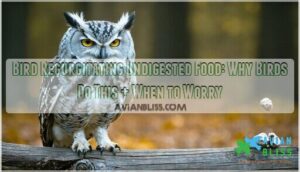 When you see your bird bringing up undigested food, you’re watching nature’s clever storage system in action.
Bird regurgitating undigested food behavior serves several purposes – it lightens their load for flight, helps clear their crop storage area, and removes indigestible materials like bones and fur.
Birds like owls, hawks, and herons regularly produce pellets containing these tough bits their stomachs can’t break down, and it’s completely normal and actually shows a healthy digestive process.
However, if your pet bird regurgitates excessively or shows other symptoms like lethargy, it might signal health issues requiring attention, and understanding the difference between natural regurgitation and problematic vomiting can help you determine when intervention’s needed.
Table Of Contents
- Key Takeaways
- Bird Regurgitation Process
- Reasons for Regurgitation
- Regurgitation Benefits
- Bird Species Regurgitation
- Pellet Regurgitation Types
- Regurgitation Triggers
- Regurgitation Health Implications
- Regurgitation Versus Vomiting
- Managing Regurgitation Behavior
- Frequently Asked Questions (FAQs)
- Why is my bird throwing up undigested food?
- Why is my bird constantly regurgitating?
- Do birds regurgitate when stressed?
- What is undigested food regurgitated by birds?
- How often do healthy birds naturally regurgitate?
- Can regurgitation behavior be completely eliminated in pets?
- What temperatures affect bird regurgitation frequency?
- Do seasonal changes influence regurgitation patterns?
- Are there genetic factors affecting regurgitation tendencies?
- Conclusion
Key Takeaways
- You’ll recognize regurgitation as normal behavior – Birds naturally bring up undigested food to feed their young, clear their crop storage, and eliminate indigestible materials like bones and fur through pellet formation.
- You can distinguish healthy regurgitation from concerning symptoms – Normal regurgitation appears mushy and controlled, while true vomiting looks watery and forceful, often accompanied by lethargy, requiring immediate veterinary attention.
- You’ll find species-specific patterns in pellet production – Owls create compact pellets with complete bone structures, hawks produce fragmented remains, and herons form long cylinders containing fish bones and scales.
- You can manage excessive regurgitation through environmental changes – Remove mirrors, avoid petting sensitive areas, reduce high-fat foods, and eliminate enclosed spaces that trigger hormonal responses, causing unwanted feeding behaviors.
Bird Regurgitation Process
You might wonder why birds seem to effortlessly bring up food from their stomachs, but this process involves a complex digestive system designed for efficiency.
Birds use specialized anatomy including a crop for food storage and a muscular esophagus to facilitate the controlled regurgitation of indigestible materials and feeding behaviors.
Crop Storage Function
Your bird’s crop acts like a temporary storage tank, holding food before it enters the stomach for full digestion.
This muscular pouch between the esophagus and stomach serves three key functions:
Nature’s temporary storage tank – your bird’s crop holds, softens, and controls food before digestion begins.
- Crop Capacity – Stores large amounts of food quickly during feeding opportunities
- Food Softening – Moistens and breaks down tough materials through extended contact
- Digestion Timing – Controls when food moves to the stomach for ideal processing
The crop’s storage duration varies by species and meal size, with some birds holding food for hours.
This avian anatomy feature aids regurgitation by keeping partially processed food accessible, allowing efficient feeding of young or elimination of indigestible materials.
Esophagus Role
Facilitating the journey from beak to belly, your bird’s esophagus acts as a muscular highway for food transport.
This flexible tube contracts rhythmically, pushing meals toward the crop through coordinated muscle movements that facilitate smooth food passage during the digestion process.
| Esophagus Feature | Function in Avian Digestion |
|---|---|
| Muscle Contraction | Propels food downward through peristalsis |
| Flexible Structure | Accommodates various food sizes and shapes |
| Rapid Transit | Enables quick food passage for flight efficiency |
| Bidirectional Flow | Allows regurgitation when needed |
| Smooth Interior | Reduces friction during food movement |
The digestion process and the role of the esophagus in it are crucial for the bird’s overall health, and understanding these elements can help in providing better care for your bird, ensuring its flight efficiency and well-being.
Stomach Digestion
Once food leaves the esophagus, your bird’s stomach takes over with two specialized chambers.
The proventriculus enzymes break down proteins and fats, while the ventriculus grinding chamber—the gizzard—crushes tough materials like seeds.
This avian digestive system processes food rapidly, supporting high metabolic demands.
The intestinal absorption phase follows, where nutrients enter the bloodstream before waste processing creates the familiar bird droppings through efficient digestion speed mechanisms.
Pellet Formation
Remarkably efficient digestive systems create pellets when indigestible material accumulates in the crop and stomach.
Nature’s recycling system at work – birds efficiently package waste into neat, compact pellets.
Your bird’s body compacts these tough components into neat, cylindrical packages for easy regurgitation.
Pellet Composition includes:
- Fur, bones, and feathers from prey
- Insect exoskeletons and scales
- Seeds hulls and plant matter
- Inorganic debris like small stones
Formation Mechanics vary by species – owl pellets contain complete bone structures, while hawk pellets show looser packing.
This digestion efficiency maximizes nutritional value extraction before eliminating waste.
Reasons for Regurgitation
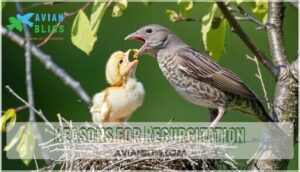
You’ll find four main reasons why birds regurgitate undigested food, each serving a vital survival purpose.
These behaviors range from practical flight considerations to essential parenting duties that keep both adult birds and their offspring healthy, which is a vital part of their survival.
Flight Efficiency
Weight reduction drives bird regurgitation as a critical flight efficiency strategy.
You’ll notice birds eliminate indigestible food components before takeoff, reducing digestive burden and aerodynamic impact.
This avian regurgitation behavior conserves energy by preventing unnecessary weight from hindering flight performance.
Metabolic demands require birds to maintain ideal body weight, making undigested food elimination essential for sustained flight and energy conservation throughout their daily activities.
Crop Clearance
Beyond efficient storage, your bird’s crop needs regular emptying to function properly.
This clearing process maintains ideal crop muscle function and prevents crop impaction from accumulating undigested food.
Here’s how crop clearance benefits birds:
- Crop emptying rate increases, preventing dangerous foreign body obstruction
- Crop flora balance stays healthy through regular turnover
- Digestion efficiency impact improves with consistent clearing cycles
- Pellet size variation allows different materials to pass through effectively
Indigestible Material
Birds can’t digest everything they swallow.
When you watch a hawk tear apart prey, bones, fur, and feathers don’t break down like muscle tissue.
These indigestible materials accumulate in the crop, creating compact pellets through pellet composition processes.
Bone digestion fails completely, while feather breakdown and fur management prove impossible.
Birds must expel these waste products to prevent blockages.
A good option is to provide easy to digest bird food for better nutrient absorption.
Heron pellets contain fish scales and bones, while penguin pellets include small mammal remains and exoskeleton processing debris from consumed prey.
Feeding Young
When parent birds return from hunting, they transform into living food dispensers for their hungry offspring.
Regurgitated food provides essential chick nutrition through partially digested meals that are easier for young birds to consume.
The food consistency becomes perfectly suited for developing digestive systems, and allofeeding benefits extend beyond mere food provision, strengthening parental care bonds while ensuring ideal chick feeding success rates, which involves frequent feeding sessions, with regurgitation frequency varying by species, ultimately leading to ideal chick development.
Regurgitation Benefits
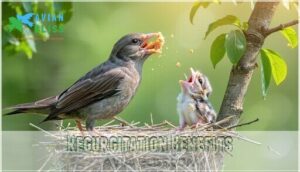
When you understand why birds regurgitate, you’ll see it’s actually a clever survival strategy with multiple benefits.
This natural behavior serves essential functions that help birds thrive in their environments and successfully raise their young, which is a key part of their survival and is indeed a very natural behavior.
Weight Reduction
Regurgitation serves as nature’s weight management system for our feathered friends. When birds eliminate indigestible materials through bird regurgitation, they achieve flight optimization by shedding unnecessary digestive load.
This energy conservation strategy maintains reduced mass, boosting metabolic efficiency. Smart birds don’t carry dead weight – they literally lighten up for better performance.
- Flight Optimization – Removing heavy bones and fur improves aerodynamics and reduces energy costs during flight
- Metabolic Efficiency – Less digestive load means more energy available for essential survival activities like foraging and reproduction
- Energy Conservation – Birds avoid wasting calories processing materials that provide no nutritional value to their systems
- Reduced Mass – Eliminating indigestible matter prevents accumulation of excess weight that would hinder flight performance
- Digestive Issues Prevention – Regular pellet formation keeps the digestive system clear and functioning at peak efficiency
Nutrient Provision
Throughout nature, nutrient provision drives the regurgitation process as parent birds deliver essential nutrition to their developing young.
Allofeeding benefits extend beyond basic survival, with adults regurgitating protein-rich crop milk and partially digested food that meets precise dietary needs.
This mate feeding behavior guarantees chick nutrition remains superior during critical growth periods.
Regurgitation frequency increases with nestling demands, supporting healthy chick growth through targeted feeding sessions.
Defense Mechanism
When facing danger, you’ll witness one of nature’s most clever escape tactics.
Some birds use regurgitation as a defense mechanism, ejecting food to distract predators while they flee.
This survival advantage works because:
- Predator Distraction – The sudden food ejection startles attackers, buying precious escape time
- Ejection Range – Birds can accurately project regurgitated matter several feet away from threats
- Escape Tactics – Weight reduction from emptying crops allows faster, more agile flight responses
- Regurgitation Accuracy – This bird behavior targets predators effectively, maximizing survival advantage through strategic vomiting timing
Metabolic Rate
Birds maintain their high metabolic rates through efficient bird digestion and strategic bird regurgitation.
When you watch birds constantly moving and foraging, you’re seeing energy expenditure in action.
The bird digestive system processes food quickly, but carrying excess weight from indigestible materials would drain energy reserves.
By regurgitating pellets, birds optimize digestion efficiency while meeting their intense food requirements for thermoregulation and sustained activity levels.
Bird Species Regurgitation
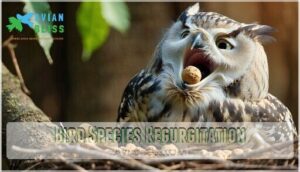
Different bird species have developed unique regurgitation patterns based on their diet and hunting behavior.
You’ll find that raptors like owls and hawks produce distinctly different pellets compared to waterbirds like herons and penguins.
Owls
Owls excel at pellet regurgitation, making them fascinating subjects for bird digestion studies.
These nocturnal hunting habits create unique digestive challenges that their owl digestive system handles efficiently.
- Barn owls produce compact, dark pellets containing complete rodent skeletons
- Great-horned owls regurgitate larger pellets with bird feathers and mammal fur
- Long-eared owls create cylindrical pellets packed with vole bones
- Barred owls expel pellets containing crayfish shells and amphibian remains
Owl pellet analysis reveals their diverse diets, while owl species comparison shows varying pellet sizes. This partially digested food removal supports owl conservation status by maintaining healthy populations through efficient bird regurgitation processes, which is crucial for their digestive system and overall health.
Hawks Eagles Falcons
Hawks, eagles, and falcons share similar regurgitation patterns as skilled birds of prey.
These raptors produce pellets containing bones, fur, feathers, claws, and teeth from their hunting conquests.
Through Raptor Pellet Analysis, scientists study their Prey Selection and Digestive Adaptations.
This pellet regurgitation occurs 12-18 hours post-meal, with smaller falcons processing faster than larger eagles, impacting Conservation Impacts.
Herons
Among wading birds, herons regurgitate distinctive pellets containing fish bones, scales, and crustacean shells.
These long-necked hunters swallow prey whole, forming compact pellets within their gizzards after six to ten hours.
Parent herons feed chicks through regurgitation, delivering partially digested fish directly into their mouths.
Habitat quality directly affects both diet specifics and regurgitation frequency patterns.
Kingfishers
Kingfishers regularly regurgitate pellets containing fish bones, scales, and arthropod shells.
Their unique bird digestive tract processes meals efficiently, with pellet formation occurring six to ten hours after feeding.
Kingfisher regurgitation serves these purposes:
- Weight reduction – Expelling indigestible materials maintains flight efficiency
- Digestive health – Pellet composition helps scour the gullet and proventriculus
- Feeding behavior – Adults regurgitate fish to nourish nestlings
- Habitat impact – Pellets accumulate below perches, indicating diet patterns
- Conservation status – Regurgitation frequency reflects ecosystem health and prey availability
This bird behavior explanation shows how kingfishers balance nutritional needs with flight requirements through strategic pellet elimination.
Penguins
Penguins take bird regurgitation causes to another level.
They store partially digested fish for weeks, producing antibacterial agents to keep meals fresh.
Penguin chick feeding relies entirely on parental regurgitation roles, with both parents taking turns.
Emperor penguin males even produce special curd-like substances when needed.
This regurgitation frequency guarantees chicks survive harsh conditions, though penguin pellet composition differs from typical bird regurgitation treatment approaches.
The unique adaptation of penguins ensures the survival of their offspring in the harsh Antarctic ecosystem.
Pellet Regurgitation Types
You’ll notice different bird species produce distinct types of pellets when they regurgitate indigestible materials.
These pellets vary markedly in size, shape, color, and contents depending on the bird’s diet and hunting habits.
Owl Pellets
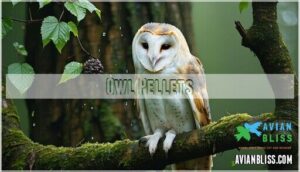
Owl pellets contain fascinating forensic evidence of their hunting prowess.
These thumb-sized bundles hold fur, bones, and teeth from 4-5 small mammals, revealing owl diet patterns through detailed pellet composition analysis.
Formation takes six hours after feeding, with barn owls producing 1-2 pellets nightly.
Fresh black pellets turn grey with age, making them perfect for educational uses in studying natural digestion and regurgitation behavior while demonstrating remarkable digestion efficiency.
Hawk Pellets
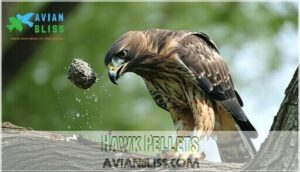
Hawks produce pellets containing crushed bones, fur, and feathers from their prey.
These grey-brown formations vary from spherical to oblong shapes, measuring half an inch to two inches.
Unlike owl pellets, hawk pellet composition shows more fragmented bones due to stronger digestive acids.
Their formation process helps clear indigestible material from the crop.
Falconers use these pellets for diagnostic purposes, examining them to monitor hawk health and identify potential illness through color or texture changes.
Heron Pellets
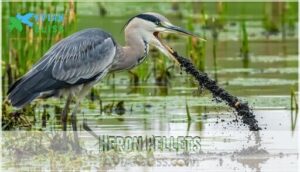
Unlike the compact pellets of owls, heron pellets stretch impressively long—typically 10-15 centimeters—and appear thin with dark gray or black coloration.
These elongated formations contain fish bones, scales, and occasional mammal remains, reflecting their aquatic hunting lifestyle.
The pellet composition varies by habitat impact, as herons near freshwater produce different contents than coastal species.
Their digestion efficiency creates these distinctive formations through a specialized formation process that compacts indigestible materials into narrow cylinders, showcasing remarkable species variation in bird regurgitation purposes.
Penguin Pellets
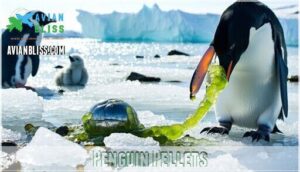
Birds living in harsh Antarctic ecosystems face unique challenges that affect their pellet composition and digestion efficiency.
You’ll find penguin pellets differ substantially from other species – they’re slimy, gray-green masses containing fish bones, scales, and occasionally dangerous metallic objects like coins or lead pellets.
These regurgitated materials help maintain chick nutrition while clearing indigestible waste, though species variation means not all penguins follow identical patterns for bird regurgitation purposes.
This is especially vital for baby penguin feeding, where parents provide essential nutrients.
Regurgitation Triggers
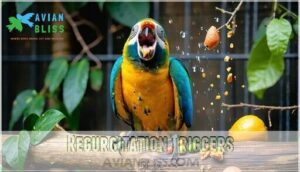
Understanding what triggers regurgitation in your bird can help you manage this natural but sometimes problematic behavior.
Several factors including behavioral issues, environmental changes, dietary choices, and social interactions can prompt your feathered friend to bring up food from their crop.
Behavioral Issues
Several common behavioral issues can trigger regurgitation in pet birds, often stemming from inappropriate interactions or misunderstood signals.
Pet birds may regurgitate due to accidental stimulation, stress, or mistaking objects for mates.
- Mirror Regurgitation occurs when birds see their reflection as a potential mate and repeatedly attempt to feed it
- Pet Bird Affection manifests as regurgitation toward favorite humans, toys, or objects the bird bonds with romantically
- Accidental Stimulation from petting under wings, back, or tail areas can trigger mating behaviors including regurgitation
- Stress Regurgitation happens during excitement, fear, or overwhelming situations that disrupt normal digestive patterns
- Object Association develops when birds form romantic attachments to specific toys, leading to repeated feeding attempts
Managing stress is important, and products aid relaxation for birds.
Environmental Factors
Your bird’s surroundings play a major role in triggering regurgitation beyond behavioral patterns.
Environmental stress from loud noises, bright lights, or sudden temperature changes can prompt this response.
Here’s how different factors affect bird regurgitation:
| Environmental Factor | Impact on Bird Health | Regurgitation Trigger |
|---|---|---|
| Habitat Influence | Captivity vs. wild settings | Increased stress responses |
| Seasonal Changes | Breeding season hormones | Heightened mating behaviors |
| Food Availability | Scarcity or abundance | Hoarding instincts activate |
| Climate Impact | Temperature fluctuations | Metabolic adjustments needed |
| Pollution Effects | Air quality degradation | Respiratory system stress |
Understanding these environmental triggers helps you create a calmer space for your feathered friend.
Dietary Influences
What you feed your pet bird directly affects its regurgitation patterns. Certain foods can trigger this behavior more than others, making dietary management important for bird owners.
- High-sugar and high-fat foods like fruits, nuts, and seeds can stimulate hormonal responses that lead to increased regurgitation
- Food consistency matters – soft, mushy textures may encourage regurgitation while harder foods require more processing
- Nutritional deficiencies can disrupt normal digestive patterns, while toxin ingestion from inappropriate foods creates digestive stress
Selecting the right bird food products can help minimize regurgitation.
Social Interactions
Your interactions with pet birds can trigger unexpected regurgitation responses through courtship behavior and bird bonding activities.
Mate feeding instincts activate when birds perceive you as a romantic partner, leading to reflection regurgitation at mirrors or persistent allofeeding behavior.
Chick provisioning responses occur during cuddling, while certain courtship rituals emerge through specific phrases, games, or physical contact that stimulates bird affection and natural bird mating behaviors.
These behaviors can also be influenced by the bird’s dominance hierarchy within a social group.
Regurgitation Health Implications
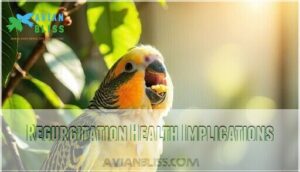
While regurgitation is normal bird behavior, excessive regurgitation can signal serious health problems requiring immediate attention. You’ll need to distinguish between healthy regurgitation and concerning symptoms that warrant veterinary care.
Excessive Regurgitation
When regurgitation becomes frequent or compulsive, it signals potential health concerns that require attention.
Unlike normal feeding behaviors, excessive regurgitation can indicate underlying illnesses or dietary imbalances affecting your bird’s wellbeing.
- Underlying illnesses like crop infections or digestive disorders trigger abnormal regurgitation patterns
- Dietary imbalance from high-fat or sugary foods overstimulates hormonal responses
- Environmental stressors including mirrors, enclosed spaces, or inappropriate touching increase frequency
- Behavioral therapy helps redirect compulsive regurgitation through trigger identification and modification
- Veterinary diagnosis becomes necessary when bird regurgitation exceeds normal courtship or feeding behaviors
Crop Impaction
Your bird’s crop can become a problematic bottleneck when food gets stuck, creating impaction causes that demand immediate attention.
Dietary factors like oversized seeds or fibrous materials often trigger this serious condition.
Without proper crop management, the accumulated food hardens, blocking normal bird regurgitation and potentially requiring surgical intervention.
Preventative measures include monitoring food size and texture to maintain healthy crop function.
Infection Risks
When things go wrong, excessive regurgitation opens the door to serious health complications.
Your bird’s compromised digestive system becomes vulnerable to multiple infectious agents that can spread rapidly.
- Crop Infections: Bacterial overgrowth from stagnant food creates ideal conditions for harmful bacteria
- Fungal Exposure: Candida and other yeasts thrive in irritated crop tissues, causing chronic infections
- Parasitic Risks: Contaminated regurgitated material harbors parasites that affect gastrointestinal health
- Chick Transmission: Parent birds unknowingly pass infections to offspring through contaminated feeding
Regurgitation can also be a symptom of avian candidiasis in birds.
Veterinary Attention
Persistent vomiting signals immediate danger requiring swift avian veterinarian consultation. Unlike normal regurgitation, true vomiting indicates serious crop issues or infection signs demanding diagnostic tests.
| When to Contact Vet | Urgency Level |
|---|---|
| Excessive regurgitation | Moderate – schedule appointment |
| True vomiting episodes | High – immediate consultation |
| Crop impaction symptoms | Critical – emergency visit |
Specialist needed when behavioral modifications fail addressing bird regurgitation triggers or bird illness persists despite intervention.
Regurgitation Versus Vomiting
Understanding the difference between regurgitation and vomiting helps you determine whether your bird needs immediate veterinary care.
While vomiting forcefully expels contents from the stomach and signals a potential health emergency, regurgitation is a normal behavior that brings food from the crop or esophagus.
Differences
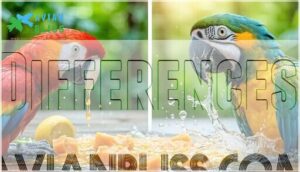
Understanding the difference between bird regurgitation vs vomiting helps you determine when your feathered friend needs help.
True regurgitation originates from the bird crop, while bird vomiting comes from the stomach.
Normal regurgitation appears mushy with minimal liquid, whereas vomiting looks more watery and acidic.
- Location origin: Pet regurgitation starts in the crop; vomiting begins in the stomach
- Consistency: Bird regurgitation has a "washed out" texture; vomit appears more liquid
- Behavior context: Allofeeding behavior and mate allofeeding involve controlled regurgitation
- Frequency: Normal regurgitation occurs naturally; excessive vomiting signals potential illness
Symptoms
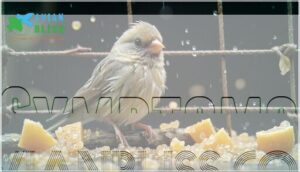
You’ll notice several key warning signs when your bird is genuinely ill.
Frequency changes occur when vomiting becomes persistent rather than occasional. Material consistency differs dramatically—vomited food appears watery with undigested pieces, unlike regurgitation’s mushy texture.
Forcefulness level increases markedly during true vomiting, causing visible distress.
Behavioral changes accompany illness, including lethargy and appetite impact affecting normal eating patterns, which can be a sign of the bird being genuinely ill.
Treatment
When regurgitation becomes problematic, you’ll need targeted treatment approaches.
Start with behavioral modification to eliminate triggers that encourage unwanted regurgitation episodes.
- Behavioral Modification – Remove mirrors, limit petting to head/neck areas only
- Dietary Adjustments – Reduce high-fat foods and sugary treats that stimulate hormones
- Environmental Enrichment – Provide foraging toys, eliminate dark enclosed spaces
- Medical Intervention – Address underlying infections or crop impaction issues
- Professional Consultation – Work with certified avian behaviorists for persistent problems
The provided list outlines a comprehensive approach to addressing regurgitation issues, covering behavioral, dietary, environmental, medical, and professional consultation aspects.
Professional Assistance
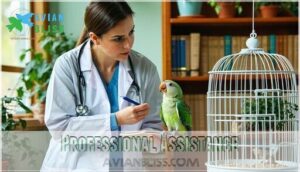
When persistent regurgitation continues despite your best efforts to reduce triggers, it’s time to call in the professionals.
An avian vet can run diagnostic tests to identify underlying issues like crop infections or blockages.
They’ll discuss treatment options suited to your bird’s specific needs. For behavioral problems, a certified bird behavior specialist can develop customized bird regurgitation solutions and provide ongoing bird health consultation support.
Managing Regurgitation Behavior
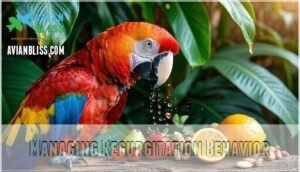
If your pet bird keeps regurgitating food, you can take steps to reduce this behavior through careful management of their environment and interactions.
Understanding what triggers regurgitation in your bird allows you to make targeted changes that can help minimize unwanted feeding behaviors, by making targeted changes to their environment.
Reducing Triggers
In the context of bird regurgitation prevention, you’ll need to identify and modify interactions that trigger this behavior.
Avoid cuddling your bird in enclosed spaces, remove reflections from mirrors, and limit sugar-rich treats.
Reduce stress by maintaining consistent routines and eliminating overstimulation.
These behavioral triggers often stem from your bird viewing you as a mate, so modifying how you handle and interact with your feathered friend is essential for successful bird behavior modification.
Enrichment and socialization are key to preventing behavior problems, as is addressing underlying environmental factors.
Dietary Changes
Adjusting your bird’s diet can reduce bird regurgitation episodes substantially. Focus on Food Consistency, Nutrient Balance, and proper Feeding Schedule timing. A well-planned dietary change for your parrot supports healthy digestion while minimizing hormonal triggers that cause excessive regurgitation behavior.
Many owners find success with a quality pelleted option.
- Switch to pelleted diets instead of high-fat seeds to prevent Supplement Needs
- Offer varied Seed Variety in controlled portions rather than unlimited access
- Reduce sugary fruits and nuts that trigger hormonal bird regurgitation responses
- Maintain consistent meal times to establish predictable bird diet routines
- Monitor portion sizes to prevent crop overloading during feeding sessions
Environmental Adjustments
Beyond dietary modifications, your bird’s surroundings substantially influence regurgitation behavior.
Mirror removal eliminates the trigger of courtship displays toward reflections, while toy modification involves replacing items that stimulate mating responses.
Space management includes removing enclosed areas like huts that encourage nesting behaviors.
| Environmental Factor | Action Needed | Expected Outcome |
|---|---|---|
| Mirror Removal | Remove all reflective surfaces | Reduces courtship regurgitation |
| Toy Modification | Replace stimulating toys with neutral ones | Decreases behavioral triggers |
| Space Management | Eliminate enclosed sleeping areas | Prevents nesting hormones |
| Interaction Changes | Limit petting to head/neck only | Reduces sexual stimulation |
These routine shifts in your bird’s environment help establish healthier interaction patterns while supporting overall bird health and proper bird care practices, ultimately leading to a better understanding of bird care.
Professional Guidance
If your bird keeps regurgitating despite environmental changes, you’ll need professional help.
An avian veterinarian can rule out medical issues through examination and diagnostic tests. A certified behavior specialist provides dietary consultation and environmental assessment customized to your bird’s needs.
Don’t hesitate scheduling that bird vet visit – sometimes medical intervention makes all the difference in managing persistent regurgitation behaviors, and it is crucial for the well-being of your bird.
Frequently Asked Questions (FAQs)
Why is my bird throwing up undigested food?
Your bird’s "throwing up" is likely regurgitation, not vomiting – a normal behavior where they bring up undigested food from their crop to feed you, their perceived mate!
Why is my bird constantly regurgitating?
Your bird’s constant regurgitation likely stems from hormonal triggers, seeing you as a mate, or stress. Avoid petting sensitive areas, remove mirrors, and reduce high-fat foods to discourage this behavior.
Do birds regurgitate when stressed?
Like telegraph operators of old, you’ll notice stress can indeed trigger regurgitation in your feathered friend.
Anxiety, fear, excitement, and overstimulation all activate this natural response, helping birds cope with overwhelming situations, which is a complete and natural response to stress.
What is undigested food regurgitated by birds?
Undigested food that birds regurgitate consists of pellets containing indigestible materials like bones, fur, feathers, fish scales, and insect exoskeletons that can’t be processed by their digestive systems.
How often do healthy birds naturally regurgitate?
While many assume regurgitation signals illness, healthy birds naturally regurgitate daily during feeding young, courtship displays, and pellet formation.
Frequency varies by species—owls regurgitate pellets regularly, while songbirds primarily during breeding season, which can be considered a part of their courtship displays.
Can regurgitation behavior be completely eliminated in pets?
Regurgitation can’t be completely eliminated since it’s natural bird behavior.
But you can substantially reduce excessive regurgitation by avoiding triggers like inappropriate touching, mirrors, and high-fat foods.
While managing your bird’s environment carefully is also crucial to reduce regurgitation.
What temperatures affect bird regurgitation frequency?
Temperature extremes don’t directly affect regurgitation frequency in birds.
However, stress from temperature changes, altered feeding patterns, or increased metabolic demands during hot/cold weather can indirectly influence regurgitation behavior through hormonal shifts.
Do seasonal changes influence regurgitation patterns?
Seasonal shifts affect regurgitation through breeding cycles, hormonal changes, and food availability. Spring increases courtship feeding, while winter survival stress may trigger defensive regurgitation behaviors in various bird species.
Are there genetic factors affecting regurgitation tendencies?
Like DNA’s blueprint for eye color, your bird’s genes can absolutely influence its regurgitation tendencies. Some species and individual birds inherit stronger instincts for this behavior.
Conclusion
Research shows that 95% of raptor species regularly produce pellets, highlighting how essential bird regurgitating undigested food behavior is for their survival.
Understanding this natural process helps you distinguish between healthy regurgitation and concerning symptoms in your feathered friends.
When you notice excessive regurgitation paired with lethargy or loss of appetite, it’s time to consult an avian veterinarian.
Most regurgitation episodes are perfectly normal, but staying alert to changes in frequency or accompanying symptoms guarantees your bird’s continued health and wellbeing.
- https://www.lakevet.com.au/article/crop-stasis-or-sour-crop-in-birds/
- https://www.petplace.com/article/birds/general/vomiting-in-birds
- https://bird-x.com/transmissible-diseases/
- https://www.birds-online.de/wp/en/birds-online-english/health-and-diseases/infectious-diseases/vomiting-crop-infection/
- https://www.petemergencyacademy.com/topic/gastrointestinal-problems-in-birds/