This site is supported by our readers. We may earn a commission, at no cost to you, if you purchase through links.
 Bird sickness diagnosis starts with watching for subtle changes in your feathered friend’s daily routines.
You’ll spot open-mouthed breathing, tail bobbing, or wheezing sounds that signal respiratory distress requiring immediate attention.
Check droppings for yellow, brown, or tarry black colors instead of normal dark feces with white urates.
Watch for behavioral shifts like sitting on cage floors, fluffed feathers during rest, or reduced preening activity that creates a disheveled appearance.
These early warning signs often reveal bacterial infections like salmonellosis, viral diseases such as avian influenza, or fungal conditions before they become life-threatening.
Spotting these patterns early makes the difference between swift recovery and emergency intervention.
Table Of Contents
Key Takeaways
- Watch for respiratory distress signals – You’ll catch open-mouthed breathing, tail bobbing, and wheezing sounds that require immediate veterinary attention before they become life-threatening.
- Monitor droppings daily for color changes – You should check for yellow, brown, or tarry black waste instead of normal dark feces with white urates to detect infections early.
- Track behavioral shifts and activity patterns – You’ll spot illness when birds sit on cage floors, display fluffed feathers during rest, or reduce preening activity that creates disheveled appearances.
- Don’t delay professional diagnosis for serious symptoms – You must seek emergency veterinary care immediately when respiratory issues, seizures, or persistent symptoms lasting over 24 hours appear.
Signs Your Bird May Be Sick
Birds often hide illness until they’re seriously sick, making early detection essential for their survival.
Birds mask illness until it’s nearly too late—watch for subtle changes to save their lives
You’ll need to watch for subtle changes in breathing, droppings, activity levels, and behavior that signal your feathered friend needs immediate veterinary attention.
Changes in Breathing Patterns
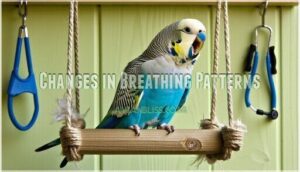
Your bird’s breathing patterns can reveal critical health information that might otherwise go unnoticed.
Watch for these warning signs:
- Open-mouthed breathing – indicates severe respiratory distress requiring immediate attention
- Wheezing sounds – suggests air sac problems or respiratory infections
- Labored breathing – visible effort during normal rest periods
- Tail bobbing – rhythmic movement while breathing shows difficulty breathing
Respiratory issues demand quick action since breathing difficulties can escalate rapidly in birds.
Abnormal Droppings and Color Changes

Your bird’s droppings serve as a health report card you can’t ignore.
Normal bird excrement contains three parts: dark feces, white urates, and clear urine.
Watch for yellow, rusty brown, or tarry black droppings changes – they signal serious trouble.
Droppings consistency matters too; watery or unusually thick waste needs attention.
Regular droppings analysis helps catch illness early.
Altered Activity and Perching Habits
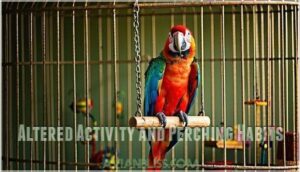
Normal activity should spark concern when you notice dramatic shifts in your bird’s daily routine.
Healthy birds maintain consistent energy patterns, but sick birds often display telling behavioral changes that signal underlying health issues.
- Prolonged perching in one spot – Your bird stays motionless on the same perch for hours instead of moving around
- Sitting on the cage bottom – A normally active bird suddenly prefers the floor over higher perches
- Fluffed feathers while resting – Feathers remain puffed out during quiet times, indicating possible temperature regulation issues
- Reduced preening activity – Less time spent grooming, leading to disheveled or unkempt appearance
Vocalization and Appetite Changes
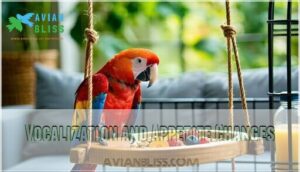
Many birds "clam up" when they’re feeling under the weather, making vocal signs essential early warning signals.
You’ll notice reduced chatter, altered tone, or complete silence from normally chatty companions.
Appetite loss often accompanies these vocalization changes, with birds showing feeding issues like picking at food without eating.
Watch for silent symptoms that speak volumes about your bird’s health, including changes that can indicate a need for closer observation of your bird’s overall well-being, such as a loss of appetite, which can be a critical early warning signal.
Unusual Behaviors and Repetitive Actions
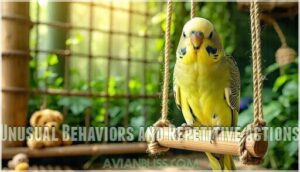
Sick birds often develop repetitive actions that signal distress. You’ll notice excessive feather preening, constant head bobbing, or unusual wing flapping when they’re unwell.
When your bird starts obsessively preening or head-bobbing, it’s crying out for help without making a sound
Watch for changes in beak grinding patterns and tail feathers positioning. These behavioral changes, combined with lethargy and breathing problems, indicate your bird needs immediate veterinary attention for proper bird sickness symptoms evaluation.
Recognizing abnormal behaviors requires understanding bird behavior patterns to identify potential health issues early on, and provide the necessary care to address the abnormal behaviors.
Common Diseases Affecting Birds
Diseases lurk everywhere in your bird’s environment, from bacterial infections to viral outbreaks.
Salmonellosis ranks as the most common bacterial infection, particularly striking seed-eating birds during winter months.
You’ll find contaminated food and water sources spread this deadly disease rapidly through bird populations.
Bacterial infections like Suttonella ornithocola cause pneumonia-like symptoms in tits, while cross-species outbreaks occasionally transmit to pets and humans.
Avian Influenza represents a serious viral threat, with H5N1 causing hundreds of outbreaks across North America.
Bird flu symptoms include respiratory distress, weakness, and systemic failure.
Avian pox creates warty growths on skin, now commonly affecting Great Tits and Starlings.
Fungal diseases like Aspergillosis attack respiratory systems, causing breathing difficulties and eye infections.
Parasite control becomes critical as trichomonosis spreads through contaminated water, linked to dramatic population declines in British Greenfinches—a sobering 67% reduction between 2007-2017.
Understanding bird disease symptoms is essential for effective prevention and treatment.
Diagnosing Bird Illness at Home

You can spot many bird health problems by watching your feathered friend’s daily habits and behaviors.
Early detection at home often makes the difference between a quick recovery and a serious health crisis.
Daily Observation and Monitoring Techniques
Establishing consistent Bird Behavior tracking helps you spot illness early.
Check your bird’s Feather Condition, Beak Inspection, and Eye Examination daily during routine interactions.
Watch for bird sickness symptoms like changes in posture, eating habits, or droppings, and remember that daily observation reveals bird health problems before they become serious emergencies, which is crucial for early detection.
Recognizing Emergency Symptoms
When bird illness symptoms escalate to respiratory distress or severe lethargy, you’re facing a true emergency.
Critical warning signs include labored breathing, tail-bobbing, open-mouth breathing, seizures, or collapse.
These bird sickness symptoms demand immediate emergency care—don’t wait. Contact your avian vet instantly when respiratory issues appear, as bird first aid requires professional intervention for proper symptom identification.
In emergency situations, it’s essential to understand emergency bird care to provide the best possible outcome for your bird.
Tracking Food, Water, and Weight Changes
Monitor your bird’s food intake daily by measuring portions and tracking how much remains uneaten.
Fresh water quality matters – change it regularly and watch for reduced consumption.
Weight monitoring reveals subtle health changes before other symptoms appear.
Note any feeding habits shifts, like picking at favorite foods or ignoring treats.
Proper nutrition balance supports bird health monitoring and helps prevent weight loss during bird sickness diagnosis episodes.
Accurate bird care involves using a food weight scale to guarantee the right amount of food is provided, ensuring proper nutrition, and maintaining accurate bird care, which is essential for bird health monitoring.
When to Seek Veterinary Help
Beyond recognizing bird illness symptoms, you must know when urgent attention becomes critical.
Emergency care situations include open-mouth breathing, bleeding, seizures, or inability to perch.
Schedule vet visits immediately for respiratory distress, sudden behavioral changes, or persistent symptoms lasting over 24 hours.
Trust your instincts—avian veterinary professionals diagnose bird sickness faster than home health checks alone, and it’s crucial to seek help for respiratory distress or persistent symptoms.
Laboratory Tests and Veterinary Diagnosis

When you suspect your bird is sick, your veterinarian will conduct thorough diagnostic tests to identify the exact problem and create an effective treatment plan.
These laboratory assessments provide essential information that home observation alone can’t reveal, helping guarantee your feathered friend receives the most appropriate care.
Physical Examinations and History Review
Your veterinarian starts with a thorough Medical History review, asking about recent behavioral changes and symptoms you’ve observed.
During Physical Checks, they’ll examine your bird’s eyes, beak, and feathers while listening to breathing patterns.
This thorough approach helps with Symptom Identification and determines which Diagnostic Tests are needed for accurate bird sickness diagnosis.
A proper vet visit checklist is essential for ensuring your bird receives the best care possible.
Fecal, Blood, and Respiratory Assessments
Laboratory testing confirms what physical exams suggest through three key diagnostic approaches.
Fecal analysis reveals bacterial imbalances, parasites, and blood traces that indicate digestive disorders.
Blood tests detect immune responses and organ dysfunction through protein levels and cell counts.
Respiratory assessments using nasal flushes identify pathogens causing breathing difficulties.
- Fecal samples show up to 40% parasite detection rates in sick birds
- Blood protein levels vary substantially between carnivorous and omnivorous species
- PCR testing achieves 95% sensitivity for early pathogen detection
Preventing Disease and Protecting Bird Health

Prevention starts with creating the right foundation for your bird’s health through proper diet and environmental controls.
You’ll protect your feathered friend by maintaining clean living spaces, following quarantine protocols, and scheduling regular vet visits to catch problems before they become serious, which is a key part of proper diet and environmental controls.
Diet and Environmental Management
Proper Nutrition Planning and bird diet directly impact your bird’s immune system and recovery speed.
Birds on high-protein diets recover from infections 40% faster than those eating seed-heavy meals.
Your bird environment requires specific attention to Cage Sanitation, Air Quality, and Water Purification.
A well-balanced diet that includes essential bird food supplements is vital for maintaining healthy health.
| Factor | Optimal Range | Health Impact |
|---|---|---|
| Temperature | 85-95°F | Supports recovery metabolism |
| Humidity | 50-60% | Prevents respiratory stress |
| Food Variety | 60-80% pellets | Boosts immune function |
| Cleaning Frequency | Biweekly minimum | Reduces pathogen load |
Quarantine and Hygiene Practices
When bringing new birds home, set up a separate quarantine space for thirty days minimum.
Clean feeding stations with ten percent bleach solution weekly, and wash your hands thoroughly between handling different birds.
Quarantine procedures prevent disease spread while sanitation methods protect your entire flock from avian illness.
Regular bird cage cleaning using a cage cleaning product is essential for maintaining a healthy environment.
Regular Veterinary Checkups
Even if your bird looks healthy, checkup schedules with an avian veterinarian facilitate early detection of hidden diseases.
Annual bird exams create health records that track changes over time, helping your vet spot problems before they become serious.
These preventative measures include blood work, weight monitoring, and physical assessments that reveal issues invisible to untrained eyes, which is crucial for the health of your bird, and can be considered a form of preventative measures.
Reducing Disease Spread in Wild and Pet Birds
Beyond checkups, protecting birds means stopping disease transmission before it starts.
Bird disease prevention requires strategic Wildlife Conservation and Avian Hygiene practices for both wild and captive populations.
You can reduce bird disease transmission through these key measures:
- Feeder management: Clean feeders weekly with 10% bleach solution and space them 20 feet apart
- Quarantine protocols: Isolate new birds for 30 days with separate equipment and clothing
- Contact barriers: Use screens to prevent wild bird access to domestic flocks
Disease Surveillance through proper Eco Health monitoring helps identify outbreaks early, supporting effective bird health management across communities.
Frequently Asked Questions (FAQs)
How long do bird illness symptoms take to appear?
How quickly can illness creep up on your feathered friend?
Bird symptoms typically surface within 24-72 hours after infection, though some diseases remain hidden for days or weeks before manifesting visible signs in your pet.
Can birds recover from diseases without veterinary treatment?
Some birds can fight off minor illnesses naturally, but you shouldn’t gamble with their lives.
Birds hide symptoms well, making self-recovery risky.
Serious diseases need professional treatment to prevent complications or death.
Whats the difference between viral and bacterial bird infections?
Viral infections spread through airborne droplets while bacterial infections thrive in contaminated environments.
You’ll notice viral cases cause systemic weakness and respiratory distress, whereas bacterial infections typically produce localized symptoms like nasal discharge.
Are certain bird species more prone to illness?
Yes, you’ll find certain species face higher illness risks.
Young birds, elderly ones, and those with compromised immune systems struggle most.
Wild waterfowl carry more diseases than pet birds due to environmental exposure and stress factors, which can lead to higher illness risks in wild waterfowl.
How do you safely transport a sick bird?
Carefully contain your companion in a secure, ventilated carrier with soft bedding. Keep the journey short, maintain stable temperatures, and minimize handling. Contact your vet immediately.
Conclusion
Prevention is worth a pound of cure when mastering bird sickness diagnosis.
You’ve learned to spot breathing changes, monitor droppings, and track behavioral shifts that signal trouble.
These observation skills help you catch bacterial infections, viral diseases, and fungal conditions early.
Remember that subtle changes often mean serious problems in birds.
Quick action based on proper bird sickness diagnosis saves lives.
Your vigilant monitoring protects your feathered companion’s health and prevents minor issues from becoming emergencies, which is a key part of preventing minor issues.
- https://vcahospitals.com/know-your-pet/testing-and-diagnostics-for-sick-pet-birds
- https://www.merckvetmanual.com/exotic-and-laboratory-animals/pet-birds/viral-diseases-of-pet-birds
- https://www.copanusa.com/wp-content/uploads/2019/04/861427138395_CDS_CDS-Guidelines-Laboratory_page20.pdf
- https://pmc.ncbi.nlm.nih.gov/articles/PMC11860460/
- https://odh.ohio.gov/know-our-programs/zoonotic-disease-program/animals/birds