This site is supported by our readers. We may earn a commission, at no cost to you, if you purchase through links.
 You’ll find that bird species desert homes showcase nature’s most remarkable survival tricks. Desert birds like Cactus Wrens build nests in spiny cacti for protection, while Pyrrhuloxias use their gray-red plumage as perfect camouflage.
These tough survivors have specialized kidneys that concentrate urine to save water, and they’ve mastered behavioral tricks like foraging during cooler dawn hours. Gila Woodpeckers depend on towering saguaro cacti, while Common Poorwills can actually slow their metabolism and enter a hibernation-like state when times get tough.
From flexible diets switching between seeds and insects to strategic food caching, these feathered desert dwellers have turned one of Earth’s harshest environments into their thriving neighborhood. The secret lies in timing, adaptation, and knowing exactly when to conserve energy.
Table Of Contents
Key Takeaways
- You’ll find desert birds have evolved specialized kidneys that concentrate urine to save water, allowing them to survive on just 10% of the water temperate birds need.
- You can spot these survivors using clever nesting strategies like building homes in spiny cacti for protection and shade, while timing their foraging during cooler dawn and dusk hours.
- You’ll discover they’ve mastered flexible diets, switching between insects, seeds, and fruits based on availability, with some species storing food during abundant times.
- You can observe remarkable adaptations like the Common Poorwill’s hibernation-like torpor state and specialized camouflage feathers that help them blend perfectly with desert terrain.
Unique Desert Bird Species
You’ll find these desert birds have mastered survival in some of Earth’s harshest environments through impressive physical and behavioral adaptations.
From the Cactus Wren’s water-absorbing feathers to the Pyrrhuloxia’s seed-cracking beak, each species shows unique traits that help them thrive where water’s scarce and temperatures soar.
Cactus Wren

You’ll spot the Cactus Wren easily with its distinctive white eyebrow and brown plumage that blends perfectly with desert surroundings.
These clever desert birds showcase notable Cactus Wren Behavior, building multiple nests in cacti spines for protection. Their Wren Habitat Preferences include thorny desert plants where they hunt insects and small reptiles.
Cactus Wren Diet consists mainly of beetles, ants, and occasional fruits. Their impressive Wren Nest Building skills create football-shaped structures that keep eggs safe from predators and heat.
Pyrrhuloxia

You’ll spot this Desert Seed-Eater in arid habitats throughout the Southwest and northern Mexico. The Pyrrhuloxia sports crisp gray and red plumage with a distinctive crest and parrot-like yellow bill.
This desert bird species feeds primarily on tough desert seeds, making it perfectly suited for harsh arid environments. As a member of the Cardinalidae family, it shares ancestry with other well-known songbirds. Its conservation status remains stable across its regional distribution.
Hepatic Tanager

You’ll recognize the Hepatic Tanager by its striking plumage variations—males sport deep red coloring while females display yellowish tones.
This desert bird species thrives in habitat overlap between pine-oak woodlands and desert habitat edges.
Their diet specifics include insects and berries, supporting stable conservation status through flexible breeding behavior patterns essential for successful birdwatching encounters.
Common Poorwill

Ever wonder how desert birds survive winter without flying south? The Common Poorwill masters a remarkable trick—entering a torpor state that’s like bird hibernation. This nocturnal behavior allows them to slow their metabolism dramatically, with body temperature dropping to 41°F and oxygen consumption reducing by over 90%.
Their camouflage plumage helps them disappear among desert rocks during these extended rest periods. While most desert birds stay active year-round, poorwills can remain torpid for weeks, surviving on stored energy when insect diet becomes scarce in regional habitats. Their presence is often detected by their distinctive nightjar calls.
Gila Woodpecker

When you spot a Gila Woodpecker in its Desert Environment, you’ll notice their striking black-and-white striped backs. These Desert Birds showcase notable Habitat Dependence on saguaro cacti for Nesting Behavior.
Their Diet Specifics include insects and cactus fruits. Regional Variations exist across southwestern deserts.
Current Conservation Status remains stable, though habitat loss threatens Gila woodpeckers.
Adaptations for Surviving Harsh Desert Life
You’ll discover that desert birds have developed impressive survival mechanisms to handle extreme heat and water scarcity. These adaptations include specialized kidneys that concentrate urine, heat-regulating behaviors like panting, and camouflaged feathers that reflect sunlight while providing protection from predators.
Water Conservation Strategies

Throughout arid landscapes, desert birds have mastered impressive water conservation strategies that put survival above all else. You’ll find species like Cactus Wrens getting nearly all hydration from food sources, while their efficient kidneys extract maximum water before excretion.
Feather water collection helps Sandgrouse transport moisture to chicks, and behavioral adaptations minimize desert water dependence through strategic foraging during cooler hours.
Heat Regulation Techniques

How do desert birds survive temperatures that would cook most animals? These feathered athletes master Evaporative Cooling through strategic panting and lowering their Metabolic Rate.
You’ll spot Desert Birds practicing Nocturnal Activity, avoiding scorching days. They use Body Orientation techniques, angling themselves away from sun, and seek Shaded Roosting spots.
Through Efficient Water Use and smart Heat Regulation, these remarkable Bird Adaptations make Desert Habitat survival look easy.
Camouflage Feathers

Blending into sandy terrain becomes second nature when you’re sporting the right feather coloration. Desert birds showcase disruptive patterns that break up their silhouettes against rocks and cacti.
The Cactus Wren’s brown plumage creates perfect mimicry feathers, while seasonal camouflage helps species like the Verdin shift appearance.
This camouflage evolution represents millions of years perfecting desert adaptation survival strategies.
Efficient Kidneys

Nature’s master engineers don’t just adapt their feathers—they redesign their entire plumbing system. Desert birds possess specialized kidney size and structure that facilitates remarkable water conservation strategies through enhanced water reabsorption and salt excretion mechanisms.
- Concentrated uric acid production – Unique adaptations allow birds to excrete waste using minimal water
- Enhanced osmoregulation systems – Desert bird adaptations optimize every drop through efficient filtering
- Specialized tubular structures – Sophisticated kidney design prevents water loss during waste removal
Nesting and Feeding Habits in The Desert
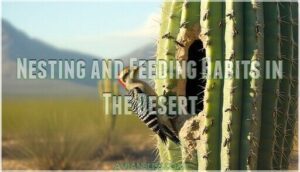
You’ll discover that desert birds have mastered the art of turning harsh landscapes into comfortable homes through clever nesting choices and flexible eating habits.
From building homes in spiny cacti that offer both protection and shade to switching their diets based on seasonal food availability, these feathered survivors show impressive adaptability in environments where water is scarce and temperatures soar.
Nesting in Shade and Cacti
Clever architecture starts with shade selection. Desert birds like Cactus Wrens choose thorny fortresses – their nests tucked within cholla and saguaro branches create natural microclimate nests.
The spiny protection shields eggs from snakes while strategic placement blocks harsh sun. These nesting habits combine nest materials with nature’s blueprint, turning deadly cacti into safe havens.
Foraging Strategies
You’ll discover how desert birds have mastered the art of finding food in harsh conditions. Their foraging strategies optimize energy while avoiding predators during scarce periods.
Here are three key techniques desert birds use:
- Timing hunts around temperature – Most insect hunting occurs during cooler dawn and dusk hours
- Ground-level seed consumption – Birds scratch through sand and debris beneath shrubs for seeds
- Nocturnal feeding patterns – Species like owls avoid daytime heat while hunting varied diets
Diet Flexibility
Desert birds constantly switch between insects, seeds, and berries depending on what’s available. Opportunistic feeding helps them survive when their preferred foods disappear. This dietary shift strategy means they’ll eat crickets today but munch on cactus fruit tomorrow—whatever nature offers up.
Desert birds consume insects, seeds, and fruits, taking advantage of what’s abundant.
Storing Food for Scarcity
You’ll find that smart desert birds don’t just survive day-to-day—they plan ahead like seasoned preppers. While diet flexibility helps them adapt to changing food availability, caching techniques become their insurance policy against lean times.
Here are three notable food storage strategies:
- Acorn specialization – Acorn Woodpeckers drill thousands of holes in tree bark, creating granaries that hold up to 50,000 acorns
- Insect preservation – Some species catch extra insects during peak times, storing them in rock crevices for later consumption
- Fat reserves buildup – Birds gorge on seeds, insects, and berries when abundant, converting excess into body fat for harsh periods
Seed storage varies by species, but the principle remains the same—when resources flow, you stockpile.
Migration Patterns and Seasonal Movements

You’ll discover that desert birds follow complex migration patterns based on seasonal changes and food availability. Some species like the Lucifer Sheartail travel to central Mexico during winter, while others such as the Western Screech Owl remain year-round residents in their territories.
Seasonal Visitors and Year-Round Residents
Some desert birds call these harsh environments home year-round, while seasonal visitors arrive based on resource availability and breeding seasons. You’ll spot resident adaptations like the Cactus Wren’s permanent territories versus migration triggers that bring warblers during spring.
Birdwatching reveals these migration patterns change with climate impacts affecting when seasonal visitors appear in desert habitats.
Distinct Migration Routes
Birds navigate distinct migration routes using specialized strategies and environmental cues. The Pacific Flyway stretches over 4,000 miles from Alaska to Patagonia, with desert stopover sites supporting 400 species.
Route variations depend on wind patterns, food availability, and seasonal movements. Nocturnal flights minimize heat exposure during desert crossings. Navigation methods include celestial guidance and geographic landmarks.
Climate impacts increasingly affect traditional migration patterns throughout arid regions.
Environmental Triggers for Migration
Climate cues trigger desert bird migration when environmental factors shift dramatically. Seasonal migration begins as food availability dwindles and water sources dry up.
Breeding triggers activate when habitat degradation forces birds to seek better nesting grounds. Migration patterns follow resource availability, helping birds avoid predator concentrations during vulnerable periods.
Birdwatching Tips for Desert Exploration

You’ll spot desert birds most easily during dawn and dusk when cooler temperatures bring them out to forage and call.
Your success depends on learning their unique songs, carrying binoculars and water, and moving quietly through their fragile habitat.
Best Times to Spot Birds
Timing is everything when spotting desert birds. These elusive creatures follow strict daily routines that enhance food availability while avoiding extreme temperatures. Understanding weather impact sightings helps you catch seasonal bird abundance during ideal birding hours.
- Dawn to 8 AM: Sunrise vs sunset debates favor morning hours when desert birds actively search for insects and water before heat peaks.
- Late afternoon (4-6 PM): Many species resume activity as temperatures drop, making this prime time for birdwatching.
- Night hours: Nocturnal bird activity increases with species like owls and poorwills hunting after dark.
Identifying Desert Bird Calls and Songs
Once you’ve spotted birds in the desert, learning their calls becomes your next adventure. Desert bird songs showcase remarkable acoustic adaptations, with call variation helping species communicate across vast spaces.
Many birds develop complex vocal mimicry, copying other species’ sounds for survival. Song complexity varies widely among desert birds, from simple chirps to elaborate melodies.
Pay attention to identifying nuances in pitch and rhythm. Each bird species has unique patterns that reveal their identity, making birdwatching more rewarding.
Essential Gear for Birdwatching
Your desert birdwatching adventure needs the right tools for success. Quality gear makes the difference between spotting those elusive desert birds and missing them entirely.
- Binocular Quality: Choose 8×42 models with ED glass for crisp views in harsh desert light
- Field Guides: Pack regional desert bird guides or download offline apps for quick identification
- Protective Clothing: Wear long sleeves, wide-brimmed hats, and hydration packs to stay comfortable during extended desert exploration
Conservation-Friendly Birdwatching Practices
Responsible birdwatching protects desert birds while you enjoy their company. Minimize impact by staying on established trails and keeping quiet distances from nesting sites. Promote conservation through ethical photography and sharing observations with citizen science projects.
| Practice | Action |
|---|---|
| Respect Habitats | Stay 15+ feet from nests |
| Water Conservation | Don’t disturb water sources |
| Ethical Photography | Use telephoto lenses |
| Share Observations | Report to eBird platform |
Citizen science projects benefit from your contributions, helping to monitor and protect these fragile ecosystems.
Frequently Asked Questions (FAQs)
How do desert birds find water sources?
Like desert detectives following invisible clues, you’ll discover these resourceful birds don’t just stumble upon water—they’ve mastered the art of extraction.
You’ll find they extract moisture from insects, fruits, and seeds while using specialized kidneys to recycle every precious drop efficiently.
What predators threaten desert bird populations most?
You’ll face threats from raptors like hawks and owls that hunt from above, plus ground predators including snakes, foxes, and raccoons targeting nests and fledglings.
Which desert birds are endangered or threatened?
Nearly 85% of desert thrasher populations have declined over two decades. LeConte’s and Bendire’s thrashers are seeking endangered species protections in 2025, alongside various desert songbirds facing habitat loss and climate threats.
How do climate changes affect desert birds?
Climate change pushes desert birds to their breaking point. You’ll see declining diversity as species face lethal heat stress, water scarcity, and disrupted food chains in increasingly extreme temperatures.
What plants do desert birds prefer nesting?
You’ll find desert birds gravitating toward cacti, mesquite trees, and thorny shrubs for nesting. These plants offer protection from predators while providing stable branches that won’t easily break during windstorms.
Conclusion
Remarkably, desert birds can survive on just 10% of the water that similar-sized birds need in temperate climates. These feathered survivors prove that adaptation isn’t just about surviving—it’s about thriving.
You’ve discovered how bird species desert homes showcase astonishing evolutionary solutions. From water-efficient kidneys to strategic nesting choices, they’ve mastered desert life.
Next time you’re exploring arid landscapes, remember you’re witnessing millions of years of natural engineering at work.
- https://www.desertmuseum.org/books/nhsd_adaptations_birds.php
- https://wickenburgaz.gov/DocumentCenter/View/7015/Desert-Adaptations-of-Birds-
- https://palmdesert.ucr.edu/calnatblog/2023/11/27/which-birds-thrive-desert
- https://bybio.wordpress.com/tag/desert-bird-adaptations/
- https://www.allaboutbirds.org/guide/Cactus_Wren/lifehistory