This site is supported by our readers. We may earn a commission, at no cost to you, if you purchase through links.
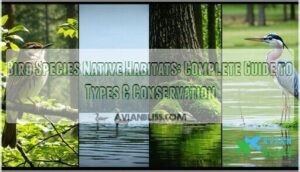 Bird species native habitats encompass four main types that shape where you’ll find different birds.
Woodland habitats with coniferous or deciduous trees support songbirds like warblers and woodpeckers. Aquatic environments including lakes, wetlands, and coastlines attract waterfowl, herons, and shorebirds.
Scrub-shrub areas with bushes and low woody plants house species like wrens and sparrows. Open grasslands, fields, and tundra provide homes for ground-dwelling birds such as meadowlarks and plovers.
Each habitat type offers unique food sources, nesting sites, and shelter that match specific bird adaptations. Understanding these connections reveals why certain species thrive in particular environments and struggle when their native habitats face threats.
Table Of Contents
- Key Takeaways
- Bird Habitat Types
- Diverse Bird Habitats
- Native Bird Habitats
- Threatened Bird Habitats
- Preserving Bird Habitats
- Frequently Asked Questions (FAQs)
- Which habitat is known for many species of birds?
- What is the most diverse bird habitat?
- What is an example of a bird’s habitat?
- What is the best habitat for birds?
- How do migratory patterns affect habitat selection?
- What seasonal changes impact bird habitat choices?
- How do climate patterns influence nesting locations?
- Which predators most threaten native bird populations?
- Conclusion
Key Takeaways
- You’ll find birds thrive in four main habitat types—woodlands, wetlands, grasslands, and coastal areas—each providing specific food sources, nesting sites, and shelter that match different species’ adaptations.
- You’re witnessing critical habitat destruction as human development, farmland expansion, and housing projects eliminate the specialized environments that native bird species need to survive and reproduce.
- You can identify key habitat features like eucalyptus woodlands with less than 30% canopy cover, proteaceae plants offering nectar-rich flowers, and coastal areas providing essential breeding grounds for marine-dependent species.
- You’ll make the biggest impact through conservation efforts like habitat restoration, community involvement, and supporting programs that protect existing ecosystems and restore damaged areas for future bird generations.
Bird Habitat Types
You’ll find that birds adapt to three main habitat types based on soil fertility, plant communities, and human impact.
Heathland environments with dense, prickly vegetation support nectar-feeding species, while open woodlands with eucalyptus canopies host different bird communities that face increasing threats from development.
Heathland Habitat Features
You’ll find heathlands thriving on infertile coastal soils around Sydney, where salt-laden winds shape unique ecosystems.
Sydney’s coastal heathlands prove that harsh conditions create remarkable bird sanctuaries.
These hardy native habitats feature dense heathland plants under two meters tall, creating perfect bird shelter through their prickly structure.
Different soil types support specialized bird species, while coastal winds maintain the low, protective canopy that countless birds call home, making these areas a perfect example of coastal winds and unique ecosystems.
Woodland Habitat Characteristics
You’ll discover woodland habitats feature eucalyptus trees with less than 30% canopy cover, creating open spaces perfect for ground-dwelling bird species.
These native habitats support diverse wildlife through their unique ecosystem balance.
- Eucalyptus trees dominate the landscape with scattered canopy cover
- Native grasses fill the understorey, providing seeds and insect habitat
- Open structure allows easy movement for larger bird species
- Bird shelter exists in tree hollows and dense grass clumps
- Woodland ecology supports both ground-feeders and canopy dwellers
Coastal Habitat Importance
Along coastal waters, you’ll discover essential sanctuaries where sea bird species thrive despite coastal erosion challenges.
These coastal habitats provide essential nesting sites and feeding grounds for marine life-dependent birds.
Ocean conservation efforts focus on shoreline protection to maintain these delicate coastal ecosystems, ensuring bird conservation efforts succeed.
| Habitat Feature | Bird Benefits | Conservation Need |
|---|---|---|
| Rocky cliffs | Safe nesting sites | Erosion control |
| Salt marshes | Rich feeding areas | Pollution prevention |
| Sandy beaches | Breeding grounds | Human disturbance limits |
| Tidal pools | Marine food sources | Water quality protection |
Diverse Bird Habitats
You’ll find birds adapted to vastly different soil conditions across Sydney’s diverse landscapes. Species in fertile woodland soils face different survival challenges than those thriving in nutrient-poor heathland environments.
Sydney Region Bird Habitats
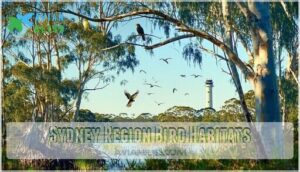
Sydney Region Bird Habitats support over 150 species through diverse ecosystems ranging from coastal mangroves to Cumberland Plain woodlands.
You’ll find native bird species thriving in remnant Banksia scrub, eucalyptus forests, and saltmarsh environments that create critical corridors for Bird Migration.
However, Urban Birds face increasing Habitat Loss as Sydney’s expansion fragments these coastal habitats, directly impacting Conservation Status of native species requiring immediate bird habitat conservation action.
The conservation of these habitats relies on understanding eucalyptus forest ecosystems and their role in supporting native bird species.
Fertile Soils Bird Species
You’ll notice fertile soil birds thrive in woodland habitats where nutrient-rich earth supports diverse plant species.
These environments attract various avian species through abundant food sources and nesting materials.
- Woodland birds depend on fertile soils for insect populations
- Rich earth supports bird-pollinated flowers and seed production
- Fertile areas provide nesting materials from healthy vegetation
- Soil quality directly affects avian diversity and migration patterns
Understanding the role of unique bird habitats is essential for conservation efforts.
Infertile Soils Bird Adaptations
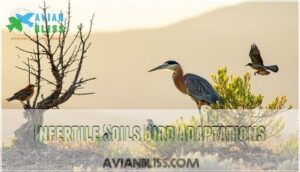
Birds on infertile soils develop remarkable adaptations to thrive where nutrients are scarce.
Nature shapes survival – scarce nutrients spark extraordinary bird evolution.
You’ll find that bird species native habitats like heathlands force birds to evolve specialized feeding strategies.
These arid bird habitats create challenges that shape desert bird behavior patterns.
Bird root systems can’t help here – instead, birds must extract maximum nutrition from infertile soil plants.
Habitat loss threatens these unique bird ecology systems with specialized feeding strategies being particularly vulnerable.
Native Bird Habitats
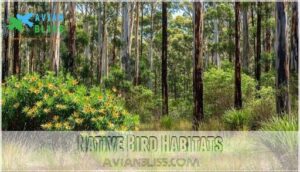
You’ll find native bird habitats centered around eucalyptus woodlands with less than 30% canopy cover and open understories of native grasses.
These areas support specialized species adapted to proteaceae plants like banksias, whose nectar-rich flowers attract honeyeaters and other native birds.
Eucalyptus Dominated Woodlands
Through eucalypts’ open canopy structure, you’ll find woodlands that support diverse Native Fauna despite Habitat Fragmentation pressures.
These natural habitat areas maintain less than 30% Tree Canopy coverage, creating unique conditions for bird species native habitats.
Key Eucalyptus Ecology features include:
- Open understorey – allows ground-feeding birds easy access
- Scattered tree spacing – provides multiple nesting opportunities
- Woodland Biodiversity – supports various feeding guilds
Habitat preservation efforts focus on protecting remaining eucalypt woodlands from further fragmentation.
Understanding forest habitat diversity is essential for effective conservation strategies in these areas.
Proteaceae Plant Species
Throughout diverse ecosystems, Proteaceae plant species create essential bird habitat restoration opportunities.
You’ll find these native plant species offering critical nectar sources through specialized Proteaceae flowers.
Plant diversity within this family supports various pollination methods, with Banksia trees serving as cornerstone species for natural habitat preservation.
The unique characteristics of proteaceae plants play a pivotal role in supporting native bird species.
| Genus | Bird Pollination | Habitat Role |
|---|---|---|
| Banksia | Year-round nectar | Primary food source |
| Protea | Seasonal flowering | Migration support |
| Grevillea | High sugar content | Territory establishment |
| Leucospermum | Dense flower clusters | Breeding habitat |
Nectar Rich Flowering Plants
You’ll find nectar-rich flowering plants create essential food webs in bird habitats.
These pollinator plants offer diverse nectar sources through specialized flower diversity.
Eucalypts and Proteaceae species showcase remarkable plant adaptations, producing bird-pollinated flowers that sustain honeyeaters year-round.
Understanding this flora connection helps botanical conservation efforts protect these essential nectar relationships between plants and birds.
Threatened Bird Habitats
You’re witnessing one of conservation’s most urgent challenges as human development destroys bird habitats at alarming rates.
Woodland clearance for farming and housing has eliminated vast areas where native species once thrived, pushing many birds toward extinction.
This destruction of habitats is a critical issue, with native species being affected the most.
Woodland Clearance Effects

When you clear woodlands, you’re witnessing habitat loss that triggers massive bird decline.
Species extinction accelerates as ecosystem disruption fragments their homes. Native wildlife habitats disappear, leaving specialist birds without proper nesting sites.
Environmental impact reaches beyond individual species – entire communities collapse when habitat fragmentation destroys connectivity.
You’ll find that habitat restoration becomes critical for reversing woodland bird habitat loss.
Farmland Expansion Impact

Aggressive farmland expansion devastates bird populations worldwide.
Nearly 90% of bird species face habitat loss by 2050 as agricultural landuse intensifies.
Habitat fragmentation isolates populations, reducing genetic diversity and breeding success.
Monoculture systems trigger biodiversity decline, eliminating food sources and nesting sites.
Agricultural chemicals cause water pollution and ecosystem disruption, while soil erosion degrades remaining habitats.
Grassland birds have lost 40% of populations since 1970, directly correlating with increased farmland area and reduced bird species diversity.
Understanding habitat loss effects is essential to addressing these environmental challenges.
Housing Development Consequences

Housing Development Consequences threaten bird populations through systematic habitat destruction.
Urban Planning decisions create Environmental Impact that leads to Biodiversity Loss across native ecosystems.
You’ll notice three critical effects:
- Habitat Fragmentation – landuse changes split continuous habitats into isolated patches
- Ecosystem Disruption – Human Settlement alters natural food webs and nesting sites
- Reduced Habitat Suitability – urban development eliminates specialized microhabitats birds need
This bird habitat destruction fundamentally changes landscape connectivity.
Preserving Bird Habitats
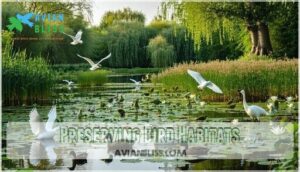
You can protect bird habitats through targeted conservation efforts that focus on preserving existing ecosystems and restoring damaged areas.
Community involvement plays a vital role in habitat restoration techniques, from planting native vegetation to supporting local conservation programs that maintain the diverse environments birds need to survive, which is crucial for their well-being and conservation.
Conservation Efforts Importance
When woodland clearance threatens bird populations, you need immediate action to safeguard these species.
Conservation efforts importance becomes clear through systematic habitat protection and species preservation strategies that facilitate ecological diversity survival. Understanding the habitat preservation importance is vital for developing effective conservation plans.
| Conservation Strategy | Impact on Birds |
|---|---|
| Habitat Protection | Maintains nesting sites and food sources |
| Species Preservation | Prevents local extinctions |
| Biodiversity Defense | Supports ecosystem balance |
Effective wildlife management requires community partnerships and scientific monitoring. Bird conservation success depends on understanding habitat suitability requirements.
Eco conservation programs protect migration routes and breeding grounds essential for population recovery.
Habitat Restoration Techniques
Success in bird habitat restoration techniques depends on strategic implementation.
You’ll find these methods most effective for ecosystem repair:
- Reforestation methods using native eucalyptus and mixed-species plantings increase bird diversity by 70%
- Wildlife corridors connecting fragmented areas boost genetic flow between populations
- Soil conservation through invasive species removal supports ground-nesting birds
Biodiversity management requires patience—mature plantings provide better nesting success than early-stage restoration.
Effective restoration also involves selecting the right native plant species to promote ecosystem health.
Community Involvement Strategies
Four proven strategies boost bird habitat conservation through community involvement.
Volunteer programs engage citizens in hands-on restoration work, while local events build awareness and support.
Community outreach educates neighbors about wildlife conservation needs.
Public engagement activities like fundraising initiatives provide essential resources.
These conservation efforts create lasting impact when communities unite for bird habitat management.
Effective bird conservation requires utilizing proper bird conservation tools to achieve desired outcomes.
Frequently Asked Questions (FAQs)
Which habitat is known for many species of birds?
Forests and woodlands support the most bird species diversity. You’ll find varied canopy layers create multiple niches for different feeding behaviors and nesting preferences, making these habitats true avian hotspots.
What is the most diverse bird habitat?
Tropical rainforests host over 50% of Earth’s bird species despite covering just 6% of land.
You’ll find the richest avian diversity in these humid ecosystems where dense canopy layers create countless niches for specialized feeding and nesting behaviors.
What is an example of a bird’s habitat?
When you’re exploring bird habitats, you’ll find forests are excellent examples.
These ecosystems feature layered canopies that provide shelter, nesting sites, and diverse food sources like insects, seeds, and fruits for countless species, making them a crucial part of the ecosystems.
What is the best habitat for birds?
Ironically, there’s no single "best" habitat since different bird species have evolved specific adaptations for diverse environments.
You’ll find ideal conditions vary dramatically—wetlands support waterfowl, forests shelter songbirds, while grasslands accommodate ground-nesters perfectly. You’ll find ideal conditions vary dramatically—wetlands support waterfowl, forests shelter songbirds, while grasslands accommodate ground-nesters perfectly.
How do migratory patterns affect habitat selection?
Migratory birds choose habitats based on seasonal food availability, breeding requirements, and weather conditions.
You’ll find they select stopover sites with abundant resources, safe roosting areas, and favorable microclimates during their incredible journeys.
What seasonal changes impact bird habitat choices?
Picture leaves carpeting forest floors like nature’s seasonal carpet.
You’ll notice birds shift their habitat preferences as temperatures drop, food sources change, and daylight hours shrink, triggering instinctive movements toward warmer, resource-rich environments, with nature’s seasonal patterns influencing their behavior, and instinctive movements guiding them.
How do climate patterns influence nesting locations?
Climate patterns dictate where you’ll find nests by controlling temperature, precipitation, and resource availability.
Birds choose protected spots with stable microclimates, avoiding extreme weather zones while ensuring access to food and water sources, which is influenced by stable microclimates.
Which predators most threaten native bird populations?
Domestic cats stalk your backyard birds relentlessly, killing billions annually.
Rats raid nests for eggs and chicks.
Hawks, owls, and snakes hunt native species, but habitat loss amplifies predation pressure substantially.
Conclusion
Protecting bird species‘ native habitats isn’t just important—it’s absolutely critical for our planet’s survival.
You’ve learned how woodlands, wetlands, grasslands, and coastal areas each support unique species through specialized food sources and nesting sites.
Understanding these connections helps you recognize why habitat loss threatens entire ecosystems.
When you support conservation efforts, restore native plants, and reduce environmental impacts, you’re directly helping preserve these essential bird species’ native habitats for future generations.
- https://www.nature.com/articles/s41598-020-58202-4
- https://www.3billionbirds.org/findings
- https://web.colby.edu/mainebirds/2020/08/20/habitat-selection-in-birds/
- https://www.birdsinbackyards.net/birds/Natural-Habitats-Birds
- https://www.audubon.org/magazine/sweeping-new-report-shows-us-birds-declining-sharply-across-range-habitats