This site is supported by our readers. We may earn a commission, at no cost to you, if you purchase through links.
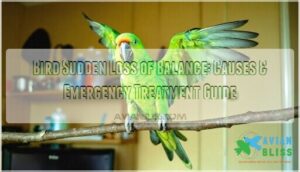 When your bird experiences sudden loss of balance, you’re likely witnessing signs of inner ear infections, neurological issues, or toxicity exposure.
Your feathered friend might display head tilting, unsteady perching, or difficulty maintaining flight control.
These symptoms shouldn’t be taken lightly since balance problems can indicate serious underlying conditions ranging from nutritional deficiencies to trauma-related injuries.
Quick veterinary intervention becomes essential for proper diagnosis and treatment.
While some balance issues resolve with medication and environmental adjustments, others require ongoing management strategies.
The key lies in recognizing early warning signs and understanding what specific symptoms reveal about your bird’s condition, which is crucial for providing the right care and ensuring the best possible outcome with proper diagnosis.
Table Of Contents
- Key Takeaways
- Bird Balance Issues
- Causes of Balance Loss
- Diagnostic Methods
- Symptoms of Balance Disorders
- Treatment and Management
- Prevention and Prognosis
- Frequently Asked Questions (FAQs)
- How do you know if a bird is losing balance?
- Can a bird lose its balance?
- Why do parrots lose balance?
- Why do birds end up on their backs?
- What is the prognosis if a bird has a balance disorder?
- How do neurological conditions affect a bird’s balance?
- What could cause a sudden loss of balance?
- Why is my bird losing balance all of a sudden?
- What does a stroke look like in a bird?
- What does ataxia look like in birds?
- Conclusion
Key Takeaways
- You’ll need immediate veterinary care when your bird shows head tilting, unsteady perching, or stumbling – these aren’t minor issues but signs of serious conditions like inner ear infections or neurological disorders.
- Watch for multiple warning signs including head shaking, ear discharge, foul odors, and loss of flight control, as these symptoms often indicate infections or toxicity that require swift medical intervention.
- Treatment success depends on quick diagnosis through blood tests, imaging studies, and neurological exams, followed by targeted medication like antibiotics for infections or anti-inflammatories for swelling.
- You can prevent most balance problems by maintaining proper nutrition with calcium and B-vitamins, creating a toxin-free environment, and scheduling regular vet checkups to catch early warning signs.
Bird Balance Issues
When your bird suddenly loses its balance, you’re witnessing a serious health emergency that demands immediate attention.
Balance problems in birds can manifest through head tilting, unsteady perching, stumbling while walking, or complete loss of flight control.
Head Tilting and Rotation
When you spot your bird’s head tilting or rotating, it’s like a red flag waving—this signals vestibular dysfunction affecting their inner ear balance system.
Head tilting often indicates neurological origins from infection indicators, trauma link, or toxin exposure.
These bird neurological issues create avian vertigo, making your feathered friend’s world spin uncontrollably, causing persistent bird balance problems and obvious bird neurological disease symptoms.
Unsteady Perching and Falling
Beyond head tilting, you’ll notice your bird struggling to grip its perch properly or tumbling from favorite resting spots.
These episodes signal serious balance problems requiring immediate attention, as unsteady perching often precedes more severe symptoms.
- Perch Size: Diameter should allow 75% toe wrap around perch for secure grip
- Cage Placement: Position perches at varying heights to prevent dangerous falls
- Perch Material: Natural wood branches provide better grip than smooth dowels
- Foot Health: Swollen or infected feet contribute to perching instability
- Muscle Weakness: Ataxia causes leg muscles to lose coordination and strength
When bird falling over becomes frequent, loss of equilibrium affects their ability to maintain balance on perches.
Bird balance problems manifest as desperate clinging to cage bars or repeated stumbling when attempting to land.
Monitor perch preferences – birds with ataxia often abandon higher perches for ground-level safety.
Wobbly Gait and Stumbling
When your bird walks like they’ve had one too many, that’s gait abnormalities at work.
Stumbling, wobbly steps, and leg weakness signal coordination problems from potential nerve damage or muscle control issues.
Watch for your unsteady bird falling over repeatedly—this bird imbalance isn’t just clumsiness.
Your dizzy bird needs immediate attention to prevent further injury.
Wing Drooping and Loss of Flight Control
When you notice wing drooping alongside stumbling, your bird’s struggling with more than just ground movement.
One wing hanging lower signals muscle weakness or nerve damage affecting flight coordination.
You’ll see crash landings, rough perches, and collisions with cage walls as Flight Instability Causes take hold.
Landing Difficulties become obvious when your feathered friend can’t judge distances or control descent speed.
Drooping Wing Impact creates a lopsided appearance, while Crash Injuries and Feather Damage worsen with each failed flight attempt during sudden balance loss episodes.
Causes of Balance Loss
When your bird suddenly loses its balance, you’re likely witnessing one of several serious underlying conditions that require immediate attention.
The culprits range from inner ear infections and neurological disorders to trauma, toxicity, and nutritional deficiencies that can strike without warning, including serious underlying conditions.
Inner Ear Infections
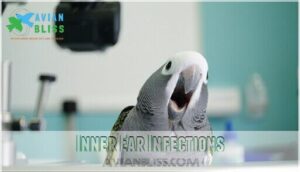
Otitis interna ranks among the most common infection sources causing avian ataxia.
When bacteria like Pasteurella multocida ascend through your bird’s Eustachian tube, they trigger vestibular disease that’ll make your feathered friend dizzy.
You’ll need antibiotic options based on culture results, though fungal involvement complicates treatment.
Chronic issues often require surgical intervention for complete resolution.
This condition can also cause spontaneous rotary nystagmus.
Neurological Disorders
Neurological disorders frequently wreak havoc on your bird’s balance system.
Avian Bornavirus causes PDD, destroying neurons and triggering coordination problems. Heavy metals like lead create devastating neurological bird symptoms, while Encephalomalacia from vitamin deficiencies damages brain tissue.
Marek’s Disease attacks peripheral nerves, causing stumbling. Bird vestibular disease disrupts equilibrium completely.
These avian neurologic examination findings require immediate veterinary attention. This condition, also known as <strong>proventricular dilatation disease</strong>, primarily affects parrots.
Trauma and Injury
Physical accidents cause severe balance problems in your bird.
Head trauma from cage collisions, window strikes, or falls can result in skull fractures and concussion, disrupting brain function.
Spinal injuries damage nerve pathways that control coordination, while wing trauma affects flight stability, and fractures impair perching ability.
Bird injury recovery requires immediate veterinary care and proper bird rehabilitation to restore normal movement and prevent permanent damage.
Toxicity and Nutritional Deficiencies

After bumps and bruises, you’ll want to watch for bird toxins and nutritional deficiencies.
Toxic fumes, heavy metals, and poisonous plants can sneak into your bird’s world, causing sudden wobbling or falls.
Vitamin deficiency, mineral imbalance, and mycotoxin exposure also trigger balance loss.
If your bird’s acting off, check their diet and environment—sometimes, trouble’s hiding in plain sight, due to environmental factors.
Diagnostic Methods

When your bird suddenly loses balance, you’ll need proper diagnostic tests to identify the underlying cause and start effective treatment.
Your avian veterinarian will use blood tests, imaging studies, and specialized neurological exams to pinpoint whether the problem stems from infections, toxicity, or neurological damage.
Blood Tests and Imaging Studies
Your veterinarian will order blood tests to screen for infections and metabolic disorders that could affect your bird’s balance.
These diagnostic tests check for bacterial, viral, and fungal causes while evaluating organ function.
Imaging studies like X-rays, CT scans, or MRI provide detailed skeletal assessment and brain health visualization, helping identify tumors, fractures, or neurological disorders causing specific symptoms.
Early detection can also be achieved by monitoring behavior for changes like reduced singing, which is a key aspect of bird’s balance and overall health visualization.
Vestibular Function Tests
Precision testing reveals what’s happening inside your bird’s balance system when traditional observations aren’t enough.
Your avian veterinarian uses specialized vestibular function tests including rotational tests and posturography to pinpoint neurological disorders.
These diagnostic tests measure eye movements during controlled spins, assess standing balance on different surfaces, and evaluate inner ear responses through VEMP testing.
Subjective measures help identify specific balance disorder patterns that guide treatment decisions, ensuring the best possible care for your bird’s neurological disorders.
Physical Examination and Cranial Nerve Exams
When your bird’s balance falters, your vet will conduct a thorough neurologic examination techniques assessment.
They’ll test the Pupillary Reflex and evaluate cranial nerve innervation patterns. The Menace Response checks optic and oculomotor nerve functions, while striated iridal muscle response reveals neurological damage.
Serial Exams track recovery progress, making pupillary light response evaluation essential in Avian Neurology diagnostics.
Optic and Oculomotor Nerve Functionality
Your veterinarian will test your bird’s vision and eye movement control through specialized cranial nerve examinations.
The menace response test evaluates optic nerve function by checking if your bird blinks when objects approach its eyes.
Pupillary reflex testing assesses oculomotor nerve functionality, revealing vision impairment or neurologic damage affecting balance coordination.
Symptoms of Balance Disorders
When your bird suddenly loses its balance, you’ll notice specific warning signs that demand immediate attention.
These symptoms range from obvious physical changes like head tilting and ear discharge to subtle behavioral shifts that signal serious underlying problems, including serious issues that require prompt care.
Ataxia and Clumsiness
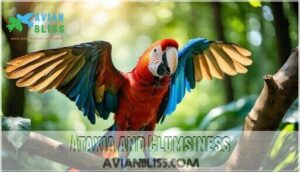
When you notice your bird stumbling, splaying its legs, or showing a wobbly gait, you’re seeing classic signs of ataxia.
Parrot ataxia often means uncoordinated movements and sudden clumsiness impact daily life.
Gait abnormalities and loss of coordination can signal neurological disorders.
Bird behavior change, like awkward perching, hints at increasing Ataxia Severity and needs careful attention.
Head Shaking and Discharge From The Ear

When your bird starts shaking its head persistently, it’s often signaling ear trouble brewing beneath the surface.
Head Shaking Frequency increases dramatically with ear infections, inner ear infections, and otitis media, making this behavior impossible to ignore.
Watch for these key Ear Discharge Types and warning signs:
- Brown or yellow discharge – indicates bacterial infection requiring immediate Treatment Options
- Constant head shaking – suggests otitis interna affecting balance and hearing
- Increased Infection Severity – head tilting often accompanies discharge, signaling deeper vestibular involvement
Regular Preventative Cleaning helps, but active discharge needs veterinary intervention immediately.
Red or Inflamed Skin Around The Ear
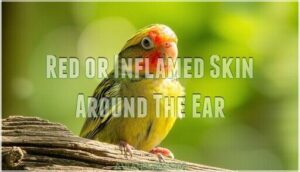
When you spot redness or swelling around your bird’s ear area, you’re witnessing visible signs of ear inflammation causes like bacterial or fungal infection.
This infection severity indicator suggests otitis media or otitis interna has progressed beyond the inner canal.
Early treatment options include antibiotic therapy, while preventative measures focus on maintaining clean environments to avoid long-term effects.
Foul-Smelling Odor From The Ear
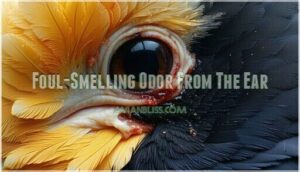
When that unmistakable stench hits your nose, you’re likely dealing with a serious ear infection.
This foul-smelling odor from your bird’s ear signals bacterial or fungal infection severity that demands immediate attention.
The smell indicates infection progression affecting inner ear structures, potentially causing neurological disorders and ataxia.
Treatment options include antimicrobial medications and improved hygiene practices, while preventative measures focus on regular ear cleaning to prevent balance loss.
Treatment and Management
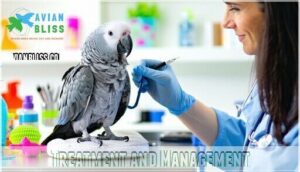
When your bird shows sudden balance problems, you’ll need immediate veterinary care to identify the underlying cause and start proper treatment.
The right combination of medication, environmental changes, and supportive care can help restore your feathered friend’s stability and prevent further complications.
Veterinary Examination and Assessment
Stepping into the clinic, your avian veterinarian will begin with a thorough veterinary examination, checking balance, coordination, and reflexes through a Neurological Exam.
Diagnostic Imaging, Blood Analysis, and serial examinations help pinpoint underlying causes.
Cranial Nerves get special attention during neurologic examination techniques, making neurological disorder diagnosis more accurate.
Think of it as detective work—every clue matters for your bird’s health.
Medication and Therapy for Balance Issues
Your vet will prescribe targeted medication based on your bird’s specific condition.
Antibiotic treatment tackles bacterial infections, while antifungal drugs combat yeast overgrowth.
Anti-inflammatories like meloxicam reduce inner ear swelling and pain.
Physical therapy includes gentle perch exercises and assisted wing movements to rebuild coordination.
Supportive care with fluids and vitamins aids recovery during neurological treatment and balance rehabilitation exercises.
Sometimes, heavy metal poisoning can also trigger these issues.
Dietary Changes and Nutritional Supplements
Proper nutrition acts as your bird’s foundation for recovery from balance disorders.
Vitamin deficiencies and mineral imbalances often trigger neurological symptoms, making dietary adjustments essential for healing.
Essential nutritional interventions include:
- Calcium deficiency correction – Add cuttlebone or calcium supplements with vitamin D3 for proper absorption
- B-vitamin complex supplementation – Supports nerve function and prevents neurological deficits
- Omega-3 fatty acids – Promote brain health through walnuts, chia seeds, and quality bird nutrition
- Probiotic benefits – Enhance nutrient absorption and support digestive health during recovery
Consult your vet about supplement dosage and essential nutrients customized to your bird’s specific needs. Many pet owners purchase bird calcium supplements online.
Environmental Modifications for Bird Safety
Creating a safe cage setup transforms your bird’s environment into a recovery haven.
Lower perches and soft landing zones with towels cushion falls, while perch alternatives like platforms reduce injury risk.
Consider comfortable cage accessories for added safety.
Remove toxic fumes sources and hazardous items from the bird environment to ensure a clean environment.
Provide supervised freedom in modified spaces, ensuring conditions that support healing and prevent further balance issues.
Prevention and Prognosis
You can prevent most balance problems in your bird by maintaining good hygiene, providing proper nutrition, and creating a safe environment free from toxins and hazards.
With early detection and proper veterinary care, many balance disorders have a good prognosis, though the outcome depends on the underlying cause and how quickly you seek treatment.
Early Detection and Intervention
Recognizing subtle signs like slight head tilts or minor coordination changes can make all the difference in your bird’s recovery.
Watch for early bird coordination problems, unsteady perching, or mild wobbling that owners often dismiss.
Swift veterinary intervention following these first symptoms dramatically improves outcomes.
Noticing changes like reduced singing can indicate discomfort.
Early PLR evaluation helps identify neurological disorders before they worsen, making prompt action your bird’s best ally against serious complications.
Reducing Risk Factors for Balance Loss
To keep your feathered friend steady on their perch, you’ll want to create a Safe Environment free from hidden dangers.
Regular Checkups with an avian vet catch problems early, while proper nutrition through a Balanced Diet strengthens their immune system.
Focus on Toxin Avoidance by removing non-stick cookware and maintaining good Hygiene Practices in their stressfree environment.
Improving Bird Health and Wellbeing
You’ll boost bird health by providing enrichment activities that stimulate natural behaviors and promote mental wellness.
Social interaction with other birds or humans prevents stress-related neurological issues.
Proper nutrition supports proper nerve function, while regular checkups catch early warning signs.
Providing essential avian nutrients can further enhance their diet.
A safe environment free from toxins and hazards creates the foundation for preventing bird neurological disease symptoms and ensuring swift veterinary intervention when needed.
Monitoring and Managing Balance Disorders
Once you’ve established healthy routines, ongoing observation becomes your bird’s safety net.
Regular home monitoring helps you spot symptom progression before balance loss worsens, while consistent supportive care maintains quality of life despite neurological disorders.
- Watch for subtle changes like increased clinginess to perches or slight head tilts that signal developing ataxia
- Document daily behaviors in a simple journal to track long-term effects of bird neurological disease symptoms
- Create calm environments that reduce stress and prevent bird disorientation during recovery periods
Frequently Asked Questions (FAQs)
How do you know if a bird is losing balance?
You’ll spot balance problems when your bird tilts its head, wobbles while perching, falls frequently, or struggles with unsteady walking and rough landings.
Can a bird lose its balance?
Can feathered friends stumble like us? Absolutely—birds can lose balance from inner ear infections, neurological disorders, toxicity, trauma, or nutritional deficiencies, causing head tilting, unsteady perching, and coordination problems.
Why do parrots lose balance?
Parrots lose balance due to inner ear infections, head trauma, heavy metal poisoning, viral diseases, or nutritional deficiencies.
You’ll notice head tilting, unsteady perching, and wobbly walking when their vestibular system gets disrupted by these conditions.
Why do birds end up on their backs?
Birds end up on their backs when severe balance problems from inner ear infections, neurological disorders, heavy metal poisoning, or brain trauma make them unable to right themselves properly.
What is the prognosis if a bird has a balance disorder?
Don’t put all your eggs in one basket—prognosis varies widely depending on the underlying cause.
You’ll find that infectious causes often respond well to treatment, while neurological damage from trauma or toxins may cause permanent disability.
How do neurological conditions affect a bird’s balance?
Neurological conditions disrupt your bird’s brain and nervous system communication pathways, causing unsteady perching, head tilting, and wobbly walking as nerve signals fail to coordinate properly.
What could cause a sudden loss of balance?
Like a tightrope walker suddenly losing their footing, your feathered friend’s world can spin out of control when balance fails.
Heavy metal poisoning, viral infections, inner ear problems, trauma, or nutritional deficiencies often trigger sudden wobbling and instability.
Why is my bird losing balance all of a sudden?
Your feathered friend’s sudden balance loss could stem from inner ear infections, head trauma, heavy metal poisoning, viral infections, nutritional deficiencies, or toxic exposure—requiring immediate veterinary attention.
What does a stroke look like in a bird?
When your bird’s neural circuits go haywire like a GPS losing signal, you’ll spot dramatic head tilting, unsteady perching, loss of flight control, and wobbly walking.
That appears suddenly and severely, with dramatic symptoms that can be alarming to observe.
What does ataxia look like in birds?
You’ll notice your bird wobbling, stumbling, or falling while walking, often standing with legs spread wide for stability.
They may struggle perching, show unsteady flight, display head tilting, and exhibit uncoordinated movements throughout their body.
Conclusion
Remember, time’s a ticking clock when dealing with bird sudden loss of balance.
You can’t afford to wait and see if symptoms improve on their own.
Quick veterinary attention makes the difference between recovery and permanent damage.
With proper diagnosis, medication, and environmental adjustments, most birds regain their stability.
Stay vigilant for early warning signs, maintain regular check-ups, and create a safe environment to prevent future balance issues.
- https://www.merckvetmanual.com/poultry/avian-encephalomyelitis/avian-encephalomyelitis
- https://mickaboo.org/newsletter/jan12/art6.2.html
- https://www.mypetchicken.com/blogs/faqs/chicken-illnesses-with-neurological-symptoms-overview
- https://www.harrisonsbirdfoods.com/wp-content/uploads/2024/02/17_nervous_system.pdf
- https://birdsittingtoronto.ca/top-10-common-diseases-or-sicknesses-in-birds/