This site is supported by our readers. We may earn a commission, at no cost to you, if you purchase through links.
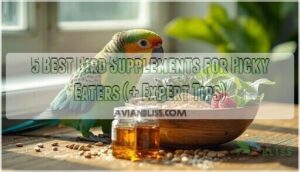
Your parakeet pushes aside every pellet you offer, your cockatiel refuses anything green, and mealtime feels like negotiating with a feathered toddler. Picky eating in birds isn’t just frustrating—it quietly steals essential vitamins and minerals their bodies need to thrive.
Over time, that dull plumage, flaking beak, or unexpected lethargy tells the story of what’s missing from their bowl. The right bird supplements for picky eaters bridge those nutritional gaps when fresh foods get rejected, turning a limited diet into one that promotes vibrant feathers, strong bones, and lasting energy.
Choosing the best supplement means understanding what your bird actually lacks and how to sneak it past their stubborn preferences.
Table Of Contents
- Key Takeaways
- Why Birds Become Picky Eaters
- Essential Nutrients for Picky Birds
- Top 5 Bird Supplements for Picky Eaters
- Tips for Introducing Supplements Successfully
- Frequently Asked Questions (FAQs)
- How to make your picky bird eat?
- What to give a bird if not eating?
- Why is my bird such a picky eater?
- How to increase bird appetite?
- Can supplements replace fresh fruits and vegetables entirely?
- How long before supplements show visible health improvements?
- Are there natural food alternatives to commercial supplements?
- Can multiple supplements be given together safely daily?
- Conclusion
Key Takeaways
- Picky eating in birds often stems from instinct, health issues, or learned behavior rather than stubbornness, and leads to serious nutritional deficiencies affecting feathers, beaks, bones, and immune function over time.
- Essential nutrients commonly missing from limited diets include vitamin A for vision and immunity, calcium and vitamin D3 for bone strength, omega-3s for plumage health, and B vitamins for energy metabolism.
- The most effective supplements for picky eaters dissolve in water or mix into favorite foods, with top options including Wild Harvest Multi Drops, Oasis Vita Drops, and Nekton-S providing comprehensive vitamin and mineral coverage.
- Success with supplements requires gradual introduction mixed with familiar foods, monitoring reactions closely for 48 hours, adjusting dosages by 10-20% weekly as needed, and consulting an avian veterinarian before starting any supplementation regimen.
Why Birds Become Picky Eaters
Your bird’s refusal to try new foods isn’t just stubbornness—it’s often rooted in instinct, health issues, or learned behavior. Understanding what’s driving this pickiness helps you address the real problem instead of fighting it.
If your bird suddenly stops eating altogether or shows signs like lethargy or weight loss, check whether bird sneezing and coughing could indicate an underlying respiratory issue.
A bird’s picky eating isn’t stubbornness—it’s instinct, health issues, or learned behavior you need to understand
Let’s look at the most common reasons birds become selective eaters and what warning signs tell you it’s time to intervene.
Common Causes of Selective Eating
Selective eating often stems from sensory preferences—your bird’s keen vision and taste buds can make them wary of unfamiliar textures or bitter compounds. Food neophobia, the fear of new foods, runs deep in avian instincts. But picky eaters aren’t just being difficult. Notably, research into selective eating and food neophobia highlights similar patterns in both animals and humans.
Common triggers behind fussy eaters include:
- Beak health issues causing discomfort while chewing crunchy items
- Digestive issues making certain foods feel heavy or unsafe
- Environmental factors like stress from noise or cage changes
- Early diet conditioning creating lifelong texture or flavor preferences
- Seasonal shifts altering appetite and food tolerance unexpectedly
Signs Your Bird Needs Dietary Support
Your bird’s body tells you when dietary support is needed. Watch for squinted eyes with crusty facial skin—that’s vitamin A deficiency affecting feather health. Flaky scales around the beak signal beak problems, while hunched posture and loose stools point to digestive issues.
Dull, brittle feathers and excessive powder down loss reveal nutrient deficits. Picky eaters struggling through molting need help fast. Nutritional imbalances can often be identified by signs of poor nutrition.
Impact of Limited Diets on Bird Health
When those warning signs pile up, limited diets start doing real damage. Picky eaters face avian malnutrition that strains their liver and kidneys. Bird obesity creeps in when high-energy seeds dominate the bowl. Feather health tanks without proper protein and amino acids.
Nutrient deficiencies hit hard:
- Weak immune function leaves your bird vulnerable to infections
- Poor reproductive performance from inadequate calcium and vitamin D
- Insulin resistance develops when diet quality stays consistently low
Dietary solutions for picky eaters become critical before these issues escalate.
Essential Nutrients for Picky Birds
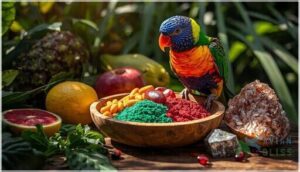
When your bird skips the healthy stuff, their body misses out on nutrients that keep feathers shiny, bones strong, and energy levels steady.
Over time, poor nutrition can even lead to serious issues like feather plucking caused by nutritional deficiency, which many bird owners don’t realize is diet-related.
Over time, those gaps show up in ways you can see and measure—dull plumage, brittle beaks, or sluggish behavior. Let’s break down what your picky eater actually needs and how the right supplement bridges those missing pieces.
Key Vitamins and Minerals Often Lacking
When diet variety drops, a few Essential Nutrients for Birds disappear fast. Vitamin A promotes your bird’s vision and immune system—watch for this Vitamin Deficiency in picky eaters.
Calcium Supplements help bone strength, especially during laying. Vitamin D3 boosts Nutrient Absorption, while vitamin E protects cells. Balanced Dietary Enrichment and careful Mineral Balance prevent long-term health issues.
Signs of Nutritional Deficiencies
Your bird’s body sends clear warnings when Nutritional Deficiencies take hold. Dull plumage and Feather Health problems—like breakage or excessive molting—often signal vitamin A or protein gaps.
Beak Problems, such as flaking or crusting, can point to essential fatty acid shortfalls. Digestive Issues, like loose stools, or Skin Conditions around the cere, reveal Nutrient Imbalances.
Lethargy after light activity suggests your bird’s Dietary Needs aren’t being met.
How Supplements Fill Diet Gaps
Quality Vitamin Supplements for Birds work like insurance policies for Bird Nutrition—they target the gaps your picky eater leaves behind. Here’s how Nutritional Supplements for Birds restore Nutrient Balance:
- Calcium and vitamin D3 strengthen bones when greens are refused
- B vitamins support feather growth during molt cycles
- Omega-3s improve plumage when seed-only diets dominate
- Trace minerals boost immunity despite limited variety
- Amino acids repair tissue when protein intake drops
Supplement Types address Dietary Gaps pellets alone can’t fix, delivering measurable Health Benefits within weeks.
Top 5 Bird Supplements for Picky Eaters
You’ve got plenty of supplement options designed specifically for birds who turn their beaks up at healthy food.
Each product on this list addresses nutritional gaps in different ways—some mix easily into water, others blend right into seed.
Let’s look at five trusted formulas that actually work for picky eaters.
1. Wild Harvest Bird Vitamin Supplement
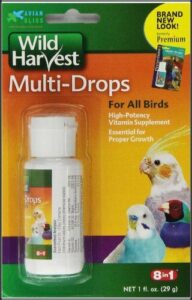
When your finch or cockatiel won’t touch anything beyond sunflower seeds, Wild Harvest Multi Drops can bridge those nutritional gaps. This water-soluble vitamin concentrate delivers a complete blend of vitamins A, D3, and B-complex directly through your bird’s drinking water—just one drop per ounce daily.
It’s designed specifically for seed-based diets, supporting vision, bone health, and energy metabolism. The formula works for all species, from tiny canaries to large parrots. Just measure carefully to avoid overdosing, and watch for improved feather condition within weeks.
| Best For | Bird owners with finches, cockatiels, or parakeets on seed-heavy diets who need an easy way to add essential vitamins without changing their pet’s routine. |
|---|---|
| Form | Drop |
| Target Species | All birds |
| Vitamin Support | High-potency vitamins |
| Life Stage | All stages |
| Administration Method | Add to water |
| Weight | 0.1 lbs |
| Additional Features |
|
- Mixes into water so even picky eaters get their vitamins without having to change food
- Covers the big nutritional gaps in seed diets (vitamins A, D3, and B-complex)
- Works for multiple bird species, from small finches to larger parrots
- Stains water dishes yellow and can be tough to scrub clean
- Easy to accidentally overdo it since it’s high-potency—you need to measure carefully
- Has a noticeable smell that some birds might be sensitive to
2. Oasis Vita Drops Multivitamin for Birds
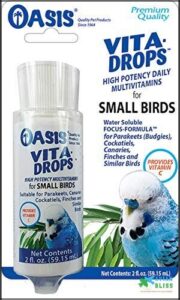
Parakeets and canaries thrive when Oasis Vita Drops lands in their water bowl each morning. This liquid multivitamin packs vitamins A, D, E, and B-complex plus extra vitamin C to strengthen immune defenses—critical when picky eaters skip nutrient-rich pellets.
Add two drops per ounce of drinking water, or mix directly onto fortified seed if your bird resists the taste. You’ll notice brighter feather color and improved vitality within weeks. The dropper cap ensures precise dosing for birds of all sizes, from finches to cockatiels.
| Best For | Small bird owners looking for an easy way to boost their pet’s nutrition when diet alone isn’t cutting it—especially helpful for finicky eaters who skip their pellets. |
|---|---|
| Form | Liquid |
| Target Species | Small cage birds |
| Vitamin Support | Complete multivitamin |
| Life Stage | All stages |
| Administration Method | Add to water |
| Weight | 2 oz |
| Additional Features |
|
- Strengthens immune system with extra vitamin C, helping prevent common infections
- Improves feather brightness and overall energy levels within a few weeks
- Easy dosing with dropper cap—just add to water or sprinkle on food
- Strong, unpleasant smell that some owners find off-putting
- Unappealing color may make the water look less inviting to birds
- Not a replacement for vet care if your bird is seriously sick
3. Hari Hagen Parrot Vitamin Supplement
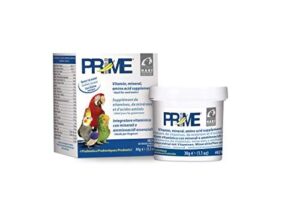
Your parrot devours seeds but leaves pellets untouched? Hari Hagen Prime bridges that gap with 14 vitamins and 9 minerals formulated for seed-heavy diets.
This ultra-fine powder dissolves into fruits and vegetables—no clumpy residue—delivering probiotics and digestive enzymes that help stubborn eaters absorb nutrients without stomach upset.
Sprinkle it over moist foods only; mixing with dry seeds means wasted doses that fall through the cracks. You’ll see richer feather color and improved energy within weeks of consistent use.
| Best For | Parrot owners whose birds prefer seeds over pellets and need a convenient way to add essential vitamins, minerals, and probiotics to their diet. |
|---|---|
| Form | Powder |
| Target Species | Seed-eating birds |
| Vitamin Support | 14 vitamins |
| Life Stage | All stages |
| Administration Method | Add to food/water |
| Weight | 1.1 oz |
| Additional Features |
|
- Dissolves easily into fresh fruits and veggies without leaving clumps, making it simple to sneak nutrition into any meal
- Contains probiotics and digestive enzymes that help sensitive stomachs absorb nutrients better
- Noticeably improves feather color and energy levels with regular use
- Small 1.1 oz container runs out quickly if you have multiple birds
- Strong smell might bother you during prep (though birds don’t seem to mind)
- Doesn’t work well with dry seeds since the powder just falls through and gets wasted
4. Vitakraft Egg Food for Birds
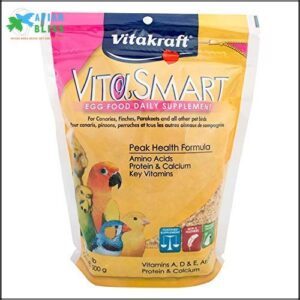
Birds who ignore their pellets often can’t resist the smell of real egg. Vitakraft Egg Food blends dried egg with honey and wheat for a crumbly texture that even finicky eaters devour—think of it as nature’s protein shake in bird form.
You get vitamins A, D, and E plus calcium in every tablespoon, perfect for molting season or breeding birds. Mix 1-2 tablespoons into their regular seeds or serve it moist. Just store it somewhere cool and dry to keep those vitamins potent.
| Best For | Bird owners looking for a protein-rich supplement to boost nutrition during molting, breeding, or for picky eaters who need extra vitamins. |
|---|---|
| Form | Seeds |
| Target Species | All bird species |
| Vitamin Support | Vitamins A, D, E |
| Life Stage | All life stages |
| Administration Method | Serve alone/mixed |
| Weight | 1.1 lbs |
| Additional Features |
|
- Real egg and honey recipe packed with vitamins A, D, and E that birds actually want to eat
- Works for all bird types—parakeets, canaries, finches, cockatiels, and parrots
- Flexible serving options: mix with seeds, serve alone, or add moisture for different textures
- At $12.48 for 1.1 pounds, it’s pricier than basic seed mixes
- Packaging sometimes arrives damaged with product spilled inside the box
- Results vary by bird, so it might not work as well for every feathered friend
5. Nekton Multi Vitamin for Birds
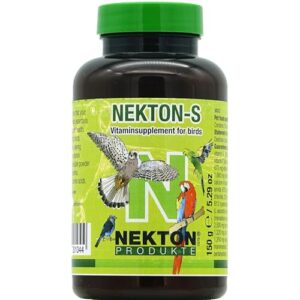
When your bird refuses everything but seeds, you need something adaptable. Nekton-S packs 13 vitamins, 18 amino acids, and essential minerals into a yellow powder that dissolves in water or sprinkles over soft food. You’ll see smoother feathers and better energy—most owners notice changes within two weeks.
Dose 1 gram per 250ml of water daily, or double it for stressed birds recovering from illness. The 150g jar lasts months, and that unflavored formula won’t spook cautious eaters.
| Best For | Bird owners whose pets eat only seeds and need a complete vitamin boost that mixes easily into water or food. |
|---|---|
| Form | Powder |
| Target Species | All caged birds |
| Vitamin Support | 13 vitamins |
| Life Stage | All life stages |
| Administration Method | Mix with food/water |
| Weight | 150 gm |
| Additional Features |
|
- Comprehensive formula with 13 vitamins, 18 amino acids, and minerals tackles nutrient gaps in seed-only diets
- Unflavored powder works for picky eaters and dissolves in water or sprinkles on soft foods
- Noticeable improvements in feather quality and stress levels within two weeks
- Turns water bright yellow, which might look alarming at first
- Narrow bottle opening makes scooping tricky without tweezers or a small spoon
- Requires daily mixing since the solution needs to stay fresh
Tips for Introducing Supplements Successfully
Getting your picky bird to accept supplements doesn’t have to feel like a daily battle. The key is working with your bird’s natural preferences instead of against them.
Here are four practical supplementation strategies that make supplementation easier for both you and your feathered friend.
Mixing Supplements With Favorite Foods
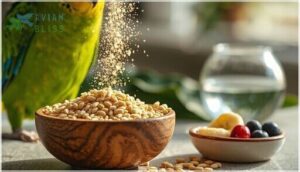
For the pickiest birds, bland bases like plain rice or millet work wonders—they distribute powder supplements evenly without overwhelming sensitive palates.
Try mixing small amounts of favored fruits or soft foods like mashed banana to mask any bitterness. Add supplements after cooking to preserve nutrients, and always offer fresh water nearby to help with any aftertaste.
Choosing The Right Form for Your Bird
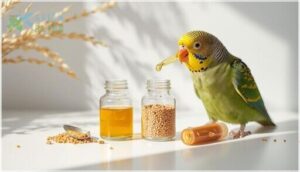
Once you’ve found what works at mealtime, the form of supplements matters just as much. Liquid drops give you precise dose control—especially helpful for cockatiels and small parrots. Powders blend smoothly into moistened pellets, while soft pastes cling to food and mask bitter notes.
Young birds often prefer fruit-flavored syrups, but texture preferences vary widely. Choose forms that match your bird’s age and eating style for better nutritional supplements uptake.
Monitoring Reactions and Adjusting Dosage

After you’ve chosen the right form, careful reaction monitoring becomes your next move. Track droppings, energy, and feather quality daily—changes within 48 hours signal it’s time for dose adjustment.
If your bird shows vomiting or lethargy, pause immediately. Increase bird vitamin supplements by 10 to 20 percent every week only when you see positive signs, ensuring supplement safety while supporting bird nutrition.
Consulting With an Avian Veterinarian

Before starting any bird supplementation guide, schedule an avian health check with a board-certified specialist. Your avian veterinarian assesses nutritional supplements for birds based on species-specific needs and current bird health status.
Ask about vet credentials through the Association of Avian Veterinarians directory. Discuss nutrition counseling, bird exam tips, and proper vet communication to guarantee veterinary care and advice safeguards your picky eater safely.
Frequently Asked Questions (FAQs)
How to make your picky bird eat?
Unlocking your bird’s appetite isn’t rocket science—start with gradual diet transitions, mixing a 10% ratio of new items into familiar favorites.
Use positive reinforcement during short daily sessions, reward exploration attempts, and maintain consistent, calm feeding routines.
What to give a bird if not eating?
Emergency hydration comes first—offer warmed water or electrolyte solutions with a dropper.
Soft food options like mashed banana or moistened pellets encourage intake. Nutrient-dense foods and gentle appetite stimulation support recovery quickly.
Why is my bird such a picky eater?
Picky eating often stems from natural foraging instincts—birds reject unfamiliar textures or respond to stress from environmental changes.
Past experiences with poor-quality food can also trigger selective eating, creating persistent nutrition gaps.
How to increase bird appetite?
Want your bird to eat with gusto again? Warm foods to release tempting aromas, offer small frequent meals, and rotate textures like soft mash and crunchy pellets—these appetite stimulation methods work wonders.
Can supplements replace fresh fruits and vegetables entirely?
No, supplements can’t fully replace fresh produce. Your picky bird needs dietary diversity—whole fruits and vegetables provide fiber, hydration, and nutrient balance that pills alone can’t deliver for complete avian wellness.
How long before supplements show visible health improvements?
Most birds show early changes in energy and appetite within one to three weeks.
Visible progress like brighter plumage takes four to eight weeks with consistent vitamin supplementation, though speed factors vary individually.
Are there natural food alternatives to commercial supplements?
Fresh leafy greens, sweet potato, and cooked legumes provide natural food alternatives with vitamin A, calcium, and protein.
Dietary diversity through whole nutrition beats commercial bird supplements when your feathered friend accepts varied mineral sources.
Can multiple supplements be given together safely daily?
Like mixing medicines in human care, combining bird vitamin supplements demands veterinary guidance.
Supplement interactions and toxicity risks escalate with daily dosing because nutrient absorption pathways compete, making safe supplement use for birds far more complex than it appears.
Conclusion
You don’t need to transform your bird overnight—small wins matter more than perfect meals. Bird supplements for picky eaters aren’t shortcuts; they’re safety nets that protect fragile bones and feathers when stubborn beaks refuse variety.
Start with one product, mix it into what they already love, and watch for subtle shifts in energy and plumage. Your patience paired with the right supplement turns nutritional gaps into steady progress, one rejected pellet at a time.