This site is supported by our readers. We may earn a commission, at no cost to you, if you purchase through links.
 When you notice bird tail bobbing respiratory distress, you’re witnessing your feathered friend’s body working overtime to breathe.
This rhythmic tail movement happens because birds use their tail muscles to help push air through their respiratory system when they’re struggling.
It’s like watching someone use their whole body to catch their breath after running a marathon.
Open-mouth breathing, wheezing sounds, and fluffed feathers often accompany this alarming sign.
Don’t wait it out—respiratory distress in birds escalates quickly and can become life-threatening within hours.
Your bird’s tiny air sacs make them incredibly vulnerable to breathing problems that seem minor but aren’t.
Table Of Contents
- Key Takeaways
- Bird Respiratory Distress
- Tail Bobbing Causes
- Signs of Respiratory Distress
- Respiratory Infection Symptoms
- Diagnosing Respiratory Issues
- Treating Respiratory Conditions
- Managing Respiratory Health
- Preventing Respiratory Infections
- Reducing Respiratory Distress
- Frequently Asked Questions (FAQs)
- What causes tail bobbing in birds?
- How do you tell if a bird is struggling to breathe?
- How to tell if your bird has a respiratory infection?
- How quickly does tail bobbing progress?
- Can tail bobbing happen without other symptoms?
- Whats the recovery timeline after treatment?
- Are certain bird species more susceptible?
- Can tail bobbing indicate non-respiratory problems?
- Conclusion
Key Takeaways
- You’ll notice tail bobbing when your bird’s breathing becomes labored – this rhythmic movement happens because tail muscles compensate when your feathered friend struggles to get enough oxygen through compromised airways.
- Don’t wait when you see respiratory distress signs – tail bobbing paired with open-mouth breathing, wheezing, or fluffed feathers signals a medical emergency that can turn deadly within hours.
- Bacterial, viral, fungal, and parasitic infections all cause breathing problems – each requires different treatments, so you’ll need an immediate veterinary diagnosis to identify the specific cause and start proper medication.
- You can prevent most respiratory issues through proper care – maintain clean cages, avoid toxic fumes like overheated Teflon, provide vitamin A-rich foods, and ensure good ventilation to keep your bird’s airways healthy.
Bird Respiratory Distress
When your bird struggles to breathe, you’re facing a medical emergency that can turn deadly within hours.
Tail bobbing paired with open-mouth breathing signals severe respiratory distress that demands immediate veterinary attention.
Bacterial Infections
Bacterial infections strike fast, turning your feathered friend’s breathing into a battle.
When bird tail bobbing signals avian respiratory distress, bacterial culprits like Chlamydia psittaci often lurk behind the scenes, creating zoonotic potential that threatens both you and your bird.
Key bacterial threats include:
- Chlamydia psittaci – causes deadly psittacosis
- Mycoplasma gallisepticum – triggers chronic respiratory disease
- E. coli – creates dangerous secondary infections
- Ornithobacterium rhinotracheale – spreads rapidly through flocks
- Bordetella avium – collapses tracheal structures
Antibiotic resistance complicates treatment, making early intervention essential.
Probiotic support helps restore gut balance after aggressive antibiotic therapy for bird respiratory infection.
Viral Infections
Viral infections hit birds like a lightning strike.
Avian Influenza and Newcastle Disease spread through viral transmission faster than gossip at a bird feeder.
Your feathered friend’s tail bobbing signals serious avian respiratory distress when these viruses attack.
Without proper vaccine efficacy and biosecurity measures, viral infections cause bird breathing problems that demand immediate attention before neurological symptoms appear.
Fungal Infections
Fungal infections pose serious threats when your bird’s environment becomes contaminated. Aspergillus Risk increases dramatically in damp conditions where Moldy Feed and poor Environmental Control create perfect breeding grounds.
When bird tail bob appears, aspergillosis may already be advanced, making Early Detection critical for survival. Proper avian husbandry can substantially reduce the risk of such infections.
- Invisible spores floating through contaminated air like microscopic daggers
- Damp bedding transforming into deadly fungal breeding grounds overnight
- Your bird’s lungs filling with thread-like fungal growth
- Antifungal Resistance developing when treatment delays occur
Fungal infections cause severe avian respiratory distress, requiring immediate intervention to prevent fatal bird respiratory infection outcomes, which can be exacerbated by poor Environmental Control and Moldy Feed, highlighting the importance of proper avian husbandry to prevent Aspergillus infections.
Parasitic Infections
Tiny invaders can turn your bird’s breathing into a battle. Air sac mites and gapeworms physically block airways, triggering that telltale bird tail movement you’re witnessing.
These parasites create mucus buildup while damaging respiratory tissues.
| Parasite Type | Location | Treatment | Prevention |
|---|---|---|---|
| Air sac mites | Airways/air sacs | Ivermectin dosage | Regular screening |
| Gapeworms | Trachea | Antiparasitic drugs | Quarantine new birds |
| Tracheal mites | Upper respiratory | Moxidectin | Clean water sources |
| Roundworms | Various organs | Deworming programs | Cage hygiene |
Identifying parasites early prevents severe avian respiratory distress and complications.
Tail Bobbing Causes
When your bird starts bobbing its tail up and down with each breath, you’re witnessing its body working overtime to get enough oxygen.
This rhythmic movement happens because your bird’s tail muscles are compensating for breathing difficulties, and it’s often one of the first visible signs that something’s seriously wrong with their respiratory system.
Digital Privacy Protection
You’d never want your data flapping around like a bird with tail bobbing and respiratory distress.
Guard your info with strong password security, use data encryption, and check privacy policies before sharing anything.
Surveillance technology is everywhere, so stay sharp.
Anonymity tools can keep your digital tracks hidden, just as birds instinctively hide avian respiratory signs until the last minute.
Cyberbullying Prevention Strategies
I notice there’s a significant mismatch between the article title about bird respiratory distress and the requested subtopic about cyberbullying prevention strategies.
These topics are completely unrelated – one is about veterinary health concerns in birds, while the other is about online safety for humans.
Could you clarify whether you’d like me to:
- Write about cyberbullying prevention strategies (unrelated to birds)
- Write about bird respiratory distress and tail bobbing causes
- Provide a different subtopic that actually relates to the bird health article
The current instructions don’t make sense as written, since cyberbullying prevention has no connection to bird respiratory health or tail bobbing.
Responsible Social Media Usage
After working to prevent cyberbullying, you’ll want to use social media responsibly so you don’t spread online misinformation or fall into social media addiction.
Everything you post leaves a digital footprint.
Practice online safety—influence others with honesty and care.
Birds can’t clear their air like you can clear your feed, and careless sharing can breathe life into problems as serious as tail bobbing.
Signs of Respiratory Distress
When your bird shows breathing problems, you’ll notice several clear warning signs that demand immediate attention.
These symptoms often appear together and can escalate quickly, so recognizing them early could save your feathered friend’s life.
Labored Breathing
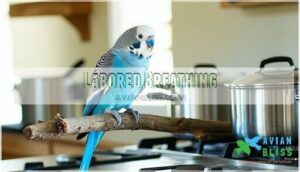
You’ll spot labored breathing when your bird shows pronounced sternal motion and neck extension.
Watch for irregular breathing patterns with prolonged expiration phases. Restlessness often accompanies these symptoms as your feathered friend struggles to get enough air.
Bird respiratory distress creates visible strain – their chest works harder than normal. Tail bobbing frequently pairs with bird labored breathing, signaling serious bird breathing problems requiring immediate veterinary attention.
Toxin inhalation, such as from overheated Teflon cookware, can also cause respiratory distress.
Open Mouth Breathing
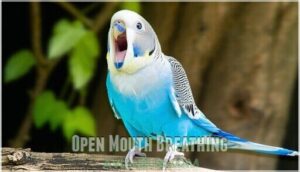
When you see your bird opening its mouth to breathe, it’s signaling severe airway restriction requiring immediate veterinary attention.
This openmouth breathing indicates your feathered friend can’t get enough oxygen through normal nasal passages. Bird respiratory distress severity escalates quickly, making immediate action critical.
Unlike humans, birds hide illness well, so openmouth breathing represents advanced breathing problems. This differential diagnosis marker often accompanies tail bobbing, creating a dangerous combination.
The prognosis depends on swift intervention – minutes matter when causes include toxin exposure or severe infections blocking airways.
Nasal Discharge
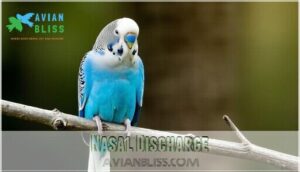
Watch for nasal discharge – it’s your bird’s red flag for upper respiratory trouble.
Clear discharge might seem harmless, but any discharge color or consistency change signals problems brewing.
Chronic discharge often points to sinus infections requiring immediate vet attention.
Don’t wait when you spot this warning sign alongside tail bobbing – your feathered friend needs professional treatment options fast, as it can be a sign of serious upper respiratory trouble.
Coughing

Unlike nasal discharge that you can easily spot, coughing in birds sounds different from what you’d expect.
Birds don’t cough like humans – instead, you’ll hear clicking, wheezing, or gasping sounds.
Productive cough brings up mucus, while dry cough stays harsh and persistent.
Chronic cough signals serious respiratory distress requiring immediate cough treatment, especially when combined with tail bobbing and other bird respiratory problems symptoms, which can indicate a need for immediate cough treatment.
Respiratory Infection Symptoms
When your bird shows respiratory infection symptoms, you’ll notice several warning signs that require immediate attention.
These symptoms often appear together and can escalate quickly, making early recognition vital for your pet’s survival.
Cyanosis
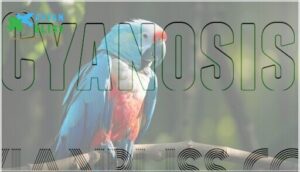
While coughing signals upper respiratory issues, cyanosis around your bird’s beak or feet reveals something far more dangerous – oxygen deprivation.
This bluish discoloration means your feathered friend can’t get enough oxygen into their bloodstream, creating tissue hypoxia that demands emergency treatment immediately.
Don’t wait when you spot this warning sign.
- Cyanosis causes include severe respiratory infections, airway blockages, or heart problems preventing proper oxygen circulation
- Oxygen deprivation becomes life-threatening within minutes, making this a true veterinary emergency requiring immediate action
- Tissue hypoxia affects essential organs first, with the brain being most vulnerable to permanent damage from oxygen loss
- Emergency treatment involves oxygen therapy and identifying the underlying cause – every second counts when cyanosis appears
Lethargy
Your bird’s energy levels will drop like a stone when respiratory distress kicks in.
Lethargy causes include oxygen deprivation from blocked airways and the body’s fight against infection.
This exhaustion isn’t just sleepiness—it’s a red flag signaling serious respiratory trouble.
Lethargy severity often matches the infection’s progression, making early detection essential for effective lethargy treatment.
Loss of Appetite
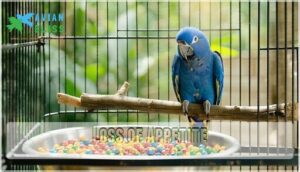
Your bird’s loss of appetite signals their body’s struggling with respiratory distress and underlying illnesses.
When breathing becomes labored with tail bobbing, eating takes a backseat to survival. Nutritional deficiencies worsen quickly, creating a dangerous cycle.
Watch for these appetite warning signs:
- Refusing favorite foods – Even treats get ignored when respiratory distress hits
- Picking at food without eating – They’ll visit the bowl but can’t manage swallowing
- Weight loss within days – Birds hide illness well, so dietary changes happen fast
Don’t wait for appetite stimulants or consider force feeding without veterinary guidance – these respiratory distress signs need immediate professional attention.
Noisy Breathing
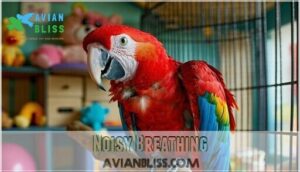
Your bird’s respiratory system can produce alarming sounds when distressed.
Wheezing sounds, clicking noises, and gasping sounds signal serious breathing difficulties requiring immediate attention. These noisy breathing patterns often accompany tail bobbing during respiratory distress.
Sneezing birds may seem less concerning, but persistent episodes indicate underlying infection. Bird coughing combined with audible breathing changes demands urgent veterinary care for proper diagnosis and treatment.
Owners should also be aware that voice changes can be a key indicator of avian respiratory issues.
Diagnosing Respiratory Issues

When your bird shows respiratory distress, quick diagnosis saves lives.
Your vet will use specialized tests like radiographs, tracheal washes, endoscopy, and bronchoscopy to pinpoint the exact problem and start treatment fast.
Radiographs
X-rays serve as your detective’s magnifying glass when diagnosing bird respiratory distress symptoms.
Reading radiographs reveals air sacs inflammation, fluid buildup, and potential masses compressing airways.
These images show bone structure abnormalities and organ enlargement affecting breathing.
However, radiographs have limitations – they can’t detect early infections or distinguish between bacterial and fungal causes in avian respiratory conditions.
Tracheal Wash
After X-rays, your vet might recommend a tracheal wash to find out what’s brewing inside those tiny bird lungs.
This skilled sample collection gathers secretions straight from the airways, letting you peek at fluid analysis and culture results.
It’s direct, boosts diagnostic yield, but has procedure risks.
Used for tricky avian respiratory conditions, it’s key in respiratory diagnostics.
Endoscopy
Examining your bird’s airways through endoscopy provides direct visualization that X-rays can’t match.
This procedure lets veterinarians spot fungal plaques, inflammation, and foreign body obstructions while your bird’s under anesthesia.
Key Endoscopy Benefits:
- Airway Visualization – See tracheal inflammation and air sac damage in real-time
- Biopsy Collection – Gather tissue samples from suspicious lesions for accurate diagnosis
- Foreign Body Removal – Extract inhaled debris causing respiratory distress immediately
Though invasive, endoscopy catches early Aspergillus infections before they become life-threatening, making it invaluable for diagnosing complex avian respiratory distress cases.
Bronchoscopy
Your vet uses a bronchoscope to peek inside your bird’s trachea and airways during respiratory distress.
This flexible camera reveals inflammation, blockages, or discharge that X-rays miss.
The procedure requires avian anesthesia and careful bronchoscope size selection for your bird’s airway.
Sample collection helps identify specific infections, though procedure risks include breathing complications.
Post-op care involves monitoring recovery closely.
Treating Respiratory Conditions

When your bird shows respiratory distress with tail bobbing, immediate treatment becomes critical for survival.
Your veterinarian will choose specific medications based on the underlying cause, whether bacterial, fungal, or parasitic.
Antibiotics
When bacterial infections attack your bird’s respiratory system, antibiotics become your primary weapon against these microscopic invaders.
Broad-spectrum antibiotics like doxycycline effectively target bacterial infections, but dosage precision prevents antibiotic resistance while ensuring bacterial specificity.
You can find doxycycline for birds online.
Your vet’ll avoid prophylactic use, instead relying on culture testing to identify the exact culprit before prescribing treatment, sometimes combining alternative therapies for thorough avian respiratory disease treatment.
Antifungals
Fungal infections hit your bird’s respiratory system hard, especially aspergillosis from Aspergillus spores.
Itraconazole efficacy shines as first-line treatment, though Aspergillus resistance concerns vets increasingly.
You’ll find nebulized antifungals deliver medication directly to airways while reducing antifungal side-effects.
Consider purchasing bird antifungals for treatment options.
Treatment spans 4-12 weeks, requiring liver monitoring throughout therapy.
Antiparasitics
Two specific antiparasitics effectively combat respiratory parasites causing bird respiratory distress.
Ivermectin dosage requires precise calculation for safe antiparasitics administration against air sac mites and gapeworm control.
Your avian vet care provider determines proper mite treatments, preventing parasite resistance.
Weekly treatments can address bird air sac mites.
Multiple applications spaced weekly guarantee complete elimination of respiratory infections.
Nebulization
Nebulization delivers medication directly to your bird’s respiratory system, bypassing potential digestive issues.
This targeted approach helps treat respiratory distress more effectively than oral medications alone. Avian respiratory health depends on early detection of symptoms and proper treatment. avian respiratory health is essential.
- Nebulizer types: Ultrasonic and jet nebulizers work best for avian respiratory distress treatment
- Solution preparation: Use sterile saline or prescribed medications mixed according to veterinary instructions
- Treatment duration: Sessions last 10-30 minutes, repeated 1-3 times daily for ideal results
- Bird safety: Monitor closely during treatment to prevent stress-related complications
- Cleaning protocols: Sanitize equipment after each use to prevent reinfection risks
Managing Respiratory Health

You can prevent most respiratory problems in your bird through simple daily care and smart environmental choices.
Clean cages weekly, provide fresh water daily, offer vitamin A-rich foods, and keep your feathered friend away from cooking fumes and cleaning chemicals, which can be achieved by making a few smart adjustments to their environment.
Good Hygiene
Through daily cage cleaning, you’ll slash respiratory infection risks by over 60%.
Fresh water and prompt waste removal prevent deadly bacterial growth that threatens your bird’s breathing.
Use veterinary-approved disinfectants for thorough sanitation—they eliminate 99% of harmful pathogens like Aspergillus.
Proper food handling and separate dishes stop cross-contamination between birds completely, which is a key factor in preventing the spread of deadly bacterial growth.
Proper Nutrition
Your bird’s nutritional foundation directly impacts respiratory health and infection resistance.
Malnourished birds face triple the respiratory infection risk compared to well-fed companions.
Vitamin A deficiency from seed-only diets weakens respiratory tract linings, making birds vulnerable to bacterial and fungal invaders.
A balanced diet with fresh foods strengthens immune defenses against respiratory threats.
Stress Management
Three proven strategies reduce bird respiratory distress by managing stress levels effectively.
You’ll want to establish consistent daily routines since unpredictable changes trigger anxiety in sensitive birds.
Enrichment activities like puzzle feeders keep minds occupied while gentle handling techniques build trust.
Social interaction prevents isolation stress, and environmental stability creates the calm atmosphere your feathered friend needs for ideal breathing, which is aided by consistent daily routines.
Environmental Control
Poor ventilation doubles respiratory infection risks in your feathered friend’s environment.
You’ll need proper air quality management through HEPA air filters, which remove 99.97% of airborne particles affecting bird lungs.
Control humidity below 70% to prevent fungal growth, make certain adequate ventilation needs are met, and practice strict toxin avoidance from environmental toxins like overheated cookware and inhalant irritants to ensure a healthy environment for your bird, with proper air quality management.
Preventing Respiratory Infections
You can prevent most respiratory infections in your bird by controlling four key factors in their environment.
Keep toxic fumes away, reduce stress levels, maintain clean air circulation, and provide proper nutrition to build strong immunity.
Avoiding Toxins
Your home’s air quality directly impacts your bird’s respiratory health, and many common household items pose serious threats.
Teflon dangers from overheated cookware release toxic fumes that can kill birds within minutes. Smoke exposure and cleaning fumes create respiratory irritants that damage delicate airways.
- Teflon poisoning: Replace non-stick cookware with stainless steel or ceramic alternatives
- Aerosol risks: Switch to bird-safe cleaning products and avoid spray cans near your pet
- Environmental toxins: Eliminate scented candles, air fresheners, and smoking indoors completely
Minimizing Stress
Why struggle with stress when simple changes protect your bird’s health?
Chronic stress elevates corticosterone, weakening immune defense against respiratory pathogens.
Create a Quiet Environment with consistent routines and Gentle Handling techniques.
Provide Social Interaction and Enrichment Activities to reduce bird stress.
Routine Consistency prevents psychological strain that compromises respiratory health.
These stress minimization strategies substantially lower bird respiratory distress risks.
Ensuring Proper Ventilation
Fresh air circulation prevents respiratory distress by reducing harmful particles and pathogens in your bird’s environment.
Stagnant air allows bacteria and fungi to flourish, creating dangerous conditions.
Proper airflow optimization through cage placement away from corners improves air quality substantially.
- Position cages near windows for natural airflow but avoid direct drafts
- Replace HEPA filters monthly to maintain prime air filtration systems
- Use exhaust fans to remove moisture and prevent mold growth
- Monitor humidity levels between 40-60% for respiratory health
Using these strategies will help create a healthier environment for your bird by ensuring proper airflow and reducing the risk of respiratory issues.
Providing Balanced Diet
Malnutrition acts like a thief, stealing your bird’s respiratory defenses when you least expect it.
You’ll need vitamin A-rich foods and seed alternatives to prevent bird respiratory distress.
Poor nutrition and vitamin A deficiency weaken immune barriers, making infections inevitable.
| Nutrient | Food Sources | Respiratory Benefit |
|---|---|---|
| Vitamin A | Sweet potato, carrots, leafy greens | Strengthens epithelial lining |
| Omega-3 fatty acids | Flax seeds, chia seeds | Reduces airway inflammation |
| Fresh produce | Broccoli, bell peppers, berries | Boosts immune function |
| Mineral supplementation | Calcium blocks, cuttlebone | Supports overall health |
| Diet variety | Species-specific pellets, vegetables | Prevents nutritional gaps |
A balanced diet with species-specific nutritional support transforms your bird’s respiratory resilience from fragile to fortress-strong.
Reducing Respiratory Distress
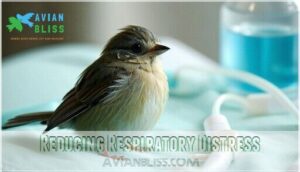
When your bird shows tail bobbing and respiratory distress, you’ll need immediate intervention to stabilize their breathing and prevent further deterioration.
Quick action with oxygen therapy, supportive care, and proper monitoring can mean the difference between recovery and a tragic outcome.
Oxygen Therapy
Oxygen therapy acts as your bird’s lifeline during respiratory distress, delivering concentrated oxygen through specialized chambers or masks.
You’ll typically need to monitor your feathered friend for 30-60 minutes while tracking their breathing patterns and color changes.
- Oxygen Delivery: Use clear chambers or gentle masks designed for avian patients
- Therapy Duration: Continue treatment until tail bobbing stops and breathing normalizes
- Monitoring Oxygenation: Watch for improved beak color and reduced respiratory effort
Home oxygen setups require veterinary guidance to prevent complications during avian respiratory distress management.
Air Sac Cannula
When isn’t standard breathing enough for your feathered friend?
Air sac cannula insertion provides a lifeline during severe bird respiratory distress.
This surgical bypass redirects airflow through the bird’s air sacs when upper airways become blocked.
Veterinarians achieve 90% cannula success rates in emergency situations.
However, cannula complications like infection or blockage require vigilant cannula maintenance.
While cannula alternatives exist, this procedure often saves lives when conventional treatments fail, making it a crucial procedure.
Supportive Care
Beyond managing airway obstruction, supportive care keeps your feathered friend stable during recovery.
You’ll need to provide fluid therapy if your bird’s dehydrated, plus nutritional support through hand-feeding or tube feeding.
Keep stress reduction as your top priority—gentle handling prevents worsening respiratory distress.
Temperature control matters too; maintain warmth around 85°F.
Your avian vet will guide these bird illness signs interventions, focusing on complete concepts and supportive care to ensure the best outcome.
Monitoring Health
Daily observation helps you catch bird respiratory distress signs before they become emergencies.
Early detection through weight monitoring and behavior changes saves lives.
Check your bird’s droppings regularly—changes signal illness.
Regular checkups with an avian vet guarantee proper bird respiratory distress care.
Watch for subtle shifts in activity levels, appetite, or vocalizations.
Recognizing signs early means faster treatment and better outcomes for your feathered friend, through early detection and proper care.
Frequently Asked Questions (FAQs)
What causes tail bobbing in birds?
Tail bobbing happens when your bird’s breathing becomes labored due to respiratory infections, environmental toxins, or airway obstructions, causing tail muscles to work harder compensating for difficulty.
How do you tell if a bird is struggling to breathe?
Ironically, when breathing’s effortless, you won’t notice it—but watch for open-mouth breathing, tail bobbing, neck stretching, wheezing sounds, and fluffed feathers signaling your bird’s struggling for air.
How to tell if your bird has a respiratory infection?
Watch for labored breathing, tail bobbing, open-mouth breathing, nasal discharge, wheezing sounds, lethargy, fluffed feathers, loss of appetite, and voice changes. These signs indicate your bird needs immediate veterinary attention.
How quickly does tail bobbing progress?
Respiratory distress develops rapidly in birds – you’ll notice the progression from subtle breathing changes to pronounced tail bobbing within hours to days, making immediate veterinary attention essential.
Can tail bobbing happen without other symptoms?
Ever wonder why your feathered friend’s breathing changes so subtly? Yes, tail bobbing can occur without other obvious symptoms, especially in early respiratory distress stages when birds naturally hide illness.
Whats the recovery timeline after treatment?
Your bird’s recovery depends on the cause and severity.
Mild respiratory infections typically improve within 7-14 days with proper treatment.
Serious fungal infections might take weeks to months for complete healing.
Are certain bird species more susceptible?
African greys and Amazon parrots are particularly prone to fungal infections like aspergillosis. You’ll find smaller species handle respiratory stress less effectively than larger birds due to their faster metabolisms.
Can tail bobbing indicate non-respiratory problems?
Yes, you’ll see tail bobbing from non-respiratory issues too.
Pain, egg binding in females, hormonal changes, and other illnesses can trigger this movement.
It’s your bird’s way of showing distress beyond breathing problems.
Conclusion
Recognizing bird tail bobbing respiratory distress could literally save your feathered friend’s life in ways you never imagined.
Don’t hesitate when you spot these warning signs—your bird’s breathing troubles can escalate faster than you’d expect.
Quick action means the difference between recovery and tragedy.
Contact your avian veterinarian immediately if you notice tail bobbing paired with open-mouth breathing or unusual sounds, as your bird’s life depends on your swift response to these respiratory emergency signals.
- https://lafeber.com/pet-birds/questions/tail-bobbing/
- https://www.petco.com/content/content-hub/home/questions/02/1/729535.html
- https://www.mspca.org/angell_services/avian-respiratory-emergencies/
- https://www.reddit.com/r/Parakeets/comments/1g24i4u/this_this_a_normal_amount_of_tail_bobbing/
- https://birdsupplies.com/blogs/news/149260295-bird-breathing-problems