This site is supported by our readers. We may earn a commission, at no cost to you, if you purchase through links.
A parrot can destroy a “heavy-duty” toy in under ten minutes—and that’s not an exaggeration. Aggressive chewers aren’t being destructive; they’re being birds. Chewing is how they explore, relieve stress, and stay mentally sharp.
The problem is that most toys on the market aren’t built to handle that kind of force, which turns a $15 toy into a pile of sharp plastic fragments and a genuine safety hazard.
Choosing the right bird toys for aggressive chewers comes down to materials, construction, and knowing your bird’s specific habits. The picks and guidelines ahead cut through the noise.
Table Of Contents
Key Takeaways
- Aggressive chewing is natural bird behavior tied to stress relief and mental stimulation, so the right toy works with that instinct rather than against it.
- Material safety isn’t optional — stainless steel hardware, non-toxic wood, and food-grade dyes are the baseline, while galvanized chains and cheap bells can silently poison your bird.
- Toy size must match your bird’s species, since a toy too small or too large creates safety risks that durability alone can’t fix.
- Daily inspections and a consistent 7–14 day rotation schedule are what actually keep aggressive chewers safe and mentally engaged long-term.
Best Bird Toys for Aggressive Chewers
Finding the right toy for an aggressive chewer can feel like searching for the indestructible — but these picks come pretty close.
Each one is built to hold up against strong beaks while keeping your bird safe and entertained.
If you want to go a step further, brushing up on common beak infections and how to prevent them can help you catch early warning signs before they become a real problem.
Here are the best options worth considering.
1. Barkbox Super Chewer Dog Toy
The BarkBox Super Chewer Dog Toy is built for birds that mean business. Its natural rubber core holds up against persistent beaks, while the shreddable outer layer satisfies the urge to destroy without creating dangerous debris.
The treat-dispensing base adds a unique layer of mental stimulation — your bird works for rewards instead of shredding out of boredom.
At 3.07 x 4.49 x 4.13 inches, it’s sized for larger, more powerful chewers, and the fluff-free design keeps cleanup simple and safe.
| Best For | Large dogs who love to chew, especially determined chewers who need something that can actually hold up to their enthusiasm. |
|---|---|
| Material | Natural Rubber |
| Squeaker | Yes |
| Chewer Suitability | Aggressive chewers |
| Age Range | All Life Stages |
| Supervision Required | Yes |
| Interactive Play | Yes |
| Additional Features |
|
- The natural rubber core is seriously tough — it’s built to last way longer than your average plush toy
- The treat-dispensing base keeps dogs mentally engaged, so they’re working their brain while they chew
- No stuffing means no mess to clean up and fewer safety worries about your dog swallowing fluff
- Super aggressive chewers might still tear through the outer layer faster than you’d hope
- The squeaker runs at a pretty high pitch, which can get old fast if you’re in the same room
- It’s on the larger and heavier side, so it’s not a great fit for small dogs
2. Vitscan Durable Dog Plush Toy
If your bird leans toward softer textures, the Vitscan Durable Dog Plush Toy offers something different. It’s built with thick pineapple plaid plush fabric — the same cut-resistant material used in protective gloves — so it holds up better than standard stuffed toys.
Built-in squeakers and crinkle paper in multiple sections keep your bird engaged and mentally sharp. At just over 13 inches long with a goose shape, there’s plenty to grab, tug, and explore.
Always supervise play to catch wear before small parts become a hazard.
| Best For | Dogs who love to chew, tug, and squeak — especially those in the light-to-moderate chewer category who also enjoy a good cuddle session. |
|---|---|
| Material | Plush |
| Squeaker | Yes |
| Chewer Suitability | Aggressive chewers |
| Age Range | All Life Stages |
| Supervision Required | Yes |
| Interactive Play | Yes |
| Additional Features |
|
- The squeaker and crinkle combo keeps dogs entertained and mentally engaged during play
- Works for all life stages, so it grows with your pup from teething to adulthood
- Versatile enough for fetch, tug-of-war, or just lounging around the house
- Heavy chewers can destroy it fast — some reviews say it didn’t even last a full play session
- Requires supervision since small parts and loose fabric can become a swallowing hazard
- Durability is hit or miss, so the experience really depends on your dog’s chewing habits
3. Wowbala Tough Dog Chew Toy
When your bird needs something tougher than plush, the Wowbala Tough Dog Chew Toy steps up. Built from premium hard rubber, it’s designed to withstand aggressive chewing without crumbling into unsafe pieces.
If you want to make sure you’re picking the right materials for your bird, brushing up on safe bird toy standards and what to avoid can really sharpen your eye.
The non-toxic construction means you don’t have to worry about harmful materials during intense chewing sessions. Its compact, rounded shape is easy to grip and resistant to punctures.
Check it regularly for deep gouges — if damage appears, replace it promptly to keep playtime safe.
| Best For | Dog owners with small, medium, or large adult dogs who want an interactive toy that’s fun for tug-of-war, fetch, and chewing — just not for the most aggressive chewers out there. |
|---|---|
| Material | Cotton |
| Squeaker | Yes |
| Chewer Suitability | Moderate chewers |
| Age Range | Adult |
| Supervision Required | Yes |
| Interactive Play | Yes |
| Additional Features |
|
- It’s extra-large and stretchy, going from 24 inches up to 31, so there’s plenty to grab during tug-of-war
- The squeaky interior keeps dogs engaged and makes playtime way more interactive
- Toss it in the washing machine when it gets gross — easy cleanup, no fuss
- Aggressive chewers will likely tear through it faster than you’d hope
- The squeaker runs a bit quiet, so dogs that need loud feedback might not stay interested
- The eyes can pop off, and while they’re not a hazard, it’s something to keep an eye on during play
4. Ipawspace Squeaky Dog Toy
Not every aggressive chewer needs hard rubber. Sometimes your bird craves something softer to grip, shake, and squeak — and that’s exactly where the Ipawspace Squeaky Dog Toy earns its place.
Built with corduroy plush and double-stitched seams, it holds up better than standard soft toys under persistent beaks. The built-in squeaker sits center-mass, triggering from multiple angles to keep curiosity sharp.
It’s non-toxic and spot-cleanable, but inspect it often — once the fabric tears, swap it out immediately.
| Best For | Medium to large dogs who love to squeak, tug, and chew but aren’t total destruction machines. |
|---|---|
| Material | Plush and Rope |
| Squeaker | Yes |
| Chewer Suitability | Aggressive chewers |
| Age Range | All Life Stages |
| Supervision Required | Yes |
| Interactive Play | Yes |
| Additional Features |
|
- The built-in squeaker and crinkle paper keep dogs entertained and mentally stimulated
- Soft, tug-friendly design is great for teething pups and interactive play
- Non-toxic and washable materials make it safe and easy to maintain
- Not built for serious power chewers — some dogs tear through it pretty fast
- The squeaker can stop working or feel underwhelming after a few sessions
- You may find yourself replacing it more often than you’d like
5. Lukito Natural Rubber Dog Toys
Solid natural rubber makes the Lukito Dog Toys a standout pick for birds that chew through softer options fast. Made from non-toxic, BPA-free rubber with no harsh chemical smell, these toys won’t crack or splinter under a strong beak.
The textured surface adds grip and helps clean teeth as your bird gnaws. They’re waterproof, easy to rinse off, and built to hold their shape long-term.
If your bird destroys everything else, this one’s worth trying.
| Best For | Medium to large dog owners who want a safe, interactive toy for outdoor play, training, or water activities. |
|---|---|
| Material | Natural Rubber |
| Squeaker | Yes |
| Chewer Suitability | Moderate chewers |
| Age Range | Adult |
| Supervision Required | Yes |
| Interactive Play | Yes |
| Additional Features |
|
- Made from 100% non-toxic natural rubber, so it’s safe for chewing and won’t harm your dog
- Floats on water, making it great for pool or beach days
- Textured surface helps clean teeth and massage gums while your dog plays
- May be too small for large or aggressive chewers, and some buyers found them smaller than expected
- The squeaker can be pretty loud, which might get annoying depending on where you live
- Not the best fit for dogs that tend to swallow small objects whole
Key Features of Durable Bird Toys
Not every bird toy is built to survive a determined chewer, so knowing what separates a durable toy from a flimsy one matters. The right toy checks a few key boxes — safe materials, solid construction, and practical design.
Here’s what to look for before you buy.
Safe and Non-Toxic Materials
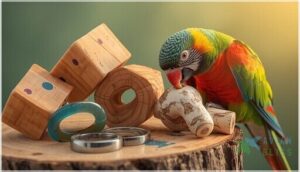
What goes into your bird’s mouth matters more than most owners realize. Durable bird toys for aggressive chewers should use bird friendly woods like maple, manzanita, or untreated birch — never cedar or plywood.
Non toxic coatings mean food-grade dyes only, no lacquers. Stainless steel hardware eliminates toxic material risks from zinc. Safe plastic options use thick acrylic.
Bird care and health starts with smarter material choices. Owners should always check for characteristics of safe bird toys before introducing anything new to their birds.
Chew-Resistant Construction
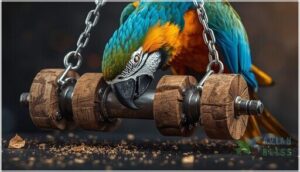
Construction is everything when your parrot treats toys like a demolition project. Durable bird toys built for aggressive chewers rely on reinforced materials — think thick stainless steel chains, welded joints, and secure fasteners that beaks simply can’t pry open.
That load-bearing design and impact resistance add up to unequaled durability. These durable pet toys deliver long-lasting fun without falling apart mid-play.
Engaging Textures and Designs
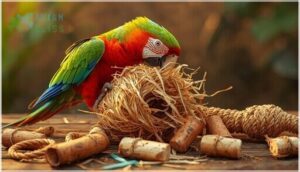
Texture isn’t just a bonus — it’s what keeps aggressive chewers coming back. Durable bird toys with natural fibers, textured surfaces, and color contrast give your bird something new to discover every session.
Shreddable toys and interactive designs let birds peel, tug, and forage, while creative design combinations like layered palm and rope create long-lasting fun your bird won’t ignore.
Easy-to-Clean Components
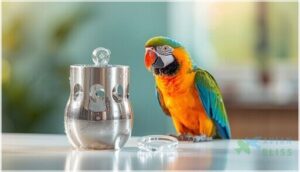
Cleaning up after aggressive chewers doesn’t have to eat your whole afternoon. The best durable bird toys are built with easy maintenance in mind — and that starts with smart material choices.
- Smooth surfaces on stainless steel parts wipe clean in seconds
- Detachable parts let you wash only what’s soiled
- Dishwasher safety on hard plastic pieces cuts disinfection time
- Bird safe materials like acrylic and steel dry fast, limiting bacterial growth
- Quick drying components return to interactive play almost immediately
How to Choose Toys for Strong Chewers
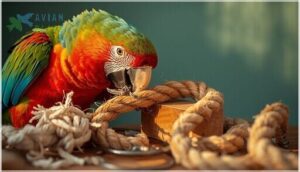
Picking the right toy for a strong chewer isn’t guesswork — it takes a closer look at your bird’s size, habits, and what materials are actually safe. Not every toy labeled “durable” is built for a beak that means business. Here’s what to keep in mind before you buy.
Matching Toy Size to Bird Species
Size matters more than most people think when it comes to bird toy purchases. Following bird size guidelines ensures your aggressive chewer stays safe and engaged. Use this species matching table to nail the right toy dimension for your bird:
| Bird Species | Toy Size | Cage Bar Spacing |
|---|---|---|
| Budgies, Parrotlets | Extra Small | 0.25–0.5 in |
| Cockatiels | Small | 0.5–0.625 in |
| Conures, Caiques | Medium | 0.625–0.75 in |
| Amazons, African Greys | Large | 0.75–1 in |
| Macaws, Cockatoos | Extra Large | 1–1.5 in |
Durable bird toys sized for cage proportions and beak safety keep aggressive chewers challenged without risk. You can consult a to make even more informed decisions for your bird’s safety and engagement.
Assessing Chewing Habits and Preferences
Once you’ve matched toy size to your bird’s species, the next step is reading their chew behavior up close. Does your bird shred methodically or chomp in big bites? Recognizing these chewing patterns helps you pick durable bird toys that actually hold attention.
Tracking beak activity daily — even casually — reveals bird preferences fast, making toy rotation and interactive play genuinely longlasting fun for aggressive chewers.
Avoiding Hazardous Parts and Materials
Knowing your bird’s chew style helps narrow choices, but material safety is where things get serious.
Toxic material risks are real — galvanized chains shed zinc flakes, cheap bells may contain lead, and non-food-grade dyes can carry harmful solvents.
Galvanized chains, cheap bells, and non-food-grade dyes can all poison your bird silently
For aggressive chewers, durable bird toys built with non-toxic woods, bird-friendly finishes, and safe coating options aren’t optional — they’re the standard.
Importance of Expert Recommendations
Even with safe materials covered, knowing which toys actually work takes more than guesswork. Veterinary guidance and expert toy reviews give you a reliable shortcut — avian vets categorize toys by enrichment type, making avian product selection far less overwhelming.
For aggressive chewers, bird behavior analysis helps match durable bird toys to your bird’s species, chewing intensity, and stress signals, turning aggressive chewer solutions into confident, informed choices.
Maintaining and Replacing Bird Chew Toys
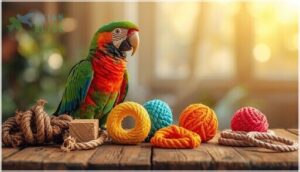
Even the toughest bird toy won’t last forever, especially when a determined beak is involved. Knowing when to clean, rotate, or replace a toy is just as important as picking the right one in the first place.
Here’s what you need to stay on top of it.
Regular Inspection for Wear and Damage
Aggressive chewers can destroy a toy faster than you’d expect — that’s why daily visuals matter. Scan for cracks, frayed fibers, and sharp edges every morning.
Weekly structural integrity checks mean handling each toy, flexing parts, and testing hardware on clips and chains.
Material monitoring catches splinters, rust, or softening rubber before they become a bird health crisis. These replacement triggers keep bird care supreme in safety.
Safe Cleaning and Disinfection Practices
Clean toys are non-negotiable for bird health. For aggressive chewers, weekly disinfection using diluted white vinegar or a bird-safe solution like F10 keeps harmful bacteria from building up. Avoid ammonia-based cleaners — they’re toxic to sensitive lungs.
Always move your bird to another room first, rinse all surfaces thoroughly, and let every toy dry completely before returning it to the cage.
When and How to Rotate or Replace Toys
Rotating toys on a consistent schedule keeps aggressive chewers mentally sharp and out of trouble. Watch your bird’s behavior — ignored toys, repetitive pacing, or sudden feather picking are clear signals it’s time to swap things out.
5 Practical Toy Rotation Planning Tips:
- Rotate every 7–14 days for most parrots
- Swap toys every 3–5 days for high-energy birds
- Replace immediately when you spot wear damage triggers like frayed rope or cracked plastic
- Use labeled bins for easy cage setup strategies
- Change only one or two toys at a time to avoid stress
Ensuring Ongoing Bird Safety and Engagement
Consistency is your strongest tool for keeping aggressive chewers safe and mentally satisfied. Daily safety checks catch sharp edges or loose parts before they become a real problem.
Pair your toy rotation schedule with enrichment activities like foraging or puzzle feeders to target bird behavior positively.
Chewer monitoring doesn’t need to be complicated — just stay observant, stay proactive, and your bird thrives.
Frequently Asked Questions (FAQs)
How to help a bird with cage aggression?
Start by identifying aggression triggers in the cage environment. Calm, consistent handling and behavior therapy help reduce territorial responses.
Bird socialization outside the cage daily builds trust and turns defensive birds into calmer companions.
Why can’t birds have bells?
Bells might seem like harmless fun, but they’re practically a disaster waiting to happen.
For aggressive chewers, bells bring toxic materials, choking hazards, beak injuries, and noise pollution all at once.
Can aggressive chewers destroy stainless steel toys?
Aggressive chewers can’t chew through stainless steel, but they can bend links, pry open clips, and create sharp edges over time.
Regular toy inspection catches these hazards before they become a real safety problem.
How often should bird toys be replaced?
Think of it as a “chew and renew” cycle. Daily checks catch damage fast, weekly rotations prevent boredom, and immediate replacement after visible chew damage keeps your bird safe and engaged.
Are homemade bird toys safe for chewers?
Yes, homemade bird toys can be safe when built with untreated wood, stainless steel hardware, and natural fiber options like sisal or hemp. However, DIY toy safety depends entirely on your material choices and construction quality.
What signs indicate a toy is unsafe?
Frayed parts, sharp edges, toxic materials, and loose pieces are red flags. If you spot rust, broken plastic, or choking hazards, pull the toy immediately — aggressive chewers turn small flaws into serious dangers fast.
Do aggressive chewers need more mental stimulation?
Absolutely — without enough mental stimulation, parrots often redirect energy into destructive habits.
Parrot enrichment and stress management go hand in hand, and chew reduction usually follows when aggressive chewers get the mental challenges they genuinely need.
Conclusion
Studies show parrots can spend up to four hours a day engaging in chewing behavior—that’s not restlessness, that’s biology. Choosing the right bird toys for aggressive chewers means working with that instinct, not against it.
Durable materials, safe construction, and regular rotation keep your bird stimulated and out of danger. When you match the toy to the bird, chewing stops being a problem you manage and becomes enrichment you provide.
- https://birdsupplies.com/pages/bird-safe-wood
- https://bonkabirdtoys.com/collections/indestructible-toys
- https://www.northernparrots.com/blog/why-do-parrots-need-foraging-toys/
- https://www.pethealthandnutritioncenter.com/blogs/natural-pet-health-education/bird-toy-safe-and-unsafe-material
- https://superbirdtoys.com/safety.php