This site is supported by our readers. We may earn a commission, at no cost to you, if you purchase through links.
 A backyard chicken keeper in Wisconsin discovered three dead hens near her coop last spring—no signs of predation, just sudden mortality. Within 48 hours, her entire flock showed neurological symptoms. The diagnosis: highly pathogenic avian influenza, a virus that’s claimed over 100 million domestic birds since 2022 and maintains a staggering 48% fatality rate in human cases.
Whether you’re managing backyard poultry, feeding wild songbirds, or working with commercial flocks, understanding transmission pathways and implementing targeted biosecurity protocols isn’t optional anymore—it’s the difference between prevention and devastation. The virus spreads through contaminated surfaces, aerosols, and direct contact, but specific interventions can reduce your risk by over 90%.
Table Of Contents
- Key Takeaways
- What is Avian Influenza and How Does It Spread?
- Recognize Warning Signs in Birds and Animals
- Essential Safety Practices for Bird Enthusiasts
- Biosecurity Measures for Backyard Flocks
- Vaccination Programs and Surveillance Efforts
- Food Safety and Raw Product Precautions
- Frequently Asked Questions (FAQs)
- Conclusion
Key Takeaways
- Avian influenza spreads through multiple pathways, including contaminated surfaces, aerosols, and direct contact with infected birds, but targeted biosecurity protocols can reduce transmission risk by over 90% when properly implemented.
- Early detection through recognizing neurological symptoms, respiratory distress, sudden mortality, and behavioral changes in both wild and domestic birds is critical for containing outbreaks before they escalate into regional epidemics.
- Essential protection measures include maintaining physical distance (minimum six feet from wild birds), wearing N95 respirators and nitrile gloves during close contact, and disinfecting feeders and birdbaths weekly with 10% bleach solution to prevent viable virus persistence for up to 21 days.
- Vaccination programs demonstrate 78-97% efficacy, depending on strain match and platform type, but effectiveness requires proper administration combined with comprehensive biosecurity measures, including segregated housing, controlled feed access, and real-time outbreak monitoring through surveillance dashboards.
What is Avian Influenza and How Does It Spread?
Avian influenza—commonly known as bird flu—poses a significant threat to both wild and domestic bird populations, and understanding its transmission dynamics is essential for anyone who works with or observes birds.
Bird flu spreads in several ways, and how much risk you face comes down to how much direct contact you have with infected birds.
To keep yourself and your birds safe, you need to understand three key ways bird flu spreads.
Understanding Bird Flu Viruses
Avian influenza viruses come in two forms: low pathogenic (LPAI) and highly pathogenic (HPAI), determined by their impact on poultry health. You’re facing a virus that mutates rapidly—over 100 H5N1 genotypes have emerged in North America since 2020. Understanding this genetic diversity helps you protect your flock and yourself. The risk of avian influenza transmission is a significant concern for poultry farmers and requires careful management.
Key points about bird flu transmission:
- Wild aquatic birds carry LPAI viruses that can mutate into deadly HPAI strains affecting domestic poultry
- Bird migration patterns spread H5N1 across continents, linking Africa, Asia, Europe, and the Americas
- Virus reassortment between different flu strains creates novel variants with increased pandemic potential
- Since 2003, H5N1 has caused 964 human cases globally with a 48% fatality rate
Wild Birds Vs. Domestic Poultry Transmission
Wild birds don’t just carry the virus—they’re the reservoir that keeps domestic poultry at constant risk, especially when migration routes cross paths with your backyard flock. Waterfowl shed avian pathogens through feces, contaminating water sources and feed areas. Your poultry farming operation faces elevated transmission risks during peak bird migration seasons.
| Transmission Route | Wild Birds | Domestic Poultry |
|---|---|---|
| Primary Source | Asymptomatic carriers | Symptomatic outbreaks |
| Spread Mechanism | Fecal contamination, migration | Direct contact, shared resources |
| Disease Ecology | Natural reservoir | Vulnerable endpoints |
Once you know how the virus moves between wild and domestic birds, you can build defenses that actually work.
Human Infection Pathways and Risk Factors
Once contaminated environments or infected animals are present, you become vulnerable through specific infection routes that turn observation into exposure. Human transmission occurs primarily when avian influenza virus particles contact your mucosal surfaces—eyes, nose, mouth—or enter your respiratory tract through aerosolized droplets.
Your risk assessment must account for three critical pathways:
- Direct contact exposure during slaughtering, milking, or defeathering increases infection risk up to five-fold compared to incidental contact
- Environmental contamination from surfaces, equipment, and aerosols in live bird markets creates indirect zoonotic disease transmission
- Prolonged unprotected exposure to infected dairy cattle or poultry amplifies viral load contact, especially for occupational groups
These patterns reveal when you’re facing outbreak conditions that go beyond what standard precautions can handle.
Effective prevention strategies require knowledge of public health risks to minimize the spread of avian influenza.
Recognize Warning Signs in Birds and Animals
Early detection can be the difference between containment and widespread outbreak. Knowing what abnormal behavior and clinical signs look like in both wild and captive birds gives you a vital advantage in protecting your flock and yourself.
Here’s what demands your attention—and when you need to act fast.
Symptoms in Wild Birds
You’ll notice subtle but telling clues when avian influenza strikes wild birds. Look for disorientation, head tremors, or erratic flight patterns—these neurological symptoms flag serious avian pathogens at work. Diseased birds may appear lethargic, isolate themselves from flocks, or fail to flee when approached. Respiratory distress, nasal discharge, and sudden death without prior warning are hallmark signs of bird flu.
Wild bird diseases like avian influenza demand vigilant bird health monitoring; infection control starts with recognizing these virus transmission indicators early. Here’s what to watch for during your observations:
| Clinical Sign | What You’ll Observe | Urgency Level |
|---|---|---|
| Neurological dysfunction | Head tilting, circling, seizures, lack of coordination | High—indicates late-stage infection |
| Respiratory distress | Open-mouth breathing, nasal discharge, coughing | Moderate to high risk |
| Sudden mortality | Death without obvious struggle or prior illness | Critical—report immediately |
| Behavioral changes | Reluctance to fly, tameness, separation from flock | Early warning sign |
| Physical abnormalities | Swollen head, ruffled feathers, weakness | Moderate—monitor closely |
Report any sick or dead wild birds displaying these zoonotic disease markers to wildlife authorities—your observations protect both bird behavior patterns and public health.
Signs of Illness in Domestic Poultry
Your backyard flock won’t always broadcast distress with dramatic symptoms—sometimes the earliest warnings whisper through subtle shifts in daily routines before clinical signs explode into full-blown outbreaks.
Poultry health checks demand attention to these red flags:
- Sudden drops in egg production without seasonal explanation
- Respiratory distress with nasal discharge or labored breathing
- Lethargy, reduced feed intake, or flock isolation behavior
- Swollen combs, wattles, or facial edema
- Unexplained mortality spikes within 24-48 hours
H5N1 avian influenza virus requires immediate veterinary care—don’t wait for confirmation when disease symptoms emerge.
When to Report Sick or Dead Birds
Recognizing when a feathered casualty demands official notification isn’t just good stewardship—it’s your frontline defense in slowing viral spread before clusters morph into regional epidemics. Contact state wildlife agencies or USDA hotlines immediately when encountering multiple dead wild birds or any poultry mortality exceeding baseline expectations within your flock.
| Reporting Trigger | Action Required |
|---|---|
| 3+ dead wild birds in one location | Report to state wildlife health monitoring authorities |
| Single dead raptor or waterfowl | Contact local avian disease alerts network |
| Any backyard flock mortality spike | Notify USDA APHIS following dead bird protocol |
| Sick bird signs with neurological symptoms | Immediate veterinary consultation and bird reporting guidelines compliance |
| Confirmed HPAI within 10-mile radius | Enhanced surveillance per public health directives |
Your vigilance transforms bird flu prevention from reactive crisis management into proactive avian influenza containment—protecting both wild birds and human communities.
Essential Safety Practices for Bird Enthusiasts

If you love watching birds, you need to protect yourself while enjoying the hobby. The right precautions keep you safe from avian influenza without sacrificing your passion for birding.
Let’s break down the key safety measures for bird watching during outbreaks.
Safe Distance Guidelines for Observation
Keeping at least six feet between yourself and any wild bird isn’t just a suggestion—it’s your first line of defense against potential viral exposure. This distance guideline for bird watching ensures you won’t contact contaminated surfaces or inhale aerosolized particles that carry avian influenza viruses.
During wildlife viewing, increase that buffer to ten feet if birds appear lethargic or disoriented—symptoms that signal active infection and elevated transmission risk for public health safety.
Proper Personal Protective Equipment
When you’re closer than six feet to potentially infected birds, gloves and respirators shift from optional gear to critical barriers between you and a virus that’s crossed into humans more than 890 times since 2003.
Your personal protective equipment protocol for infection control must include:
- N95 respirators with proper fit-testing—surgical masks won’t block aerosolized viral particles during virus transmission events
- Nitrile gloves for glove selection that resists punctures when managing contaminated materials
- Safety goggles or face shields for eye protection against mucous membrane exposure
- Hand sanitizing procedures immediately after PPE removal to eliminate residual pathogens
This layered approach to infection prevention reduces your contact risk substantially.
Handling Feeders and Birdbaths Safely
Feeders and birdbaths can harbor viable avian influenza virus for up to 21 days in cool, wet conditions—turning your backyard sanctuary into an accidental transmission hub without proper sanitation protocols.
You’ll need to disinfect these stations weekly using a 10% bleach solution, wearing personal protective equipment during bird feeder sanitation to prevent wildlife disease management failures. Drain birdbaths completely between cleanings—stagnant water accelerates pathogen survival.
These disease prevention methods and clean water tips protect both feathered friend hygiene and public health during avian influenza outbreaks, making safe birdbath maintenance your frontline defense against bird flu transmission.
What to Do After Potential Exposure
If you’ve touched a sick bird, contaminated surface, or suspect exposure to avian influenza, immediate post-contact protocols can markedly reduce your risk of infection and prevent viral transmission to your household or flock.
Wash your hands thoroughly with soap for at least 20 seconds—hand washing remains your most effective infection control measure. Remove contaminated clothing and disinfect boots using approved disinfection strategies before entering clean areas.
Monitor yourself for flu-like symptoms over the next 10 days, and contact medical guidance immediately if respiratory signs develop. Report the exposure to local health authorities for proper infection reporting and emergency response coordination.
Biosecurity Measures for Backyard Flocks
Protecting your backyard flock from avian influenza requires a proactive approach that starts at your property’s perimeter. The right biosecurity measures create multiple layers of defense between your birds and potential viral threats.
Here are four essential strategies to keep your flock safe.
Setting Up Disinfection Stations
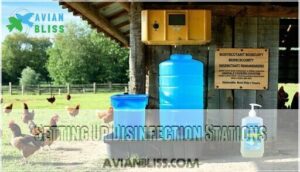
Establishing a functional disinfection station at every entry point to your flock area can reduce viral contamination by up to 70%, making it one of the most cost-effective barriers against avian influenza introduction. You’ll need to position biosecurity gates where foot traffic naturally flows—barn doors, coop entrances, and feeding zones all qualify as critical station placement sites.
Your disinfection protocols should include:
- Boot dips containing EPA-approved virucidal agents refreshed on cleaning schedules (minimum twice weekly)
- Hand sanitizer dispensers paired with personal protective equipment storage bins
- Footwear brushes for removing organic debris before chemical disinfection
- Weatherproof signage reminding visitors about infection prevention strategies
When farm sanitation becomes routine, infection control stops being theory and starts being practice.
Segregating Different Bird Types
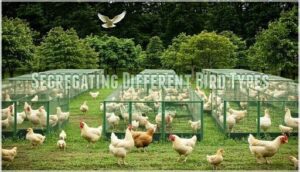
Mixing layers, broilers, and breeding stock within the same operation creates cross-species transmission corridors that can heighten infection rates by 60% compared to segregated housing systems.
You’ll want to maintain separate enclosures for each poultry type, preventing direct contact between bird species with different immunological profiles.
By keeping your flock types apart, you help curb the spread of avian influenza, as viruses have a much harder time moving between zones.
This kind of thoughtful poultry segregation protects your birds and keeps outside pathogens from slipping in with wild visitors.
Protective Netting and Barrier Methods
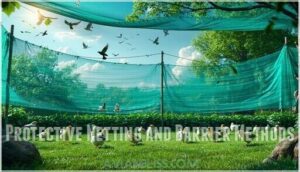
Physical barriers—specifically high-tensile mesh installed overhead and along perimeter zones—cut wild bird intrusion by up to 60%, forming your primary defense against airborne viral vectors entering backyard flocks.
You’ll need netting materials with apertures under 2.5 cm to exclude sparrows and starlings, while fence designs incorporating buried skirting prevent ground-level breaches.
These enclosure systems function as critical prevention and control measures, complementing personal protective equipment protocols in your all-encompassing bird flu prevention strategy against avian deterrents’ failure points.
Controlling Wild Bird Access to Feed
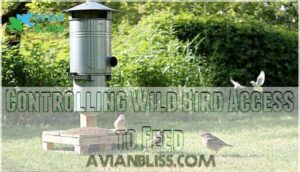
Once netting blocks airborne exposure, you must address the ground-level magnet that draws infected wild birds directly into your biosecure zone: unprotected feed storage and open feeding stations.
Implement covered seed dispensers with treadle-activated mechanisms that restrict wild bird access while permitting flock feeding. Store bulk feed in rodent-proof metal bins, elevated 45 cm minimum, establishing feed management protocols that eliminate spillage—the primary attractant for migratory species carrying avian influenza.
Together, these steps build a solid defense against avian flu spread in your operation.
Vaccination Programs and Surveillance Efforts
Protecting flocks from avian influenza requires coordinated action beyond individual biosecurity efforts.
Government-led vaccination programs and systematic surveillance networks form the backbone of early detection and outbreak control.
These large-scale systems combine surveillance and vaccination to protect domestic flocks and wild birds alike.
National Vaccination Coverage and Effectiveness
Vaccine efficacy rates against highly pathogenic avian influenza mortality range from 78% to 97%, depending on the platform and strain match. Live recombinant vaccines demonstrate approximately 97% efficacy, while inactivated vaccines show 95% protection against homologous strains but drop to 78% against heterologous variants.
Global vaccination efforts deployed over 113 billion doses in poultry between 2002 and 2010, with China leading at 91% of total consumption.
Poultry vaccination programs face challenges from inadequate administration rather than antigenic drift, emphasizing that vaccine development strategies must integrate with biosecurity for effective pandemic prevention and global health security.
Wild Bird Monitoring Systems
Consider the surveillance grid humming above us: weather radar and automated bioacoustic sensors now underpin rigorous Avian Surveillance, tracking Migration Patterns and real-time Bird Tracking for Conservation Efforts.
This Wildlife Monitoring network detects abrupt shifts in wild bird populations, flagging risks of Avian Influenza Virus introductions. Such coordinated systems are indispensable for effective Bird Flu Prevention, keeping you and your flock a step ahead.
Tracking HPAI Outbreaks in Real Time
How effectively can you respond when H5N1 surfaces unexpectedly near your operation? Real-time tracking dashboards—DashFLUboard and APHIS platforms—deliver daily outbreak alerts, integrating wild bird migration data with environmental variables to predict avian influenza outbreaks before they escalate.
These disease surveillance systems enable you to tighten biosecurity measures immediately, monitor seasonal peaks, and assess regional risk with precision that transforms reactive protocols into proactive defense.
Food Safety and Raw Product Precautions

When avian influenza shows up in livestock or poultry operations, what you eat matters. Raw and undercooked animal products from infected or potentially infected sources can transmit the virus—but proper handling eliminates that risk.
The key steps for staying safe through informed food choices during outbreaks:
Avoiding Raw Milk From Infected Animals
You can’t see, smell, or taste avian influenza in raw milk, but consuming unpasteurized dairy from infected animals creates a direct pathway for viral exposure that no amount of farm-fresh appeal can justify.
Raw milk from infected animals carries invisible avian influenza virus that no farm-fresh appeal can justify risking
Pasteurization eliminates viral particles through thermal inactivation, while raw milk products bypass this critical infection control measure.
Dairy safety protocols mandate avoiding unpasteurized milk from any animals with confirmed or suspected avian influenza infection—milk contamination represents a preventable transmission route you control through informed food management choices that prioritize bird flu prevention over unproven health claims.
Safe Egg Handling During Outbreaks
Eggs from commercial operations don’t carry avian influenza virus through their shells when proper collection and storage protocols prevent fecal contamination—but surface pathogens from infected flocks demand management procedures that treat each unwashed shell as a potential biosecurity breach point.
Your egg storage and cleaning methods during bird flu outbreaks require refrigeration tips that maintain food safety guidelines:
- Wash hands thoroughly before and after managing eggs from poultry farms
- Discard cracked eggs immediately—compromised shells bypass pasteurization-level protection
- Cook eggs until yolks solidify—thermal treatment inactivates avian influenza particles
Commercial egg operations maintain rigorous testing protocols, but your cracking safety practices provide the final defense layer.
Understanding Price Impacts From HPAI
Supply shocks from avian influenza outbreaks don’t just threaten biosecurity—they ripple through your grocery budget with extraordinary force. Egg prices reached $8.15 per dozen in March 2025, reflecting a 350% spike as HPAI eliminated over 30 million layers.
Global price volatility now persists because wild bird circulation sustains transmission cycles year-round, disrupting poultry trade patterns and compressing production growth projections below 2.5% worldwide.
Frequently Asked Questions (FAQs)
Can children safely participate in backyard birding activities?
Kids thrive when they explore nature through safe, supervised Family Birding Activities. With proper Backyard Safety Tips—maintaining distance from sick birds, avoiding direct contact, and using Bird Watching Kits designed for children—you can minimize Recreational Activity Risks associated with Zoonotic Diseases like Avian Influenza.
Kid Friendly Birding teaches Child Education Resources while implementing Bird Flu prevention methods.
How long does bird flu survive on surfaces?
Avian influenza virus persistence on surfaces depends on environmental factors like temperature and humidity. Under favorable conditions, the virus can remain viable for several days on contaminated materials.
Cool and damp conditions help the virus stick around longer, but when surfaces are exposed to strong sunlight and dry air, the virus breaks down much faster—which is why thorough disinfection is so important.
Are songbirds carriers of avian influenza viruses?
While songbirds can contract avian influenza viruses, they’re rarely significant carriers compared to waterfowl and shorebirds.
Wild bird migration patterns primarily involve aquatic species that maintain viral reservoirs, making songbird infection an uncommon contributor to avian influenza outbreaks worldwide.
Should I disinfect my binoculars after birding trips?
An ounce of prevention is worth a pound of cure—and that applies to binocular hygiene after your birding excursions. While virus transmission through optical equipment remains unlikely, disinfecting lenses and surfaces you’ve touched reduces pathogen exposure.
Infection preventionists recommend wiping birding gear with appropriate sanitizing solutions, especially after observing wild birds in outbreak zones, as part of thorough disease prevention protocols.
What vaccines protect humans from bird flu exposure?
Currently, no licensed vaccines protect humans against avian influenza viruses like H5N1. Vaccine development continues, with candidate vaccines stockpiled for pandemic preparedness.
Antiviral medications, including Tamiflu, offer post-exposure treatment options when human infection occurs.
Conclusion
A single oversight—contaminated boots, an unwashed feeder—can unravel months of vigilance. Yet the alternative is clear: proactive bird viral infection prevention transforms that Wisconsin keeper’s nightmare into an avoidable tragedy.
Deploy disinfection protocols rigorously, maintain species segregation, and monitor surveillance bulletins weekly. These measures don’t merely reduce risk—they create barriers that collapse transmission chains before they reach your flock.
When biosecurity becomes habitual rather than reactive, you’re no longer gambling with mortality rates. You’re controlling the variables that matter most.
- https://www.aphis.usda.gov/livestock-poultry-disease/avian/avian-influenza/hpai-detections/commercial-backyard-flocks
- https://layinghens.hendrix-genetics.com/en/articles/effective-biosecurity-measures-against-hpai/
- https://www.newsweek.com/bird-flu-vaccine-poultry-viral-evolution-china-mutation-2019085
- https://pmc.ncbi.nlm.nih.gov/articles/PMC11997231/
- https://www.cdc.gov/bird-flu/php/surveillance/chart-epi-curve-ah5n1.html