This site is supported by our readers. We may earn a commission, at no cost to you, if you purchase through links.
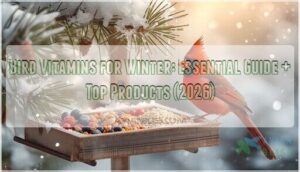
A healthy bird can lose up to 10% of its body weight overnight during winter—a metabolic burn rate that would leave most mammals dead by morning. That brutal caloric demand doesn’t just drain fat reserves. It strips essential vitamins from tissues faster than seed alone can replace them, leaving even well-fed backyard birds vulnerable to deficiencies that compromise immunity, bone strength, and reproductive health.
The problem intensifies when you factor in shorter daylight hours reducing vitamin D3 synthesis and frozen ground limiting access to mineral-rich grit. Your feathered visitors need more than extra sunflower seeds to survive the cold months—they need targeted nutritional support that tackles winter-specific deficiencies before respiratory infections, weak eggshells, and poor feather quality set in.
Table Of Contents
- Key Takeaways
- Essential Vitamins Birds Need in Winter
- Why Winter Increases Birds’ Vitamin Needs
- How to Choose Bird Vitamins for Winter
- Top Bird Vitamin Products for Winter
- 1. Vitofarma Bird Vitamin Supplement
- 2. Wagners Wild Bird Food With Cherry Flavor
- 3. Kaytee Wild Bird Seed Mix
- 4. Kaytee No Mess Bird Seed Mix
- 5. Wagners Cardinal Wild Bird Food
- 6. Wagners Deluxe Wild Bird Food Blend
- 7. Kaytee Wild Bird Food Seed Blend
- 8. Wagners Eastern Wild Bird Food
- 9. Pennington Wild Bird Seed Blend
- Safe and Effective Vitamin Supplementation Tips
- Frequently Asked Questions (FAQs)
- How can you help birds in the winter?
- Which vitamin is good for the winter season?
- How to keep your bird warm in winter?
- How do I know if my bird has a vitamin deficiency?
- Can wild birds overdose on vitamin-enriched seed?
- Do hummingbirds need vitamins during winter migration?
- Are vitamin supplements safe for baby birds?
- How do vitamins affect feather molt timing?
- Can vitamins replace fresh food in winter?
- Conclusion
Key Takeaways
- Birds lose up to 10% of body weight overnight in winter through metabolic burn, creating vitamin deficiencies that compromise immunity, bone strength, and feather quality beyond what seed alone can fix.
- Vitamin A, D3, and E form winter’s critical nutritional trio—supporting immune barriers against infection, enabling calcium absorption for bone health, and providing antioxidant protection during cold-stress metabolism.
- Indoor birds miss UVB exposure needed for D3 synthesis while outdoor birds face frozen ground limiting mineral access, making targeted supplementation essential when shorter daylight and higher energy demands peak.
- Species-specific dosing matters more than product choice—overdosing fat-soluble vitamins causes toxicity, while mixing supplements into soft foods instead of water prevents bacterial growth and ensures accurate intake.
Essential Vitamins Birds Need in Winter
Winter doesn’t just demand more food—it reshapes what birds need at the micronutrient level. Your backyard visitors burn through fat and protein to stay warm, but vitamins and minerals keep their immune systems sharp, their bones strong, and their feathers intact.
Mealworms deliver that complete nutritional package—protein-dense mealworms naturally supply the vitamins and minerals that keep wild birds thriving when winter stress peaks.
Here’s what every bird needs to survive the cold months, and why each nutrient matters.
Understanding the difference between seed and suet for birds helps you provide the right energy sources when temperatures drop.
Vitamin a for Immunity and Vision
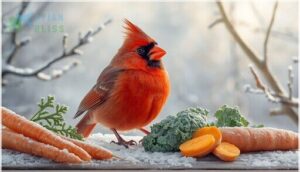
Vitamin A stands as your bird’s frontline defense against winter’s brutal challenges—supporting both immune resilience and sharp vision when they matter most. Deficiency leaves respiratory and ocular tissues vulnerable, compromising your bird’s ability to fight infection and navigate safely.
Winter diets often lack the fresh greens and colorful vegetables that provide natural sources of avian vitamins, making supplementation crucial during these challenging months.
- Maintains epithelial barriers in respiratory, oral, and digestive tracts against pathogens
- Boosts antibody production and enhances T-cell responses for immune system support
- Prevents night blindness by supplying retinal for photoreceptor function and eye health
- Reduces infection risk through improved phagocytic activity in immune cells
- Corrects common deficiencies in seed-heavy diets lacking adequate avian nutrition
In fact, studies highlight the essential importance of for disease resistance and overall bird health.
Recognizing symptoms early allows for timely intervention, especially with bacterial infections like psittacosis that require specific treatment approaches.
Vitamin D3 for Calcium Absorption
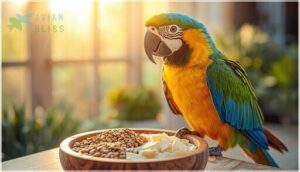
Without adequate D3, even calcium-rich diets fail—your bird’s bones, egg production, and metabolic balance depend entirely on this vitamin’s ability to release calcium from food. Birds need regular exposure to to naturally produce Vitamin D3 for peak health.
Providing access to natural sunlight or full-spectrum UVB lighting ensures your bird synthesizes vitamin D3 efficiently—explore complete avian vitamin requirements to optimize their nutritional foundation.
| D3 Function | Impact on Avian Nutrition |
|---|---|
| Calcium Balance | Regulates intestinal absorption and kidney reabsorption |
| Bone Health | Prevents skeletal deformities and fractures |
| Egg Production | Ensures strong shell formation in breeding birds |
| Mineral Absorption | Enhances phosphorus uptake for metabolic processes |
Indoor birds miss critical UVB exposure, making nutritional supplements essential for proper calcium absorption and vitamin interactions.
Vitamin E for Antioxidant Support

Cold weather ramps up oxidative stress in your bird’s cells—that’s where vitamin E benefits come in. This antioxidant intercepts harmful molecules before they damage cell membranes, protecting tissues throughout winter’s metabolic surge.
Vitamin E intercepts harmful molecules before they damage your bird’s cells during winter’s brutal metabolic surge
In cold-exposed quail, dietary vitamin E at 250–500 mg per kilogram improved body weight and egg production compared to lower doses, proving these winter supplements genuinely strengthen avian wellness when birds need it most.
Calcium and Iodine for Bone and Metabolic Health

Antioxidants alone won’t carry your bird through winter—bone density and avian metabolism depend on calcium and iodine working in tandem with vitamin D3. Calcium supplements correct the brutal gaps in seed-only diets, preventing fractures and thyroid health crises tied to iodine deficiency.
Key nutritional needs for birds include:
- Quail need 0.75–0.90% dietary calcium for peak bone strength.
- Laying hens mobilize skeletal reserves during egg production—low calcium triggers up to 62% keel fracture rates.
- Iodine deficiency causes goiter, compressing airways and esophagus in parrots and mynahs.
- Vitamin D3 supercharges intestinal calcium absorption, making both nutrients essential for bird nutrition and health.
Seed diets lack both minerals. Replace them with formulated pellets or targeted bird vitamins under veterinary guidance to prevent nutritional deficiencies in birds.
Why Winter Increases Birds’ Vitamin Needs

Cold weather doesn’t just make birds fluff up their feathers—it rewires their entire metabolism. Your backyard visitors burn calories at an astonishing rate to stay warm, pushing their nutritional needs far beyond what summer foraging provides.
Here’s what happens inside a bird’s body when temperatures drop, and why standard seed mixes often fall short.
Effects of Cold on Bird Metabolism
When temperatures drop, your bird’s body shifts into overdrive—basal metabolic rates and maximal shivering capacity climb markedly higher than summer levels. This cold stress demands increased energy expenditure for thermoregulation, pushing daily caloric needs up substantially.
The metabolic workload doesn’t just burn through calories; it elevates oxidative balance challenges too, making vitamin supplements for birds essential for maintaining nutritional balance and supporting overall avian care and wellness during winter’s brutal demands.
Fat, Protein, and Carbohydrate Demands
Energy balance hinges on macronutrient ratios—your bird’s winter foraging must deliver dense fat (around 75–80 percent of overnight reserves burned), adequate protein to spare muscle, and rapid carbohydrate for immediate heat. Cold weather adaptation demands this trio work in concert: fat fuels thermoregulation, protein maintains tissue, carbs provide quick glucose.
Avian nutrition and bird health require dietary supplements for birds when natural sources fall short, ensuring nutritional balance for birds and supporting avian care and wellness through winter’s relentless energy drain.
Common Nutritional Gaps in Winter Diets
Vitamin deficiencies emerge when your feeder emphasizes oil-rich sunflower or suet—excellent for calories, brutal for micronutrients. Seed limitations mean inadequate vitamin A (squamous metaplasia risk rises), insufficient D₃ (calcium absorption falters), and scarce essential amino acids once insect protein vanishes.
Mineral imbalances follow: winter’s energy-dense menu dilutes trace elements unless you balance fat content with mealworms, formulated pellets, or targeted dietary supplements for birds.
How to Choose Bird Vitamins for Winter
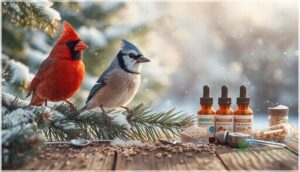
Not every bird needs the same winter supplement—and picking the wrong one can do more harm than good. You’ll need to match the formula to your bird’s species, age, and current diet, then decide whether liquid or powder fits your routine.
Here’s how to narrow down your options and dose safely.
Species-Specific Requirements
Not all birds share the same nutritional blueprint—what keeps a cardinal thriving through January’s freeze won’t necessarily sustain a finch or a parrot. Species variations in bird size and metabolism demand targeted dietary supplements for birds:
- Parrots require higher vitamin A for parrot health and diet maintenance
- Finches need concentrated B-complex for rapid metabolic turnover
- Canaries benefit from enhanced iodine for canary health and thyroid function
- Cardinals thrive with elevated vitamin E for cold tolerance
- Hummingbirds demand specialized micronutrients for extreme energy output
Nutritional balance for birds depends entirely on matching vitamin supplements to species-specific physiology—not guesswork.
Age and Life Stage Considerations
A fledgling’s skeleton demands more than a retiree’s aging frame—your bird’s life stage dictates which vitamin supplements work best. Rapidly growing juveniles burn through calcium and vitamin D3 for bone elongation, while geriatric care emphasizes antioxidants like vitamin E to slow cellular decline. Breeding supplements spike vitamins A, E, and B-complex to support egg production and hatchability. Adult maintenance birds on balanced diets rarely need extras unless winter stress compounds nutritional gaps.
| Life Stage | Priority Nutrients | Supplementation Goal |
|---|---|---|
| Juvenile Nutrition | Calcium, Vitamin D3, Vitamin A | Skeletal development, immune foundation |
| Adult Maintenance | Vitamin A, minimal D3 | Barrier function, homeostasis |
| Breeding Supplements | Vitamins A/E/B-complex, Calcium | Eggshell formation, embryo viability |
| Geriatric Care | Vitamin E, B-vitamins, Zinc | Antioxidant support, metabolic efficiency |
Nutritional balance for birds shifts as they age—growth factors that fuel a chick’s first winter become toxic when overdosed in seniors.
Liquid Vs. Powdered Supplements
Delivery method matters as much as dosage—liquid drops absorb faster through mucosal membranes, while powders cling to seed coatings for controlled release throughout the day.
Liquids offer precise dosage control for vitamin A and D3, but shelf life shrinks once opened. Powders resist spoilage longer and simplify administration ease when mixed with fresh foods, though bioavailability varies with your bird’s digestive transit time.
Safety and Dosing Guidelines
Overdose prevention starts with label adherence—most products cap vitamin D3 and trace elements at 5 percent of daily intake because fat-soluble vitamins accumulate in tissues rather than flush out.
Bird size considerations matter: small finches need 0.5 g daily, parrots tolerate 1–2 g.
Supplement interactions turn dangerous when you combine fortified pellets with liquid drops—dosing errors spike when water-based delivery can’t account for individual consumption rates, so discontinue overlapping nutritional support products immediately.
Top Bird Vitamin Products for Winter
You need products that deliver essential vitamins, energy-dense fats, and reliable nutritional support when winter hits hardest. The right supplement or seed blend fills gaps in natural foraging, keeps metabolism strong, and bolsters immune function through freezing temperatures.
Below are nine top-performing products—from targeted vitamin formulas to nutrient-rich seed mixes—that help backyard and captive birds thrive all winter long.
1. Vitofarma Bird Vitamin Supplement
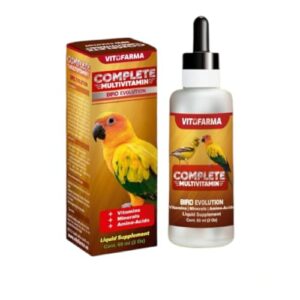
VITOFARMA Multi-Vitamin for Birds delivers a complete spectrum of vitamins, minerals, and amino acids in a 2-ounce liquid formula designed to strengthen immunity and promote vibrant plumage across all small bird species. Precision matters here: dose 3-4 drops for finches or canaries, and 30 drops per 8 ounces of water for larger parrots.
The supplement’s safety profile aids young birds in building appetite and development, while supporting aging companions fighting debilitating conditions. It also benefits picky eaters struggling with deficiencies, making it essential for winter’s metabolic demands when avian nutrition gaps widen.
| Best For | Bird owners with picky eaters, vitamin-deficient birds, or anyone looking to boost immunity and plumage quality in small to large species year-round. |
|---|---|
| Weight | 10 Pounds |
| Primary Ingredient | Sunflower Seed |
| Brand | Wagner’s |
| Item Form | Seed blend |
| Country of Origin | United States |
| Feeder Compatibility | Hopper or Tube |
| Additional Features |
|
- Complete vitamin, mineral, and amino acid formula supports immune health and promotes shiny, full feathers
- Flexible dosing works for both small birds (3-4 drops) and large parrots (30 drops per 8 oz water)
- Helps young birds develop healthy appetites and assists older birds managing age-related health issues
- Requires careful measurement to avoid under or overdosing different bird sizes
- Results vary by individual bird health, so improvements aren’t guaranteed for every case
- Should involve a vet consultation before starting, adding an extra step to the process
2. Wagners Wild Bird Food With Cherry Flavor
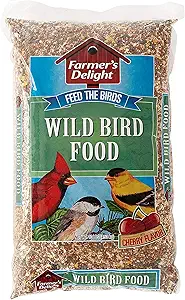
Wagner’s Farmer’s Delight Wild Bird Food with Cherry Flavor shifts your focus from liquid drops to a seed-based approach—10 pounds of sunflower, millet, cracked corn, and milo deliver high-energy bird nutrition through hopper or tube feeders. The cherry flavor’s strong aroma attracts cardinals, blue jays, and chickadees without deterring consumption, though you’ll notice wildlife management challenges when squirrels arrive.
Black oil sunflower seeds anchor the blend’s fat content, critical for winter bird feeding when thermoregulation demands peak. Proper feeder placement and seed composition monitoring prevent waste and spoilage.
| Best For | Backyard birdwatchers looking for an affordable, year-round seed mix that attracts a wide variety of common feeder birds like cardinals, blue jays, and chickadees. |
|---|---|
| Weight | 5 lb |
| Primary Ingredient | Sunflower seeds |
| Brand | Kaytee |
| Item Form | Chunk |
| Country of Origin | USA |
| Feeder Compatibility | Platform or tube |
| Additional Features |
|
- High-energy blend with sunflower seeds, millet, and cracked corn provides essential nutrition for birds across all seasons, especially during winter when energy demands are highest.
- Strong cherry aroma makes the mix highly attractive to birds without deterring them from feeding, with many users reporting increased bird activity at their feeders.
- Excellent value for the price with a 10-pound bag of high-quality, USA-made ingredients suitable for standard hopper or tube feeders.
- Attracts squirrels, chipmunks, and raccoons in addition to birds, which can create wildlife management challenges and competition at feeding sites.
- Some birds pick through the mix and discard seeds they don’t prefer (especially milo), leading to waste and scattered seeds on the ground below feeders.
- The strong cherry scent may be off-putting to some people, and smaller seed-preferring birds like finches may not find this mix as appealing as specialized blends.
3. Kaytee Wild Bird Seed Mix
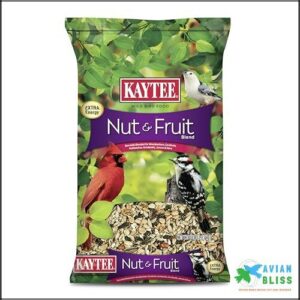
Kaytee Wild Bird Food builds on that high-energy approach with vitamin A and vitamin D3 supplements fortifying sunflower seeds, peanuts, and grain—your feeder maintenance just got more technical. The 8% crude protein minimum and 4% crude fat baseline won’t match the Winter Blend’s 32% fat ceiling, but calcium carbonate inclusion promotes bone health and eggshell formation when natural sources vanish.
You’ll see cardinals and woodpeckers respond to the mix’s seed selection for birds, though proper seed storage in airtight containers between 40–70°F prevents rancidity in those added fats.
| Best For | Backyard birders who want a vitamin-fortified seed mix that attracts cardinals, woodpeckers, and chickadees year-round without stepping up to premium winter blends. |
|---|---|
| Weight | 10 Pounds |
| Primary Ingredient | Hulled sunflower seed |
| Brand | Wagner’s |
| Item Form | Chunk |
| Country of Origin | USA |
| Feeder Compatibility | Tube, hopper, platform |
| Additional Features |
|
- Fortified with vitamin A, D3, and calcium carbonate to support bird health when natural sources are scarce
- Attracts a wide variety of songbirds and woodpeckers with its sunflower seed, peanut, and grain blend
- Balanced nutrition with 8% protein and 4% fat provides steady energy without the cost of high-fat winter formulas
- Lower fat content (4% vs. 32% in Winter Blend) may not provide enough calories during extreme cold snaps
- Requires careful storage in airtight containers at 40–70°F to prevent fat rancidity and insect problems
- More expensive than basic mixes and gets consumed quickly, meaning you’ll refill feeders often
4. Kaytee No Mess Bird Seed Mix
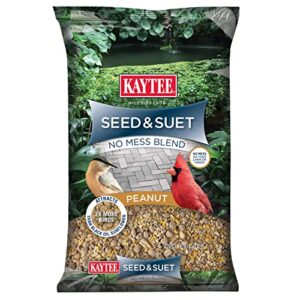
Hull-free convenience meets winter bird nutrition when you select Kaytee’s No Mess Peanut blend. 13.5–23% crude protein and 18–44% crude fat deliver high-energy bird food without shell debris littering your yard.
The seed composition combines hulled sunflower seeds and shelled peanuts with vitamin A, D3, and E fortification, ensuring nutrient balance while waste reduction keeps feeder maintenance minimal.
You’ll attract cardinals and woodpeckers with this 100% edible mix, though proper storage in sealed containers below 70°F prevents moisture-driven spoilage in black oil sunflower seeds during brutal cold snaps.
| Best For | Backyard birders who want to attract high-energy birds like cardinals and woodpeckers without dealing with messy seed shells or yard cleanup. |
|---|---|
| Weight | 6 Pounds |
| Primary Ingredient | Black Oil Sunflower |
| Brand | Wagner’s |
| Item Form | Seed & Grain Blend |
| Country of Origin | USA |
| Feeder Compatibility | All feeders |
| Additional Features |
|
- 100% edible blend with no shells means zero mess under feeders and no unwanted sprouting in your lawn or garden beds
- High protein (13.5–23%) and fat (18–44%) content provides the calorie-dense nutrition wild birds need during cold winter months
- Fortified with vitamins A, D3, and E plus trace minerals to support bird health beyond basic seed nutrition
- Some users report finding dust, grit, or more corn filler than expected, which can leave feeders grimy
- Requires careful storage in sealed containers below 70°F to prevent moisture damage and spoilage
- May contain less suet than advertised and might not attract as wide a variety of species as competing premium blends
5. Wagners Cardinal Wild Bird Food
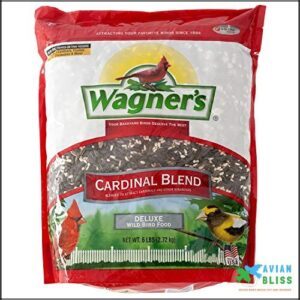
Targeted seed composition makes Wagner’s Cardinal Blend a winter standby—60% black oil sunflower seeds and 40% safflower deliver 40% oil content for thermoregulation while squirrel deterrence keeps your feeder stocked.
Cardinals, chickadees, and finches favor this high-energy bird food during brutal cold snaps when fat-rich nutrition becomes essential.
Place feeders 5–6 feet high near escape cover, monitor for spoilage in damp conditions, and you’ll maintain consistent cardinal attraction through dawn and dusk feeding windows when winter bird feeding matters most.
| Best For | Backyard birders who want to attract cardinals and songbirds year-round while keeping squirrels away from their feeders. |
|---|---|
| Weight | 4 pounds |
| Primary Ingredient | Sunflower seeds |
| Brand | Wagner’s |
| Item Form | Seed |
| Country of Origin | USA |
| Feeder Compatibility | Tube, hopper, platform |
| Additional Features |
|
- High oil content (60% black oil sunflower, 40% safflower) provides the fat and energy cardinals need during winter
- Safflower seeds naturally deter squirrels while remaining attractive to cardinals, chickadees, and finches
- No filler seeds means less waste and mess under your feeder
- Higher price point compared to generic wild bird seed mixes
- Feeders may need frequent refilling since birds prefer these energy-dense seeds
- No storage or shelf-life information provided, which matters for bulk purchases
6. Wagners Deluxe Wild Bird Food Blend
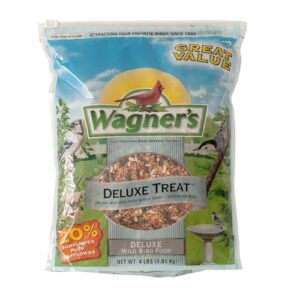
Blends marketed as deluxe selections can disappoint—Wagner’s Deluxe Wild Bird Food contains 20% sunflower seeds alongside 30–40% milo and cracked corn filler that songbirds reject during winter bird feeding.
Seed composition matters for nutrient profile. Black oil sunflower seeds deliver essential fat, but high-filler blends reduce cost-effectiveness when cardinals and finches selectively eat premium components while discarding low-energy grains.
Waste management becomes critical—uneaten milo accumulates under bird feeders, creating mold risks. Choose feeder compatibility wisely or upgrade to no-mess blends for cleaner winter bird care and better bird attraction.
| Best For | Budget-conscious bird enthusiasts who don’t mind ground cleanup and want to attract both songbirds and ground-feeding species with a basic mixed seed blend. |
|---|---|
| Weight | 9.75 Pounds |
| Primary Ingredient | Hulled Sunflower Seed |
| Brand | Kaytee |
| Item Form | Flake |
| Country of Origin | USA |
| Feeder Compatibility | Hopper, gazebo, tube |
| Additional Features |
|
- Contains 20% sunflower seeds (black oil and striped) that attract cardinals, finches, and chickadees with high-fat nutrition
- Works in all standard feeder types—tube, hopper, and platform—making it versatile for existing backyard setups
- Priced as a value option with strong customer ratings (4.7 stars on Amazon), appealing for those feeding birds on a budget
- Contains 30-40% filler seeds (milo and cracked corn) that most songbirds reject, reducing overall cost-effectiveness
- Creates significant waste as discarded seeds pile up under feeders and can develop mold if not cleaned regularly
- Attracts squirrels due to cracked corn content, potentially requiring additional investment in squirrel-proof feeders
7. Kaytee Wild Bird Food Seed Blend
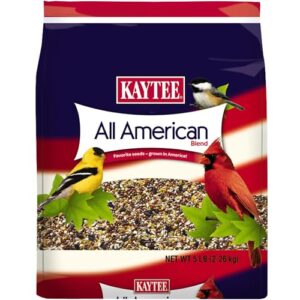
You’ll notice fortified wild bird blends advertise vitamins A and D3—Kaytee Wild Bird Food Seed Blend includes both to support immune function and calcium metabolism during winter bird feeding stress. The seed composition blends black oil sunflower seeds with cracked corn and grain products, attracting cardinals, chickadees, and finches to your feeder.
However, consumer reports flag fine grinding and excess corn as problematic for bird nutrition and feeder maintenance. Regional formulations tested by university researchers show a 3:1 preference over generic mixes, improving bird attraction when you select climate-appropriate high-energy bird food for supplement fortification goals.
| Best For | Budget-conscious bird watchers who want to attract a variety of common backyard birds without spending a lot on seed. |
|---|---|
| Weight | 20 pounds |
| Primary Ingredient | Black Oil Sunflower |
| Brand | Wagner’s |
| Item Form | Seed |
| Country of Origin | USA |
| Feeder Compatibility | Tube, hopper, platform |
| Additional Features |
|
- Fortified with vitamins A and D3 plus calcium carbonate to support wild birds during stressful seasons like winter and migration
- Attracts a wide range of species including cardinals, chickadees, finches, jays, and woodpeckers to keep your feeder active
- Regional formulations have been field-tested by researchers and show a 3:1 preference over generic mixes when matched to your climate
- Contains more cracked corn and filler than premium blends, which can lead to waste and uneaten seed scattered under feeders
- Fine grinding and dust can clog gravity-style feeders and accumulate at the bottom, requiring more frequent cleaning
- Some users report needing to refill every other day during peak seasons, and improper storage can attract moths and pests
8. Wagners Eastern Wild Bird Food
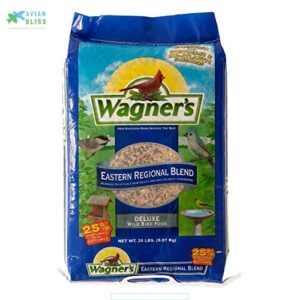
Regional preferences matter when you’re selecting winter bird feeding blends—Wagner’s Eastern Wild Bird Food tailors seed composition specifically for cardinals, blue jays, and chickadees common to your eastern backyard.
This 20-pound bag combines black oil sunflower seeds with white millet and cracked corn, delivering high-energy bird food through multiple feeder placement options: tube, hopper, or platform.
Bird attraction rates improve with regionally formulated mixes, though you’ll need strategic bird feeder placement and squirrel deterrents to optimize winter bird care effectiveness and minimize waste during cold-weather supplementation.
| Best For | Backyard birders in the eastern United States who want to attract a variety of songbirds like cardinals, chickadees, and blue jays with a regionally tailored seed blend. |
|---|---|
| Weight | 5 Pounds |
| Primary Ingredient | Black oil sunflower |
| Brand | Kaytee |
| Item Form | Chunk |
| Country of Origin | USA |
| Feeder Compatibility | Hopper, tray, ground |
| Additional Features |
|
- High-energy mix with black oil sunflower seeds, white millet, and cracked corn designed for eastern bird species
- Works with any feeder type—tube, hopper, or platform—giving you flexibility in setup
- Made in the USA with quality grains that minimize waste and keep birds coming back
- Tends to attract squirrels along with birds, so you’ll need deterrents
- Pricier than some generic bird seed options on the market
- High bird activity means you’ll be refilling feeders more often
9. Pennington Wild Bird Seed Blend
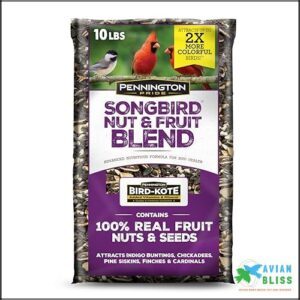
Vitamin-enriched seed blends transform basic backyard feeding into strategic winter bird care—Pennington Wild Bird Seed Blend uses Bird Kote Technology to coat black oil sunflower seeds, peanuts, and dried fruit with added vitamins and minerals.
This nutrient enrichment fills common winter feeding gaps through energy-dense seed composition: 40% oil content in sunflower seeds plus 45% fat from peanuts creates high-energy bird food that aids thermoregulation.
The 10-pound bag attracts cardinals, chickadees, and indigo buntings through balanced product positioning—year-round formulation meets increased winter metabolic demands without specialized seasonal switching.
| Best For | Backyard birders who want to attract colorful songbirds year-round while providing a nutritionally complete diet that supports birds through winter’s higher energy demands. |
|---|---|
| Weight | 10 lb |
| Primary Ingredient | Real fruit and nuts |
| Brand | Pennington |
| Item Form | Seed |
| Country of Origin | USA |
| Feeder Compatibility | Hopper, gazebo, tray |
| Additional Features |
|
- Bird-Kote technology coats seeds with vitamins and minerals that aren’t readily available in natural winter diets, creating a more balanced food source than plain seed mixes.
- High-energy formula combines black oil sunflower seeds (40% oil content) and peanuts (45% fat) with real fruit and nuts to help birds maintain body temperature in cold weather.
- Attracts a wide variety of songbirds including cardinals, chickadees, indigo buntings, and nuthatches, and works in multiple feeder types (hopper, gazebo, tray).
- The 10-lb bag can get expensive for heavy feeders since it doesn’t last long when you have a lot of bird traffic.
- Contains millet, which may attract larger birds like mourning doves and grackles that some people don’t want at their feeders.
- Some users noticed the blend lacks niger (thistle) seed, so you might need a separate feeder if you’re trying to attract finches that prefer thistle.
Safe and Effective Vitamin Supplementation Tips

Getting the dosing right matters just as much as choosing the right supplement—too much can harm your bird, and too little won’t help at all. You’ll need to know how to mix, store, and deliver vitamins properly while watching for signs that something’s off.
Here’s what works in the field, based on years of clinical practice and real-world results.
Mixing and Administering Supplements
Steer clear of adding vitamins to drinking water—they break down fast, usually within 24 hours, and can encourage bacterial overgrowth. Instead, mix powdered supplements into soft foods like mashed vegetables or chopped greens to guarantee accurate dosing and consistent intake.
Follow the manufacturer’s instructions precisely; fat-soluble vitamins such as Vitamin A, Vitamin D3, and Vitamin E accumulate in tissues and pose real toxicity risks when overdosed.
Monitoring Bird Health and Behavior
Once you’ve started supplementation, watch your bird’s droppings, feather quality, and energy levels daily—these three markers will tell you whether the vitamin regimen is working or causing harm.
- Dropping Analysis: Check color, consistency, and volume—watery or discolored droppings signal trouble.
- Feather Condition: Look for breakage, dullness, or abnormal molting patterns.
- Behavioral Changes: Note lethargy, decreased appetite, or unusual vocalizations requiring immediate veterinary attention.
Storing Vitamins for Maximum Potency
Proper storage determines whether your dietary supplements deliver their promised nutrients or turn into expensive dust. Keep bird vitamins in a cool, dry place between 40–70°F—heat and humidity degrade Vitamin A and Vitamin E rapidly.
Seal containers tightly after each use to block oxygen and moisture. Refrigerate liquid supplements once opened, and toss any product showing discoloration or unusual odor immediately.
Consulting an Avian Veterinarian
Before you buy any supplement, book a bird health check with a board-certified avian veterinarian. They’ll evaluate your bird’s current diet, run blood work if deficiencies are suspected, and recommend safe products customized to species and life stage—preventing toxicity from over-supplementation.
- Professional consultation uncovers hidden nutritional gaps that seed-only diets create
- Veterinary guidance adjusts dosing for molt, breeding, or illness
- Supplement advice prevents dangerous vitamin A or calcium overdoses
Frequently Asked Questions (FAQs)
How can you help birds in the winter?
When winter bites, you can’t just throw out seed and call it a day—birds need high-energy bird food, liquid water access, bird shelter, and clean feeders to survive brutal cold.
Which vitamin is good for the winter season?
Vitamin A, D3, and E stand out during cold weather—they support immunity, calcium absorption, and antioxidant defenses.
Combine these with B complex vitamins for energy metabolism, plus calcium for bone strength in your avian nutrition plan.
How to keep your bird warm in winter?
A parrot owner in Michigan noticed her African Grey fluffing constantly after relocating the cage near a window—classic draft stress.
Maintain indoor temperature between 18–22°C, cover cages nightly, and avoid sudden drops exceeding 10°C.
How do I know if my bird has a vitamin deficiency?
Look for dull feathers, flaky skin, nasal discharge, white oral plaques, watery droppings, lethargy, or tremors—signs pointing to vitamin A, E, or D deficiency that demand immediate veterinary assessment and dietary correction.
Can wild birds overdose on vitamin-enriched seed?
Like over-watering a garden, excessive vitamin A or calcium in fortified seed can accumulate in wild birds—toxicity remains rare but possible with prolonged, high-intake exposure, especially affecting fat-soluble vitamins.
Do hummingbirds need vitamins during winter migration?
No—migrating hummingbirds don’t require added vitamins in nectar supplements. They meet avian health needs through insects and natural foraging.
Focus winter bird feeding on clean, plain sugar water for energy rather than fortified feather care or vitamin A additives.
Are vitamin supplements safe for baby birds?
Feathering the nest with extras can backfire—baby bird nutrition demands precision, not guesswork.
Unsupervised supplement risks include vitamin toxicity in neonatal health, particularly vitamin D and E overdose.
Always consult an avian vet before addressing nutritional deficiencies in pet bird health.
How do vitamins affect feather molt timing?
Adequate iodine ensures thyroid hormones trigger scheduled molts, while vitamin A and B-complex deficiencies delay feather replacement.
Vitamin E limits oxidative stress during molt, and vitamin D3 facilitates calcium-dependent feather regeneration, collectively regulating molt timing.
Can vitamins replace fresh food in winter?
Supplements are like a spare tire—they’ll get you through a pinch, but you can’t drive on them forever. Fresh vegetables, pellets, and varied whole foods deliver nutrients vitamins alone can’t replicate.
Conclusion
Winter survival for your backyard flock isn’t a gamble when you stack the deck with targeted nutrition. Bird vitamins for winter close the metabolic gaps that seed alone can’t fill—strengthening immunity, fortifying bones, and safeguarding reproductive health against brutal caloric demands.
Monitor behavior, dose species-specifically, and store supplements properly. Your feathered neighbors don’t just need more food during the cold months—they need smarter fuel that matches their accelerated burn rate.
- https://www.cambridge.org/core/journals/world-s-poultry-science-journal/article/effects-of-retinoids-on-immune-responses-in-birds/AACF251D086F4903AFF856C41E8D2B53
- https://www.frontiersin.org/journals/animal-science/articles/10.3389/fanim.2024.1484262/full
- https://pmc.ncbi.nlm.nih.gov/articles/PMC10221067/
- https://elifesciences.org/articles/15675
- https://pubmed.ncbi.nlm.nih.gov/34142139/