This site is supported by our readers. We may earn a commission, at no cost to you, if you purchase through links.
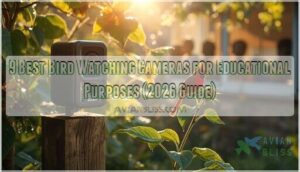
Imagine this scenario: a classroom goes silent as students watch a cardinal crack open a sunflower seed just inches from the lens. Her technique is methodical—three precise taps, then a twist. Someone whispers, “She’s left-footed!” That’s the magic of bird watching cameras for educational purposes.
These aren’t your typical security cameras repurposed for nature. They’re purpose-built learning tools with AI species ID, night vision, and weatherproof housing designed specifically for outdoor observation. Students can track migration patterns, analyze feeding behaviors, and contribute to real citizen science projects—all without disturbing a single feather.
The best part? You don’t need a massive budget or tech degree to get started.
Table Of Contents
- Key Takeaways
- Key Features of Bird Watching Cameras for Education
- Educational Benefits of Bird Watching Cameras
- Top 9 Bird Watching Cameras for Educational Use
- 1. Bird Buddy Smart Bird Feeder Camera
- 2. Netvue Smart Bird Feeder Camera
- 3. Technaxx Full HD Bird Camera
- 4. Soliom Bird Feeder Camera
- 5. Netvue Hummingbird Feeder
- 6. Netvue Birdfy Pro Perch Extension Kit
- 7. Wasserstein Bird Feeder Camera Case
- 8. Wyze Outdoor Security Camera
- 9. Blink Outdoor Wireless Security Camera System
- Integrating Bird Cameras Into Classroom Learning
- Choosing The Right Camera for Educational Needs
- Frequently Asked Questions (FAQs)
- What is the best camera for bird watching?
- What is the best camera for beginners wildlife photography?
- Do bird cameras work during heavy rain or snow?
- How much storage is needed for recorded footage?
- Are there privacy concerns with outdoor bird cameras?
- What ongoing costs come with bird watching cameras?
- Conclusion
Key Takeaways
- Bird-watching cameras transform classrooms into live science labs where students track migration patterns, analyze feeding behaviors, and contribute to real citizen science projects without disturbing wildlife.
- The best educational bird cameras combine AI-powered species identification, weatherproof durability (IP66/IP67 ratings), motion detection with night vision, and reliable Wi-Fi connectivity to capture 24/7 wildlife observations.
- Beyond STEM learning, bird cameras deliver unexpected benefits like mindfulness practice, stress reduction, and emotional regulation when students spend just two to five minutes daily watching feeder activity.
- Budget-friendly options like the Wyze Cam Outdoor ($50-70) or repurposed security cameras with feeder cases deliver solid educational value, while premium models like Bird Buddy ($200+) offer solar power and instant AI identification for hands-free classroom integration.
Key Features of Bird Watching Cameras for Education
Not all bird cameras are built the same, especially when you’re setting them up for students. The right features transform a simple backyard feeder into a year-round wildlife classroom.
For families just getting started, choosing bird cameras designed specifically for kids ensures durable builds and intuitive controls that won’t frustrate young learners.
Let’s look at what makes a bird camera actually worth your investment for educational use.
Motion Detection and Night Vision for Continuous Observation
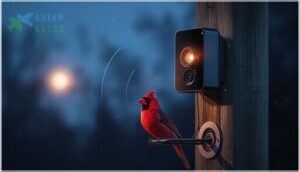
Motion detection and night vision turn your camera into a 24/7 wildlife observation tool. Many bird cameras support motion detection with night vision for effective observation even in low light.
AI bird recognition and object detection let you track who visits the feeder, while alert systems ping you when motion triggers recording.
Video analytics help students study patterns—dawn feeding, twilight roosting—without staring at screens all day. Outdoor cameras with motion tracking capture moments you’d otherwise miss.
Weatherproof and Outdoor-Ready Design
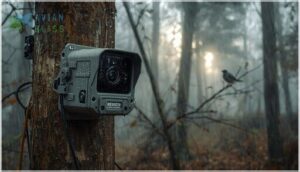
Your outdoor camera needs to survive more than just rain resistance. Look for models with IP66 or IP67 water resistance—they’ll handle dust, downpours, and humidity swings.
Thermal management keeps things running from -20°C to 50°C, while weather sealing protects ports and lenses. Corrosion-resistant outdoor mounting hardware matters too. Durability testing ensures your wildlife conservation tool won’t quit mid-lesson, making it ideal for year-round outdoor education and outdoor surveillance.
AI-Powered Species Identification Tools
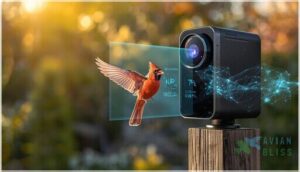
The real breakthrough? AI species identification that works like bird paparazzi with brains. Neural networks trained on thousands of images analyze your visitor in 100–500 milliseconds, slapping on species labels with confidence scores.
Machine learning algorithms handle image recognition and species classification automatically, while smart bird feeder technology flags uncertain guesses for your students to investigate. It’s artificial intelligence meeting real-world ecology—and honestly, it beats flipping through field guides during recess.
For those interested in streamlining the monitoring process, explore automated species identification tools that integrate AI and expert review for efficient species-level analysis.
Wi-Fi Connectivity and Live Streaming Functions
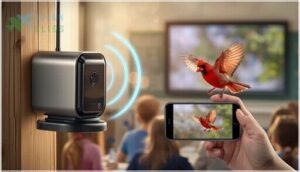
Beyond smart identification, your wildlife camera needs rock-solid Wi-Fi connectivity to bring feathered drama into the classroom.
Modern bird feeder cameras support dual-band networks—2.4 GHz for Wi-Fi range up to 100 meters, 5 GHz when bandwidth management matters.
Live streaming adapts from 1080p down to 720p as signal strength fluctuates, while WPA3 encryption keeps your smart bird feeder secure from prying eyes.
Educational Benefits of Bird Watching Cameras
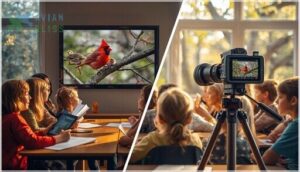
Bird watching cameras turn your classroom into something pretty extraordinary—a live science lab where students witness nature’s drama unfold in real time.
Beyond the cool factor of watching birds up close, these cameras deliver serious educational benefits that touch everything from STEM skills to mental health. Here’s how they transform learning when you bring the wild indoors.
Enhancing STEM and Nature-Based Learning
You turn bird cameras into living STEM projects when students track migration patterns, graph feeding times, and measure beak-to-seed ratios. These outdoor education tools blend nature exploration with environmental education, transforming outdoor classrooms into wildlife education for children hotspots.
Conservation efforts become tangible as birdwatching technology delivers data for inquiry-driven challenges. Students build hypotheses, test predictions, and present findings—educational technology that makes nature conservation click.
Supporting Mindfulness and Student Well-Being
Stillness settles into classrooms when students watch feeder cams for two to five minutes daily. This mindful learning builds student calm through nature therapy, letting kids name emotions and regulate stress while observing cardinals or chickadees.
Outdoor education tools become wellbeing education, blending birdwatching with emotional balance practices. Educational technology meets environmental education resources, turning bird watching equipment into daily moments that lower anxiety and lift mood.
Facilitating Real-Time Observation of Bird Behavior
Live streaming transforms your classroom into a wildlife monitoring station. Students catch territorial displays, feeding hierarchies, and courtship dances the moment they unfold—no waiting for documentary footage.
Real-time observation of avian behavior shows how camera placement near bird habitat reveals patterns you’d miss with binoculars alone. Bird watching becomes immediate, visceral, authentic.
Integrating Citizen Science Projects Into Curriculum
Your bird camera becomes a portal into programs like Project FeederWatch—connecting students to collaborative research spanning continents. They’ll collect real data using standardized protocols, sharpening data literacy while tracking species tallies that inform wildlife conservation education.
This project-based learning approach maps beautifully to curriculum design standards in science and math, turning wildlife observation methods into genuine bird conservation efforts that engage your entire community.
Top 9 Bird Watching Cameras for Educational Use
So you’re ready to turn your classroom or backyard into a live nature lab. The right camera makes all the difference—you’ll want something that actually survives weather, captures crisp footage, and doesn’t require a PhD to set up.
Here are nine cameras that deliver the goods for student learning, from budget-friendly basics to feature-packed powerhouses.
1. Bird Buddy Smart Bird Feeder Camera

Think of Bird Buddy as your classroom’s resident bird paparazzi. It captures 5MP photos and streams 2K video with a 120-degree field of view that won’t miss the action at the feeder. The built-in AI identifies species on the spot—perfect for quick student investigations.
You’ll love the solar-powered design for effortless operation, though its two-cup seed capacity means frequent refills. The app organizes visits by species with timestamps, turning every bird stop into a teachable moment your students can revisit anytime.
| Best For | Teachers who want to bring real-time wildlife observation into their classroom without the hassle of manual monitoring or complicated setup. |
|---|---|
| Resolution | 5MP photos, 2K video |
| Power Source | Solar-powered |
| AI Identification | Yes |
| Night Vision | No |
| Mounting Type | Various options |
| Connectivity | Wi-Fi |
| Additional Features |
|
- AI identifies bird species instantly, creating teachable moments without you needing to be a birding expert
- Solar-powered operation means zero battery swaps or outlet hunting—just mount it and forget it
- App organizes visits by species with timestamps, so students can review and study birds they missed during class
- Two-cup seed capacity requires frequent refills, which might interrupt your teaching flow
- Squirrels can damage the feeder and cables, potentially creating maintenance headaches mid-semester
- Small fill door makes reloading tricky, especially if you’re rushing between classes
2. Netvue Smart Bird Feeder Camera
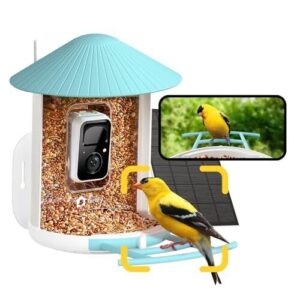
Want clear feather detail without breaking the classroom budget? Netvue’s Birdfy streams 1080p video straight to your phone and identifies species with lifetime-free AI—no subscription trap.
The 135-degree lens captures the full feeder scene plus nearby branches, while night vision keeps observation rolling after sunset. You get three months of cloud storage for reviewing favorite visits.
Just note that the wide-angle view might catch your neighbor’s cat alongside your cardinals, and rain protection could be sturdier for seed preservation.
| Best For | Teachers and families who want affordable bird identification without monthly fees, plus night recording to catch early-morning visitors. |
|---|---|
| Resolution | 1080P |
| Power Source | Solar compatible |
| AI Identification | Yes |
| Night Vision | Yes, 2MP |
| Mounting Type | Outdoor Wi-Fi |
| Connectivity | Wi-Fi |
| Additional Features |
|
- Lifetime-free AI species identification with no subscription costs
- 1080p streaming with night vision captures clear footage in any lighting
- Solar panel compatibility makes it low-maintenance for outdoor setups
- Seeds can spill out easily, attracting squirrels and larger birds
- Limited weatherproofing may lead to spoiled seed during rain
- Wide-angle lens might record unwanted background activity in your yard
3. Technaxx Full HD Bird Camera
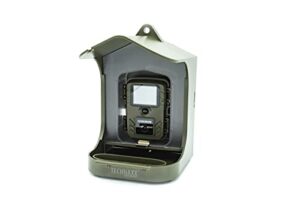
Need macro-level detail on a shoestring? Technaxx TX-165 locks focus from 2 to 6 inches out, letting your students watch beaks crack seeds in slow-mo at 25 fps.
The 100-degree lens and 0.3-second trigger catch quick movements, while IR LEDs record nocturnal visitors without spooking them. Built-in mic picks up calls for behavior analysis. Just remember it runs on AA batteries—keep rechargeables on hand—and seed spillage can gum up the mechanism during wet weeks.
| Best For | Educators and backyard birders who want detailed close-up footage of bird feeding behavior without spending much money. |
|---|---|
| Resolution | 8MP, Full HD |
| Power Source | 4 AA batteries |
| AI Identification | No |
| Night Vision | Yes, IR |
| Mounting Type | Hanging mount |
| Connectivity | Standalone |
| Additional Features |
|
- Captures sharp macro video from 2-6 inches with fast 0.3-second trigger and 100-degree field of view
- Records day and night with IR LEDs and built-in audio for complete behavioral documentation
- Budget-friendly option that works with standard AA batteries and basic mounting hardware
- Requires frequent battery swaps unless you stock rechargeable AAs
- Tight focus range limits versatility compared to adjustable-lens cameras
- Vulnerable to weather damage and mechanical issues from seed debris in wet conditions
4. Soliom Bird Feeder Camera
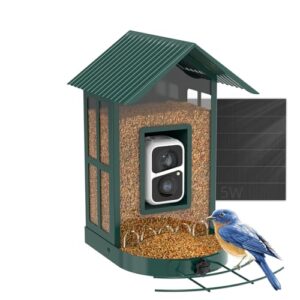
Stepping up from macro detail to big-picture versatility, the Soliom BF08 brings AI into your classroom’s nature lab. Its on-device processor identifies more than 10,000 species and sends instant alerts when birds land, so you won’t miss teachable moments.
The 1080p camera streams live day and night—full-color night vision reveals twilight feeders—while 8× zoom highlights plumage details. The 2.7L metal reservoir holds enough seed for weeks, and the 5W solar panel plus 5000 mAh battery keep it running without constant trips outside.
| Best For | Bird enthusiasts and educators who want hands-free wildlife observation with AI-powered species identification and real-time alerts. |
|---|---|
| Resolution | 2K |
| Power Source | Solar with backup |
| AI Identification | Yes, 10,000+ species |
| Night Vision | No |
| Mounting Type | Pole/wall mount |
| Connectivity | 2.4GHz Wi-Fi |
| Additional Features |
|
- AI recognizes 10,000 bird species and sends instant alerts when birds arrive
- Solar-powered with battery backup means minimal maintenance and no constant recharging
- Metal construction with squirrel-proof design and 2.7L capacity holds weeks of seed
- Small birds can access the storage area when feed runs low
- Only works with 2.4GHz Wi-Fi, not compatible with 5G networks
- Mounting the camera to a pole can be tricky and may need extra hardware
5. Netvue Hummingbird Feeder
When your students are ready for flight literally, the Netvue Hummingbird Feeder turns tiny acrobats into classroom celebrities. Its dual-camera setup captures multi-angle close-ups at 1080p, so you’ll catch iridescent throat flashes and hovering mechanics in real time.
The 18.3 oz reservoir refills easily through the yellow-flower top, while motion alerts ping your phone seconds after a hummer arrives. Built-in Wi-Fi streams to your projector, and the 5000 mAh battery—solar-panel compatible—keeps recording from spring migration through fall farewell.
| Best For | Teachers and bird enthusiasts who want to bring hummingbird watching into the classroom with live video feeds and multi-angle close-ups. |
|---|---|
| Resolution | N/A |
| Power Source | N/A |
| AI Identification | N/A |
| Night Vision | N/A |
| Mounting Type | Hanging mount |
| Connectivity | N/A |
| Additional Features |
|
- Dual 1080p cameras capture stunning close-ups of hummingbirds from multiple angles, perfect for classroom observation
- Motion alerts and Wi-Fi streaming let you project live footage to students the moment a hummingbird arrives
- Solar-compatible 5000 mAh battery keeps it running through entire migration seasons without constant recharging
- Requires Birdfy compatibility for full camera and streaming features to work properly
- Solar charging performance drops on cloudy days, which might interrupt recording sessions
- Needs regular cleaning to prevent nectar leakage and bacterial buildup that could harm birds
6. Netvue Birdfy Pro Perch Extension Kit
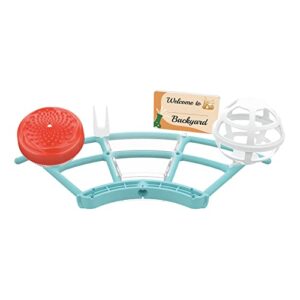
If one feeder feels limiting, the Netvue Birdfy Pro Perch Extension Kit multiplies your teaching opportunities. This wider platform lets multiple birds land at once—perfect for observing social hierarchies and feeding competition.
Snap on the suet ball holder for woodpeckers, the mini hummingbird cup for nectar lovers, or the fruit tray for orioles. Anti-slip grips keep visitors steady in wind, while weather-resistant materials survive year-round exposure. Quick-connect mounting means you’ll spend less time assembling and more time watching jays jostle for prime real estate.
| Best For | Bird enthusiasts who want to attract multiple species and teach kids about different feeding behaviors without managing several separate feeders. |
|---|---|
| Resolution | N/A |
| Power Source | N/A |
| AI Identification | N/A |
| Night Vision | N/A |
| Mounting Type | Easy install |
| Connectivity | N/A |
| Additional Features |
|
- Accommodates different food types (suet, nectar, fruit) so you can attract woodpeckers, hummingbirds, and orioles all in one spot
- Wide perch lets multiple birds land simultaneously, making it easier to observe social interactions and pecking orders
- Quick-connect design and weather-resistant build means less maintenance and more watching time
- Priced higher than basic feeders, which some users feel doesn’t match the value
- Hummingbird nectar attachment may have defects that frustrate birds trying to feed
- Food trays need frequent cleaning and should be removed before rain to prevent mess buildup
7. Wasserstein Bird Feeder Camera Case
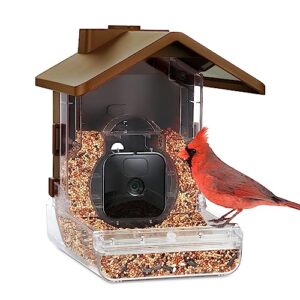
Already own a Wyze camera? The Wasserstein Bird Feeder Camera Case transforms your existing security hardware into a budget-friendly bird station. Its durable weatherproof plastic shell holds 26.4 ounces of seed and protects your camera from rain, snow, and sun damage.
Mount it to a tree or wall using the included strap or metal bracket—no tools, no fuss. Refill the seed tray without pulling the whole unit down. Your students get close-up footage without your school buying dedicated bird tech.
| Best For | Teachers and hobbyists who already own a Wyze, Blink, or Ring camera and want to repurpose it for bird watching without buying a new device. |
|---|---|
| Resolution | 2K HD |
| Power Source | Solar powered |
| AI Identification | Yes, 99%+ species |
| Night Vision | Yes, color |
| Mounting Type | Wireless |
| Connectivity | Wi-Fi |
| Additional Features |
|
- Works with cameras you might already have, saving you money on specialized bird equipment
- Weatherproof design protects your camera from rain and sun while holding a decent amount of seed
- Simple setup with multiple mounting options—strap it to a tree or use the wall bracket
- You’ll need to buy the camera separately if you don’t already own one
- Might attract squirrels and other critters you didn’t plan on feeding
- Some users mentioned the plastic build feels a bit flimsy for long-term outdoor use
8. Wyze Outdoor Security Camera
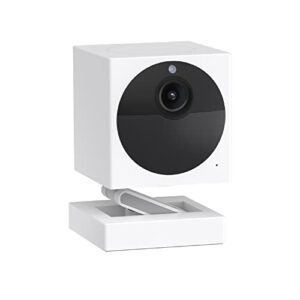
Budget-conscious schools, listen up: the Wyze Cam Outdoor punches way above its price tag. You’ll get 1080p HD video and color night vision that works in low light—perfect for those dawn chorus sessions.
The battery lasts up to six months, and setup takes minutes through their mobile app. Mount it near your classroom window or on a pole by the playground feeder. One base station connects up to four cameras, so you can track multiple feeding zones without breaking your STEM budget.
| Best For | Budget-conscious schools and educators who need reliable outdoor cameras to monitor bird feeders or wildlife activity without spending a fortune. |
|---|---|
| Resolution | N/A |
| Power Source | Solar compatible |
| AI Identification | No |
| Night Vision | No |
| Mounting Type | Strap/wall mount |
| Connectivity | Compatible with cameras |
| Additional Features |
|
- Six-month battery life means less maintenance and more time watching birds instead of swapping batteries
- Color night vision captures early morning or dusk bird activity in vivid detail
- One base station supports up to four cameras, so you can cover multiple feeding stations affordably
- Color night vision needs some ambient light, so pitch-black conditions won’t give you colorful footage
- The internal battery can’t be replaced, meaning you’ll eventually need a new camera when it wears out
- Motion detection can miss quick events or have slight delays, which might mean missing that perfect bird moment
9. Blink Outdoor Wireless Security Camera System
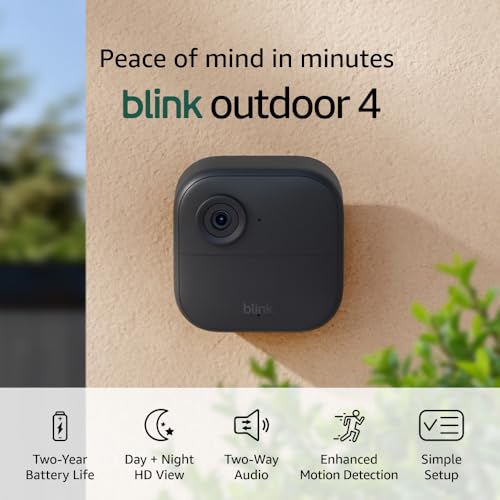
The Blink Outdoor system delivers two years of battery life on AA lithiums—set it and forget it. You’ll appreciate the 1080p night vision when tracking nocturnal visitors like owls or night-feeding songbirds.
Dual-zone motion detection cuts down false alerts from swaying branches. Connect up to three cameras through one Sync Module, and store clips locally via USB or in the cloud.
The magnetic mount lets students reposition cameras easily during field projects. Weather-resistant housing withstands rain, snow, and curious squirrels without complaint.
| Best For | Homeowners and researchers who need long-lasting outdoor monitoring without frequent battery changes, especially for wildlife observation or property security in remote areas. |
|---|---|
| Resolution | 1080P |
| Power Source | Battery powered |
| AI Identification | No |
| Night Vision | Yes, color |
| Mounting Type | Wire-free |
| Connectivity | Wi-Fi |
| Additional Features |
|
- Two-year battery life means minimal maintenance and no hassle with constant recharging or battery swaps
- Dual-zone motion detection reduces annoying false alerts from wind-blown branches or passing cars
- Weather-resistant design handles rain, snow, and temperature swings without protective housing
- Only works with 2.4GHz Wi-Fi, so you can’t use faster 5GHz networks even if available
- Recording clips max out at 60 seconds, which might cut off important events or full sequences
- Heavy motion detection use drains batteries faster than the advertised two-year lifespan
Integrating Bird Cameras Into Classroom Learning

Getting a bird camera set up is one thing. Actually weaving it into your classroom rhythm? That’s where the magic happens.
The best part is you don’t need a PhD in ornithology to turn daily bird visits into powerful learning moments—just a camera, some curiosity, and a few smart strategies that turn those feathered visitors into your most reliable teaching assistants.
Recording and Analyzing Bird Behavior
Camera surveillance transforms your classroom into a behavioral lab. Motion-triggered auto recording captures those blink-and-you’ll-miss-it moments—courtship dances, territorial squabbles, feeding hierarchies.
Your students can then:
- Use AI bird identification to catalog species visiting the feeder
- Map bird behavior patterns across different times and weather
- Apply data analysis tools to spot behavioral insights
Strategic camera placement strategies near nest boxes reveal wildlife observation methods that textbooks can’t touch.
Creating Student Presentations From Camera Footage
Footage editing turns raw clips into powerful visual storytelling. Your students craft 90-second narratives with clear beginnings and endings—think bird paparazzi meets documentary filmmaker.
They’ll add captions, timestamps, and arrows highlighting feeding strategies or territorial displays. This hands-on presentation design builds media literacy while classroom technology integration meets nature photography equipment.
Student engagement soars when they see their bird feeder camera observations become polished educational tools that teach real ecological concepts.
Encouraging Environmental Awareness and Conservation
When your students watch a mother bird feed her chicks, they’re not just observers—they become stewards of the ecosystem right outside your window. Real-time wildlife conservation lessons spark environmental awareness for kids that lasts.
Bird cameras transform students from passive observers into active stewards of the ecosystem outside their window
Here’s how bird cameras build environmental stewardship:
- Students design bird-friendly gardens using native plantings and reduced pesticides, turning nature education into sustainable living practices.
- Camera data informs local conservation decisions like habitat restoration, connecting green education to measurable community impact.
- Teams communicate findings to families, expanding education and wildlife conservation beyond classroom walls.
This hands-on approach transforms environmental education tools into catalysts for bird conservation action.
Choosing The Right Camera for Educational Needs
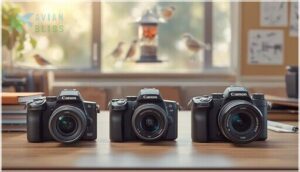
Not all bird cameras are created equal, especially when you’re shopping for a classroom or homeschool setup. The right choice depends on who’s using it, what your budget looks like, and how much tech troubleshooting you’re willing to tackle on a Tuesday morning.
Let’s break down the key factors that’ll help you find your perfect match.
Assessing Camera Features for Different Age Groups
Young bird watchers deserve cameras that match their skill levels. Preschoolers benefit from rugged chassis with large physical buttons, while elementary students need simple single-button starts. Middle schoolers gain value from adjustable zoom for exploring behavior under varying light, and high schoolers prefer manual focus options for detailed species identification.
| Age Group | Essential Features | Student Engagement Boost |
|---|---|---|
| Elementary | Large buttons, quick setup | Reduces frustration during outdoor education resources |
| Middle School | Adjustable zoom, basic exposure controls | Interactive tools support exploration |
| High School | Manual focus, higher visual clarity | Enhanced bird species identification for integrating technology in education |
Age-based settings and camera durability guarantee bird watching technology fits educational classrooms at every developmental stage.
Comparing Price, Durability, and Connectivity
Budget matters, but so does Device Longevity. Smart Bird Feeder models starting around $150 balance Cost Analysis with durability—IP66 housings withstand years of weather.
Network Options like Wi-Fi or cellular keep Bird Feeder Cameras streaming during lesson time, while Solar Power Efficiency extends field use. Compare Hardware Comparison specs: higher-priced Outdoor Camera Systems often include cloud storage and stronger warranties for Bird Watching Technology that lasts.
Evaluating Ease of Setup and Maintenance
Once you’ve compared price and connectivity, Setup Challenges become your next hurdle. Smart Bird Feeder units usually need under ten minutes—quick start User Manuals with visuals guide Auto Recording setup.
Solar Powered options reduce Maintenance Costs, while Weather Resistance ensures Hardware Durability outdoors. Check if manufacturers offer Technical Support; strong warranties mean your Bird Feeder Camera survives years of classroom use.
Frequently Asked Questions (FAQs)
What is the best camera for bird watching?
There’s no one-size-fits-all answer—it depends on your classroom goals.
For classroom birdwatching, smart bird feeder cameras with 4K resolution and image stabilization deliver stunning wildlife photography without disturbing natural bird habitat behaviors.
What is the best camera for beginners wildlife photography?
The Canon EOS R7 stands out for newcomers, pairing fast autofocus with reliable animal eye tracking.
Its 5 MP sensor delivers sharp images while keeping files manageable—perfect for learning photography basics without overwhelming your workflow.
Do bird cameras work during heavy rain or snow?
Yes, weatherproof bird camera feeders handle storms beautifully—most outdoor surveillance systems with IP66 ratings laugh off rain and snow down to minus twenty Celsius, maintaining clear visibility when storm performance matters most.
How much storage is needed for recorded footage?
Storage capacity depends on resolution and recording mode. A 1080p 2K HD camera needs roughly 5–0 TB monthly with continuous recording.
While 4K video can demand 15–25 TB using similar footage retention schedules.
Are there privacy concerns with outdoor bird cameras?
Outdoor surveillance systems can feel like opening Pandora’s box—your bird camera feeders might capture neighbors’ yards or conversations.
Check privacy laws, adjust camera placement carefully, get consent forms when needed, and strengthen data protection with secure passwords.
What ongoing costs come with bird watching cameras?
Beyond the initial purchase, you’ll face subscription rates for AI features, cloud fees for video storage, battery costs or solar power upkeep, data plans if using cellular, and maintenance expenses for weatherproof hardware.
Conclusion
Here’s the truth: the best classroom lessons often happen when you’re not even in the room. Those bird watching cameras for educational purposes keep teaching long after the bell rings—tracking nocturnal visitors, capturing courtship dances, documenting nest construction.
Your students won’t just learn about nature; they’ll witness it unfolding in real time. Pick a camera that matches your budget and curriculum goals. Then step back and let curiosity do the heavy lifting.
- https://nestwatch.org/learn/all-about-birdhouses/installing-a-nest-box-camera/
- https://www.birdfy.com/pages/birdfy-and-school
- https://birdcamslab.allaboutbirds.org/about-bird-cams-lab/
- https://feederwatch.org/educational-and-homeschool-resources/donation-support-feederwatch-classroom/
- https://extension.umd.edu/resource/beginners-guide-birding-citizen-science-wb-2022-0643