This site is supported by our readers. We may earn a commission, at no cost to you, if you purchase through links.
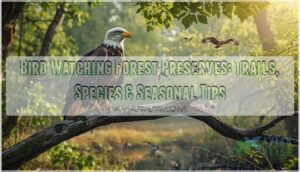
A Bald Eagle‘s talons grip a bare branch above Glacier Pools Preserve while 200 species shuffle through the canopy around it—raptors overhead, warblers darting branch to branch, waterfowl dotting the wetlands below.
Bird watching forest preserves pack this kind of biodiversity into protected corridors where migration routes intersect with resident populations.
Spring brings passerine waves surging through in May; fall stretches the show across August through October as cooling fronts trigger southbound flights. You don’t need exotic destinations when North American preserves concentrate songbirds, shorebirds, and raptors in accessible habitats.
The right trail, decent optics, and basic knowledge of seasonal patterns put you in position to log rare sightings and common species alike.
Table Of Contents
- Key Takeaways
- Top Forest Preserves for Bird Watching
- Best Trails for Bird Watching
- Bird Species Commonly Seen in Forest Preserves
- Seasonal Bird Migration in Forest Preserves
- Essential Tips for Bird Watching in Forest Preserves
- Frequently Asked Questions (FAQs)
- What is a bird preserve?
- What are the 5 S’s of birding?
- What is the best month for bird watching?
- What colors not to wear when birding?
- How do you attract birds in the forest?
- What permits are required for forest preserve access?
- Are dogs allowed during birding activities?
- What are the best seasonal migration timing tips?
- How do weather conditions affect bird visibility?
- What safety precautions should birders take in forests?
- Conclusion
Key Takeaways
- Pennsylvania’s forest preserves concentrate over 200 bird species along migration corridors, with peak viewing windows in May for spring passerines and August through October for fall migrations—eliminating the need for exotic destinations.
- Five preserves deliver consistent biodiversity: Rider Park (120+ species in mixed woodlands), Glacier Pools (200 species across 420 acres of wetlands), Lime Bluff (warbler migrations April-June), Worlds End (780 acres with winter Rosy Finch), and Montour Preserve (300-acre riparian sanctuary with spring waterfowl).
- Success depends on timing and habitat awareness—dawn yields highest counts along forest edges and wetland boardwalks, while understanding seasonal patterns and migration triggers puts you in position for rare sightings alongside common residents.
- Responsible birding requires basic ethics: maintain distance from nests, stay on marked trails, skip playback calls that stress breeding birds, and support conservation through citizen science rather than sharing exact nest locations.
Top Forest Preserves for Bird Watching
You don’t need to wander far to find exceptional birding spots in Pennsylvania’s forest preserves. Each location offers something different—whether you’re after deep woods warblers, soaring raptors, or wetland specialists.
Look for the cheerful Carolina Chickadee year-round in mixed woodlands and wooded suburbs across the region.
Here are five preserves where the habitat diversity and bird counts consistently deliver.
Rider Park
Rider Park hosts meadows and mixed woodlands that attract over 120 bird species during migration season. You’ll find deep forest habitat, breathtaking vistas, and forest trails perfect for wildlife viewing.
Dawn birding yields the highest bird counts along hiking trails threading through oak stands and wetland edges. The preserve offers outdoor recreation opportunities and regular park events focused on nature education and bird watching for all experience levels.
Understanding forest structure and composition is key to recognizing why these preserves support such rich birdlife.
Glacier Pools Preserve
Glacier Pools Preserve spans 420 acres of conifer forest and freshwater wetlands supporting up to 200 bird species. Pool edge habitats and wetland conservation efforts create ideal conditions for wildlife management and avian species identification.
You’ll spot Black-crowned Night Heron and Belted Kingfisher near the pools during migration. Accessible boardwalks shelter you in any weather while experiencing bird species diversity across forest ecosystems.
Seasonal counts monitor these nature preserves’ wildlife conservation efforts each autumn. Birding enthusiasts can discover highlights from the best national parks for bird watching to compare species diversity and habitats nationwide.
Lime Bluff Recreation Area
Lime Bluff Recreation Area covers 320 acres of mixed hardwood forest with steep bluff overlooks offering panoramic lake views. This habitat diversity fosters both resident species and transient neotropical migrants, especially during April through June warbler migrations along forest edge paths.
Standing dead trees provide nesting cavities for woodpeckers and owls. Park accessibility features make these birding locations ideal for outdoor recreation. Sunrise yields the highest bird counts on open overlooks.
Worlds End State Park
Worlds End State Park spans 780 acres of rugged Pennsylvania terrain with river corridors that attract warblers, thrushes, and kinglets during migration. You’ll find forest habitats ranging from young regrowth to mature stands—perfect for hiking and birdwatching.
Winter brings Rosy Finch sightings at higher elevations. Wildlife conservation efforts support this diversity. Guided nature walks run weekends during peak migration.
- 780 acres of diverse park geography
- River corridors attract migrating warblers
- Rosy Finch migration site in winter
- Forest age variety from regrowth to mature
- Weekend guided walks during migration peaks
Montour Preserve
Montoursville’s 300-acre riparian sanctuary combines deciduous forest habitat with a large reservoir that draws waterfowl during spring migration windows. You’ll spot Carolina Chickadees and Tufted Titmice along accessible boardwalks and observation decks.
After spring waterfowl depart, watch for ruffed grouse foraging along the forest edges where they switch between buds, berries, and insects.
Shorebirds appear along reservoir edges when spring crayfish blooms create heron feeding opportunities.
| Feature | Details |
|---|---|
| Size | 300 acres forest and reservoir |
| Nesting Species | Carolina Chickadee, Tufted Titmouse |
| Migration Window | Spring shorebird sightings |
| Access | Boardwalks, observation decks |
Best Trails for Bird Watching
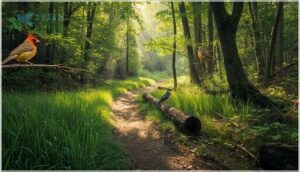
The right trail can make or break your birding experience. You want paths that wind through varied habitat—wetlands, forest edges, open meadows—where birds actually congregate and feed.
Here are four trails in Lycoming and Clinton Counties that consistently deliver diverse species and memorable sightings.
Susquehanna River Walk and Timber Trail
You’ll find some of the region’s richest birding locations along the Susquehanna River Walk and Timber Trail, a 4.2-mile paved loop linking Market Street and Maynard Street bridges. This accessible route delivers prime wetland wildlife observation and river edge ecology.
The trail offers various attractions, including:
- Waterfowl and songbirds congregate in marshy riverfront habitat during spring and fall migrations.
- Interpretive signs detail timber history alongside outdoor recreation opportunities.
- Wheelchair-friendly trail accessibility ensures everyone can explore these wildlife habitats.
James P. Bressler Heritage Trail
Just off the mainland on Canfield Island, you’ll discover the James P Bressler Heritage Trail, a half-mile loop offering riverfront views and island ecology alongside archaeological insights.
This birding location combines trail history with wetland habitat access. Trail maps guide you through interpretive panels explaining Native American occupations while you watch for waterfowl and riverside songbirds in the Susquehanna’s floodplain environment.
Loyalsock Trail
The Loyalsock Trail stretches 59 rugged miles through north central Pennsylvania, following Loyalsock Creek from Route 87 to Worlds End State Park.
You’ll traverse steep elevation changes and hemlock-shaded valleys where ruffed grouse drum and warblers forage along stream corridors.
Trail difficulty ranges from moderate to challenging, with rock ladders and canyon overlooks rewarding your effort with raptor sightings above forested ridges.
Lycoming County Conservation Learning Trail
The Conservation Learning Trail in Lycoming County loops through oak-maple forest and riparian wetlands where educational signage guides you through habitat restoration zones and bird watching hotspots. This family-friendly preserve promotes environmental education through:
- Interpretive panels with QR-linked audio explaining wildlife conservation
- Species identification signs for songbirds and waterfowl
- Volunteer-led trail maintenance and community engagement events
- Accessible gravel paths with benches for patient observation
Birding locations in Pennsylvania rarely offer this much hands-on learning alongside quality habitat.
Bird Species Commonly Seen in Forest Preserves
Forest preserves in the region host over 200 bird species, from raptors soaring above ridgelines to warblers flitting through understory vegetation.
You’ll encounter different species depending on habitat type, elevation, and seasonal migration patterns. Here’s a breakdown of the most commonly observed birds across four key groups.
Raptors and Birds of Prey

Raptors like Bald Eagles and Osprey patrol these forests with razor-sharp talons and beaks built for the hunt. You’ll spot them soaring on thermals during raptor migration, scanning for prey miles away with eyes that put yours to shame.
Watch for peregrine falcons at McElhattan Bridge or follow migratory bird routes through White Deer Ridge, where wing anatomy and hunting strategies transform into pure aerial power.
Waterfowl and Shorebirds
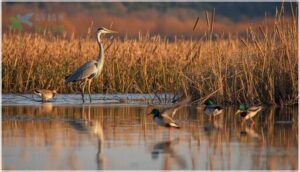
Waterfowl migration brings Mallards and Northern Pintails across migratory bird routes to wetlands and open water in forest preserves, while shorebirds like Spotted Sandpipers and Killdeers pick through mudflats for invertebrates.
Their avian adaptations—webbed feet, waterproof plumage, slender probing bills—showcase wetland conservation in action. Great Blue Herons stalk the marsh edges.
Bird feeding strategies vary from dabbling to filter-feeding, making these wetland bird habitats essential stopovers for coastal birding species.
Songbirds and Sparrows

Songbirds fill forest preserves with trills and chatter, especially during seasonal bird migration peaks when warblers and thrushes move through mid-canopy layers.
Song sparrows display bold chest streaks and stuttering melodies, while their seed-eating cousins form flocks in shrubby edges. Listen for feather identification cues and nesting habits in dense understory—sparrow behavior reveals territorial boundaries through repeated local dialects you’ll recognize after patient avian wildlife observation.
Notable Rare Sightings
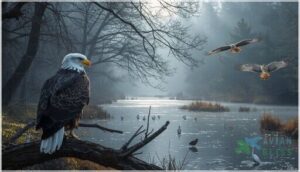
Beyond the usual suspects, rare bird encounters shake up your field notes. White-tailed eagles with 8-foot wingspans perch along river corridors, while cerulean warblers flit briefly through spring canopies—often fewer than 10 per sighting.
Snowy egrets show up at inland wetlands in late winter, their bright yellow lores catching light. Northern goshawks thermal above remote conifers, and red-shouldered hawk juveniles display pale eyes in mixed hardwoods.
Seasonal Bird Migration in Forest Preserves
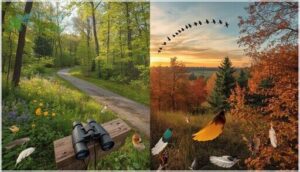
Forest preserves transform throughout the year as different bird species move through on their migratory journeys.
Timing your visits around these seasonal patterns lets you witness species you won’t find during other months.
Understanding when and where migrants appear turns ordinary birding trips into unforgettable wildlife encounters.
Spring and Fall Migration Peaks
Migration patterns across local preserves reveal distinct seasonal bird migration patterns you can track with precision. Spring migration builds from late April through May, with passerine flocks surging during warm, calm days after fronts pass. Fall migration stretches longer, running late August through October as cooling fronts trigger southbound waves.
- Peak seasons shift slightly each year based on atmospheric patterns and regional climate variations
- Stopover dynamics depend on habitat quality, with migrants resting 2 to 7 days to refuel
- Flyway ecology concentrates movements along river valleys and forest edges during spring
- Bird habitats near water bodies attract the highest diversity during migratory birds’ peak windows
Warblers and Neo-Tropical Migrants
You’ll spot over 30 warbler migration species in local forests during peak neo-tropical birds movement, with bright yellow-and-black beauties fueling up on insects before their long haul south.
Forest ecology fosters these migrant and wintering songbirds through dense canopy layers that shelter feeding territories.
Bird conservation efforts protect stopover habitats critical for avian research and seasonal bird migration patterns, ensuring safe passage for these extraordinary travelers.
Waterfowl Migration Patterns
You’ll witness waterfowl migration unfold along major flyways when daylength cues trigger autumn departures and spring returns.
Stopover sites across wetlands let ducks and geese refuel for days or weeks, their migration timing shaped by weather fronts and ice cover.
Waterfowl habitat quality drives bird species identification success, while flyway ecology reveals how seasonal bird migration patterns and avian migration connect breeding grounds to wintering areas.
Essential Tips for Bird Watching in Forest Preserves
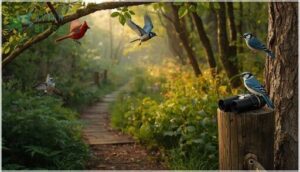
You don’t need fancy gear or years of experience to start spotting birds in forest preserves.
Success comes down to showing up at the right time with basic equipment and knowing what to look and listen for.
Here’s what works when you’re out on the trails.
Choosing The Right Equipment
Pack an 8×42 binocular for sharp magnification in dense forest light. Download a field guide app with offline libraries covering over 10,000 bird species identification tools for instant audio playback.
Carry a lightweight pocket notebook and pencil to jot plumage details. Clean binocular lenses with microfiber cloth between hikes. Store optical accessories in weather-resistant cases to prevent moisture damage during outdoor recreation sessions.
Best Times for Bird Observation
You’ll catch the best action during the dawn chorus, when songbirds flood forest edges with morning feeding calls. Early light reveals warblers and thrushes before late-morning quiet sets in.
Afternoon roost periods bring a second surge of crepuscular activity near water edges, while evening songs peak just before sunset—prime windows for bird watching along seasonal migratory routes and sharpening your bird identification skills across seasonal birding cycles.
Identifying Birds by Sight and Sound
You can nail species identification by pairing visual cues—body shape, bill size, plumage contrast—with auditory clues like frequency range and rhythm. Record calls on your phone, then compare spectral patterns using apps like Merlin Bird ID.
Focus on song structure: count syllables per phrase, note the tempo, and listen for harmonic fingerprints. Combining sound analysis with field observation sharpens your ornithology skills fast.
Responsible and Ethical Birding Practices
You protect what you observe—that’s the heart of responsible birding and wildlife conservation. Keep distance from nests, stay on trails to preserve bird friendly habitats, and skip playback calls that stress breeding birds.
Protect what you observe: keep distance from nests, stay on trails, and skip playback calls that stress breeding birds
Ethical photography means respecting roosts and sharing habitat preservation tips, not exact locations. Support conservation efforts through citizen science and environmental education. Your birding ethics directly shape habitat management for bird populations.
Frequently Asked Questions (FAQs)
What is a bird preserve?
A bird preserve is protected land where habitat conservation safeguards species from hunting and habitat loss.
Wildlife refuges and nature reserves provide wetlands, forests, and grasslands that support breeding, feeding, and shelter.
What are the 5 S’s of birding?
The five S’s of birding—Size Focus, Shape Identification, Shade Patterns, Sound Recognition, and Space Habitat—form your foundation for avian species identification, helping you narrow down wildlife habitats and ecosystems while sharpening observation skills.
What is the best month for bird watching?
May offers peak migration times with warblers and neo-tropical migrants flooding forest trails at dawn.
September’s fall birding brings diverse waterfowl and seasonal species preparing for winter, influenced by weather fronts triggering mass movements.
What colors not to wear when birding?
Skip bright reds, yellows, oranges, and white when birding. Choose neutral shades like olive green, brown, and tan to blend with foliage.
Matte fabrics in earth tones guarantee better wildlife observation and bird camouflage during outdoor recreation.
How do you attract birds in the forest?
Transform your patch of woods into a living bird sanctuary by layering native plants for habitat diversity, adding water sources, and leaving deadwood for shelter—you’ll support bird feeding and boost avian species identification opportunities naturally.
What permits are required for forest preserve access?
Most forest preserves don’t require permits for individual birding or hiking.
Special use permits apply to group sizes, special events, or commercial activities. Application processes vary by region; check fees and accessibility rules beforehand.
Are dogs allowed during birding activities?
Most forest preserves require leashed dogs during birding activities to protect wildlife and nesting areas.
Check posted leash requirements and trail access rules at each location, as pet etiquette promotes conservation and wildlife protection.
What are the best seasonal migration timing tips?
Catch migration patterns during peak seasons when weather influences timing strategies most dramatically.
Show up at bird habitats near dawn in mid-April through May for seasonal bird migration patterns across Pennsylvania and Delaware.
How do weather conditions affect bird visibility?
Weather forecast determines visibility factors: bright sunshine heightens contrast for spotting avian species identification, while overcast skies flatten outlines.
Temperature shifts affect bird behavior and atmospheric effects like fog limit detection distances in bird sanctuaries.
What safety precautions should birders take in forests?
You’ll chase freedom in nature preserves, yet danger lurks everywhere.
Stay on marked trails to avoid ankle injuries, maintain 50 feet from wildlife, wear insect repellent, carry navigation tools, and monitor weather precautions constantly.
Conclusion
You could chase rarities across continents, burn through guidebooks, rack up miles—or you could show up at bird watching forest preserves when migration corridors funnel hundreds of species past a single trailhead. Pack binoculars, learn the seasonal windows, respect nesting zones.
The Bald Eagle perched overhead didn’t need your validation; it just needed protected habitat. You’re the one who benefits when conservation meets accessible trails. Don’t overthink it—go watch birds.