This site is supported by our readers. We may earn a commission, at no cost to you, if you purchase through links.
 Bird watching in local parks turns your neighborhood into a wildlife theater where hundreds of species—from spring warblers to year-round finches—perform daily just minutes from home. Colorado’s parks like Cherry Creek State Park host over 300 bird species across lakes, forests, and grasslands, while accessible trails at Walden Ponds and Boulder’s Flatirons welcome beginners with clear paths and helpful apps.
You’ll need basic binoculars (8×42 magnification works great), a field guide or identification app, and respect for trail etiquette to minimize disturbance.
Beyond the thrill of spotting a Red-winged Blackbird or tracking migration patterns, birdwatching delivers proven mental health benefits and aids local conservation efforts that protect these feathered neighbors for future generations.
Table Of Contents
Key Takeaways
- Local parks like Cherry Creek State Park and Boulder’s trails host over 300 bird species across diverse habitats, making them accessible wildlife theaters just minutes from your neighborhood with basic gear like 8×42 binoculars and field guide apps. – Birdwatching delivers measurable mental health benefits through stress reduction and mindfulness while supporting local economies through ecotourism that creates jobs and generates tax revenue in communities like Boulder County. – Colorado invested nearly $73 million in wildlife conservation for 2025, including $11 million for habitat connectivity through programs that protect 900,000 acres of public land and guide species recovery over the next decade. – Simple conservation actions like joining citizen science projects such as eBird, planting native species in your yard, and practicing trail etiquette directly protect bird habitats and support both local and national environmental preservation efforts.
Best Local Parks and Trails for Bird Watching
Local parks and trails offer some of the best spots for birdwatching, each with its own unique feel and scenery.
The area’s standout locations vary quite a bit in what they offer.
Top-rated Birding Trails in Avon and Boulder County

If you want bird diversity and unforgettable scenery, look right in your backyard. Avon’s Royal Elk to Beaver Lake Trail is a seasonal favorite for spotting warblers and raptors. In Boulder County, Walden Ponds and Flatirons stand out for their bird watching trails, accessible paths, and vibrant community programs: A Denver birdwatching tour offers a chance to see local species.
- Trail Ratings guide your route
- Community Programs foster connection
- Seasonal Birding offers year-round variety
Trail Lengths, Difficulty, and Accessibility
Once you’ve picked a trail that catches your eye, you’ll want to know how far you’ll walk, how tough the terrain is, and whether the path works for everyone in your group.
Difficulty and length matter—so do things like how much you’ll climb, what kind of surface you’re dealing with, and whether the trail’s accessible for different abilities.
Trail reviews and maps (AllTrails.com is a good one) give you the details you need before you lace up your boots.
Trail Maps and Planning Resources

After deciding which trail suits your stride, having the right maps and planning tools handy can make your birdwatching walk feel like a sure thing instead of a guessing game.
Digital resources like trail maps and hiking trail information apps offer Map Accessibility, updates on Seasonal Closures, Permits Required, and trail reviews—plus details on guided tours—so you never miss great bird watching locations.
Wheelchair-accessible Birdwatching Locations
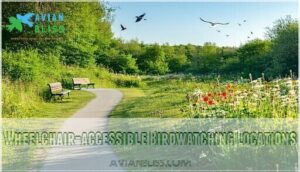
If you’re looking for birdwatching spots that welcome everyone, you’ll be glad to know there are trails and parks designed with easy access in mind. Many city parks now offer Accessible Trail Features, Adaptive Equipment Options, and even Companion Birding Programs.
Inclusive Birding Groups and Sensory Birding Experiences—like those in the Birding Without Barriers program—make discovering local bird species and habitats possible for all.
Essential Gear and Birdwatching Tips
Getting started with birdwatching is easier when you have the right gear and some simple know-how. A few basics will get you ready to spot your first feathered friends.
Recommended Binoculars and Spotting Scopes
Ever squinted at a distant bird and wished you could see every feather as if it were perched right beside you? That’s where binoculars and spotting scopes come in.
Popular birdwatching picks are 8×42 or 10×42 for Magnification Explained and brightness, with lens coatings boosting clarity.
For birding on a budget, compact options and lightweight carrying cases make bird identification easier.
Field Guides and Bird Identification Apps
There’s a certain thrill in flipping open a field guide or tapping an app to finally put a name to that flash of color you just spotted in the trees.
Digital vs. print guides both have strengths—apps offer instant updates and regional variations for bird species, while paper versions remain go-to beginner resources. App accuracy keeps your birding sharp, wherever avian fauna fly.
Birdwatching Etiquette and Wildlife Safety
Before you head out on the trail, it pays to know a few simple ways to respect both the birds and the folks sharing the path with you. Minimize disturbance by keeping quiet, stay on marked trails, and leave no trace.
A few smart habits go a long way when you’re birding on shared trails. Keep noise down, stick to the path, and pack out what you pack in.
Tips for Beginners and Families
Ready to turn your next walk into a mini adventure that the whole family can enjoy? Pick kid-friendly trails, pack simple family-friendly gear, and load up a beginner birding app.
Play birding games to spark curiosity, or try backyard birding if you’re tight on time. Keeping bird identification simple and sharing wildlife observation makes bird watching fun for everyone.
Bird Species and Habitats You’ll Encounter
As you make your way through local parks, you’ll find an exciting mix of birds and habitats waiting around every bend.
Here’s a look at what you can expect to see along your birdwatching journey.
Get ready to spot all kinds of feathered friends as you explore your birdwatching route.
Common and Rare Birds in Colorado Parks

Did you know a single day in Colorado State Parks can offer both familiar sights and exciting Rare Bird Sightings? Between flocks of House Finches and the hopeful search for elusive Common Redpolls, your wildlife observation skills get a workout. These trails showcase real Habitat Diversity and shifting Population Density Trends—all fueling your passion for Species Identification and Conservation Status.
Colorado’s eagle population has been increasing, with over 300 nests across the state.
- Spot 48,000+ House Finches in March
- Watch Red-winged Blackbirds in wetland bird habitats
- Search for rare birds like the Rusty Blackbird
- Experience over 300 bird species at Cherry Creek State Park
- Help track Conservation Status while enjoying bird watching
Seasonal Bird Migration Patterns
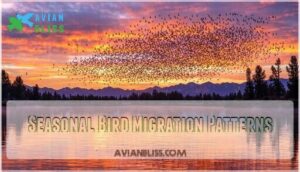
Imagine stepping outside during Migration Timing—suddenly, the sky’s alive with migratory birds tracing ancient routes above Colorado. Nights in peak fall migration bring millions overhead, flying at impressive altitudes and shifting with the weather.
This seasonal rhythm shapes your birdwatching: from observing spikes in Species Diversity to appreciating the Conservation Challenges that keep these bird migration patterns dependable for future generations.
Unique Habitats: Lakes, Forests, and Grasslands

When you follow the rush of migrating birds, you’ll start to notice how each stop—from quiet lakes and shady forests to open grasslands—offers its own cast of feathered visitors. Habitat diversity shapes bird niches and ecosystem balance.
Wetlands attract waterfowl, while forests shelter singers; grasslands favor raptors and ground dwellers. Diverse bird habitats boost both bird species variety and conservation strategies.
Economic and Health Benefits of Bird Watching

Bird watching does more than bring you closer to nature. Here are some ways it can boost your community, well-being, and wallet.
You’ve probably heard bird watching brings you closer to nature. But it also strengthens your community, improves your mental health, and can even save you money.
Birdwatching’s Impact on Local Economies
While you’re scanning the trees for a flash of color, birdwatching quietly transforms local economies into something vibrant.
- A community economic boost as ecotourism fills hotels, shops, and restaurants
- Tourism job creation while guiding visitors along their favorite trails
- Tax revenue impact and equipment sales growth, strengthening small businesses right in Boulder County
Mental and Physical Health Advantages
Beyond the dollars and jobs, birdwatching offers something you can’t measure: it’s surprisingly good for your body and mind. Just thirty minutes of birding can lower stress, boost mindfulness, and spark cognitive benefits.
Combine physical activity and the fresh air of hiking with a walk through healthy bird habitats, and you’ll foster your own microbiome health too.
Community and Social Benefits of Birding
If watching birds brightens your mood, just wait until you see how it brings people together. You’ll find:
- Social Birding Groups that foster shared experiences,
- Community Science projects that spark teamwork,
- Intergenerational Birding outings, perfect for all ages,
- A spirit of birding inclusion at every bird watching destination—because everyone belongs out on the trail.
Conservation Efforts and Protected Green Spaces
Protecting birds starts with taking care of their homes and the wild spaces they need.
Here’s a look at how parks, people, and local action make a difference for birds and nature.
Discover how parks, passionate people, and grassroots efforts all help create a safer world for birds and the wild places they call home.
How Parks Boost Biodiversity and Bird Populations
Did you know that the simple stretch of green space in your local park can act as a lifeline, drawing in birds and helping countless species thrive right next door? Larger park size and habitat connectivity create safe zones, boosting avian diversity and species richness.
These protected areas bolster urban birding and reinforce wildlife conservation efforts for bird species and habitats.
Ongoing Conservation Initiatives in Colorado
Colorado’s putting real money behind its birds. In 2025, the state directed nearly $73 million toward wildlife conservation efforts and environmental protection initiatives, with up to $11 million earmarked specifically for Habitat Connectivity through the Colorado Wildlife Habitat Program.
The 2025 State Wildlife Action Plan guides Species Recovery for vulnerable birds over the next decade, while Collaborative Programs between agencies like Colorado Parks and Wildlife and Great Outdoors Colorado expand habitat preservation across 900,000 acres of public land management areas, supporting environmental protection and Funding Allocation for at-risk species.
How to Support Local and National Bird Habitats
You don’t need a degree in ornithology to make a real difference for the birds in your backyard and beyond. Simple actions add up fast:
- Join Citizen Science projects like eBird to track species and inform Habitat Restoration efforts
- Fund Conservation initiatives through donations to wildlife refuges and nature reserves managing public land
- Practice Sustainable Practices at home—native plants boost habitat preservation while Policy Advocacy protects environmental protection nationwide
Every step counts.
Frequently Asked Questions (FAQs)
What time of day is best for bird watching?
Ever wonder why early risers spot the most birds? Morning brings peak singing hours as birds claim territory and search for food. Diurnal raptors hunt actively at dawn, while evening sees flocks returning to roosting sites.
Weather impacts timing too—overcast days extend activity periods at prime birdwatching locations across diverse bird habitats.
How do weather conditions affect bird activity?
Weather shapes bird activity more than most people realize. Temperature effects and wind impact feeding patterns, while precipitation influence drives birds to shelter.
Weather plays a bigger role in bird behavior than you’d think. When it gets too hot or cold, or when the wind picks up, birds change how they hunt for food—and heavy rain or snow sends them scrambling for cover.
Can I bring my dog to bird watching areas?
Most parks allow leashed dogs, but Leash Laws Enforced matter because Dog Impact Risks include scaring birds from their habitats.
Wildlife refuges often restrict pets entirely to protect Bird habitats and minimize Bird Disturbance Factors.
Responsible Pet Ownership means checking rules before you go.
What should I wear for bird watching outings?
Most birders agree that layering strategies are the best approach for comfort.
Wear neutral or camouflage clothing, comfortable footwear for hiking and outdoor activities, and sun protection like hats or sunscreen for birdwatching destinations.
How do I photograph birds without scaring them?
Mastering stealth takes patience and the right tools. Use telephoto lenses to keep your distance, wear camouflage gear to blend in, and switch to silent settings on your camera.
Remote shutters prevent startling movements during bird identification at any wildlife refuge.
Conclusion
So maybe you won’t become the next Audubon overnight—shocking, right?—but bird watching in local parks offers something better: real encounters with nature that don’t require a PhD or expensive gear.
Whether you’re tracking warblers at Cherry Creek or enjoying grassland species near Boulder, these trails deliver accessible adventure and genuine mental health perks.
Grab those binoculars, respect the wildlife, and discover how your neighborhood transforms into a living field guide worth exploring every season.
- https://www.allaboutbirds.org/news/a-third-of-american-adults-are-birdwatchers-according-to-nationwide-survey/
- https://www.grandviewresearch.com/industry-analysis/birdwatching-tourism-market-report
- https://www.fs.usda.gov/psw/publications/4902/psw_2004_4902_071_chi.pdf
- https://nabci-us.org/wp-content/uploads/2020/01/NABCI-linking-bird-conservation-to-human-benefits-3.pdf
- https://www.fxva.com/explore/outdoors/birding-bird-watching/