This site is supported by our readers. We may earn a commission, at no cost to you, if you purchase through links.
Something shifts the first time you notice a bird doing something unexpected—a crow using a stick as a tool, a mockingbird cycling through a dozen stolen songs, a heron standing so still it looks like a lawn ornament someone forgot to bring inside. You want to remember it. You pull out your phone, type three words, and a week later have no idea what you were even talking about.
A dedicated bird watching journal fixes that. It turns scattered moments into a real record—something you can flip back through and actually learn from. The right journal makes the whole hobby click faster than you’d expect.
Table Of Contents
- Key Takeaways
- How to Start a Bird Watching Journal
- What to Record in Your Bird Watching Journal
- Key Features to Look for in Birding Journals
- Top 9 Bird Watching Journals for Beginners
- Tips for Making The Most of Your Journal
- Frequently Asked Questions (FAQs)
- What are the 5 S’s of bird watching?
- What do people put in a bird watching journal?
- Can bird journaling help with conservation efforts?
- What sketching tools work best for field journaling?
- How do I journal birds in different seasons?
- Are there bird journaling communities or clubs?
- How do I record rare or unusual bird sightings?
- Conclusion
Key Takeaways
- A dedicated bird watching journal transforms forgettable three-word phone notes into a real record you can actually learn from over time.
- You don’t need fancy gear to start — just a notebook, a pair of binoculars, and a birding app will get you through your first session without the chaos.
- Logging behavior (not just species names) is where bird watching gets genuinely interesting, since what a bird does tells you more than what it looks like.
- Sharing your observations through apps like eBird or local Audubon chapters turns your personal hobby into real citizen science data that researchers actually use.
How to Start a Bird Watching Journal
Starting a bird watching journal doesn’t require fancy gear or expert knowledge — just curiosity and a willingness to pay attention. The real question is figuring out what setup actually works for you.
If you’re still figuring out where to begin, bird watching tips for local parks can help you find your footing without overcomplicating things.
Here’s what you need to get going.
Choosing Between Paper and Digital Journals
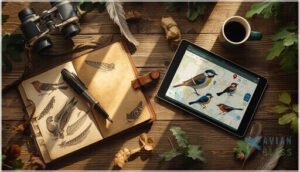
Before you write a single word, you’ve got one big choice to make: old-school paper or go full digital. Both work — it really comes down to your vibe. Here’s the honest Journal Comparison breakdown:
- Paper Quality wins for that raw, in-the-moment nature journaling feel
- Digital birding tools offer Storage Options, easy search, and GPS tagging
- User Interface on apps beats soggy pages in the rain
Pick what you’ll actually use.
Essential Supplies for Beginners
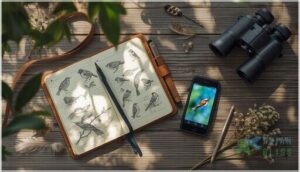
Once you’ve picked your journal style, it’s time to grab a few simple things that’ll make your first birding session way less chaotic. Your bird watching journal or notebook, a decent pair of binoculars (your optical tools, basically), and a birding app on your phone — that’s your starter pack.
Compact journal sizes like A5 travel well. Simple field gear, zero stress.
Setting Up Your First Entry

Now that your gear’s ready, cracking open that journal for the first time is honestly the best part. Keep your initial setup simple — date, location, weather, and one solid observation. That’s your entry template right there. No overthinking.
Bird journaling isn’t about flawlessness; it’s about showing up and noticing stuff. Good record keeping starts with one honest line. You’ve got this.
Establishing a Journaling Routine

Consistency is where the magic happens — showing up regularly, even for just ten minutes, turns scattered sightings into a story you can actually learn from. Pick a time that already fits your day — morning coffee, lunch breaks, whatever.
Ten minutes of regular birding, woven into your day, turns scattered sightings into a story worth reading
Daily entries don’t have to be long. Even three lines count. Your bird watching journal grows with you, and habit formation beats motivation every single time.
What to Record in Your Bird Watching Journal

So you’ve got your journal — now what actually goes in it? The good news is there’s no wrong answer, but a few key things will make your entries way more useful over time.
Here’s what to start tracking from day one.
Bird Species and Identification Details
Start with the name — even a best guess counts. Jot down bird species, note the feather patterns, beak shapes, and any standout bird plumage like wing bars or eye rings. These are your field marks, the little details that make species identification click.
Species classification gets easier the more you write it down. Bird Identification Guides can help you fill in the gaps later.
Learning to observe overall size and shape makes accurate identification much easier in the field.
Location, Date, and Weather Conditions
Where you were, when you went, and what the sky was doing that day — these details seem small until you’re looking back at your notes six months later trying to figure out why the warblers showed up early. Solid Location Mapping and Weather Tracking turn your bird watching journal into a real seasonal record. Log these every time:
- Exact spot and habitat notes
- Date and time of day
- Temperature, wind, and cloud cover
- Any climate observations worth flagging
Seasonal Changes make sense fast once you start connecting the dots.
Bird Behavior and Notable Observations
Behavior is where bird watching gets real. What a bird does tells you more than what it looks like. Log it all — the double-scratch an Eastern Towhee does in leaf litter, the aerial swoops of Barn Swallows, the way flocks suddenly crowd together when something’s watching.
| Behavior | What It Means | Worth Logging? |
|---|---|---|
| Sally gleaning | Hunting insects mid-air | Yes |
| Alarm calls | Predator nearby | Absolutely |
| Courtship Displays | Breeding season activity | Always |
| Flocking shifts | Shared threat awareness | Yes |
Keeping track of observation and recording tips can make your bird watching journal even more insightful.
Sketches, Photos, and Sound Notes
You don’t have to be Picasso to sketch a bird — a quick squiggle of its shape, a note about that flash of red on its wing, or even a voice memo of its call can tell you more than a paragraph of words ever could. Visual recordings like rough Bird Portraits or snapped Nature Photography shots work great alongside Audio Notes.
Honestly, these are some of the best nature journaling tips for keeping your birding journal alive and real.
Key Features to Look for in Birding Journals

Not all journals are built the same, and that actually matters a lot once you’re out in the field. The right one can make your birding sessions smoother, while the wrong one falls apart in a light drizzle.
Here’s what to look for before you pick yours.
Size and Portability for Field Use
Nobody wants to lug around a bulky journal when you’re scrambling through brush to catch a glimpse of a rare warbler. That’s why size and portability matter more than you’d think. The best birding journal fits your bag without the drama. Look for:
- Compact Designs around A5 or 5.5×8.3 inches
- Spiral binding for flat, easy writing in the field
- Lightweight Travel Formats that won’t slow you down
- Field Portability-friendly shapes for jacket pockets or daypacks
Weatherproof and Durable Materials
Rain doesn’t care about your notes — but a weatherproof journal does. When you’re out in the field, things get real fast. Mud, drizzle, a surprise downpour.
That’s why cover quality and binding strength matter. Look for durable notebook materials that can take a hit. Good page protection keeps your outdoor recording tools intact so your birding journal survives whatever nature throws at it.
Page Layout and Organization
A good layout is what turns a messy pile of notes into something you’ll actually want to flip back through. The right journal structure makes all the difference. Look for notebooks with page templates that guide your note organization without boxing you in.
Here’s what a solid layout design does for you:
- Puts content prioritization on autopilot — no more forgetting what to record
- Makes your birding journal easy to scan at a glance
- Keeps the whole notebook feeling intentional, not chaotic
Extra Features: Checklists and Life Lists
Layouts keep things tidy, but checklists and life lists are where the fun really kicks in. Think of Checklist Design as your personal scoreboard — built-in Bird Species Logging that turns every outing into progress.
The Sibley Birders Life List logs 923 species for serious Sightings Organization. Life List Tracking and Journal Customization keep your birding journal feeling alive, not like homework.
Top 9 Bird Watching Journals for Beginners
There are a lot of journals out there, and honestly, not all of them are worth your time. So here’s a list of nine solid picks that work well for beginners — different styles, different vibes, something for everyone. Take a look and see which one feels right for you.
1. Birding Journal Notebook
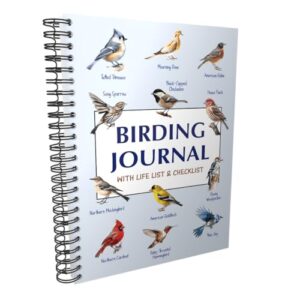
This spiral-bound A5 notebook keeps things simple in the best way. At 8.3 x 5.8 inches, it fits easily in a pack without eating up space.
You get 120 entries for your life list, 120 pages for notes and sketches, and a checklist section with columns for location, year, and season.
The cross-referencing system between all three sections is genuinely smart. No pre-filled species names either, so it works wherever you’re birding in the world.
| Best For | Birders of any skill level who want a flexible, no-fluff journal they can use anywhere in the world. |
|---|---|
| Binding Type | Spiral |
| Page Count | 133 |
| Size | 8.3×5.8″ |
| Skill Level | Beginner & Advanced |
| Gift Suitable | Yes |
| Note Space | Yes |
| Additional Features |
|
- Three sections (life list, notes, checklist) that cross-reference each other — actually useful once you get the hang of it
- No pre-filled species names, so it works whether you’re in your backyard or halfway across the world
- Compact A5 size lays flat and fits in a bag without any fuss
- At $14.99, some birders feel it’s a little steep for what’s essentially a blank notebook
- Paper quality is nothing special — don’t expect premium feel under your pen
- Not a field guide, so you’ll need a separate app or book to actually ID what you’re seeing
2. Rite In The Rain Weatherproof Notebook
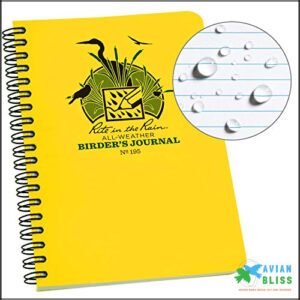
Weather ruins notebooks. Not this one. The Rite in the Rain Weatherproof Notebook (Model 195) is built for exactly the kind of chaos birdwatching throws at you — rain, mud, sweaty hands, accidental puddles.
Its patented wood-based paper shrugs off moisture without smearing your notes. At 7 x 4.88 inches and 3.2 ounces, it barely weighs anything. Wire-O binding keeps pages flat and aligned.
Just stick to pencils or all-weather pens — regular ballpoints won’t play nice when things get wet.
| Best For | Outdoor enthusiasts — hikers, birders, and anglers — who need a reliable notebook that holds up in wet, messy conditions. |
|---|---|
| Binding Type | Wire-O |
| Page Count | 64 |
| Size | 7×4.88″ |
| Skill Level | All levels |
| Gift Suitable | Yes |
| Note Space | Yes |
| Additional Features |
|
- Paper shrugs off rain, sweat, mud, and grease without smearing
- Lightweight at 3.2 oz with Wire-O binding that keeps pages flat
- Eco-friendly, recyclable wood-based paper
- Only 32 sheets per notebook, so heavy users will go through them fast
- Pricier than your average notebook
- Regular ballpoints won’t work on wet paper — you’ll need a pencil or all-weather pen
3. Bird Watching Journal Notebook
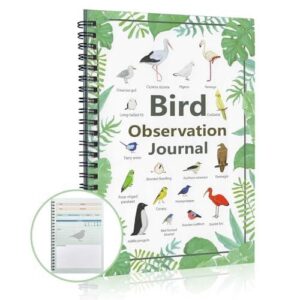
This one’s a solid all-rounder. The Bird Watching Journal Notebook packs 126 full-color pages into an A5 size — small enough to carry anywhere, sturdy enough to actually use.
It’s spiral-bound so it lays flat while you’re scribbling notes mid-sighting. You get dedicated spaces for species, behavior, habitat, weather, and sketches.
One heads-up: the writing lines run small, so if you’ve got big handwriting, you’ll feel that. Still a great pick for beginners who want structure without the overwhelm.
| Best For | Birdwatching enthusiasts, nature lovers, biology students, and researchers — beginners and seasoned birders alike. |
|---|---|
| Binding Type | Spiral |
| Page Count | 126 |
| Size | 8.3×5.8″ |
| Skill Level | Beginner & Advanced |
| Gift Suitable | Yes |
| Note Space | Yes |
| Additional Features |
|
- Spiral-bound design lays flat, making it easy to write on the go
- Dedicated sections for species, behavior, habitat, weather, and sketches keep observations organized
- Compact A5 size fits in a bag or pocket without any hassle
- Writing lines are quite small, which can feel cramped if you have larger handwriting
- Soft cover needs a bit of extra care to avoid bending or damage
- Some copies have been reported to contain typos, including a misspelling on the front cover
4. BitKan Funny Bird Spiral Notebook
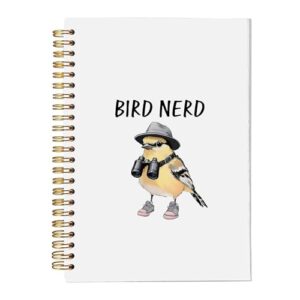
If personality matters to you, the BitKan Funny Bird Spiral Notebook earns its spot. The deep green cover is stamped with wild bird doodles — it looks like something you’d actually want to carry around.
At 5.5 x 8.3 inches and just 10.5 ounces, it won’t weigh you down on a long trail. The 90 gsm paper accommodates pens and markers without bleed-through, and the spiral binding folds flat for easy field writing.
Solid gift material, too.
| Best For | Anyone who wants a compact, personality-packed notebook for journaling, sketching, or daily notes — whether at work, in class, or on the go. |
|---|---|
| Binding Type | Hardcover |
| Page Count | Unspecified |
| Size | 8.3×5.5″ |
| Skill Level | All levels |
| Gift Suitable | Yes |
| Note Space | Yes |
| Additional Features |
|
- Lightweight and portable at just 10.5 ounces — easy to toss in a bag
- Works for just about anything: journaling, brainstorming, drawing, daily lists
- Fun cover design makes it a great gift for writers, students, or creative types
- Some users have reported quality concerns
- Only comes in one color (Yellowbird) — not much variety
- Fixed size may not work for everyone who prefers something bigger or smaller
5. Sibley Birder Life List Diary
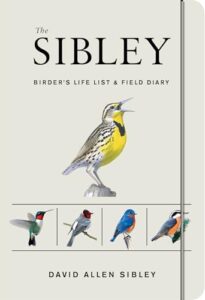
For serious listers, the Sibley Birder Life List Diary is basically the benchmark. It covers 923 species across the U.S. and Canada, organized into three sections — detailed species entries, a quick checklist, and a blank life list you fill in as you go.
The spiral binding lays flat in the field, and the cover is waterproof. It’s compact at 5.2 x 7.7 inches and pairs perfectly with Sibley’s field guides. Around $22, it’s worth every penny.
| Best For | Birders of any experience level who want a dedicated place to track sightings, build a life list, and jot down notes about each bird they spot. |
|---|---|
| Binding Type | Softcover |
| Page Count | Unspecified |
| Size | Unspecified |
| Skill Level | Beginner & Advanced |
| Gift Suitable | Yes |
| Note Space | Yes |
| Additional Features |
|
- Covers 923 species across the U.S. and Canada, organized in a way that mirrors Sibley’s field guides — so it feels familiar right away
- Three separate sections (species entries, checklist, and life list) mean you can track sightings in whatever way works best for you
- Blank pages give you room to add new species or personal notes as you go
- No Hawaii birds included, which is a real gap for anyone birding there
- Some users have flagged errors in the index and print that’s tough to read — a bit frustrating when you’re trying to look something up quickly
- Cross-referencing between sections takes extra effort since there are no pre-printed page number fields or direct links between the three parts
6. Fitie Bird Spiral Notebook
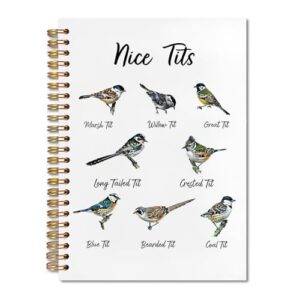
The Fitie Bird Spiral Notebook keeps things simple — and sometimes that’s exactly what you need. At 5.5 x 8.3 inches, it slips easily into a bag without the bulk.
The spiral binding lays flat while you’re writing or sketching, and the smooth pages make note-taking feel easy. It’s not the fanciest paper in the world, but it gets the job done.
With a stylish cover, practical size, and lightweight at 10.2 ounces, it’s a solid everyday companion for casual birders who just want to show up and start recording.
| Best For | Students, professionals, and creatives who want a lightweight, no-fuss notebook for journaling, planning, or sketching on the go. |
|---|---|
| Binding Type | Spiral |
| Page Count | 148 |
| Size | 8.3×5.8″ |
| Skill Level | Beginner & Advanced |
| Gift Suitable | Yes |
| Note Space | Yes |
| Additional Features |
|
- Compact 5.5 x 8.3 size slides right into a bag without taking up much space
- Spiral binding lays flat, making it easy to write or sketch without fighting the pages
- Eye-catching cover design makes it feel a little more personal than a plain notebook
- Paper is decent but nothing special — not ideal if you use markers or heavier pens
- The back cover can catch on the spirals when you open it all the way
- At least one buyer noticed a typo on the cover, which is a small but annoying quality control slip
7. Bird Watching Guided Journal
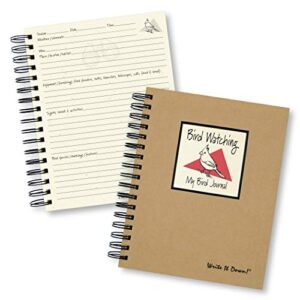
Think of this journal as having a built-in mentor. The Bird Watching Guided Journal ($24.95) walks you through each entry with prompts for time, place, weather, species, and behavior — so you’re never staring at a blank page wondering what to write.
It’s got 120 pages of acid-free, recycled paper, a sturdy kraft hardcover, and even space for sketches. Printed in the USA with soy-based ink. A solid pick if you’re just getting started and want some structure guiding the way.
| Best For | Bird watchers of all levels who want a structured way to log sightings and build a lasting record of their time in the field. |
|---|---|
| Binding Type | Spiral |
| Page Count | Unspecified |
| Size | 8.3×5.5″ |
| Skill Level | All levels |
| Gift Suitable | Yes |
| Note Space | Yes |
| Additional Features |
|
- Guided prompts take the guesswork out of what to record — great if you’re just starting out
- Eco-friendly materials (recycled paper, soy-based ink) you can feel good about using
- Dedicated space for sketches or photos makes each entry feel complete
- The structured format might feel limiting if you like to journal freely
- At 1.28 lbs and over 11 inches wide, it’s better suited for home or car than a long hike
- $24.95 is a bit steep compared to a basic blank journal
8. BitKan Hummingbird Spiral Notebook
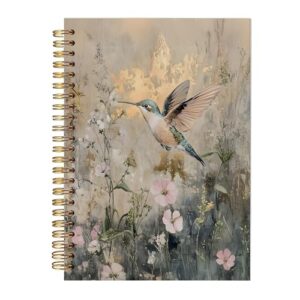
If you want something that works as hard in the field as it does on a gift table, the BitKan Hummingbird Spiral Notebook delivers both. It’s A5-sized (8.3 × 5.5 inches), light at under 10 oz, and the metal spiral binding lays completely flat — clutch when you’re juggling binoculars and a pen.
The 90gsm ruled pages handle most pens without bleed-through. Cute hummingbird cover, fingerprint-resistant matte finish, and 118 pages to fill. Rated 4.7 stars. Practical and pretty — rare combo.
| Best For | Anyone who loves a notebook that looks good on a desk but can actually handle daily use — students, journalers, teachers, or anyone hunting for a thoughtful gift. |
|---|---|
| Binding Type | Hardcover |
| Page Count | Unspecified |
| Size | 11.4×9.1″ |
| Skill Level | All levels |
| Gift Suitable | Yes |
| Note Space | Yes |
| Additional Features |
|
- The matte hardcover feels sturdy and keeps fingerprints off, so it stays looking clean
- Compact A5 size slips into a bag or backpack without taking up much room
- Works for pretty much everything — class notes, journaling, Bible reflection, travel, you name it
- A few buyers got notebooks with bent corners or packaging damage on arrival
- Some reported the cover doesn’t close all the way flat
- The medium-small size might feel limiting if you like to write big or sketch
9. Big Dumb Bird Journal Book
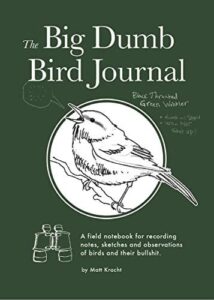
Not every birding journal has to take itself seriously — and that’s exactly where the Big Dumb Bird Journal earns its spot on this list. Written by cartoonist Matt Kracht, it’s built on the same sarcastic energy as his bestselling Field Guide to Dumb Birds of North America.
You get 176 pages of lined space, quirky bird drawings, and snarky tips that make logging observations feel less like homework. Fair warning: it’s got some adult language, so maybe not one for the kids.
| Best For | Bird lovers and watchers who don’t take themselves too seriously and appreciate a good laugh with their hobby. |
|---|---|
| Binding Type | Spiral |
| Page Count | Unspecified |
| Size | 8.3×5.5″ |
| Skill Level | All levels |
| Gift Suitable | Yes |
| Note Space | Yes |
| Additional Features |
|
- Combines actual birding utility with humor, so logging observations doesn’t feel like a chore
- Packed with snarky tips, bird facts, and quirky drawings to keep things entertaining
- Makes a genuinely fun gift for birders who’ve seen every generic journal out there
- Contains profanity and mature language, so it’s not family-friendly
- The irreverent tone might put off serious birders who prefer a straightforward journal
- Not a great fit for professional or conservative settings
Tips for Making The Most of Your Journal
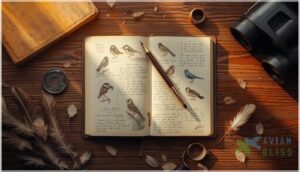
Having a journal is one thing — actually using it well is another. A few simple habits can turn your notes from a scattered mess into something you’ll actually want to look back on. Here’s what makes the biggest difference.
Updating Entries Regularly
Keeping your bird journal fresh doesn’t have to feel like homework — a quick note here and there adds up to something pretty wonderful over time. Even jotting down two or three observations after a walk builds solid record-keeping habits.
Consistency benefits your accuracy, too. The more you commit to documenting sightings regularly, the sharper your eye gets — and tracking progress becomes genuinely exciting.
Using Reference Guides and Checklists
Once your entries start stacking up, a good reference guide turns all those scribbled notes into actual answers. Field guides make species verification way less frustrating — think of them as cheat codes for avian identification. Pair a physical guide with digital references like Merlin or eBird for the best of both worlds.
Checklists keep your life list honest, and checklist benefits show up fast once you start spotting patterns.
Reflecting on Past Observations
Flipping back through old entries is honestly one of the best parts of keeping a bird journal — patterns you totally missed in the moment start jumping off the page.
Your personal log becomes a living record of:
- Seasonal insights — spotting which species vanish every October
- Behavioral trends — noticing that one warbler always hits the same shrub
- Skill improvement — realizing your early IDs were hilariously wrong
That’s pattern recognition working for you.
Sharing and Learning From Other Birders
Birding gets way better when you stop going it alone. Joining group outings, club workshops, or online communities like the Cornell Lab of Ornithology’s Bird Academy connects your journal to real-world feedback. The eBird mobile app turns your observations into citizen science gold. Mentor guidance from local Audubon chapters can sharpen your bird identification guides usage fast.
| Resource | What You Gain | How to Start |
|---|---|---|
| eBird Mobile App | Citizen science data logging | Download free on iOS/Android |
| Cornell Lab of Ornithology | Expert online communities | Visit allaboutbirds.org |
| Local Audubon Chapter | Mentor guidance + club workshops | Search audubon.org/chapters |
| Group Outings | Live ID feedback | Join seasonal guided walks |
| Reddit/Discord Groups | Shared observations | Search your region’s bird group |
Frequently Asked Questions (FAQs)
What are the 5 S’s of bird watching?
The 5 S’s are Size Comparison, Shape Analysis, Visual ID, color, and Auditory Cues — basically your quick mental checklist for identifying birds fast before they fly off.
What do people put in a bird watching journal?
Most birders jot down bird sightings, habitat notes, and seasonal observations. You’ll also find personal reflections, sketches, a life list, checklist entries, learning insights, and even conservation notes woven right into the pages.
Can bird journaling help with conservation efforts?
Yes — your notes become Citizen Science Data that fuels real Conservation work. Researchers use Wildlife Observation logs to track Population Trends, Biodiversity Tracking, Climate Impact, and Habitat Monitoring.
Birding Journals turn casual Data Collection into something that actually matters.
What sketching tools work best for field journaling?
For quick field notes, graphite pencils and waterproof pens are your best friends. Toss in portable watercolors and a good eraser, and your sketching space becomes a full nature journaling setup — lightweight, practical, ready for anything.
How do I journal birds in different seasons?
Each season tells a different story. Note Spring Migration arrivals, Summer Residents nesting, Fall Plumage changes, and Winter Visitors passing through.
Seasonal record keeping turns your bird watching journal into a living nature timeline.
Are there bird journaling communities or clubs?
Tons of communities exist for nature journaling fans. Cornell Lab of Ornithology connects birders worldwide through online forums and collaborative projects.
Finding groups locally or digitally means community benefits, club activities, and shared outdoor hobbies — all fueling your birding journals journey.
How do I record rare or unusual bird sightings?
Spotted something rare? Write everything down fast — time, location, behavior, markings. Detailed notes and photos strengthen sighting verification.
Follow your local reporting protocol, and always practice ethical birding by keeping a respectful distance.
Conclusion
Every bird you spot is a small door opening—walk through enough of them, and you’ll find yourself somewhere you never expected. Your bird watching journal for beginners is the map that gets you there.
It turns quick glances into real knowledge, and random outings into a story worth telling. Don’t wait for the perfect sighting to start writing. The crow with the stick didn’t wait for permission either.
- https://play.google.com/store/apps/details?id=edu.cornell.birds.ebird&hl=en_CA&gl=US
- https://apps.apple.com/us/app/ebird/id988799279
- https://www.audubon.org/content/how-identify-birds
- https://indianaaudubon.org/2025/07/01/birding-101-how-to-identify-a-bird/
- https://swibirds.org/blog/2020/5/3/a-beginners-guide-to-bird-id